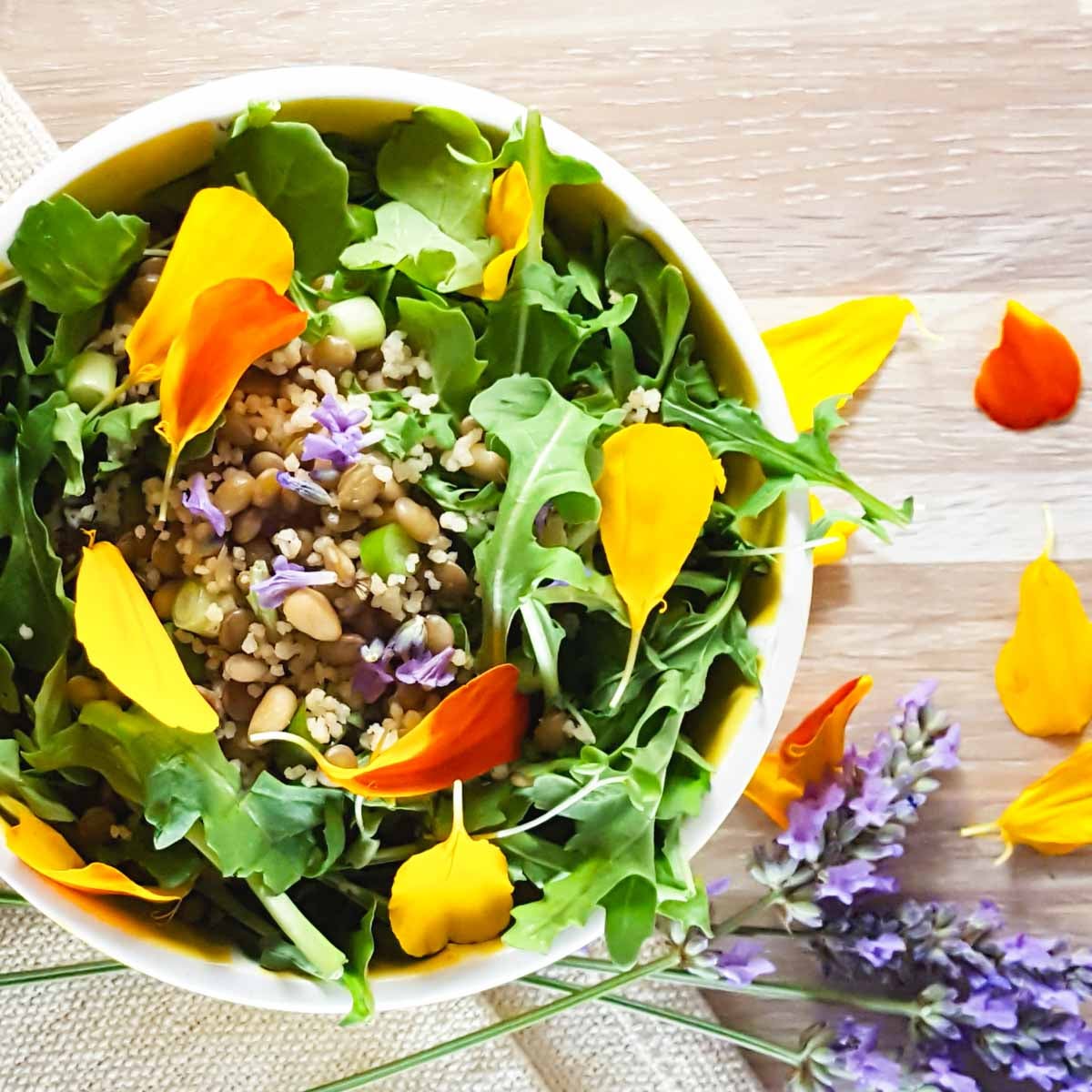
A good salad with edible flowers will have simple ingredients to allow the delicate flower flavor to come through.
I also explain how to adjust the flavor based on the edible flowers you have on hand.
To start, I selected mild-flavored ingredients that add texture and body to the salad without overpowering the flowers:
- Feta or goat cheese: a good mild, creamy cheese
- Lentils: add a chewy texture with a mild flavor
- Couscous: adds a light & fluffy texture
- Pine nuts: soft texture and buttery flavor
- Lemon-honey dressing: acidity & sweetness
Types of edible flowers for salad
This salad works with any type of edible flower you can find in stores or from your garden.
Just make sure if you're buying flowers, they are for culinary purposes, not for flower arrangements (which are usually sprayed with inedible preservatives).
Below is a chart of edible flowers you can use on your salad, along with a few tips on how to customize the salad based on the flowers you pick.
After the chart, I go into more detail about each type of flower.
| Flower | Greens | Other flavors to add |
|---|---|---|
| Nasturtium | Arugula | Fresh Parmesan |
| Calendula | Arugula | No changes |
| Marigold | Arugula, butter lettuce | Coriander, tarragon |
| Lavender | Butter lettuce, spring mix | Herbal cheese, thyme |
| Chive blossom | Any greens | Herbal cheese, garlic |
| Pansies | Butter lettuce, spring greens | Herbal cheese, tarragon |
| Lilacs | Butter lettuce, spring greens | Orange zest |
| Squash blossom | Arugula | Garlic |
Nasturtium
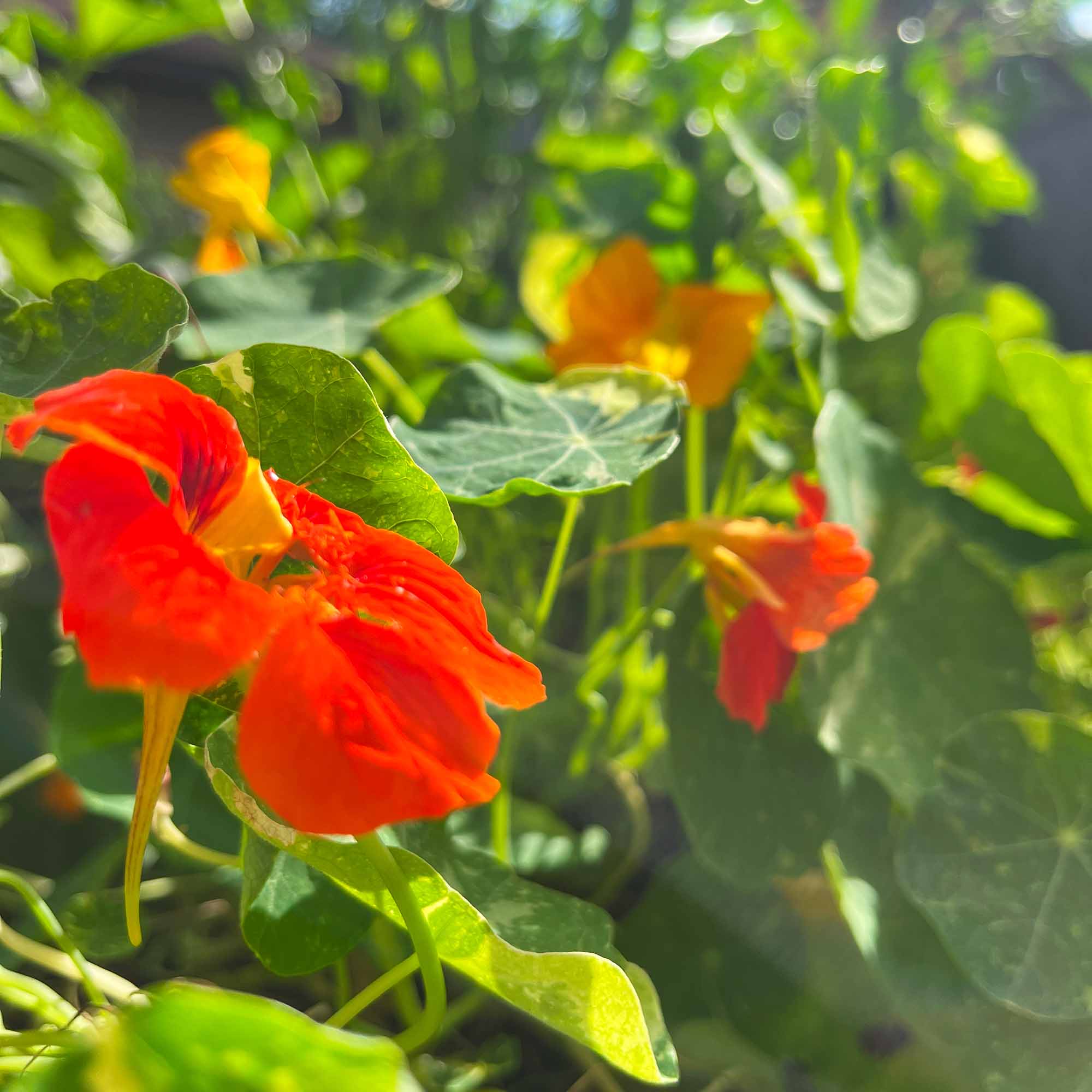
The whole nasturtium plant is edible (leaves, flowers, stems, and seeds).
They are known for their peppery bite, which is stronger in the leaves and much more mild in the flowers.
Arugula is a good choice because its peppery flavor is very similar to the peppery bite of nasturtium. Add in some mustard greens for the same reason. I use this combination all of the time for a really tasty edible flower salad.
In additional to plain feta or goat cheese, Parmesan's flavor would be very complementary.
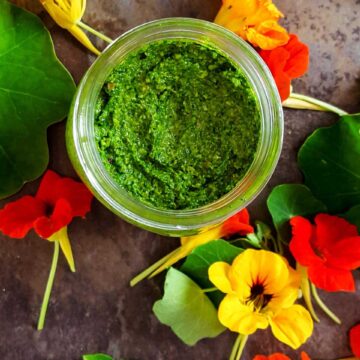
If you want to use the whole plant, make a nasturtium pesto, pickle the seeds, and use the stems in place of chives.
Calendula
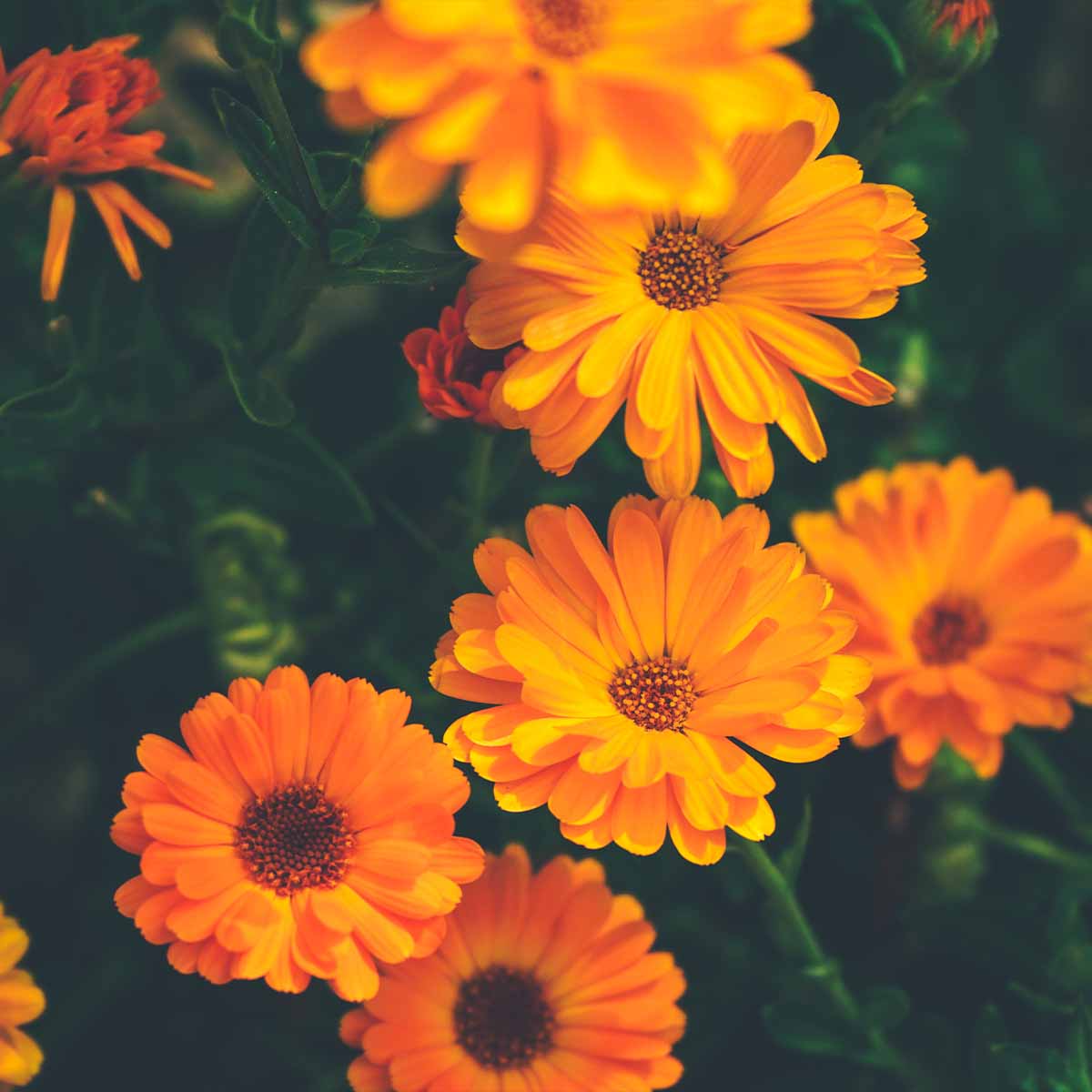
Calendula (Calendula officinalis) is a very popular edible flower that's often called a pot marigold (even though it is not a true marigold).
They look more like daisies than marigolds with a mild, slight pepper flavor. These pair well with the same things as nasturtium: arugula, feta or goat cheese, and the dressing as written.
Marigold
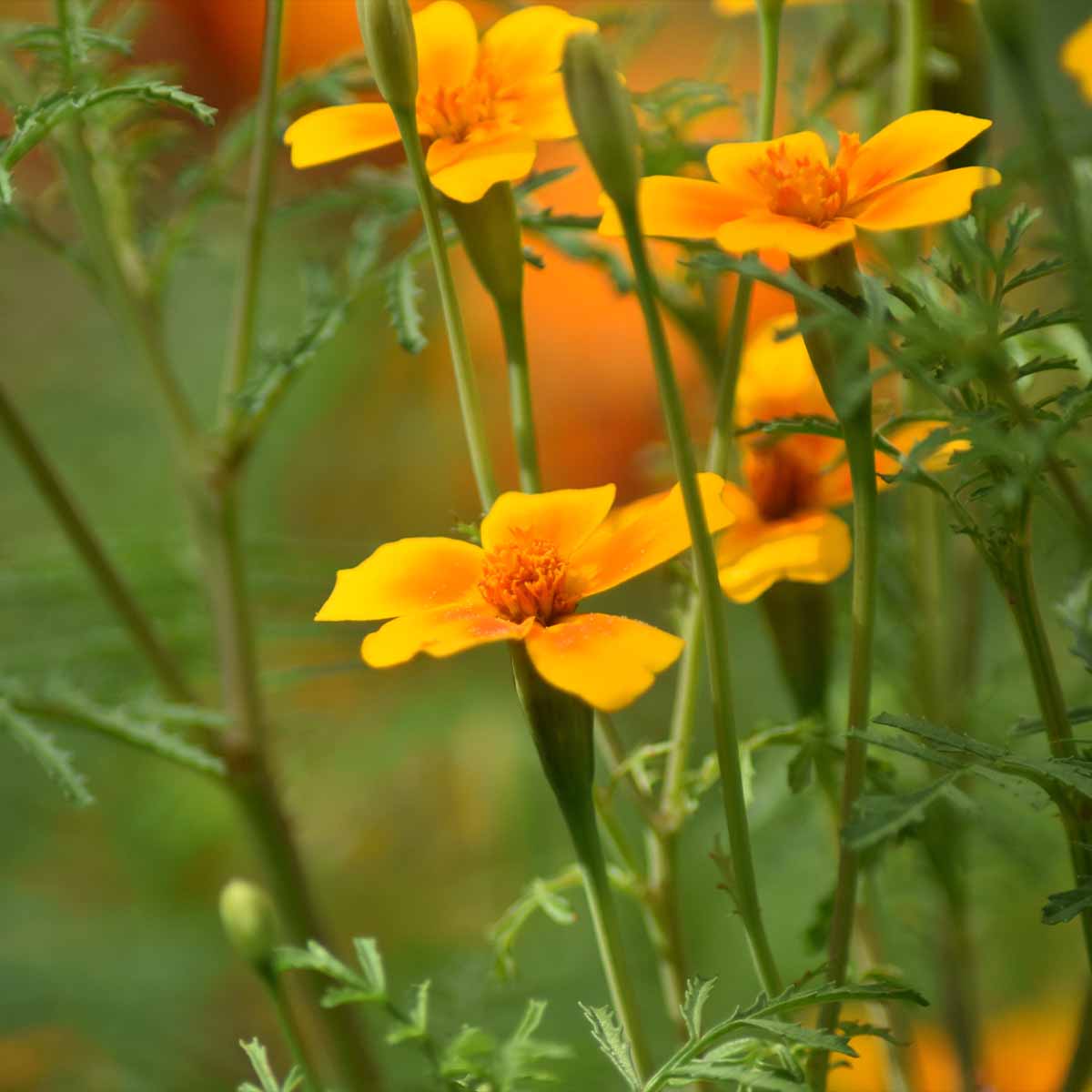
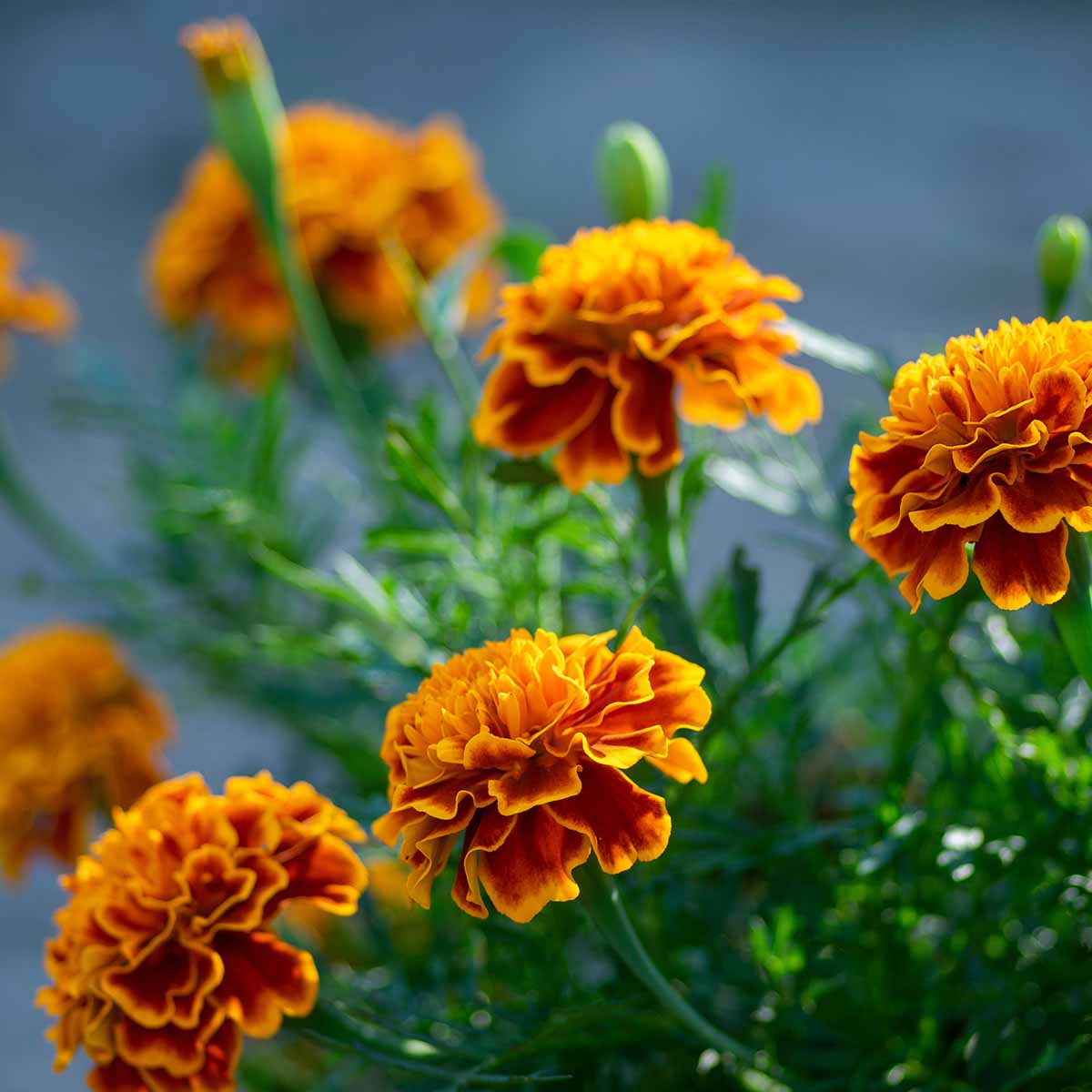
Then there are true marigolds, but not all of them are safe to eat. Here are varieties that you can eat:
- Signet marigolds: hints of citrus flavor, smallest of the bunch (6" or shorter), with a single row of petals (Tagetes tenuifolia). Look for Lemon Gem or Tangerine Gem varieties
- Mexican tarragon: strong anise or tarragon flavor (licorice) (Tagetes lucida)
- French marigolds: technically edible but not very tasty and often bitter. Frilly, almost serrated flower shape on 6-12" tall plants (Tagetes patula)
African marigolds (Tagetes erecta) can cause digestive problems. They have pom pom like flowers on 3-foot tall plants. Other types of Tegetes species might also not be edible and look similar to the other species, so know what you are eating!
Marigold flowers are slightly bitter, mildly spicy with a citrus undertone.
Arugula, spinach, and butter lettuce would all make a great salad base. Feta or goat cheese will pair nicely. And you could try adding coriander to the salad dressing.
Lavender
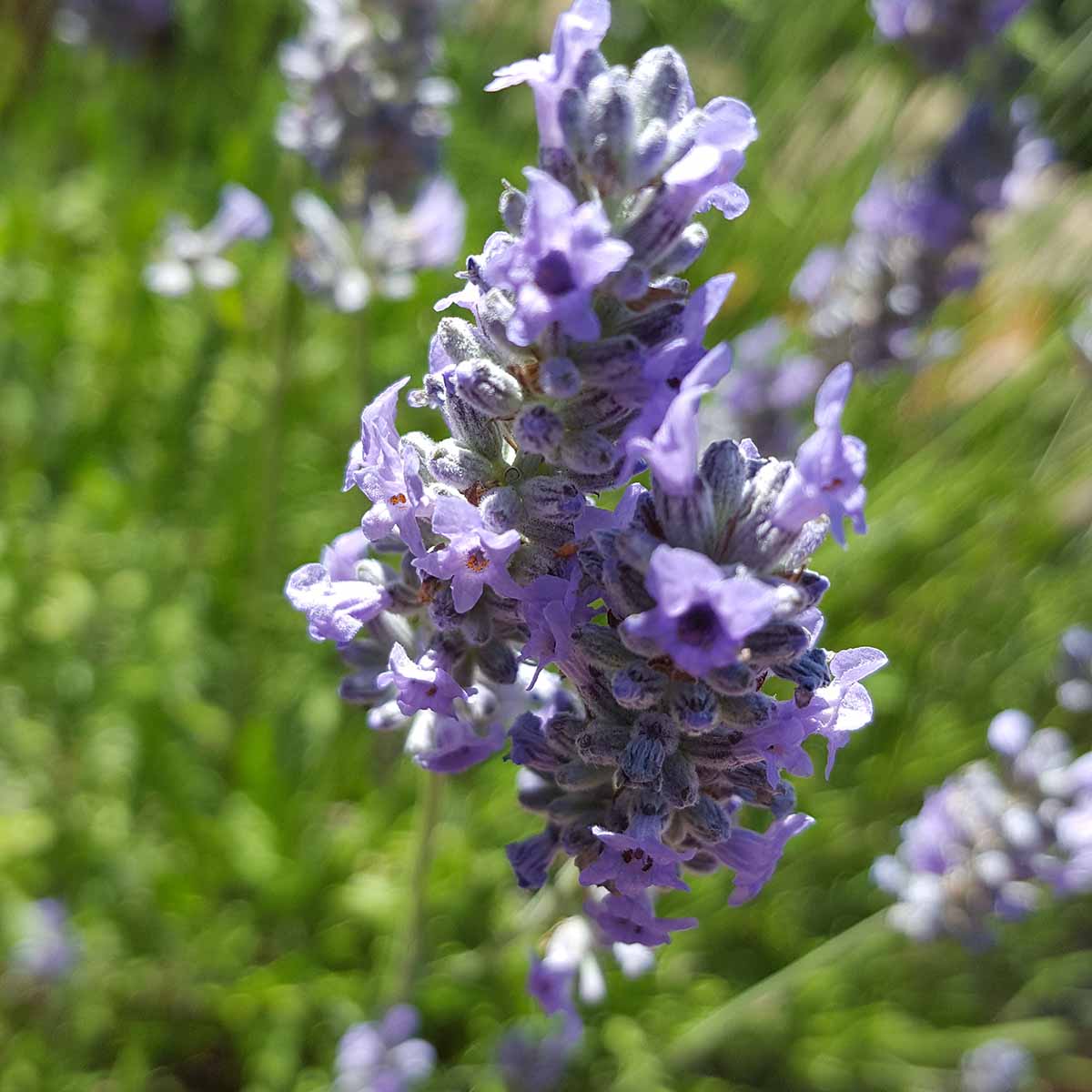
Use English Lavender (Lavandula angustifolia) for eating because is has a cleaner, floral flavor that doesn't lean soapy (unless used in large quantities). Other types can cause upset stomachs from a high amount of camphor.
Harvest lavender when some of the flowers are open, and some are closed. The flavor changes as they bloom, so it's nice to have a mix of both.
To work with their perfumed, eucalyptus flavor, use butter lettuce, spinach, or a spring mix as the base for the edible flower salad.
An herbal goat cheese would pair really well. Add thyme to the dressing for an Herbs De Provence flavor.

Chive blossoms
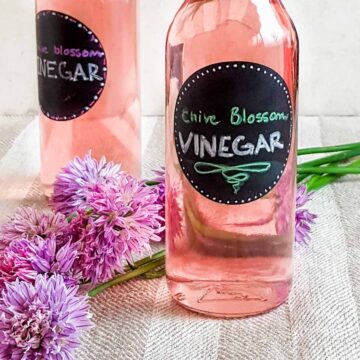
Chive blossoms definitely have a green-onion flavor and all varieties are safe to eat (from the Allium family).
Break apart the fluffy heads after your wash them really well to get any bugs out. They might have tiny black seeds that you can also eat.
Use your favorite salad green and a feta or goat cheese infused with herbs. Try dressing will be great as-is.
Pansies
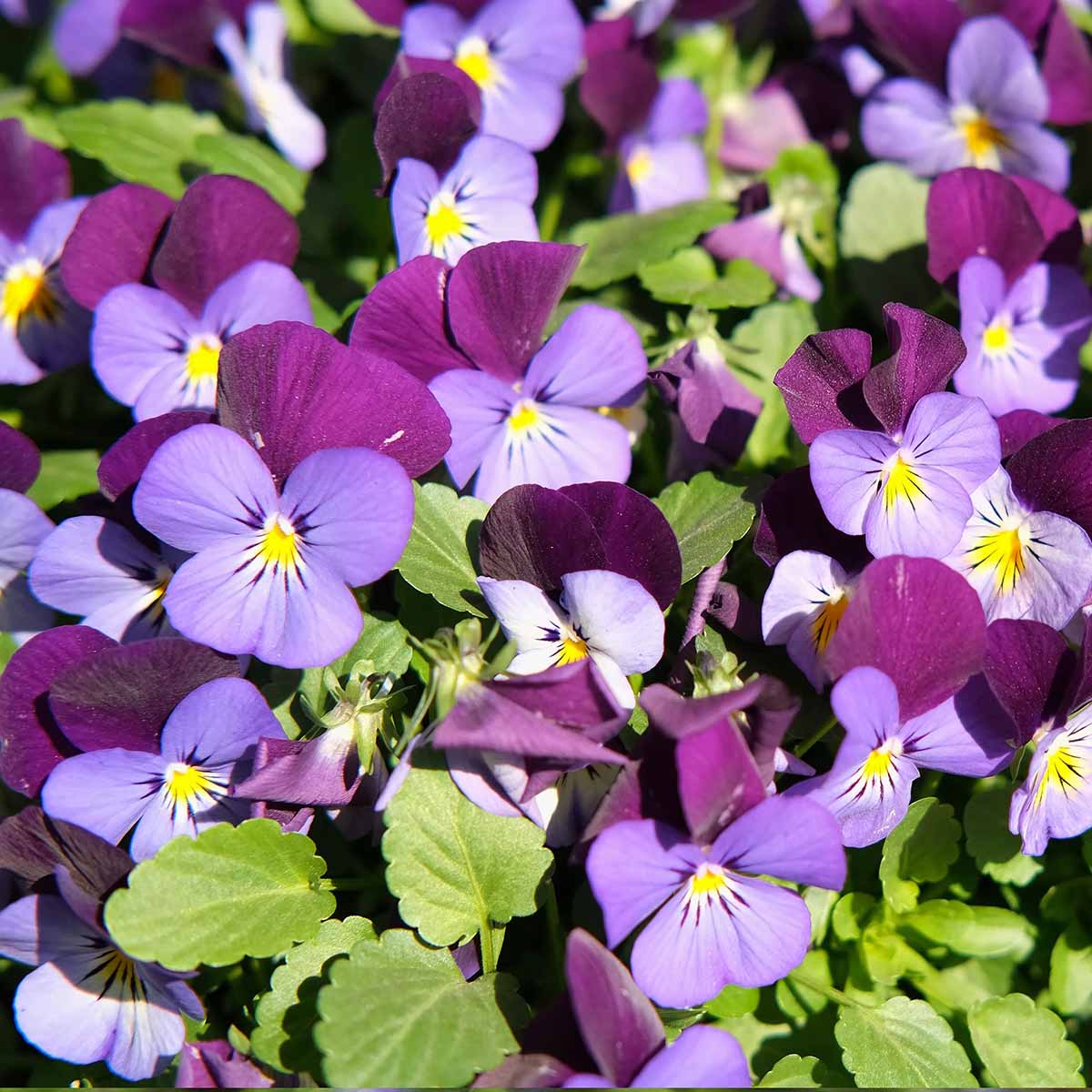
The flowers from all types of true pansies (from the Viola family) are edible, but the leaves are not eaten, according to Fine Gardening.
They have a mild salad green flavor that's slightly grassy. They will pair well with spring greens, or the super mild butter lettuce if you want more of the pansy flavor to come through in your salad.
Add herbs to the dressing, like chives, dill, or tarragon (licorice flavor) in very small quantities.
Use plain feta if you make an herbal dressing, otherwise you could use an herb-infused feta or goat cheese.
Lilacs
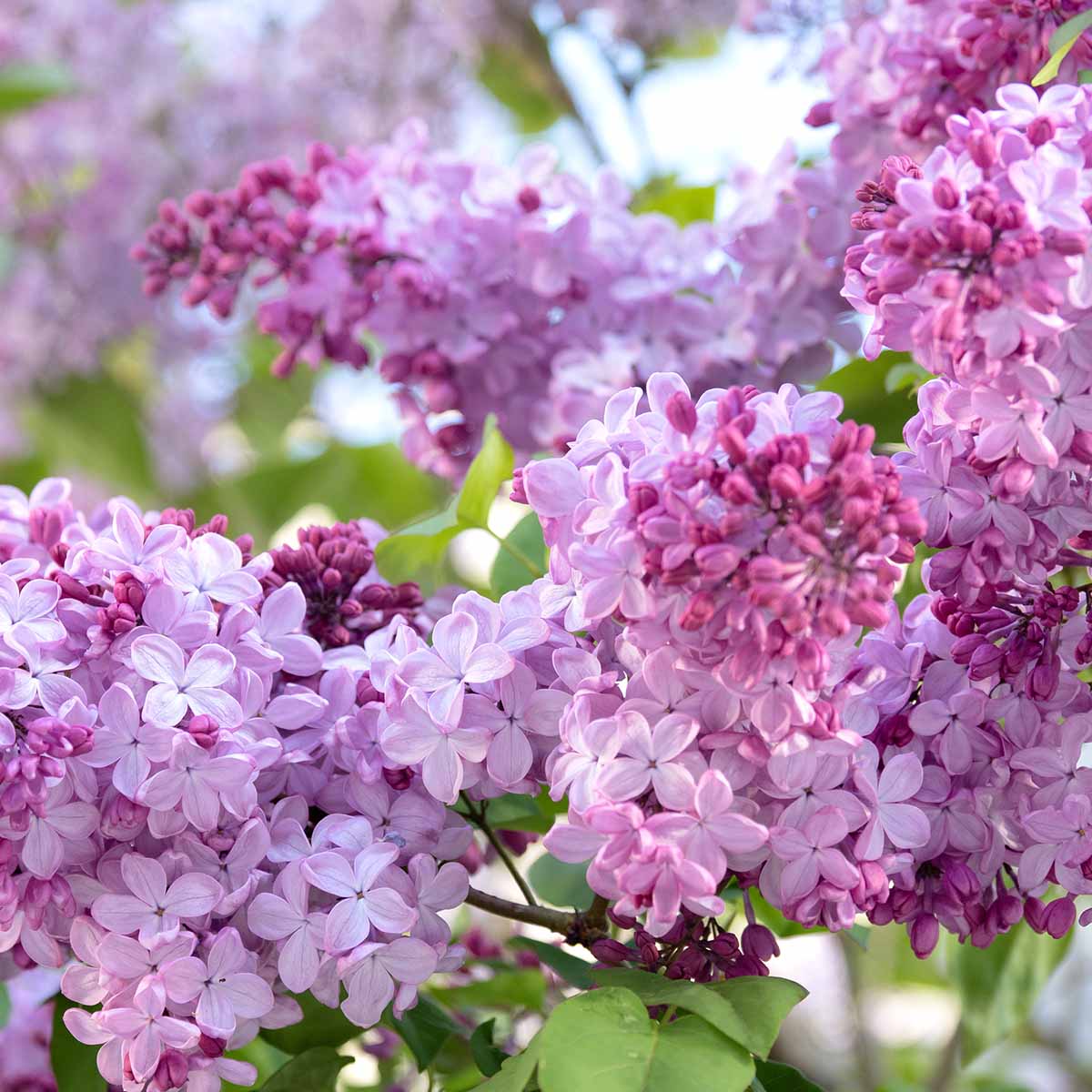
All species of lilacs (Syringa) are edible, but only the flowers, according to Forage Colorado. Harvest when the blooms are open, with a few closed, so you get them at their peak.
If left until all flowers bloom, you'll have some brown wilted ones that you'll have to pick through.
Lilacs taste sweet and very floral. Use butter lettuce or spring greens as your salad base to let their flavor shine.
Keep the cheese plain and add orange zest to the dressing, which brings subtle floral notes, or add a tiny dash of orange blossom water to really bring out the floral flavors.
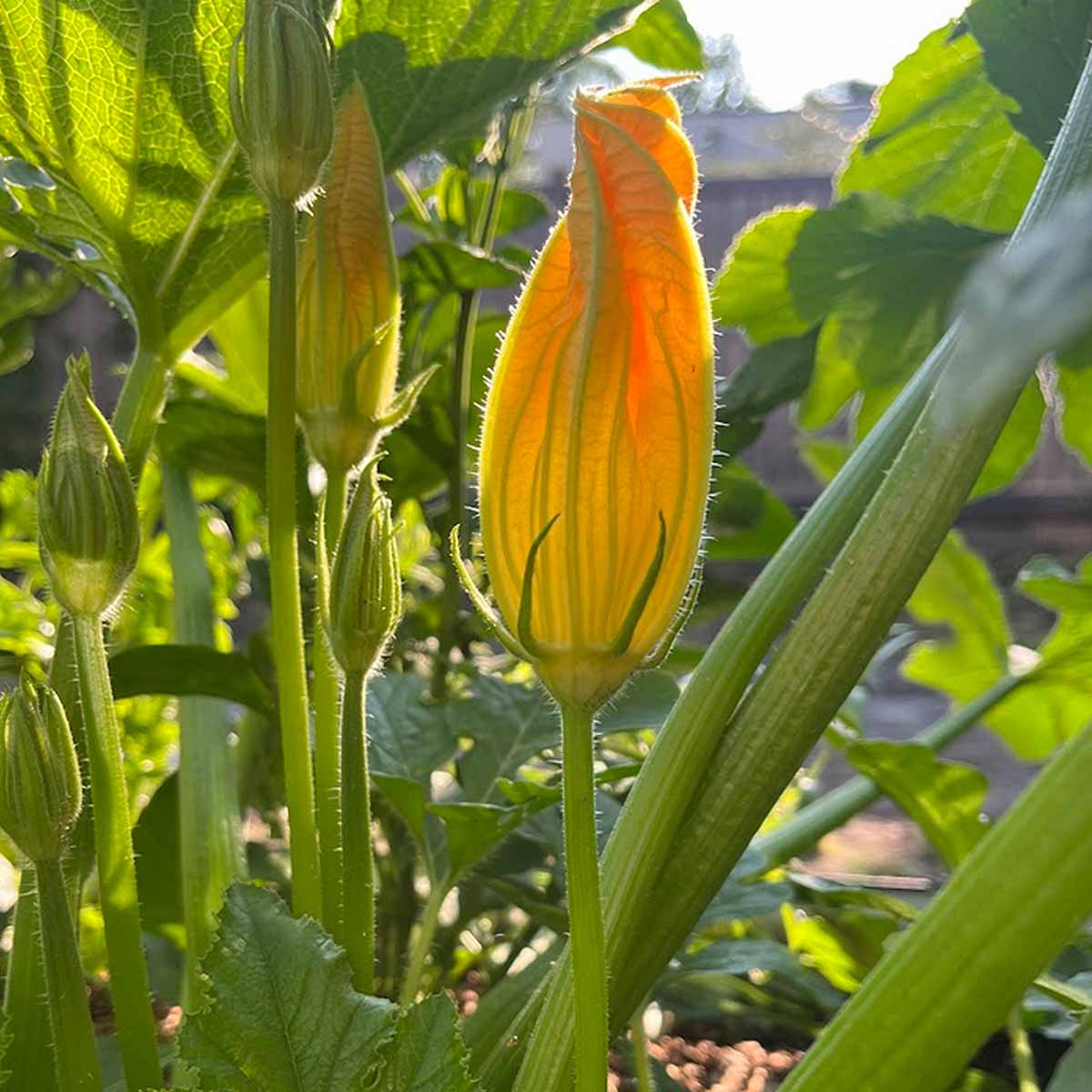
Squash blossoms
If you are feeling adventurous, stuff squash blossoms with cheese and add to the top of the salad.
All varieties of squash blossoms are safe to eat, including zucchini, summer squash, winter squash, and pumpkins. If you harvest male flowers, the females will remain and produce squash, although both genders are edible.
When harvesting male squash blossoms, remove the stamen to avoid the extra pollen and bugs.
Farm to Jar has a really great post about how to stuff squash blossoms with options for a regular or beer batter for frying, as well as instructions for roasting without a batter.
Arugula will make a great base for the squash blossoms, and adding a little garlic to the dressing will pair nicely.
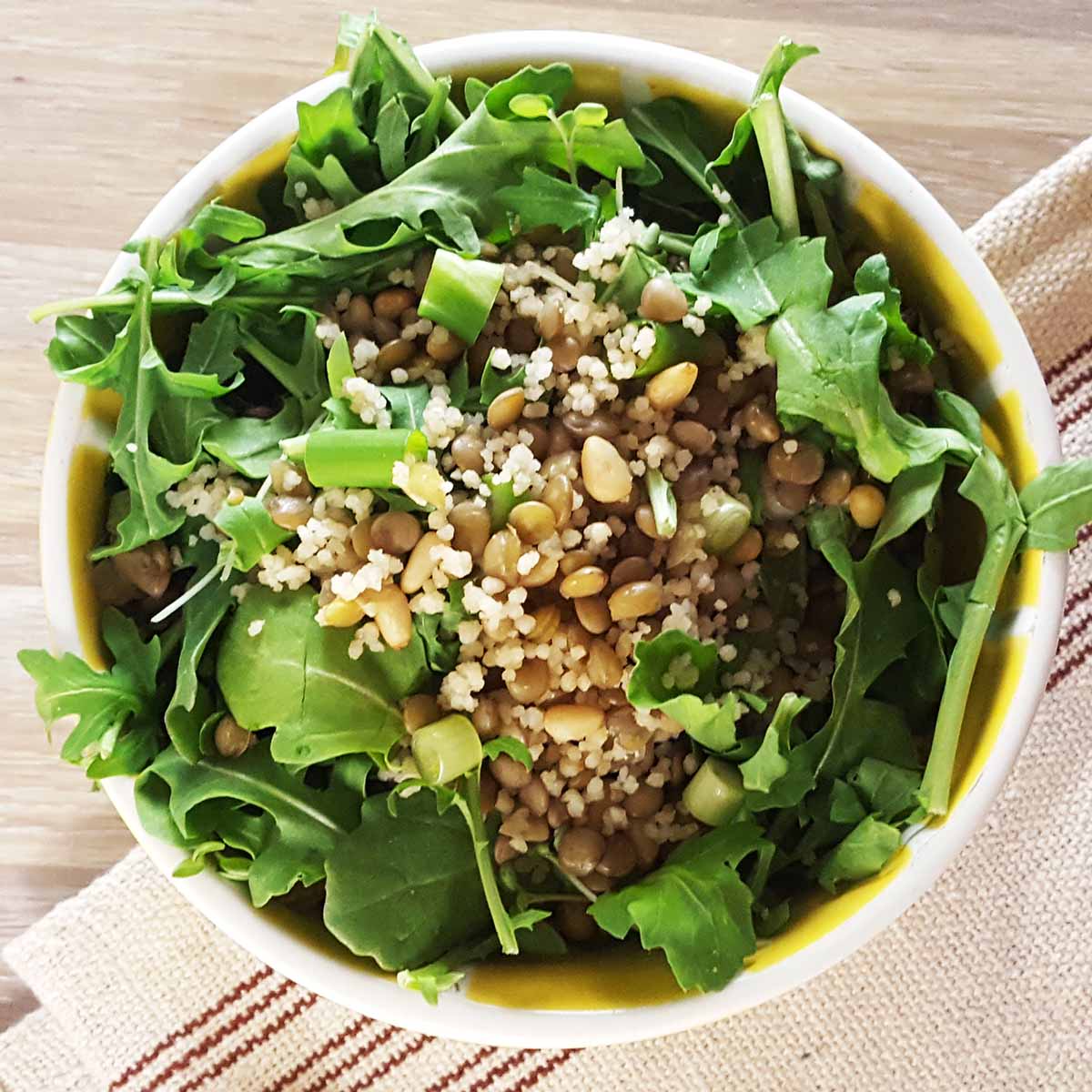
Lentils & couscous add body to the salad
Most salads have flavorful fruits and vegetables to make the salad interesting. However, I wanted the flowers to be the star, so I left out all fruits and vegetables.
Instead, I add lentils and couscous for texture, one is chewy and the other is fluffy. Cook them in chicken (or vegetable) broth for added flavor that doesn't compete with the flowers.
You could also add quinoa that's been baked until crispy.
When to add dressing and flowers
Mix the arugula, lentils, and couscous together with the salad dressing. The couscous and lentils will soak some of it up, as intended.
Add the cheese, then the flowers last. I usually wait to add delicate flowers until I'm ready to serve the salad.
If you want bolder flavors, you can make this blackberry vinaigrette for the salad.
Make ahead & leftovers
This salad also lasts a surprisingly long time, even when dressed (I know!). The arugula can stand up to it and the salad is still really good the second day for leftovers.
If you make it ahead, wait to mix in all of the ingredients until you're ready to serve (or transport it), so that it's really fresh. Add the flowers once you're ready to serve.
Recipe
Ingredients
Couscous
- ½ cup dry couscous
- ¾ cup vegetable or chicken broth
Lentils
- ½ cup dry green lentils
- 1 ¼ cup chicken broth
Salad
- 5 oz baby arugula 1 plastic container
- 2 green onions
- ¼ cup pine nuts toasted
- 4 oz feta cheese or goat cheese
- 1 cup edible flowers see note
Dressing
- 2 lemons
- 2 Tbs olive oil
- 2 teaspoon honey wildflower preferred
- 1 teaspoon Dijon mustard or whole grain
Instructions
Cook lentils & couscous - start early
- Ideally, the lentils and couscous are cooled when added to the salad, so they don't wilt the arugula.
- To start the lentils, place the lentils and broth in a pan, bring to a boil. Reduce heat to low, cover, and simmer until tender, around 25 minutes.
- To make the couscous, bring the broth to a boil, remove from heat and add the couscous. Stir well, then cover and let stand for 5 minutes. Fluff with a fork.
- Place both in the fridge until ready to use.
Prep the salad and dressing
- Toast the pine nuts in pan for about 5 minutes until they start to turn golden.
- Cut the green onion into thin slices.
- Zest 1 lemon into a bowl for dressing. Add the juice of 1 lemon, honey, and Dijon mustard to the bowl. Mix and whisk in olive oil. Taste, and add more lemon juice as desired.
Mix, add flowers, and serve
- Mix arugula, couscous, lentils, green onions and dressing. Top with cheese, pine nuts, and edible flowers
Storing & leftovers
- Store leftovers in the fridge and the salad lasts at least a day, even when mixed with the dressing. Amazing, I know! My guess is the couscous and lentils soak up extra liquid, keeping the arugula from wilting or getting soggy.
Notes
- Nasturtium: arugula and feta or goat cheese
- Calendula: arugula
- Marigold: arugula or butter lettuce, add coriander or tarragon
- Lavender: butter lettuce or spring mix, add herbal cheese, thyme
- Chive blossoms: any greens, add herbal cheese, garlic
- Pansies: butter lettuce or spring greens, herbal cheese, tarragon
- Lilacs: butter lettuce or spring greens, orange zest in dressing
- Squash blossoms: arugula, and stuff with cheese
Nutrition
More about nutrition
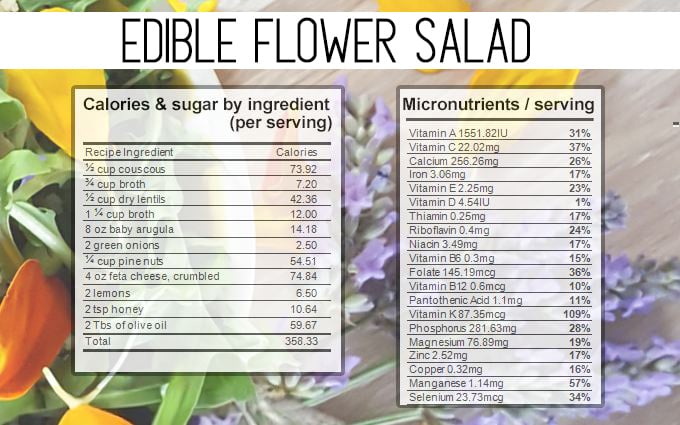
This salad packs in a lot of protein, fiber, and nutrients
- 30% of the recommended daily protein
- 40% of the recommended fiber
- 100% vitamin K
- 360 calories
While calories are the best measure of 'healthiness,' they are helpful for meal planning. A salad with 350 calories is a lot different than one with 700.
In order to let you more easily customize this salad to meet your nutritional goals, I've provided a breakdown of calories per ingredient, per serving.
More recipes & resources
Want more edible flower recipes? I've got you covered. First, let's look at other edible flower salads:
- Green pasta salad with edible flowers from The Pasta Project
- And edible flower salad with dandelion greens from One Green Planet
- A crunchy, kid-friendly salad that adds flowers for visual more than flavor, from Forks over Knives
And I also have a lot of salad recipes for you to browse. Some use lentils, and other use fresh spring or summer produce.
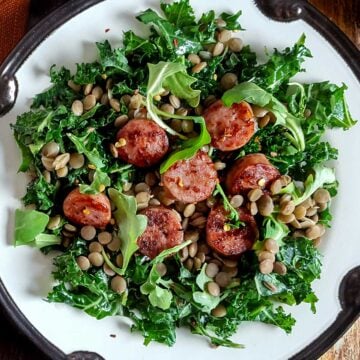
- Kale and lentil salad with sausage
- Strawberry spinach salad with avocado-peppercorn dressing
- Caesar salad with tomatoes & homemade croutons
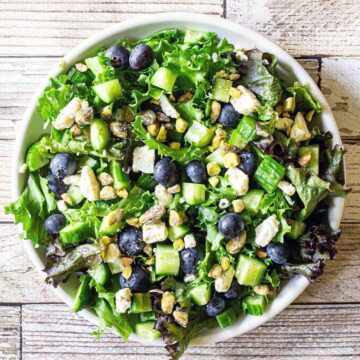
- Blueberry cucumber salad with feta cheese


You can also try out other arugula salads:
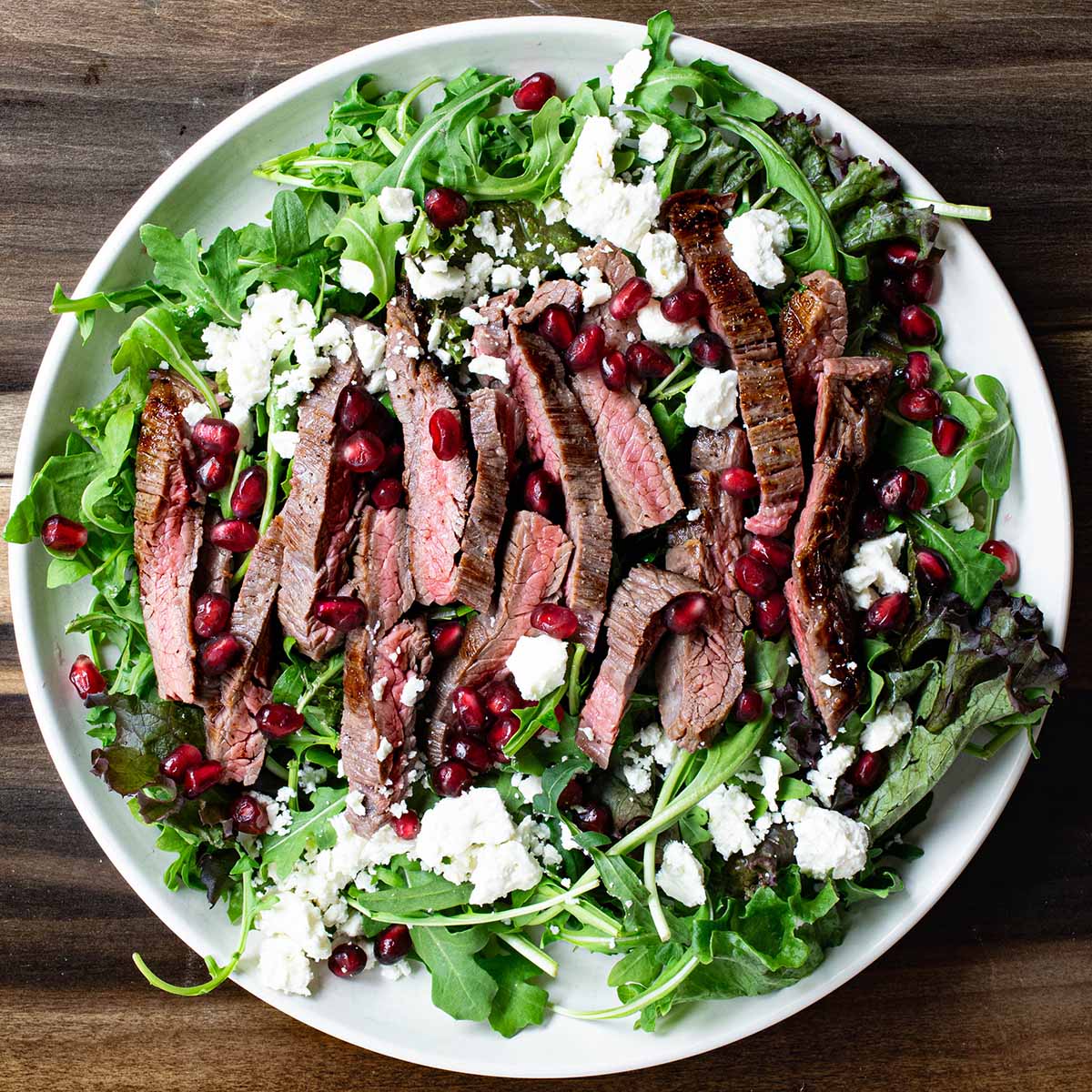
Arugula steak salad with pomegranate dressing
This steak salad is ready in 15-20 minutes, thanks to the thin flank steak that sears with just 3-4 minutes per side.
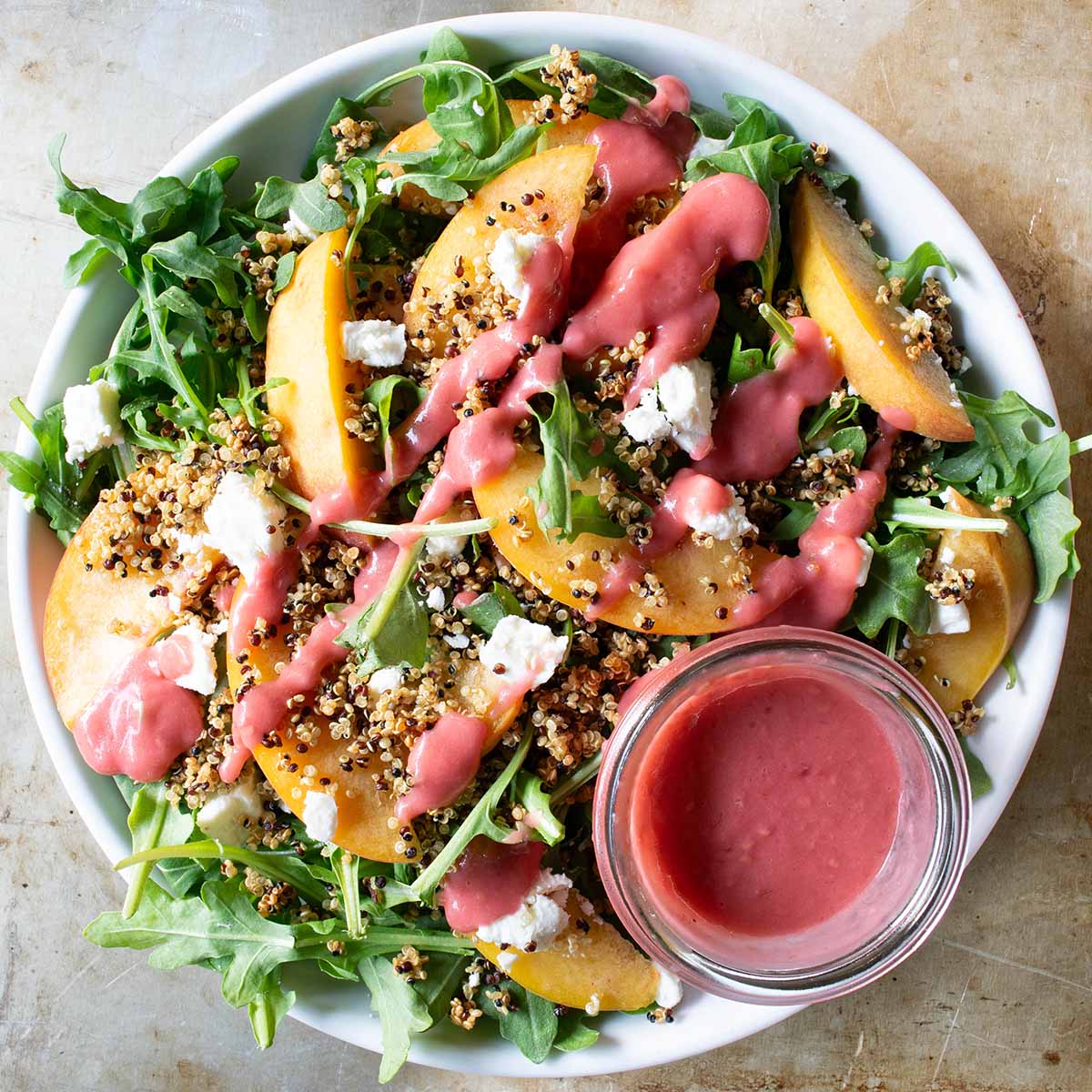
Crispy quinoa salad with peaches and arugula
Crispy quinoa levels this salad up a notch as it turns extremely crunchy from roasting in the oven.
If you're wondering what else is currently in season, check out my calendars to see what produce is in season each month (and coming up soon).

Leave a Reply