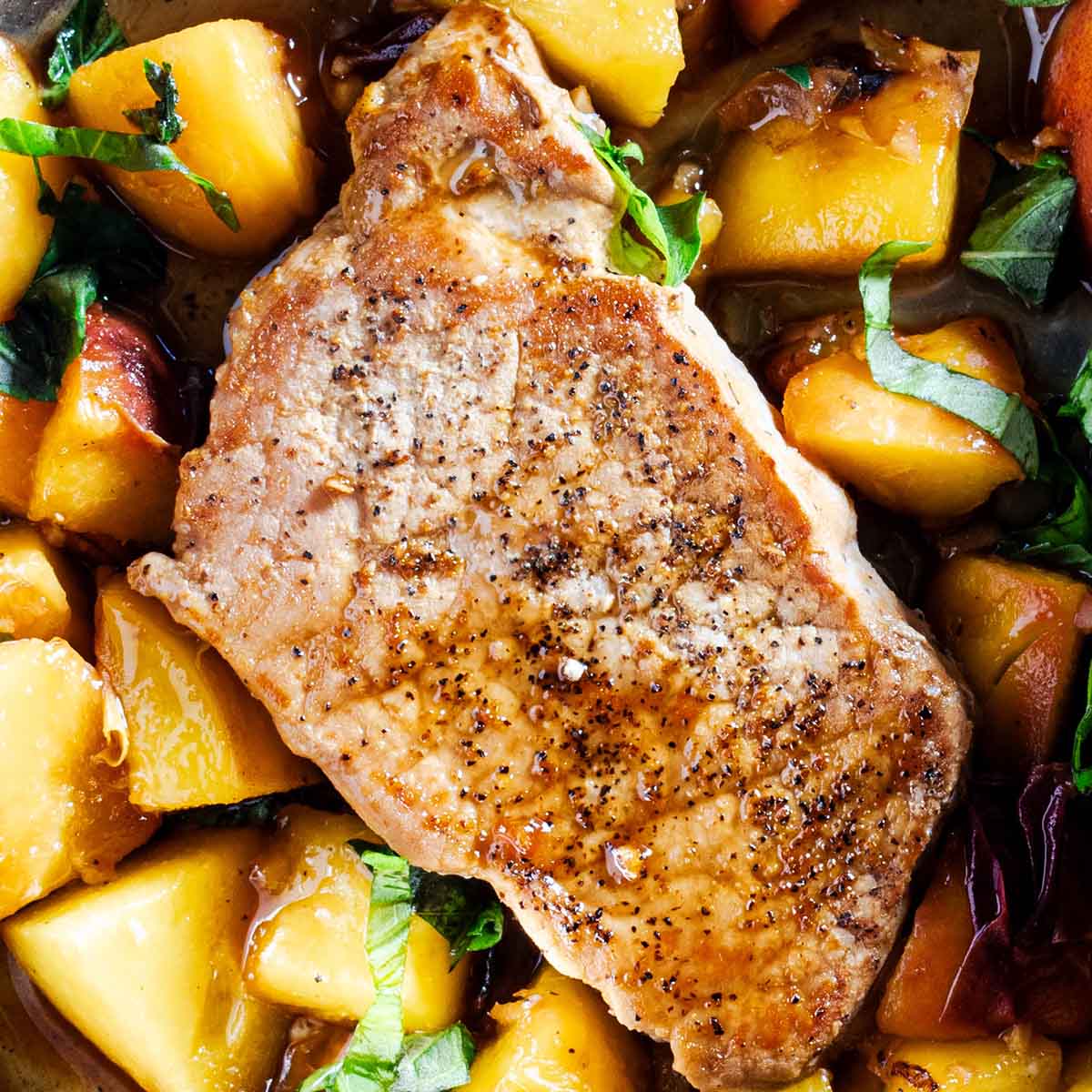
Pan-frying pork chops is one of my go-to weeknight dinner recipes because they cook up so fast. During summer, I make these pork chops with peaches, ginger and basil, which are honestly ready in under 20 minutes (including prep time).
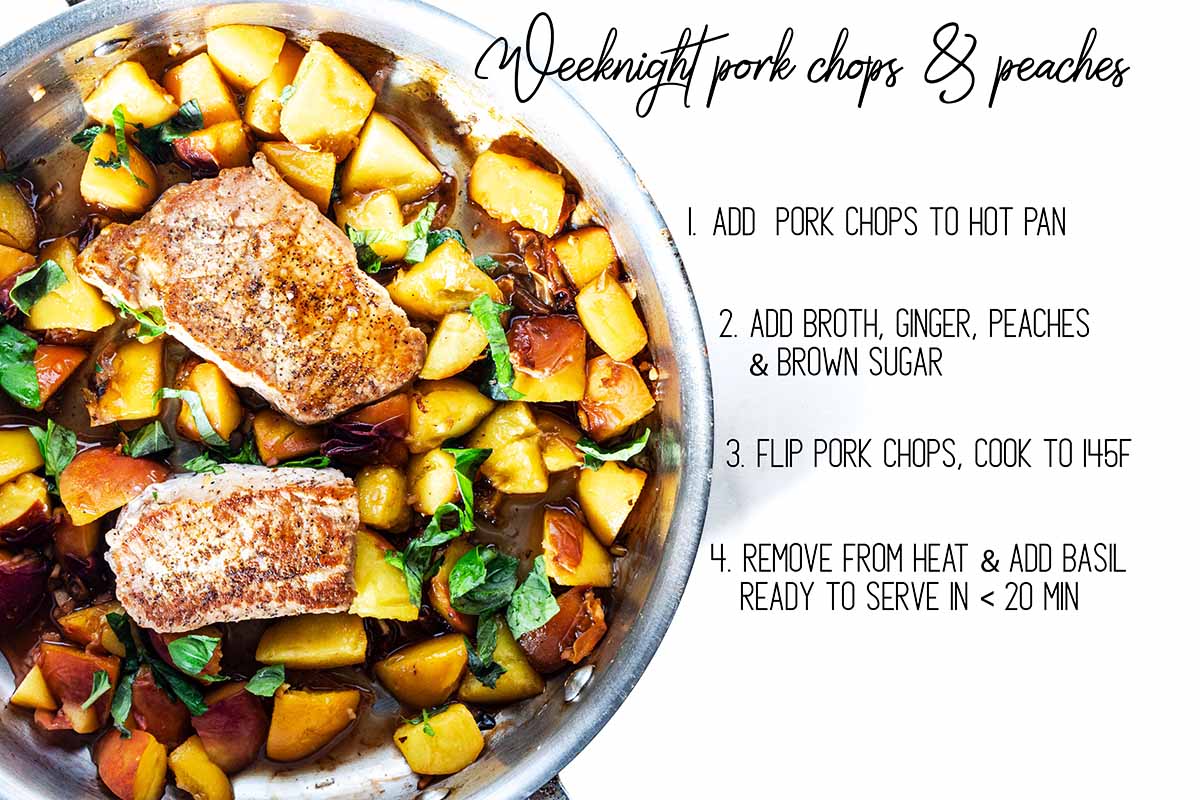
The pork is seared in a hot skillet (no oil necessary), and then fresh peaches, ginger, and broth are added to make a quick sauce. All in the same pan - all cooking at the same time.
Boneless pork chops only take 3-4 minutes per side to reach 145°F, and bone-in pork chops might take a few minutes longer. Either way, the peach sauce is resilient enough to work with a short or longer cook time.
Jump to:
Recipe
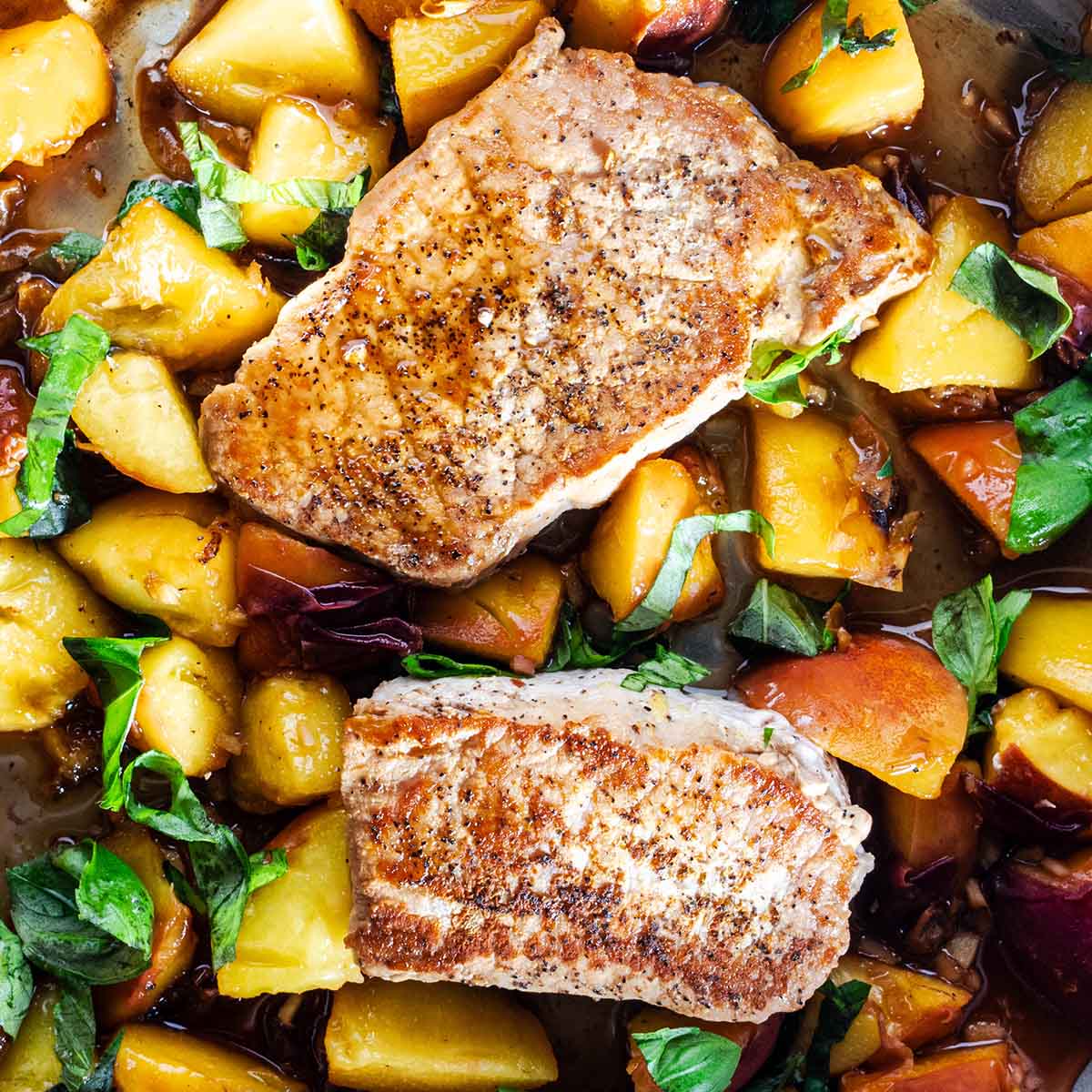
Ingredients
- 2 8 oz boneless pork chops
- 1 teaspoon salt to season pork chops
- pepper to taste to season pork chops
- ¼ cup broth any kind
- 3-4 peaches
- 1 tablespoon brown sugar
- 1 tablespoon diced fresh ginger double amount if you love ginger
- 1 handful fresh basil
Instructions
Prepare ingredients
- Dry the pork chops and season with salt and pepper (if they are wet, they don't get as good of a sear). If preferred, cut the fat off the edge (optional). Cut the peaches into large chunks. Dice the fresh ginger (removing skin is optional). Remove basil leaves from stems and chop.
Cook the pork chops & peaches
- Heat a stainless steel or cast iron skillet over medium-high heat. No need for oil. Once hot, add the pork chops - they will release from the pan once browned, even without oil. This also means you won't get oil splatter or have a smokey kitchen!If you left the fat on the edge of the pork chops, first add them to the pan with the fat side down, holding them upright with tongs. Once the fat crisps up, lay the pork chop flat in the pan and continue to cook as instructed.
- Immediately add the peaches around the pork (not on top) and let them char for 30-60 seconds. Then add the broth, brown sugar, and ginger. Reduce heat to medium.
- The pork will be browned after 3-6 minutes. Flip to finish cooking the other side. Add more broth if needed to keep the peaches from sticking and burning. The sauce thickens as it bubbles, cooking down to a glaze-like consistency.
- Pork is done once it reaches 145℉. Stir in basil and serve immediately (so pork doesn't keep cooking!)
Notes
Nutrition
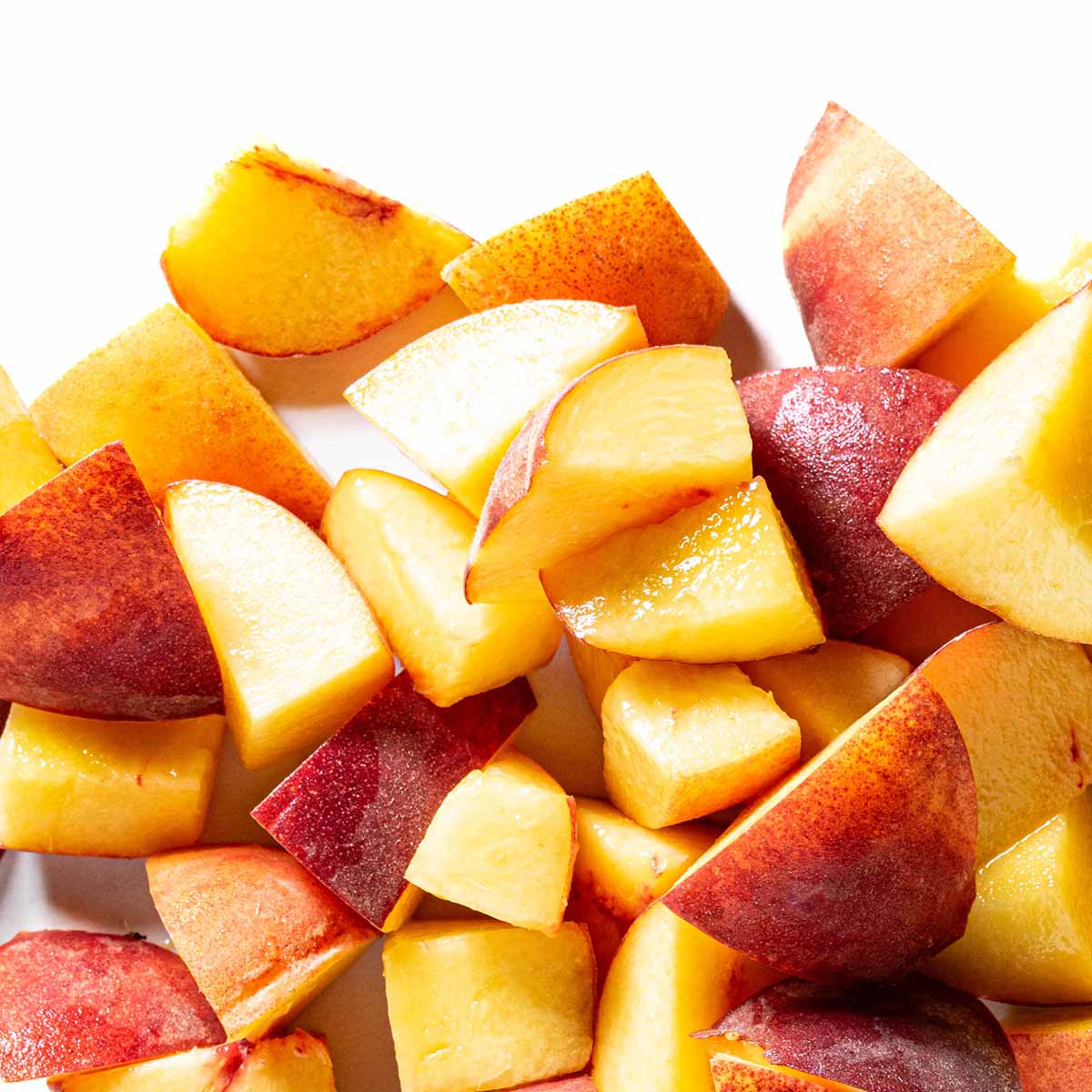
Fresh peaches
When peaches are in season, they are bursting with flavor. I like the eat the tastiest ones straight up as a snack. Those will undoubtedly be great in this peach pork chop dish.
However, cooking peaches with basil and ginger can save a lackluster peach and even soften unripe ones. It's one reason I end up cooking some pork chops with peaches every summer.
To find the tastiest peaches:
- Smell the peach, the more aroma is has, the higher chance it's full of flavor. This is the most reliable method.
- You can also look at the undertone - the lighter spots should be yellow, not white or light green (which indicates it was picked too early).
Both hard and soft peaches can be used in this recipe. Soft peaches will probably lose their shape when cooked in the pan, which is totally fine. If you want them to retain their shape, add them only after you've flipped the pork.
Hard peaches will soften fairly quickly as they cook alongside the pork chops. Add them right after you set the pork in the pan to give the more cooking time.
Get more recipes for flavors that pair with peaches while they are in season.
White vs yellow peaches
White peaches have less acidity, so they taste sweeter. They also have juicier and softer flesh, in general, which falls apart faster when cooked.
I prefer yellow peaches for this pork chop recipe. That said, flavor preferences are so personal, honestly, either one should work out great for you.
Leave the skin on the peaches
The peach skin actually contains a good amount of flavor as well as fiber. Keep the skin on - the texture isn't really noticeable once they are cooked down with the pork, unless you extra sensitive to it. This also keeps the recipe prep time down for an easy weeknight meal.
Alternatively you can use nectarines, which are a sibling to peaches but without the fuzzy skin.

How to chop peaches
There are two methods to cut up your peaches. Freestone peaches have pits that easily release, so you can use the first method listed below.
- Use a knife to vertically cut around the pit of the peach to make two hemispheres.
- Set the knife down and grab the peach with your hands, twisting the two hemispheres apart.
- The pit will be stuck in one side. Make another cut around the pit and you should be able to pull each remaining half off the pit.
- Chop into large chunks
Clingstone peaches have pits that strongly cling to the flesh, so it's harder to remove them. They can be so difficult, that you crush the flesh just trying to remove it.
Cut up clingstone peaches around the core, like you would for an apple. If you're unsure what type of peach you have, you can try the first method, or just jump right to this one.
For you visual learners, Serious Eats has pictures of how to cut each type of peach.
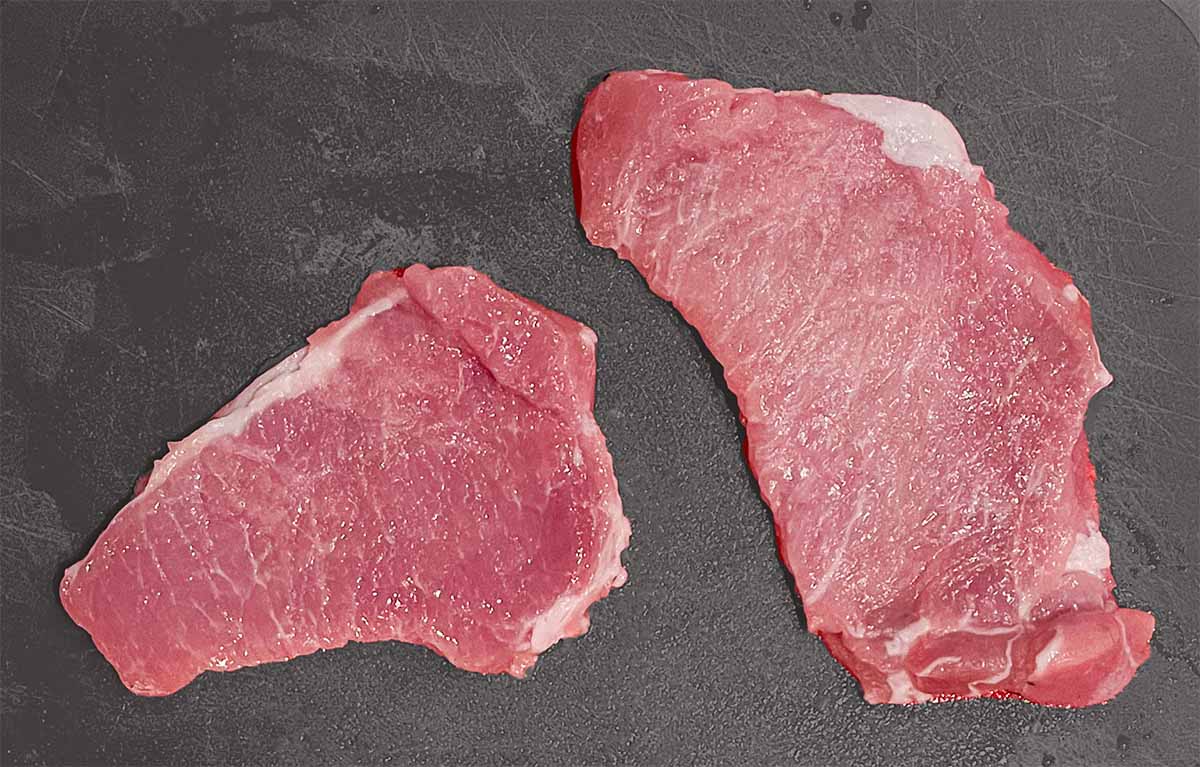
How to cook pork chops
There are several different kinds of pork chops, but this cooking method focuses on boneless pork chops (which come from the loin), and it also works for bone-in pork loin chops (also called porterhouse, center cut loin chop, or t-bone chop).
A note on sustainable pork
I buy almost all of my meat from a sustainable farm that treats the animals, land, and community with respect. The meat is pricier, but it also tastes better and has healthier fat profiles than conventionally raised meats.
A number of research studies have looked at different things that impact the quality of pork. One found that "pigs reared in outdoor conditions had enhanced juiciness in their meat," while another found that pigs "grown on grazing farms had a better meat quality and higher nutritional value."
If you're interested, I'm a long-time customer of Seven Sons Farms who go a step further and practice regenerative farming. The pork in this photo is from their farm. You can get $10 off with my affiliate link. I want to assure you I put my money where my mouth is and spend at least $100-$200 a month on their meat. (Try their bacon-bison burgers and you won't regret it!)
How much salt to season the pork chops?
In general, you want about 1 teaspoon of kosher salt per pound of pork chops. When I made and photographed this recipe, I had two 7-ounce pork chops and used 1 teaspoon of salt and they turned out great.
Using a hot pan & no oil
When you heat a cast iron or stainless steel skillet hot enough, it will immediately start to sear meat once it's added. This works really well for both beef and pork.
Your actually don't need any oil to your hot pan, either. Skeptical? I was too... until I tried it. The meat will stick to the pan at first, refusing to budge. But as it cooks, it naturally releases from the pan. Once you flip it, you'll see it turned nice and brown. The Kitchn has a guide on skipping oil when pan-searing steaks.
One of the main roles of oil is to transfer heat to the entire surface of the meat. Meat isn't perfectly flat - the muscles have nooks and crannies. Oil evens that out, transferring heat into those spots as long as you have enough oil in the pan.
But for relatively flat cuts of meat, like pork chops, oil isn't necessary. The nooks & crannies are so small, oil doesn't make a big difference.
That said, oil is critical for certain types of recipes, like a pepper-crusted pan-seared steak where a perfectly seared crust is key to the overall flavor. Oil is also necessary for any breaded or flour-coated meats. But for this skillet peachy pork chop recipe, it's not necessary at all.
The pork chops still get a nice brown sear and the peach sauce adds a lot of the flavor. Adding oil to the pan would also add oil to the peach sauce - and I didn't want that.
Internal temperature: 145°F
The pork chops will be anywhere from ¾ inch to 1.5 inches thick. The thicker ones will take a couple more minutes to cook to reach the minimum desired temperature of 145°F.
If you recall a target temperature of 160°F for food safety, you're not misremembering. It used to be 160°F. However, in 2011, the USDA lowered the recommended temperature down to 145°F for whole cuts of pork (not ground pork).
At 145°F, the pork chops will be just slightly pink inside, and that's okay. Taste of Home says, "Yes, contrary to what we were told as kids, pink pork is safe to eat. We've learned that color is no longer a definitive marker of doneness or food safety." That article also has a visual representation of the inside of pork chops at various internal temperatures.
Use an instant-read thermometer, placed in the center of pork chop. If you don't have one yet, run (don't walk) to buy one now! It's not surprising that I use mine all the time for cooking meat to perfection, but I also find it invaluable for baking (never again will I have over or under baked quick breads, cakes, or muffins - and you can make the fudgiest brownies by removing them at 180°F!).
I have had my Thermapen for almost 15 years now and I love it. It's one of the priciest options on the market, but it's been reliable. After going through 3 cheap thermometers that ended up on the fritz after just a year or two of use, I finally treated myself to the gold standard Thermapen.
There are also some more budget options that I haven't tried, but get good reviews. These are affiliate links so I get a small commission if you buy something. I try to be open and honest about what I own and what I like using, while also keeping your budget in mind.
You can find the Thermapen on Amazon, or check out less expensive thermometers to get started and see how often you use it, and upgrade at a later date (or not!).

- Unmatched Speed and Accuracy: A blazing fast ONE-second instant-read time delivers quick and precise...
- Outstanding Customer Support: Our Customer Care and Tech Support teams are based in American Fork...
- Commercial Grade Durability: Built to last with a waterproof IP67 rating and a 5-year warranty...
Timing the pork chops with peaches
Pork chops are a pretty lean cut of meat, so they can get tough if overcooked. Keep an eye on the temperature and remove once they reach 145°F.
Making the pork chops with peaches is easy because the peach sauce timing is so adaptable. If the pork chops are done quickly, you'll have a peach sauce with more structure. If the pork takes longer to cook, your peaches will be saucier. Both are delicious.
If you want a more cooked-down sauce, you can always take the pork chops out of the pan once they reach the desired temperature. Set them on a plate and cover with foil to keep warm.
Ginger & basil
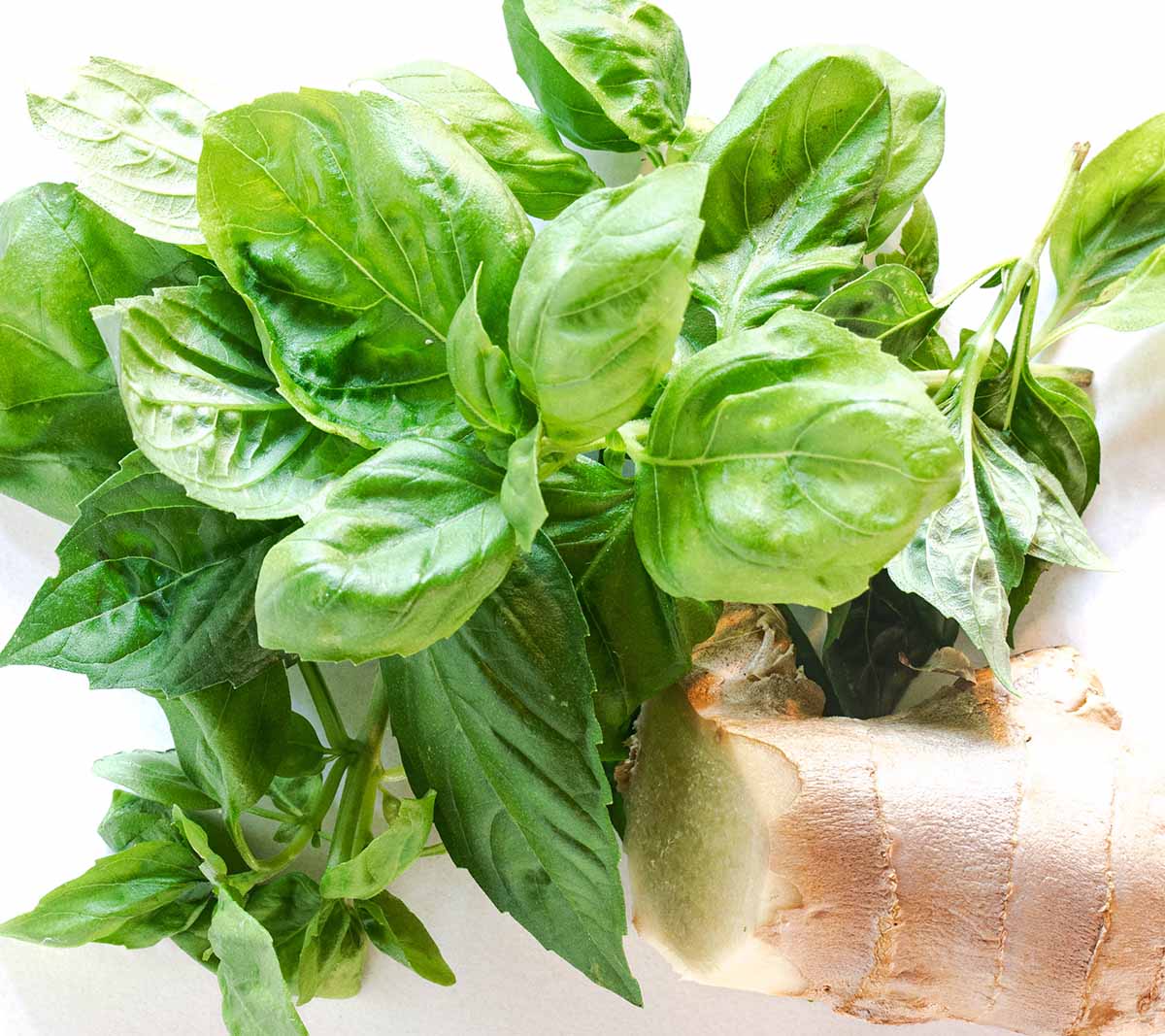
Ginger and basil are natural flavor pairings for these peachy pork chops. They both add a spicy flavor with sweet undertones.
Fresh ginger
Fresh ginger is ideal (and it's also inexpensive). You'll only need a half-inch or inch-long piece for this recipe. The Food Network points out that you don't need to peel ginger, but you can if you want to.
If you want to peel the ginger, use the edge of a spoon to scrape the skin off, instead of a knife. That article from the Food Network claims that using a spoon makes no sense, but I'm here to say it works for me at least!
Toss the diced ginger to the pan once the broth is added so the ginger doesn't burn. But you want it in early enough for the flavors to start mingling with the rest of the sauce.
Fresh basil
Fresh basil flavor is so much stronger when it's fresh, and off the charts when you grow it yourself. Add as much as you see fit - the recipe is very flexible.
Only add the basil once you remove the dish from the hot cooktop. Basil doesn't hold up well to high heat, which is why most recipes stir basil in at the end of cooking.
More recipes & resources
Looking for more skillet pork chop recipes to make this summer? Here's a few that caught my eye:
- Maple & plum pork chops from Sugar Maple Farmhouse
- Pork chops with a cherry pan sauce by Simply Recipes
- Skillet balsamic pork chops with tomatoes by Aberdeen's Kitchen
- Garlic butter creamed corn pork chops by Half Baked Harvest
Wondering what to make with these pork chops? Last time I served them alongside some fresh corn fritters.

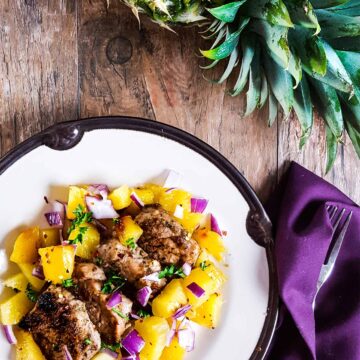
You can also try some of my other peach recipes, like this peach and arugula salad or this crispy quinoa salad with peaches.
If you're wondering what else is currently in season, check out my calendars to see what produce is in season each month (and coming up soon).

manus says
This article is incredibly helpful! The detailed tips on choosing and preparing peaches, along with the cooking techniques, make me feel confident I can make this dish perfectly. Love the insights on sustainable pork too!
Veronica T says
Let me know how it turns out! Enjoy the tail end of peach season.