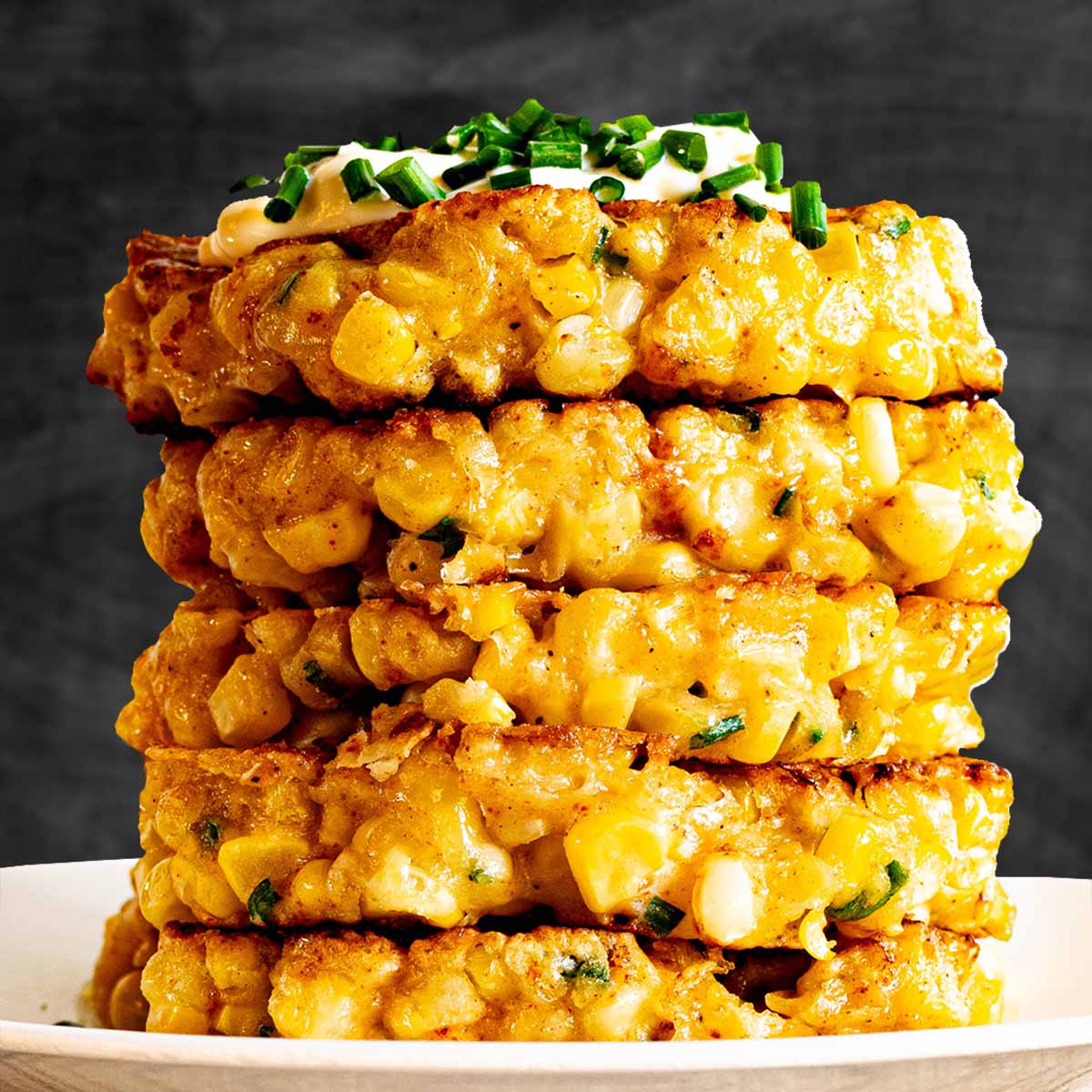
When corn is in season, set aside 20 minutes for some homemade corn fritters. The fresh corn flavor really comes through, with a crispy exterior and cheesy, soft center.
They are quick and easy to make in a single bowl, with 10 minutes (or less) to prepare the ingredients. The corn fritters are pan-fried for 2-3 minutes per side, perfectly cooked through to 160F.

They also freeze and reheat really well. All it takes is 5-10 minutes in a 350F oven (or 10-15 if cooking from frozen). If you want extra tips on pan-frying the corn fritters, or how to easily get a perfect shape, keep reading after the recipe.
Each corn fritter has 5 grams of protein and 150 calories (including the oil from pan-frying), for a fairly healthy side dish.
Jump to:
Recipe
Ingredients
- 4 ears corn about 3 cups of kernels
- 1 cup flour
- 1 cup shredded cheese gouda or cheddar, 2.5 ounces
- ½ cup milk any kind
- 2 large eggs
- ¼ cup chopped chives fresh
- ¾ teaspoon salt
- ½ teaspoon garlic powder
- Oil, for frying
Instructions
Prepare & mix ingredients
- Cut kernels off the corn. Pro tip: lay the corn on it's side to cut off the kernels so they are less likely to bounce and scatter across your countertop. Chop fresh chives. Shred cheese.
- Add eggs to a mixing bowl and likely whisk with a fork. Add all remaining ingredients and combine. Mixture will be thick and sticky.
Pan-fry fritters
- Preheat a skillet with a thin layer of oil covering the bottom, or medium-high heat.
- Add a scant ⅓ cup of corn fritter mixture to the pan for each patty. Press down so it's less than a ½-inch thick. Cook for about 3 minutes - it should release from the bottom of the pan once it's cooked.
- There should still be a good sheen of oil covering the pan (if not, add more). Flip the patties and cook another 3 minutes, until they are golden brown and the internal temperature reaches 160℉.
- Remove patties and set aside. Add more oil to the pan. Repeat with remaining fritter mixture.
- Serve as-is, or with your favorite dipping sauce or aioli.
Notes
Nutrition

Using fresh corn
The corn flavor really comes through in these corn fritters, so they will only be as good as what you buy. Make this recipe when corn is in season during summer.
Corn from the grocery store is hit or miss on flavor. I recently bought a bunch that were on sale for $0.09 each - I was hoping it was an abundance from good weather, but sadly, the flavor was incredibly bland. I mixed it into a strongly-spiced Southwestern dish in order to still make use of it. Though other times I've been lucky!
For these corn fritters, I made the extra trip to the farmers market and it was well worth it. The quality if reliably good. The farmers are usually growing a flavorful variety that's freshly picked for the market.
How to pick out fresh corn
- Husks should be green, fresh, and not dried out
- Cobs in husks maintain their moisture much longer than shucked cobs
- Silks (the tassels at the top) should be fresh-ish looking. In the field, the silks turn brown as the corn is ripe for picking, so brown silk tassels are expected. Avoid ones that have totally dried out silks, as the corn is also likely drying out.
- Corn should feel full and plump below the husk, and heavy (light weight indicates the kernels are drying out)
How to tell is corn is bad:
- Black, mushy silks mean the corn is past its prime (but likely still safe to eat)
- Slimy kernels should not be eaten
- Mold at the tip end means the corn is bad and you should not buy or eat it
- Mold on the corn itself should be discarded
- When purchasing, you might find black spots on the husk - the cobs are normally in perfect condition underneath, but check for signs of mold to be safe. Don't use those husks for tamales and other edible purposes, however.
Storage
Store your fresh corn cobs in the fridge to maintain freshness and sugar levels. Storing them in the fridge slows down the process that turns the sugar to starch (which preserves the sweet flavor and ideal texture).
Modern corn varieties maintain their peak quality for 4-7 days after harvest. Old-timey corn was best the day it was picked because the sugar converted to starch at a breakneck speed. But almost all corn sold (even at farmers markets) is a modern variety that holds sugars longer.
Save the cobs
The cobs are great for making soup broth. They add a subtle sweet-corn flavor while the broth boils. Remove them when you want to finish making your soup. It's especially good in chowders of any kind.


Types of cheese
For a cheesy corn fritter, choose any cheese you like. Most recipes suggest cheddar, and while I'm a huge fan of cheddar, there's a few cheeses I like better for pairing with corn.
I want the corn flavor to come through, so I like to go with subtle-flavored cheeses, like these:
- My favorite: Castello smoked pepper gouda
- A basil-jack or pepper-jack cheese
- Herb-flavored goat cheese
I used 2.5 ounces of shredded gouda for the fritters in this recipe, which was about 1 cup, loosely packed. For a super cheesy corn fritter, you could double the amount of cheese. The batter should hold just fine without extra adjustments.

Corn fritter batter
The batter is easy to make - mix all of the ingredients in a single bowl. It will feel very sticky, almost gluey, but it cooks up to a perfect texture that holds its shape.
If it seems dry and isn't sticking together, add an extra tablespoon of milk.

Pan-frying the corn fritters
The corn fritters fry up quickly and relatively easy in a pan. Use a stainless steel or cast iron pan, not a non-stick (it won't get as good of a sear). The photo above used a thin coat of oil over the entire pan to get perfectly golden-brown fritters.
How much oil?
I think the hardest part of homemade corn fritters is mastering the frying technique. You need a thin layer of oil coating the pan to get a golden-brown sear. If you have too little oil, you'll get dark spots only on the areas with direct contact of the pan.
The exterior won't be evenly crispy either. We're not talking about a lot of oil, just a real thin coat. It should slide around the pan when tilted. If no oil slides around, there isn't enough oil.

Heat levels
I have an induction cooktop and have been using one for over 10 years. I fry my corn fritters over medium-high heat and they turn out perfect. However, if the pan is too hot, the corn kernels can pop and jump around. Be ready with a splash guard (or a lid in a pinch). I haven't ever turned it up too hot, but I've seen questions about it in cooking forums.
If you're worried about the heat level, start out over medium heat.
- For a gas cooktop, you might want to start over medium heat
- If using a cast iron pan, start with medium heat since they don't adjust to temperature decreases quickly
Perfect-shaped fritters
This corn fritter batter is very thick. You can easily plop it into the pan and flatten it down. It won't be perfectly round and that's totally fine. Who cares, right?
Well, I did find that with a trick that not only makes them perfectly round, but also more sturdy. Otherwise, they can break apart along weak points. Again, you might not care.

But if you do care or want to experiment, try using English Muffin rings. This lets you press the batter into a perfect round shape, and it also compacts it for a sturdier fritter. It takes almost no extra time and you can throw the ring in the dishwasher.
- Set a ring on the pan.
- Scoop the batter into the ring and press down to even it out. Don't smash them, a light press is enough.
- Remove the ring with tongs (it gets hot FAST, so don't pick it up with your fingers)
- Repeat with remaining corn fritters
You don't need to let the rings stay on the fritters while they cook - you just need them for shaping and compacting.
I bought these "crumpet rings" years ago and like them. I use them all of the time for patties, believe it or not, and to swirl around fresh, hot cookies for a perfect shape.
The set I bought is on the pricier end and I can't say if they are better than cheaper options. Here's some less expensive alternatives on Amazon, if you are interested.
Both of those links are affiliate links, so I get a small commission if you buy something from Amazon. I try to be up front with what I've used, like, and what I might buy in the future. I don't want to ever mislead you because I don't like being disappointed at bad product recommendations either.
Freezing
Make a double or triple batch while fresh corn is in season, then freeze the extras. Who doesn't want some homemade corn fritters in the middle of winter?
- Cook as instructed
- Let fully cool
- Package for the freezer
For bonus points, you can vacuum seal them. But first you'll need to freeze them in a single layer until hard, or the vacuum sealers with compact them. Once hard, continue with vacuum sealing the fritters.
Reheating
These corn fritters will last in the fridge for several days. They reheat really well in a number of ways:
- Toaster oven for 5 minutes (7-10 if frozen)
- Oven at 350F for 7-10 minutes (10-15 if frozen)
- Under a broiler for 5 minutes (not recommended for frozen)
- Microwave in 30-second increments (they won't be crispy)

Dipping sauces & other fritter flavors
Looking to make even more corn fritters? Here's some recipes that caught my eye:
- Most fun for a party: Corn fritter caprese stacks (so fun for summer!!) by Simply Delicious Food
- Most unique: Corn-mint fritters with lavender peaches by Vegetarian Ventures
- Sourdough discard corn fritters from Food52
- Corn & peach fritters with Jalapeno-avocado crema by The Original Dish
- Zucchini & corn fritters with chipotle lime crema by Vanilla and Bean
- Mexican street corn fritters using cotija cheese, by Whisked Away Kitchen
- A smoked paprika aioli to go with your fritters, by Fountain Avenue Kitchen
- Thai corn fritters that use coconut milk and kaffir lime from Simply Suwanee
More recipes & resources
Looking for more summer recipes? I've got you covered.

- Chicken club sandwich with bacon & swiss cheese
- Crispy quinoa and peach salad
- Peach arugula salad with raspberry dressing
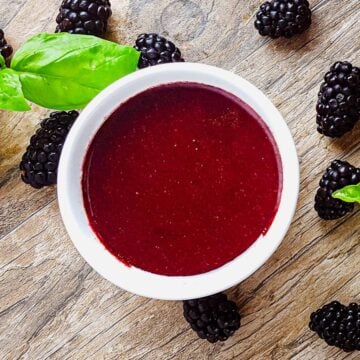
- Blackberry vinaigrette with basil
If you're wondering what else is currently in season, check out my calendars to see what produce is in season each month (and coming up soon).

Leave a Reply