This cider braised pork shoulder recipe covers all of the special tricks to make sure you have juicy, tender meat.
- Overnight salt rub: helps retain moisture during cooking
- Dutch oven lid: leave cracked open to make sure the cider braising liquid doesn't boil (which will overcook the pork shoulder)
- Critical cooking temperatures: 185°F for slicing or 205°F for shredding
Most recipes want you to braise in a 275°F oven for about 3 hours. But I tested that three times and each time the meat was still tough - it just cooked too fast. So I lowered the temperature to 250°F and it turned out perfectly (5-6 hours of cooking time).
The longer cooking time also infused more flavor into the pork shoulder, whereas the shorter time in a hotter oven barely transferred any apple cider flavor to the meat.
It also helps if you are able to buy pork shoulder from a good source. I partnered with a sustainable source, Seven Sons Farms, to offer you a free pork shoulder during the month of November. (More on that below the recipe, no catches, promise).
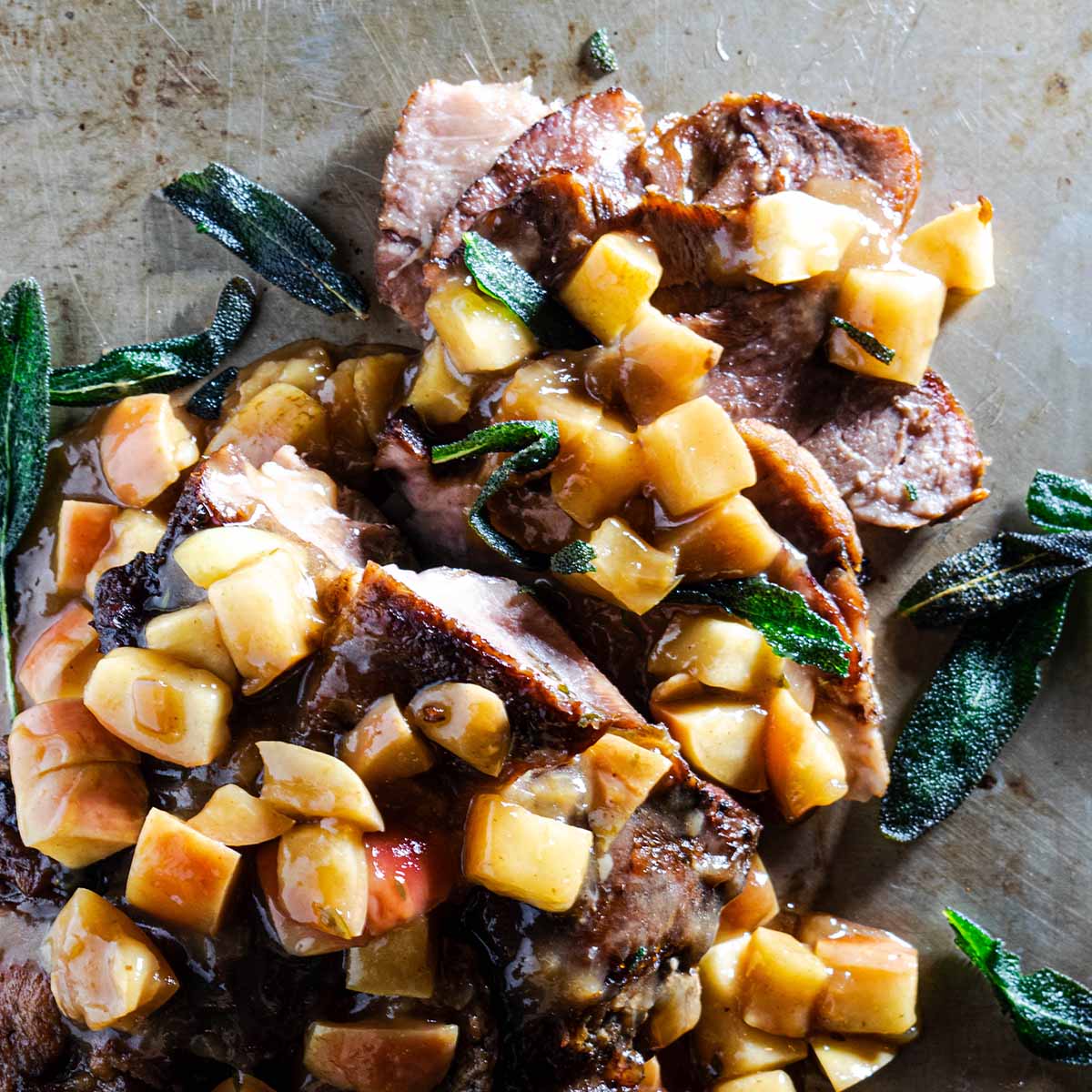
Use the pan drippings to make a gravy with diced apples for a very cider-flavored, braised pork shoulder. This recipe is perfect for fall when apple season is at it's peak.
Jump to:
Recipe
Ingredients
Braised pork shoulder
- 3 pound pork shoulder
- 1 tablespoon kosher salt
- 2 tablespoon brown sugar
- 2 tablespoon olive oil
- ½ yellow onion, sliced
- 3 garlic cloves, chopped
- 2 cups apple cider
- 2 teaspoon apple cider vinegar
- 3 bay leaves
- fresh thyme 5-10 sprigs
- fresh sage 10-12 leaves, on stems
- ½ teaspoon black pepper plus pinch of cayenne, optional
Apple cider gravy
- 1 cup pan drippings fat strained off
- 3 apples
- 1 tablespoon apple cider
- 1 teaspoon cornstarch or more as needed
Instructions
OVERNIGHT
- Salt the entire outside of the pork shoulder the night before, wrap it in plastic wrap and refrigerate it (can do this up to 2-3 days before, if desired).
SEAR & COOK AROMATICS
- Preheat oven to 250℉ (for slow cooking to ensure super tender texture in 4-6 hours) or 275℉ (if you don't have time to wait, but fat and collagen might not fully break down).
- Sprinkle the outside of the pork shoulder with a little more salt and then rub with brown sugar. (The sugar adds flavor and helps sear the outside). Add some oil toe the pan and sear the outside of the pork shoulder - it should only take 3-5 minutes per side. Remove from dutch oven and set aside.
- Add onions and garlic to the pan and cook until the onions start to soften. Pour in cider & vinegar and deglaze the pan (scrape it with a wooden spatula to remove stuck bits). Toss in the herbs, no need to remove stems, and bring liquid to a low simmer.
- Add pork shoulder to the pot of braising liquid.
BRAISE the PORK SHOULDER
- Transfer the dutch oven to the oven and cover with the lid, leaving the lid slightly ajar to let steam escape. This keeps the max temp inside the dutch oven around 185℉, preventing the braising liquid from boiling. Boiling is bad - it cooks the meat too hot and too fast, making it tough.
- It should take roughly 3-4 hours for sliced meat and 5-6 hours for shredded meat. You want the pork to get to 160℉ and then stay between 160℉ and 180℉ for at least 60 minutes (as a rough guess - the longer it's in this range, the more the collagen breaks down for tender meat).If it is cooking too fast, lower the oven temp by 25℉ and it will slow down considerably.
- Cook until the pork shoulder until it feels really tender when poked with a fork. As a guideline, 185℉ is a good temperature if you want to slice the meat, and 205℉ is better if you want to shred the meat.Don't have a leave-in thermometer? No problem, just check the temp periodically, losing heat as you open the oven will only help the meat (as it slows down the cooking).
- Remove pot from oven, let roast cool in the braising liquid for 30 minutes (if you have time, otherwise, take it out and set aside).
CIDER GRAVY
- Strain the pan drippings to remove the herbs. Add the onions back into the drippings (if desired). Separate the fat.
- Heat 1 tablespoon of the fat in the dutch oven. Add chopped apples and cook until they start to soften. Add in the pan drippings. Heat until warm. Taste the gravy, if it's too salty from the drippings, add water or more apple cider - then thicken it in the next step.
- To thicken the gravy, mix corn starch with a cool liquid (apple cider or water) until blended and smooth. Then slowly stream the cornstarch-liquid into the gravy, stirring constantly. This is pretty foolproof and you shouldn't have any risk of clumps - the corn starch will clump if added directly to the hot pan without pre-mixing.
- If the gravy isn't thick enough, add more cornstarch (AFTER pre-mixing it with cool liquid again). If it's too thick, add more pan drippings, apple cider, or broth.
SERVE & SAVING LEFTOVERS
- Serve the braised pork shoulder with gravy on the side. Top with fried sage leaves if you're feeling fancy.
- Refrigerate leftovers. To reheat, you can add sliced (or shredded) meat with the gravy and gently warm in a pan on the stovetop.
Notes
Nutrition
Best pork cuts for braising
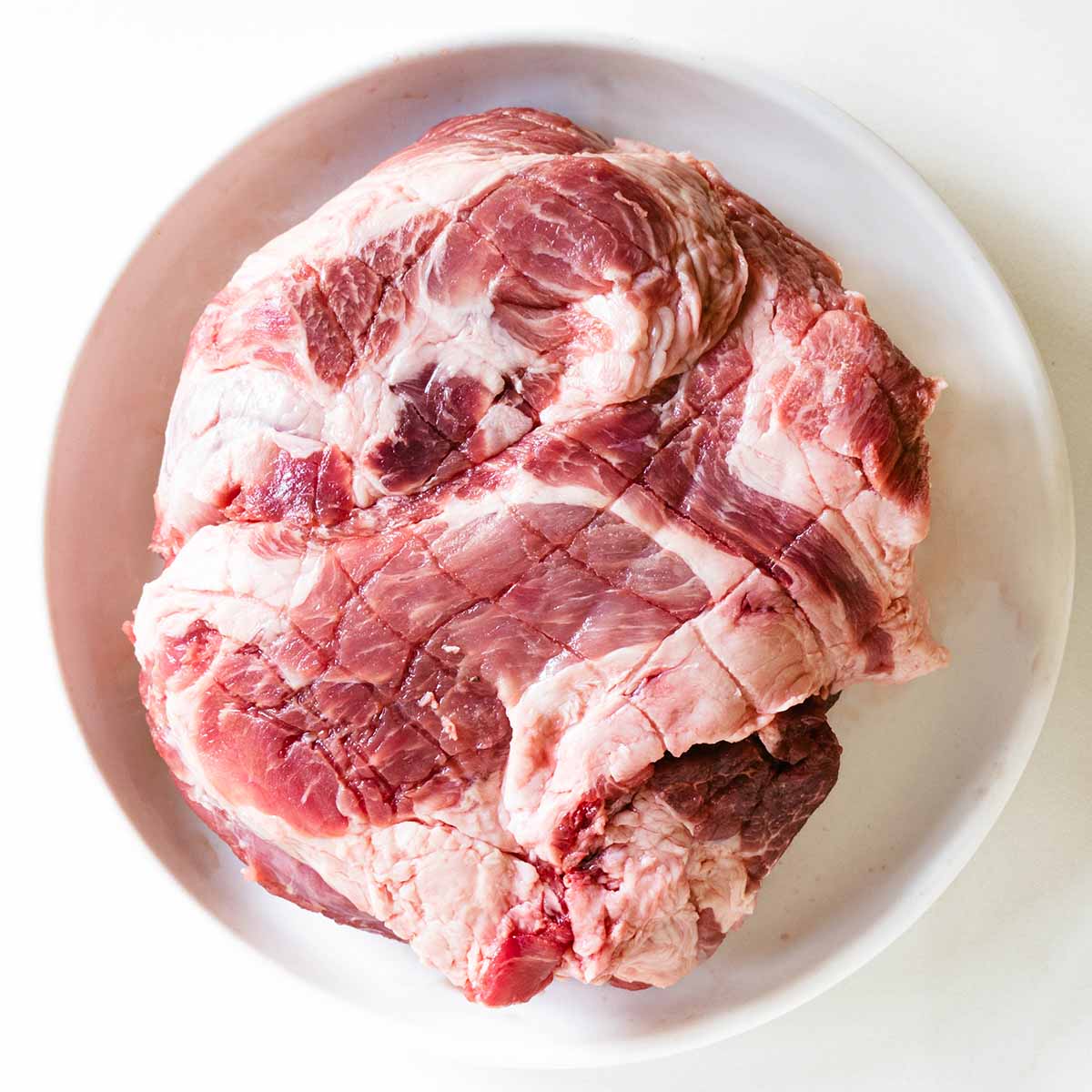
When it comes to braising pork, shoulders are really the best option. Some places sell Boston Butt (which is the top of the shoulder, not actually the butt), or Picnic Shoulder (lower on the leg).
For braising, I use boneless pork shoulders from a sustainable farm that I started buying my meat from years ago. They treat the animals, land, and community with respect.
It's not just family-owned, but family run too. All seven of the sons work on the farm and I'm much happier spending money to support people like this instead of mass-farming corporations.
The meat is pricier but it also tastes better and has healthier fat profiles than conventionally raised meats.
A number of research studies have looked at different things that impact the quality of pork. One found that "pigs reared in outdoor conditions had enhanced juiciness in their meat," while another found that pigs "grown on grazing farms had a better meat quality and higher nutritional value."
To get more specific, pasture raised pork has more omega-3s (a healthy fat), more vitamins and minerals (like vitamin E) than conventionally raised pork.
If you're interested, I'm a long-time customer of Seven Sons Farms who goes a step further and practices regenerative farming. And I take a deeper dive into the benefits and costs of sustainable meat.
Buying pork shoulder
I believe farms like this make a big impact and I'd like for more people to be able to try sustainable meat. So I partnered with Seven Sons Farms and they provided a very generous offer for my readers, like you!
Get $25 off any order with no tricks, just good old-fashioned family-run farm. And they ship nationwide. (Try their bacon-bison burgers and you won't regret it!)
You need to use this link to create an account to get the $25 offer.

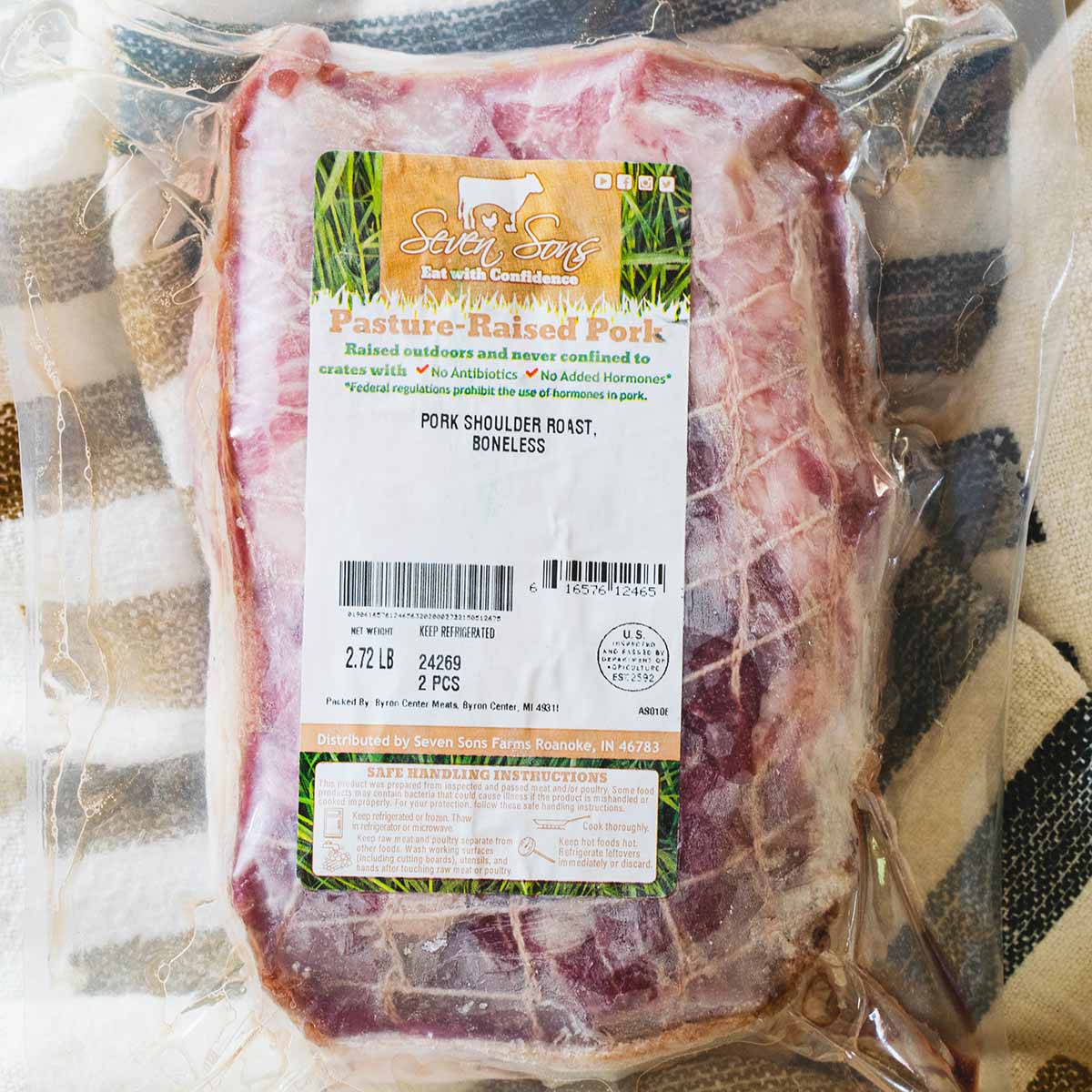
I want to assure you I put my money where my mouth is and have personally spent at least $200-$300 every couple of months on their meat for the past several years. I used their boneless pork shoulder for this apple cider braised pork recipe - it's a picnic cut and it worked great!
Some of my other favorite products from Seven Sons are:
- Bacon infused beef (or bison!) burgers
- Heritage ham (it's super flavorful and perfect for Christmas!)
- Spicy sausage (it smells divine while cooking and tastes even better - I can't go back to regular grocery brands now)
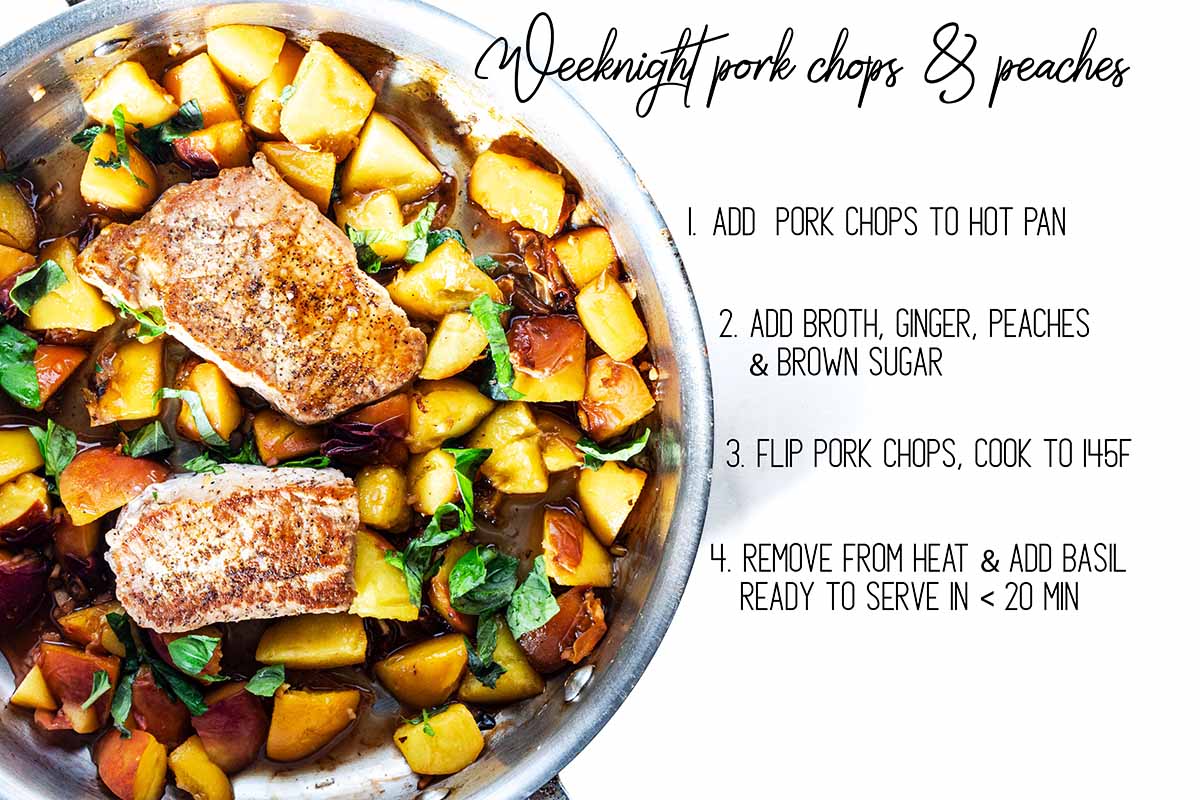
- Boneless pork chops (used in this Jagerschnitzel recipe and this pork chops & peaches recipe)
- Whole chickens
- Bison stew meat (perfect for chili!)

Keeping it tender
Pork shoulders are tough muscles that need a long cooking time to turn tender. Even with slow roasting or braising, I've ended up with tough pork roasts in the past. So I've done a lot of research to figure out how to make sure they are tender, every time!
The key aspects to cooking a tender pork roast are as follows:
- Pork cut & fat cap
- Salt rub
- Low oven temperature & cracked lid
- Critical meat temperatures
Pork cut & fat cap
Pork from older animals that have worked harder (like grazing) will have tougher muscle fibers, which tenderize when cooked and don't dry out as much thanks to their better collagen and fat structures.
Younger, modern farmed pork can be more easily overcooked, as discussed in the science-based book, "On Food and Cooking" by Harold McGee. Overcooking is something you rarely have to worry about with pasture-raised pork (like the ones from Seven Sons Farms).
Some pork shoulder cuts, like Boston Butt, have a fat cap on one side. Cooking with the fat cap face up does two things. First, the fat reduces water evaporation from the meat, insulating it from direct heat. Second, the fat melts over the top of the meat as it cooks, making it taste more succulent and juicy.

Overnight salt rub
The vast majority of braised pork recipes instruct you to salt the meat right before cooking. But I've always found those to be somewhat dry and under-salted when finished.
Only a handful suggest salting the meat overnight, but it turns out that overnight salting is actually a key element to ensuring your braised pork shoulder is tender. Overtime, salt will travel through the meat, distributing throughout the entire pork shoulder.
Here's why that helps make a tender braised pork:
- Salt dissolves parts of the protein structure that cause toughness
- Salt helps hold water within the meat, making it juicier
You don't get those benefits if you only salt the pork right before you braise it. So it's a worthwhile step!

Low oven temperature & cracked lid
Braised pork shoulders need to be cooked low and slow to give the fat and collagen enough time to break down. When cooked too fast, it doesn't have time to break down and the pork will be really tough.
The idea behind braising is to keep the liquid from boiling in your dutch oven. An oven temperature of 250°F or lower works well if you keep the dutch oven lid slightly ajar.
A fully covered pot will boil in a 250°F oven, causing your braising liquid to be too hot and cooking the pork shoulder too fast. But when the lid is cracked open, it allows some of the water to evaporate.
When the lid is cracked slightly open, the braising liquid maxes out around 185°F, according to The Food Lab by J. Kenji Lopez-Alt. At that temperature, the collagen has plenty of time to break down, without losing more moisture than necessary.
If the internal meat temperature is rising too fast, lower the oven temperature by 25°F. You want the meat to cook very slowly or it won't be tender. You can see one of my timelines in the "Cooking Time" section below.
Critical meat temperatures
There are two critical temperatures to monitor when braising your pork shoulder. The first is the temperature to get collagen to break down, the second is your final temperature.
- 160°F: collagen dissolves - a key to tender braised pork
- 185°F: final temp for slicing pork or 205°F for shredding
Collagen breakdown: 160°F
Collagen starts to weaken at 130°F, but begins to actual dissolve at 160°F. So 160°F is your first target. You then want the meat to continue to cook between 160°F and 180°F for as long as possible - I'd say at least an hour.
I've tried to find actual experiments on how long you need to keep a pork shoulder at (or above) 160°F for the collagen to fully dissolve, but couldn't find any real data. A few sources seem to indicate an hour is enough to do the trick (with one source suggesting only 30 minutes is required).
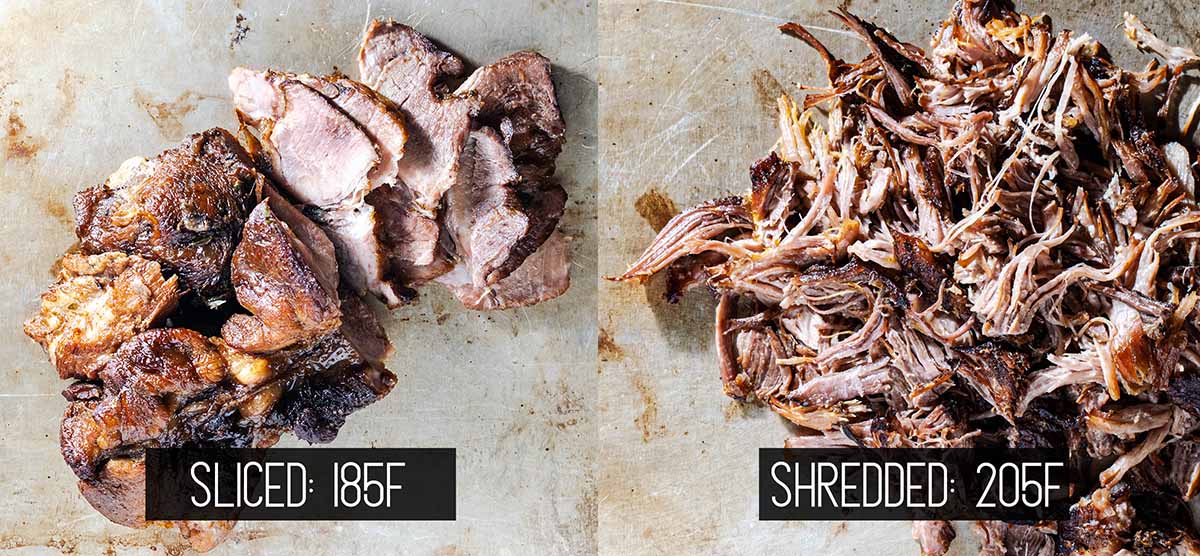
Final temperature: 185°F vs 205°F
One of the things I like about the Seven Sons boneless pork shoulders that I buy, is that I can braise them for slicing or for shredding without having to work around a bone.
- For slicing: 185-190°F
- For shredding: 200-210°F
To ensure the pork can be sliced, try taking the meat out when it's between 185-190°F. That's assuming it's cooked long enough and is tender. If it cooked too fast, the collagen might not have broken down and the meat might be tough.
If that's the case, you'll want to let it cook longer, even though it might want to shred more easily than slice. Also, cold pork is easier to slice than when it's warm, especially if you want sandwich-thin slices.
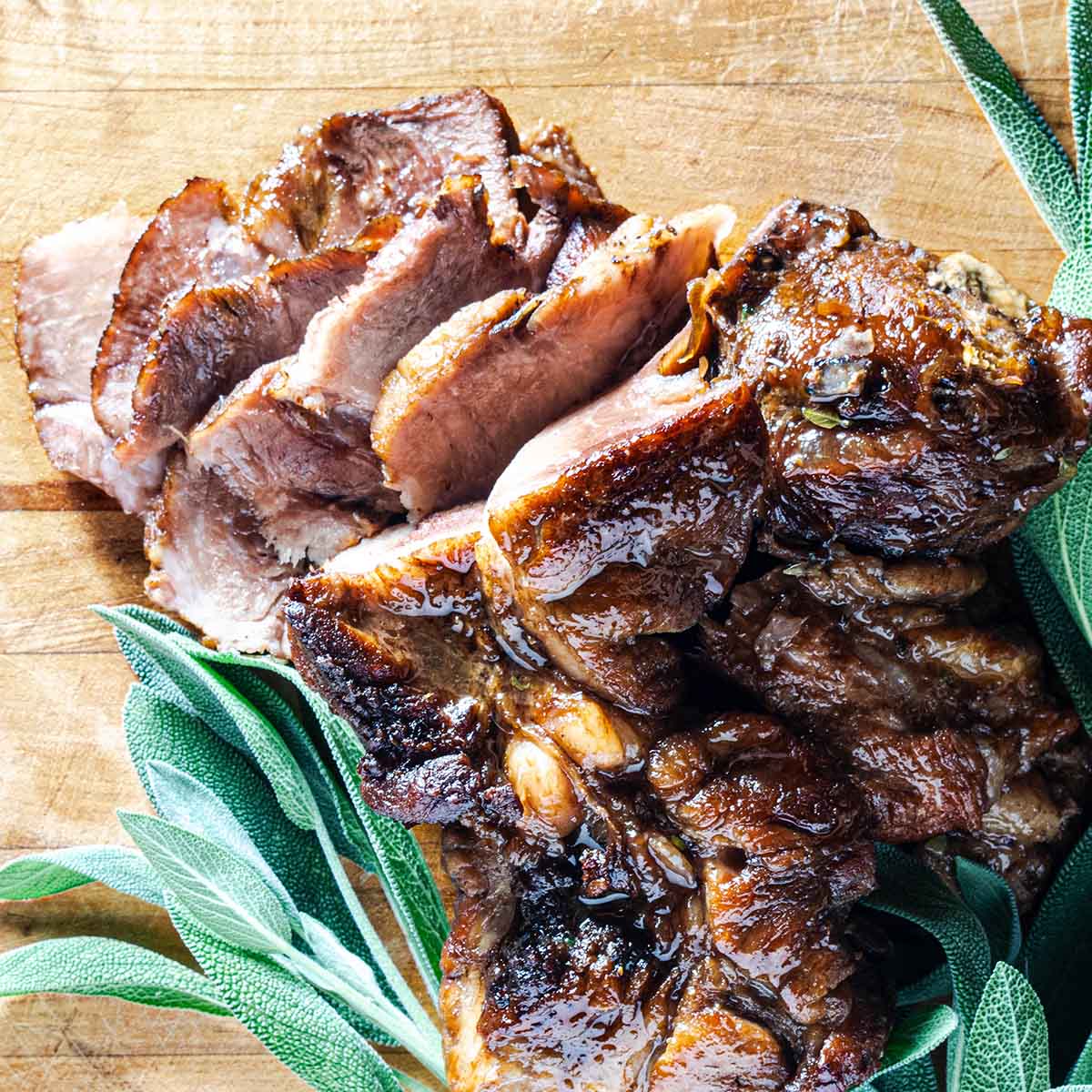
That said, I cooked my apple cider braised pork to 185°F and sliced it while still hot and had no trouble at all.
For shredded pork, you want to keep cooking it, which breaks the muscle fibers down even more. At 200°F, the meat can be easily shredded. It's hard to overcook a good pork shoulder, so you can even go up to 210°F and you'll be fine.
For even more science on cooking pork shoulder
For a more in-depth discussion, read "Why you should overcook tough cuts of meat" by Salt Sear Flavor and Science of Slow Cooking.
If you're a cookbook collector, grab a copy of Harold McGee's On Food & Cooking and flip to page 150. Also check out J. Kenji Lopez-Alt's book, The Food Lab and turn to page 239 about making pot roasts.
Cooking time
I wish I could give you a definitely answer on how long it will take for your braised pork shoulder to finish cooking. However a lot of things impact the cooking time.
- Size of the pork shoulder
- Amount of fat (fat is less heat conductive, so it cooks slower)
- True oven temperature
- How often the door is opened and how much heat escapes
If you follow my recipe for apple cider braised pork shoulder, expect to cook it for about 3-4 hours for slicing, or 5-6 for shredding.
If at any point you think the pork shoulder is cooking too fast, lower the oven temp by 25°F. The internal meat temperature will raise much slower, even with that small of a change. Here's a timeline from one of my tests for shreddable meat:
- Start at 5:00pm
- At 6:15 the pork reached 161°F
- At 6:45 it reached 170°F, so I lowered the oven down to 235°F - if this was for slicing, I would have lowered the oven temp sooner to let it cook longer before reaching 185°F.
- At 7:45 it reached 185°F. Happy the cooking time slowed enough, I raised the oven back up to 250°F.
- At 9:00 it reached 194°F - it was pretty tender, but you could tell it needed more time.
- At 10:30 it reached 204°F - it was very tender and I could have taken it out but wanted to keep going to see how long it took for the temperature to keep rising
- At 11:00 it reached 205°F. I took it out and it was super tender and flavorful. All of the fat was dissolved.

Why braising?
Braising is one of the most popular methods of cooking pork shoulder and other tough cuts of meat "low and slow." I find it's easier to get a tender, juicy result with braising than with dry roasting. Plus, you end up with tasty juices to turn into a gravy.
Some of the flavors, like the herbs and apple cider, transfer into the meat. It's stronger in the areas that cooked in the braising liquid, which is why I suggest flipping it. That said, the flavor is subtle, but definitely noticeable.
The big pop of apple cider flavor comes from turning the braising liquid into a sauce.
There are 3 steps for braising pork shoulder:
- Sear the meat to develop a flavorful crust (which also affects the sauce)
- Cook aromatics (like onions) and liquid to the dutch oven and heat to a simmer
- Transfer the pot to the oven (with lid ajar) and cook until tender
The reason pork shoulder is braised in the oven, and not the cooktop, is that an oven provides a constant temperature, turning heating elements on and off to regular the temperature. Whereas a cooktop provides a constant heat source - so the pot will get hotter and hotter even on the same setting, often overcooking the meat.
Braising also works in a slow cooker, which is very popular with plenty of recipes.
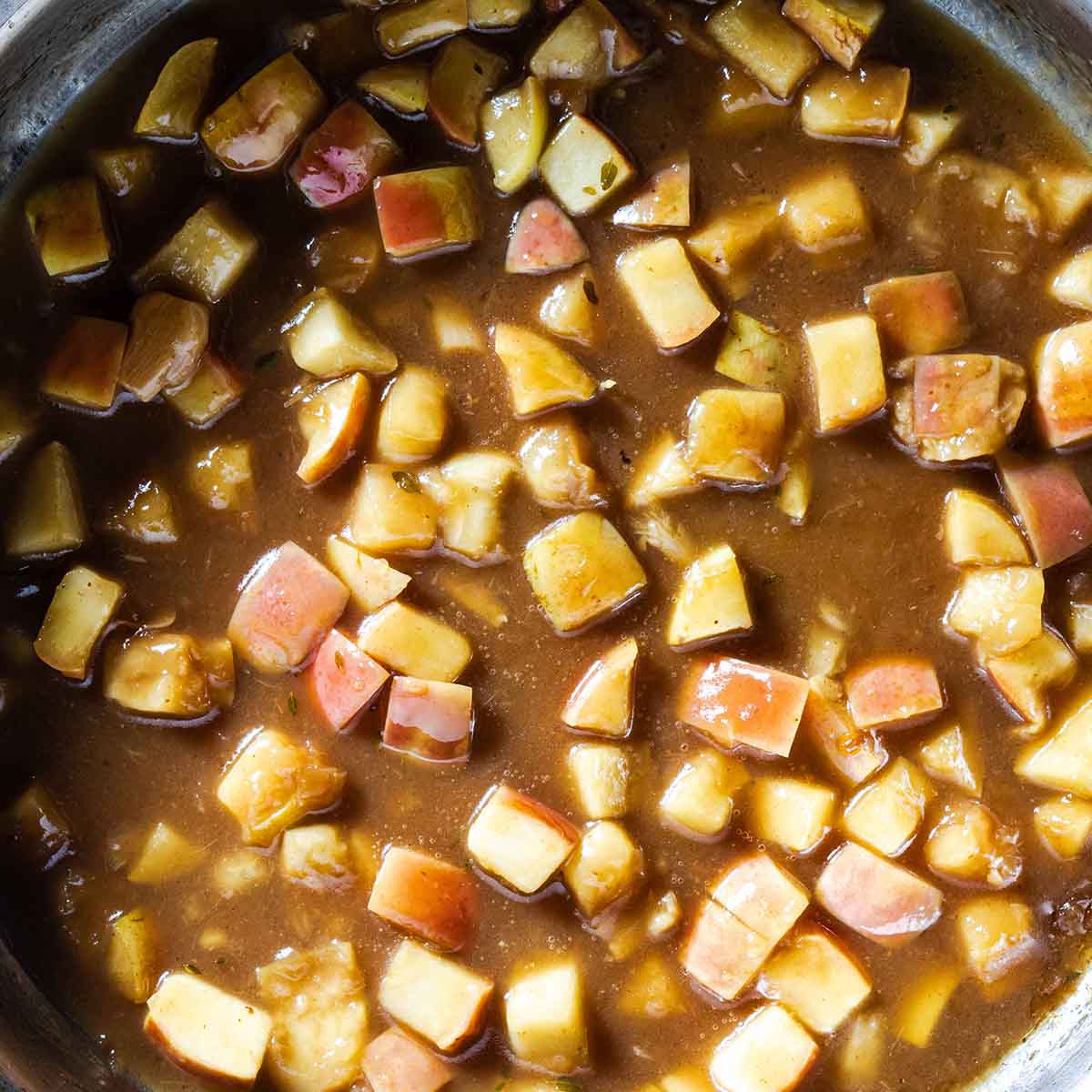
Apple cider gravy
Apple cider braised pork needs a gravy to really bring the flavor home. You won't get apple cider tasting meat without it. But don't worry, this gravy is very easy to make, even for beginners.
Apples & apple cider
First, let's talk about the apples. I don't add them while braising the pork shoulder because they fall apart and don't add much extra flavor (the apple cider does most of the work).
Instead, I prefer to add diced apples that hold their shape in the gravy. They don't need much time to soften, as long as you pick out the right apples. Some apples can still be pretty crunchy after light cooking, so you'd have to cook them longer.
- Soft after 5+ minutes: Golden delicious, Golden supreme, Fuji, Cortland, McIntosh
- Need to cook longer: Honeycrisp, Pink Lady, Braeburn, and sometimes Granny Smith

As for apple cider, the stronger the flavor, the better the gravy. During apple season, I buy mine from the farmers market. Unfiltered cider has some apple pulp that actually adds extra flavor. It blends right into the gravy without adding a pulpy texture.
Filtered apple cider will be flavorful, but not as strong as unfiltered. And finally, while you can use apple juice, the flavor will be much more subtle.
Braising liquid
After you remove the pork shoulder from the braising liquid, carefully pour the liquid through a strainer and into a heat-proof glass measuring cup, bowl, whatever you have around.
Remove the sprigs of herbs, but keep the onions. Add those back in to the sauce when you cook the apples.
You'll need to separate the fat before you use it though. While some fat makes a luscious textured gravy, too much fat leaves a heavy coating on your tongue and teeth.
Fat floats to the top of your container and there are a few ways to separate it:
- Easiest: use a fat separator (it's like a glass measuring cup with a spout coming from the bottom to pour the liquid off while the fat floats on the top). Fat separators cost between $15-30.
- Fuss free: chill in the fridge - the fat will harden on the top and you can scrape it off
- Immediate but fussy: put ice in a metal ladle, and stir the bottom of the ladle in the juice. The fat will cling to the cold metal and you can wipe it off.
Cook the gravy with apples
Once you have the fat separated out, grab a tablespoon of the fat and add it back to your dutch oven, on the stovetop. Add the diced apples and cook for 5 minutes, until they start to soften.
Add in the separated braising liquid and onions (if desired). Return to a simmer.
Thicken the gravy
As an optional step, you can thicken the gravy with some corn starch. The only trick here to make this foolproof is to first mix the cornstarch in a separate bowl with some cold liquid.
Once dissolved, you can stir the cornstarch mixture into the gravy pan, slowly. Add a little at a time until it's as thick as you want it. If it gets too thick, add more braising liquid (or apple cider or broth).
More recipes
Try out some of these other pork recipes, or some other sides to make for your Friendsgiving dinner.



Leave a Reply