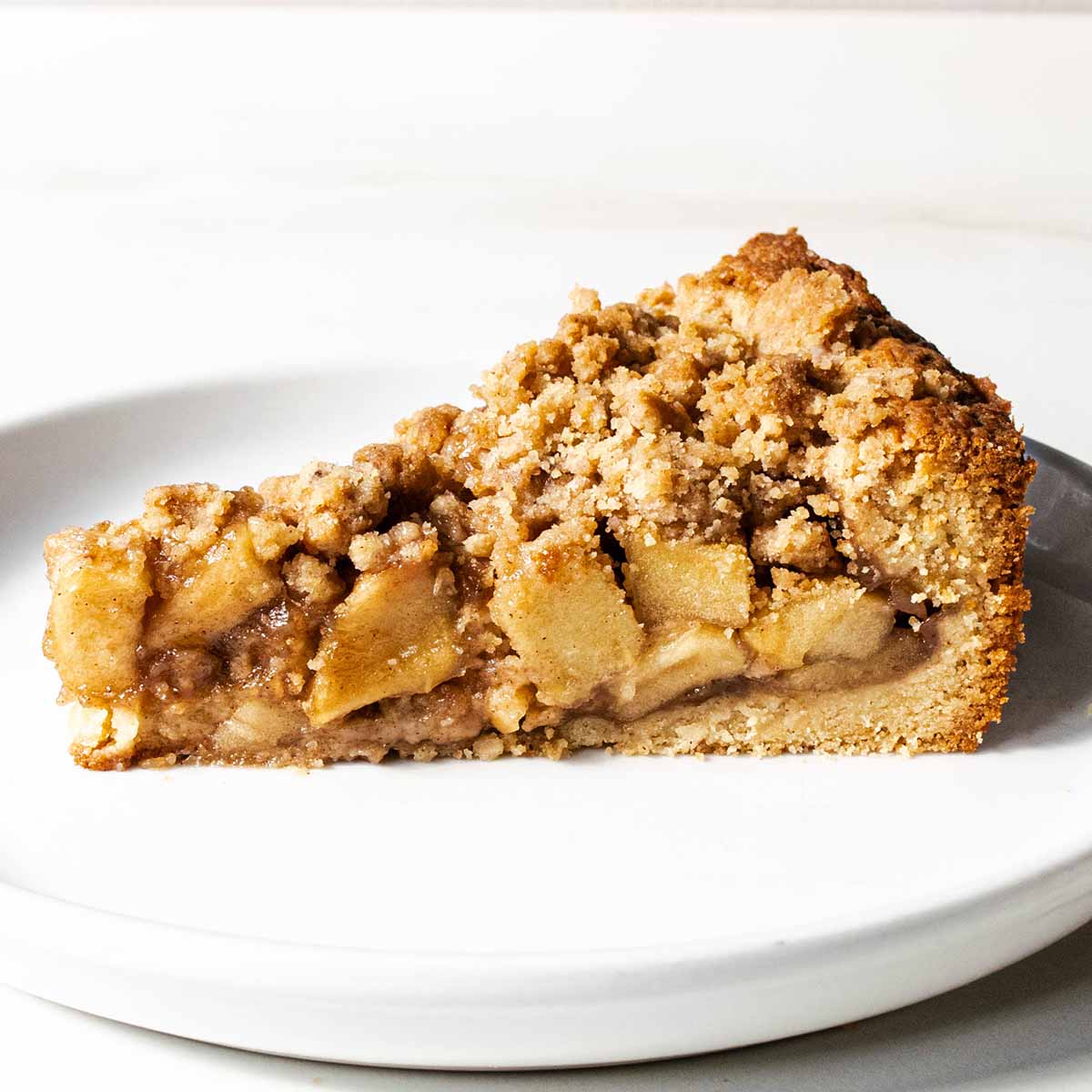
This Dutch apple pie has a thick, sturdy crust (that's never soggy) and a deep dish pie filling that's cooked on the stovetop ahead of time to ensure the perfect texture before baking.
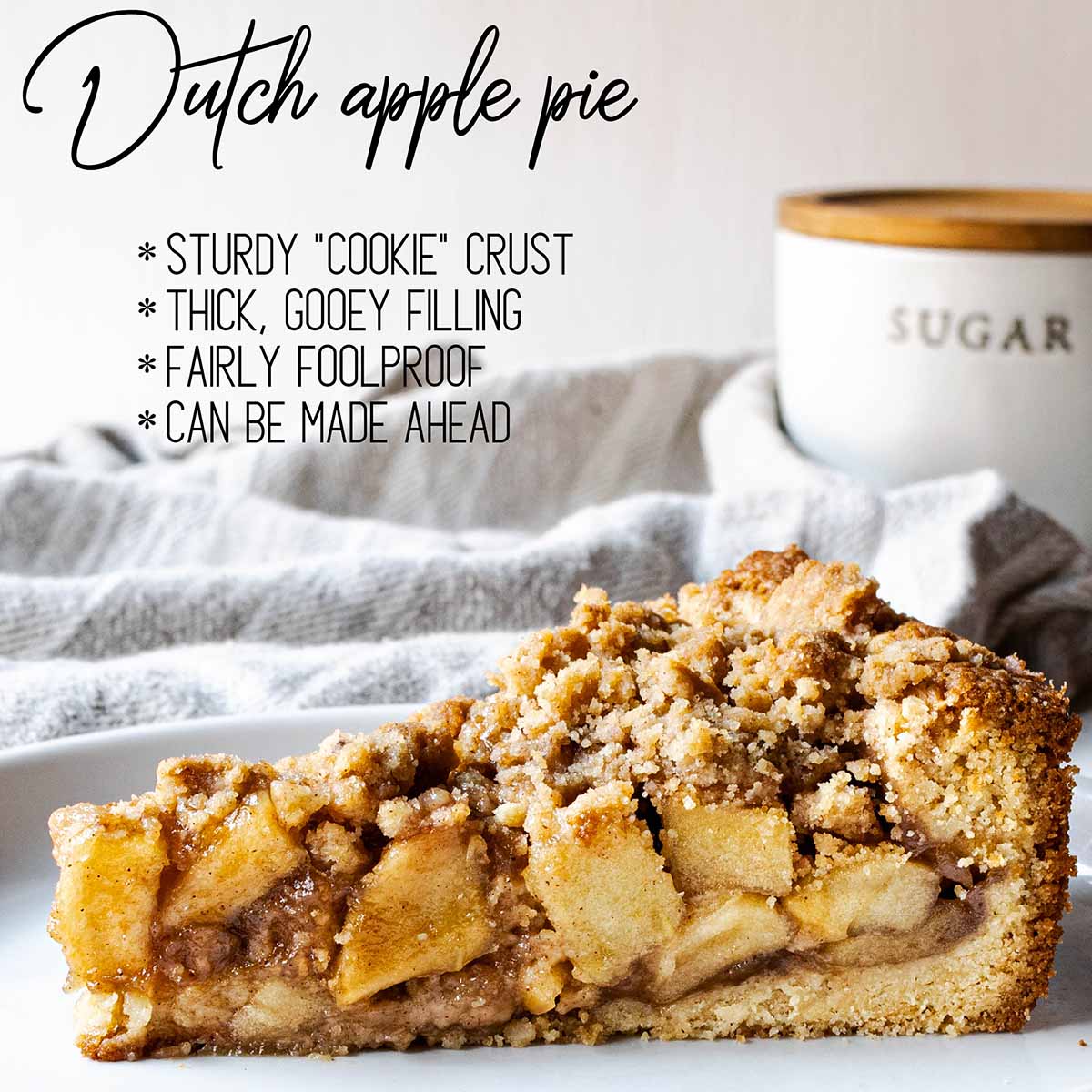
This is easily the best apple pie I've ever made. Here's why:
- Better crust: the sturdy crust has the texture of a soft sugar cookie (way more fun than pie dough)
- Deep dish: a high ratio of pie filling
- Foolproof: cooking the filling on the stovetop gets the consistency right
- Crumb topping: adds more flavor and texture than a pie crust
- Convenience: whole pie can be made ahead, or each part can be made separately then assembled and baked the day of (great option for Thanksgiving).
I've made this recipe half a dozen times and it's never failed me. The crust, apple pie filling, and crumble topping are all pretty foolproof and forgiving. But in case you're still a little worried, I'll go over each step (after the recipe) so you can make the best Dutch apple pie ever!
Jump to:
- Recipe
- Best types of apples for pie
- The secret to perfect pie filling every time
- The never-soggy French cookie crust
- Why the pie pan material matters
- The crumble topping is really easy
- Browned crust edges determine when it's done
- Holidays, special occasions, & make ahead
- More Dutch apple pie recipes & resources
Recipe
Equipment
- 1 9-inch springform pan or deep pie dish metal pans will cook this better (you can also use a square 8x8 brownie pan)
- stand mixer
- Parchment paper
- tin foil if necessary
Ingredients
Apple pie filling
- 3 pounds apples About 8-12 apples. see note for best types of apples
- ½ cup sugar 3.5 ounces
- ½ cup brown sugar 3.75 ounces
- ¼ cup water or apple cider (sweeter)
- 2 tablespoon butter
- 2 tablespoon cornstarch
- 1 teaspoon cinnamon
- ½ teaspoon salt
- ⅛ teaspoon nutmeg
- ⅛ teaspoon cardamom optional
Crust
- 12 tablespoon butter room temp (about 65℉)
- ¾ cup sugar 5.25 ounces
- ¼ cup brown sugar 1.75 ounces
- 2 large eggs
- 1.5 teaspoon vanilla extract
- 2 cups all-purpose flour 8.75 ounces
- 2 tablespoon cornstarch
- 1 teaspoon salt
Crumble topping
- ½ cup sugar
- ⅓ cup butter, melted 5.3 Tbsp
- ⅛ teaspoon salt
- 1 teaspoon cinnamon
- 1 cup all-purpose flour 4.5 ounces
Instructions
Make the apple pie filling
- Peel the apples and chop into 1-inch pieces. You should have about 2.5 pounds of chopped apples for the pie filling (after skins and cores are discarded). This takes about 10 minutes.
- Line a rimmed baking sheet with parchment paper (for easy cleanup when you cool the pie filling)
- In a Dutch oven (or large, non-reactive pot), add all of the apple pie filling ingredients. Just dump them all in and stir (including the cornstarch). Cook over medium heat, stirring occasionally.
- Cook until apples are softened, and mixture is thick (not runny). About 15-20 minutes (depending on your stovetop). My pie filling started bubbling after 7 minutes, started to soften around 10 minutes, and were soft and done after 15 minutes. Adjustments: If mixture is too thick before apples soften, add 1-2 more tablespoons of water at a time. If it's not thick enough, mix 1 tablespoon of cornstarch with cold water and then add it to the pie filling (it needs cold water or it will clump).
- Cool the apple pie filling on parchment-lined tray, or a large bowl.
Make the dough for the crust
- Preheat oven to 350℉ and prepare your pie pan: spray with cooking spray with flour, or spray with oil and dust with flour. Then line the bottom with parchment paper.
- In a stand mixer with a paddle attachment at medium speed: beat the butter, sugar, and brown sugar until light and fluffy - about 3 minutes. Scrape down the sides as necessary.
- Add each egg in, one at a time, and beat until combined. Add in vanilla.
- In a medium bowl, whisk together the dry ingredients (to make sure they are evenly dispersed). Then add to stand mixer and mix on low speed until just combined. It will resemble the texture of drop cookie dough. (Set bowl aside for next step).
Make the crumble topping
- Mix together the crumble topping ingredients in the medium bowl used for the dry ingredients for the crust (save on cleanup).
Assemble the pie
- Spread the dough on the bottom of the pie pan and 1.5-1.75 inches up the sides. It's tacky and takes longer to spread out than you might think (5-10 minutes).
- Pour in the cooled apple pie filling. Then add the crumble topping. This pie doesn't rise or bubble over the top, so as long as you didn't go over the top, you will be good. Out of caution, you can put a baking tray underneath to catch drips, but mine has never bubbled over.
Cook at 350℉ for 1 hour
- Cook the dutch apple pie for about 1 hour. After 40-45 minutes, check on the topping. If it's getting too brown, you can cover it with foil. Cooking time might take as long as 1 hours and 20 minutes.
- Let cool for at least 10 minutes before serving. Once room temperature, the filling doesn't ooze out at all. A springform pan makes the best presentation and is the easiest to cut & serve (no sides to navigate around).
Notes
Nutrition
Best types of apples for pie
I always combine several varieties of apples when I make a Dutch apple pie (or any apple dessert). Each variety has its own flavor characteristics and texture, so you get a more interesting pie when you mix them together.
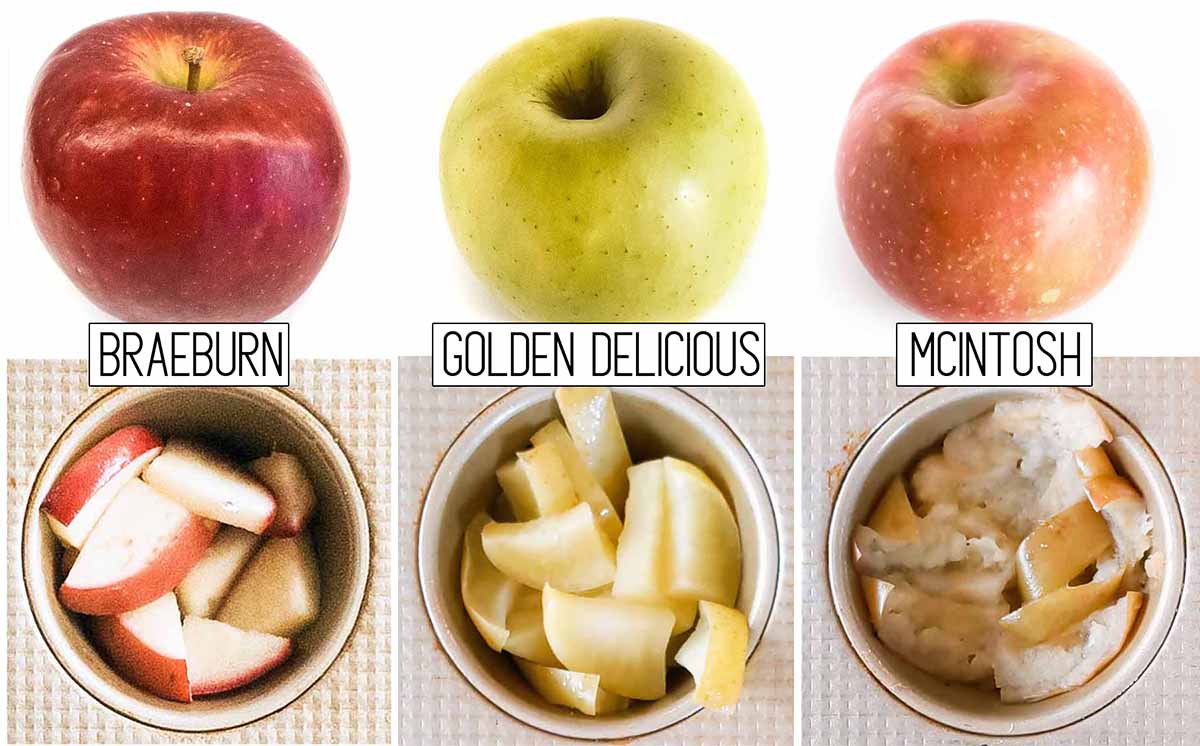
My favorite apples for this Dutch apple pie
I've tested dozens of apples to figure out the best (and worst) apples for pie.
I have settled on a mixture of 3 apples. They each have distinct flavors that you can actually taste (not light 'hints' that only a sommelier would notice) and different textures as well.
- 50% Golden Delicious - a really buttery flavor and soft texture when cooked
- 30% Braeburn - tart flavor and firmer texture when cooked
- 20% McIntosh - apple cider flavor with apple-sauce texture when baked (not grainy)
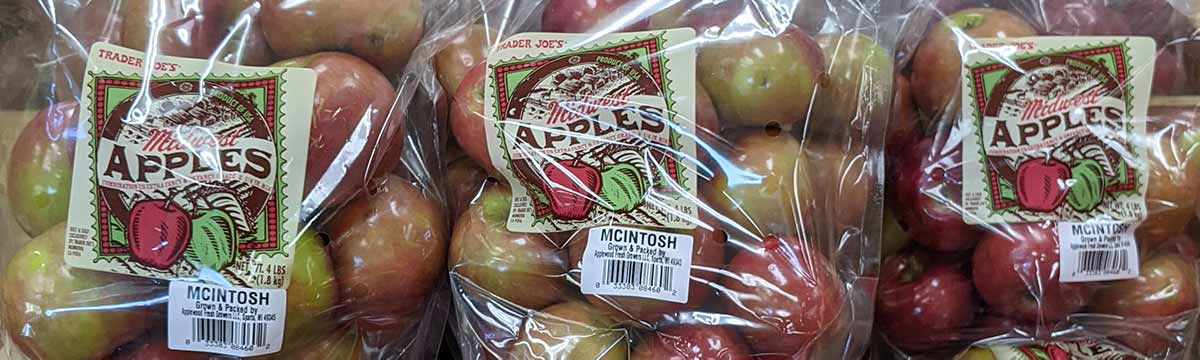
You should be able to find Golden Delicious and Braeburn at most grocery stores. I don't often see McIntosh at my local Jewel (Safeway), but I reliably find them every year at Trader Joe's.

Alternative apple varieties
If you can't find some of these apples, here's a few alternatives to use and still have a top notch Dutch apple pie.
- Pink Lady - sweet and apply flavor with a firm texture when baked
- Honeycrisp - tart and a honey-sweet flavor when baked and hold their shape
- Fuji - probably the sweetest apple you can buy, with an apple flavor that isn't otherwise noteworthy. Excellent texture when baked - perfectly soft while holding its shape
Apples to avoid (for any pie)
While you can sub in most grocery store apples and get close to the perfect flavor, there are some you should avoid:
- Red Delicious - they look beautiful but are flavorless and mealy
- Gala - good raw, but grainy when baked
- Rave - they get an odd overly-fruity Jolly Rancher flavor when baked
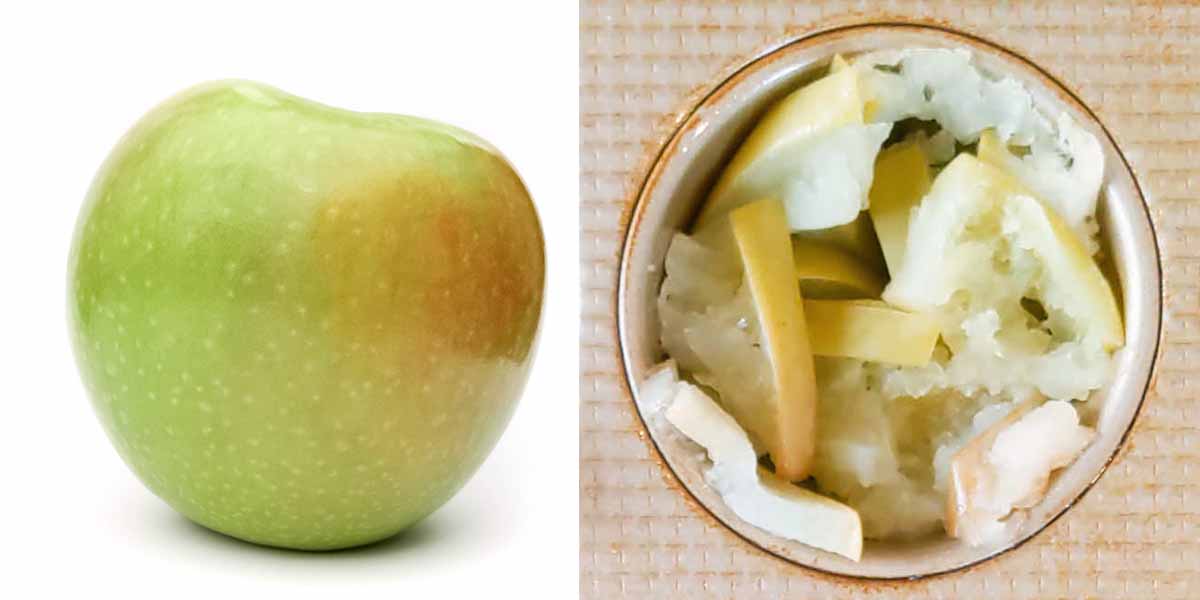
Granny Smith should also be avoided and I know that it's a classic recommended apple for Dutch apple pies and regular apple pies. It used to be good.
The problem is with modern storage they can be stored for 10 months or more. When removed from refrigeration, the flesh quickly breaks down and becomes mealy much faster and easier than other varieties.
Fresh Granny Smith apples from the farmers market do hold up when baked. However, because of the structure of their flesh, they soften and break down faster than most other apple varieties. So they can over cook and turn to mush by the time your other apples are done.
That said, if you've used Granny Smith apples in the past and they've worked out for you. Keep on using them! You probably have a good source and a knack for cooking them just right.
Here's a chart from my article, "The best (and worst) apples for pie" for a more complete look:
| Apple variety | Flavor rating & Texture (baked) | Comments |
|---|---|---|
| Braeburn | 4, Firm | Sweet-tart balance |
| Golden Delicious | 5, Soft & holds shape | My favorite pie apple |
| Golden Supreme | 4, Soft & mostly holds shape | Sweet, almost no acid. Best early-season for pies in Aug & Sept. |
| Northern Spy | 5, Firm | Excellent balance of sweet & tart. Hard to find outside of NE & Midwest |
| Jonagold | 4, Soft & holds shape | Sweet-tart balance |
| Fuji | 3, Medium-firm | Good grocery store option: sweet, apple flavor. Excellent med-firm flesh when baked. |
| Honeycrisp | 3, Firm | Good grocery store option: Sweet honey-like flavor, some tartness |
| Pink Lady | 3, Firm | Good, but expensive. Consistent sweet-tart flavor and texture (due to brand quality control) |
| McIntosh | 5, Falls apart | Excellent cider flavor. Apple sauce texture when baked. Great supporting apple for pie. |
| Cortland | 4, Soft & mostly holds shape | A McIntosh alternative with similar flavor that doesn't totally break down |
| Jonathan | 5, Almost holds shape | Excellent flavor & tartness. Holds shape but falls apart under a fork |
| Granny Smith | 2, Firm OR mushy | Adds tartness, no flavor. Commercially stored Granny Smiths turn to grainy mush when baked |
The secret to perfect pie filling every time
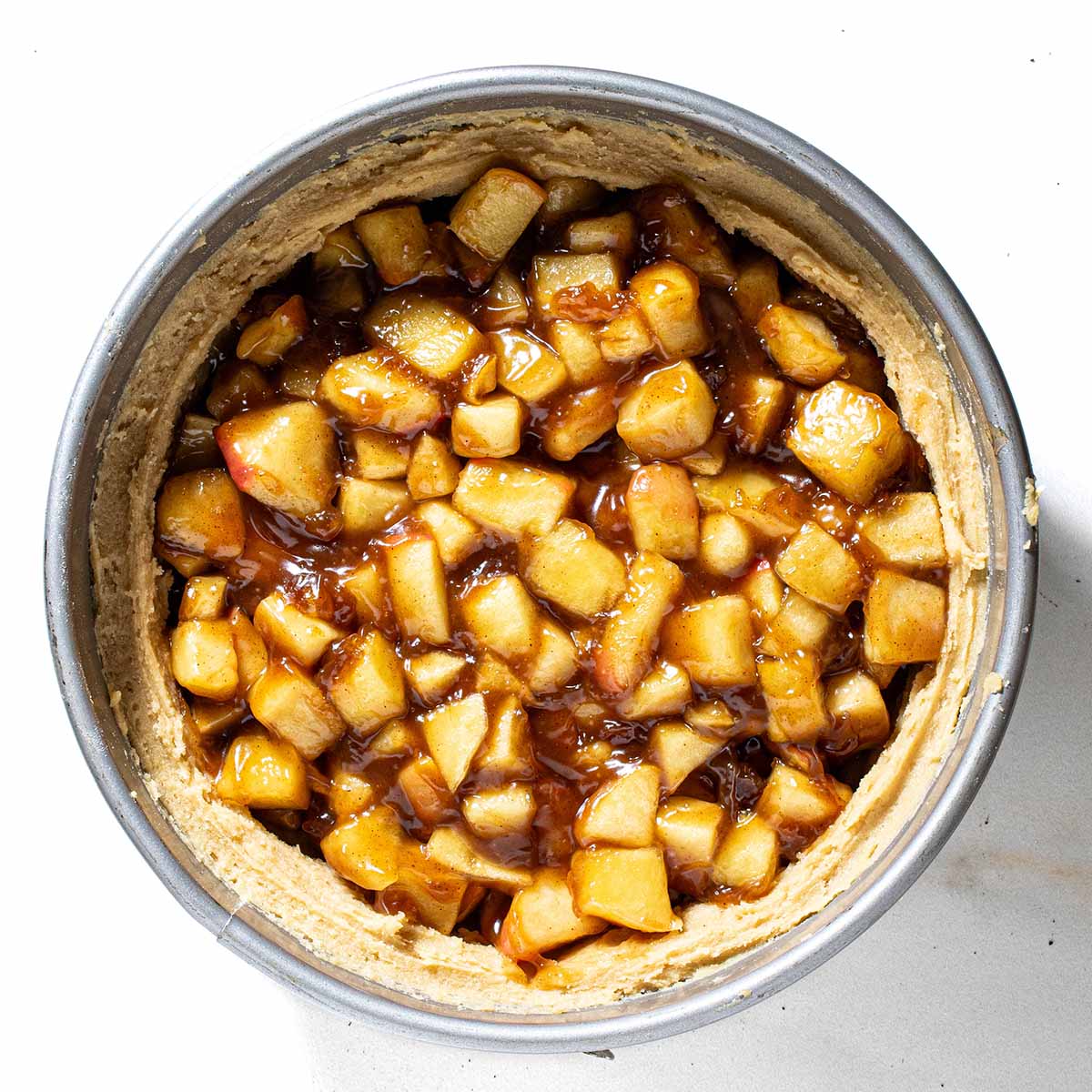
You've probably eaten enough apple pies to notice that some cook up perfectly and others are watery. Even the most seasoned pie baker still occasionally runs into this problem because apples can vary in juiciness, even within the same variety.
Precooking the pie filling is a foolproof way to make sure you consistently make the best Dutch apple pie every time.
Let's dig into a few details and then go over the process of making the filling.

The difference between apple slices vs chunks
A lot of apple pie recipes use thinly sliced apples because of how they release liquid, pectin, and mix with the cornstarch to thicken the sauce. They settle into tight layers so there are less gaps under the top crust.
However, I prefer cutting my apples into chunks for this Dutch apple pie. It's much less fussy and I like how the chunks hold their shape while still softening.
Precooking the apples on the stovetop avoids any problems with how they release juices and thicken the sauce. All of that is controlled on the stovetop so you know the actual consistency when adding it to the pie.
If you want to use slices, you can. You will probably need to reduce the amount of time they cook on the stovetop.
Why I peel the apples
In most dishes, I try to not peel apples because the skins have a lot of nutrients and flavor. But I think apples are worth peeling, not only for this Dutch apple pie, but any other apple pie.
The skins don't soften much when baked and they can separate from the apple, curling up into a ribbon. This affects the texture, adding a chewy element when I'm going for a deliciously soft pie filling.
That said, if you like the texture and flavor of the apple peels, keep them on! It comes more down to preference as there's little impact on the actual baking process when pre-cooking the apple pie filling.

How to make the Dutch apple pie filling
Making the pie filling on the stovetop sets you up for success. You can control the softness of the apples and thickness of the sauce before adding it to the pie. They don't overcook once baked in the oven, either.
Here's the timeline for how long it took my apples to cook:
- 7 min to for apples to release juices and sauce to start bubbing
- 10 more minutes to soften
- Done after a total of 20 minutes
- 10 minutes to cool
You might have to make some adjustments as you cook the pie filling based on the heat intensity of your cooktop and the juiciness of your apples.
- Scorching apples: The initial amount of water should be enough to prevent the apples from sticking to the pot before they release their natural juices. But if they do stick, add more water (a couple of tablespoons at a time)
- Too thick sauce: If the sauce is thickening and starting to stick to the pot before the apples are soft, also add more water
- Runny sauce: if the apples are fully soft and the sauce isn't thick enough, add more cornstarch (after first mixing it with cold water)
Otherwise, it's a pretty straightforward process. Once the apple filling is ready, spread it out on a baking tray so it can cool to room temperature before adding it to the pie.
If you're interested in a traditional apple pie, Recipe Tin Eats talks about pitfalls and pre-bakes the apples in the oven (rather than the stovetop) for her recipe.
The never-soggy French cookie crust
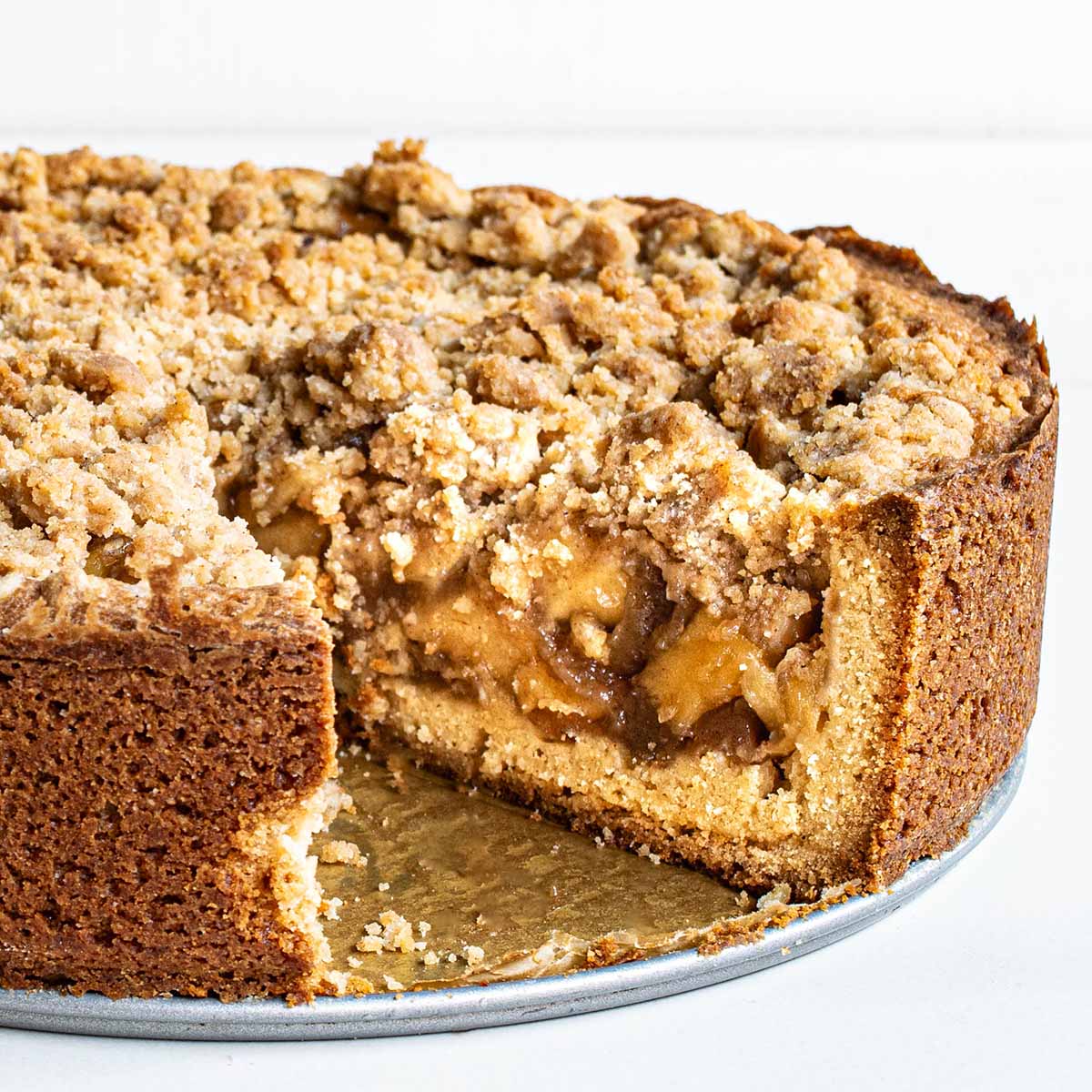
This is my go-to crust for Dutch apple pies (and any deep dish style pie). The texture is like a soft sugar cookie, or maybe a cross between shortbread and poundcake. It's hard to explain but it's divine.
I prefer this type of crust to a regular flaky pie crust for several reasons:
- It's very sturdy
- It's never soggy
- It's easy (not fussy like flaky pie crusts)
It also has a better flavor and texture, in my opinion. And since it's so sturdy, it can handle more apple filling for a deep dish apple pie, and who doesn't want that?!

Make the dough
The dough follows the basic steps for a drop cookie dough (and has the same texture):
- Beat butter with sugar until light & fluffy (as shown above)
- Add in eggs and extracts
- Mix in dry ingredients
There's no cutting in cold butter, folding layers, or chilling the dough. Just mix it all up!

Pick the right pan
Spreading the dough takes more time than you might imagine (at least it does for me every time I make this). I just spread it out by hand and about 1.75 inches up the side. The dough doesn't rise up the sides, so if you are using a deep dish pie pan instead of a springform, it should still work.
- Regular pie pans: about 1.5" deep
- Deep dish pie pans: 2" deep (or a smidge under)
- Springform pans: about 3" deep
The type of pie pan makes a noticeable difference, whether that's glass, ceramic, or metal. It comes down to how they transfer and hold heat.
The quick story is that you should use metal, specifically aluminized steel.
- Best choice: metal. It heats and cools quickly - easily browning crusts and cooling when removed from the oven
- Glass: heats up slowly and holds heat long after removed from oven
- Not recommended: ceramic and stoneware: takes the longest to heat up and cool down
Not everyone agrees, however. Even the most respected bakers, like Stella Parks (prefers glass) and Rebecca Frey (prefers metal) from Serious Eats disagree. You can see the pie tests they did to show how the pan affects the crust.
Why the pie pan material matters
If you already have your pan picked out, you can skip this section or read on if you're curious how the material affects the baking.
Metal pie pans: even browning and crispy crusts
Metal pans heat the butter in pie crusts fast, making them crispy and generating steam to create lift (for a flaky pie crust, when using a standard pie dough recipe). It also typically bakes crusts more evenly than glass or ceramic.
King Arthur Baking also recommens an aluminized steel pan for baking pies. They like the USA Pan brand and I have to agree that I've been happy with every USA Pan that I own (two giant baking sheets and a 9x13). And of course, the baking subReddit has a thread on the superiority of metal pans (with a lot of other users recommending USA Pan too).
This Dutch apple pie recipe is best in a springform pan - not for how it cooks, but for cutting and serving. It's really changed my pie game.
I own the Nordic Ware springform pan and like it well enough. But if I was to ever replace it, I'd get the USA Pan version.

- This 9 inch springform pan accommodates standard size recipes
- Fragile foods are easy to unmold with removable band and sturdy buckle
- With its premium nonstick surface made without PFOA, this pan allows you to make cheesecakes...


- Classic 9-inch Springform pan with easy release latch makes for no drama removal of delicate...
- Cheesecake springform pan made with heavy gauge aluminized steel for even heat distribution...
- Expandable rings release baked goods with sides and crusts intact
Glass pie pans: more likely to burn top edges
Glass pans are popular because you can see if the crust is browned. The tradeoff, however, is that it they cook more slowly, often taking 15 more minutes and browning unevenly. Since it needs more time in the oven, you're also more likely to burn the edges (unless you use tin foil).
Ceramic & stoneware: uneven browning and risk of soggy crusts
Ceramic and stoneware pans are admittedly really cute. If you're going to a party it's hard to resist using one for presentation. However, since they transfer heat much, much slower, they can take 20 minutes (or more) longer to bake than in a metal pan.
The crust will brown unevenly with the edges overcooking and the top burning. The crusts also tend to be less crisp and chewier.
The crumble topping is really easy
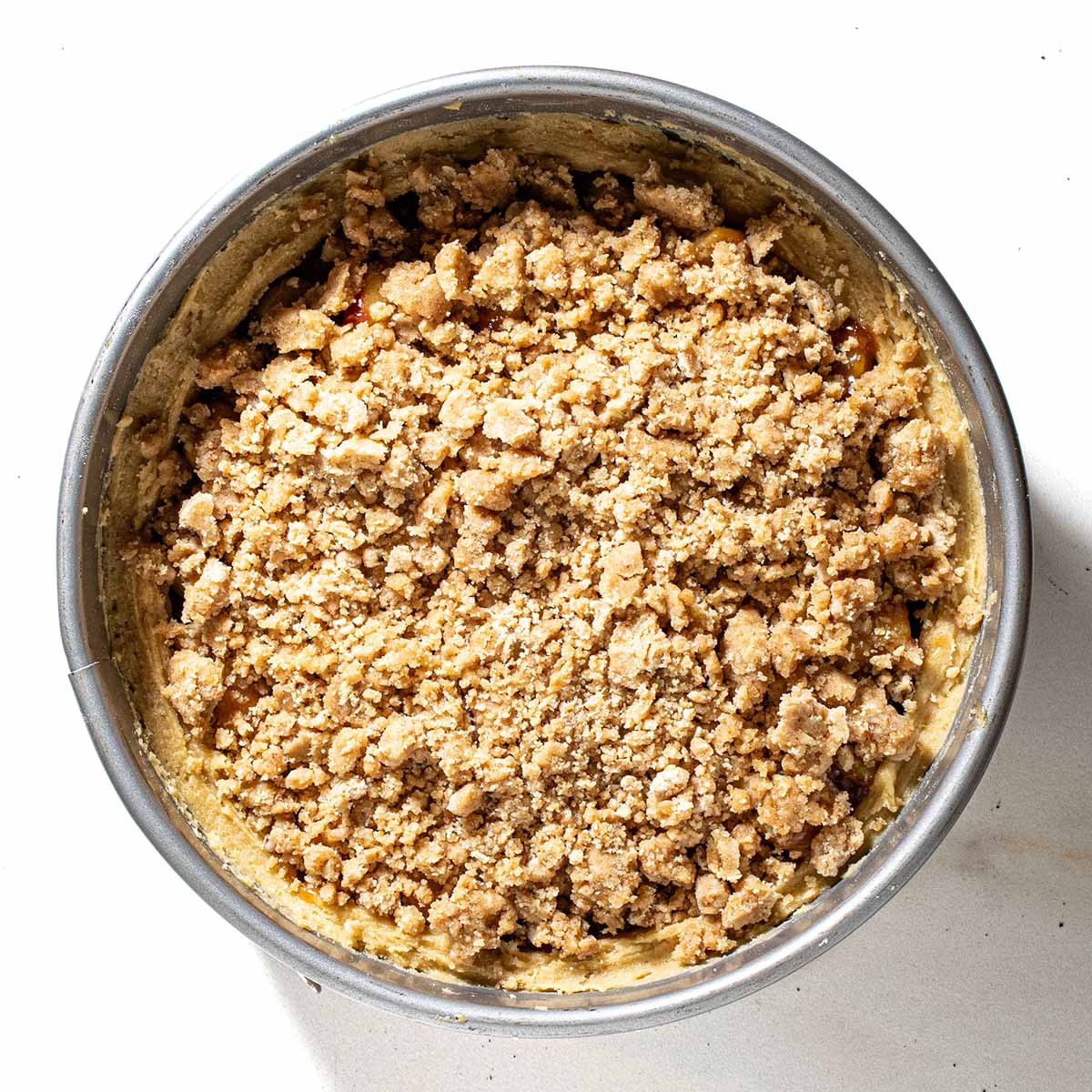
A Dutch apple pie is defined by having a crumble topping. So let's make sure it's a good one and there's plenty of crumbles.
It's simple really, just mix together melted butter, sugar, flour, cinnamon, and some salt. Crumble it on top of the pie and then throw it in the oven.

Browned crust edges determine when it's done
This Dutch apple pie recipe has never failed me, baking up perfect every time. The top edges brown at the same rate as the sides and bottom when placed in the middle of the oven. That's how you can keep an eye on the crust to know when it is done.
You really shouldn't ever have to cover the crumble topping with foil, as it should bake at a similar rate to the crust. But if it darkens first, add tin foil on top and then periodically check to see if the crust is done baking.
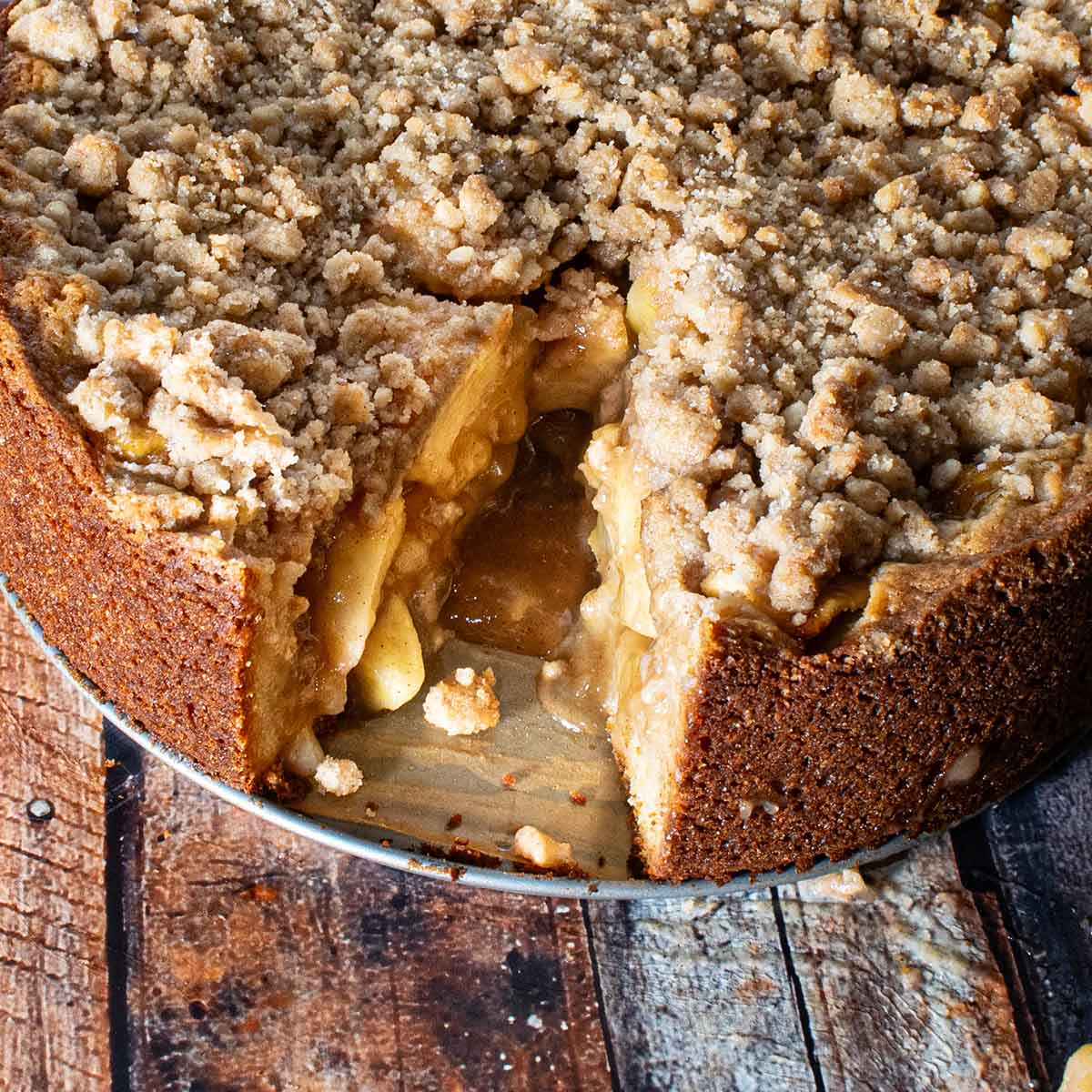
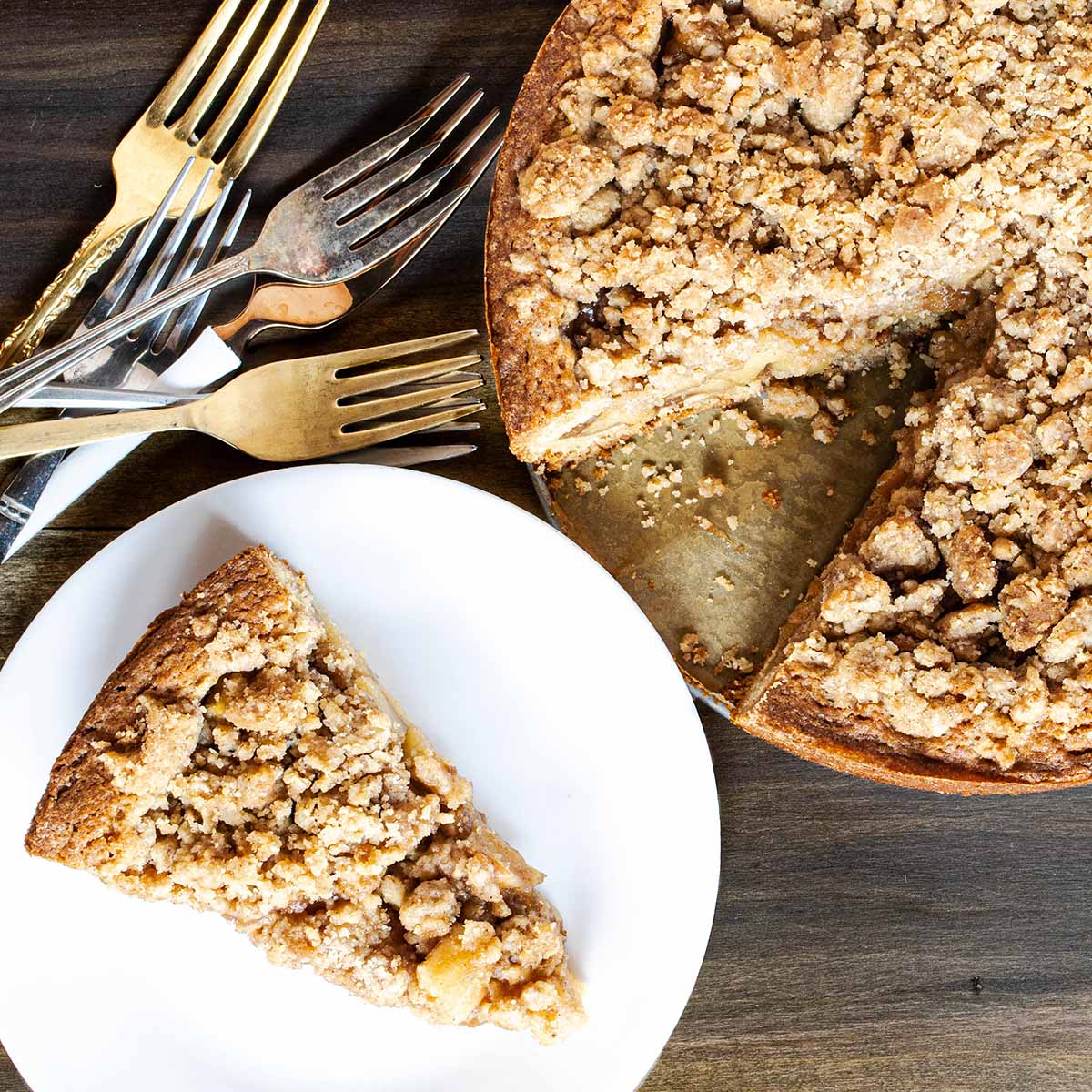
You can slice the pie shortly after removing it from the oven and the filling will ooze a little, or you can wait a few hours (or a day) and the filling will be fully set.
Holidays, special occasions, & make ahead
If you've ever hosted a Thanksgiving dinner, you know how much work goes into it. It's always nice to have a handful of make-ahead recipes if possible.
Make ahead
You have two options for making this Dutch apple pie ahead of time:
- Make the pie the night before and store it on the counter
- Make all of the parts ahead of time (filling, dough for crust, and crumble topping) and store in the fridge. You can even spread the dough out in the pan ahead of time, but don't add the filling until you're ready to bake it.
Servings
The next question for the holidays or any special occasion is how many pies to make. For this one, you should be able to get at least 12 servings since it's really tall, especially for Thanksgiving when guests are still full.
If you have several types of desserts that people are sampling, you can get more than 12 servings out of it - you know, for the people who want 'a sliver of each pie.'
More Dutch apple pie recipes & resources
Looking for more apple pie inspiration? I found a few recipes that look really good:
- Pennslyvania Dutch apple pie with a traditional crust and sliced apples, from Serious Eats
- Apple pie with pre-baked apples in the oven, from Recipe Tin Eats
- Cider bourbon apple pie with oatmeal cookie crumble from How Sweet Eats
- Apple galette with rum-spiced dulce de leche from Bojon Gourmet
I have also worked on perfecting recipes for apple cider donuts (that actually takes like apples), making caramel apples at home, the best way to make apple butter, and homemade apple chips, along with recipe and flavor notes for different types of apples.


If you're wondering what else is currently in season, check out my calendars to see what produce is in season each month (and coming up soon).

Leave a Reply