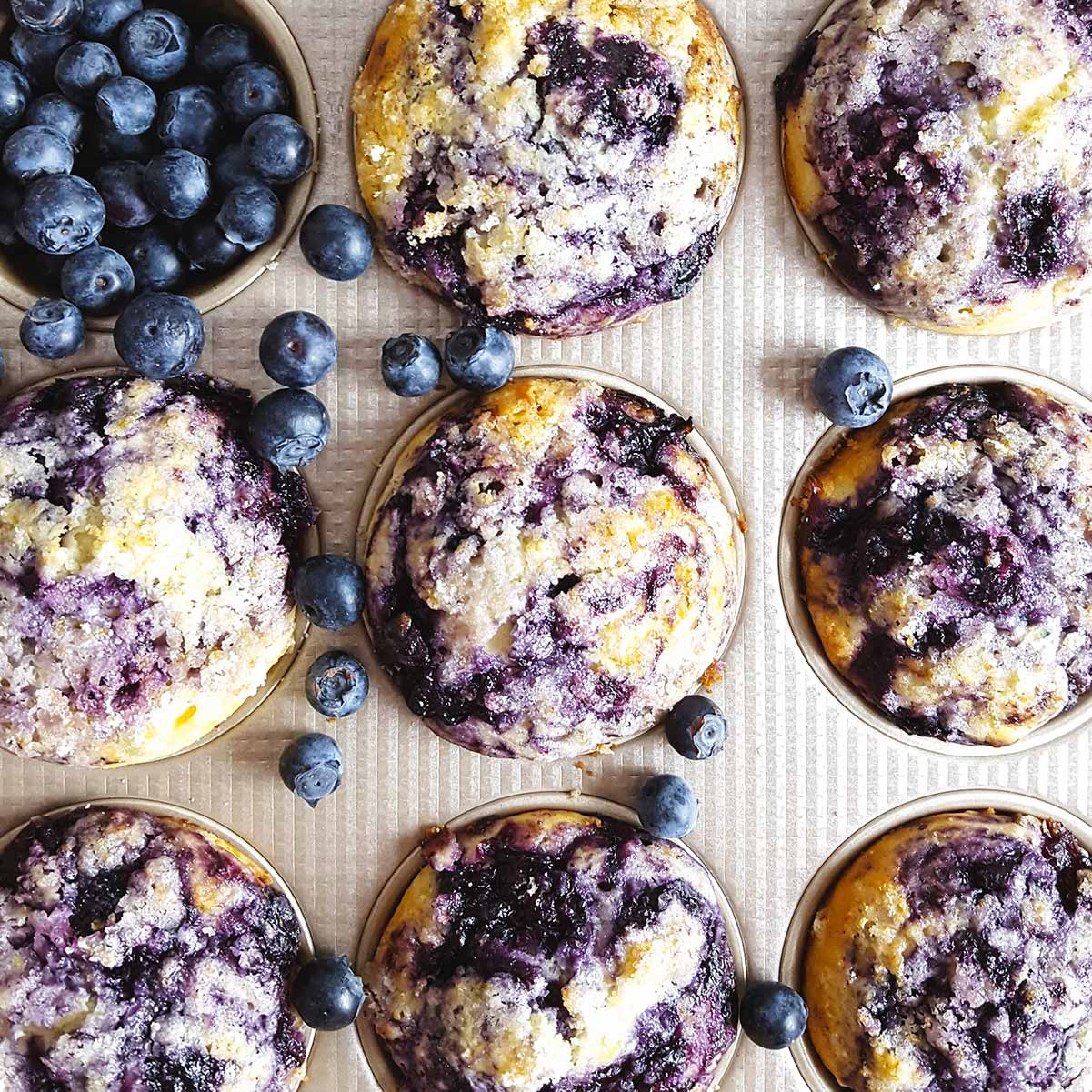
After testing numerous blueberry muffins recipes, I've settled on a favorite. It's a blueberry swirl muffin that maximizes flavor with a blueberry puree swirled in the top.
It takes a little more time to make than other recipes, but it's worth the effort for a bakery-style blueberry swirl muffin.
- Fluffy texture (from creaming butter and sugar)
- Tall domes (from creaming butter and sugar)
- Homemade blueberry syrup (compote) is swirled in to boost flavor
- Bakery style topping with a lemon-sugar sprinkle

This blueberry swirl muffin recipe is actually a combination of the famous "Department Store" muffins from Jordan Marsh (for the best texture), and the scientific approach from Cook's Illustrated (for the blueberry syrup).
Jump to:
Make the blueberry swirl
The defining characteristic of these blueberry swirl muffins is the blueberry compote mixed in before baking.
It's the best way to add even more blueberry flavor since you can only add so many blueberries before the muffins would just fall apart (ask me how I know!).
Cook the compote / puree
This blueberry compote only takes 5-10 minutes to make (but it dirties another pan, sorry!).
You cook this before you start the muffin batter so that it has time to cool. You don't want to add a hot blueberry puree to the muffins, or you might start melting that butter too early!
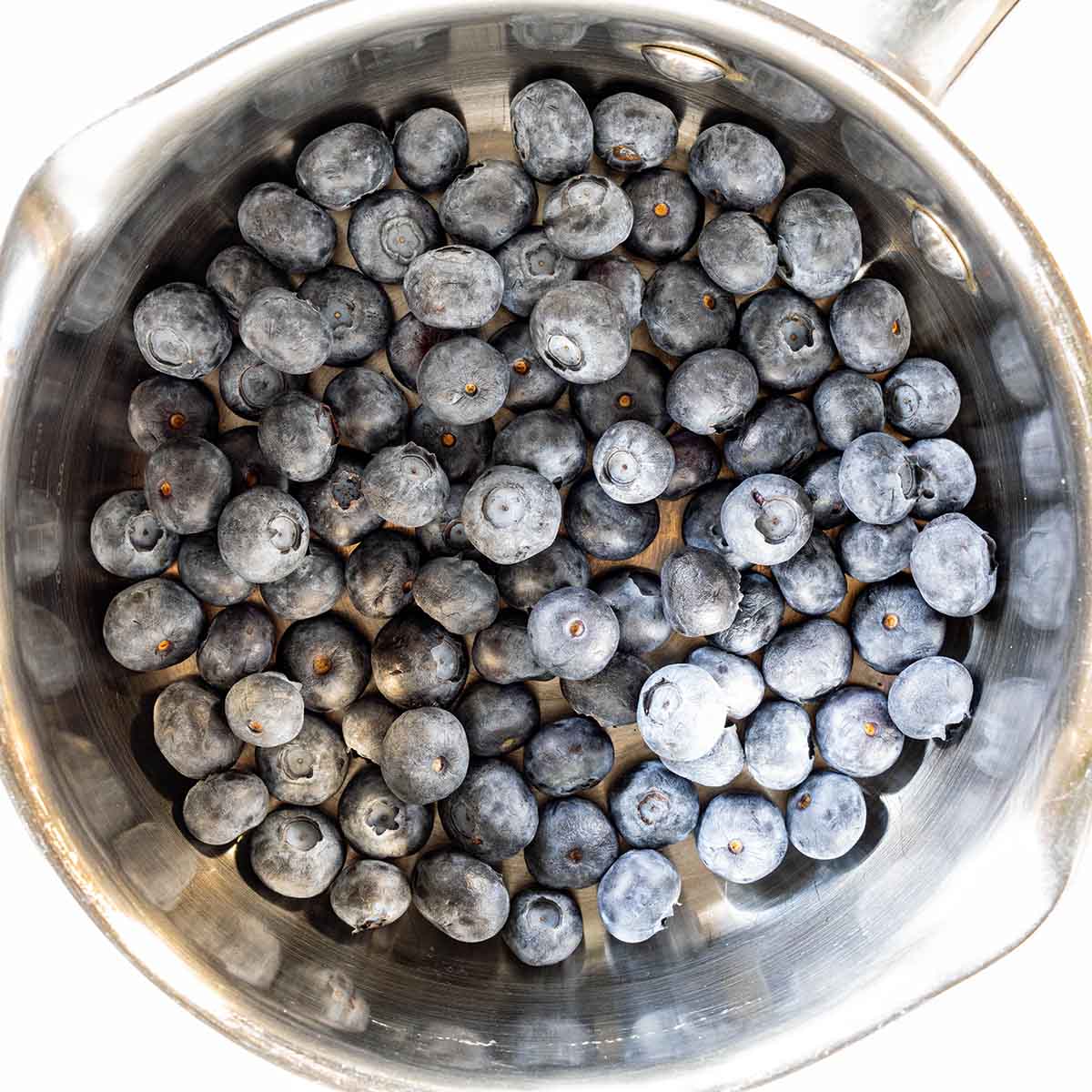
Add 1 cup of fresh (or frozen) blueberries to a small saucepan along with 1 teaspoon of sugar. They should quickly break down into a chunky blueberry puree. You don't need to add corn starch to thicken it.
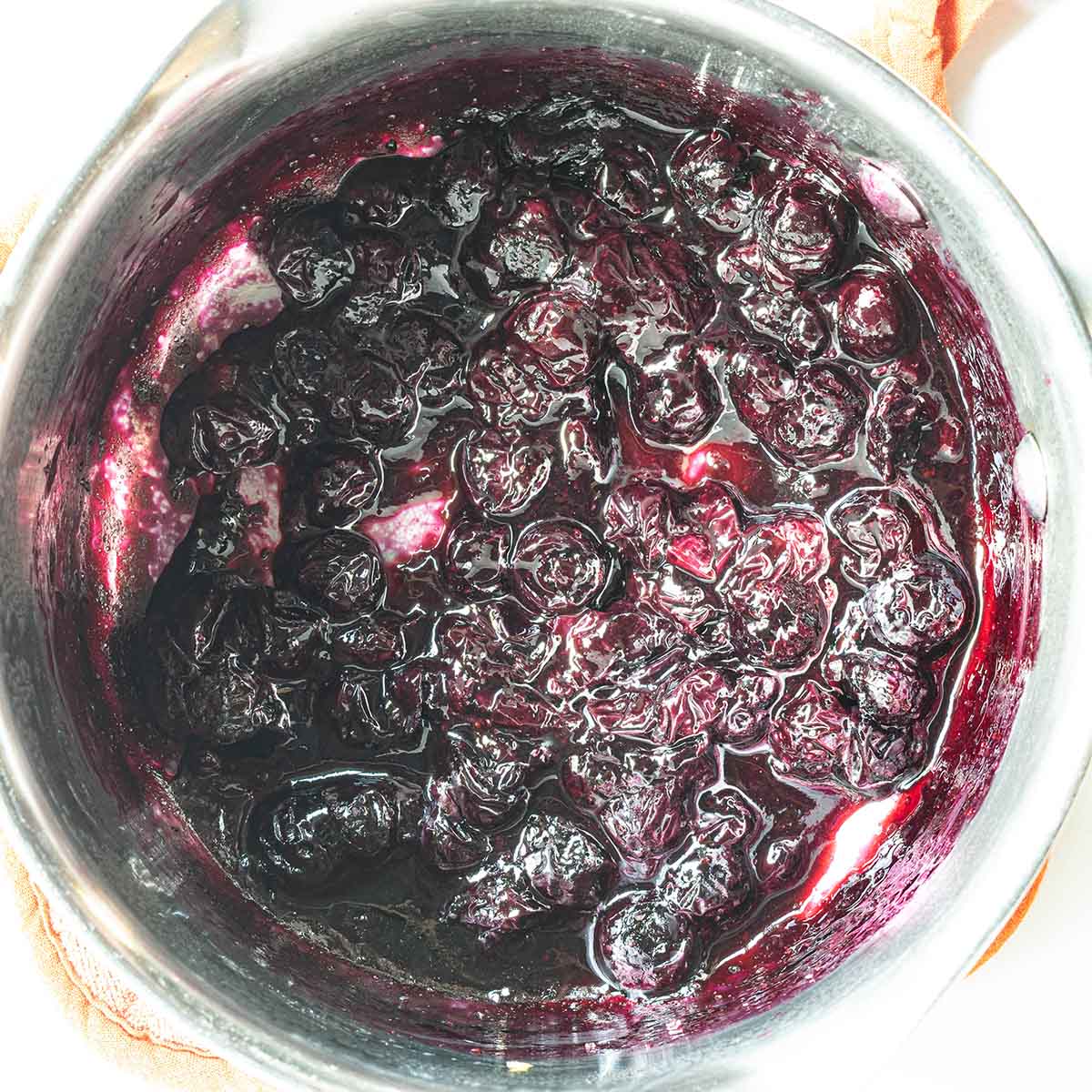
Cook the compote until it reduces to about ¼ of a cup (usually 10 minutes or less). That's enough to swirl 1 teaspoon of syrup into each blueberry muffin. It doesn't seem like a lot, but it's enough.
Once that's done, set it aside to let it cool. You can also transfer it to another bowl or a ½-cup measuring cup so it can cool faster (ugh, more dishes - get that dishwasher ready).
How to swirl in the blueberry compote / puree
Adding the puree to make blueberry swirl muffins is the fun part.
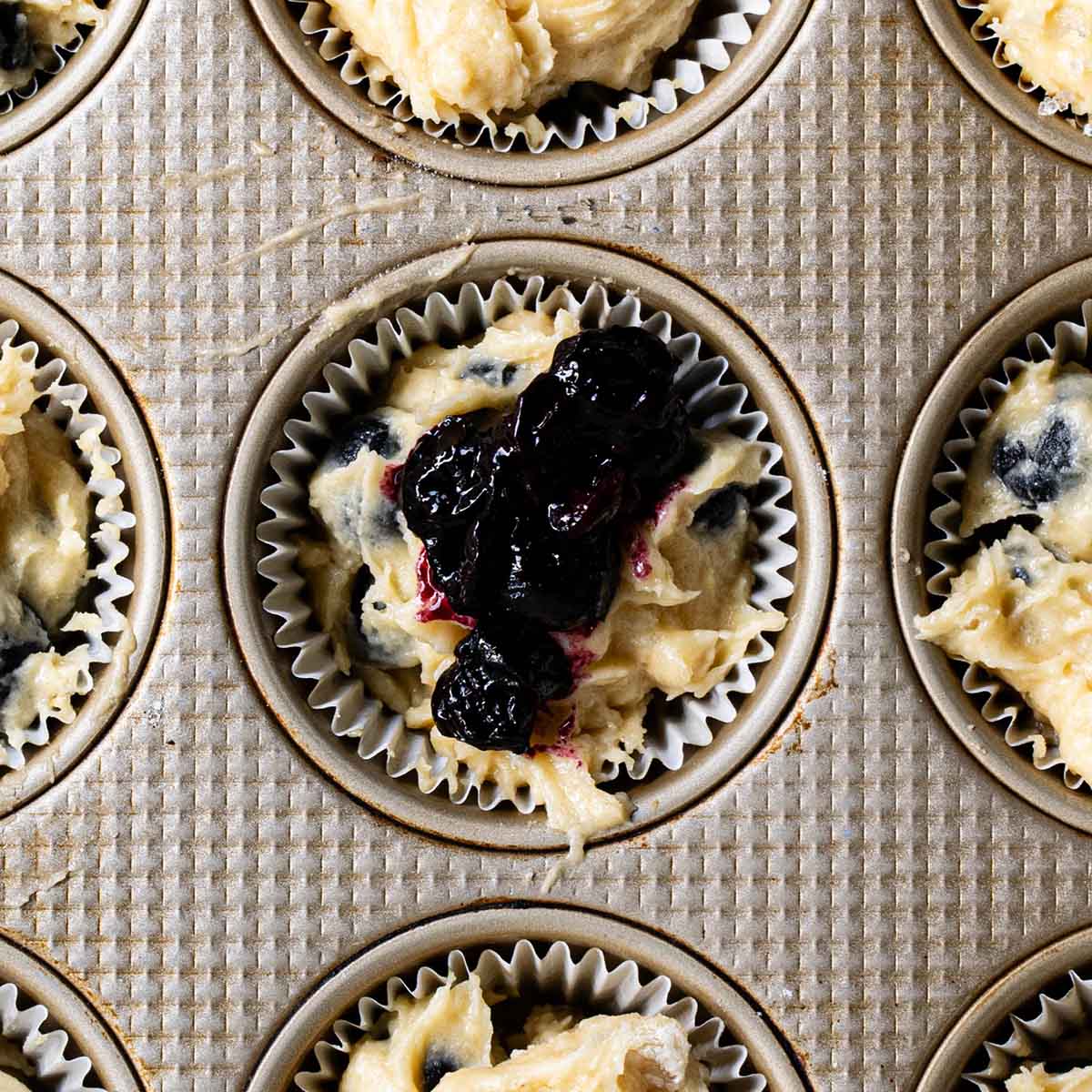
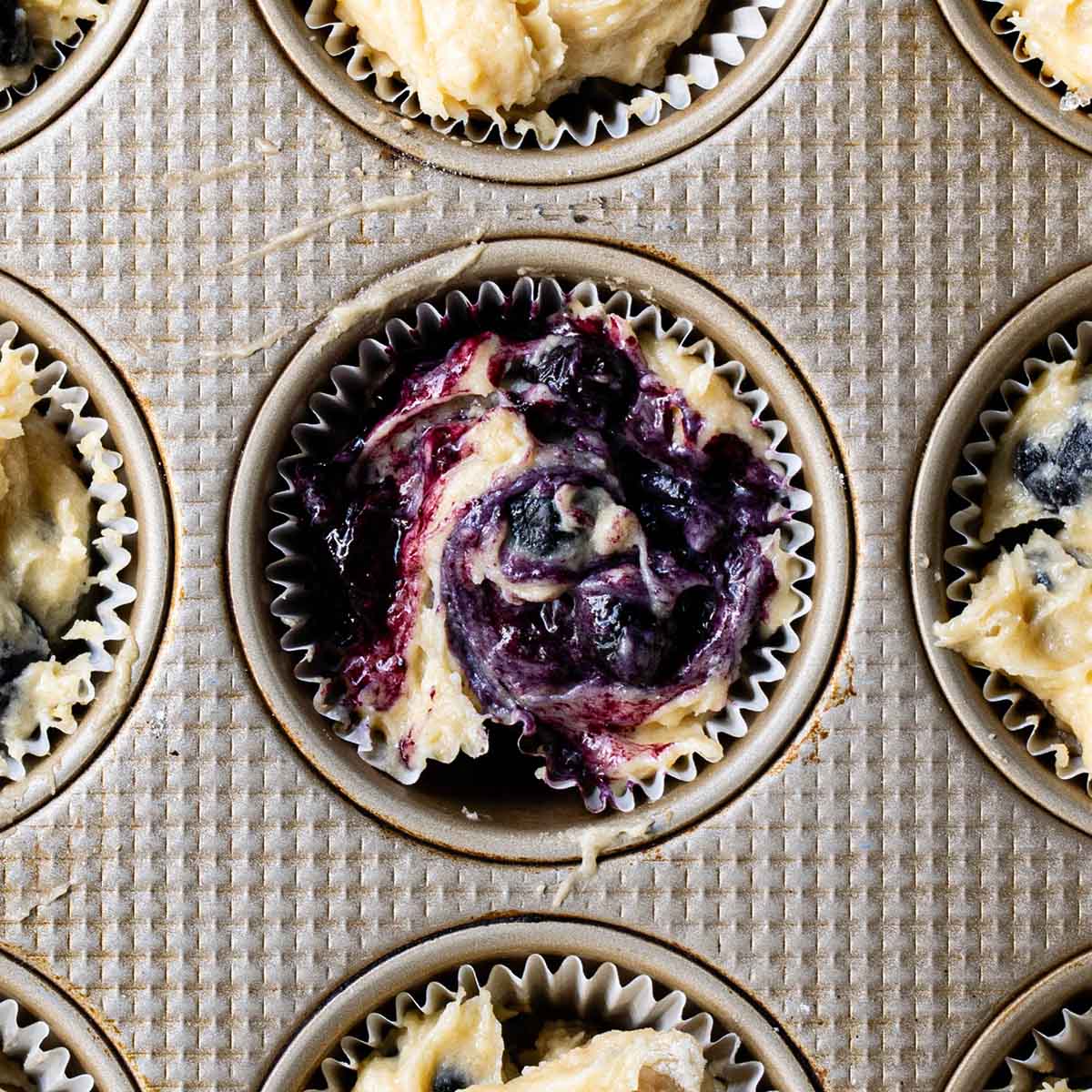
Once the muffin tins are filled with the batter, measure 1 teaspoon of blueberry puree and then swirl it into each muffin.
I use a chopstick or skewer to swirl it around. I'm careful not to fully mix it into the batter, since I want blueberry puree ribbons throughout the muffin when I eat it.
A test of different blueberry swirl methods
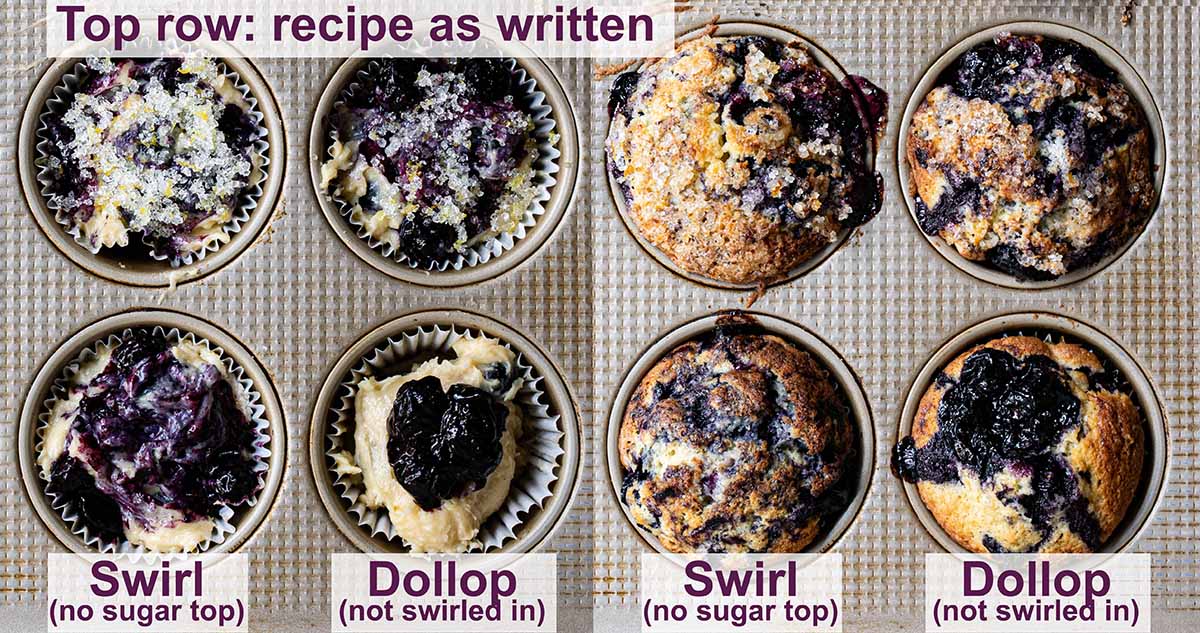
I was wondering how the compote would act when swirled in versus just plopped on top of the muffins. If just set on the top, would it spread and create an interesting crusted top? (The answer is no).
I tested a version that swirled in the blueberry topping (as instructed), but left off the sugar top so you can get a better view of how it bakes up. That's labeled as "swirl" in the photo above).
I then compared that to a version where I added a dollop of the blueberry compote but didn't mix it in, to see what happens. That is labeled "dollop" in the photo above.
It turns out that you probably should mix it into the muffin batter.
Add the swirl to other blueberry muffin recipes
I get it - this recipe takes a bit of extra work over batters that use melted butter and one bowl. So I'm going to help you out - yes, you can make any of those recipes into blueberry swirl muffins by following this same technique.
Lastly, I also used a reliable method to keep blueberries off the bottom of the muffins as mentioned in "Blueberry muffins, what could go wrong?" The trick is to fill the tins ¼ full with plain batter first. Unfortunately, tossing them in flour doesn't actually stop them from sinking.
Cream butter and sugar to get the best texture
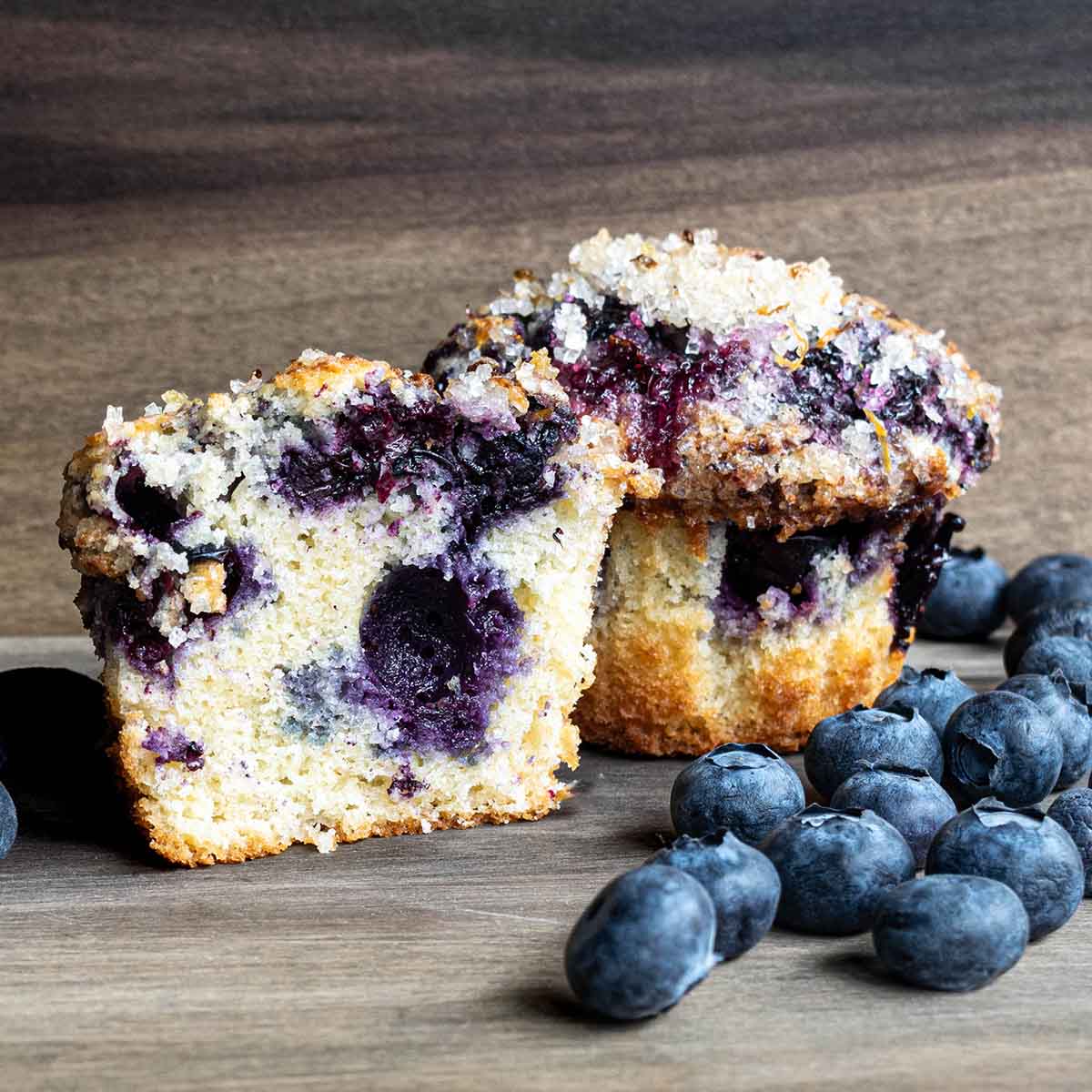
The reason this muffin has a moist and tender interior is mostly thanks to creaming step. The recipe creams butter with sugar instead of using melted butter or oil like other recipes.
Why does this matter? It creates a lighter, fluffier muffin with more domed tops. This little step does a lot of work to accomplish this.
It adds air
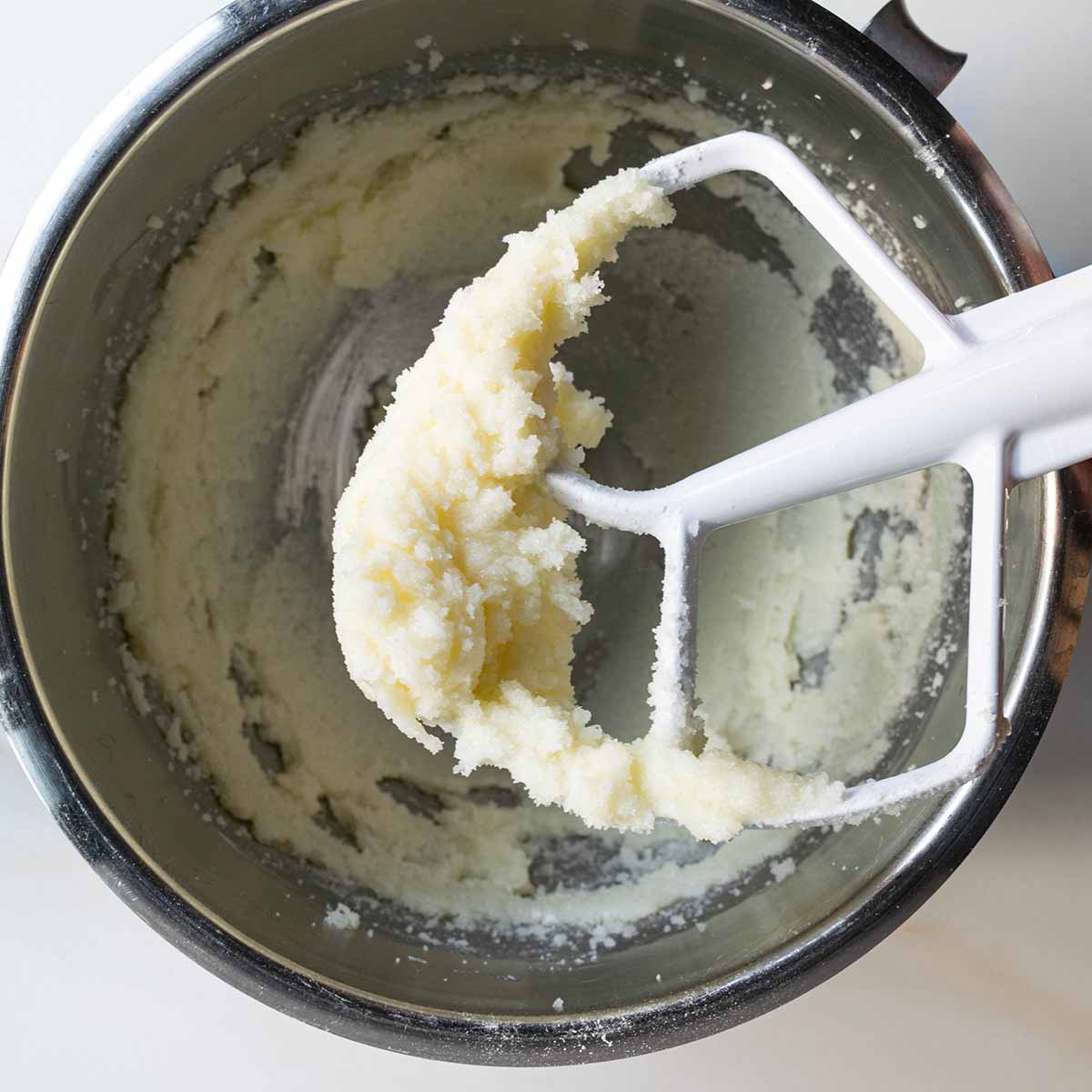
First, the sugar adds air to the butter as it's aggressively mixed together. This creates tiny little air pockets that capture gasses as it bakes, allowing the batter to rise easier and create that fluffy texture. Without this step, the blueberry muffins will be denser.
Second, the sugar is surrounded by the butter fat, protecting it from dissolving early. It stays intact even after eggs and flour are added, keeping the structure of the air pockets in place and holding more water within the fat structures.
It delays gluten formation
Lastly, both sugar and flour are hydroscopic, meaning they both want to absorb water. Since the sugar is surrounded by fat, it can't fully dissolve, which locks up some of the water access that flour will want as it's mixed in.
Once baking begins, heat melts the butter, which lets the sugar finish dissolving. As that happens, more water is available for the flour. This process slows gluten formation, which also helps create a light & airy muffin.
Room temperature butter: 60-62°F
Why does every recipe tell you to start with room temperature butter? It's because it needs to be just soft enough that it can stretch as the sugar crystals break into it and create air pockets.
If the butter is too hard, this doesn't work. If the butter is too soft, the sugar starts to dissolve and then you might as well have just used melted butter (which makes a denser crumb).
Most sources define room temperature butter as 65-68°F. However, as you reach 68°F and beyond, the butter melts (and this is bad!). An electric mixer quickly raises the temperature too - about 1 degree each minute of mixing.
It's best to err on the side of caution and start with butter that's around 60-62°F. This tip comes from Serious Eats, which probably has the best explanation on creaming butter and sugar. They also suggest using cold eggs to keep the temperature from creeping too high.
What does cream until light & fluffy really mean?
The next step that's always felt a little vague is "cream until light & fluffy." If you undercream, you don't get the full benefit. If you overcream, the structure is broken and your blueberry muffins will be dense and collapse when baking.
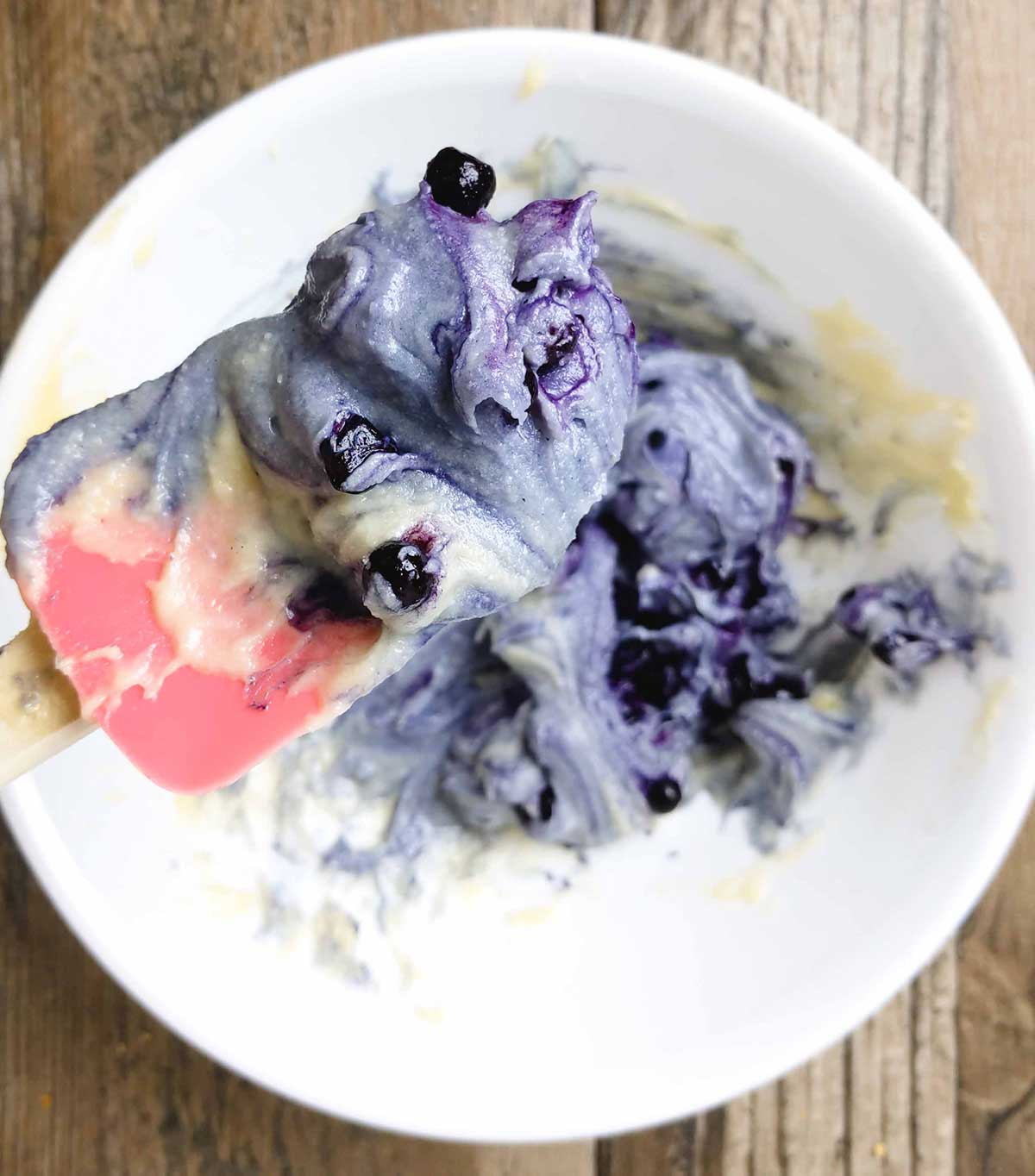
The Serious Eats guide admitted that it's hard to see how much air is adding as you continue to cream the butter and sugar. So they added blue dye that clearly shows how much it lightens up. Land O Lakes has a guide that shows properly creamed butter alongside a picture of when it's overcreamed.
Lemon-sugar topping for a crunchy muffin top
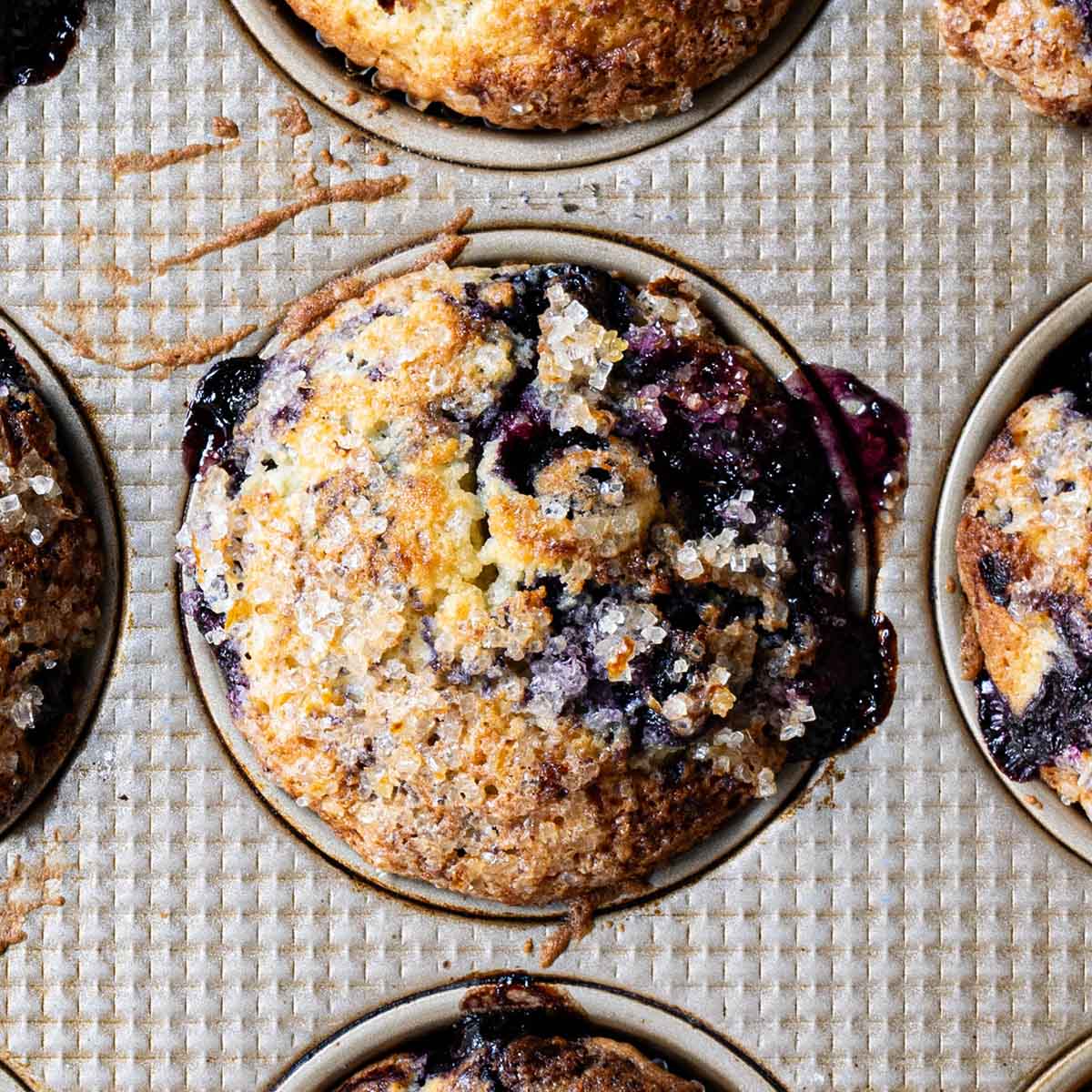
The lemon-sugar topping helps create that coveted crackly muffin top that you find at bakeries.
The sugar caramelizes and hardens before the muffin finishes rising. As the muffin continues to rise, it forces cracks into the top.
Is it necessary? Nope. But it sure does taste more like a bakery style blueberry muffin.

Best sugar to use
Any kind of sugar works, but there are some differences. Let me quickly explain so you can pick your favorite.
Regular white granulated sugar will melt into the top of the muffin as it cooks, creating a more uniform crackly topping. It adds a medium crunch (but not from the individual crystals).
Turbinado sugar has larger crystals that will partly melt when baked. However, some of their crunchiness remains (which I personally love).
Sparkling sugar has even bigger crystals, usually with a bright-clear color. They purposefully do not melt when baked so you have a distinct, crunchy, sugar topping. (I use the one from King Arthur flour all the time).

You could also try using a flavored sugar, specifically the lavender lemon sugar from Spicewalla, pictured above. I have this trio and use them mostly on top of muffins, fresh fruit salads, and a homemade foamy coffee.
These are affiliate links to products I own and use on a regular basis. I do get a small commission if you buy something, so I like to be very transparent on product recommendations, letting you know when I use & like a product vs something I'm sharing for inspiration.
Why you shouldn't reduce sugar in these particular muffins
This particular blueberry muffin recipe is designed to create light, tender, tall domed muffins. To achieve that, we need to use a full cup of sugar. That's typical for muffin recipes, although I try to use only a half-cup for healthier muffins.
Reducing sugar in any muffin will impact the texture, not just the flavor. Reducing sugar usually means the muffin won't be as tender and won't taste as moist.
Recommended: 1 cup of sugar
I urge you to not reduce the sugar in these blueberry swirl muffins. Less sugar means less aeration in the butter-creaming step. That will affect both the texture and the rise, resulting in a denser, drier muffin.
I've also found reduced-sugar blueberry muffins, in particular, have a pretty bland flavor. I believe it's because the batter itself is pretty plain - it doesn't have any spices, at all. Compare some common muffins:
- Banana muffins: cinnamon or peanut butter
- Apple muffins: apple pie spices
- Lemon muffins: lemon flavor throughout the batter, and poppy seeds
- Whole grain muffins: a lot of spices are added to the batter
- Blueberry muffins: no added flavors, just blueberries
I don't think this is a bad thing - in fact, the opposite. The absence of other flavors gives them their characteristic charm. You just have to be willing to throw your sugar goals out the window.
Reducing sugar
If you do want a blueberry muffin with less sugar, try a recipe that uses melted butter to save you some time. Take any recipe and reduce the sugar to about a half-cup.
Here's a breakdown of sugar levels:
- 1 cup (best option): most recipes call for 1 cup of sugar and those muffins turned out best, even with an extra ¼ cup lemon-sugar topping.
- ¾ cup (2nd best): you can get away with reducing the sugar to ¾ cup in this recipe.
- ½ cup (not good): The muffins I baked with ½ a cup of sugar were too bland and denser.
You might also be tempted to skip the lemon-sugar topping, which you can do without sacrificing the texture. But before you make that decision, I wanted to point out that each muffin gets 1 teaspoon of the sugar topping, which is 16 calories.
Use fresh blueberries
Blueberries are in season from about May until August. They grow well in all climates across the US so you should be able to find great-tasting ones at a farmers market near you, and imported ones in winter.
If you're going to use the blueberries within a day or two, you can keep them stored in the fridge in the plastic package they came in at the grocery store, or the bag from the farmers market.
However, if you don't plant to use them right away, spread them out on a plate or small baking tray lined with paper towel. The paper towel helps absorb moisture and also lets you see any berries that go bad.
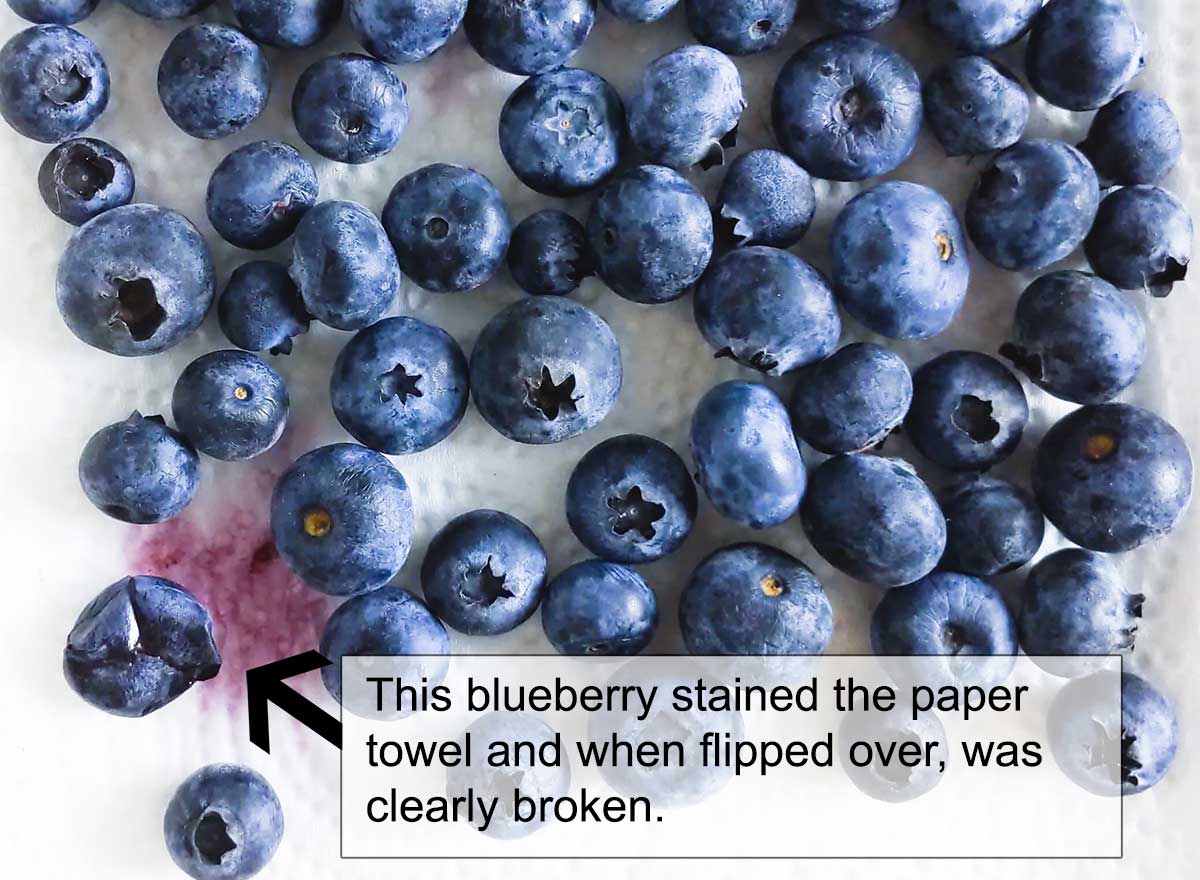
Berries that start to go bad will ooze juice that is clearly visible on the paper towel, allowing you to quickly spot ones that need removal. They should last a few days to a week in the fridge.
What about frozen blueberries?
You can use frozen blueberries in the batter and for the blueberry swirl syrup. If you can find frozen wild blueberries, get those! They are rarely sold fresh in stores, but often sold frozen. They are smaller and have a stronger flavor.
If you do use frozen blueberries, follow these tips:
- Reduce amount by ¼ cup for adding to batter (they release more liquid)
- Don't let the blueberries thaw before adding them to the batter
- Toss frozen blueberries in flour before adding to the batter to prevent them from dying your muffins purple
For the blueberry swirl syrup, you don't need to change anything. They will quickly cook down into a sauce. It might be more soupy than when you use fresh blueberries, but as long as you stick to swirling in 1 teaspoon per muffin, it shouldn't change the texture enough to notice.
Common problems with muffins
I've tested so many blueberry muffin recipes and techniques that I've lost count. But I have learned a lot along the way. I documented the problems I came across to show you how to fix them.
The article linked above addresses all of these problems:
- Blueberries that turn red or green-blue
- Frozen blueberries dying the batter
- Muffins that don't rise well
- Sugar toppings that caramelize
Recipe

Equipment
- muffin tin
- stand mixer or hand mixer
Ingredients
Muffins
- 8 tablespoon butter room temperature
- 1 cup granulated sugar
- 2 large eggs
- 2 teaspoon baking powder
- ½ teaspoon salt
- 1 teaspoon vanilla extract
- 2 cups all-purpose flour 241 grams
- ½ cup milk
- 1.5 cups fresh blueberries 1 ¼ cup if using frozen
Blueberry syrup swirl
- 1 cup blueberries
- 1 teaspoon granulated sugar
Sugar topping
- ¼ cup granulated sugar
- 1 teaspoon lemon zest from 1 lemon
Instructions
Prepare
- Preheat oven to 375°F.
- Lightly grease your muffin tins. If using paper cups, lightly grease those as well.
Make the blueberry syrup & lemon sugar
- In a small saucepan, add 1 cup of blueberries and 1 teaspoon sugar with a teaspoon or two of water (to prevent scorching). Cook over medium heat until reduced to about ¼ of a cup. This should take about 10 minutes.
- While the syrup simmers, zest the lemon and mix with ¼ cup sugar, stirring until the zest is evenly distributed.
Muffin batter
- In a large bowl, or in the bowl of a stand mixer, beat 8 tablespoon butter and 1 cup sugar until combined. (If not using a stand mixer, a hand mixer works too).
- Add 2 eggs, one at a time and beat until well incorporated.
- Add 2 teaspoon baking powder, ½ teaspoon salt, and 1 teaspoon vanilla to the bowl and beat well.
- Gently mix in the flour and milk (over beating at this point will make a denser muffin): Mix in half of the flour (1 cup), then add the milk (½ cup) and stir. Scrape the sides and bottom of the bowl to incorporate any stuff not mixed in. Then add remaining flour (1 cup) and mix until just combined.
- Do not add blueberries yet!
- Line the bottom of the muffin tins with a little of the blueberry-less batter, about 1 Tbsp. This layer keeps blueberries off the bottom of the muffins and doesn't have to be exact.
Finish assembling the muffins
- Once the bottom of the tins are lined with the 'plain' batter, gently fold 1½ cups of blueberries into the batter. No need to toss berries with flour *1 (see note). Fill the muffins tins to about ¾ full (just under ¼ cup of batter).
- Swirl in 1 teaspoon of blueberry syrup into the top of each muffin using a chopstick or straw. Using more than 1 teaspoon might create a mess.
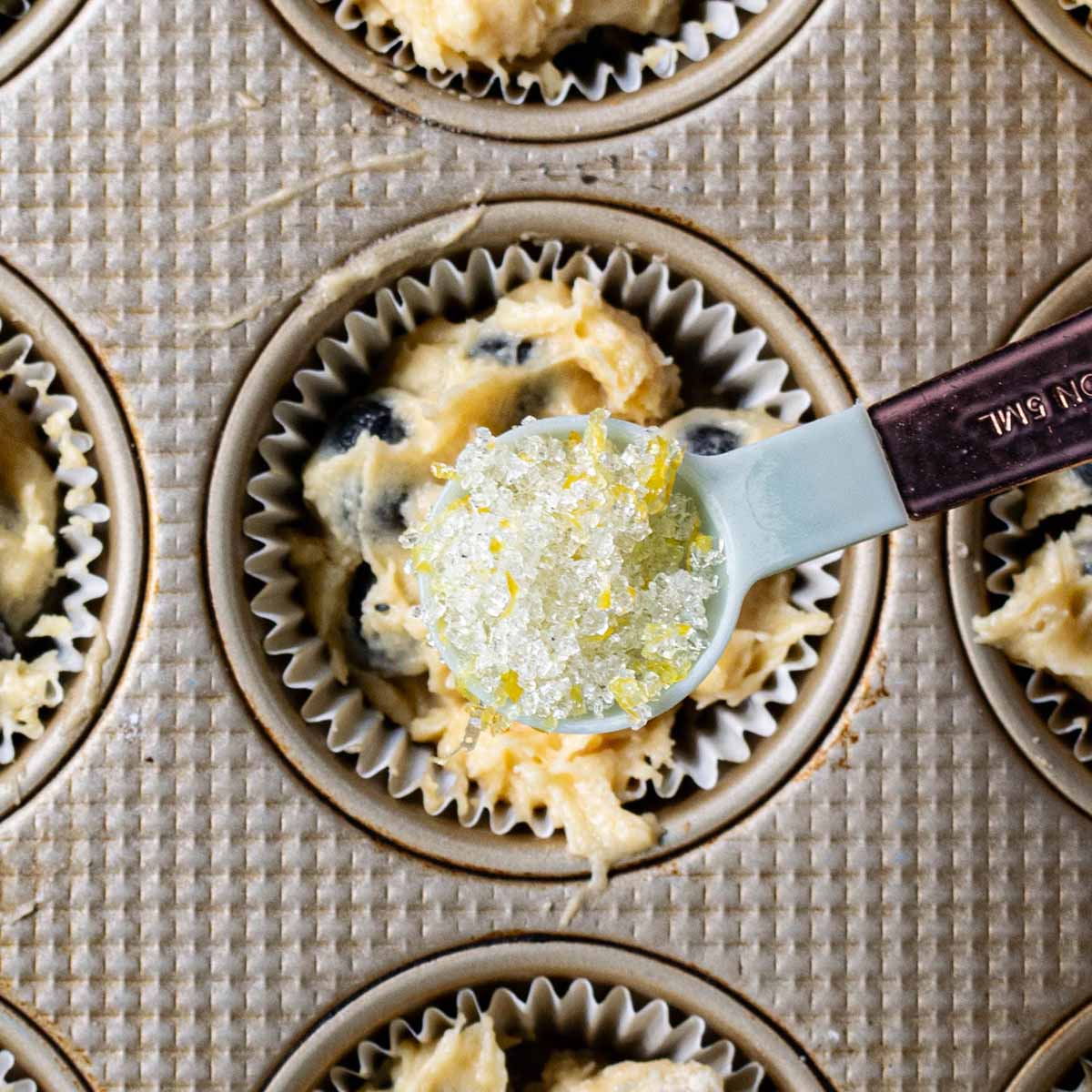
- Lastly, top each muffin with 1 teaspoon of lemon sugar.
Bake
- Bake in your 375°F oven for about 30 minutes. Check after 25 minutes since every oven is very different. The top should be golden brown.
- When removing from the oven, loosen the edges of the muffins from the tin, as the sugar topping can make them stick. Doing this while warm makes it easy, but don't touch any caramelized areas with bare hands, it will burn. Let the muffins cool for 5-10 minutes before removing them entirely from the tins.
Notes
Nutrition
More blueberry muffin recipes
I encourage experimentation to find the blueberry muffin recipe that you like best. First, let's start off with the two recipes that combined to make mine: Jordan Marsh Department Store recipe and Cook's Illustrated recipe (requires membership).
If you're willing to go down the rabbit hole, Pancake Princess did a blueberry muffin bakeoff, testing a dozen different recipes to compare butter vs oil, different flours, etc.
The clear winner was the one from Hummingbird High, which is a spinoff from Jordan Marsh (like mine), uses a crunchy sugar topping (also like mine), but she mixes in some almond flour. I love this idea!
Quick & easy
These recipes use melted butter or oil for a quick & easy, one bowl method.
- Streusel-topped blueberry muffins (melted butter) from Culinary Hill
- Easy blueberry muffins using milk and melted butter, low calorie, from The Salty Marshmallow
- Blueberry muffins that use vegetable oil, from Inspired Taste
Healthy swaps
Try swapping white flour out for whole wheat, oatmeal, or shredded zucchini.
- Blueberry muffins with whole wheat flour and coconut oil from Cookie + Kate's
- Oatmeal, blueberry, and apple sauce muffins with a walnut-oat streusel from Ambitious Kitchen
- Blueberry zucchini muffins from Food Above Gold
Other flavors
- Blueberry lavender muffins from Olive & Mango
- Triple berry muffins by The View from Great Island
- Lemon blueberry muffins from Sally's Baking
- Blueberry coffee cake muffins with chai butter from Yes to Yolks
Other muffin recipes
I make a lot of muffins, usually something every week or two to have around as a quick (and somewhat healthy) snack. Here are some of my other favorite recipes.

More blueberry recipes
Looking for other ways to use blueberries this summer? If you have large quantities to use up, make this blueberry syrup for canning, and use the strained pulp for blueberry butter. Or check out this collection with 75 blueberry recipes & flavor pairings.



If you're wondering what else is currently in season, check out my calendars to see what produce is in season each month (and coming up soon).


Amal H says
So in full disclosure I didnt make the full recipe. I needed to make purplish muffins for my daughters preschool. So I tried to make your swirl and used your technique on a kids friendly yoghurt muffin recipe and the swirl turned out so beautiful and delicious! I was skeptical but the method worked and looks so pretty! So thanks a million!
Veronica T says
I'm so glad the swirl helped make adorable purple muffins. Thanks for sharing 🙂
Reva says
Hi there! My son likes blueberry flavor, but doesn't like "chunks" in anything. So I'm wondering if I can make a blueberry puree or blueberry syrup and replace the whole blueberries entirely -- perhaps just blending the puree or syrup right into the batter. Any thoughts or advice on that? I appreciate the help - I'm not a muffin master by any means. LOL
Vee says
Yes, I believe pureeing it all into a syrup and swirling it in would be great. You can also look for blueberry powder for flavor (and a fun purple color). The downside is it will likely be a bit pricey. (PS, sorry I missed your comment earlier this month, I didn't mean to keep you waiting).
Devi says
Beautiful
Shelley says
simply delicious
Kari says
I just made these and that swirl topping is so good!