Getting bell peppers to grow is the hard part, harvesting them in easy. And I'll show you why.
Most bell peppers start out green, then ripen to red, orange, yellow, or even purple (some varieties actually start out a pale white). Their final color depends on the variety. But how do you know when to harvest them?
They can actually be harvested at any growth stage or color. It depends on what flavor you're looking for, and if you have time to let them ripen before cool weather sets in. Even if you harvest them too early, they can still be eaten.
If you're short on time, here's the quick summary:
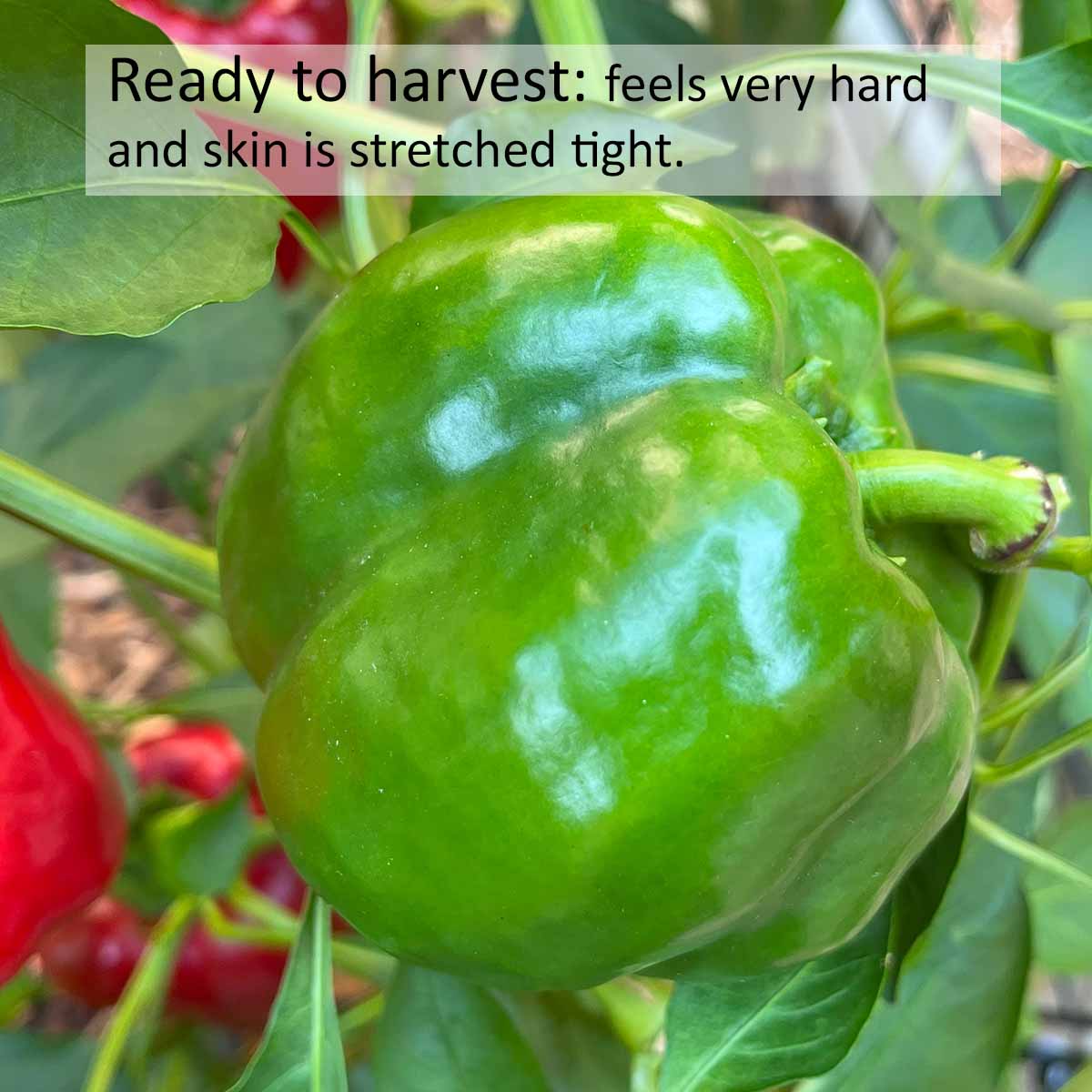
- Green bell peppers are mature and ready to harvest once full sized and they feel really firm. They'll feel so hard there's no real give if squeezed. The skin will also be very smooth and taut. This is referred to as green-mature.
- Red, orange, and yellow (etc) bell peppers can be harvested any time after they are green-mature, taking about 3 extra weeks to fully ripen to their final color. Flavor gets more citrusy and sweeter the longer they are left to ripen on the plant. They should still feel firm but might be a tiny bit softer than green-mature.
- Fully ripened bell peppers will usually last on the plant for at least a couple of weeks (climate, weather, and variety dependent). They might lose a little firmness, but will otherwise be fine (and still tasty!).
- Immature bell peppers are still edible, they won't be as crunchy and might be slightly more bitter.
Jump to:
Harvest timeline
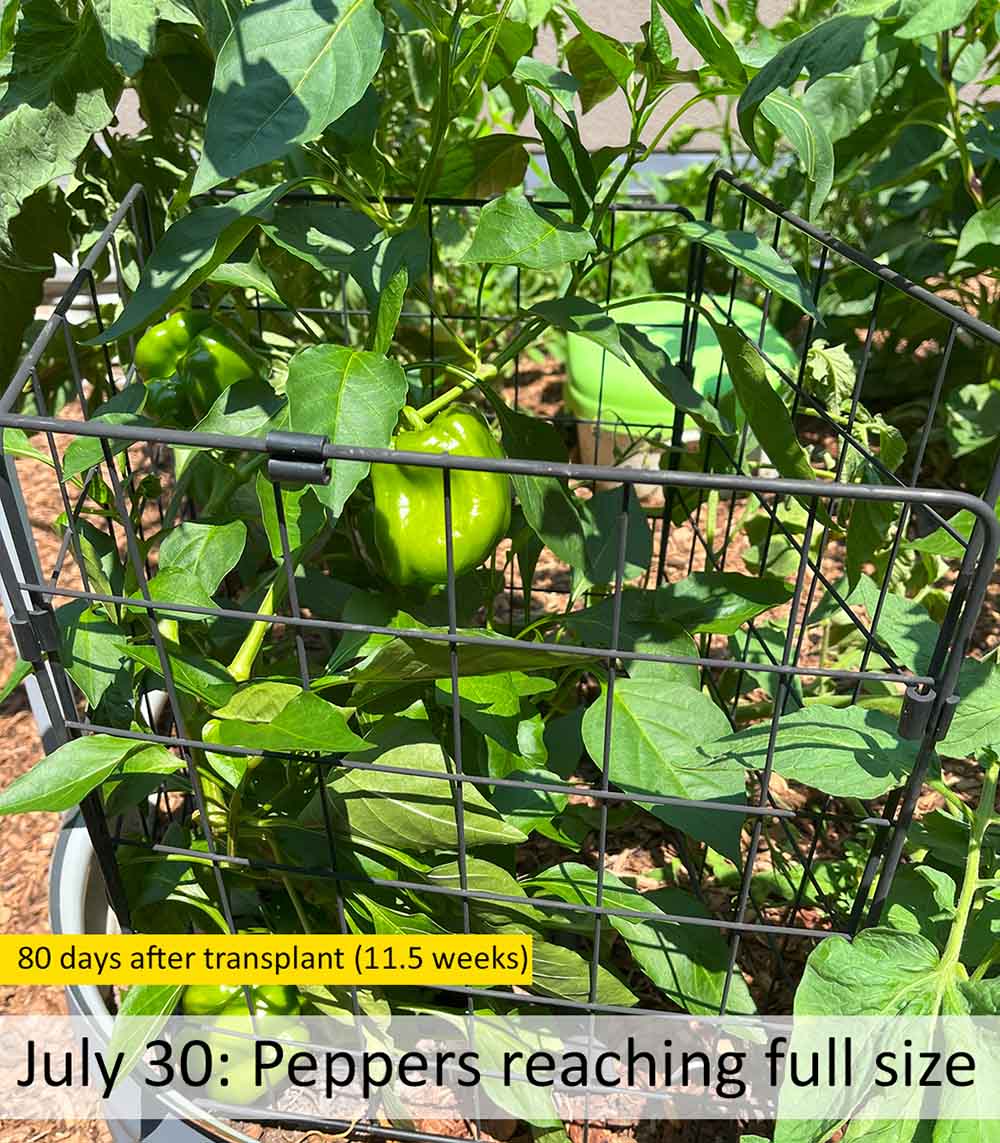
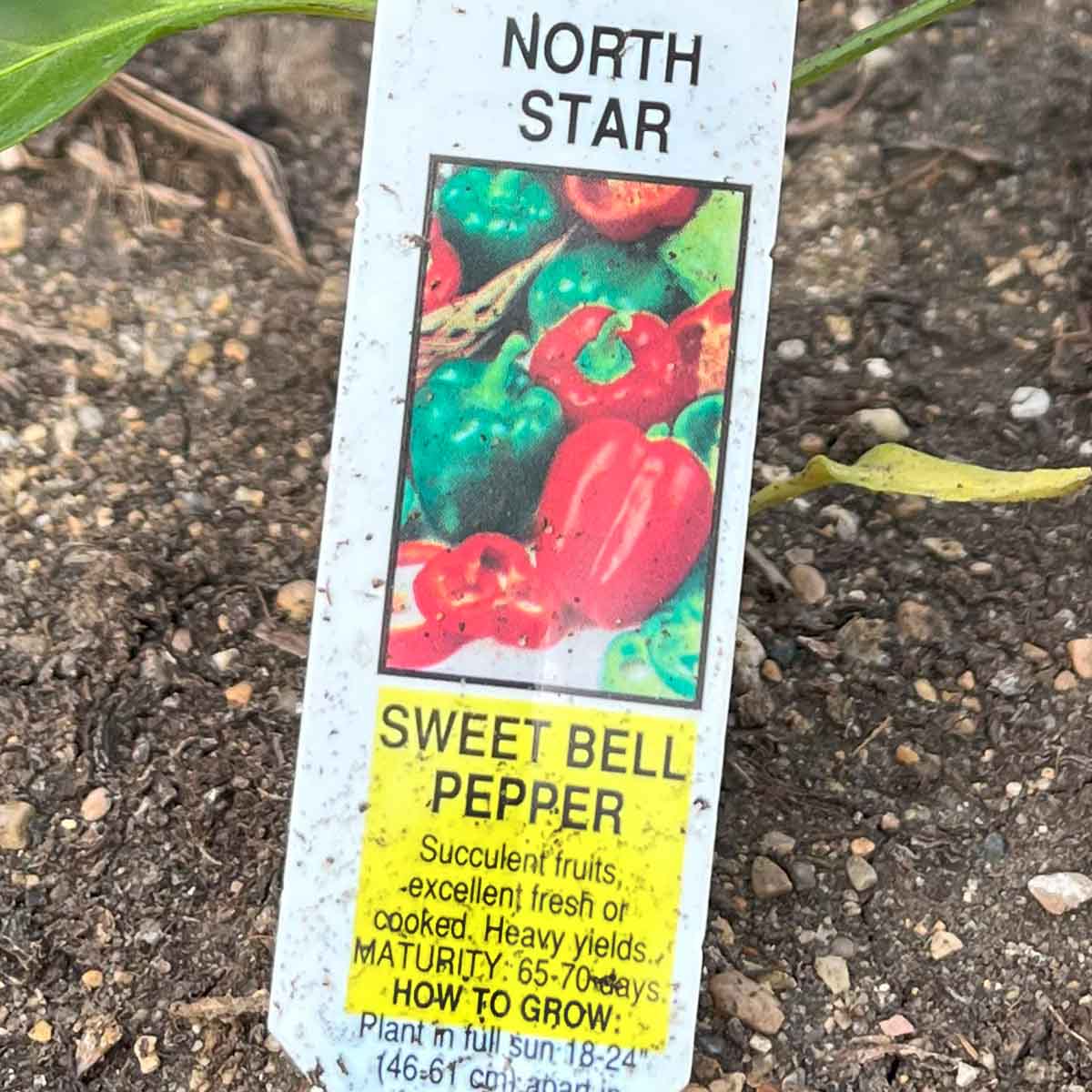
I planted a North Star bell pepper that was labeled as mature in 65-70 days, but as always, it takes longer than listed. Here's the harvest timeline from my Chicago area garden (USDA zone 6a):
- First bell pepper set: 8 weeks after transplant, tiny, itty-bitty bell peppers set from flowers
- Full size and green: Ready to harvest 4 weeks after fruit set (about 12 weeks after transplant)
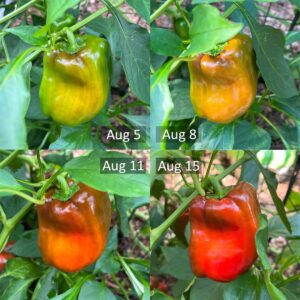
- Fully ripened to red: 3 weeks after green-mature (about 15 weeks after transplant)
My climate is middle-of-road for the US. Summer pretty warm - not too hot, but not too cold either. If you live in a cooler part of the US, add 2-4 weeks to the harvest timeline above. In warmer areas, you will probably harvest the bell peppers a week (or even two) earlier than me.
Days to maturity
So why does the plant tag always seem too optimistic on the maturity days?
Well, it's typically based on perfect growing conditions from research farms and greenhouses. That includes favorable weather, ideal fertilizing schedules (based on continuous soil tests), consistent soil moisture, and a professional managing the whole thing.
As home gardeners, we're not that exact. While we may take daily strolls through the garden and talking to the plants, we don't always get the ideal amount of water, nutrients, or cooperative weather.
It's also worth noting that the "days to maturity" label isn't always consistent from one seed vendor to another. For bell peppers, it typically measures the time from transplant to mature (but still green). It takes another 3-4 weeks for bell peppers to ripen fully to their final color.
When to harvest green bell peppers
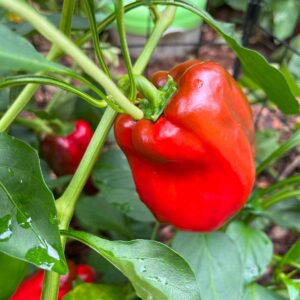
Green bell peppers are mature and ready to pick when they are full sized and feel firm. If you think it's ready, give it a light squeeze. If you're first thought is 'wow, I didn't know a bell pepper could be that hard,' then it's ready to pick. (Seriously, it surprising me every year).
So what does a ripe bell pepper look like? It will be very plump with smooth, shiny skin. You won't see any wrinkles in the skin.

If it gives a little, it's probably not ready. The skin will not look fully filled out. Picture your skin after a night-out, poor sleep, and dehydration... it's subtle but you can tell your skin isn't plump.
If you pick a bell pepper too early, it's still fine to eat although they won't be good for seed-saving. The peppers are edible at any stage and still have a good enough quality, unlike unripe tomatoes which are hard and flavorless. An unripe bell pepper won't be as crunchy and the flavor might be slightly more bitter than a ripe one.
If you are unsure, you can also just wait another week until you see the first signs of ripening to red (or any other color). Go ahead and pick it at this point if you want that green bell pepper flavor.

One research study found that bell peppers picked once green-mature (with no color change), can still turn color after harvest. But it took a long time - 5 days to start showing color, and about 2 weeks to fully change color. Within that time, it lost 11% of it's mass, even with perfect storage conditions.
A mature-green bell peppers will be crunchy with the typical grassy, vegetal flavor. They also have a good shelf life once picked, up to a couple of weeks.
When to pick red bell peppers
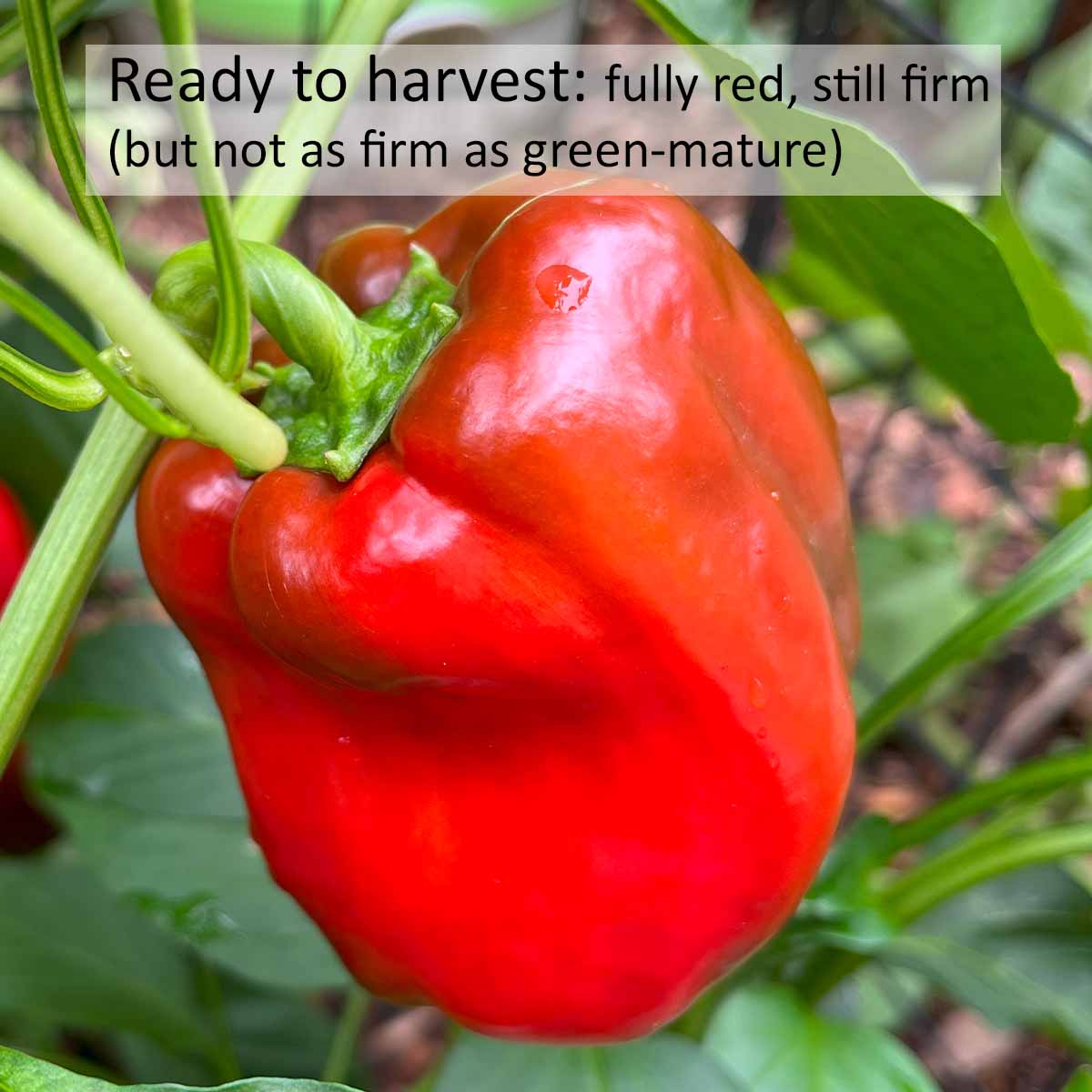
Bell peppers can be harvested any time they start to turn red, orange, yellow, or purple. Once they start to turn color, it will take about 3 weeks for them to fully ripen on the plant.
The sun-facing sides turn colors first, often finishing in a week or two. The shaded back side takes longer. If picked once they start changing color, you'll see them continue to change color on the counter. That said, the flavor won't be as pronounced if left to fully ripen on the plant.
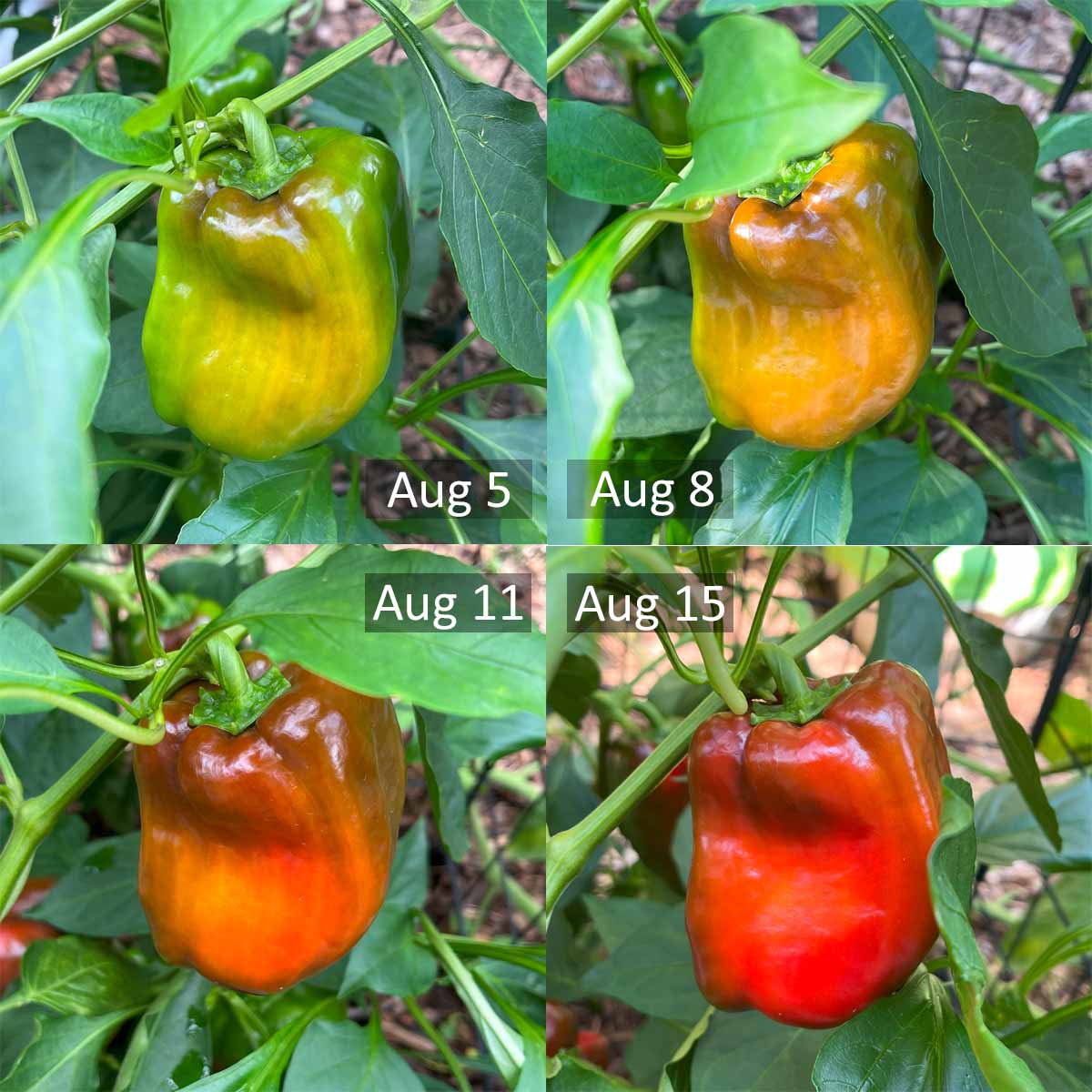
Deciding when to harvest your bell peppers is a balancing act. If you don't have pest or disease problems, wait to harvest the bell peppers until they fully ripen on the plant. You can even leave fully red (etc) peppers on the plant for a couple of weeks and their quality holds. (Some varieties might hold better on the plant than others). The peppers will start to have shriveled skin and feel softer if left too long on the plant.
But if you have pest or disease problems, you might not want to wait or you'll risk not getting any of your peppers.
When to harvest early
There are a few reasons to harvest your bell peppers early:
- Risk of bugs, critters, or diseases
- You have a short season and want at least some of the peppers to fully ripen
- Early harvest can increase production
The risk of bugs, critters, and diseases is obvious, but the other two aren't so clear. Let's take a closer look at why early harvesting can help the peppers ripen or produce more.
A pepper plant can only produce so much energy to grow and ripen peppers. If you pick some of them, you reduce the current number the plant is supporting. This allows the plant to redirect that energy that's no longer needed by those peppers.
One way to spend that energy is to ripen the remaining bell peppers. This can speed up the process to ripen them before the cold fall weather sets in.
Another way the plant can spend energy is to produce more flowers and set more fruit. This can increase the yield for people with longer growing seasons. So don't be afraid to pick a few green bell peppers early in the season!
End of season: pick everything!
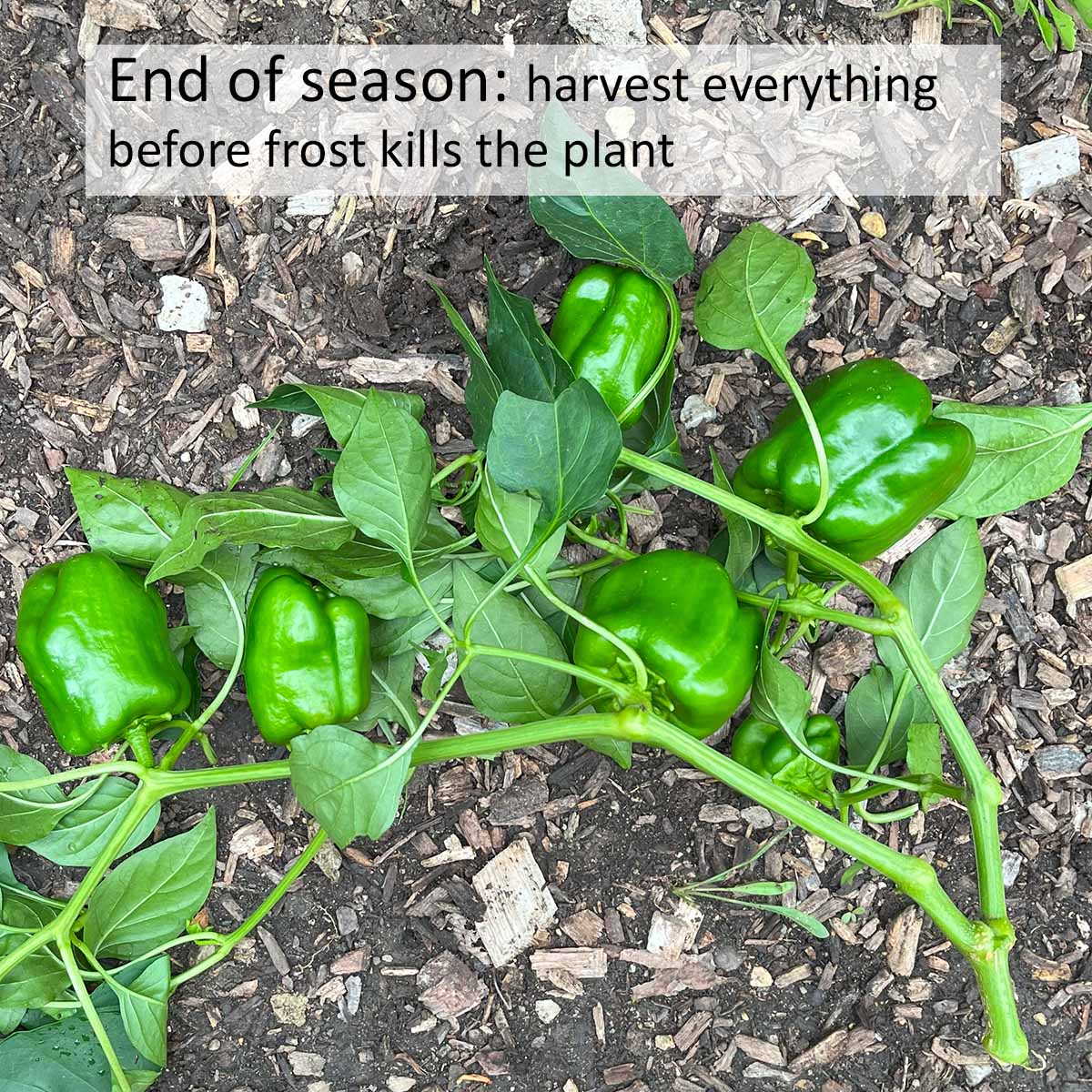
When the weather starts to cool, you'll notice the peppers take longer to fully ripen. If freezing temperatures are in the forecast, the plants will completely wilt and die back, while the peppers might get some chilling injuries that result in soft spots.
Harvest all of the peppers before your first fall freeze, regardless of their growth stage. Here's what to do with the peppers:
- Small, immature peppers: eat these first. They'll have a classic bell pepper flavor (maybe a little extra bitterness). Walls will be thinner and less crunchy, but work great for sauteing down in a recipe.
- Partially ripened peppers: eat these next
- Mature, green peppers: eat these last, as they have the longest shelf life after harvest.
Freezing your bell peppers
If you harvest a lot at once at the end of the season, you can freeze them for later use. They aren't great raw, but are delicious when cooked in almost any recipe.
- Clean & cut the peppers, discarding membranes and seeds.
- Place on a tray or some plates and toss in the freezer for an hour or two until frozen-ish. This step prevents them from freezing together in one giant, solid chunk.
- Transfer to a freezer-safe container or vacuum-sealer.
The quality should keep for at least 8 months if well-sealed. The University of Nebraska has a whole guide on freezing peppers if you want more information.
How to harvest
This might seem obvious and maybe it is... but I've found that when you're new to gardening, more information is always better.
In all of my experience, bell peppers can't be easily pulled from the stem, even when fully ripe. The stems are really thick and sturdy. You'll have to cut them from the plant or risk breaking the whole branch.
I have seen several guides mention that mature peppers are easily pulled from the plant, but I have not encountered this. My guess is those guides are lumping advice in for all peppers. I am definitely able to pull most hot peppers right off the plant by hand.
As an example, the University of Illinois says, "When the fruits mature, they break easily from the plant. Less damage is done to the plants, however, if the fruits are cut rather than pulled off." That guide is also about all peppers, as are most of the guides that tell you to simply pull the peppers off.
Just thought I'd clear that up, in case you are in your garden and wondering why you are failing to pull a bell pepper off the plant by hand.
More resources
If you're having trouble ripening your bell peppers in cooler climates, check out some of my climate-specific guides. There are strategies to grow them in pretty chilly environments if you have the time and energy, and pick the right varieties.



More garden guides to check out
Want to know how to harvest other veggies in your garden? Check out these other detailed guides.
Leave a Reply