A majority of cities in the Mountain West are at a high elevation with cooler temperatures and shorter growing seasons. While it's an absolutely stunning part of the country, it can be challenging to grow bell peppers here.
That's because bell peppers thrive in warm summer temperatures and the weather here can be a little chilly. But it's not impossible if you make a few adjustments.
There are several tricks to successfully grow them, like ways to warm the soil, increase spacing, and choosing the right varieties. This guide goes through every option to give your bell pepper plants their best shot!
At the end of the article, I've included other resources, like trial results in Fort Collins, and a bulletin from Idaho State about growing at high elevations.
Ideal temperatures
The first thing I want to share are the temperature ranges for growing bell peppers, since some of the problems are related to the low overnight temperatures at the high elevations in the Mountain West.
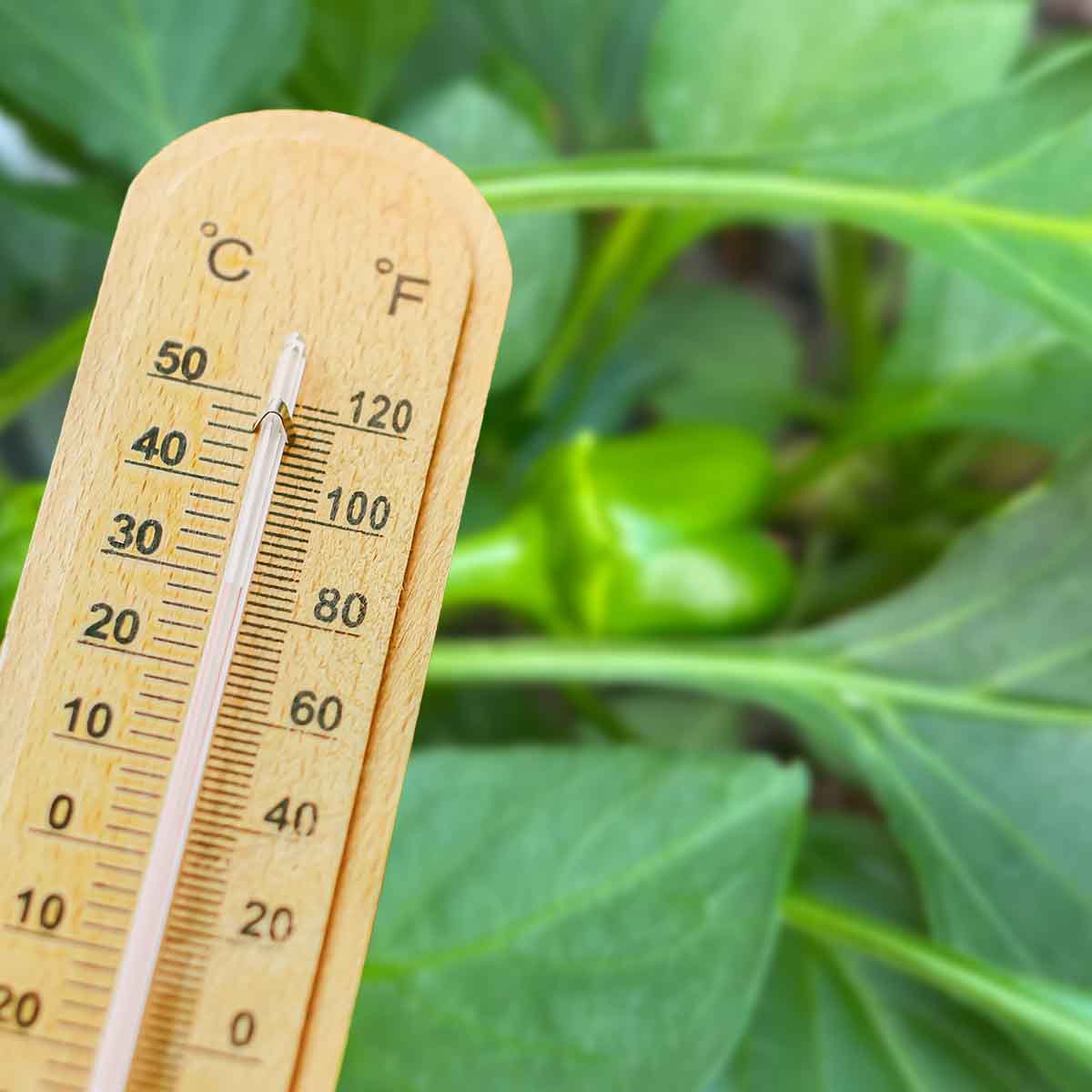
The ideal air temperatures for growing bell peppers are between 70-85F during the day and between 60-70F at night. Plants will be fine down to 50F, but below that they can suffer cold damage.
Here are some example highs and lows in the region based on Weather Spark's data. Look up your averages on Weather Spark by typing your zip code into the box in the upper right.
| City | July Highs | July Lows |
|---|---|---|
| Aspen, CO | 73F | 44F |
| Jackson, WY | 78F | 43F |
| Park City, UT | 79F | 52F |
| Flagstaff, AZ | 80F | 53F |
| Santa Fe, NM | 82F | 56F |
| Bozeman, MT | 82F | 48F |
| Idaho Falls, ID | 86F | 52F |
| Denver, CO | 88F | 62F |
| Reno, NV | 90F | 52F |
What happens outside of these temperature ranges? If you have cooler daytime temperatures, the plants will also grow slower and the peppers take longer to ripen.
Most pepper varieties are mature and green 80-85 days after transplant, in perfect conditions. This is the number of days to maturity listed on plant tags, and I'm pretty sure no one meets those dates outside of greenhouses and research areas. It takes an extra 3 weeks on average for peppers to turn red (or orange, or yellow).
However, in the Mountain West, your pepper plants will take an extra 4-5 weeks to mature (to green) because they grow slower in the cooler weather. This is why you want to find early-maturing varieties that list 60-70 days to maturity on the tag.
Another cool-weather problem is when temperatures drop below 60F. At that temperature, flowers will drop or have problems properly pollinating. This isn't an all-or-nothing scenario. Some flowers will still be fine down to 50F, but you will just have a lower yield.
Keep in mind, this is the ideal range, and bell peppers can still grow outside of these ranges.
You can grow varieties better adapted to cooler climates, like New Ace, which doesn't abort flowers as easily when temperatures dip low.
Adapting to the cool climate
A majority of cities in the Mountain West are at a high elevation with cooler temperatures and shorter seasons. But you can still grow bell peppers with some adaptations.
Let's take a look at the problems for your region and how to address them.
- Find warm microclimates
- Warming the soil
- Extra sunlight
- Further plant spacing
- Block wind
Warm microclimates
Bell peppers thrive when daytime temperatures are around 70-80F and night time temps are around 60F. Plant growth, including flower production and bell pepper maturation, slows in the cooler temperatures of this area.
Furthermore, when temperatures drop below 60F at night in early summer, flowers sometimes don't pollinate properly, or fail to form.
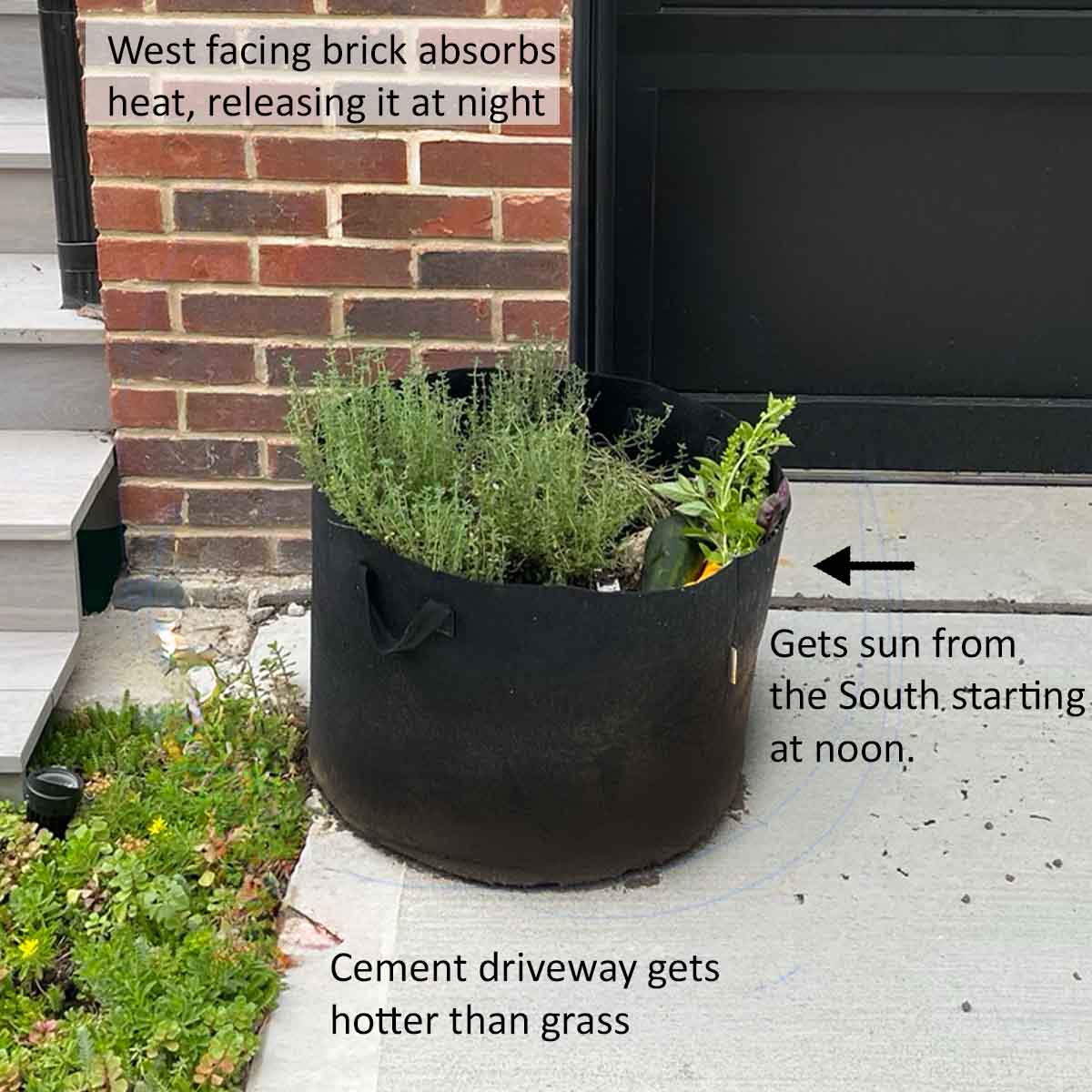
Keep the temperatures up on cool nights with cloches and find warm microclimates in your yard.
- South-facing walls and fences radiate heat, so nearby plants are warmer.
- Concrete, rocks, and decks radiate much more heat than grass (think of standing in a hot parking lot vs a park). Planting in pots on these surfaces takes advantage of the microclimate.
- Eaves, awnings, and overhangs trap a little bit of heat that's rising up. If they don't shade the plant, it's a good way to add extra heat overnight.
Warming the soil
Warmer soil will help speed up your bell pepper plant growth. There's a few ways to do this, and you can combine them as well.
The first thing to know is that soil in raised beds warms up earlier than soil in the ground. The soil in raised beds also gets hotter on a daily basis, which your pepper plants will appreciate.
Soil in pots get even warmer than soil in raised beds. As a bonus, they can be moved indoors or into a garage to avoid a late spring freeze or an early one in fall, and to finish maturing (if necessary) at the end of the season.
Pepper plants will be more than happy in a 5 gallon container. Black plastic containers will get the hottest. I prefer black fabric pots because I think they are more fool-proof with temperature and water regulation, but it's possible the black plastic is better for your cool summers.
Next, you can cover soil with clear or black plastic. It comes in sheets and is like one of those thick construction garbage bags. Research trials show that clear plastic actually heats the soil up more than black, as the sunlight is able to directly warm the soil. The plastic keeps the soil warmer overnight, reducing the ability for the heat to escape.
Lastly, consider skipping mulch. Mulch actually keeps the soil cooler, and in my current garden (Chicago), mulched soil is 5-8F cooler than bare soil. If you are willing to put in the extra effort to keep beds weed-free and well-watered, skip the mulch.
Extra sunlight
In areas with higher elevation, the more intense sunlight can make up for some of the lower temperatures, according to "Growing Peppers in Short-Season, High-Altitude Idaho Gardens."
If you can find the space, put your peppers in a south-facing part of your yard. This gives your pepper plant sun all day, from sunrise to sunset.
If you don't have a good south-facing option, the second best is west-facing so it gets sun from about noon until sunset. The temperatures get even warmer with afternoon sun exposure, which is why it's much better than east-facing (facing the sunrise).
Plant spacing
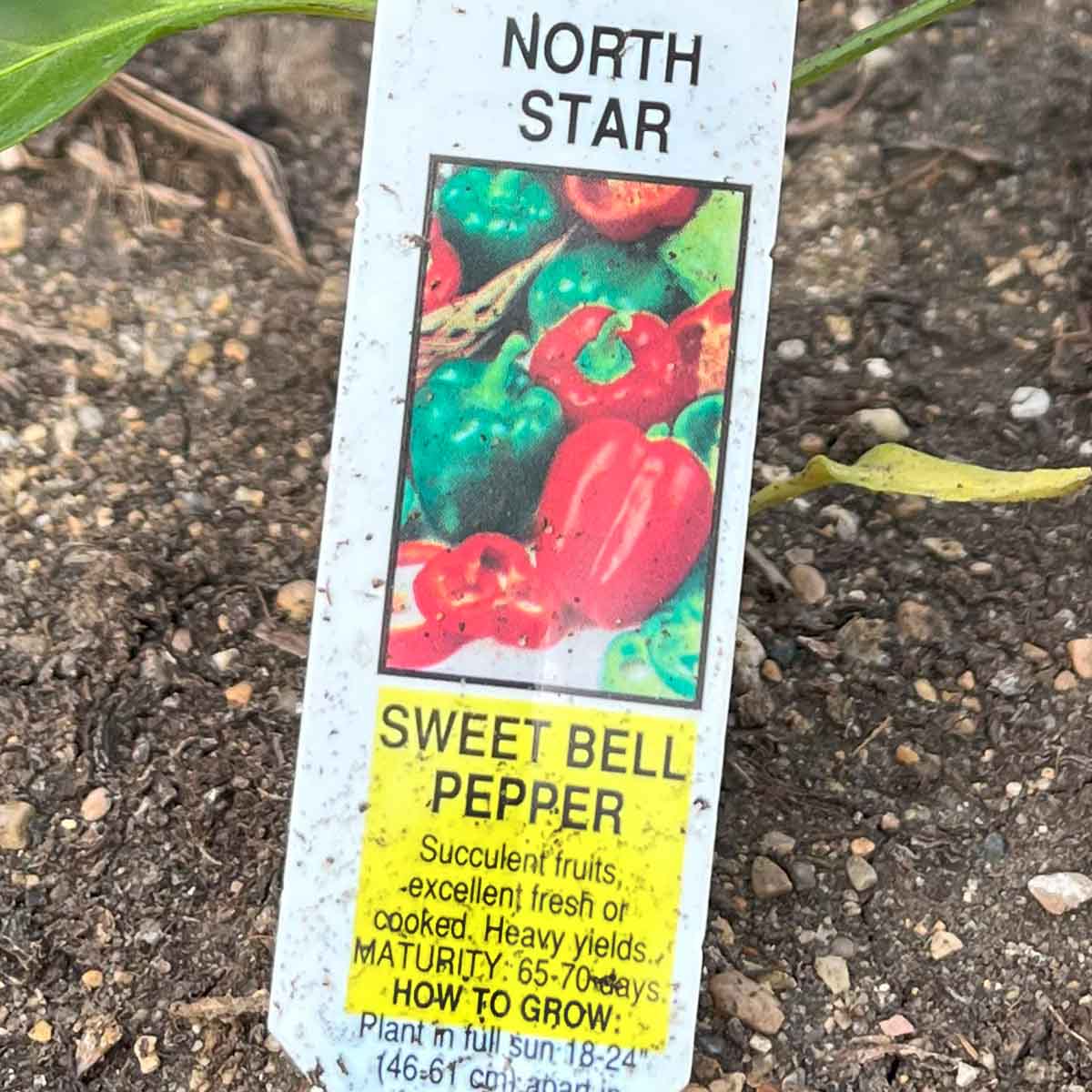
The standard spacing for bell pepper plants is 18-24 inches apart. In your cooler, high-elevation region, you'll want to plant them at least 24 inches apart, possibly even 30 inches.
"The extra spacing allows plants to become bushier, receive more sunlight, and ultimately be more productive," as explained in the University of Idaho bulletin, "Growing Peppers in Short-Season, High-Altitude Idaho Gardens."
With greater spacing, the plants have less resource competition for nutrients, water, and even sunlight. Any extra competition will slow down their growth - which is the last thing you want in your cool, short-season summers.
On that note, make sure you keep the bed weed-free and resist the urge to fill the empty space in with other plants (like herbs). You don't want those extra plants competing for resources.
Your pepper plants will also benefit from the exposed, bare soil that can warm up in the sun. The extra spacing between plants and lack of other plants helps make this happen. Research has shown that bare soil gets much warmer in summer than soil with mulch or covered in vegetation.
Blocking wind
Bell pepper plants are short and stocky, but each branch is holding a heavy load for its size. Wind can break the branches off. If this happens, you can eat whatever bell peppers were on that branch - they are edible at any stage.
Provide a wind break or enough structure to protect your bell pepper plants from the wind. Most people stake their plants, but the side branches are still susceptible to breakage. I've found tomato cages provide adequate support on windy days.
You can also create a wind barrier if you know which direction the prevailing winds come from in summer. Caged tomato plants, corn, or sunflowers can do a pretty good job of blocking enough wind. Just make sure they aren't shading out your peppers. You can also put up a barrier with shade cloth or landscape fabric (like a mini-fence), as long as it doesn't shad the plants.
Short season
The late spring frosts and early freezing weather in fall creates a short season for growing bell peppers in the Mountain West. The trick is to provide as much heat as possible and to consider season extenders if peppers haven't fully matured in time.
To provide more heat, consider growing the bell peppers in raised beds or containers, both heat up faster that in-ground soil (containers heat up the fastest).
If you grow the peppers in pots, you can also move them into a garage (or even indoors) if you get a late frost or early freeze. Then put them back outside to enjoy the sunshine. Alternatively, if cool weather has set in at the end of summer, set the pepper pots on a seedling heat mat in the garage to let them finish ripening.
For season extension ideas, check out the guide from the University of Idaho.

Varieties for the Mountain West
Like other cooler areas, look for peppers with a shorter maturity window. Most peppers take 80-85 days to mature and won't work on your area. Look for early varieties that take 60 or 70 days to mature.
The University of Idaho has a list of bell peppers that perform well at high elevations and Larimer county in Wyoming published a multi-year vegetable trial that includes bell peppers.
Colorado State University also conducted trials, growing 15 types of bell peppers in Fort Collins. Plants averaged 4-6 bell peppers each with a couple varieties standing out. In the results, they claim that "The variety 'Ace' was the earliest maturing variety in both years. 'Olympus' was the highest yielding variety for both years."
Here are some suggested varieties, pulled from numerous sources:
- ⚪ Chablis - (white-to-orange-to-red, 60 days), a fun pepper turning multiple colors and can be harvested at any stage.
- 🔴 Parks Early Thickset Hybrid - (listed at 45 days by University of Connecticut), full sized, very early bell.
- 🔴 King Arthur - (red, 59 days), heavy producer with great disease resistance.
- 🔴 North Star - (red, 60-70 days), very productive with yields of 10-12 in the Northeast, and suggested by University of Idaho.
- 🔴 Olympus - (red, 65 days), one of the best producing peppers in trials conducted in Fort Collins, largest sized peppers that are good for stuffing.
- 🔴 Lady Bell - (red, 68 days), adapted to cooler climates, setting fruit even in cool weather.
- 🔴 King of the North - (red, 70 days), a great producer in cool climates.
- 🔴 Peacework - (red, 65 days), a child of King of the North. Small plants with a denser canopy. Fedco trials in Maine produced 6 peppers per plant, and I'd expect similar in the Mountain West.
- 🔴 Ace - (red, 60 days), an early ripening variety with thinner walls, can still be found at Johnny's Selected Seeds.
- 🔴 New Ace - (red, 60 days), appears to be replacing Ace at most vendors. Sets fruit even in cooler temperatures and turns red early. Reportedly doesn't abort flowers as easily in low overnight temperatures. A seed vendor in Alaska even claims it can grow outdoors in their climate. Expect 6+ peppers per plant.
- 🟠 Gilboa - (orange, 66 days), heavy yields (12 per plant). Fedco reports early ripening, with harvest around September 1 in Zone 4 (Hartland, Maine).
- 🟠 Corona (orange, 70 days), reportedly from Denmark, where summers are also cool with July highs around 70F and lows around 56F.
- 🟡 Doe Hill Golden Bell - (yellow, 60 days), a miniature squat-shaped bell pepper that's supposed to be a good keeper if you don't use peppers right away. Heavy yields.
- 🟡 Golden Star - (yellow, 72 days), an early full-sized bell that produces well with bushy growth to shade peppers. Fedco (in Maine) reports 7-10 peppers per plant, harvesting in September and trials in Fort Collins produced 4-5 peppers per plant.
- 🟡 Gypsy - (yellow, orange, and red, 65 days), not a bell pepper, but mini peppers that you find pre-bagged in the grocery store. Can ripen faster than full-sized bells.
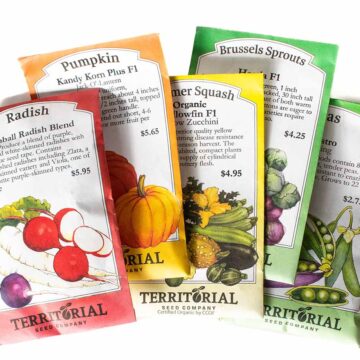
Check out Pueblo Seed & Food Co. for seeds grown in Colorado, suitable for the Mountain West climate.
Bell pepper growing: the basics
Next, let's cover some climate-specific advice for the basics, like starting peppers from seed, transplanting, and fertilizing. For a more comprehensive explanation on all of these steps, check out "How to grow bell peppers in YOUR climate."
Starting from seed
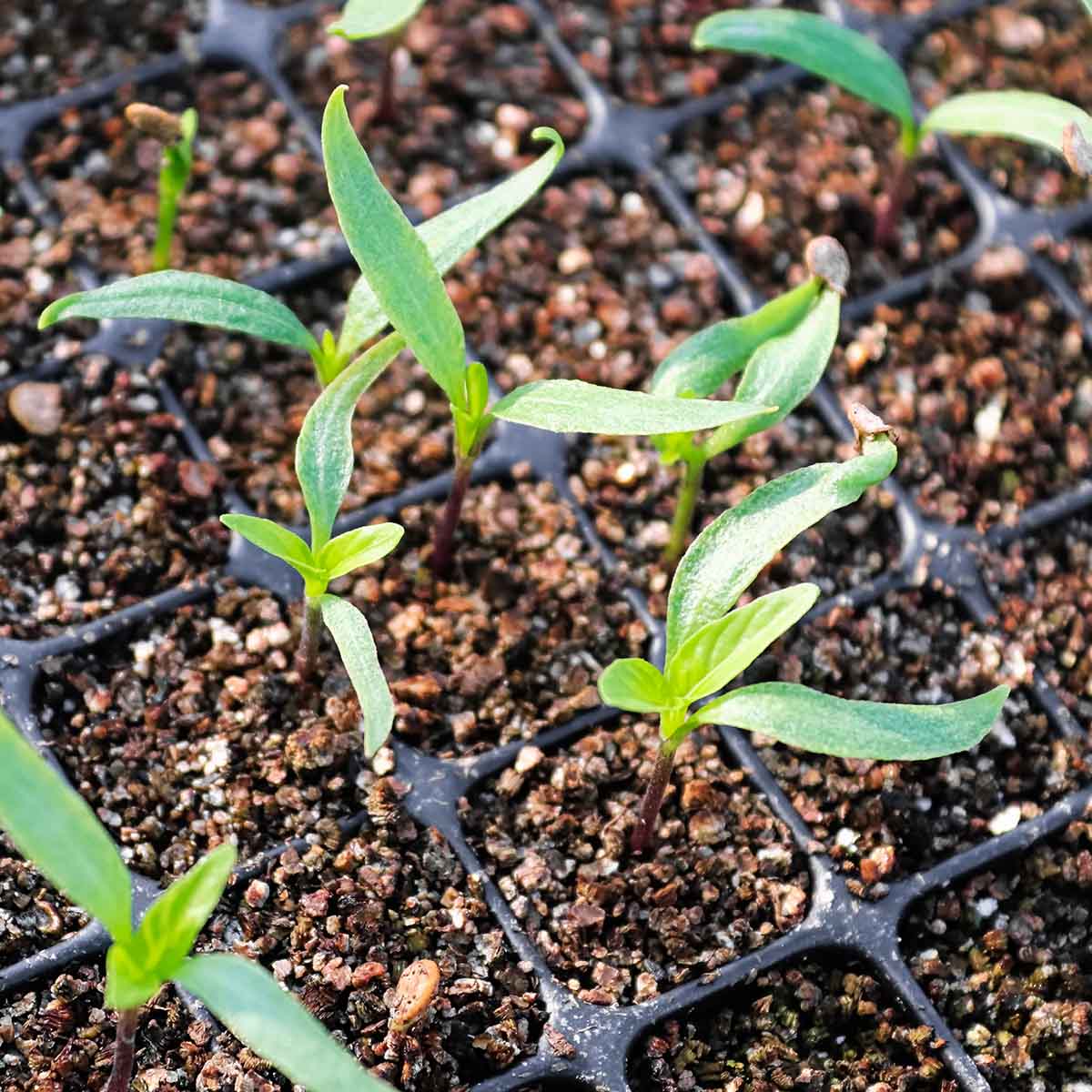
Bell pepper seeds need pretty warm soil to germinate - much more so than other garden vegetables, like tomatoes. You'll probably want a heat mat, or set them on top of your fridge (which is actually warm).
Start the seeds 10-12 weeks before your average last frost to give them enough time to grow. You'll want them to be 6-8 inches tall before transplanting them.
Transplanting
Make sure you transplant 2-4 weeks after your average last frost date, and when the lows are consistently above 50F degrees. You can also warm the soil up ahead of time with black plastic sheeting.
Some areas can get away without hardening off their transplants, but you'll probably want to take the extra time to do it. Hardening them off makes them more resilient to the temperature swings, overnight lows, and windy spring conditions.
Harden the peppers off by taking them outside for a couple hours a day, increasing the time spent outside each day for 2 weeks. Their growth will slow during this period while they 'toughen up' and then they will pick back up once transplanted.
Remove flowers for the first 4 weeks after transplanting. If left to flower, the plants will direct energy into growing bell peppers instead of leaves. This means the plant will only be able to soak up enough sunlight and nutrients for 1-2 bell peppers.
When the flowers are removed, the plant puts more energy into leafy growth, so it can support more peppers. Typically 4-8 per plant in this climate.
Fertilizing schedule
Bell peppers need a lot of fertilizer to flourish and grow large peppers. Forgetting to fertilizer is one of the biggest mistakes people make. Other vegetables like tomatoes or zucchini can get by with minimal fertilizer - they might not be as productive but you'll still be pretty happy.
If you skip the fertilizer for bell peppers, they will grow too slowly to produce mature peppers before your summer is over. With a short season, you really can't skip this!
When to fertilize:
- At transplant: mix in compost or a slow release fertilizer into the hole for planting. Make sure it's a type that won't burn the roots. Add an extra source of nitrogen to encourage leafy growth, like bone meal.
- At flowering and after: use a balanced fertilizer once every 3-4 weeks.
Harvesting
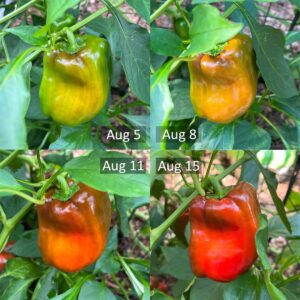
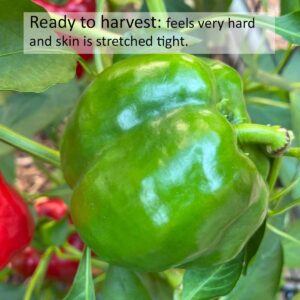
Green bell peppers are mature, but not fully ripened to red, orange, yellow, or even purple. It can take an extra 3 weeks on average to turn their full color.
That said, you can harvest bell peppers at any stage from green to their full final color. If you harvest them when they are partially turned, they will continue to turn colors indoors (but that's not necessary to eat them). The walls should still be thick and crunchy at any stage, but the flavor might be a little more bitter than usual.
They don't withstand freezing temperatures, so if you can't protect them or bring them indoors during a cold snap, be sure to harvest beforehand. You can eat all of the bell peppers, even if they are small and green (and of course, no signs of spoilage).
The plants don't like temperatures below 50F and can start to die off. Keep an eye on them and harvest peppers if the plant shows distress. The peppers can start to lose their firmness in these cooler temperatures as well.
If you're peppers are really slow the ripen, and you're season is coming to an end, you can do a few things to try to speed them up.
- Remove flowers that show up late in the season - the plant won't have enough time to grow a fully mature bell pepper in short-season areas
- Harvest some of the mature bell peppers - this allows the plant to distribute it's finite resources to the remaining bell peppers, ripening them faster.
- I talk about these options in more detail in this article by Tenielle Jordison on Homes & Gardens.
More resources
- University of Idaho, "Growing Peppers in Short-Season, High-Altitude Idaho Gardens"
- University of Wyoming "Tips on cultivating peppers in Wyoming" and their temper(ature) tantrums
- Fine Gardening has a short article on growing hot chili peppers in the Mountain West
- Larimer country, Wyoming vegetable trials
- Boulder Weekly's "Growing Hotties" on gardening with peppers in Colorado
- Seeds grown in and adapted for the Mountain West, from Pueblo Seed & Food Co
Leave a Reply