I installed 10 metal raised garden beds in 2023 and they've seen several growing seasons now. I chose metal garden beds because I didn't want to replace wood, since it rots pretty quickly in my Midwest climate.
While I genuinely like the raised metal garden beds and trellises that I bought, the coating is already failing and I have a lot of rust spots after just 3 years. I wondered why this happened, since I had purchased a premium brand that advertised a 20-year lifespan (or longer).
I wanted to know if it was a bad product or if it was something I did. And was this avoidable?
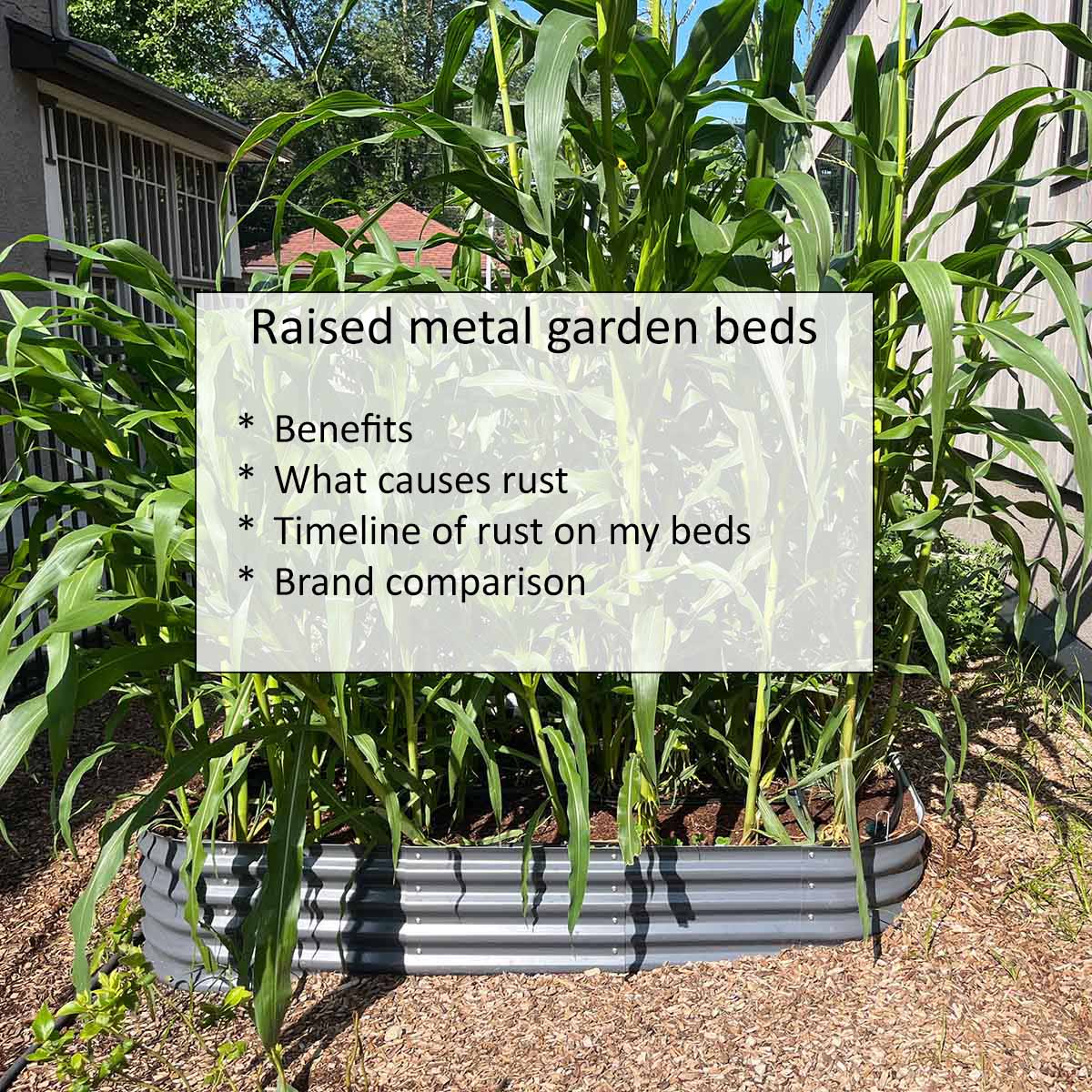
After a bunch of research and a couple of calls with a soil corrosion specialist at the Texas A&M corrosion lab, it seems this rust was inevitable. I've concluded it wasn't a bad product (or even a brand-specific problem), and not my fault, either.
I hope my answers help you decide if you want to buy raised metal garden beds.
This post does not contain any affiliate links - I wanted to keep it as an unbiased guide to help you decide if metal garden beds are right for you.
Jump to:
A quick overview of metal raised garden beds
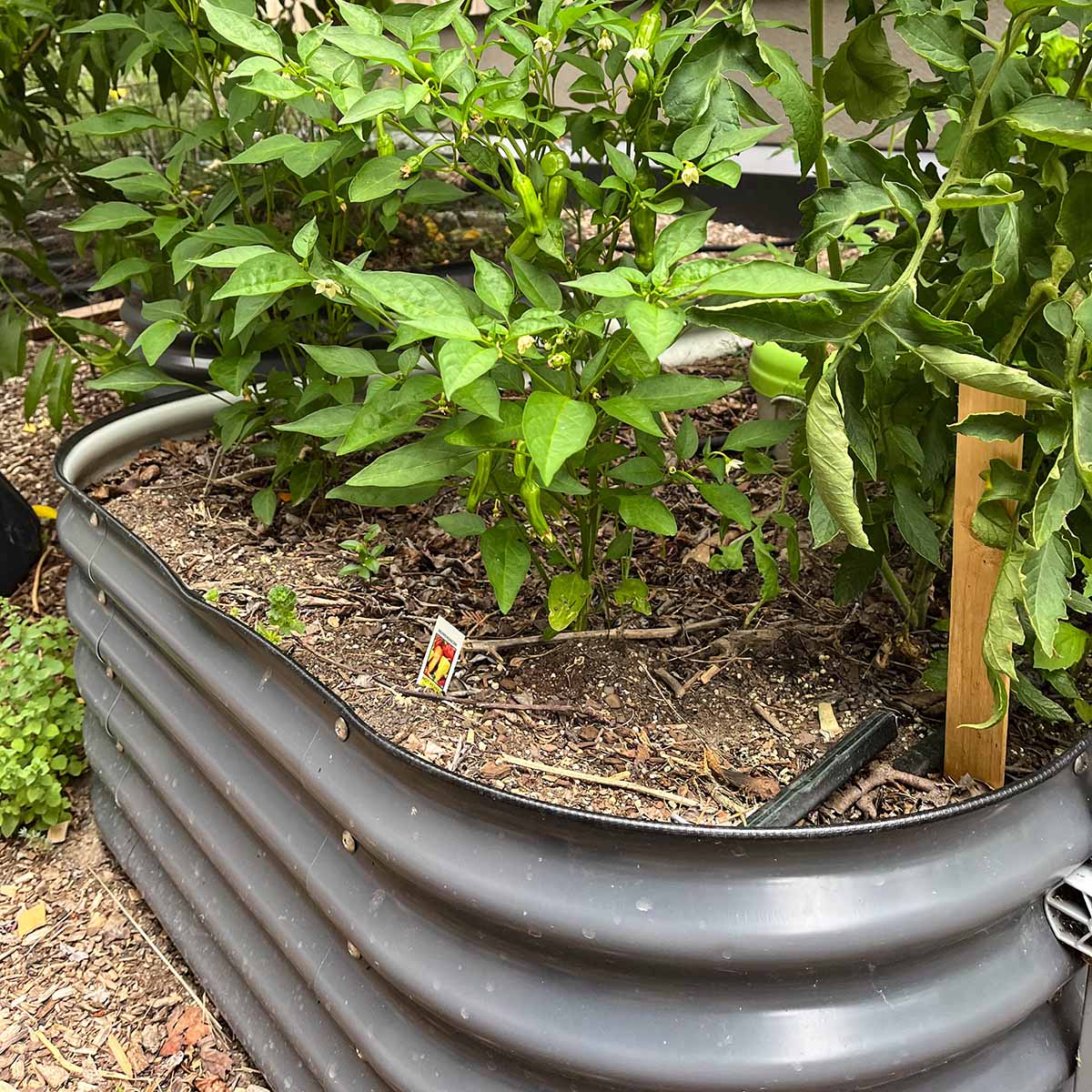
Raised metal garden beds are an attractive option for their durability, thin (but sturdy) design, temperature regulation, sustainability, and aesthetics.
I had cedar beds in the past, made out of wood that was 2" thick. They can rot pretty quickly in the wet Midwest environments. Joe Gardener, based in Atlanta, had untreated cedar wood beds made out of 4x4 posts and they were completely rotted through after 14 years (he admitted they needed replacing by year 10).
Because of the past rotting wood beds, I chose raised metal garden beds, as did Joe. He has a very, very detailed post about both types of beds and how he designed the replacement DIY metal beds. (It's frustratingly difficult to find posts that don't have affiliate links, essentially trying to convince you to make a purchase, but Joe's is a good one!)
Anyway, let's dig into the details for durability and temperature.
Durability
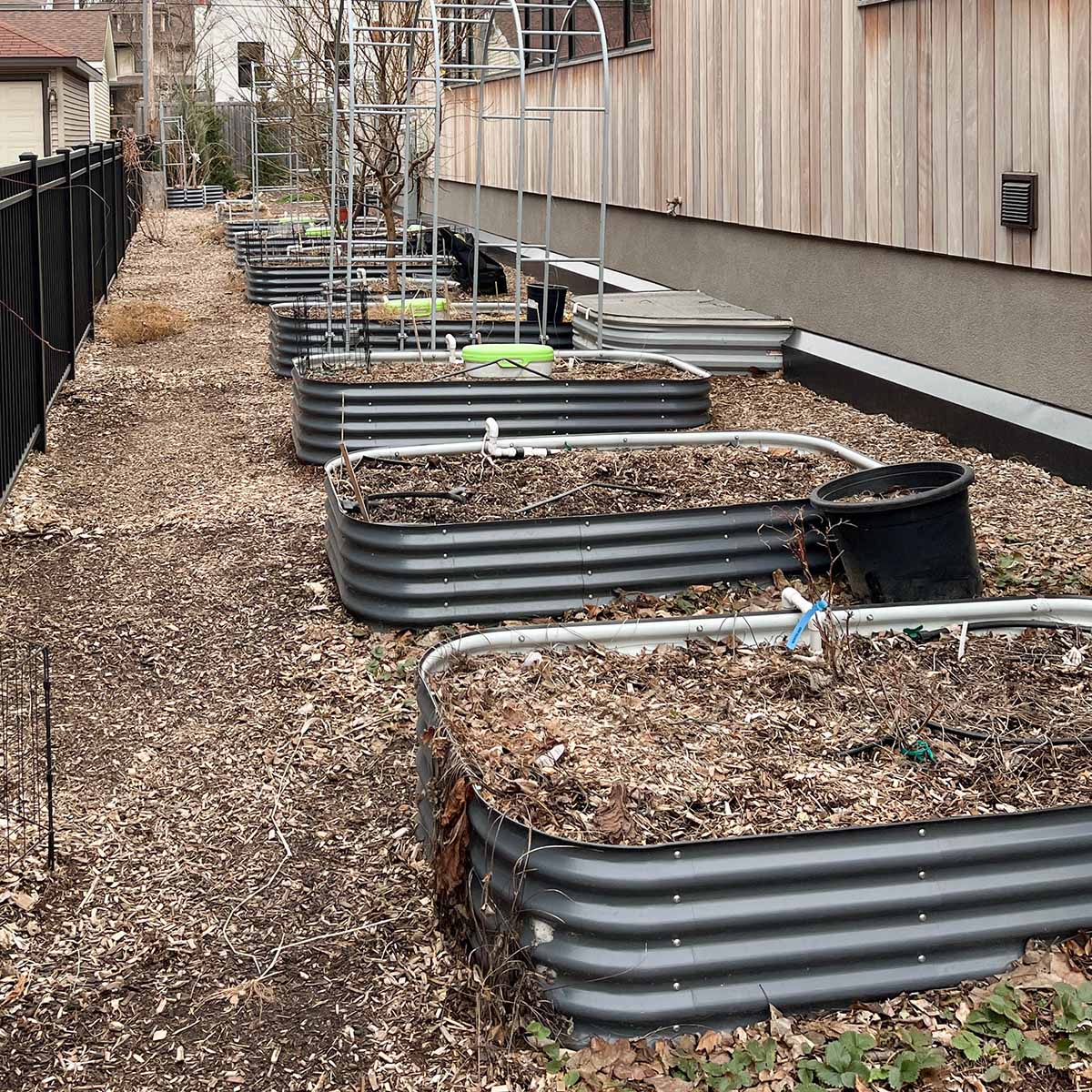
High quality raised metal beds are very sturdy - the corrugated steel ones are extremely strong. They don't easily bend or bow, even when fully filled with soil. I didn't use any cross braces in my beds and they didn't bow at all, even the one that's 8 x 2 feet.
In order to protect the steel garden beds from rust, companies coat them with various substances. These days, that's either an aluminum-zinc coating, or aluminum-zinc-magnesium coating.
Vego Garden uses the latter, aluminum-zinc-magesium in their VZ 2.0 material. They claim their VZ 2.0 material's "exceptional performance has been verified at the Texas A&M; National Corrosion & Materials Reliability Lab."
A lot of the metal raised garden beds advertise 20-year (or more) lifespans. That was important to me since I'm growing asparagus in them, as well as some fruit trees, like peaches, cherries, and my Javid's Iranian almond.
So I was very disappointed when my beds started rusting after just 3 years.
Temperature
The soil in any raised garden bed (regardless of material) heats up faster in spring compared to soil in the ground. This can help you get a jump start on your heat-loving vegetables, especially if you're growing bell peppers.
But you might be worried that a raised metal garden bed gets too hot. Good news - they don't!
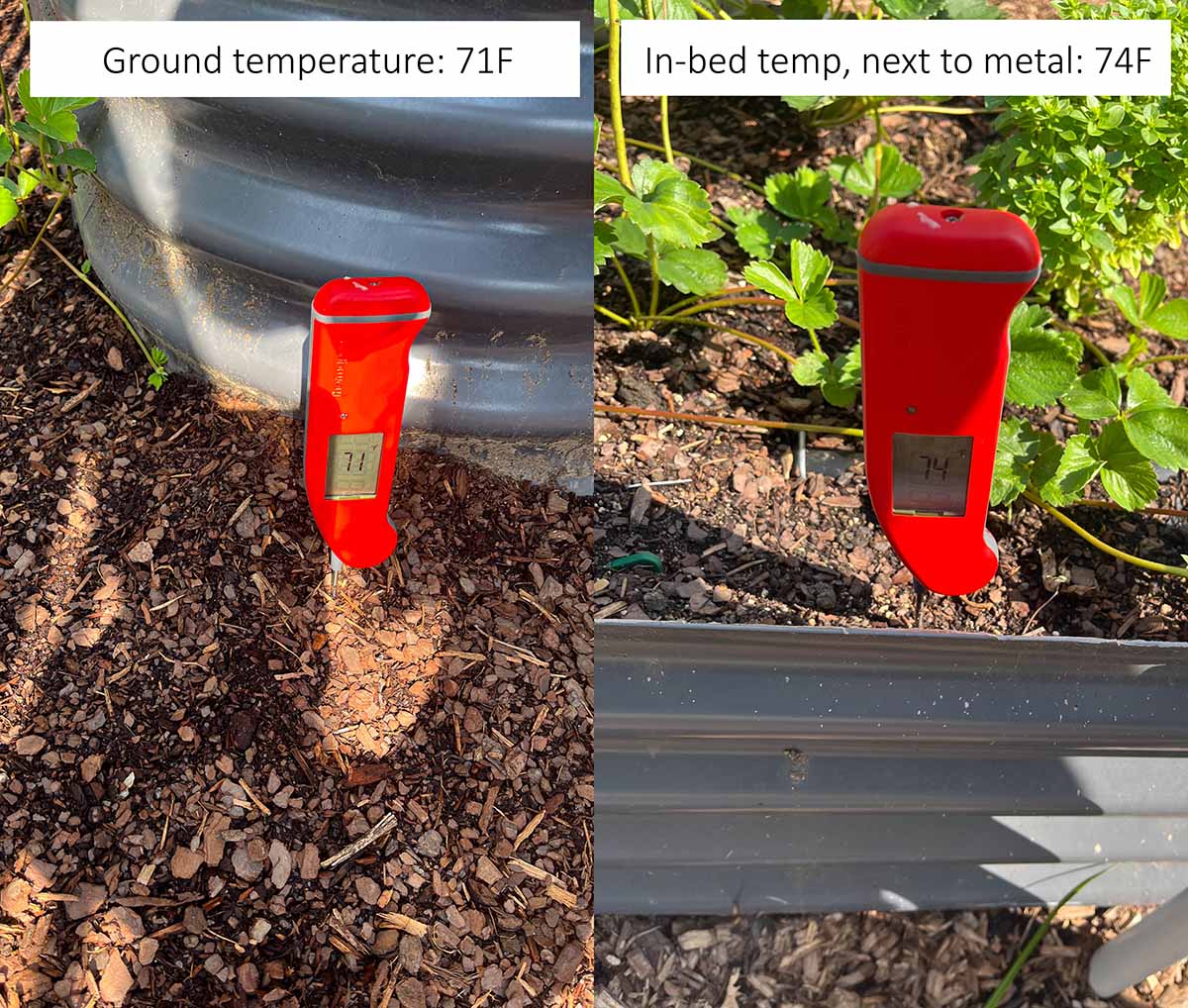
These raised beds regulate heat really well, which matches tests from other sources. I'm in the Chicago area with hot summers and the soil. As you can see from the photo above, on a regular summer day, the temperature difference isn't that large.
I also tested the soil in my raised metal garden beds during a heatwave with 102F air temperature and the soil was cooler than the air:
- Unshaded soil with no mulch: 98F
- Unshade soil, mulched: 90F
- Shaded soil: 80F
Shade and mulch have a bigger effect on the soil temperature than the metal garden bed, especially if you need to protect your plants during a heatwave.
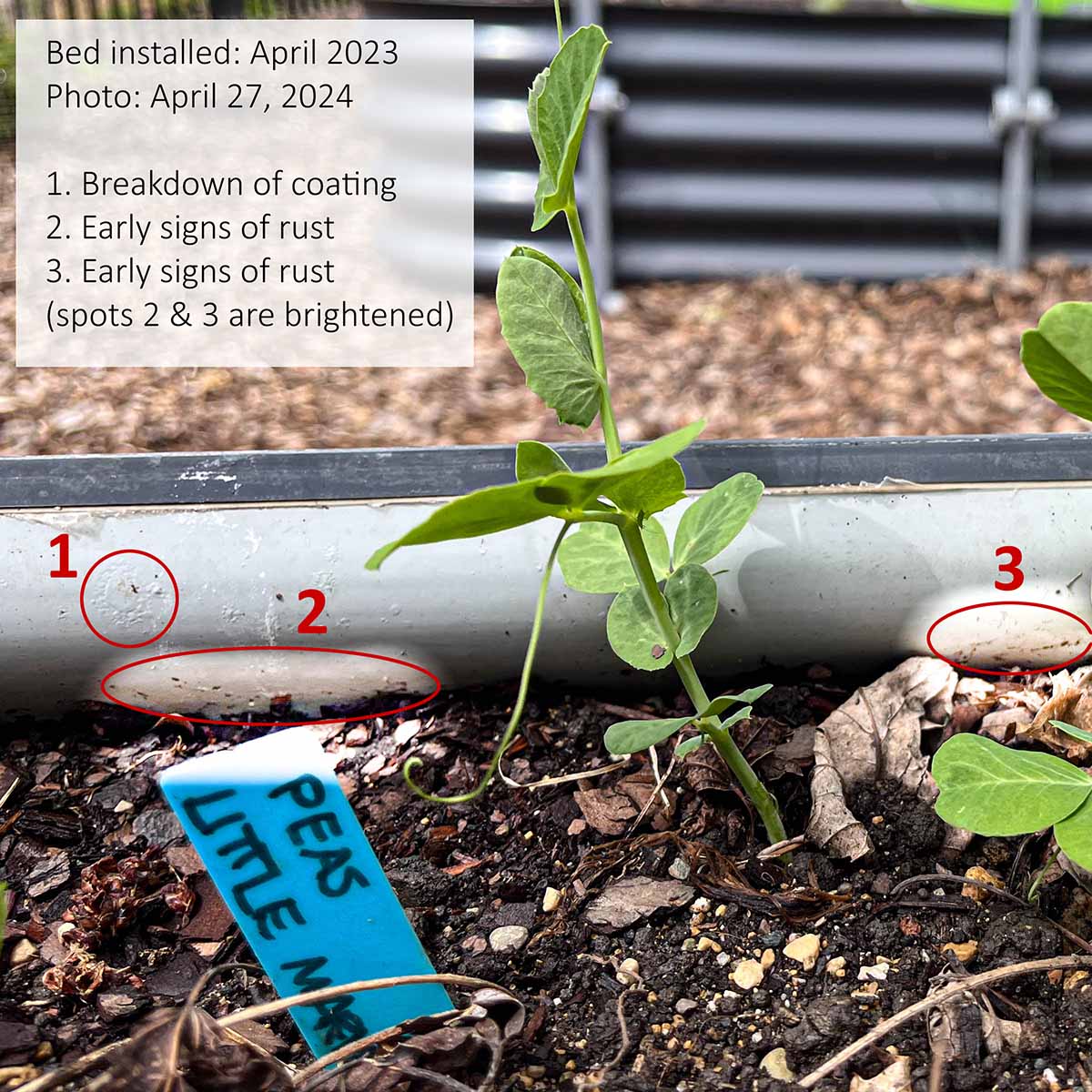
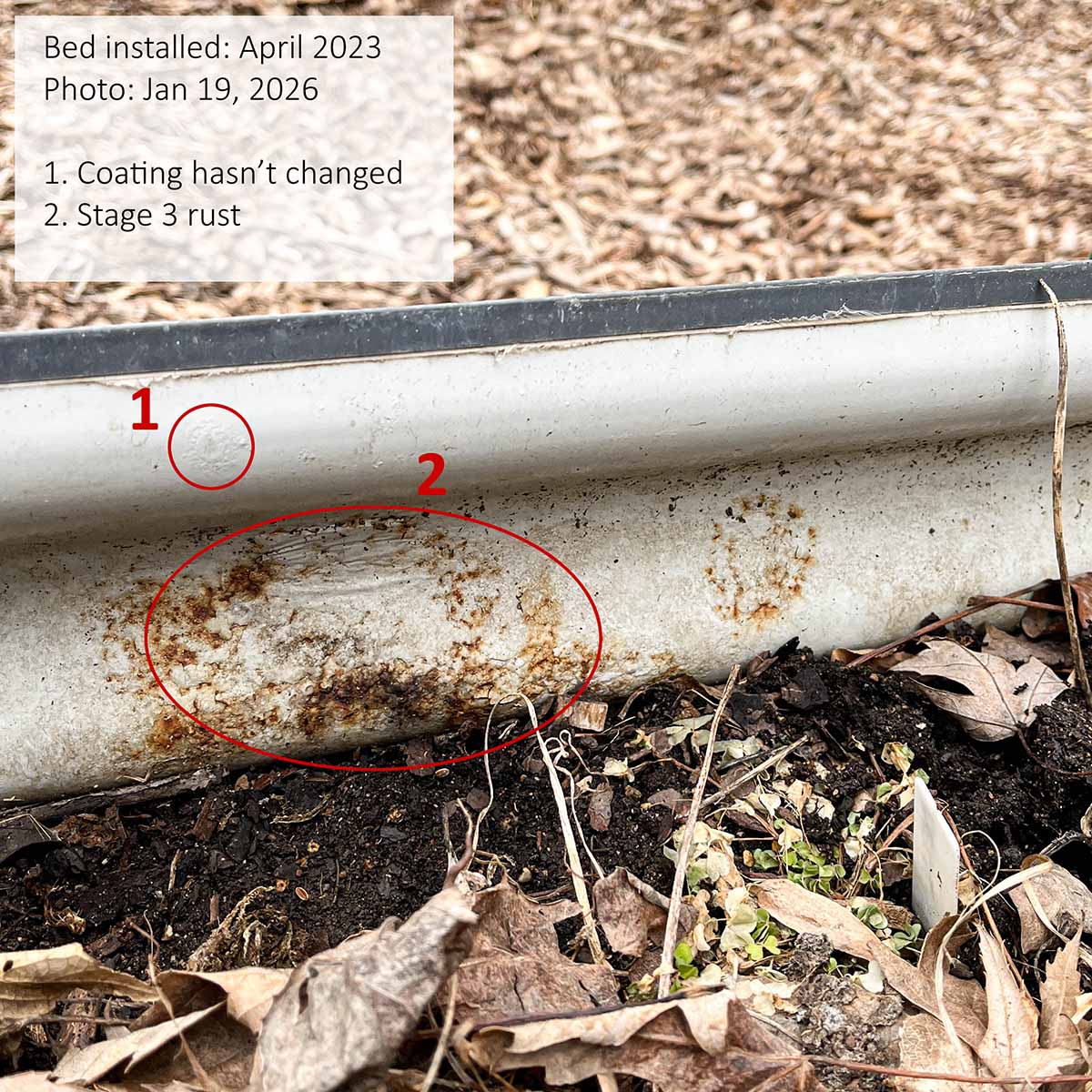
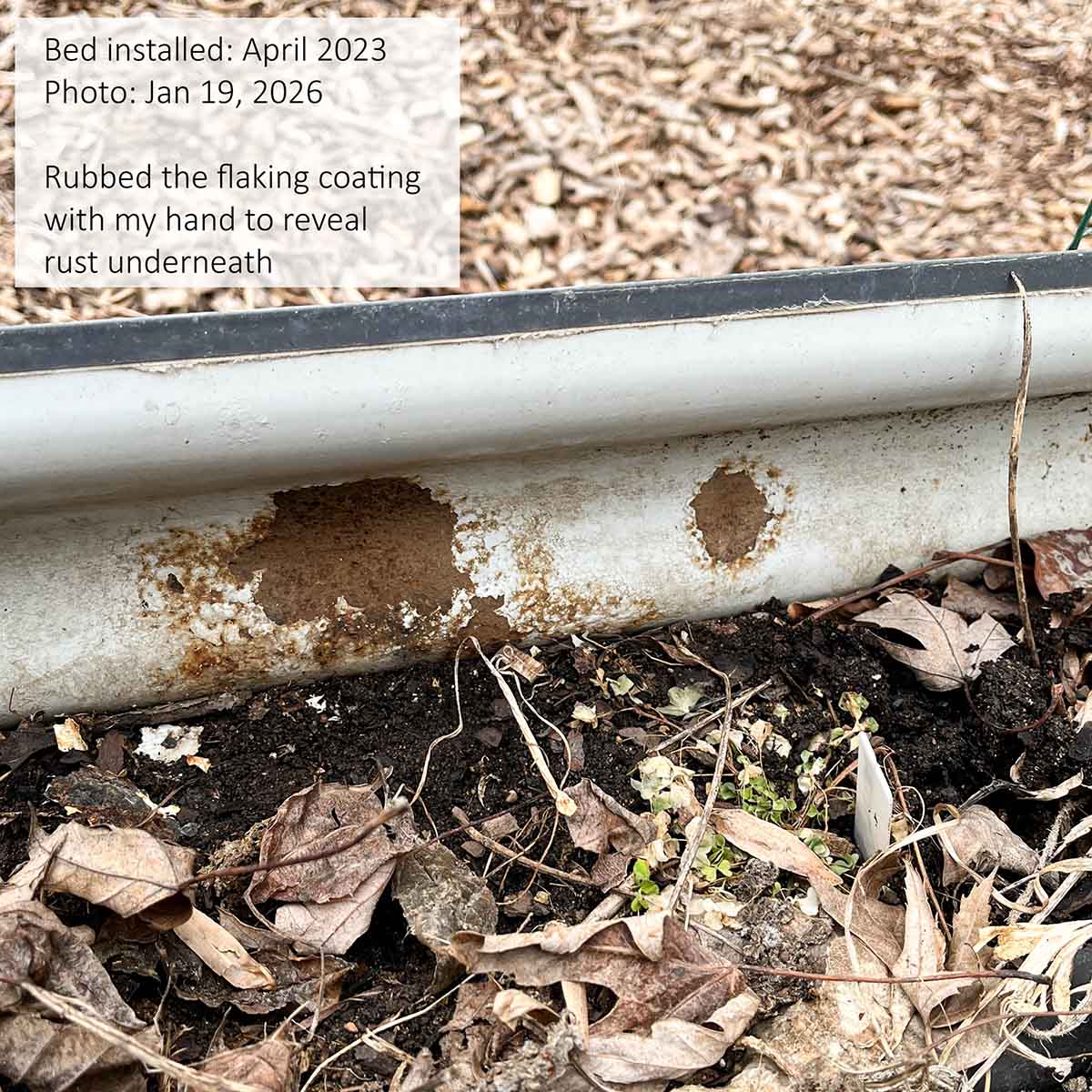
So why did my beds rust after only 3 years?
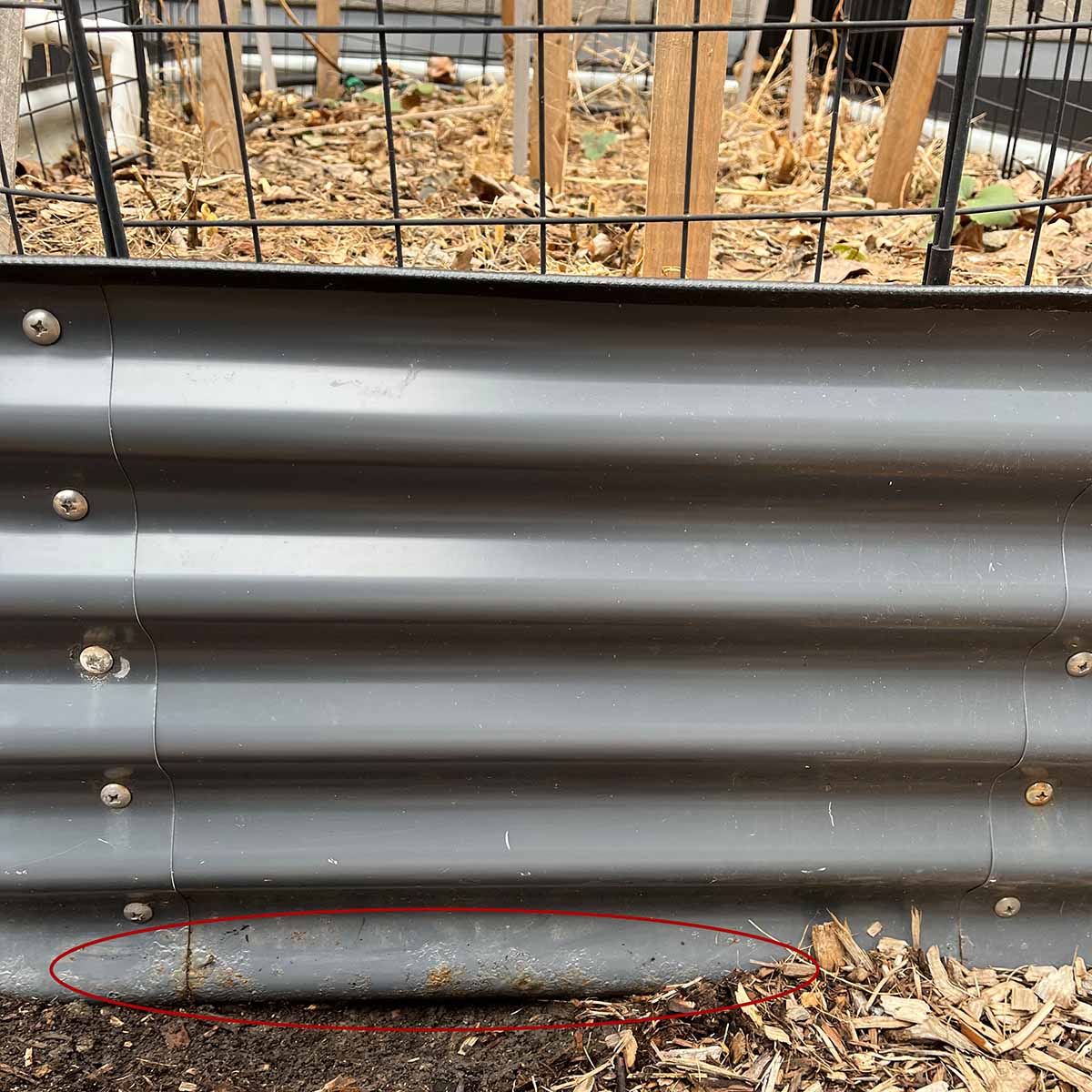
In early 2026, I was doing some garden bed cleanup and preparation before spring planting. I noticed rust spots in all of the garden beds, mostly near the soil line - after just 3 years of use.
When I went back through my camera roll, I actually found evidence of early rust at the soil line after just 1 year!
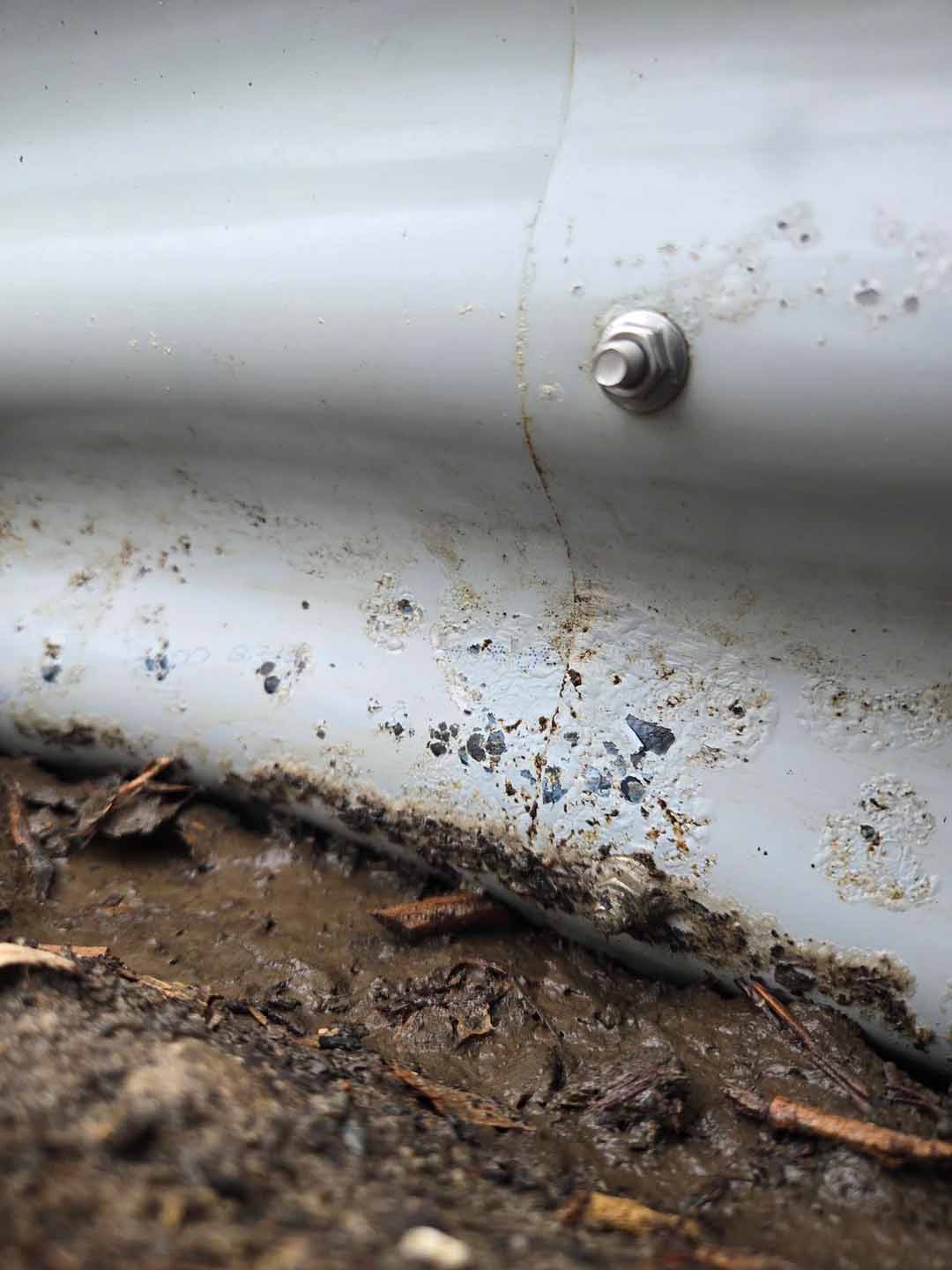
My garden beds are currently showing stage 3 rust:
- Stage 1: The painted surface is bubbly and might show minor etching or pitting
- Stage 2: White powdered or small rust spots show up on the surface, but metal structure is sound
- Stage 3: Rust spots have affected the structure of the metal, pitting is evident
- Stage 4: Metal has been penetrated, with holes through the entire structure
For more information and pictures of the stages of rust, read this article on Corrosion Stages.

As you might imagine, I was surprised after reading all of the marketing information about longevity. After consulting with some experts, I found out my soil is probably highly corrosive and that my climate isn't gentle on metal either.
Can you really expect a 20-year lifespan?
The 20-year longevity claims are misleading in my opinion. The vast majority of us don't understand corrosion or know the rate of deterioration in our own gardens. So it doesn't seem unreasonable to assume the beds will last 20 years (without maintenance) based on the marketing.
Will my beds still last 20 years, even with this rust? It's near impossible to tell and I couldn't get any real estimates from experts (because there are too many variables and a good expert will admit that!).
I'd also like to point out that the tests at Texas A&M labs did not provide longevity estimates. The research lab wasn't able to share the actual test results with me because they are proprietary, but they were adamant that they did not provide longevity estimates.
What causes metal garden beds to rust
Rust needs 3 things to form: iron, water, and oxygen. Metal garden beds have all of them, so why do they rust quickly in some people's gardens, but not others?
To find out, I called the director of the National Corrosion and Materials Science Reliability lab at Texas A&M, Dr. Homero Castaneda. We had an enthusiastic discussion about metal garden beds - it turns out that he actually specializes in soil corrosion.
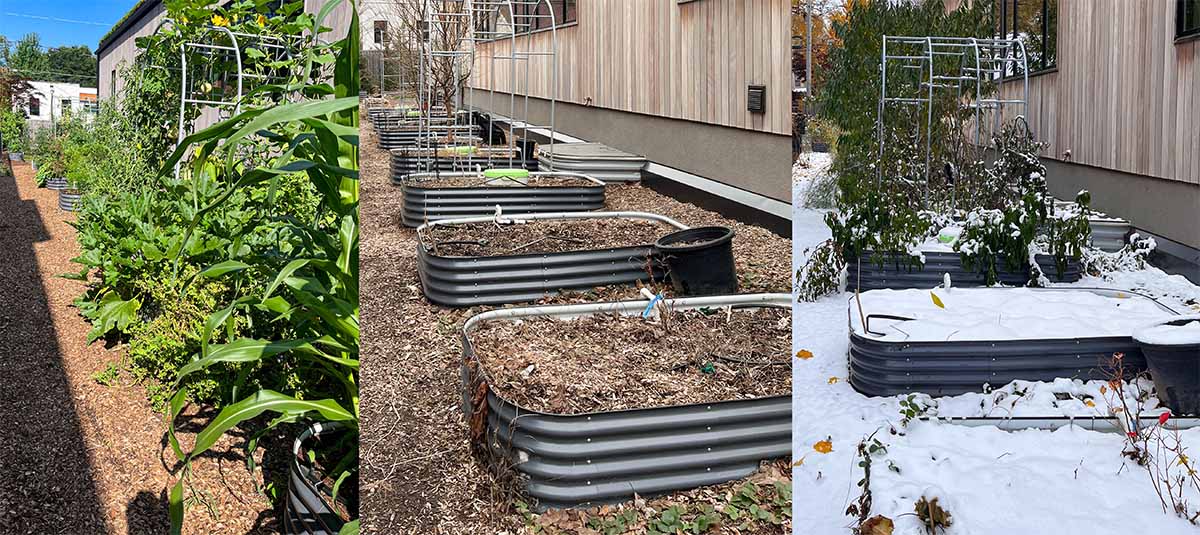
In real garden conditions, several factors come together to make a particularly harsh environment for metal garden beds. These factors vary from region to region and from one garden to another.
Let's take a look at these things in more detail:
- Coating on the metal beds
- Climate
- Soil types
- Fertilizer
Coated metal beds
Metal garden beds are made of steel because of its superior strength. Steel is mostly iron (typically 98%). Galvanized steel has been coated in zinc, which protects the iron from water and oxygen.
Modern raised metal garden beds are typically coated in aluminum and zinc, and sometimes magnesium is added to that mixture. These all serve the same purpose - to provide a protective coating to the steel.
This protective coating is designed to slow corrosion, not eliminate it entirely. How long the coating holds up is dependent on the environment around it, which is always changing.
Acids, salts, and fertilizers in the soil break down these coatings. Some faster than others. Vego Garden beds (and Birdies brand, among others), perform better than typical galvanized steel (with the same coating thickness), but are not as indestructible as you might assume from the marketing material.
Corrosion at the soil line
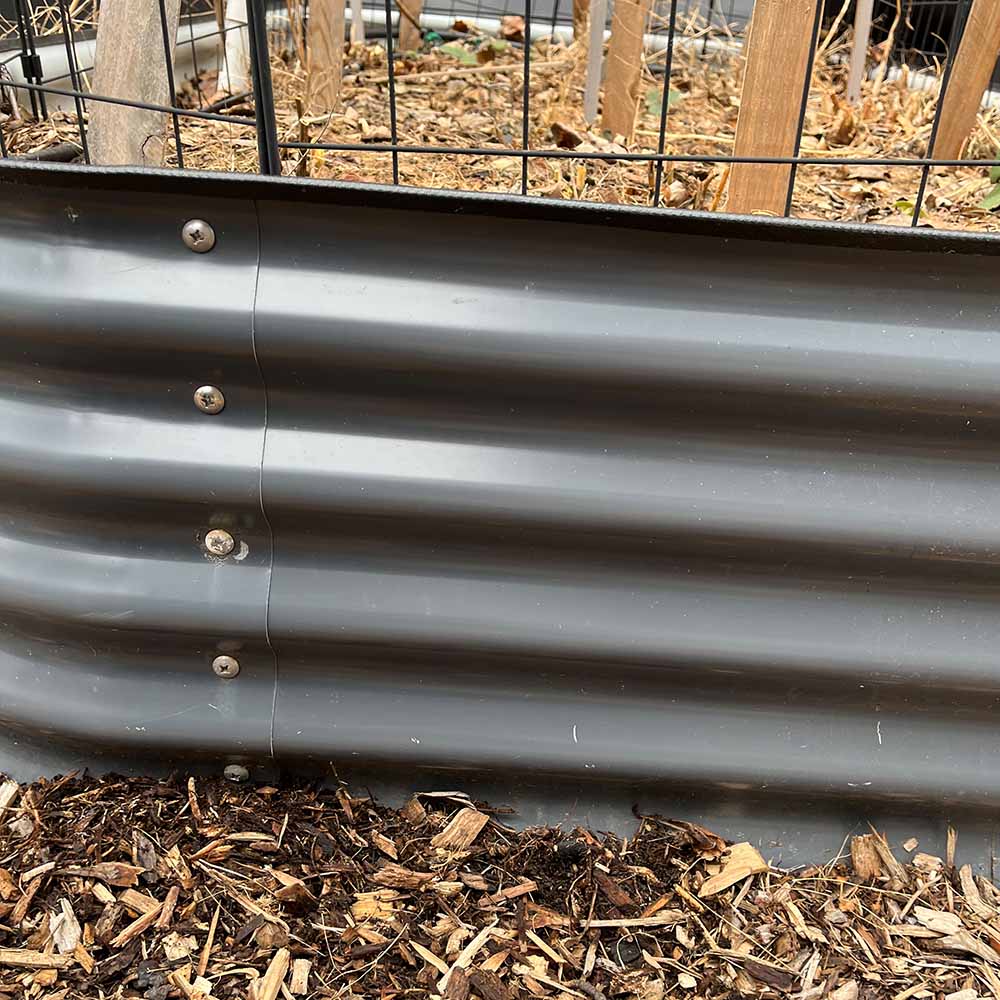
The first place you'll probably notice rust is at the soil line, both where the garden bed meets the ground and at the top of the soil on the inside.
That's because the soil line creates the most favorable conditions for rust to form. This is sped up by wet-dry cycles in your climate (or watering schedule), along with your soil type.
There's constant moisture at the soil line, staying damp even when the garden bed itself would dry out. There's also a lot of oxygen at the soil line (more than deeper in the soil). This environment can quickly erode the protective coating and eventually form rust.
Wet-dry cycles
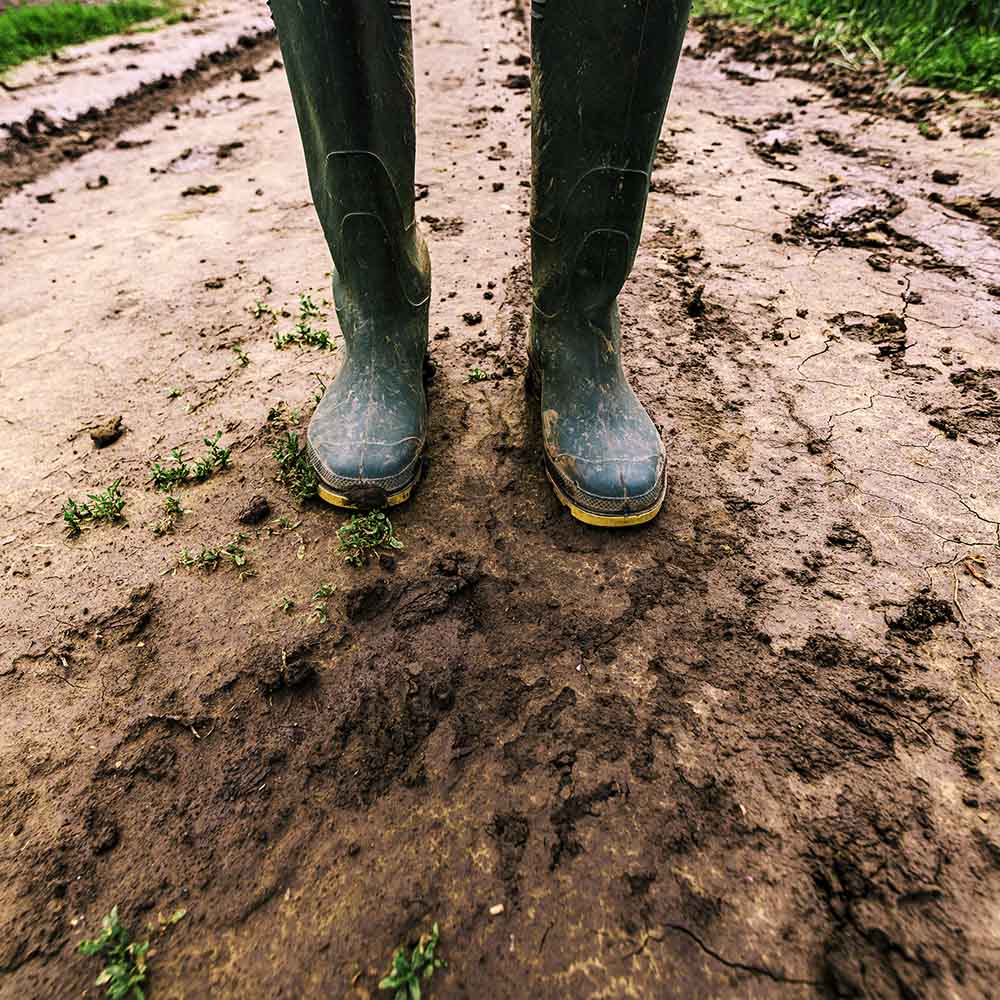
Wet-dry cycles are even worse. The soil gets wet, then as the metal dries, salts and minerals are concentrated and left behind. Those break down the protective coating faster as the cycle repeats. This is very common at the soil line.
Rust also forms faster in high humidity and areas rainy climates with slow-drying soil. Hello, Midwest and our water-holding clay soils! Freeze-thaw cycles also break down the protective coatings as the water gets into tiny cracks or imperfections and expands.
Soil types
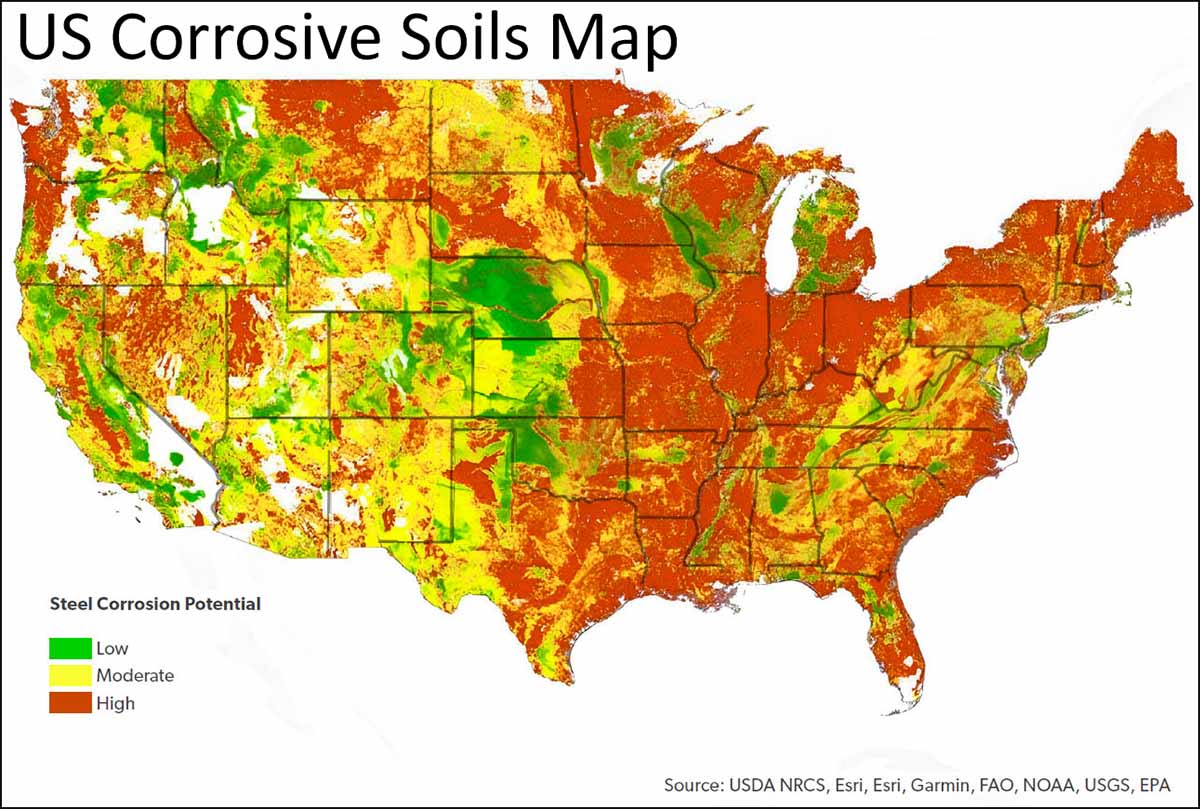
Some soils are naturally more corrosive than others. Here are some things that make a soil more corrosive:
- Stays damp most of the year - like clay or compacted soils
- Drains slowly - like clay
- High in chlorides (salt) - like coastal areas, road salt, fertilizers, and the soil itself can also be naturally high in chorlides
- Acidic soils (less than 6 pH)
In addition, a vegetable gardener's ideal soil has high microbial activity. That's great for plants, but bad for the raised metal beds. Microbes produce acids, retain moisture, and alter oxygen levels, accelerating corrosion.
Fertilizers & compost
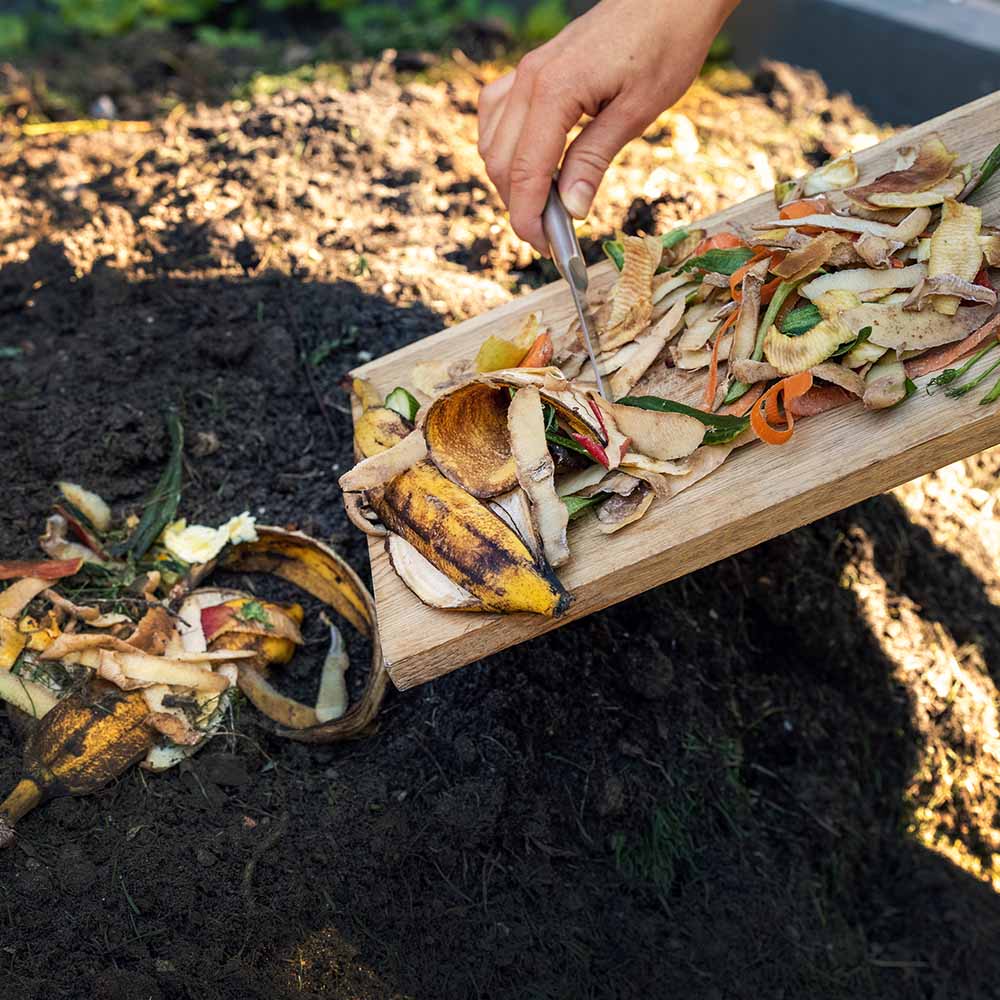
The fertilizers and compost we add to the garden also affect the soil's corrosive properties, impacting the longevity of your raised metal garden beds. Fresh manures are probably the harshest and liquid fertilizers are harder on the metal than dry fertilizers.
If you're adding nutrients from compost, here's how much they might impact the metal:
- Fresh compost is probably the most corrosive (compost that is still breaking down)
- Manure-based compost (especially chicken) is also highly corrosive
- Spent mushroom compost can be moderately corrosive, mostly because it contains salts and holds moisture
- Worm castings are only mildly corrosive because they hold water and have microbial activity (which creates oxygen)
- Aged compost and slow-release organic fertilizers are the least corrosive
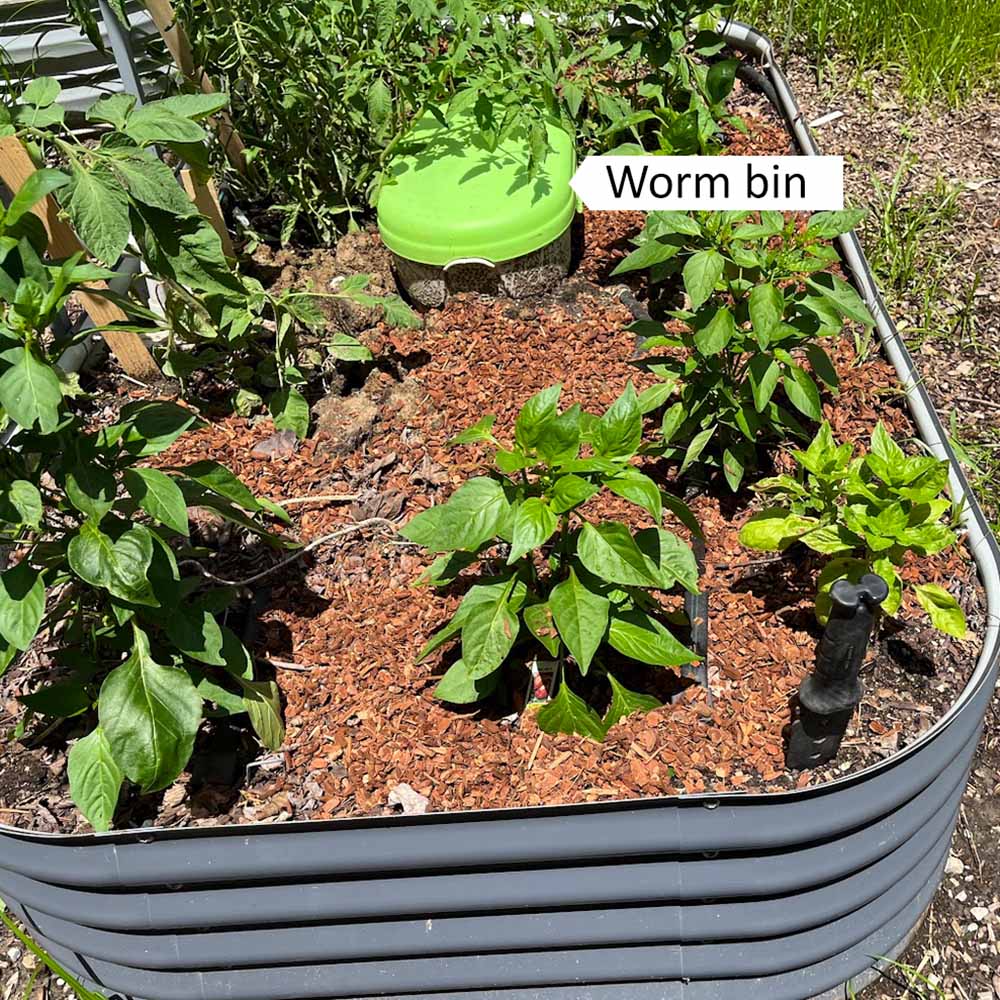
I have worm bins in the very center of each garden bed and it's one of my favorite things in the garden. It doesn't smell (really, I promise), and worms turn my kitchen scraps into black dirt within a couple of days. It feels like magic!
Even though I'm using fresh compost, it appears to have very minimal impact on the raised metal garden bed. A worm bin like this creates a very localized area of microbial activity, but the organic acids don't travel far and the salt is more likely to move down in the soil (not laterally across the soil).

Brand comparison
I reviewed the product specifications for 4 popular raised metal garden beds:
These are not affiliate links, rather links to the product pages for reference.
I only own the Vego Garden brand. But from what I can tell, they are all nearly indistinguishable. My guess is they would all have similar performance in my soil. I also compare their warranties and customer service below.
Comparing product specifications
Other major brands appear to be extremely similar in both materials and longevity claims. Note the coating type is abbreviated Zn (zinc), Al (aluminum), and Mg (magnesium).
| Brand | Panel thickness | Coating type | Food safe paint | Longevity claim |
|---|---|---|---|---|
| Vego Garden | 0.6mm | Zn-Al-Mg | Yes | "Built to last 20+ years" |
| Birdies (Epic Gardening) | 0.6mm | Aluzinc | Yes | "structural lifespan of over 20 years" |
| Vegega | 0.6mm | Zn-Al-Mg | Yes | "a 20-year lifespan" |
| Olle | 0.6mm | Aluzinc | unknown | "Built to last (20+ Years)" |
I haven't bought any of these other brands, but they seem nearly interchangeable based on the data from their product pages, photos and reviews I've found online.
Birdies does elaborate on the longevity on their product FAQs, saying, "Like all iron-based metals, steel will rust eventually, but with proper care, these beds will last you 20+ years."
Other factors
It's possible some brands have thicker coatings than others, which will affect the rust resistance. I could only find information for the Vegega beds with a coating weight of 140 g/m2. I asked Dr. Homero Castaneda how that weight stacks up and he said it's pretty standard for this type of application.
My guess is they'll all act pretty similarly regarding rust and longevity. So if you end up with a highly corrosive environment (like me), raised metal garden beds might not be the best option.
Problems & success with all brands
I've seen complaints of rust after just a couple years for both Vego and Birdies, while other people report no problem 5 years in (or longer) for both brands. Anecdotally, it seems that for every complaint of rust, there are 5 people claiming their raised metal beds are rust-free.
I tried to run a survey to gather more data on this, but only got a handful of responses. I had high hopes to make a map of the US to see if certain areas had more rust problems while others were perfectly fine. Wouldn't that have been nice as a buying guide?! Maybe some day.
People who've had rust problems on their metal garden beds:
- Birdies / Epic Gardening: Rust in just 1 year, photo above (Reddit thread)
- Birdies / Epic Gardening: "In less than one year all 14 of my Epic Gardening Birdie beds I purchased showed some form of rust on them" (Reddit thread)
- Vego: "I have four Vego raised beds that I purchased two or three years ago. I recently emptied them out to move them, and three look brand new while one was rusting. I reached out to Vego's customer service with photos and they promptly sent me a replacement bed." (Reddit thread)
- Vego: "Paint chipping/rusting at bottom exterior as well as large patches blistering off in the interior. We have checked ph on our dirt as well and can't find an extreme reason that would cause this." (Facebook post)
- Vego: "Beautiful, but don't expect them to last long. We moved ours after 4 years and it showed significant signs of degradation." (Review on Amazon with photo)
People who have NOT had problems:
I excluded sources with affiliate links, like blogs and Instagram.
- Self Sufficient Me video on Birdies raised metal garden beds after 12 years (very little rust - based in Australia, does have an affiliate link, it's my one exception)
- Birdies / Epic Gardening: "I'm on year 3 of three Birdies beds and have zero rust." (Reddit thread)
- Birdies / Epic Gardening: "We have 15 of them in all sizes and shapes. They are solidly built and we've run into no issues at all with them so far (about 3 years in)" (Reddit thread)
- Vego: "I bought my Vego beds almost 8 years ago and they are still looking great. I'm also in the rainy Pacific NW, zone 8b." (Reddit thread)
- Vego: "I have several of the Vego beds, and my oldest is about 4 years now... Mine seem okay so far, but it's not as wet here." (Reddit thread)
- Vego: "My Vego Garden beds, every single one, are just fine. The oldest is 5+ years old now and has been in constant production." (Reddit thread)
- Vego: "We ordered a bunch a few years ago and they are amazing quality. They have held up perfectly. No rusting or bowing. Worked perfect for our garden. We just added more to our space." (Review on Amazon)
The Vegega and Olle brands aren't as popular so I haven't found as much data on them.
Warranty
The warranties for these products are pretty hard to find. Only one of the brands had a link to the warranty on either the product page or site footer (Vegega).
Most of the warranties have exclusions for highly acidic environments and my guess is rust will be hard to claim a warranty for.
- Birdies (Epic Gardening): Birdies' website lists a 5 year warranty, normal surface rust is excluded. They do have an extended "warranty" (prorated coverage) where they prorate replacement products past 5 years.
- Vegega: 3 year warranty, excluding damage caused by misuse, improper assembly, and use in highly acidic environments (among other things).
- Vego Gardens: 2 year warranty, which does not cover damage due to misuse, improper application, excessively acidic, alkaline and/or corrosive products, etc...
- Olle: no warranty, and when I contacted them they said that customers are encouraged to contact their customer service for help instead
My concern is that any use of fertilizer would probably fall under alkaline and/or corrosive products or environments.
Customer service
Although I knew my raised metal garden beds were past their current warranty,I reached out to Vego's customer support for help.
They replied with a courteous answer the same day. They elaborated on the warranty terms: "Powder-coated items also carry a two-year warranty, with rust or deterioration not included."
They also gave me some helpful advice on how to treat and repair the rusting spots.
Even though I don't own Birdies beds, I reached out to Epic Gardening with a similar question about rust. They got back to me the following day, sharing a lot of helpful information and resources. It turns out they have a Discord channel with 8,000 people and Facebook group with over 40,000 members.
Features
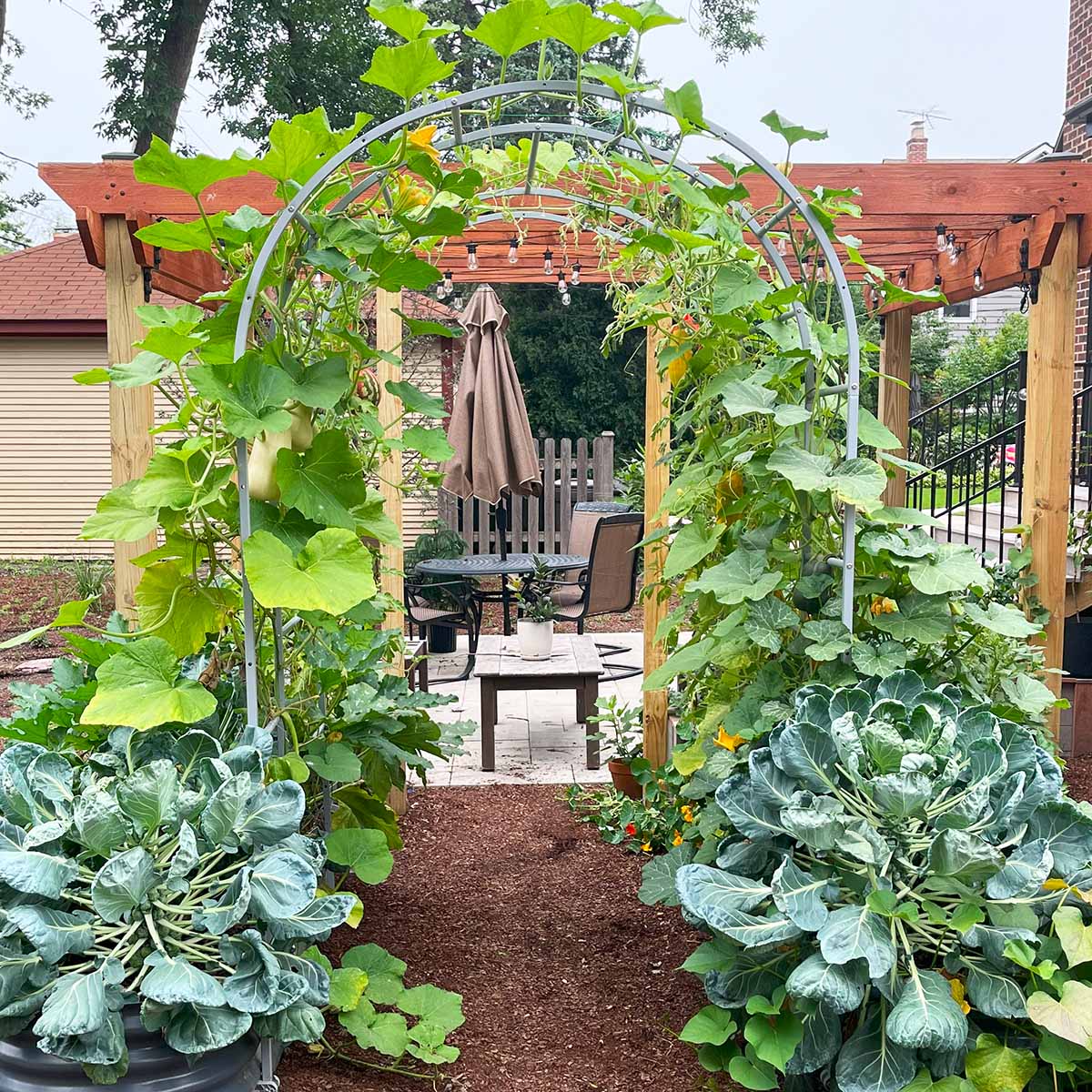
One of the main reasons I chose Vego Gardens raised metal beds was because they had a lot of accessories, like trellises, that fit right in. Vego Garden and Vegega both have a lot of accessories, whereas the other two brands currently do not.
However, you can buy some pretty cheap trellises on Amazon and just plop them in your beds (or between beds, like the Vego Garden trellises are designed for).
In fact, it's probably more convenient to have a separate trellis because it's easy to move around. The ones from Vego Garden need to be installed in clips that are screwed into the garden bed. So if you want to move it, now you're moving the clips and digging through soil and it's more work than you'd expect.
How to repair the metal garden beds
You can repair the rust spots to extend the life of your raised metal garden beds. I haven't done a very deep dive on this yet, but I will be before spring when I have to repair my own beds.
Remove rust & apply a new coating
In the meantime, Vegega has a guide on how to remove rust. Once the rust is removed, you can add a protective coating back to the metal. It's important that the surface is clean and dry, and properly prepared.
It seems like getting all of the rust removed can be a ton of work and difficult to fully remove it all. Which brings me to another option: working with the rust.
Stop the rust, but don't remove it
Another option is to use an industrial paint-to-rust product. You first need to scrub off anything that's flaking or loose, and then seal it with a protective paint.
I consulted with another expert who has handled rust in industrial capacities and he recommended one of these types of products meant to go over rust and stop it from getting worse. There are some machinery or automotive options that you can find on Amazon.
A better raised bed?
Some people have made their own raised metal garden beds out of metal roofing panels. While research seems to indicate the Zn-Al-Mg coatings outperform galvanized steel, that's assuming similarly thick coatings.
If you can get galvanized steel with a thicker coating, that should help delay corrosion. The thickness on these popular raised metal garden beds is probably 10-15 microns thick per side, whereas G185 roofing panels are about 40 microns thick.
Ipe wood
I have 2 small raised garden beds made out of leftover ipe wood from our deck construction. Ipe wood is a super-dense Brazilian wood that actually sinks in water (it's that dense!).
It has extremely long lifespans and is used for boardwalks in the Southeast (like the Driessen Beach Park boardwalk), the Northeast (like the Nashawannuck Pond Promenade Park in Massachusetts), and the Midwest (like Millenium Park in Chicago).
And it's also the siding on my house! It's so dense, it doesn't get cracks and checking like cedar does. So it's very low maintenance, but it also costs about 3 times more than untreated cedar and twice as expensive as treated cedar.
The ipe planters I have were built in 2023 and after 3 years, the wood looks completely unaffected by the water.
I will update this post each year with photos of my metal and wood raised beds.
More garden guides & resources
- Joe Garden's article about replacing wood beds with DIY raised metal beds
- The Beginner's Garden article on raised beds do's & don'ts (she has both metal and wood raised beds)
- A video review from Bre Ellis of wood vs galvanized steel garden beds after 5 years, with holes from rust and the top edges breaking off from rust at the soil line (around 4:00 minutes in). She likes the wood better, but the affordability of the cheaper metal garden beds.
- Corrosion study: how Zn-Al-Mg coated steel corrodes in soil

Leave a Reply