New England is one of the cooler regions of the US, including Vermont, Maine, Connecticut, Massechusetts, New Hampshire, and Rhode Island, especially up in the Appalachian mountains or northern Maine.
The cool summers in New England can make growing bell peppers challenging, but not impossible.
"Peppers don't really want to grow in Maine. Our temperatures are too cool and our seasons too short for them to produce well without a lot of help." - Tom Atwell, Portland Press Herald
Even in this region, you can still get a decent harvest if you follow a few tricks. You can expect about 6 bell peppers per plant for some varieties, or a dozen on others.
The key takeaways, if you're short on time:
- Protect plants from freezing temps if a cold front comes in after transplant. Try growing in raised beds or pots because the soil warms faster. Growing in pots also lets you bring them indoors during cold snaps and are great for short-season areas to bring them in at the end of the season to finish ripening.
- Pinch off flowers at transplant and continuously for 4 weeks (to let the plant focus on leafy growth).
- Fertilize once a month - bell peppers need more fertilizer than most garden plants to produce a lot of big peppers. Skipping this leads to fewer and smaller peppers.
- Water consistently at least until they are flowering (research has shown that to be the critical cutoff for a large yield).
Next, let's cover some basics to help you understand more about how bell pepper plants grow, then get into advice tailored to the New England climate.
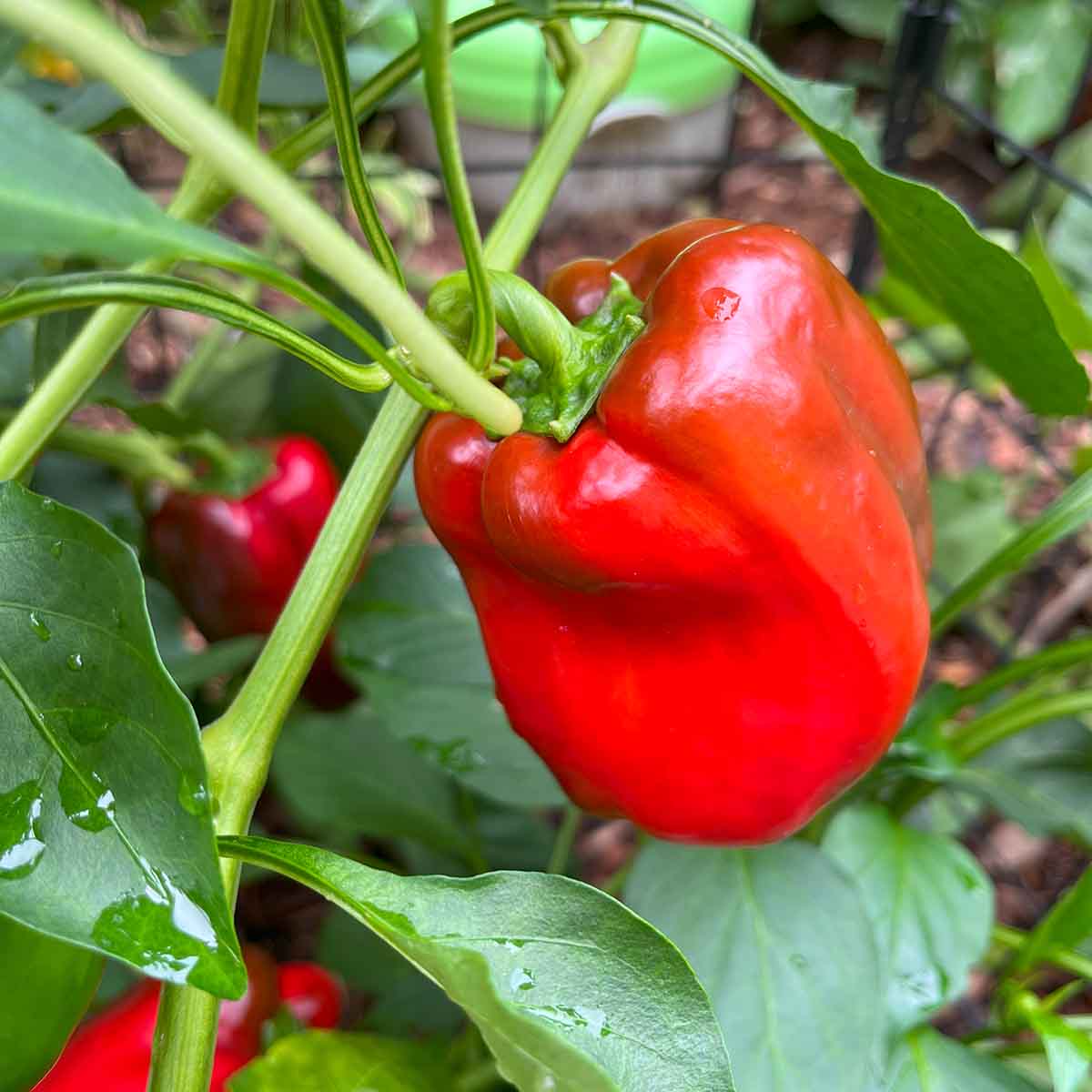
Note the color in the photos in this post are all unedited - even on a cloudy day. I wanted to make sure you could see exactly what the plants looked like, without added contrast or hue adjustments.
Jump to:
Ideal temperatures
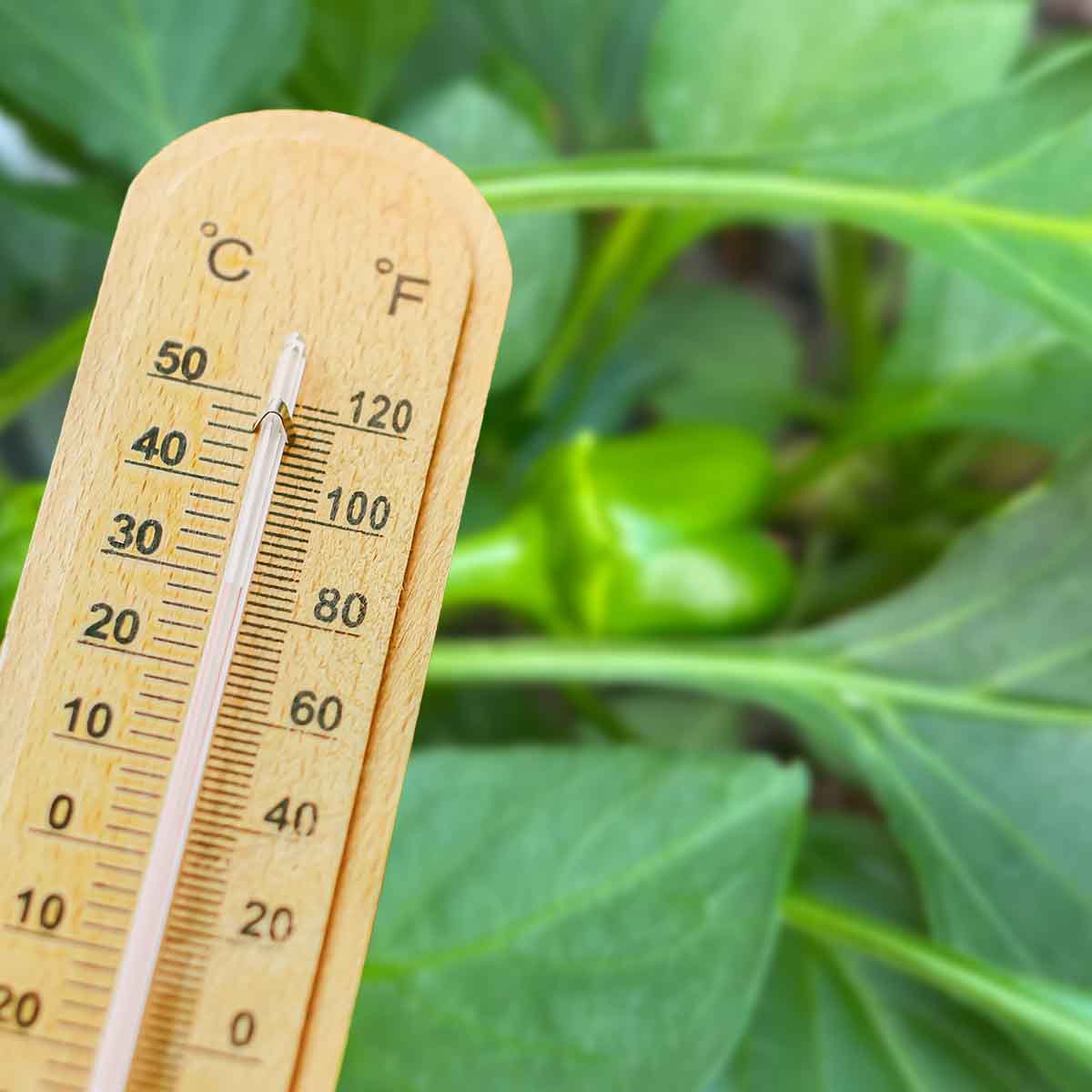
The first thing I want to share are the temperature ranges for growing bell peppers, since most of the problems in the Northeast are from the cooler summers.
The ideal air temperatures are between 70-85F during the day and between 60-70F at night. Most of the New England area is on the lower end of these ranges, so the plants will grow a little slower and peppers will take longer to mature than in warmers regions of the US.
| City | July Highs | July Lows |
|---|---|---|
| Fort Kent, ME | 73F | 57F |
| Portland, ME | 78F | 61F |
| Newport, RI | 79F | 65F |
| Concord, NH | 81F | 61F |
| Burlington, VT | 81F | 62F |
| Boston, MA | 82F | 66F |
| Hartford, CT | 84F | 66F |
Look up your averages on Weather Spark by typing your zip code into the box in the upper right.
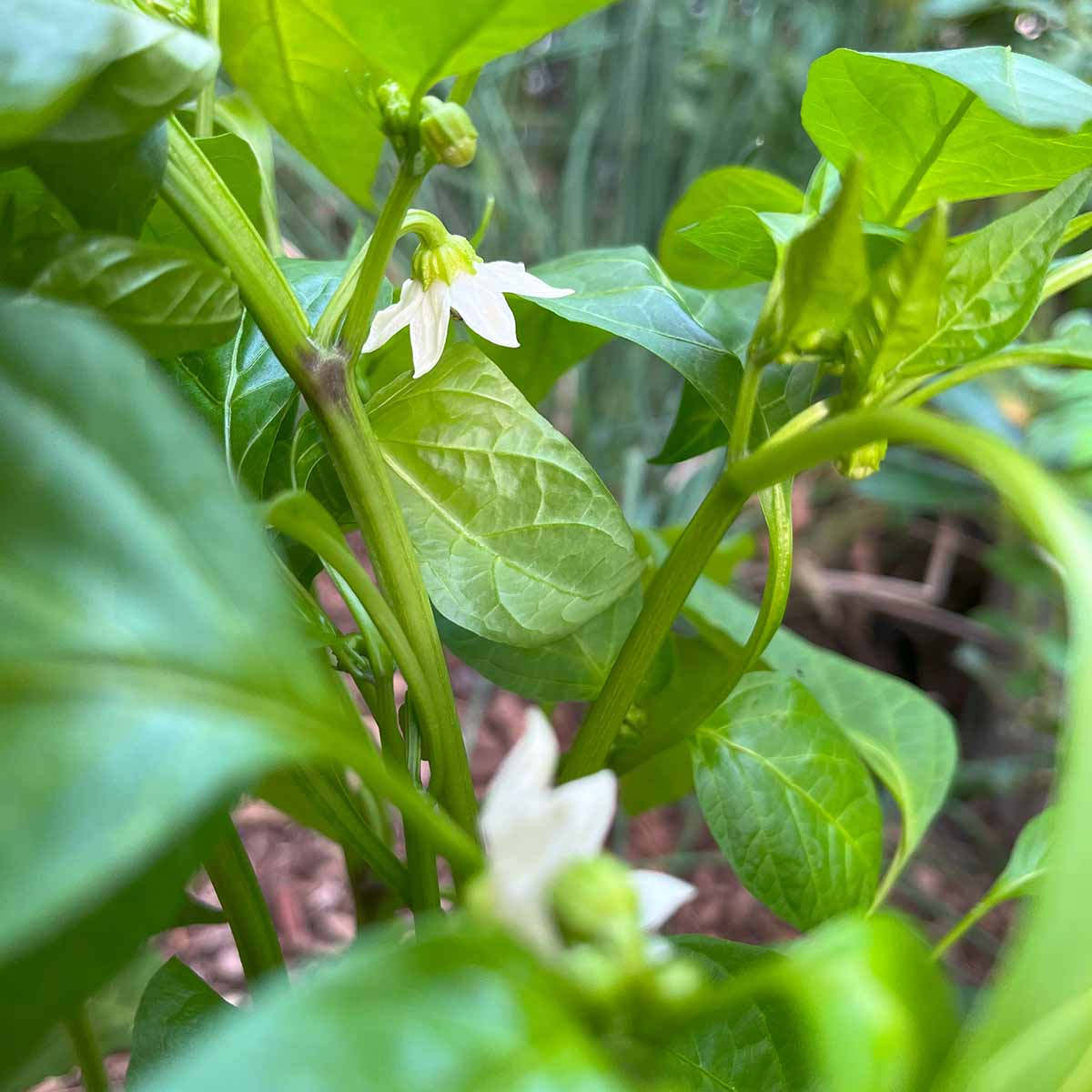
What happens outside of these temperature ranges? When the temperature drops below 60F, flowers don't pollinate properly, drop, or the plants drop bell peppers that just set.
It isn't an all-or-nothing scenario though. Some flowers will still pollinate and be fine down to about 50F, while others will fail. You won't get as big of a harvest if you have consistently cool nights, but you will still get some!
While rare in New England, a heat wave consistently above 95F for several days can cause the same problems during flowering. Once temperatures return to normal, any new flowers will be properly pollinated.
Keep in mind, this is the ideal range, and bell peppers can still grow outside of these ranges.
Problems when growing bell peppers in New England:
The cooler weather poses some problems, as I already mentioned. But the humid weather is a big plus, since the plants usually produce more peppers in higher humidity.
The humid weather also prevents the plants from drying out too much, while still allowing them to transpire as needed. This helps the plants cool down during hot afternoon temperatures and cycle in more nutrients as they uptake more water from the soil.
Potential problems:
- Cool summer
- Short season
- Don't top your plant
- Acidic soil
Cool summer
Your task is going to be to find ways to raise the temperature.
- Make sure the bell pepper plants have full sun - they need it even more than your tomatoes and zucchini
- If you have a brick or stone wall, plant them nearby as they radiate extra heat back at your plants
- Find warm micro-climates in your yard. Paved driveways, patios, decks, and porches are warmer than grass - put peppers in a planter or pots on those areas
- Consider covering your soil with black plastic in the spring to warm up the soil and keep it warm for several weeks after transplanting
- Add mulch after the weather warms up (more on this below)
If the plants are flowering and nighttime temps are dropping below 60F, try covering them with a cloche. They flowers won't pollinate (or might drop) if the temps drop below 60F. Gardening Know How has a bunch of DIY cloche ideas.
Also make sure not to transplant the peppers too early so they don't die from a late frost. The won't grow well until it warms up to 70F anyway!
Add mulch only after the weather warms up! Bare soil heats up faster than soil with organic mulches (like bark or grass clippings). You can also use plastic mulch to warm the soil even more - it comes in pebbles (which I find hard to work with as they mix into the soil), or just cover the soil with black or clear landscape plastic. In research trials, clear plastic warmed the soil more than black, since the sun was allowed to warm the soil directly, while the plastic kept that heat in.
Fertilize!
One of the biggest ways to help the plants along is to make sure you fertilize on a good schedule. This helps them grow tall enough and produce enough leaves so they can adequately set fruit.
Michigan State University suggests using a heavier nitrogen fertilizer at planting, repeating every week until you want to let the first flowers set. After the flowers set, use a balanced fertilizer (like 12-12-12) once a month.
Extend your season
Some parts of the New England have around 130 frost-free days, while coastal towns can have 200+ frost free days. This is normally enough time to fully ripen bell peppers, but since the summers are pretty cool it takes a lot longer than other regions.
You probably won't be harvesting your peppers until sometime in September.
Most bell peppers are listed as 80-85 days to maturity. This is typically measured under perfect conditions from transplant to green-mature. In New England, a plant listed with 80 days to mature will take closer to 95 to 100 days due to the cooler summers.
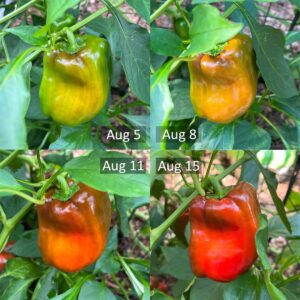
You can expect the bell peppers to take about another 4 weeks to fully ripen to red, orange, yellow, or purple. This brings the total number of days to around 125 after transplant.
You normally transplant 2-4 weeks after your average last frost, so you'll need about 140-155 days to fully mature your peppers starting from your average last frost date.
When temperatures start to cool down below 70 during the day or 60 at night, cover them with a cloche or move potted ones to a greenhouse. That will help the plants to continue to provide nutrients to the maturing bell peppers.
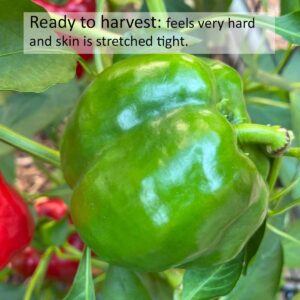
If your season is cut short, you can at least harvest the bell peppers before a frost. They can be harvested while green, even if they aren't fully grown. I've found that even when picked prematurely, they still have thick, crunchy flesh.
If you're peppers are really slow the ripen, and you're season is coming to an end, you can do a few things to try to speed them up.
- Remove flowers that show up late in the season - the plant won't have enough time to grow a fully mature bell pepper in short-season areas
- Harvest some of the mature bell peppers - this allows the plant to distribute it's finite resources to the remaining bell peppers, ripening them faster.
- I talk about these options in more detail in this article by Tenielle Jordison on Homes & Gardens.
Don't top your plant
When you "top" a bell pepper plant, you pinch the growth back by a few leaf nodes. This forces the plant to branch and focus on creating more foliage and eventually more flowers and fruit.
However, it can take an extra month (or more) to grow the extra foliage with a cool summer. You don't have that much time to lose, so it's probably not worth doing. MIGardener is a great resource and he talks about this around the 5 minute mark in his video, "Speed Up Pepper Growth & Fruiting."
You DO still want to pinch off any flowers and early fruit, or your plant will be short with only a handful of bell peppers. I often get bell pepper plants from the nursery that already have flowers on a 6" tall seedling. Pinch them off starting at transplant, continuing for 4-6 weeks, until the plant is at least 12" tall, ideally 18".
Acidic soil
Acidic soil is common throughout the Northeast, sometimes as low as 4.5 (lower = more acidic). This is fantastic for growing blueberries, but not so much for growing bell peppers and other vegetables.
Bell peppers prefer soil with a pH between 6.5 and 7. When the soil is too acidic, bell pepper plants have a hard time soaking up nutrients from the soil. This will cause stunted growth, reduced yields, and slow ripening. The University of Maine goes into more detail about the acidic soils found in the Northeast.
Test your soil with a garden pH meter or send a sample in for really accurate testing. If your soil is 6.0 or lower, you'll want to consider raising the pH to make it less acidic.
Kellogg Garden has an article on how to organically raise the soil pH in your garden by adding limestone for long-term effect or wood ashes from your fireplace for a quick boost.
Varieties for cold climates
Grow early maturing varieties that have maturity dates listed at 60 or less will be the most reliable, but you can experiment with varieties up to 70 days and still probably get a full harvest.
- ⚪ Chablis - (white-to-orange-to-red, 60 days), a fun pepper turning multiple colors and can be harvested at any stage.
- 🔴 Parks Early Thickset Hybrid - (listed at 45 days by University of Connecticut), full sized, very early bell.
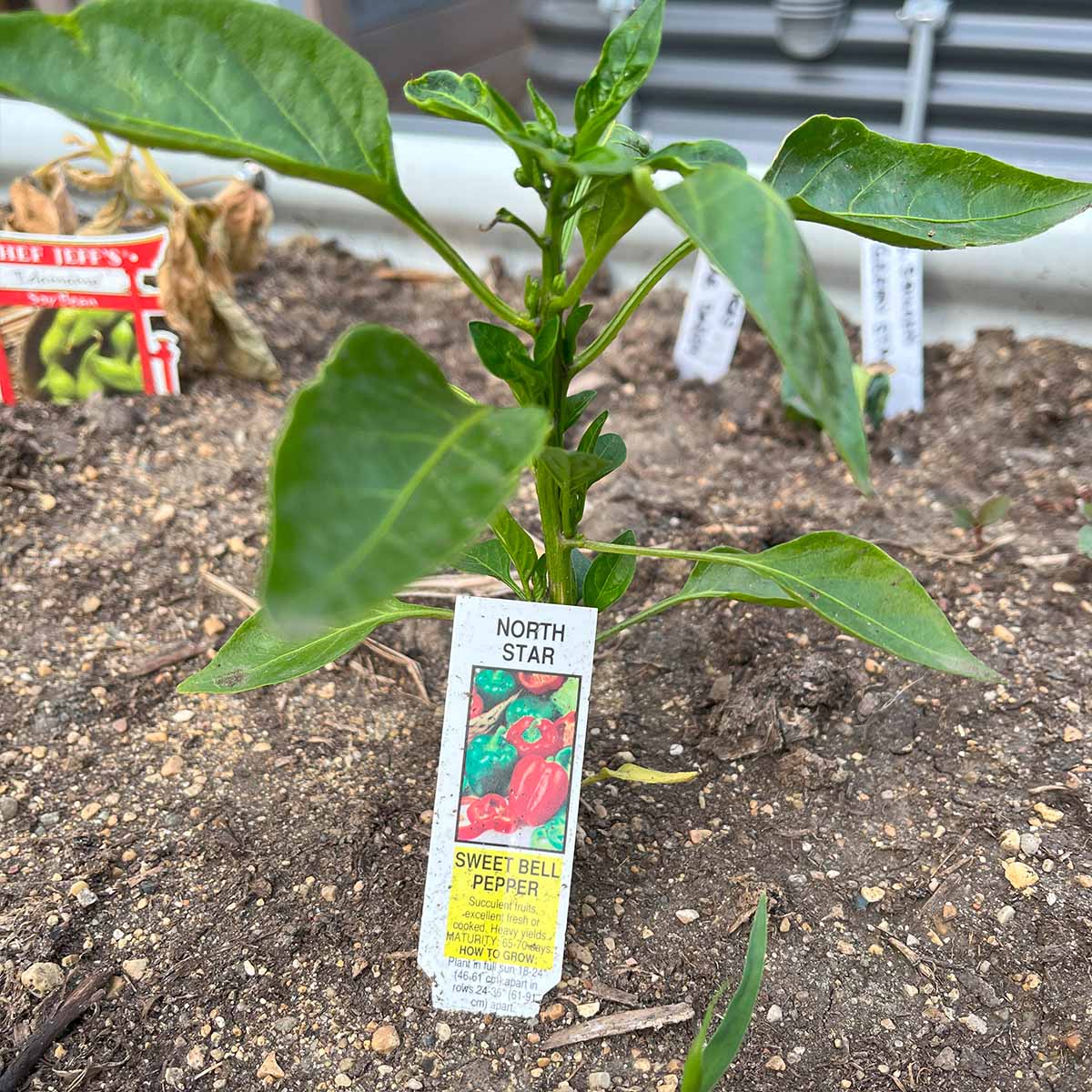
- 🔴 North Star - (red, 60-70 days), very productive with yields of 10-12 in the Northeast.
- 🔴 Lady Bell - (red, 68 days), adapted to cooler climates, setting fruit even in cool weather.
- 🔴 King of the North - (red, 70 days), a great producer in northern climates.
- 🔴 Peacework - (red, 65 days), a child of King of the North. Small plants with a denser canopy. Fedco trials in Maine produced 6 peppers per plant.
- 🔴 Ace - (red, 60 days), an early ripening variety with thinner walls, can still be found at Johnny's Selected Seeds.
- 🔴 New Ace - (red, 60 days), appears to be replacing Ace at most vendors. Sets fruit even in cooler temperatures and turns red early. A seed vendor in Alaska even claims it can grow outdoors in their climate. Expect 6+ peppers per plant.
- 🟠 Gilboa - (orange, 66 days), heavy yields (12 per plant). Fedco reports early ripening, with harvest around September 1 in Zone 4 (Hartland, Maine).
- 🟡 Doe Hill Golden Bell - (yellow, 60 days), a miniature squat-shaped bell pepper that's supposed to be a good keeper if you don't use peppers right away. Heavy yields.
- 🟡 Golden Start - (yellow, 72 days), an early full-sized bell that produces well with bushy growth to shade peppers. Fedco (in Maine) reports 7-10 peppers per plant, harvesting in September.
If you've had trouble with full sized bell peppers in the past, try again this year using some of the tricks I mentioned. Also try growing some smaller "lunchbox" sized peppers which mature faster.
Seed sources
I've ordered from all of the sources listed below except Best Cool Seeds. I've been happy with all of my orders and the customer service. The link for Burpee is an affiliate link.
Seed vendors for the Northeast:
- Big vendors like Burpee have a wide selection and Baker Creek is a fan favorite - keep an eye on the days to maturity to find ones right for you.
- Fedco seeds are grown in Maine
- MIGardener seeds are grown across various farms in Michigan, usually USDA zone 5-6
- Best Cool Seeds are grown in Alaska
More resources
More guides for your climate:
- A guide to growing peppers in cool climates, from Zone 3 Vegetable Gardening, and another for subarctic climates from Frosty Garden.
- Northern Homestead's guide to growing peppers in a cold climate
- University of Connecticut's guide to peppers and a list of varieties for the climate
Leave a Reply