The weather in the warmer parts of the Midwest are pretty favorable for bell peppers: warm but not too hot, with humidity that pepper plants like.
However, the colder weather and shorter seasons in the more northern parts of the Midwest, like Northern Wisconsin, Minnesota, and Michigan can be a bit more challenging with the shorter seasons.
Even if your weather cooperates, you can still end up with plants that only produce a handful of bell peppers. But if you follow a few critical tasks, you should be able to get a lot more peppers.
Some varieties will yield 6-8 bell peppers per plant, while others can produce more than double that. This guide will help you grow plants loaded with bell peppers.
The key takeaways, if you're short on time:
- Protect plants from freezing temps if a cold front comes in after transplant.
- Pinch off flowers at transplant and continuously for 4-6 weeks (to let the plant focus on leafy growth).
- Pinch the top 3 sets of leaves off 4 weeks after transplant, and again 2 weeks later (this helps produce more branches, potentially doubling the number of bell peppers that grow).
- Fertilize once a month - bell peppers need more fertilizer than most garden plants to produce a lot of big peppers. Skipping this leads to fewer and smaller peppers.
- Water consistently at least until they are flowering (research has shown that to be the critical cutoff for a large yield).
- If you have a short-season (cool areas), try growing in raised beds or pots, since they get hotter and can help the plant grow.
Now let's cover some basics to help you understand more about how bell pepper plants grow, then get into advice tailored to the Midwest climate.
Jump to:
Ideal temperatures
The first thing I want to share are the temperature ranges for growing bell peppers, since some of the problems are related to the temperature swings we can get in the Midwest.
The ideal air temperatures are between 70-85F during the day and between 60-70F at night. Most of the Midwest easily fits into this temperature range in summer, although some of the cooler regions often dip below 60F overnight.
| City | July Highs | July Lows |
|---|---|---|
| Marquette, MI | 75F | 57F |
| Duluth, MN | 77F | 60F |
| Eau Claire, WI | 82F | 62F |
| Fargo, ND | 82F | 61F |
| Sioux Falls, SD | 84F | 64F |
| Chicago, IL | 84F | 72F |
| Columbus, OH | 84F | 66F |
| Indianapolis, IN | 85F | 67F |
| Des Moines, IA | 86F | 68F |
| Omaha, NE | 87F | 68F |
| St. Louis, MO | 89F | 70F |
| Wichita, KS | 92F | 71F |
Look up your averages on Weather Spark by typing your zip code into the box in the upper right.
What happens outside of these temperature ranges? Most of the temperature concern is during the flowering phase. When highs climb above 90-95F, the flowers don't pollinate properly, flowers drop, or the plant aborts peppers that just set.
When temperatures drop below 60F, flowers also drop or don't pollinate properly. If you have cooler daytime temperatures, the plants will also grow slower and the peppers take longer to ripen.
Keep in mind, this is the ideal range, and bell peppers can still grow outside of these ranges.
For example, if temperatures climb really high while flowering, you'll lose some flowers, but you won't lose the whole crop. One study found that plants pollinated when temperatures were above 91F (for several days), they produced 15-20% fewer peppers than plants held within the ideal temperature range.
On the other side of the temperature range, while bell peppers don't pollinate as well below 60F, they can (and do) still pollinate down to 50F. Fewer fruit might set, but it isn't an all-or-nothing scenario. You can grow varieties better adapted to cooler climates, like New Ace, which doesn't abort flowers as easily when temperatures dip low.
Problems when growing bell peppers in the Midwest:
The most forgiving climates are warm and humid, like in the Midwest. In these areas, the temperature range is close enough to ideal, but the weather is also unpredictable. (And we have several false springs messing with our transplant timeline!)
While we might complain about hot and humid weather, bell pepper plants love it - they actually produce more peppers in higher humidity.
The humid weather also prevents the plants from drying out too much, while still allowing them to transpire as needed. This helps the plants cool down and cycle in more nutrients as they uptake more water from the soil.
Potential problems:
- Early cold snaps
- Heat stress
- Short seasons (in cooler areas)
- Root rot from clay
- Sunscald (only a minor problem here)
Early cold snaps
Welcome to the Midwest where you can have 4 kinds of weather in a 24-hour period! We all love to transplant our vegetables into the garden when that false spring shows up and deceives us.
But bell pepper plants will die if they get hit with freezing temperatures. In fact, there's no real benefit to planting them early because they grow at a snail's pace (if at all) until the weather warms up to at least 65-70F during the day.
Be ready with a cloche, an empty 2-liter bottle or milk jug, or some other DIY mini greenhouse if the weather gets chilly. If night temps are below 50F, your plants will appreciate the extra heat.
Gardening Know How has a bunch of DIY cloche ideas.
Heat stress on flowers
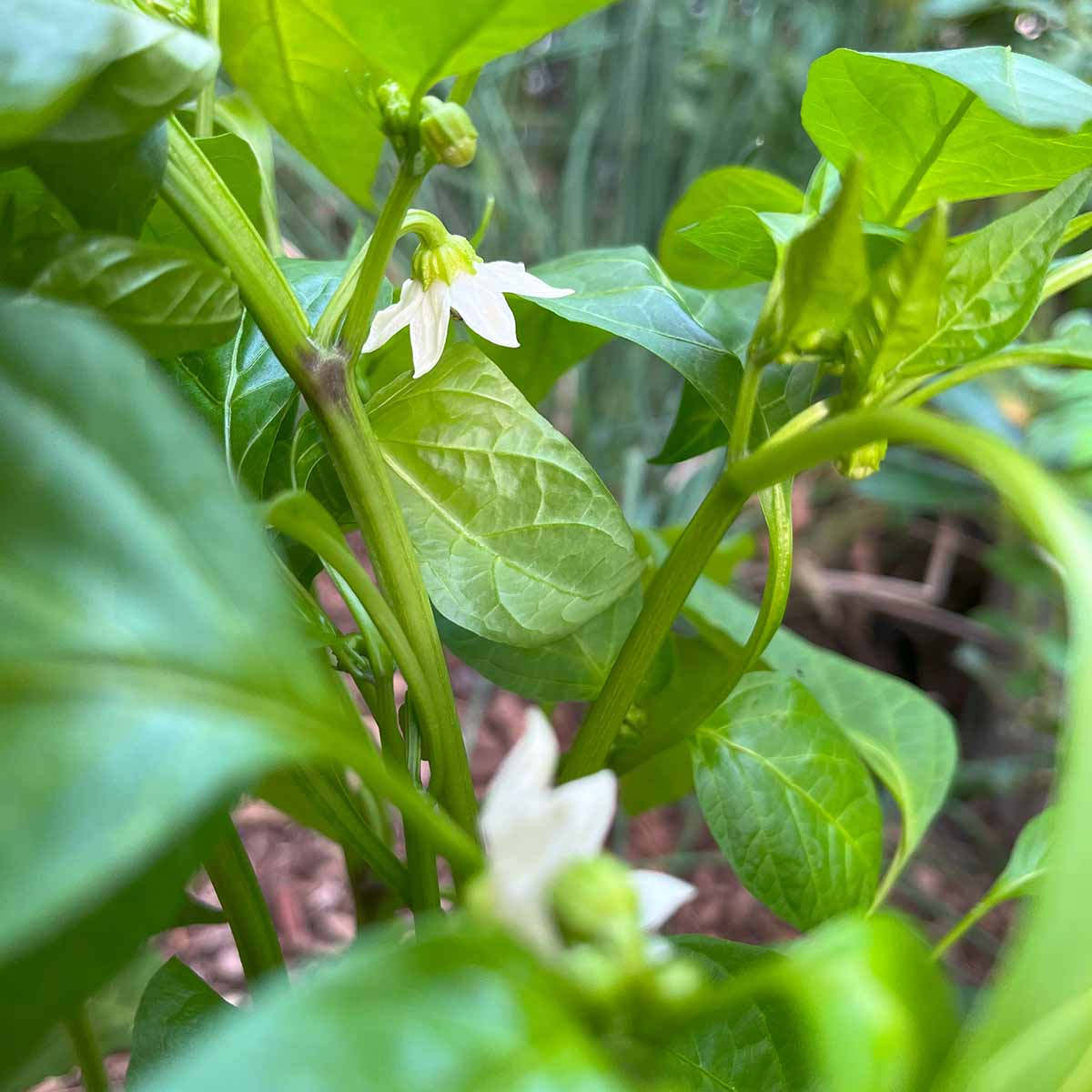
When summer heat waves climb above 90-95F for a couple or more days in a row, the flowers can fail to pollinate properly or drop. I've found outside of the flowering stage, the pepper plants are fine in higher temps, at least below 99F.
If these temps don't happen often in your area during flowering, you don't need to worry. Some flowers might fail to pollinate with extremely bad timing, but not all of the flowers open at the same time, and not all of them will fail to pollinate.
I live in the Chicago area and my bell pepper plants flower around mid-June. It's not uncommon to get a random heatwave of 95F for several days sometime in June. I pull up shade cloth and other things to cool down the plants when this happens for an extended amount of time. It is necessary? No, but I like to do it to ensure my plants don't have a reduced yield.
Short seasons
Some of the colder parts of the Midwest have a short season, like Ashland, WI, St. Cloud, MN, or Fargo, ND. Many towns have 130 frost free days, on average, with only 100 days of warm-enough weather for productive growth.
If you put your zip code into Weather Spark and scroll to the "Growing Season" section, it lists your average number of frost free days.
The cooler regions will benefit from warm microclimates in your yard. South facing spots that get full sun is a good start. If you can set them in front of a south-facing wall, they'll benefit from the extra heat radiating off the building.
You could also consider raised beds and pots, as the soil heats up more than in-ground dirt. If you grow in pots, you can try setting them on a driveway, cement patio, or wood deck for the extra heat. Picture how standing on a driveway or parking lot is much hotter than on grass in your yard or in a park.
Lastly, potted plants can be brought indoors from an early cold snap, or to finish ripening at the end of a season. Bring pots into a garage and set them on a seedling heat mat to finish ripening for a couple of weeks.
Pepper plants are more than happy in a 5 gallon pot. I've grown them in every type of pot (plastic, clay, and fabric). I have the best luck with black fabric pots. They warm up easily without getting too hot, they don't get waterlogged, and they warm up well on seedling heat mats.
I've used these pots from Vivosun (amazon link) for the past several years, leaving them outdoors over winter and reusing them the following spring.
(This is an affiliate link so I get a small commission if you make a purchase. I try to be as transparent as possible, letting you know if I own the product and how I like it. These have lasted 3 years so far, and still going strong.)
Clay soil
A lot of the Midwest has clay soil, from Chicago up to the towns on Lake Superior in Northern Wisconsin. Clay heats up more slowly in spring. Once it heats up, however, it holds the heat better and radiates it off at night, keeping the plants warmer. This is a good thing in the Midwest.
If you want to get your plants out early, remove any mulch you have. Direct sunlight will heat the soil faster. Once warm weather sets in, you can put the mulch back to retain moisture and keep the soil from getting too hot.
Clay holds water really well, but it can also hold too much and cause roots to rot. If a big thunderstorm rolls through, you can probably let the plants go without water for a week - just make sure to check the moisture levels every couple of days.
If you have trouble with root rot, you probably will want to amend the clay soil with compost each year to slowly improve it. Alternatively, use raised beds and bring in good garden soil from a local nursery (they often deliver for an affordable fee).
Clay soil can also turn hard as cement if left to completely dry out. You'll notice the top of the soil cracks and feels really hard. This isn't good for the roots either.
Sunscald
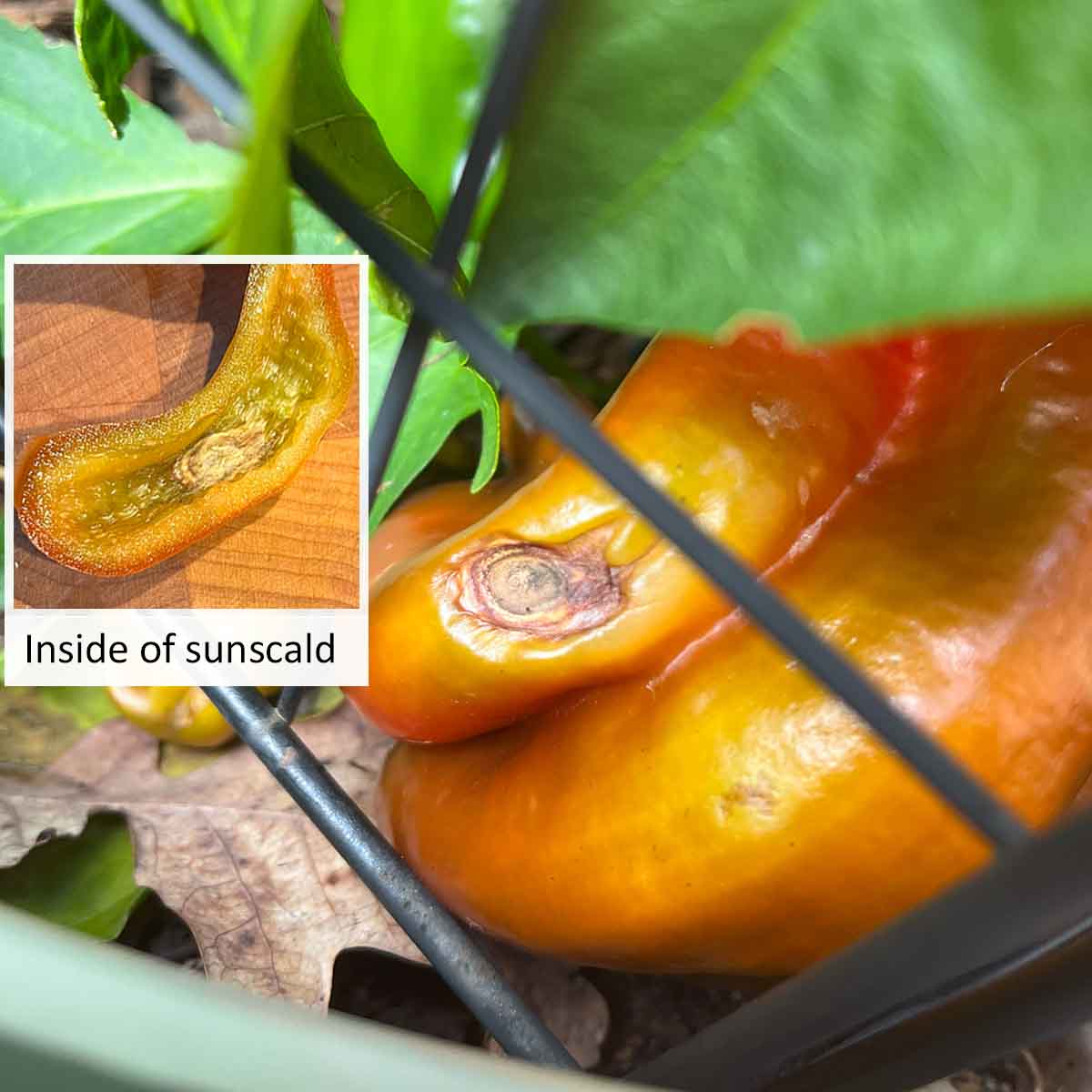
Sunscald happens when peppers receive too much direct sunlight on the same spot, especially during hot weather. They essentially get a sunburn. It usually shows up as a tan or white spot and it can get bigger the longer it's left on the plant.
This is a bigger problem in the Southern parts of the US, but can still happen in the Midwest. For the most part, your plants should be bushy enough that they filter enough sunlight to protect the individual peppers.
I don't protect my plants and get sunscald on only one pepper per every few plants. This year, out of 12 bell pepper plants, I had sunscald on 3 peppers in a south-facing garden with zero shade (Chicago suburb).
If you do get some peppers with sunscald, harvest it right away before it gets more damaged or starts to rot. Cut away the bad part - as long as the rest of the pepper looks good and there are no signs of spoilage, you can eat it.
Bell pepper varieties for the Midwest
Most bell pepper varieties are listed as mature (green) in 80 days. That's under perfect test conditions, which we don't have in our own yards. In the Midwest, those varieties will be mature in 90 days (instead of 80) in warmer areas, and 100 days (or more) in really cold areas.
It takes an extra 3 weeks on top of that to turn from green to red, for a total of 110 days in warmer areas and 130 days in cooler areas. Look for varieties that mature faster (suggestions below).
You can grow almost any variety you want in the warmer areas (like zone 6 or warmer), but will have more reliable results with peppers that are listed to mature in 70-75 days (or less).
For parts of the Midwest that are zone 5 or cooler, definitely stick to varieties that mature in 70 days or less. My advice is to try a bunch of different varieties and see what performs well, what tastes the best, and which ones were disease resistant.
Recommendations
If you want a few specific recommendations to try, I've listed a few I think you might like.
- 🔴 North Star - (red, 60-70 days), Very productive in my garden in Chicago with 15 peppers on a single plant. I grow this every year.
- 🔴 Lady Bell - (red, 68 days), adapted to cooler climates, setting fruit even in cool weather.
- 🔴 King of the North - (red, 70 days), a great producer in northern climates, but more susceptible to drop flowers in hot weather.
- 🔴 Peacework - (red, 65 days), a child of King of the North. Small plants with a denser canopy. Fedco trials produced 6 peppers per plant.
- 🔴 Mercer - (red, 75 days), a top producer in Michigan State trial (in southwest Michigan) with 15 bell peppers per plant (compared to 7-8 for other varieties). Dense, bushy growth.
- 🔴 Ace - (red, 60 days), an early ripening variety with thinner walls, can still be found at Johnny's Selected Seeds.
- 🔴 New Ace - (red, 60 days), appears to be replacing Ace at most vendors. Sets fruit even in cooler temperatures and turns red early. A seed vendor in Alaska even claims it can grow outdoors in their climate. Expect 6+ peppers per plant.
- 🟠 Gilboa - (orange, 66 days), heavy yields (12 per plant). Fedco reports early ripening, with harvest around September 1 in Zone 4 (Hartland, Maine).
- 🟡 Doe Hill Golden Bell - (yellow, 60 days), a miniature squat-shaped bell pepper that's supposed to be a good keeper if you don't use peppers right away. Heavy yields.
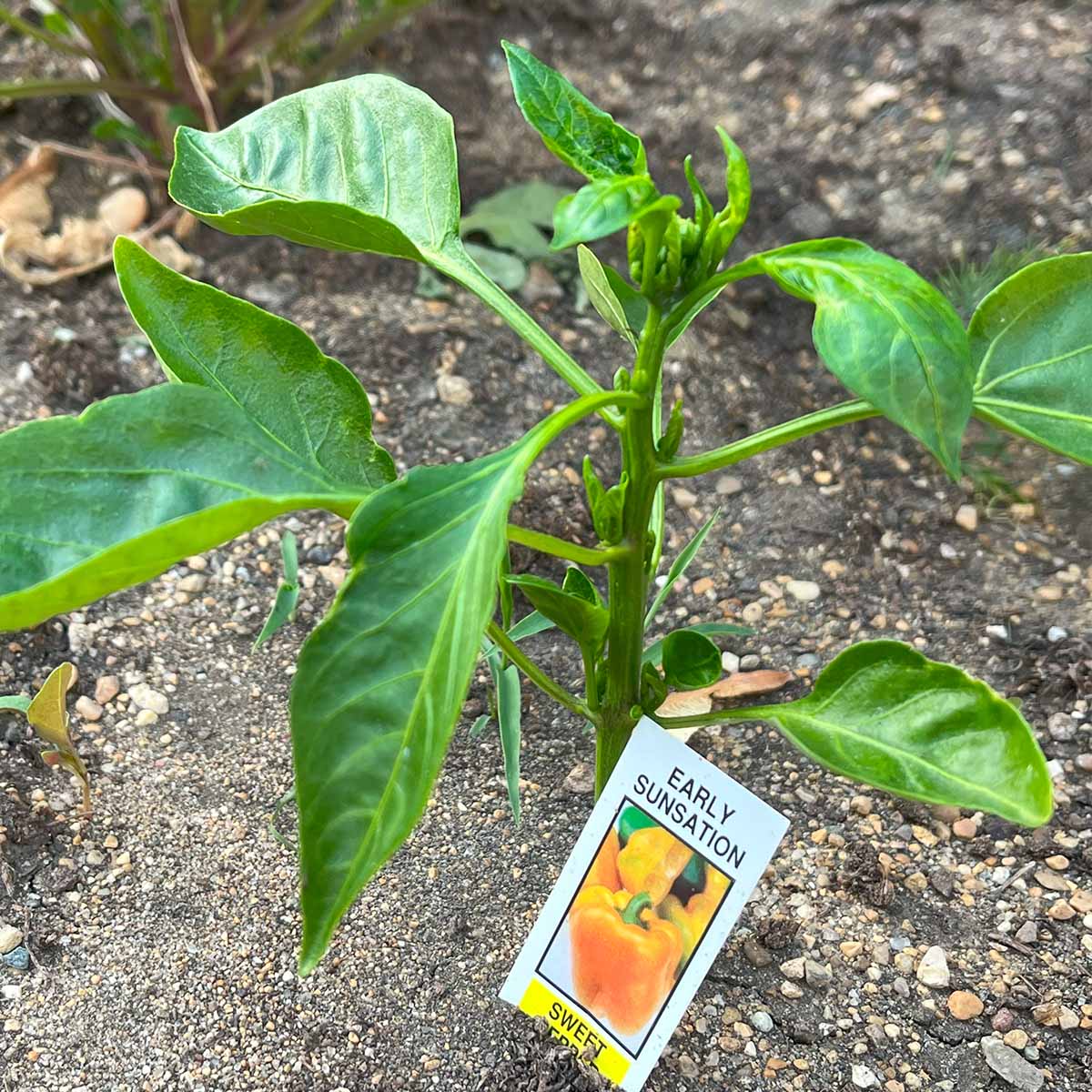
- 🟡 Early Sunsation - (yellow, 70 days), one of the earliest full-sized yellow bells with bushy growth to shade peppers. Very disease resistant according to Park Seed.
Check out Michigan State's bell pepper cultivar trial and UW-Green Bay's pepper list (pdf).
Seed sources
I've ordered from all of the sources listed below except Best Cool Seeds. I've been happy with all of my orders and the customer service. The link for Burpee is an affiliate link.
Seed vendors for the Midwest:
- Big vendors like Burpee have a wide selection and Baker Creek is a fan favorite
- MIGardener seeds are grown across various farms in Michigan
- Fedco seeds are grown in Maine and are great for cooler Midwest regions
- Best Cool Seeds are grown in Alaska.

Starting from seed
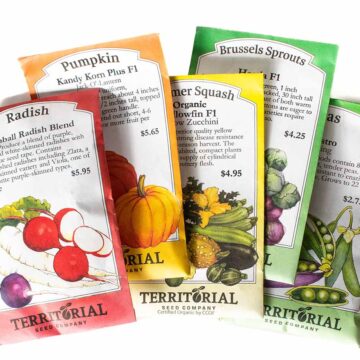
Bell peppers need warm soil and warm days to grow, so starting them from seed directly in the garden isn't a real choice. They germinate best when the soil is between 80-85F, and the soil just takes too long to get this warm in the Midwest.
Instead, you can start seeds ahead of time (or buy plants from a nursery) to transplant into the garden. Even if the soil is only 50 or 60F, the transplants will be okay.
In the Midwest, you'll want to start your seeds 10-12 weeks before your last average frost date. Most sources suggest 8-10 weeks, but with some of the cooler regions, it's better to have a more mature plant for transplanting. If it's one too young, it can struggle to fully ripen bell pepper by the end of summer.
Look up your average last frost date with your zip code on Almanac.com. You'll probably be starting your seeds sometime in February or March.

Transplanting
Bell pepper plants will die if exposed to freezing temperatures, so don't put them out too early. Wait until the air temperatures are consistently above 50F at night.
If you've transplanted your peppers and see near-freezing temps in the forecast, get some frost protection ready. Here are some options:
- Cloches act like mini greenhouses - you can make them out of 2-liter bottles, milk jugs, etc.
- Row covers, cold frames, or plastic sheeting that reaches the soil traps in heat and can raise the ambient temperature by 5F or more.
- Water: water the soil well a day in advance. The water absorbs heat and keeps the ambient air temperature warmer as it releases that heat overnight.
- Above-ground water: add water to jars and jugs, and place them to surround your plant, then drape plastic or a tablecloth over the top. The water retains enough heat to keep the plant warmer, and the plastic traps that heat.
In the Midwest, transplant bell peppers 2-4 weeks after your last average frost date. The overnight temperatures should be above 50 degrees. If you open your windows on nice spring days, you can set the potted plants in front of those windows as a simpler "hardening off" step before transplanting.
If you harden off the plants, they will be hardier to cold snaps. During the hardening off period, they slow their growth to become sturdier. If you don't harden them off, they go into 'shock' and stop all of their growth at once, and then slowly start growing again.
In the end, either method will produce peppers at about the same time, according to Steve Reiners, Professor of Integrative Plant Science at Cornell.
Spacing
In most parts of the Midwest, bell pepper plants can be spaced 18 inches apart. But you might want to make some adjustments if you live in the hotter or cooler edges of the region.
In cooler Midwest climates, closer spacing at 10-12 inches can create a slightly warmer microclimate as the denser foliage traps extra heat as it radiates off the soil at night.
Closer spacing might reduce the number of bell peppers per plant, since the plants will be competing more for the same nutrients. Use a little extra fertilizer or add more plants to make up the difference.
In hotter and more humid regions, adding more space can help keep the plants cooler and improve air circulation. A lot of diseases thrive in humidity, so allowing extra air flow between the plants can reduce that pressure. Aim for 24 inches apart.
If you haven't had disease problems in the past, you can keep spacing them at 18" apart.
Fertilizing schedule
Bell peppers need a lot of fertilizer to flourish and grow large peppers. I know that advice says all vegetables need fertilizer... but not in the same way bell peppers need it.
If you under-fertilize tomatoes or zucchini, you'll still get a decent (enough) harvest. You might even walk away thinking fertilizer isn't as big of a deal as everyone says. But if you don't fertilize peppers, you'll have a super short plant with 0-3 peppers on it that take longer to mature.
You can follow this simplified schedule for fertilizing:
- At transplant: mix in compost or a slow-release fertilizer that won't burn the roots into the transplanting hole. Also add in blood meal* for extra nitrogen to encourage leafy growth up front.
- Once a month: use a balanced fertilizer every 4 weeks (or 6 weeks of you have heavy clay soil), until you are done harvesting.
There are a lot of areas in the Midwest with heavy clay soils so there are few adjustments to the general guidelines. Clay soil hold nutrients really well, so you won't have to fertilize as often once the bell peppers flower. Once every 6 weeks should be sufficient. (If you space the plants closer than 18 inches, fertilize every 4 weeks).
*You can buy blood meal at most stores that sell outdoor plants, seed vendors, and Amazon. I use the Burpee brand from Amazon and am always happy with the results. (Those are affiliate links, so I get a small commission if you buy something and I try to be as transparent as possible, only recommending products I use and continue to buy).
Pinching flowers & topping the plant
One of the other tricks to increasing your bell pepper yield: pinch off flowers and pinch back the plant.
Removing flowers
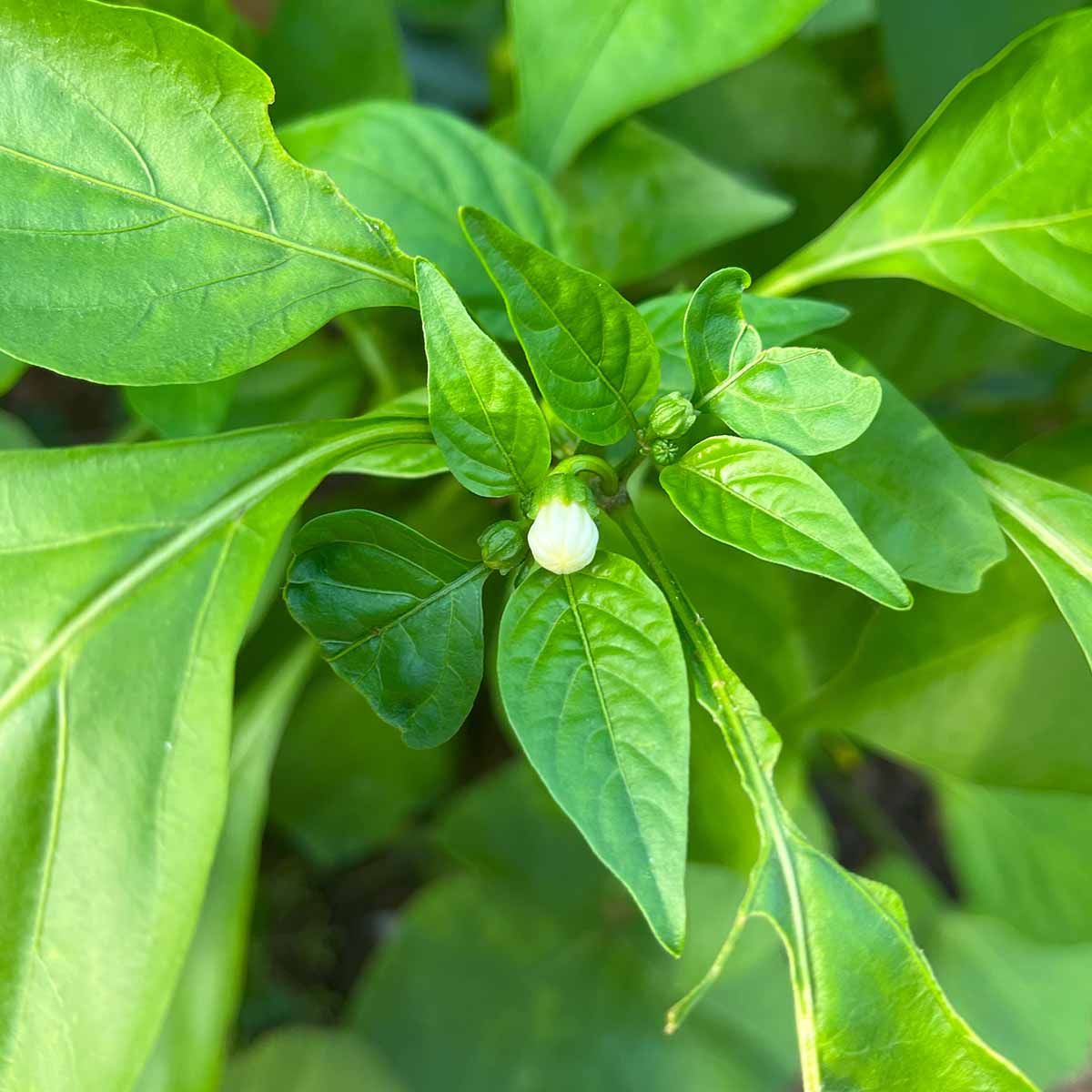
Bell pepper plants want to flower really early. In fact, I often see flowers on 6" tall transplants from nurseries. The problem is that once the plant flowers, it directs energy away from growing bigger and instead toward producing the bell peppers. This is in one of the main reasons a plant will produce only a couple of peppers for the entire season.
Pinching flowers off is as simple as it sounds. Just pinch them off with your fingers once you see them. Do this any time you see flowers pop up, and continue it for 4-6 weeks after transplant. The plant should be (roughly) 18" tall and a little bushy by the time you stop.
Topping the plant
Topping the plant is a technique that removes the top 3 sets of leaves as the plant grows. This forces the plant to branch out and become bushier. When the plant has more branches and leaves, it's able to support more bell peppers, giving you a bigger harvest.
Research has shown that topping pepper plants can double the yield. They found that pinching back the top sets of leaves 1 month after transplant, and again 2 weeks later produced the largest yields.
It turns out pinching back twice is key. Doing so only once barely increased the yield. I topped one of my North Star bell pepper plants at 3 weeks and 5 weeks after transplant, and left another one untouched. The topped plant produced 15 bell peppers, and the other one had 6.
If you live in the cooler areas of the Midwest, topping the pepper plants might slow their progress down too much to get ripe peppers before fall. I suggest you try topping some of your plants, leaving others alone, and see how each method works out in your area.
Harvesting
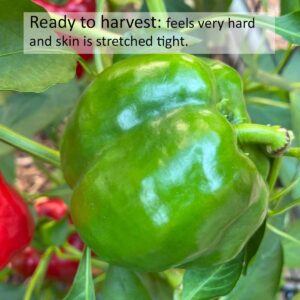
You can harvest bell peppers at any stage, even when they are small. They are actually edible at any stage. Cut them off with a scissors or knife, since pulling on them can break the branch.
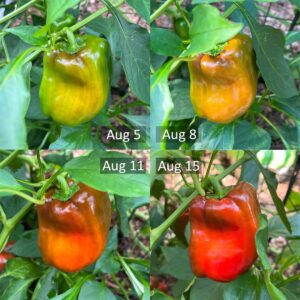
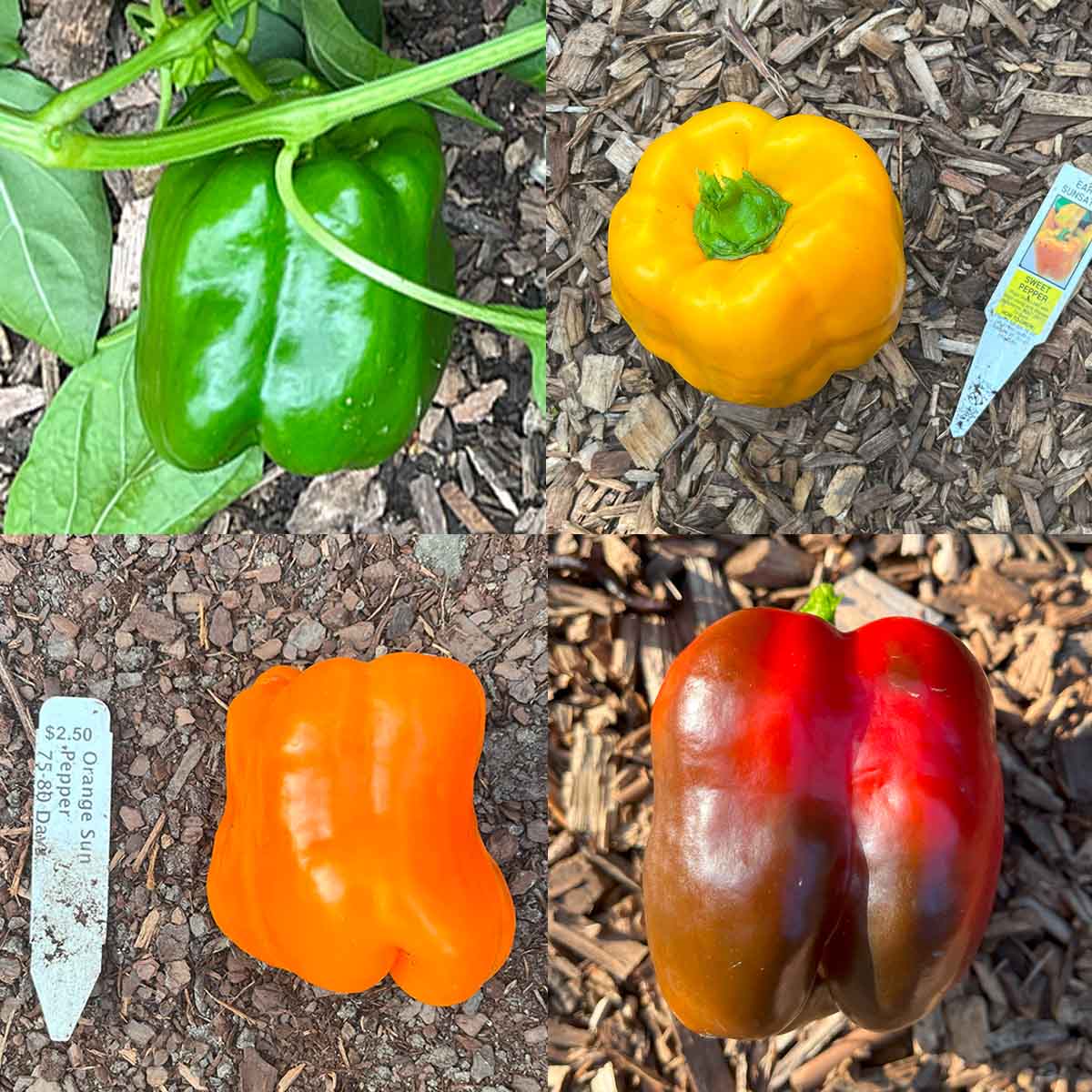
Full-sized green bell peppers are mature, but not fully ripened to red, orange, yellow, or even purple. It can take an extra 3 weeks on average to turn their full color.
In the Chicago area, you can expect full sized green peppers around August 1st, and fully ripened to red (etc) by the end of the month. Add 2-4 weeks to this timeline for cooler regions in the Midwest.
If they fail to ripen before cool weather sets in, you can harvest all of them at once. Use them in any of these recipes.
More resources
Seed vendors for the Midwest:
- Big vendors like Burpee have a wide selection and Baker Creek is a fan favorite
- MIGardener seeds are grown across various farms in Michigan
- Fedco seeds are grown in Maine and are great for cooler Midwest regions
- Best Cool Seeds are grown in Alaska.
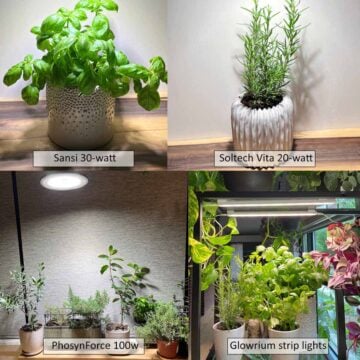
- I tested grow lights for herbs (basil, rosemary, thyme...)
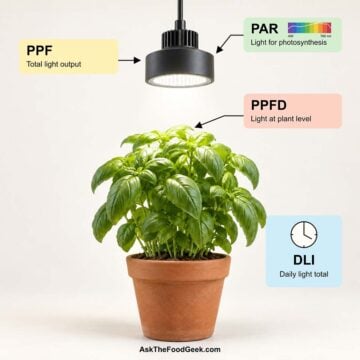
- Grow light measurements explained: PAR, PPF, PPFD, and DLI
- Bt & Spinosad for squash vine borers: what actually works?
- Squash vine borer eggs: how to find & remove them
Leave a Reply