Tzatziki is a cucumber-yogurt sauce that uses only a handful of ingredients. But the quality of those ingredients can really impact the flavor and consistency.
The basic sauce is also a great candidate for endless variations (like an avocado version or one with sun-dried tomatoes).
Jump to:
What does tzatziki taste like?
First, let's talk about what tzatziki sauce tastes like, which will help you make flavor adjustments down the road.
Tzatziki sauce is best described as refreshing and tangy thanks to the cucumbers and yogurt, with flavors of garlic and dill typically mixed in. You can think of it like an herbal yogurt that's less tangy than sour cream. The texture is similar to yogurt but with crunchiness from the cucumbers.
Tzatziki sauces balance fatty meats, salty dishes, and anything spicy. That's why it's commonly used with gyros, grilled meat, fried and spicy foods.
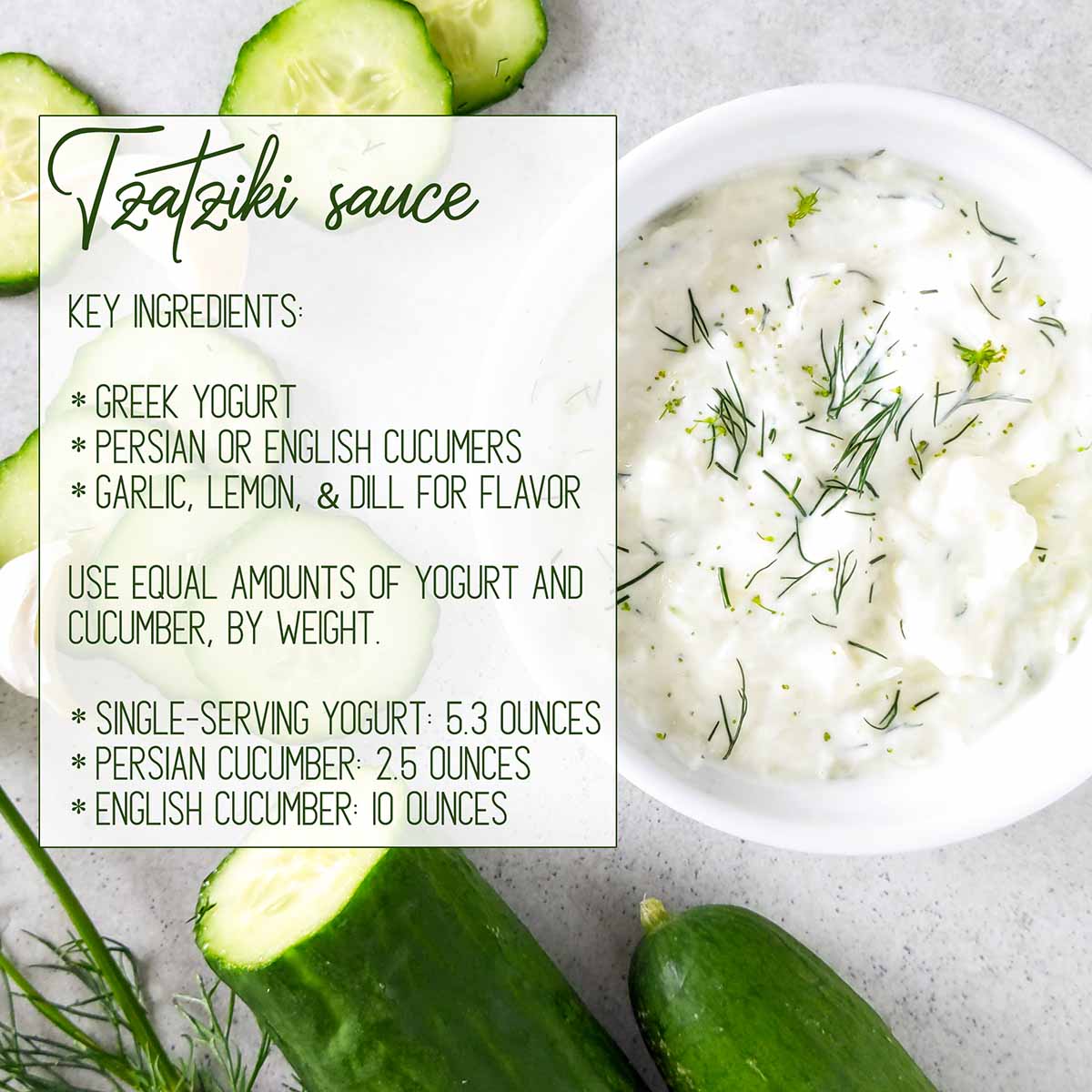
The 2 key ingredients
No matter what recipe you use, there are 2 key ingredients you need to get right: cucumbers and yogurt.
- Pick the right type of cucumber (and squeeze out the water)
- Use a good-tasting, thick yogurt (Greek yogurt is the gold standard for tzatziki)
So let's take a more in-depth look at each of those ingredients so you can have the most refreshing, creamy homemade tzatziki sauce.
Best cucumber varieties
The best cucumbers for tzatziki share several characteristics:
- Good flavor and no bitterness
- Thin skin and wax free
- Few seeds
- Not watery
English and Persian cucumbers are the best choice, and if you don't like bitter cucumbers, avoid the American slicing variety. If that's all you have, check out "Bitter cucumbers & how to fix them."
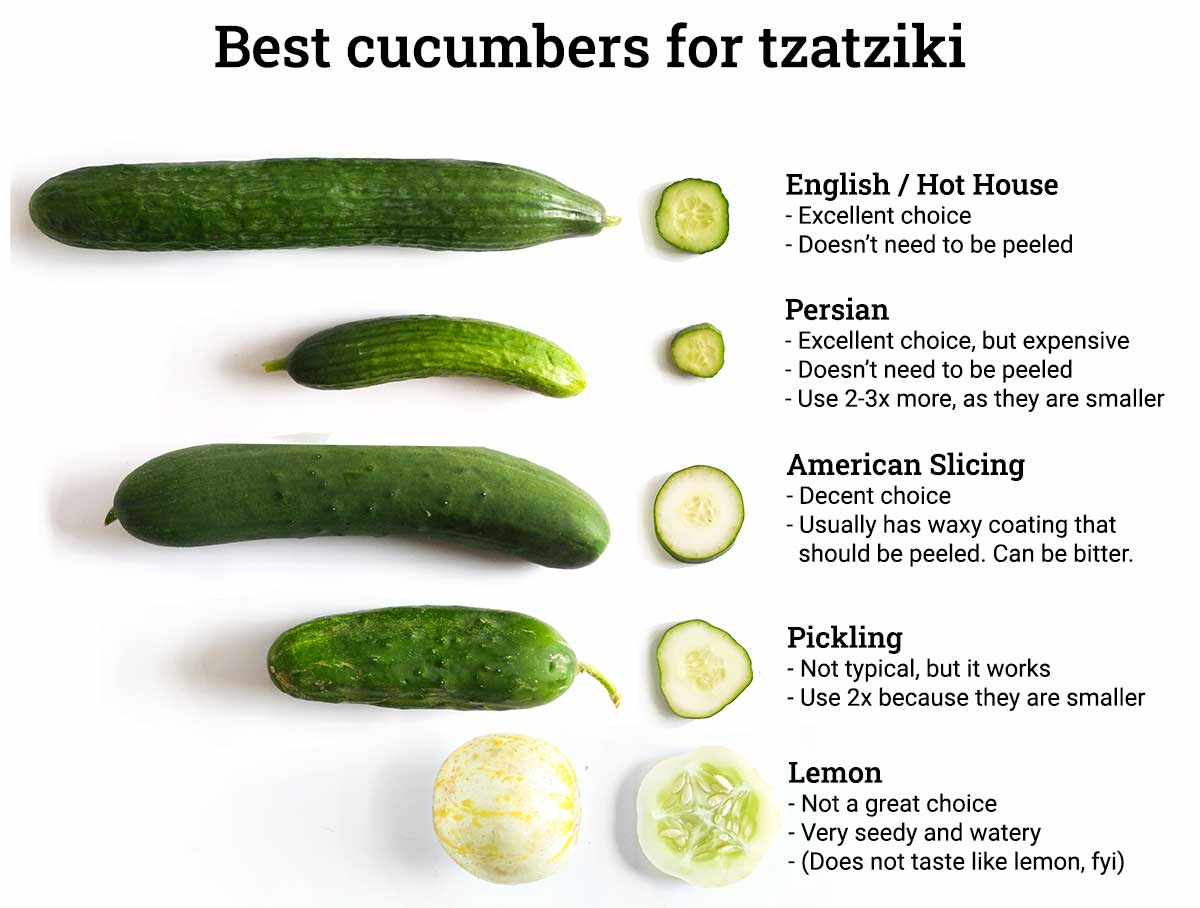
Persian cucumbers
Persian cucumbers are going to have the best flavor. They taste more cucumber-y than other options and are never bitter. They don't need to be peeled and have very few seeds.
They are typically sold in plastic-wrapped trays in packs of 4 to 6. Because they are wrapped, they aren't coated in wax (which would require peeling).
The downside is they also tend to be the most expensive. That said, if they fit in your budget, they are worth the splurge for recipes that rely on a good quality cucumber, like this tzatziki sauce, fresh salads, or in gin & tonics.
English hot house cucumbers
The next best cucumber to use are English hot house cucumbers. They are more affordable, with very few seeds. The skin is thin enough that it doesn't need to be peeled and they are almost never bitter.
They have a good flavor, but not as stand out as Persian cucumbers. They are also more watery than Persian, but still considered low-water cucumbers.
They are sold individually wrapped in plastic. While many of us try to reduce plastic waste, this at least keeps them wax-free.
American slicing cucumbers
These are the standard sausage-shaped cucumbers in the grocery store. They are coated in wax and the skin is often bitter, so you'll want to peel them.
American slicing cucumbers are also more seedy and watery. You might want to cut them in half and scoop out the seed cavity first before shredding them.
These also benefit from extra straining - shred the cucumbers, then add salt and set it over a collander to drain. Squeeze out every last drop before adding it to the tzatziki sauce.
The seasonal cucumber guide covers even more varietal information.
Squeezing the cucumbers
For a thick tzatziki sauce, you'll want to remove any extra liquid from the cucumbers. Persian and English cucumbers can be shredded and then squeezed right away with a tea towel, cheese cloth, or bamboo paper towel.
American slicing cucumbers, or any other watery cucumber, might need to be salted first. The salt breaks down the cell walls, releasing extra water. Shred the cucumber and then add ½ a teaspoon of salt per cucumber. Let it sit over a colander for 15 minutes.
The water will start to drain off, but you'll still need to squeeze it out before adding to the tzatziki. If you skip this step, your sauce will be runny.
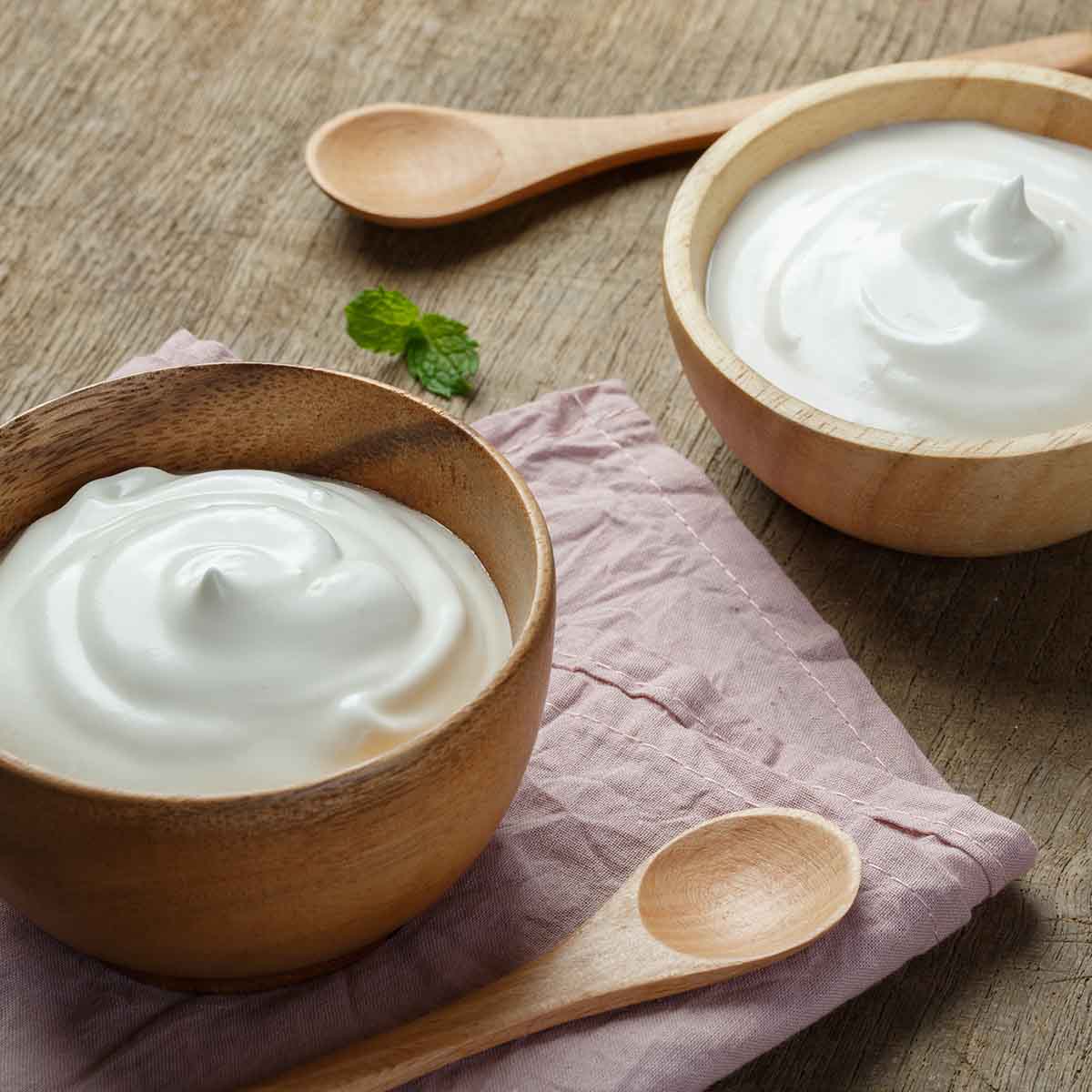
Types of yogurt
There are a lot of types of yogurt at the grocery store these days, and they do affect the flavor and texture of tzatziki sauce. Greek yogurt is the gold standard for its thick texture and flavor.
Greek yogurt: top pick
Greek yogurt is going to have the thickest texture. This makes it one of the best choices for tzatziki since it doesn't get too watery once the cucumbers are added in.
The thick texture comes from the straining process to remove the liquid whey, which then concentrates the fats and proteins. The flavor is less tangy than regular or low fat yogurts, much higher in protein, and has a creamier flavor (like the difference between whole and skim milk).
Note that there's a difference with Greek-style yogurt which may not be strained, and instead thickened with ingredients like pectin or starch. The ingredient list for true Greek yogurt will just have milk & cultures, no thickeners.
Skyr yogurt
Skyr yogurt, also known as Icelandic-style, is also pretty thick, though slightly less so than Greek yogurt. Skyr yogurt is made from specific Icelandic bacterial cultures that affect the flavor and usually starts from skim milk.
The thickness is from concentrated proteins rather than fat. It's less acidic and has a subtle sweet dairy flavor, making it taste lighter than Greek yogurt.
This is a pretty solid choice for making any tzatziki sauce recipe.
Whole milk yogurt
The next best option is going to be whole milk yogurt. It's not as thick and you'll definitely want to pour any extra water off. If it feels watery in the container, try straining it through a cheese cloth, letting excess liquid drip off for 30-60 minutes.
It tastes more tangy than Greek or Skyr yogurts, with a thinner mouthfeel due to the less concentrated proteins and fat. The texture is improved with some added olive oil, which my tzatziki recipe already calls for.
Yogurt to avoid
Nonfat and low-fat yogurt are going to be too watery and not provide the creamy texture that you want in this sauce. If you really want to use these (or don't have any other option in your fridge), strain the yogurt with a cheese cloth for an hour, and add in an extra tablespoon of olive oil.
Yogurt with added thickeners are also not going to have the ideal texture or flavor. They might feel thick and smooth, but won't have the depth to build on the other ingredients. Think of adding starch to thicken skim milk - it still won't taste and feel like whole milk.
Jump to:
Recipe
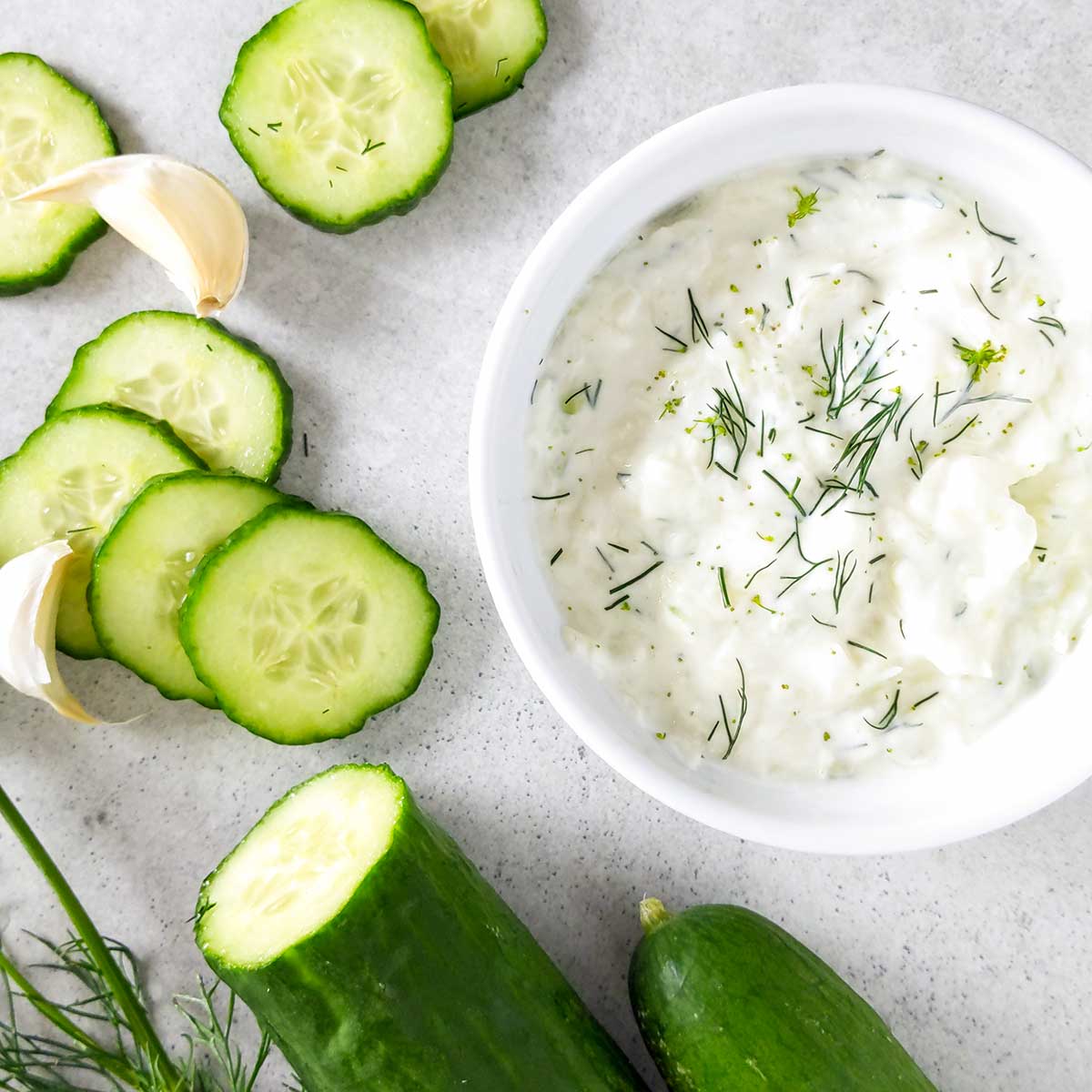
Ingredients
- 1 English cucumber or 4 Persian cucumbers, see note
- 1¼ cups plain greek yogurt two standard 5.3-oz containers, see note
- 1-2 tablespoon fresh lemon juice or red (or white) wine vinegar
- 1-2 tablespoon chopped fresh dill
- ¼ teaspoon salt more to taste
- ¼ teaspoon black pepper
- 2 tablespoon olive oil
- 2 cloves garlic grated
Instructions
Prep vegetables
- If the cucumber has a waxy coating, peel it off. Otherwise you can leave the skin on. Grate cucumber over a tea towel or bamboo paper towel. Wrap up the towel and squeeze out as much liquid as you can (this prevents the tzatziki from being too watery).
- Grate garlic with a microplane if possible. Otherwise, mince it with a knife. Place the garlic in a bowl with the 2 tbps of olive oil. (This melows the garlic bite out a little and flavors the oil at the same time).
- Chop dill.
Make the tzatziki, gradually adding flavor
- Note: The cucumber-yogurt base allows for flavors to quickly take over. Because of this, add each of the flavors in gradually until you like how it tastes.
- Open the 2 containers of greek yogurt and pour off any liquid sitting on top. Scoop yogurt into a bowl. Fold in the shredded cucumber.
- Add in half (1 tbsp) of the lemon juice (or red/white wine vinegear), 1 tablespoon dill, and ¼ teaspoon each of salt and pepper. Stir and taste. Add more to taste.
- Add in half of the garlic oil (1 tbsp). Stir and taste. Add more to taste.
- Now it's ready to serve.
Make-ahead and storage
- This will last 5-7 days in the fridge. The water and oils might seperate, that's natural. Stir to combine before serving. Note that the garlic flavor will get stronger as it sits in the fridge, so consider lowering the amount if making ahead.
Notes
Nutrition

Tzatziki sauce recipe variations
As with any recipe, I encourage you to customize it to your liking. Some variations are subtle, while others push the definition of tzatziki.
Extra lemon & dill
Add even more lemon flavor with the zest and be sure to use lemon juice (not any vinegar) in the recipe. You can also try adding ¼ teaspoon of sumac if you have it in your pantry - it's a lemony flavored spice.
Try this tzatiki sauce variation from Ginger With Spice.

Minty fresh
Both mint and cucumbers have natural cooling effects, so why not combine them in a tzatziki variation perfect for a hot summer day. Not only will it make a good veggie dip, but the mint also pairs well with lamb or spicy dishes, especially some curries.
Herb flavors come through really well in tzatziki sauce. If you're growing your own herbs, definitely use those. You can also try growing interesting varieties like Citrus Kitchen Mint from Richters (read my review).
Mexican
For a Mexican version of tzatziki sauce, replace the dill with equal amounts of cilantro, and swap lime in for the lemons. This is a great sour cream replacement for tacos and burritos. Try this recipe from Main Street Farms.
Italian with sun-dried tomatoes
There's two types of recipes for a sun-dried tomato tzatziki sauce. One replaces the cucumbers with sun-dried tomatoes in olive oil (recipe on Half Baked Harvest). The other still uses cucumbers and adds in rehydrated sun-dried tomatoes (recipe from Country Grocer)
Sour cream & onion
Replace some of the Greek yogurt with sour cream and add chopped green onions or chives for a more mild flavor, or red onions like this recipe for a sharper bite.
Ranch
Add some buttermilk and dried herbs for a fun tzatziki variation. The recipe from Serving Dumplings reduces the amount of cucumber so that you can add in some buttermilk and get that ranch flavor.
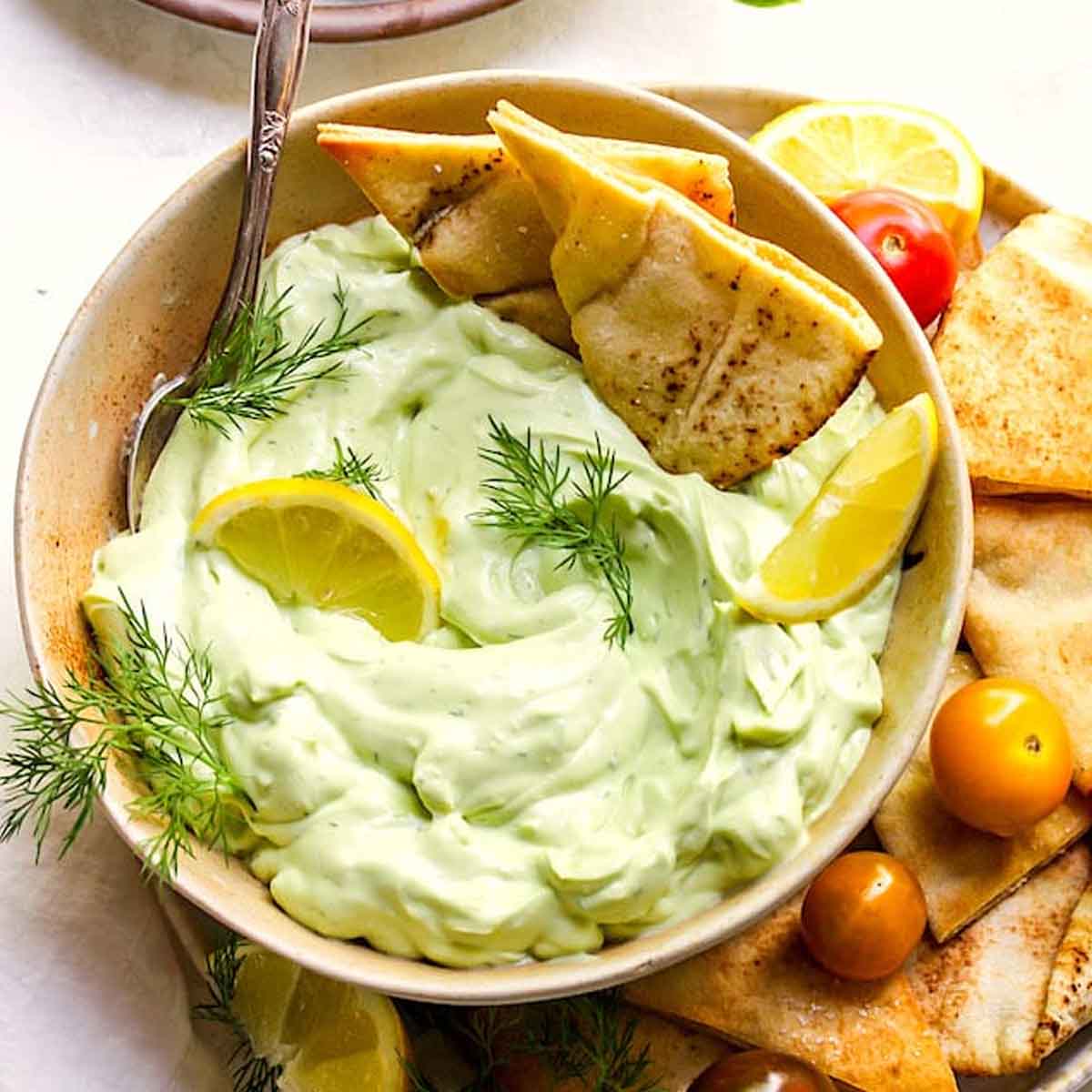
Avocado
Take any recipe and then add an avocado to it. No need to adjust the other ingredients. This will also help thicken a runny tzatziki sauce or one that starts with a thinner yogurt. Try this recipe from Two Peas & Their Pod
Smoky
Add a smoky element with some smoked paprika. Start with a half-teaspoon per 5.3 ounce container of Greek yogurt. You can keep all of the other ingredients the same.
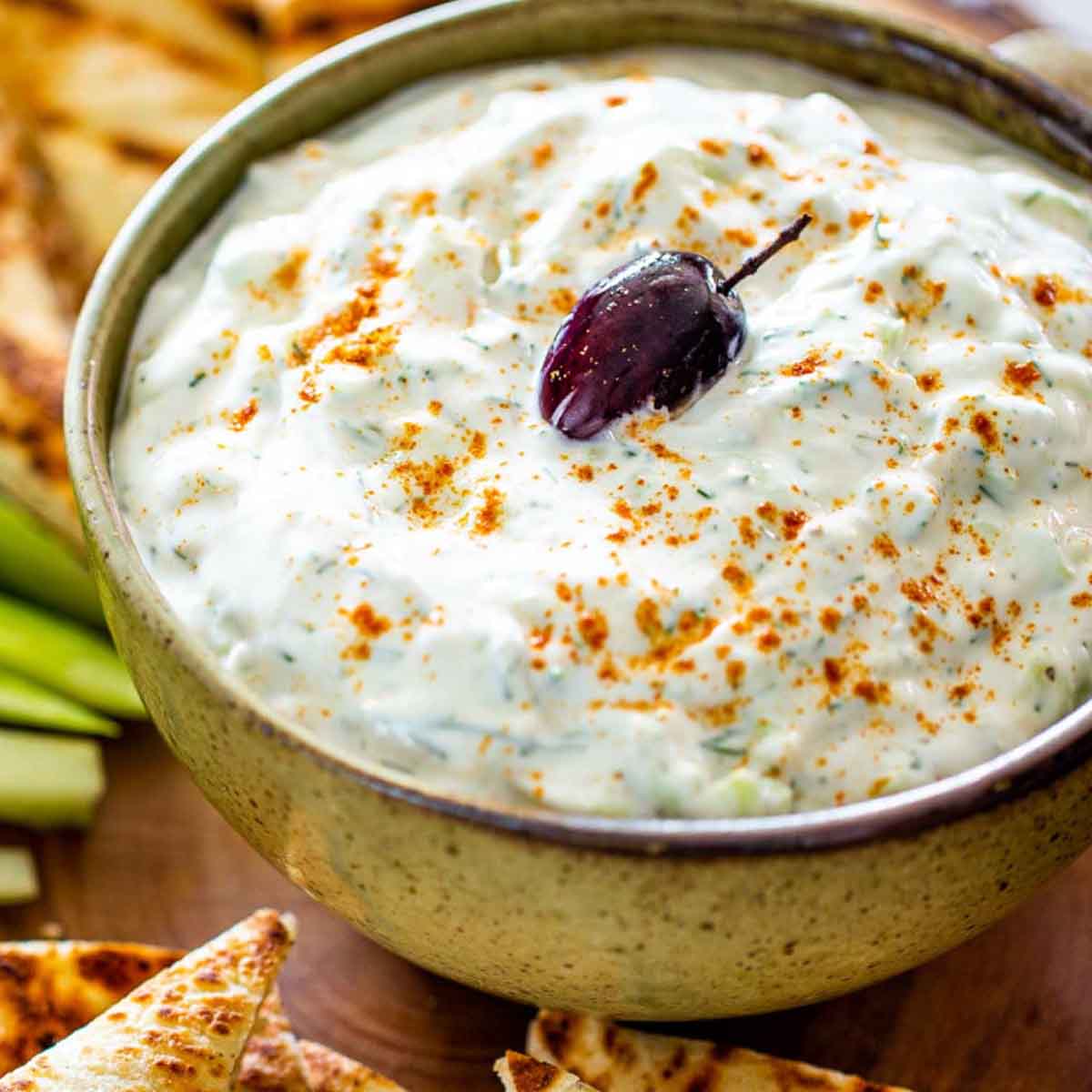
Spicy
Make a spicy tzatziki variation by adding fresh jalapenos (or other hot peppers), hot sauce, or with some cayenne from your spice collection.
- Spicy tzatziki from Cooking and Beer, using hot sauce and chipotle powder
- Cayenne tzatziki from Jo Cooks
- Jalapeno tzatziki variation from Peas & Crayons
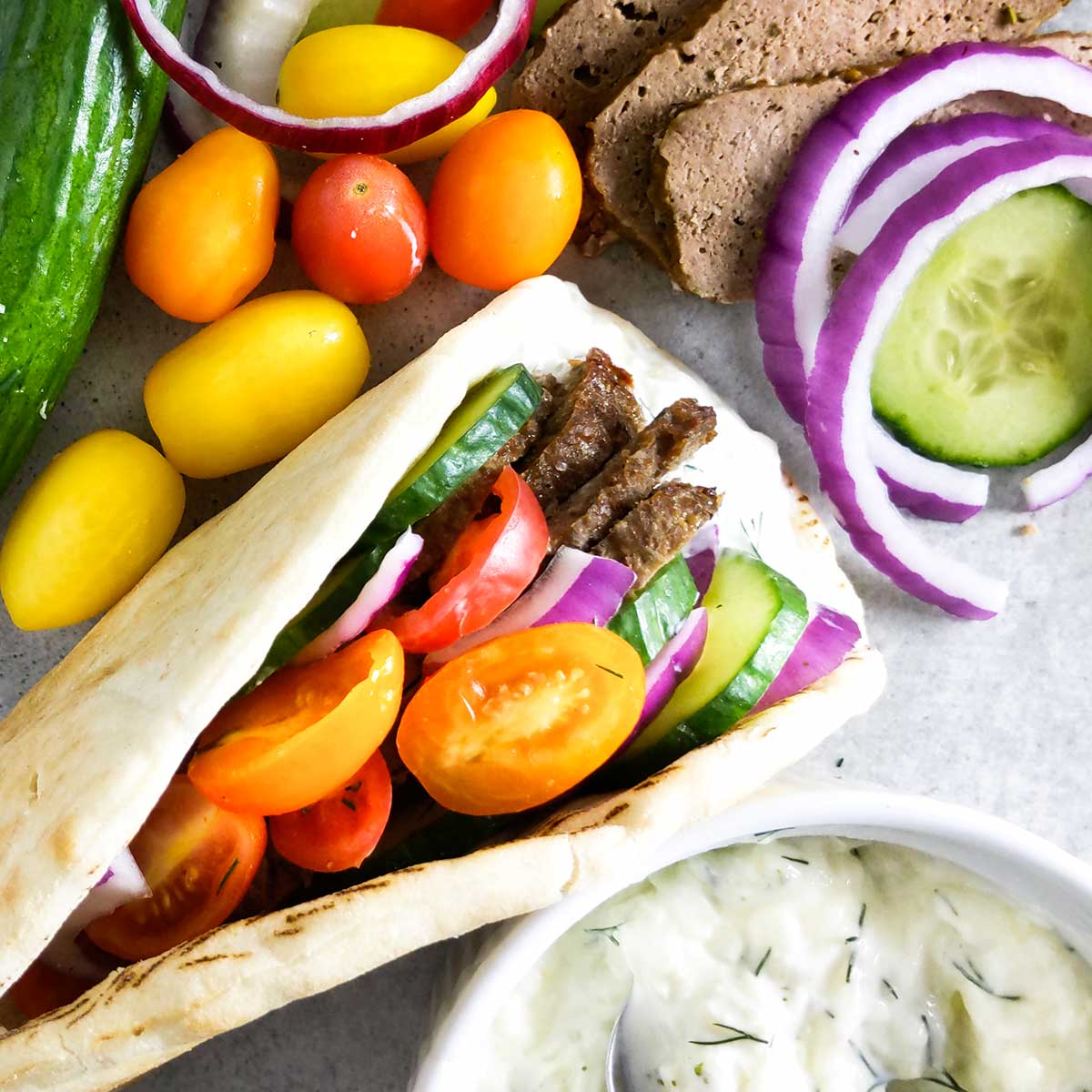
Recipes that use tzatziki sauce
A classic use for tzatziki sauce: gryos. It's hard to replicate the restaurant style meat, since most of us don't have a rotisserie running all day to slowly shave meat from. Instead, forming it into a flat, dense loaf works better at home.
Get the gyro meat recipe and the best grocery store alternative (hint: look no further than Trader Joes).
Here are some other fun recipes that use tzatiki and the many variations:
- Greek lamb souvlaki with avocado tzatziki by Half Baked Harvest
- Grilled zucchini gyros with sun-dried tomato tzatziki by Half Baked Harvest
- Ina Garten's Tzatziki with sour cream, from Make It Ahead cookbook (a great cookbook, by the way).
- A very minty version that also lets garlic steep before removing it, by Bon Appetit.
- Greek feta burgers with sun-dried tomato tzatziki by Burger Base
If you're wondering what else is currently in season, check out my calendars to see what produce is in season each month (and coming up soon).



RA! says
I have a question. Has anyone ever heard of a "sweet" tzatziki sauce?
There used to be a gyro place in NYC in the late1970s near Madison Square Garden. They made great gyros and offered a sweet tzatziki sauce which was awesome. Anybody ever heard of this type?
Can't find a recipe anywhere!
Thanks, RA!
Vee says
I have not, but will look around. I don't know if it's as simple as adding sugar (or honey) or if they do something else. Let me see what I can find out.