Kale makes the best winter Caesar salads because it's extremely cold-hardy and gets sweeter after a frost.
To give this classic a seasonal update, I also added in celery root for some crunch and subtle celery flavor, and toasted hazelnuts.
The Caesar salad dressing is really easy. You only need 4 ingredients and you can shake them in a jar: garlic, lemon juice, mayo, and olive oil. It's light on the mayo, keeping it relatively healthy.

Jump to:
Why kale tastes better in winter
As I mentioned earlier, kale is great for winter Caesar salads because it gets sweeter and more tender after a frost.
Freezing temperatures trigger the kale to protect itself. It does this by converting some of the starch in the leaves to sugar. The chemical changes also make the leaves less tough and fibrous.
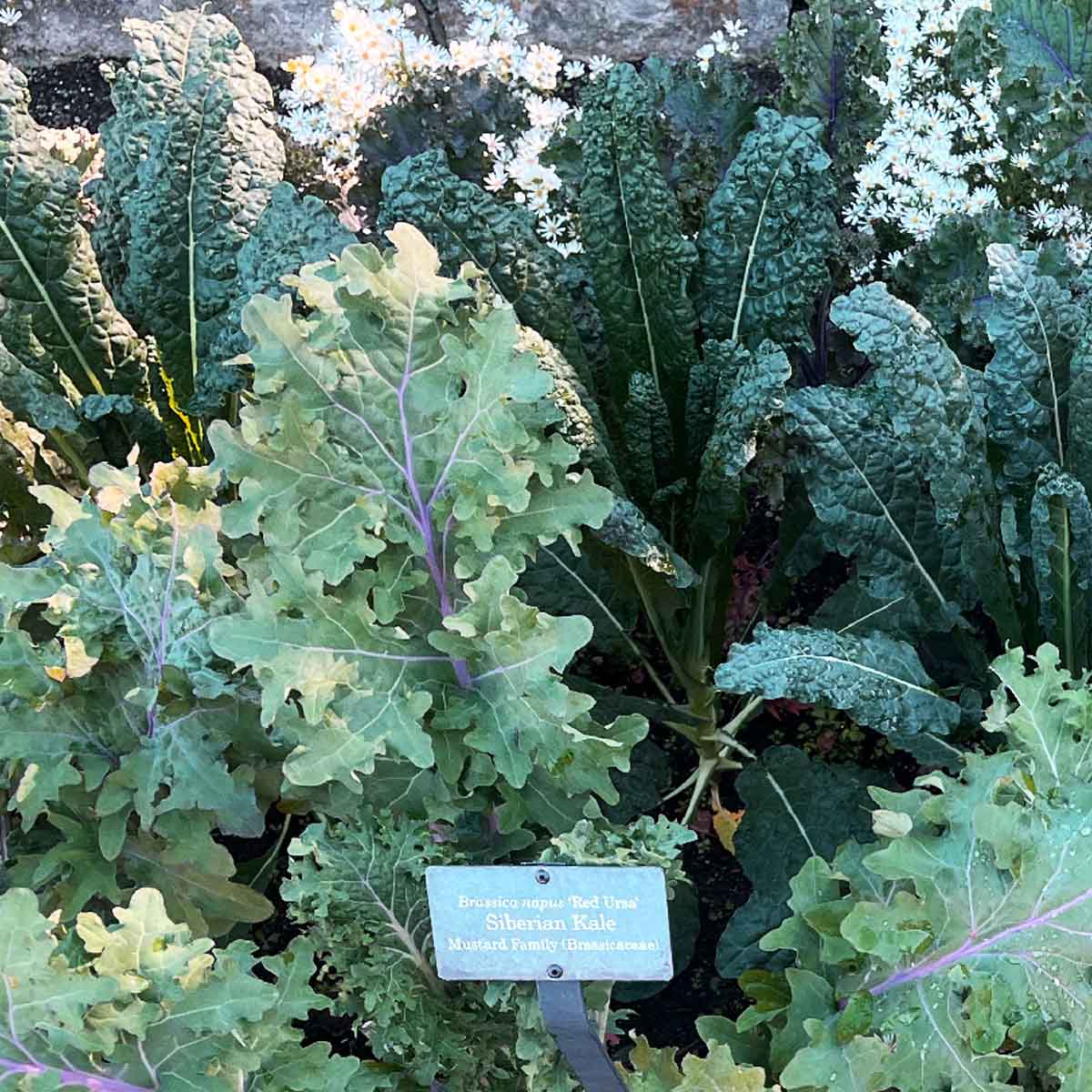
Best types of kale
Use your favorite type of kale in the winter Caesar salad. Lacinato (dinosaur) and curly kale both work out really well.
Lacinato kale, in particular, can become chewier than other varieties in cold weather. It has to do with how their thicker leaves are structure and protect itself against cold weather.
If you're growing kale in the garden, Siberian kale is one of the hardiest varieties, often surviving deep freezes and snow. The leaves get softer with freezes due to their thinner structure.
Massage large kale leaves to further soften
When working with kale, especially lacinato (dinosaur), you'll want to massage the leaves to make them more tender and less chewy.
The trick to breaking down more of the tough cell walls is to massage the leaves with dressing, physically breaking them down.
To do this, remove the tough stems from the kale leaves. They can be cut away or simply ripped off the center stem by grabbing the base with one hand and ripping down with the other (as shown here).
Next, tenderize the kale leaves by massaging the Caesar dressing into them prior to serving.
Both the massaging action and the lemon juice in the dressing helps break down the fibrous leaves, making them much more pleasant to chew.
Shredded kale doesn't need a massage
Shredded kale doesn't need tenderizing because the thin strips have already broken up the fibers. (Think about cutting meat on the bias).
All you need to do is simply toss the shredded kale and dressing together 10 minutes before serving. The lemon juice will do all of the tenderizing you need, without turning them mushy.
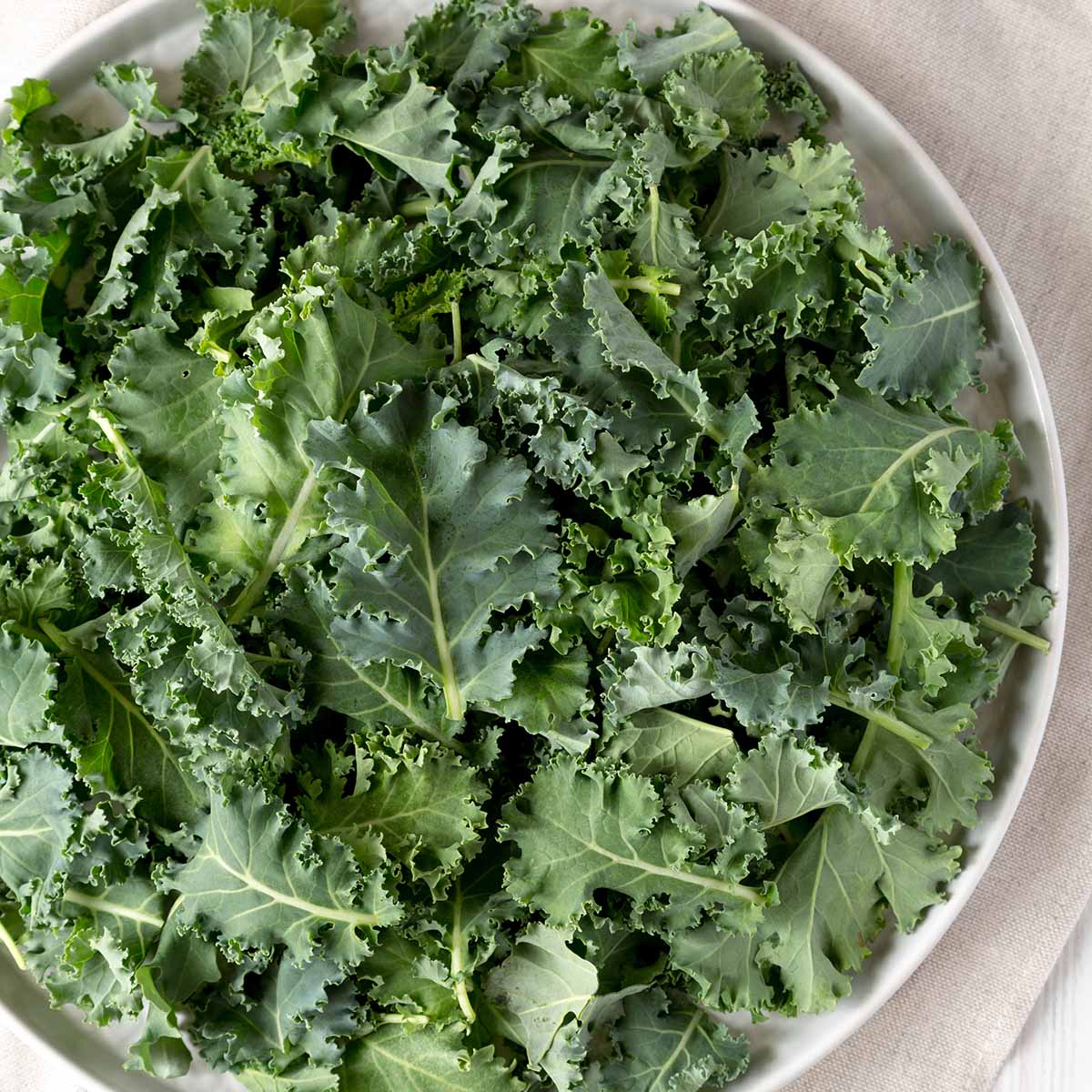
Baby kale doesn't need any special treatment
If you're using baby kale for the salad, don't massage the leaves or dress them early.
As Bon Appétit advises, "you definitely don't need to massage it-that stuff is delicate enough to eat on its own, and massaging it will just wilt it in a gross way."
What if kale is bitter?
Lastly, if you find kale to be bitter, try soaking it in hot water instead of massaging dressing into it.
America's Test Kitchen shares this method, explaining, "When you soak kale, some of the bitter-tasting compounds found in cruciferous vegetables after they're chopped, called isothiocyanates, are rinsed away. This results in a milder kale flavor."
I haven't tried this because I like the flavor, but I might do it next winter and report back.
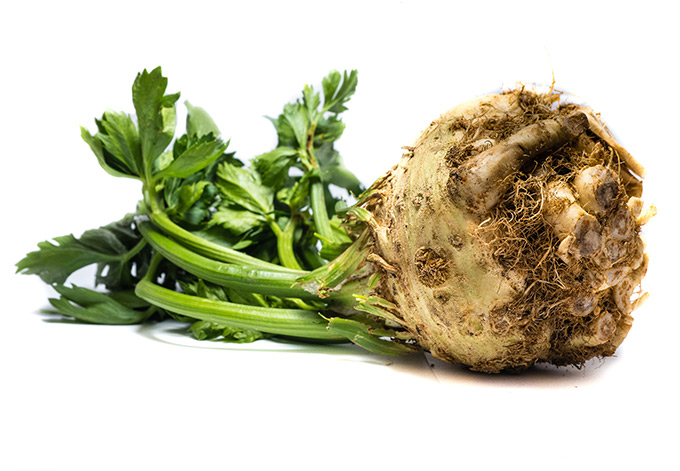
Celery root adds crunch and subtle celery flavor
Celery root, also known as celeriac, is in season throughout winter. It's a specific type of celery plant grown for the root ball.
It has a delicate potato-celery like flavor and can be eaten raw or cooked. It's used raw in this kale Caesar salad, but you could certainly take the time to roast it for a warm salad option.
Smaller celery root will have a more pronounced flavor, which I recommend for salads. If you get one with a spongy center, it's still perfectly fine to use. Just cut around the spongy center and use the rest of the flesh.
The celery root will oxidize (just like potatoes), so I toss it in some lemon juice and honey to keep it white.
Get more tips with the celery root guide. If you enjoy it, try adding it to my winter minestrone.
Nuts add a winter heartiness
Most nuts are harvested in fall and then stored through winter. Some grocery stores sell them still in their shells, like walnuts, almonds, and pecans.
For this salad, I chose hazelnuts because they pair really well with both kale and celery root. They taste very nutty, slightly sweet, and are very aromatic when toasted, adding their own dimension of flavor the salad.
Hazelnut's flavor pairs well with celery root's nutty undertones, which is why you see this combination at restaurants too.
Chopped hazelnuts are easier to handle
While I often buy seasonal nuts in their shell, this is one time I go for convenience.
Buy hazelnuts that are already chopped to save time. It's not that chopping takes a ton of effort, but rather the skins have already been removed for you.
I've tried every trick to removing skins off whole hazelnuts and it's still a tedious, time-consuming process.

Use a microplane grater for Parmesan
A microplane grater turns Parmesan cheese into a light and fluffy version of the Kraft grated version.
This has several advantages over a regular-sized cheese grater:
- The tiny size mixes easily into the dressing and helps thicken it
- It clings to the kale leaves because it's so light
- The flavor is distributed into every bite, so you don't need as much
It's worth buying a good Parmesan, Romano, or even Asiago cheese for your winter Caesar salad. The flavor is critical for a really good Caesar.
Make this a full meal with quick-breaded chicken
To make this a full meal without a lot of hassle, you can quick-bread and pan fry some chicken breasts. My lazy-girl method is simple:
- Pour panko breadcrumbs on a plate
- Cut chicken into strips or chunks and then toss them with the breadcrumbs (most of them stick to the chicken)
- Pan fry in a stainless steel skillet with 2 tablespoons of olive oil until crispy and cooked through
- Total time: 15 minutes (5 prep and 10 to cook)
Alternatively, grab your favorite chicken from the deli, whether that's grilled chicken breasts or fried chicken strips.
Calories
While calories are not the perfect measure, I find it helpful to portion out a meal and to put each ingredient into perspective.
The recipe is written as 4 side salads, without chicken, which is 318 calories.
If you add chicken and make the salad a meal, it will serve 2-3 people:
- 2 giant salads with chicken: 880 calories each
- 3 large salads with chicken: 586 calories each
Let's take a look at where the calories come from, using the 4 side salads as an example:
| Ingredient | Calories per side salad |
|---|---|
| Kale | 11 |
| Celery root | 70 |
| Hazelnuts | 45 |
| Parmesan | 25 |
| Croutons | 115 |
| Dressing | 52 |
The chicken adds a total of 500 calories (including breading and half of the frying oil). Split between two people, that's 250 calories each.
If you skip the breading and frying, the chicken is only 260 calories total, or 130 if split between two people.
I also put together some general information on estimating Caesar salad calories, whether you make it at home or dine out.
Recipe

Ingredients
Salad
- 1 bunch kale any variety
- 1 celery root aka celeriac
- 1 tablespoon white wine vinegar for tossing on celery root
- 1 tablespoon honey for tossing on celery root
- ¼ cup chopped hazelnuts or walnuts
- ¼ cup Parmesan cheese 1 ounce, grated
Croutons
- 1 large chunk hearty bread
- 1 tablespoon olive oil
- salt and pepper
Caesar dressing
- 1 clove garlic
- 1 lemon
- 1 tablespoon mayonnaise
- 1 tablespoon olive oil
Optional: chicken & Breading
- ½ lb chicken breast
- ½ cup Panko bread crumbs
- 2 tablespoon olive oil
Instructions
Prepare salad
- Kale: Cut out stems of kale and slice into bite-size pieces. Parmesan: Use the microplane to grate the Parmesan. Set half aside for the dressing, and half for topping the salad.Garlic & lemon: Peel garlic and grate it on a microplane to make a paste. Then zest the lemon, then cut it into quarters. Celery root: Peel and cut celeriac into matchstick pieces, then put it in a bowl with the vinegar and honey (to keep it from turning brown, and add a little flavor).
Make Caesar dressing & massage kale
- Combine the grated garlic, mayo, lemon zest, juice from the lemons, and half of the Parmesan cheese in a bowl (or mason jar). Whisk in 1 tablespoon of olive oil (or shake the jar). Season with salt and pepper to taste.
- Place kale in a bowl and pour half of the dressing over the leaves. Massage for 30-60 seconds with your hands to soften the leaves.
Make the croutons
- Cut or tear the bread into crouton-sized pieces (or roughly break it apart). Toss with olive oil and season with salt and pepper. Put them under the broiler for a few minutes, until crispy (or toast in a toaster oven).Set a timer for 2 minutes - they can burn fast under a broiler. A toaster oven is more foolproof if you have one.
Toast nuts
- Toss the nuts in a dry pan (if making chicken, use a skillet large enough for the chicken). Cook over medium heat, stirring occasionally. Set a timer for 3 minutes to check on them (they can burn fast). If they aren't done, set the timer for 1 more minute at a time, until they are done.
Optional: make the chicken
- Pour the breadcrumbs onto a large plate.
- Cut the chicken into bite-size pieces. Season with salt. Toss half of the pieces into the bread crumb-mixture and toss to coat. Set aside and repeat with remaining chicken. This version skips the typical milk-egg-flour process. The mixture sticks well enough for a quick pan-fry meal that the time saved is worth it.
- Place 2 tablespoon of olive oil in a pan and heat it on medium-high.
- Add the chicken to the hot oil (if it isn't very hot, the breading will soak it up instead of frying). Cook until browned and no longer pink, turning occasionally.
Combine & Serve
- Add in the celeriac, hazelnuts, and remaining cheese to the dressed-kale. Add remaining dressing and combine. Top with chicken and croutons. Enjoy your winter Caesar salad!
Notes
Serving size & nutrition
This salad makes 4 good-sized side salads without the chicken, which is how nutrition is calculated below. Here are some other adjustments:- 2 very large salads: 586 calories each
- 2 meal-sized salads with chicken: 880 calories each (chicken, breadcrumbs, and oil add 250 calories per serving)
Nutrition
More Caesar salad variations
This is one of my favorite kale Caesar salad recipes, although you should feel free to make your own variation as well.

Summer Caesar salad with tomatoes and homemade croutons
- Autumn Caesar salad with butternut squash croutons by Plays Well with Butter
- Winter Caesar with kale, brussels sprouts, and butternut squash from How Sweet Eats
- A vivid pink / purple Caesar with radicchio from Munching with Mariyah
More salad recipes
I have more winter salad recipes for you to check out, some of them are also standalone meals.
- Arugula steak salad with pomegranate dressing
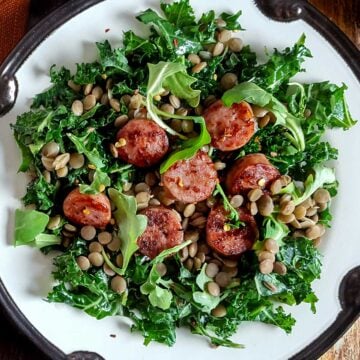
- Kale and lentil salad with sausage
- Chinese chicken salad with fresh mandarin oranges
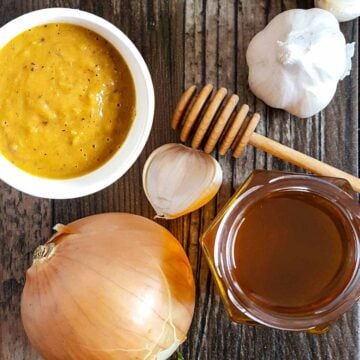
- Sweet onion vinaigrette with roasted garlic

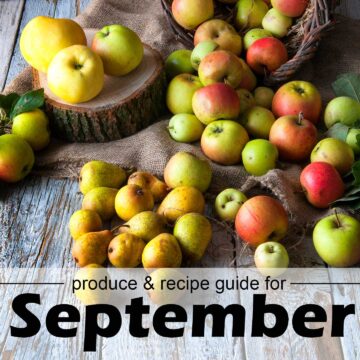
If you're wondering what else is currently in season, check out my calendars to see what produce is in season each month (and coming up soon).


Veronica T says
I look forward to this every fall and winter