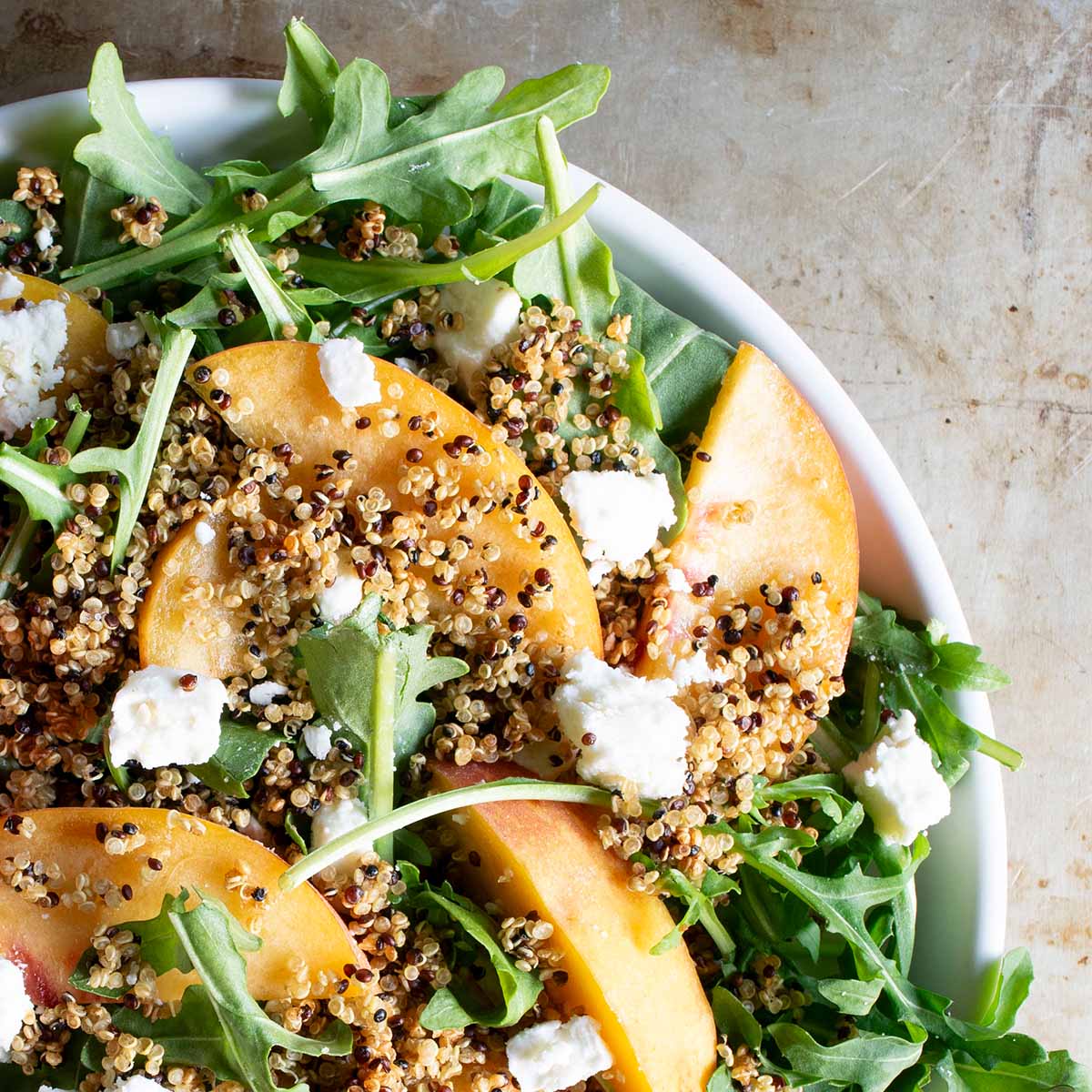
Crispy quinoa takes this peach salad up a notch. Roasting the quinoa in the oven after cooking it, transforms it into a salty, crunchy (and healthy) topping that really makes the salad pop (pun intended).
I use a generous ¼ cup of crispy quinoa for each side salad, but you can always make more if you want to double it.
The rest of the ingredients all work together for a simple salad with harmonious flavors. Peaches, arugula, and feta are tied together with a tart raspberry vinaigrette that only takes 5 minutes to make in the blender or food processor.
Jump to:
Tips to make the crispy quinoa
The process to give the quinoa crunch is pretty simple. You cook it in a pot of water, following the package instructions. Then you roast it in the oven for 15-30 minutes until crispy.
After making this salad so many time throughout summer, I have a few tips so you get the quinoa right the first time.
Rinse quinoa to remove bitter flavors
The first tip starts with rinsing the quinoa before cooking it in your pot of water. That's because the exterior can be covered in saponins (a bitter compound on the outer layer), which create a bitter flavor people don't like.
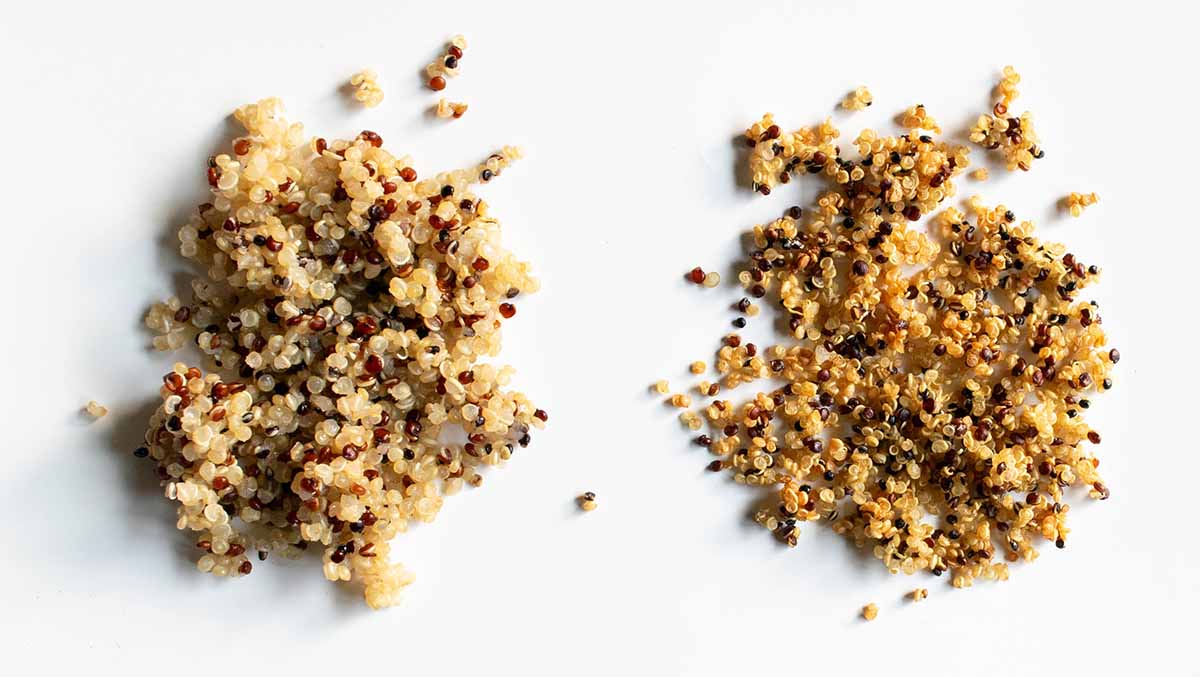
Volume of dry vs cooked vs roasted quinoa
Next, it's helpful to how much quinoa you need to cook. In case you want to add more quinoa to the salad, here's the ratios for you to work with.
I measured each step of the process: ½ cup dry > 1.5 cups cooked > 1 cup toasted. That means dry quinoa will be double the amount once fully cooked and toasted.
- Dry quinoa from the package: ½ cup
- When cooked in a pan with water: that half-cup turns into 1.5 cups of cooked quinoa
- Roasting reduces that 1.5 cups of cooked quinoa down to 1 cup toasted.
Briefly drain and dry the quinoa
After you cook the quinoa, you want to thoroughly drain it and then let the steam continue to evaporate. This speeds up the roasting process in the next step.
I spread mine out on a sheet of parchment paper and let it sit for 5-10 minutes. The parchment paper absorbs some of the water too.
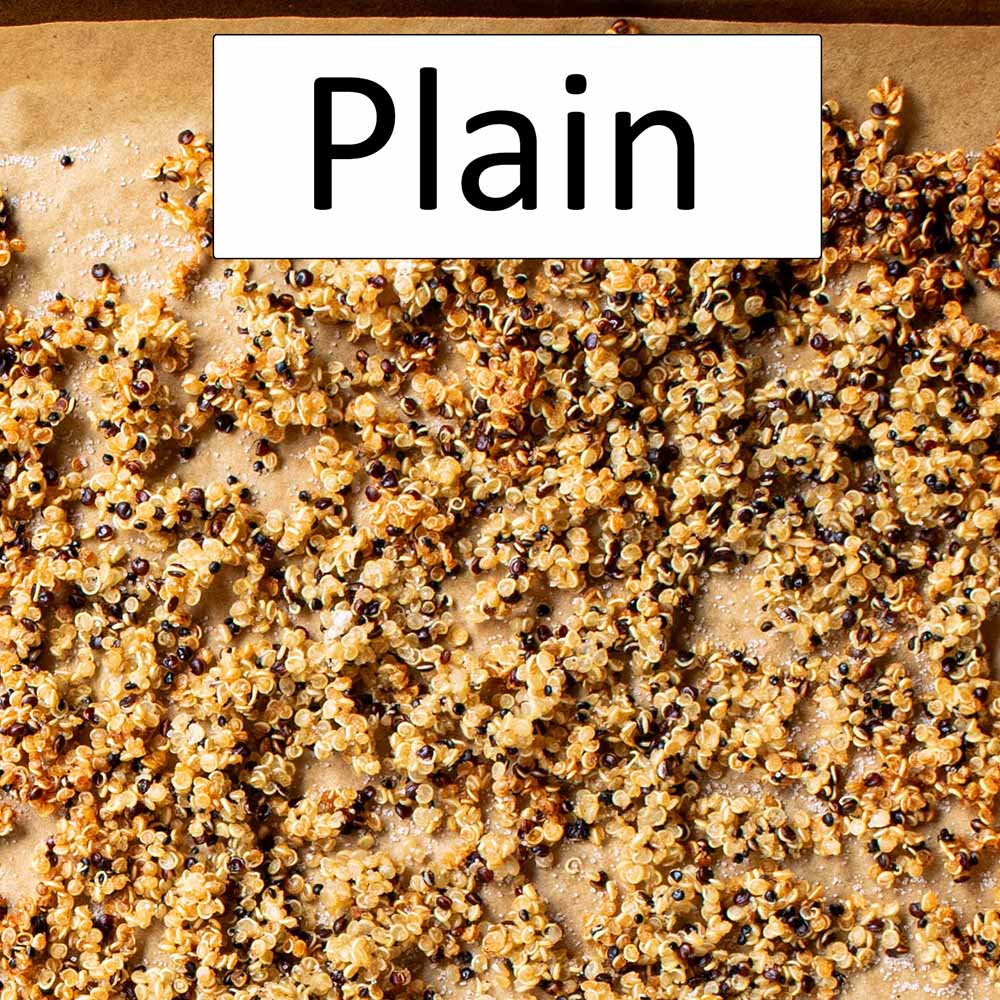
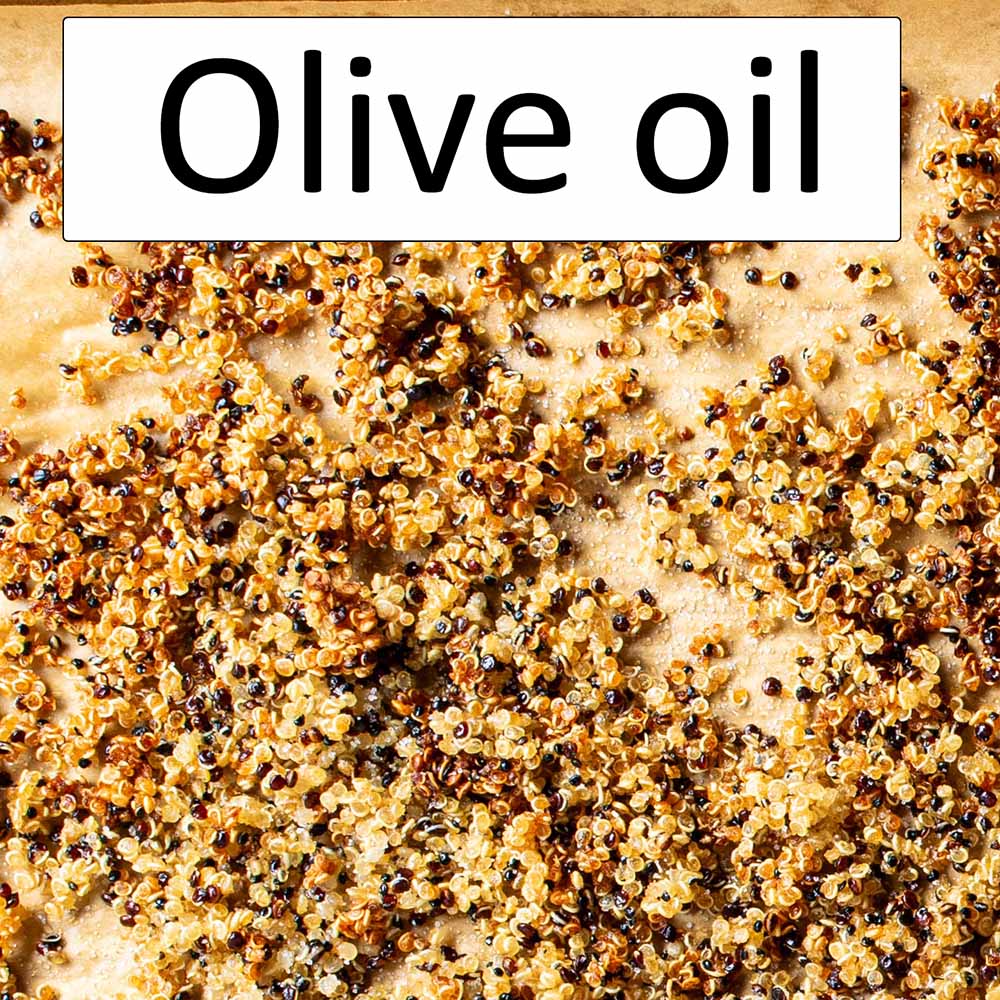
Roast with or without olive oil - both work
For roasting, you can choose to leave the quinoa plain or drizzle it with olive oil. I did a side-by-side test and the texture was nearly identical. The quinoa roasted with olive oil tasted a little richer, which a hint of the olive oil flavor.
Season the quinoa
Immediately after you remove it from the oven, you'll want to season the it so the salt sticks to the grains. I sprinkle salt over the top, stir it, and then taste it.
I continue to add salt until it hits the levels I'm looking for. I tend to make this purposefully salty to add a bit of an addictiveness to the salad.
But if you're trying to keep you sodium in check, only lightly salt it (or leave it off altogether).
You can also try a flavored version of crispy quinoa that's cooked in vegetable stock, then flavored with spices like onion powder, paprika, and garlic.
Make the quinoa ahead of time
You can make the crispy quinoa ahead of time and it will stay crispy when stored on the counter in an airtight container.
Most reputable sources say you can store cooked quinoa (before it's crisped in the oven) for a week in the fridge. Sources for crispy quinoa were very hard to find and I don't have a definitely answer for food safety, so it's best to play it safe.
I've stored mine on the counter for weeks and it stays super crispy and doesn't taste rancid. But I've really dried it out (basically dehydrating it), which extends the shelf life.
Quinoa is a complete protein
Roasted quinoa is similar to toasted bread crumbs, but with added health benefits. It's a complete protein, containing all nine essential amino acids, which is rare for plant foods.
It's also a good source of fiber, magnesium, iron, potassium, and zinc. Here's a chart based on a serving of ¼ cup crispy quinoa (which is only 2 tablespoons uncooked from the package).
| Nutrient | Daily Value |
|---|---|
| Fiber | 7% |
| Protein | 6% |
| Iron | 5% |
| Magnesium | 10% |
| Potassium | 3% |
| Zinc | 6% |
Choose your favorite type of peach
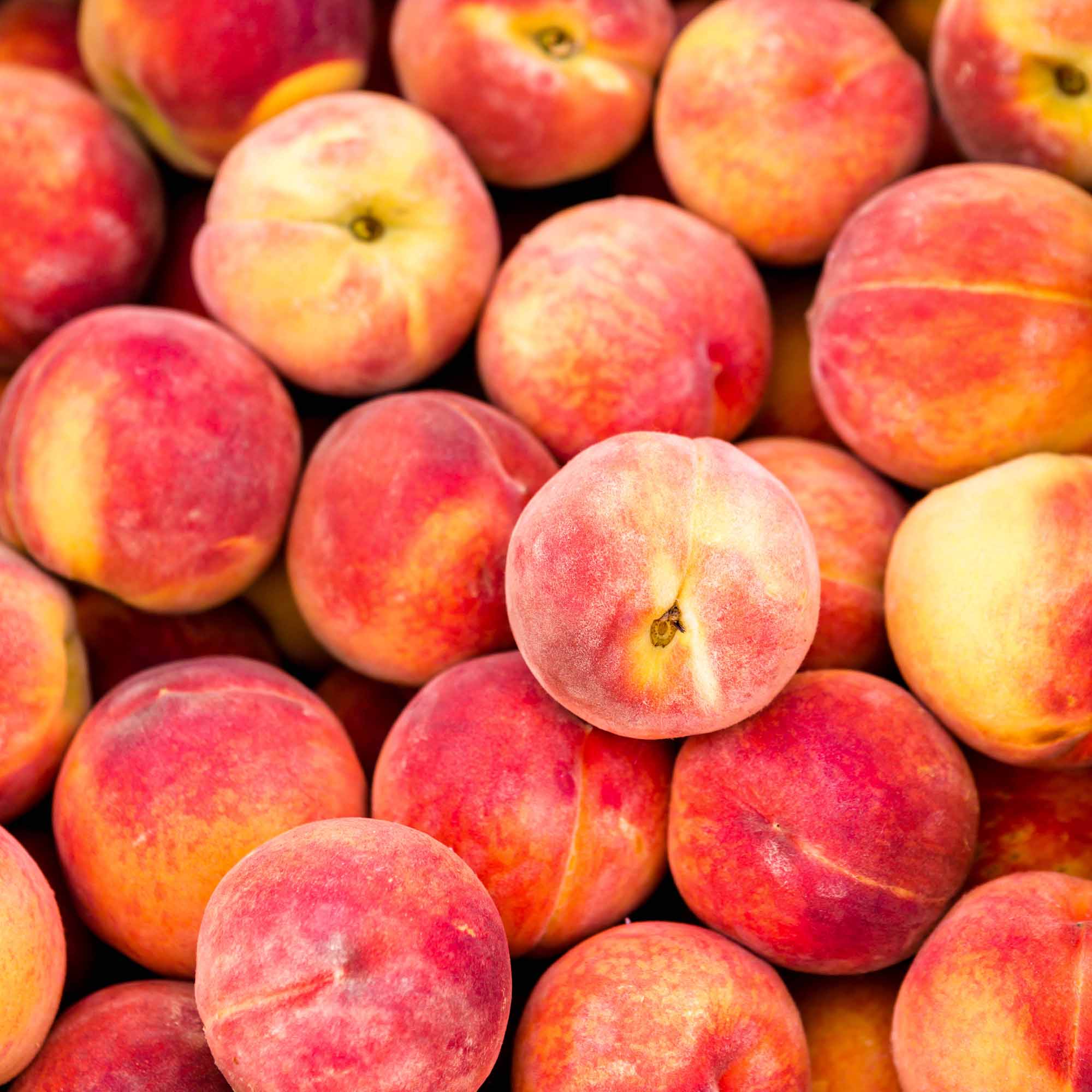
Any type of peach works well in this salad, so buy the best tasting ones from the farmers market or grocery store. The best way to guess at their flavor is to choose the ones that smell the best (really!).
Here's a few generalized characteristics to help you choose the best peach for this salad:
- Yellow peaches: sweet, low acid, very soft
- White peaches: even more sweet and less acid, and very soft
- Nectarines: sweet, medium-low acid, soft but firmer than peaches
For an even deeper dive into the specific characteristics, head over to my seasonal peach guide.
Peaches are super juicy
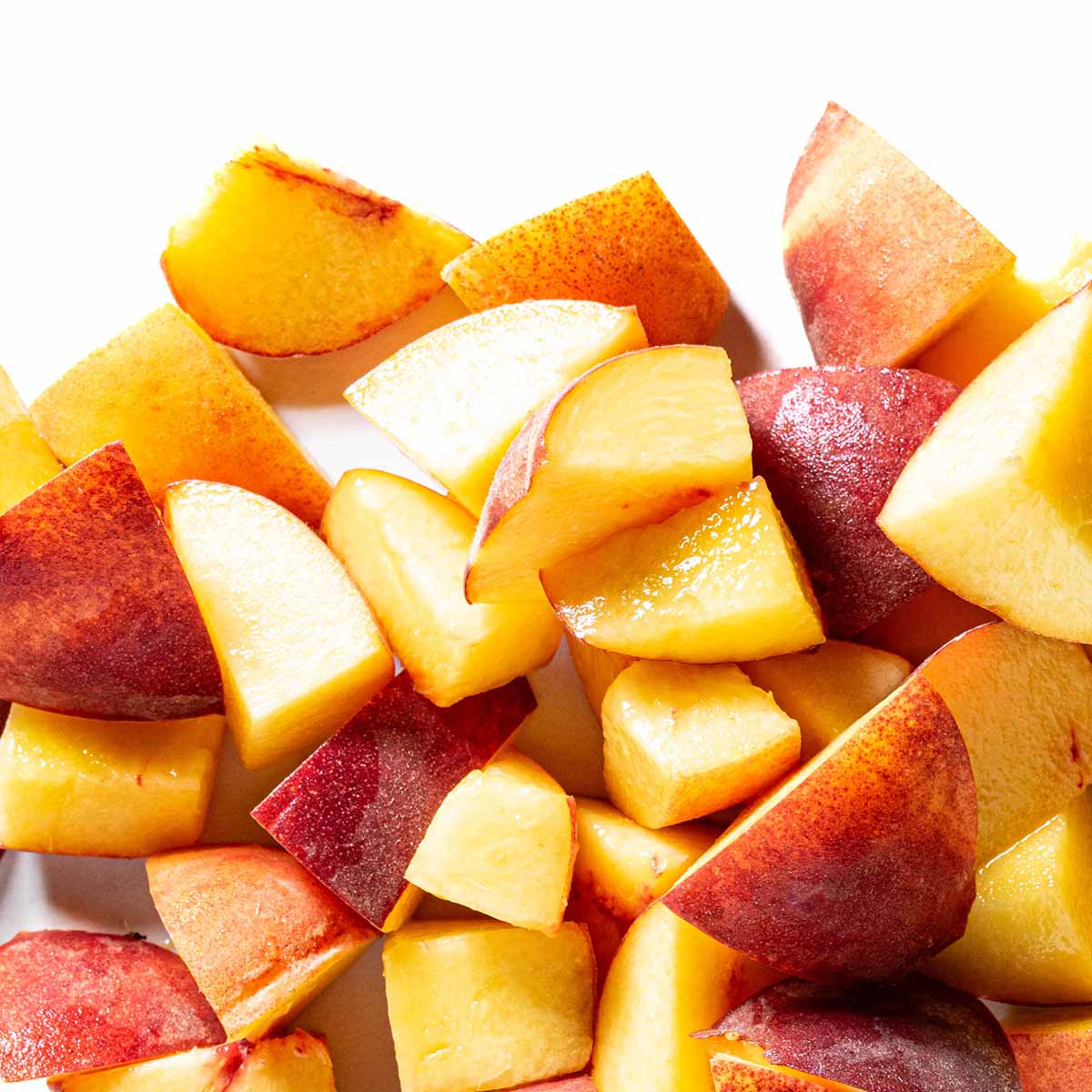
Peaches just might be the juiciest summer fruit. When you cut a ripe peach, juice will get all over and it will continue to release juice as it sits.
You have a few options to handle the extra moisture:
- Cut the peaches right before adding them to the salad
- Cut them and place in a colander to drain for 15 to 30 minutes
- Grill or roast them ahead of time, releasing some of the water content
You can also use slightly firmer peaches, before they've fully softened. If they smell good, they should taste good.

Why arugula is the best option for certain salads
Arugula is a salad superstar. It brings a bold flavor and the leaves remain light and structured even under heavy ingredients.
That's important for this peach quinoa salad because peaches can really weigh down certain greens. It's the same reason I use it in this peach arugula salad, as well as this steak arugula salad.
Other greens, like butter lettuce, wilt under the weight of peaches. More structured greens, like kale, can hold up to the peaches. However, the crunchiness of the quinoa gets lost within the tougher kale leaves.
How much arugula to use?
Recipes seem to vary wildly on how much arugula (or greens) to use. That's probably because everyone defines the size of a side (or full size) salad very differently.
So let me just show you, so you can decide how much arugula to use for yourself.

The image above shows a large salad plate on the right (not a dessert-sized plate). Arugula is often sold in 5 ounce plastic bins, so you can get 4 generous side salads (1.25 ounces each) per container.
For small side salads, like a dinner party or for backyard grilling parties, you can expect to get 6-8 servings. That's assuming you have other sides being passed around.
Raspberry vinaigrette
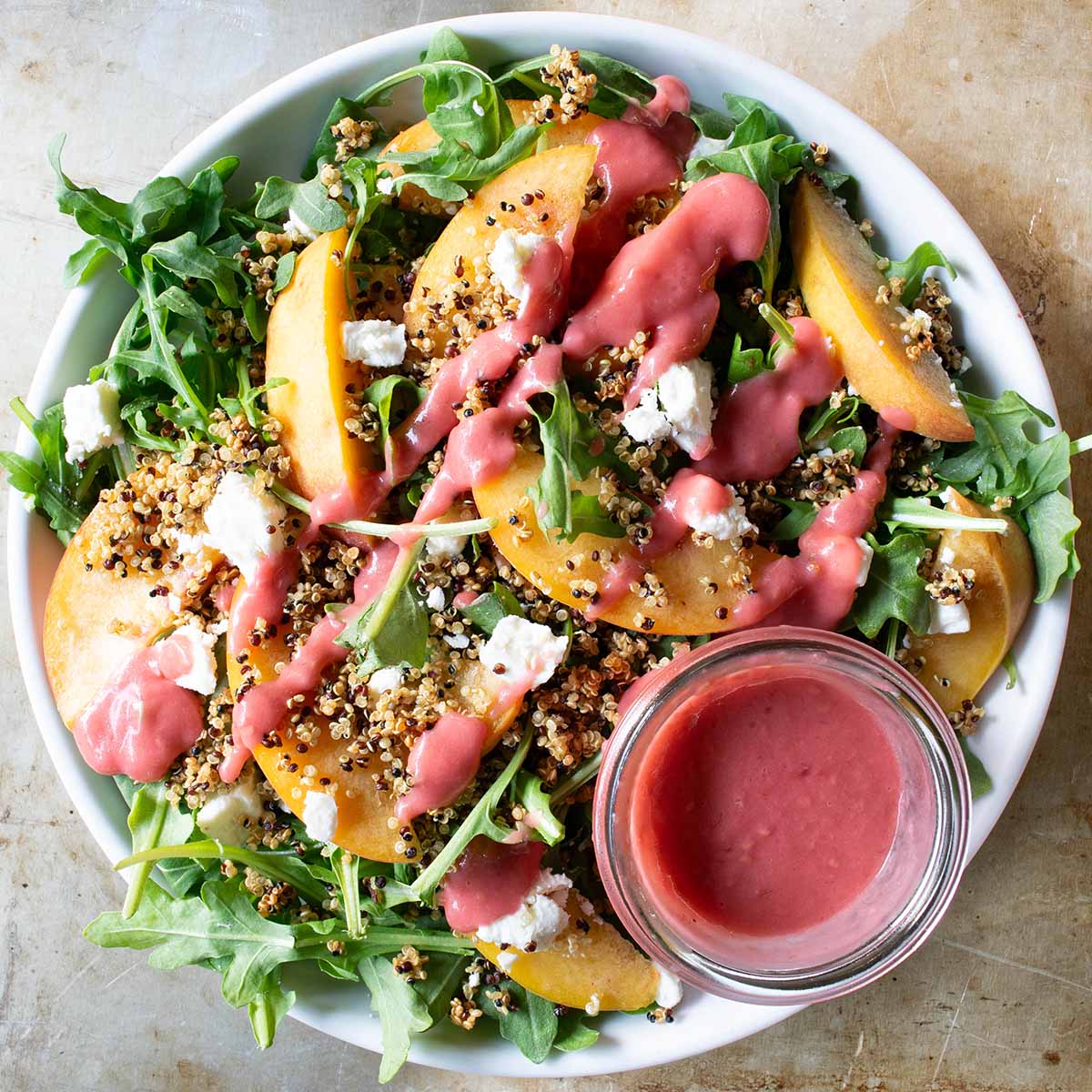
I like this raspberry vinaigrette for this salad because it coats everything with a bright, sweet-tart flavor that contrasts with the extra-salty quinoa.
It takes just 5 minutes (or less) to make with a blender or food processor.
Peaches are usually extremely sweet, so the super-tart flavor from raspberries really balances it out as well.
Alternatively, this blackberry vinaigrette is another great option, adding a hint of bitterness and tannic flavors that can pair nicely with the quinoa.
Recipe
Ingredients
Arugula salad
- 5 ounces arugula
- 3 peaches
- ½ cup feta cheese or goat cheese
- ½ cup dry quinoa
- 1.5 tablespoon olive oil optional for roasting quinoa
Raspberry vinaigrette (makes about 1 cup)
- 6 ounces raspberries 1 small container
- ⅓ cup olive oil
- 2 tablespoon lemon juice or white wine vinegar
- 1 pinch salt
Instructions
Make the quinoa
- Preheat oven to 375℉. Rinse raw quinoa to remove saponins (bitter flavors). Then cook according the package directions.½ cup dry quinoa
- Drain cooked quinoa and spread out on parchment paper, a plate, or baking sheet to let it briefly dry and steam to release. 5 minutes is enough time.
- Transfer quinoa to a baking sheet lined with parchment paper (optional for cleanup). Make sure the quinoa has enough room to spread out in a single layer. At this point you can toss with olive oil which adds a richer flavor, but isn't necessary for crispiness.1.5 Tbsp olive oil
- Roast for 15-30 minutes, until crispy. Check often after 10 minutes so it doesn't burn.
Make the salad dressing
- Add raspberries to a food processor or blender, and blend briefly until smooth. You don't need to remove the seeds, but can strain them if you want a smoother dressing. (I usually don't).6 ounces raspberries
- Add in olive oil and lemon juice, blending just until mixed. Add salt to taste.The pectin in the raspberries act as a thickener and emulsifies without mustard. However, the emulsion is temporary and won't hold for hours, so add 1 teaspoon of mustard if you want a stronger emulsion.⅓ cup olive oil, 2 Tbsp lemon juice, 1 pinch salt
Assemble the salad
- Slice peaches (or cut into chunks).3 peaches
- Add arugula, peaches, and feta to your plates, then drizzle with dressing and top with crispy quinoa.5 ounces arugula, ½ cup feta cheese
Notes
Nutrition
More recipes & resources
When peaches are in season, salads are a great way to enjoy them, other than fresh eating of course.
I found a few other peach salad recipes that might interest you, so you can enjoy them on different salads all summer long.
- Grilled peach salad with arugula and mint pesto from Love & Lemons
- Tomato, peach, and burrata salad from Half Baked Harvest
- Peach & tomato caprese salad from What's Gaby Cooking
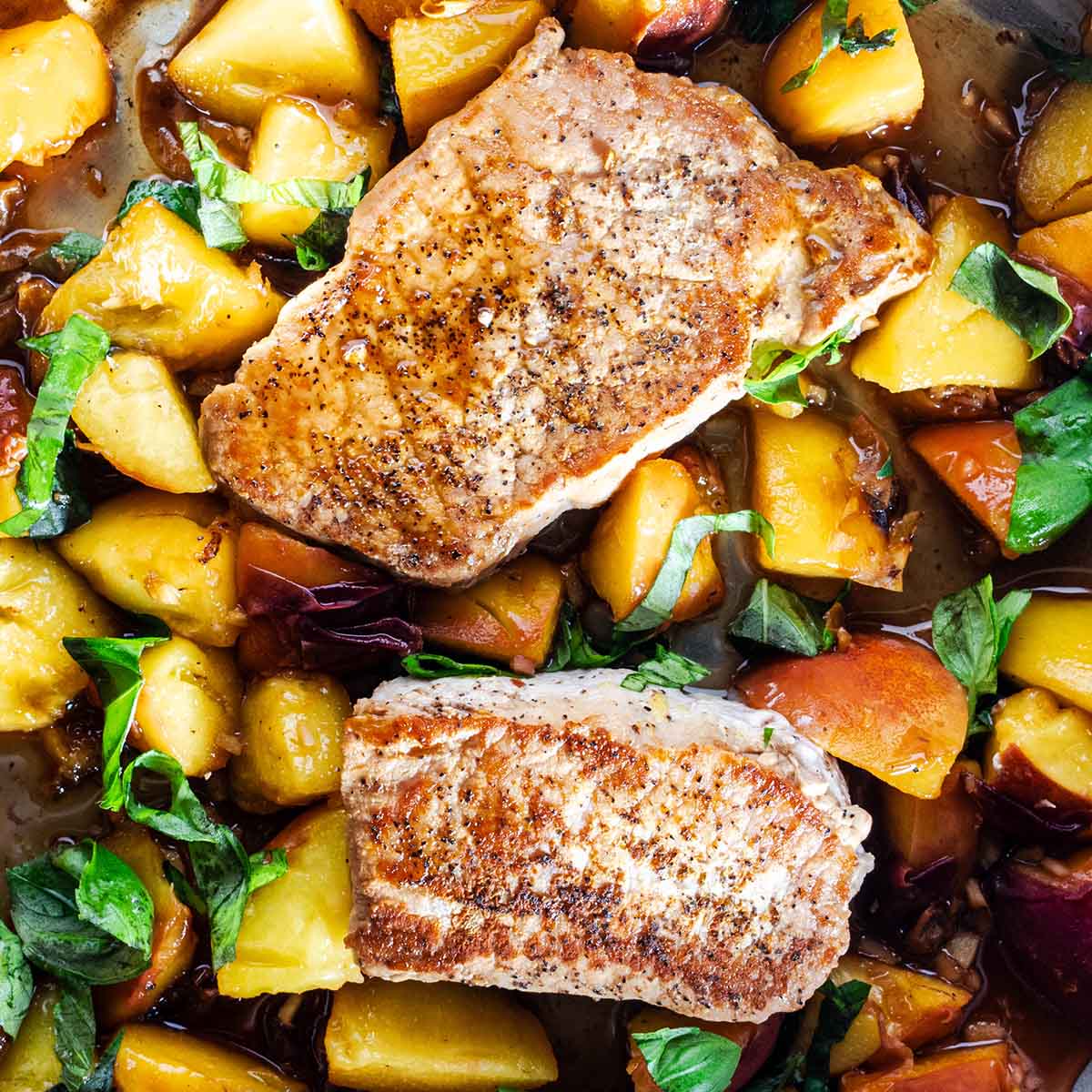
Looking for more peach recipes? I've gathered over 75 ideas for you, grouped by flavor pairings, like basil, ginger, bacon, or jalapenos. One of my favorites is boneless pork chops with peaches and basil.
More crispy quinoa salad recipes
I also found some other salads that load up on crispy quinoa. Here are a few on my list:
- Crispy quinoa cucumber and chickpea salad with a tahini balsamic dressing from Kale Junkie
- An asparagus and crispy quinoa salad from Dishing Out Health
- Taco salad topped with crispy quinoa from This Savory Vegan
If you're wondering what else is currently in season, check out my calendars to see what produce is in season each month (and coming up soon).

Leave a Reply