This has to be one of the easiest roasted butternut squash soups I've made. The vegetables are roasted on a single sheet pan with bacon laid over the top. The bacon fat is soaked up by the vegetables, and then pureed in a soup pot with broth and Cajun spices (paprika, oregano, and thyme).
That's it - then the soup is topped with crispy bacon and ready to be served.
Jump to:
Recipe

Ingredients
FOR ROASTING
- 2 medium butternut squash (about 4.5 pounds total, or 3.5-4 pounds precut)
- 1 yellow onion
- 6 ounces bacon
- 2 tablespoon olive oil
- 1 teaspoon paprika
- 1 teaspoon thyme
- 1 teaspoon oregano
- 1 teaspoon salt
FINISHING THE SOUP
- 5 cups chicken stock (or vegetable stock)
- 2 teaspoon paprika
- 1 tablespoon chile oil optional
Instructions
PREPARE INGREDIENTS
- Preheat the oven to 400℉
- Peel butternut squash and cut into rough 1-inch cubes. Cut the onion in half, then into quarters so they are a similar size to the butternut squash cubes.2 medium butternut squash, 1 yellow onion
ROAST
- Place butternut squash and onions on a baking sheet. Toss with olive oil and spices. Then lay bacon over the top.6 ounces bacon, 2 TBSP olive oil, 1 tsp paprika, 1 tsp thyme, 1 tsp oregano, 1 tsp salt
- Roast for about 20 minutes, or until the vegetables are tender and bacon is done to your liking. If the bacon is done early, simply remove it and set aside on a paper-towel lined plate. If it needs to cook longer than the vegetables, return to over after removing the veggies.
BLEND SOUP
- Once vegetables are tender, they need to be pureed with stock. - If using a blender: add ¼ of vegetables with 1 cup of stock and blend, then transfer to a soup pot. Repeat in batches until all soup is pureed and added to the soup pot. Add more stock to soup pot to thin to desired consistency. *Be careful with hot soup in a blender, cover with a towel to hold the lid down, and never over-fill.- If using an immersion blender: add all vegetables to soup pot along with 3-4 cups of stock. Blend! Add more stock until you reach the desired consistency.5 cups chicken stock
SEASON TO TASTE
- Taste soup, then add in more paprika, 1 teaspoon at a time, until it's to your liking. Add salt to taste.2 tsp paprika
- Top with a chile oil if desired. Serve with crumbled bacon.
Notes
Nutrition

How to maximize the bacon texture and flavor
Some people like chewy bacon and others (like me) prefer it crispy. However, when adding it to a soup, crispy bacon loses its texture in less than a minute.
That said, there are still degrees of chewiness. I don't like the rubbery texture when bacon is simmered in a soup, which is why roasting in the oven is still ideal.
The reason some soups simmer bacon with the broth is so the fat renders right into the pot, retaining all of its flavor.
That's why I roast the bacon on top of the vegetables - so they soak up the fat. This adds the same amount of bacon flavor to the soup as if you simmered it.
And you get the added bonus of much better textured bacon to crumble on top of the soup just before serving.
Whole vs pre-cut butternut squash
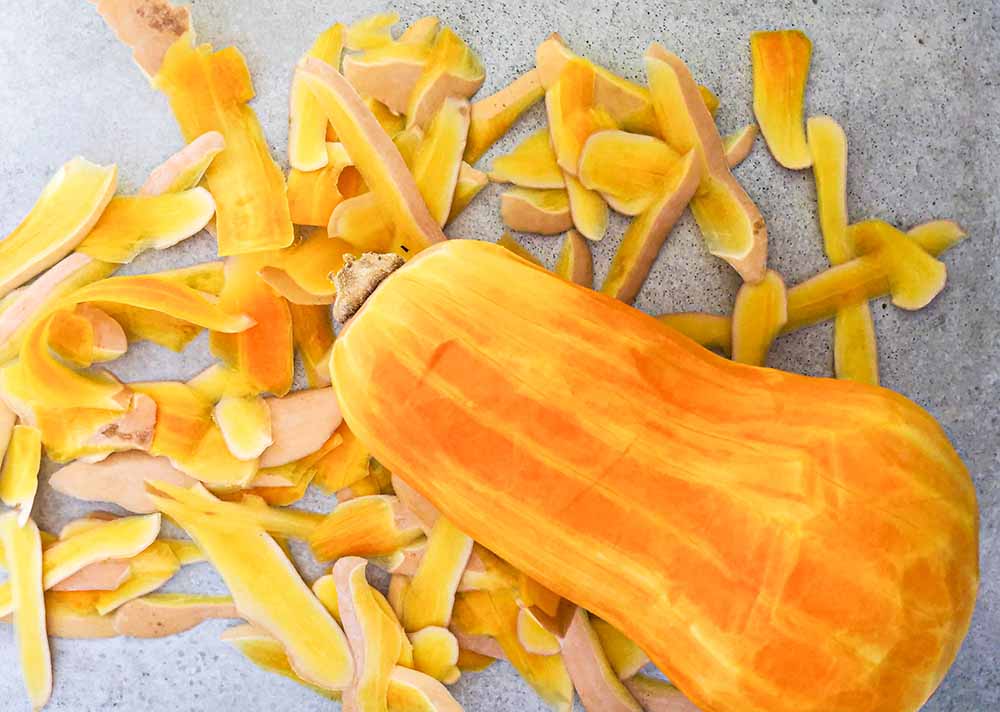
Whole butternut squash will take about 10 minutes (or less) to peel and cut into cubes. In exchange for that effort, you'll have money and this becomes a pantry staple meal since whole butternut squash lasts months when properly stored.
Pre-cut butternut squash from the store saves you time and works great in this soup, or other pureed butternut squash soups (like this other roasted butternut squash soup with Thanksgiving spices).
However, I don't recommend it for a chunky soup because the pre-cut cubes are always too big so you have to cut them down, undoing the time convenience you paid for.
Whole butternut squash is easier to prep than you might think
Working with whole butternut squash is easier than it might seem, and there's a big shortcut if you don't want to peel and dice it that I'll get to shortly.
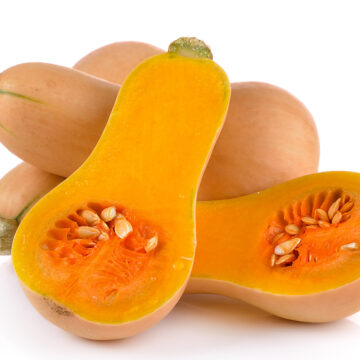
Peeling a butternut squash is fairly easy with one (or maybe two) swipes of a vegetable peeler. I like to peel the bulb portion first so I can keep a firm grip on the neck. (Once the neck is peeled, it can be slippery and hard to hold while peeling the bulbous end).
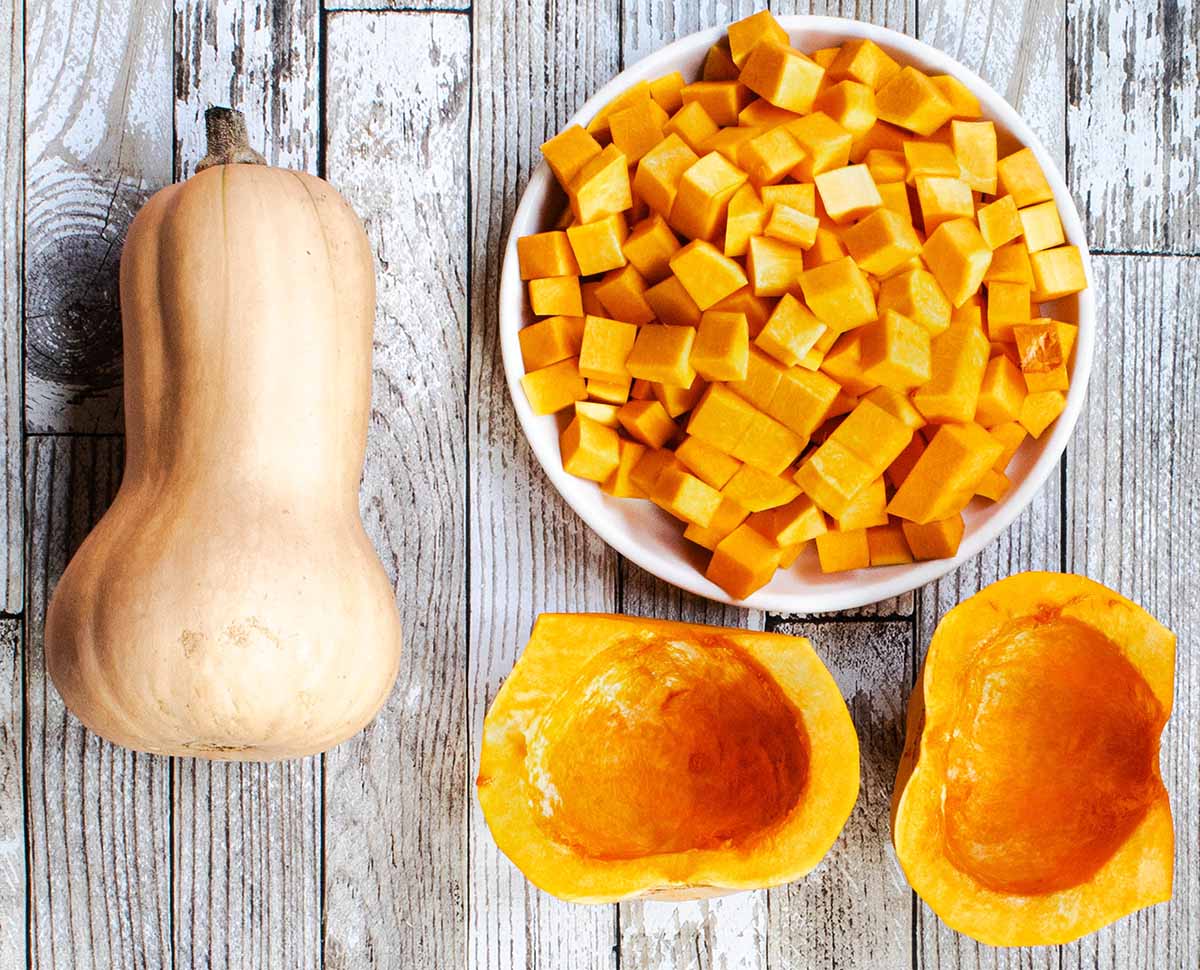
After peeling the butternut squash, cut the longer neck from the rounded bowl end. The neck is pure flesh and dices as easily as a large potato. If the center of the neck looks a little spongy, that's ok. It's likely on the older end of its shelf life but will be perfectly fine after it's roasted and pureed into soup.
The bulbous bowl end has the seed cavity and requires just a little extra work. Separate out the seeds (and roast them like pumpkin seeds). Scoop any stringy flesh away with a spoon and discard it. Slice it up then cut it into cubes.
Alternatively, set the 'bowl' ends of the butternut squash aside to stuff for a side dish on another night.
How much to buy
A medium butternut squash weighs about 2 pounds and a large one weighs up to 3 pounds. I've also used a giant one that was 4.5 pounds before. You'll lose about 2-3 ounces after peeling the skin and removing the seeds.
This recipe doesn't need an exact amount of butternut squash - a little more or a little less will work out just fine. Just adjust the amount of stock you use.
Alternatively, you can buy two larger butternut squash, perhaps about 3 pounds each (instead of 2 pounds). Peel the neck for the soup and reserve the bottom bowl-like halves for roasting & stuffing for another dinner. The nice thing about this is there's no need to peel the bottoms.
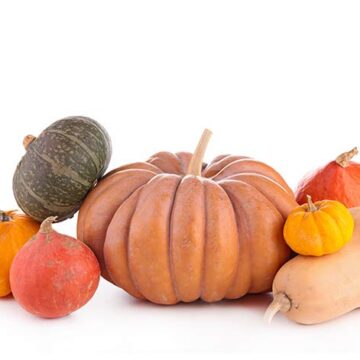
You can also use other winter squash
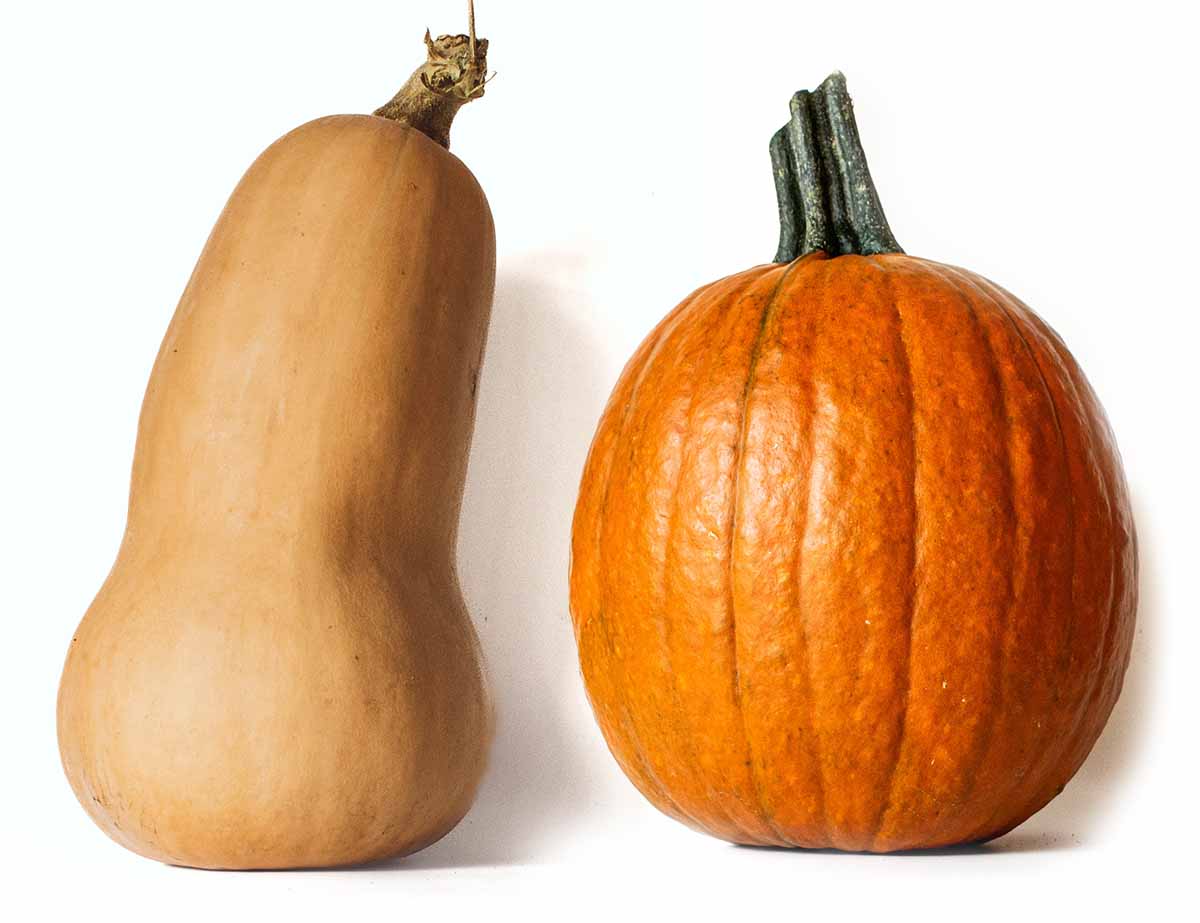
Butternut squash is the easiest winter squash to work with for a soup like this because they are actually easy to peel with a vegetable peeler. Other winter squash have ridges and don't peel easily.
That said, I'm all for using what you have growing in your garden or found at the farmers market.
- Honeynut squash: a smaller cousin to the butternut that's sweeter and has a stronger flavor. Peel & cut up like a butternut, or roast halved. (Also peels easily)
- Kabocha squash: the dryer flesh will absorb more of the bacon fat, intensifying the flavor
- Acorn squash: while the skin is edible, I don't think it would blend well into a soup like this (unless you have a Vitamix - it might make good work of the skin)
- Sugar pie pumpkin: these have a milder squash flavor, so play with the spices to adjust
Since these are near impossible to peel with a vegetable peeler, here's how you want to handle them in the soup:
- Cut them in half and scoop out the seeds
- Rub the spices on the flesh, then place on the baking sheet face up
- Top with bacon, then roast until tender all of the way through
- Turn them face-down for the last 10 minutes of cooking to encourage browning on the exposed flesh
Depending on the size of the squash you use, it might take 30-45 minutes to roast them all of the way through. Keep an eye on your bacon and remove it before it burns. Check after 15 minutes, then in increments of 2-5 minutes.
Once the squash are tender all of the way through, remove them from the oven. Scoop out the flesh with a spoon and pureed as instructed.
Roast for flavor
Using roasted butternut squash in a soup creates a deeper flavor than if you were to simmer the squash in the broth. The high heat caramelizes the sugars in the squash and intensifies its nuttiness. Cutting the butternut squash into chunks before roasting also allows for more surface area to caramelize. Meanwhile, some of the bacon fat is absorbed into the flesh.
The dried spices also benefit from roasting in the fat (both olive oil and bacon), as many of the flavor compounds are fat soluble. Dried herbs can also hold up to heat better than fresh herbs.
If you substitute in fresh herbs, tuck them under the butternut squash so they don't burn, or add them to the soup pot and let the soup simmer to release their flavor.

Roast the seeds
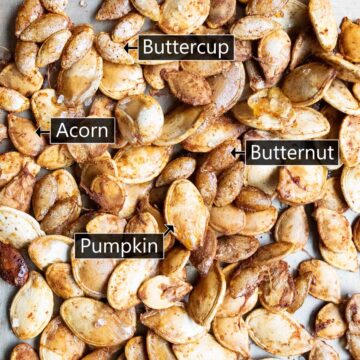
One of my favorite snacks is roasted butternut squash seeds (and other winter squash). That's probably a very odd thing to consider a favorite snack but I look forward to them every time I cut open a fresh winter squash.
After the butternut squash and bacon are done roasting for the soup, you can lower the oven temperature and roast the seeds. You could also scoop up some of the rendered bacon fat from the roasting tray, that's already flavored with the spices, and use that to flavor your squash seeds.
Each butternut squash has about a ½ cup of seeds. There's no need to rinse them, just set them aside in a bowl, trying to separate them from the stringy flesh as much as possible.
Mix a half-cup of seeds with a half-TBSP of olive oil (or your saved bacon fat), ¼ teaspoon salt, and ½ teaspoon spices. Roast at 250 for about 30 minutes. If you used two butternut squash for this soup, you'll have about 1 cup of seeds. In that case, use 1 tablespoon of olive oil (or bacon fat), ½ teaspoon salt, and ¾-1 teaspoon spices. Don't use extra oil or fat, because it will pool and the seeds will be a bit too oily when they are done.
Get the recipe for extra crispy roasted winter squash seeds.
More recipes
If you are looking for a more traditional roasted butternut squash soup. Cookie + Kate has one seasoned with garlic and a pinch of nutmeg, or try Love & Lemon's version with sage, rosemary, and ginger. For something totally out of the box, try Half Baked Harvest's brie & cheddar butternut soup.
Try some other butternut squash recipes or cook with a variety of winter squashes this season.



Leave a Reply