This butternut squash pie has the same smooth, creamy filling as a regular pumpkin pie, with a stronger pumpkin flavor.
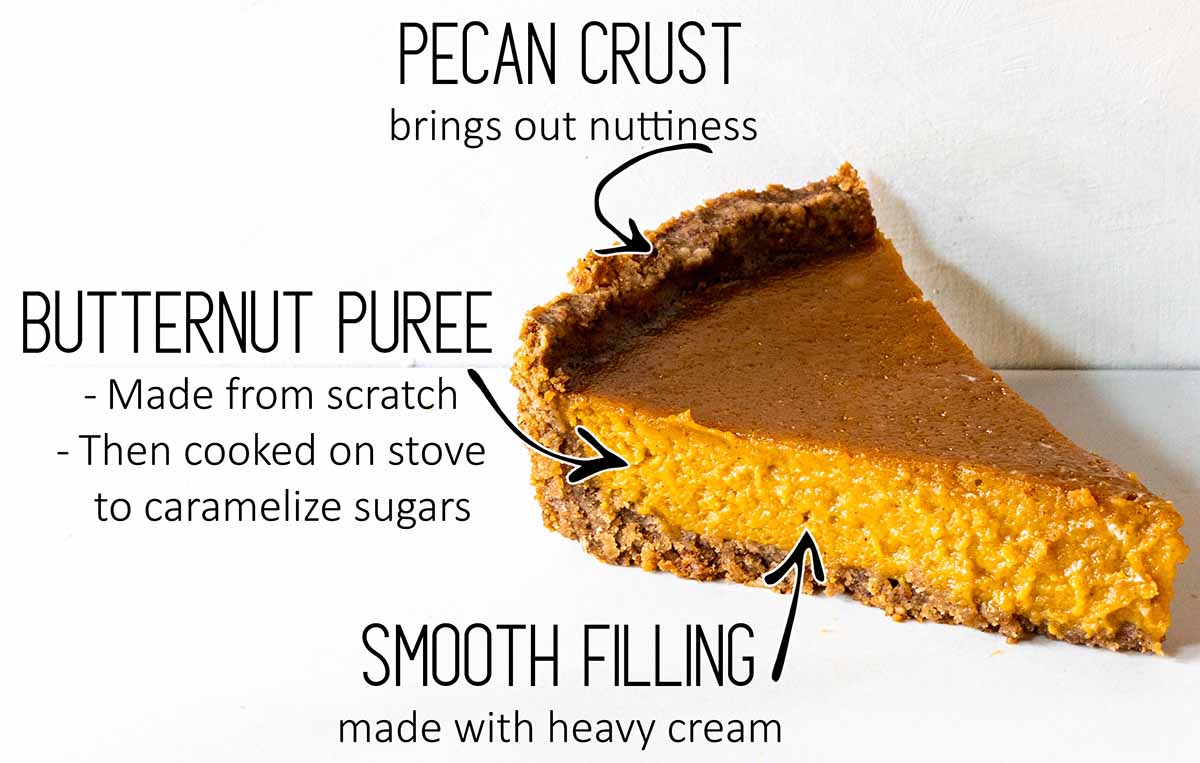
Since I was going through the trouble of making this pie from scratch, I wanted to bring out the natural butternut squash flavor. I did that by using brown sugar instead of white, cooking the puree to caramelize the natural sugars, and making a pecan shortbread crust for the nutty notes.
How does butternut squash pie compare to pumpkin pie?
This recipe came out of my great pumpkin pie baking test, where I compared 8 different types of winter squash to canned pumpkin. After picking a few favorite squash, I turned them into 3 different pies:
- This butternut pumpkin pie
- Sugar pumpkin pie with graham cracker crust
- Chai-spiced white pumpkin pie with a gingersnap crust
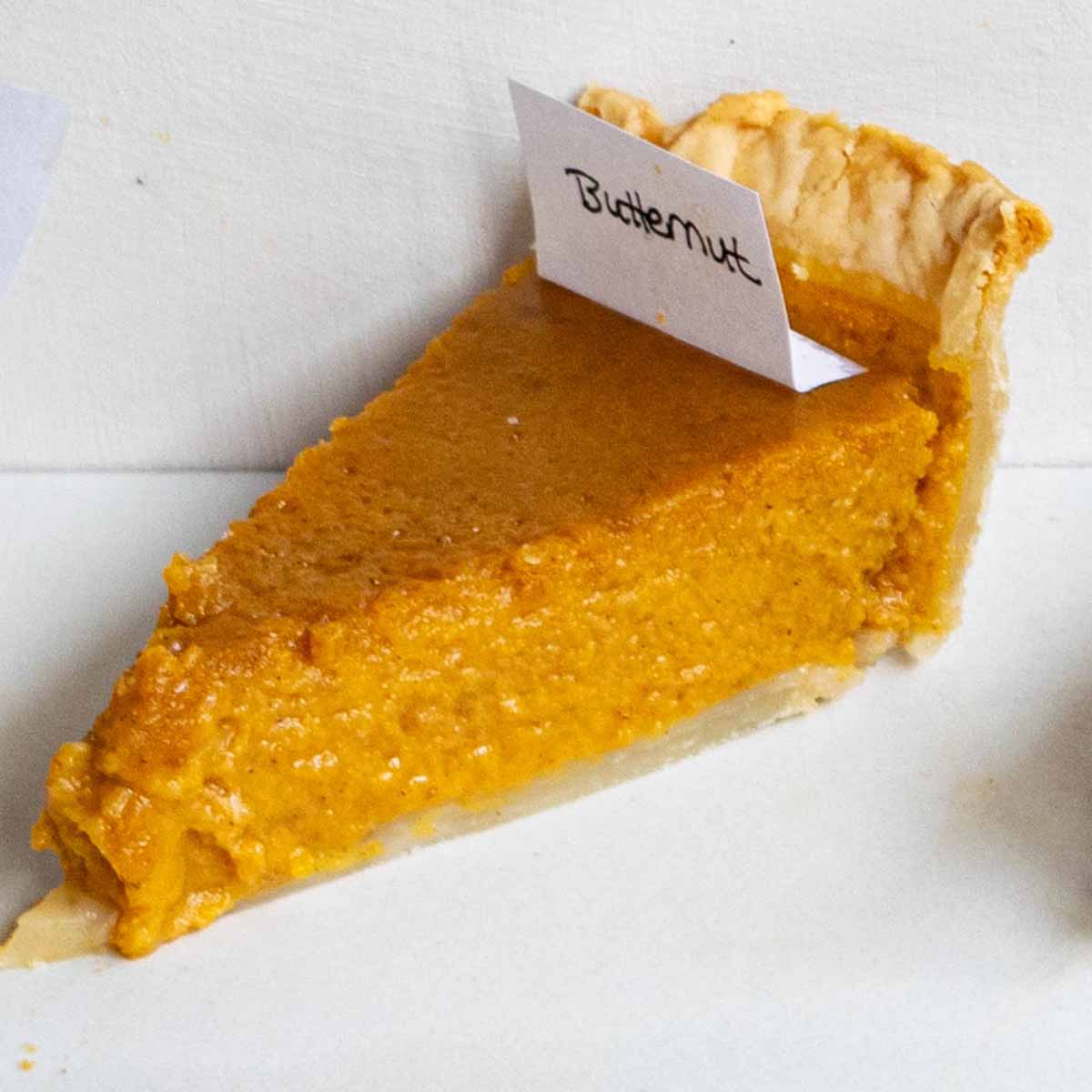
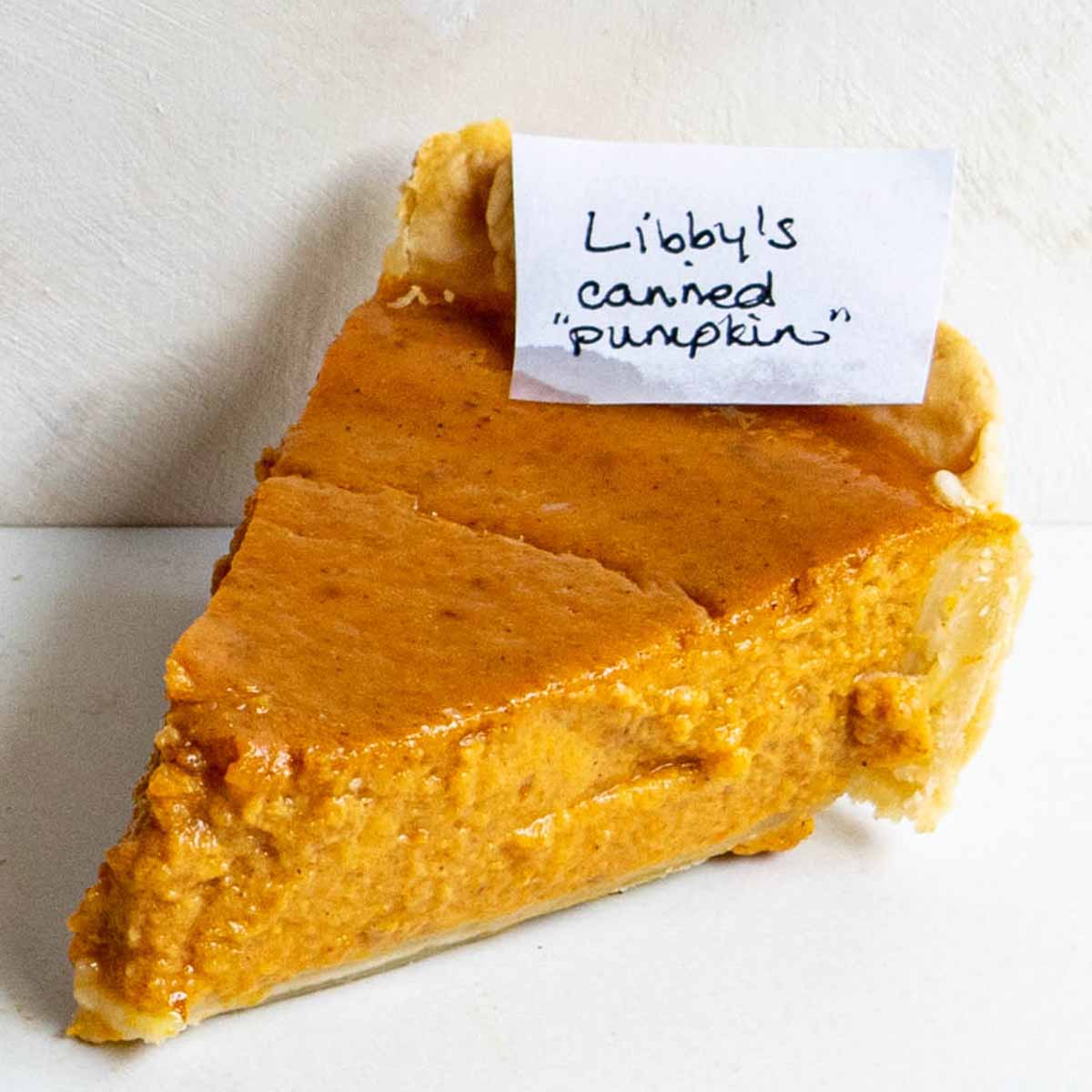
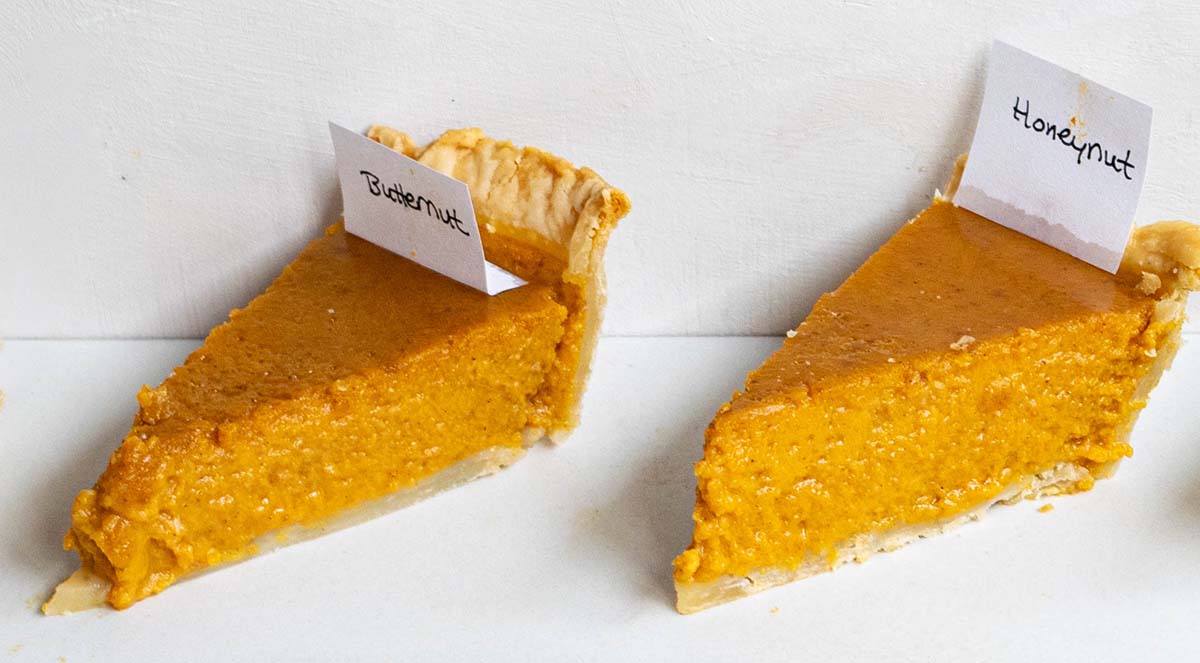
Based on all of these tests, I can tell you that a homemade butternut pie is extremely similar to one made with canned pumpkin. It has a nearly identical texture and a slightly stronger squash-pumpkin flavor.
In fact, butternut squash is more closely related to the Dickinson squash that Libby's uses than sugar pie pumpkins.
Here's how they compare in the taste tests I did:
| Squash filling | Flavor | Texture |
|---|---|---|
| Canned pumpkin | Mild | Silky, creamy |
| Sugar pumpkin | Medium | Smooth, creamy |
| Butternut squash | Stronger pumpkin | Almost silky, creamy |
| Honeynut squash | Stronger & sweeter | Almost silky, creamy |
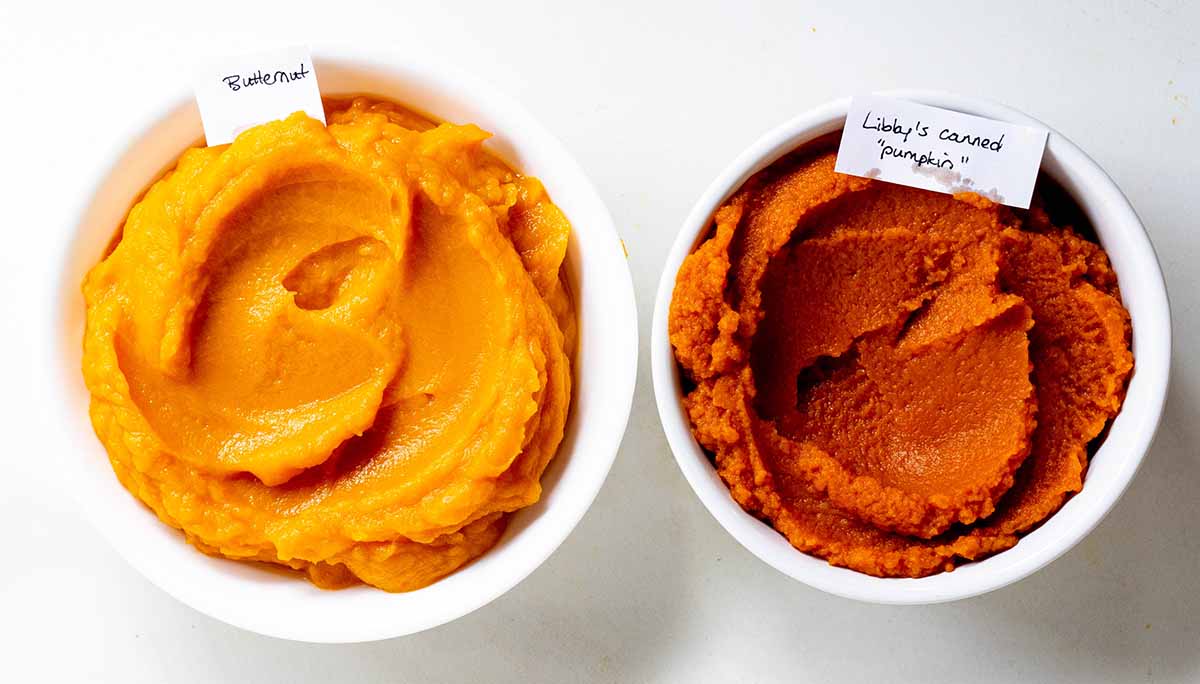
Canned pumpkin is processed with industrial equipment and can get that ultra-silky texture in a custard based pie that's hard to get at home. However, butternut squash gets extremely close. Sugar pumpkins still make a smooth pie and most people won't notice the texture isn't as silky, but a pumpkin pie critic might.
Honeynut squash as an alternative
Honeynut squash are closely related to butternut squash, bred to be better versions of butternut squash. I tested these in some pies and they can definitely be swapped in (and dare I say, might even be better!)
Here's how they compare to butternut squash:
- Size: much smaller (you need 4 to make this recipe)
- Flesh: darker and even more tender
- Flavor: stronger squash flavor and even sweeter
How to bring out the butternut flavor
I wanted to enhance butternut's natural flavor, so for this recipe I cooked the squash puree on the stovetop with some spices to deepen the flavor. I also made a pecan crust to bring out the natural nuttiness of butternut.
Here's how I've done that with this recipe:
- Fresh butternut: I make butternut squash puree from scratch (skip the canned stuff)
- Caramel flavors: I cook the puree on the stovetop to caramelize the sugars and bloom some spices with it. I also use brown sugar instead of white sugar.
- Nuttiness: I use a pecan shortbread crust to bring out the natural nutty flavors of the squash. The crust tastes nutty (of course), but it doesn't dominate the flavor of the pie (surprising, I know!)
- Maple flavors: Maple syrup (or sugar) have toasted caramel notes that also enhance the roasted flavor of butternuts
What if you don't want the fuss?
If you want a simple butternut pie, you can skip cooking the butternut on the stovetop. I've tested this recipe with both types of the puree and the texture ends up similar enough that I couldn't tell a difference. The flavor is definitely stronger and more caramel-y when cooked on the stovetop.
You can also use a regular pie crust, but everyone really, really likes the pecan version (I tested both with a bunch of taste testers in my giant pumpkin pie bakeoff).
How to make the butternut pie
The recipe to make the pie filling is going to be similar to a traditional pumpkin pie, but with butternut squash puree. It still has the typical amount of heavy cream, sugar, and eggs.
The process to get there is a little more involved, but it's worth it for a deeply flavored pie.
Roast and puree the squash
Making your own butternut squash puree from scratch is actually fairly easy. It does take a little time, but most of that is hands off while you wait for it to cook in the oven.
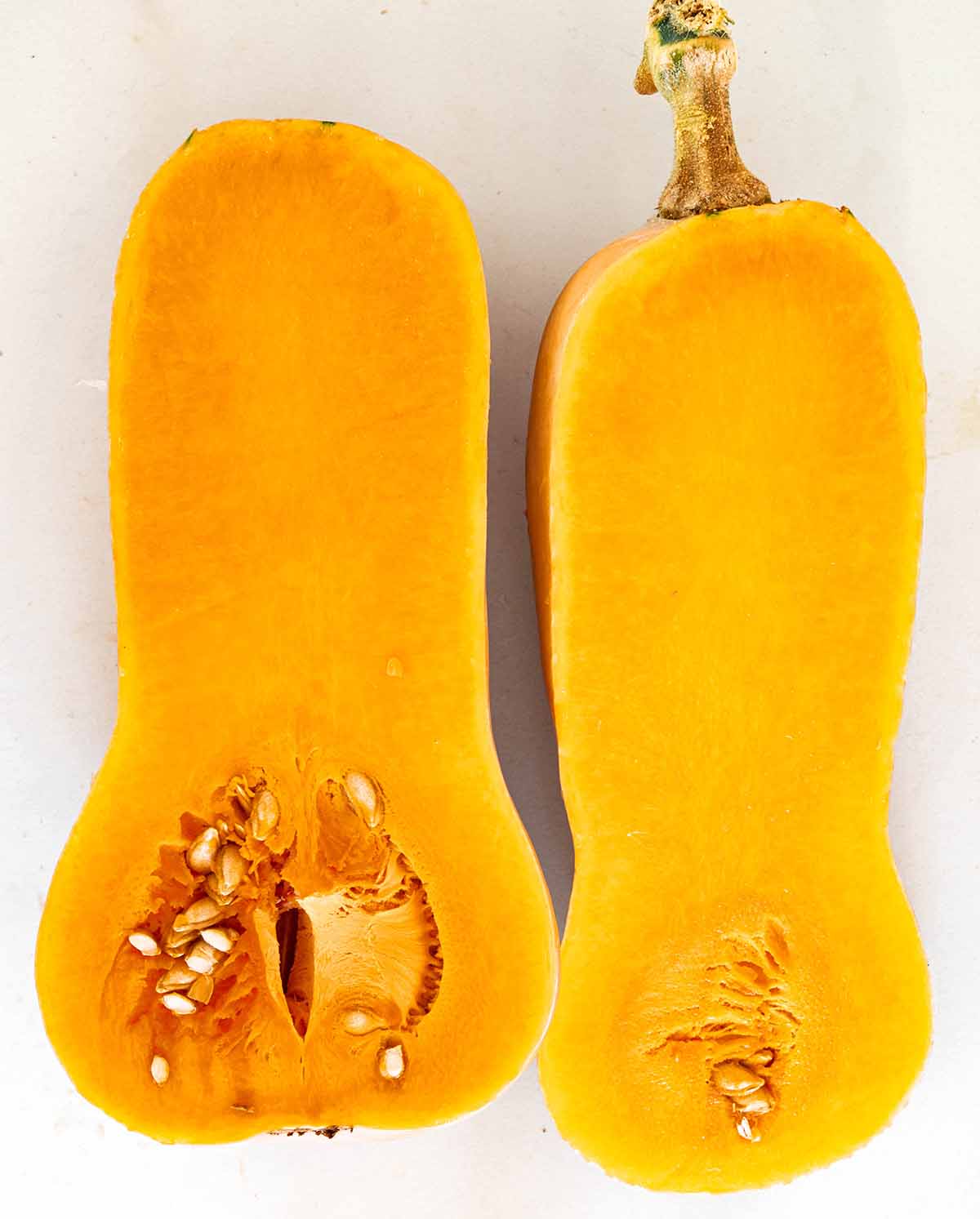
- Cut your butternut squash in half from the top down and scoop out the seeds. No need to peel the squash, which is one reason this is so easy.
- Place the cut sides down on a parchment-lined baking sheet (to prevent burning). Roast for 45-70 minutes until the flesh is soft.
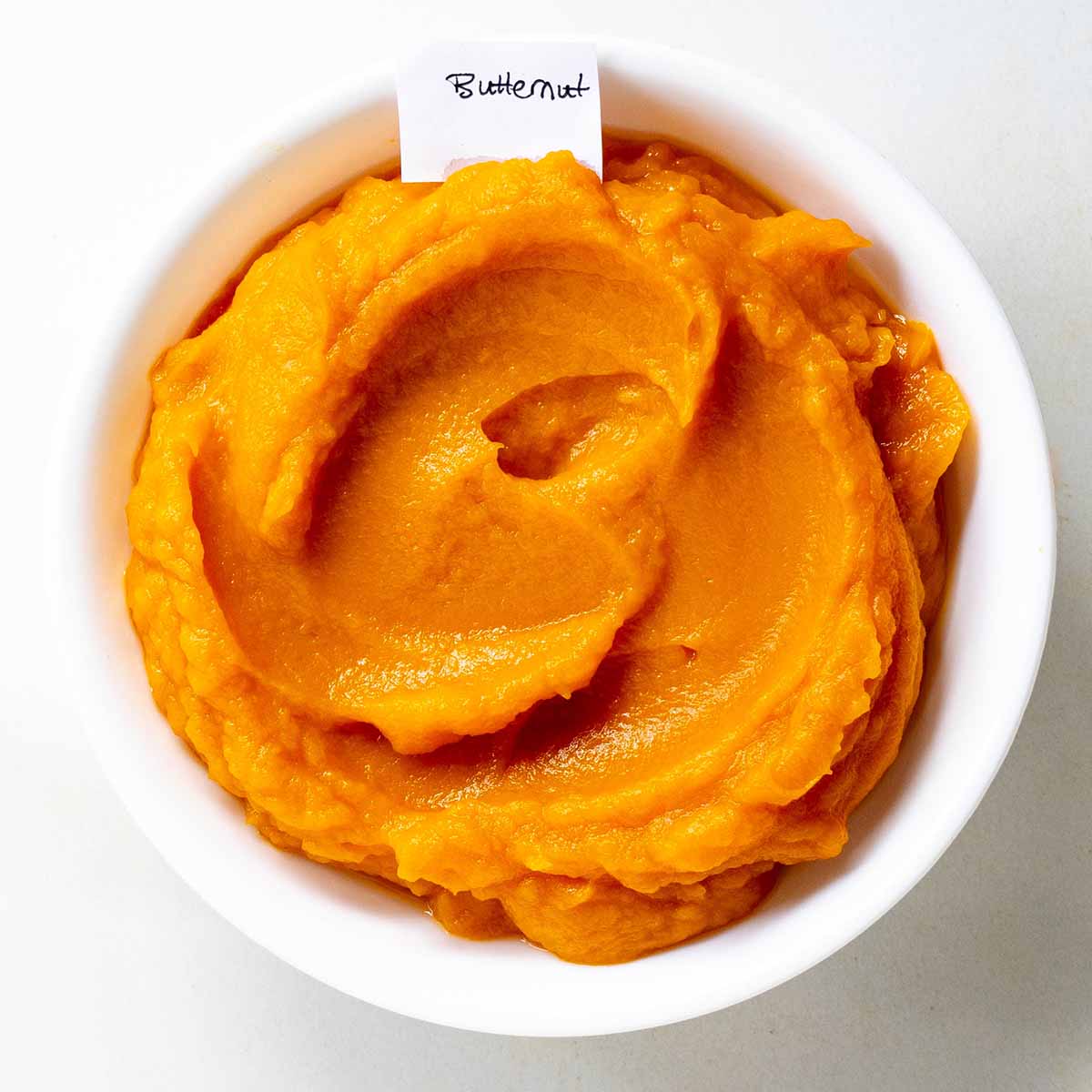
- Once cool enough to handle, pull the skin off, then puree the flesh.
That's it! You don't roast it with any oil, butter, or spices.
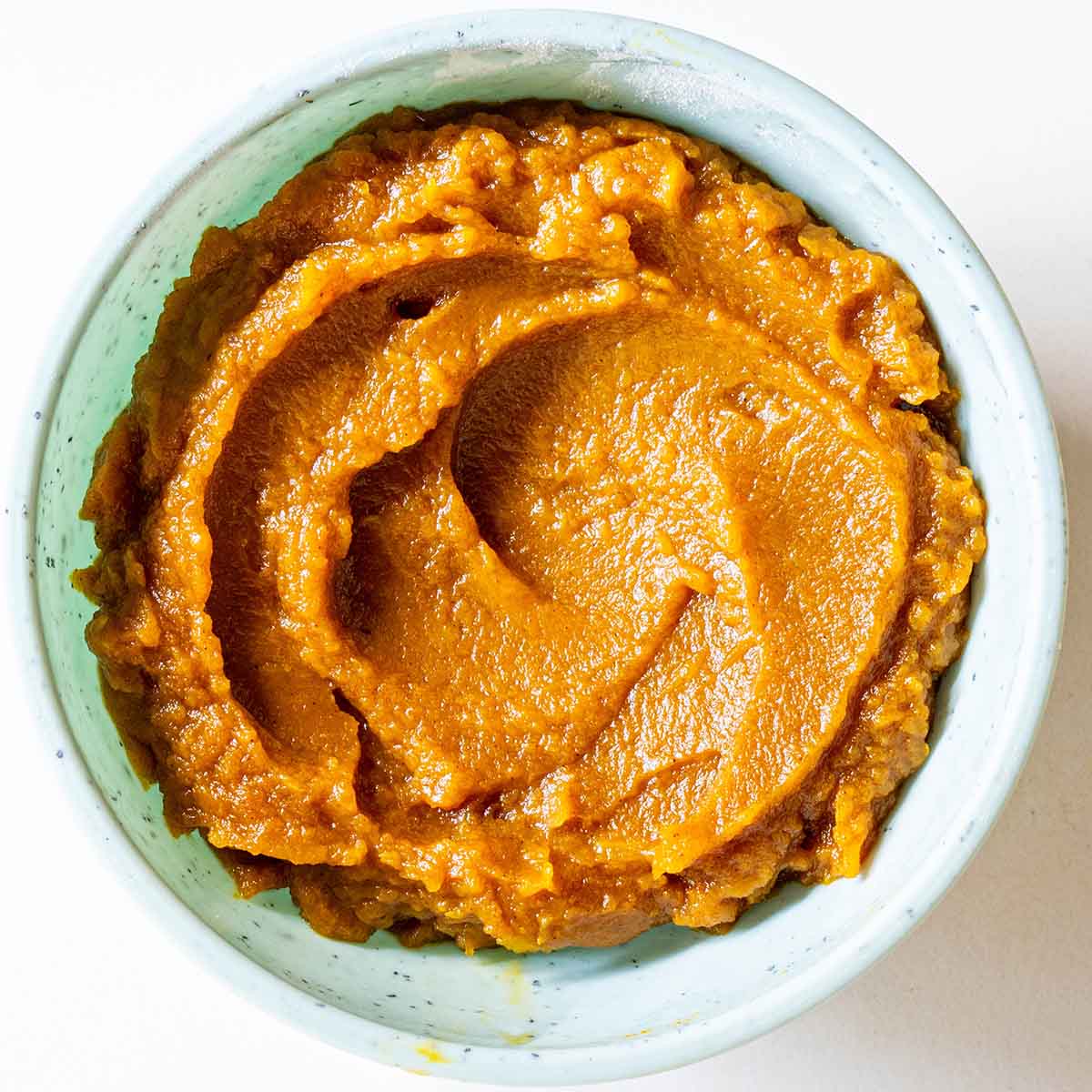
Cook the puree for a deeper flavored pie (optional)
I've never had to drain water out from butternut squash puree made like this. The consistency has always been comparable to canned pumpkin without any extra fuss.
But as I mentioned earlier, I cook it on the stovetop to get a stronger flavor.
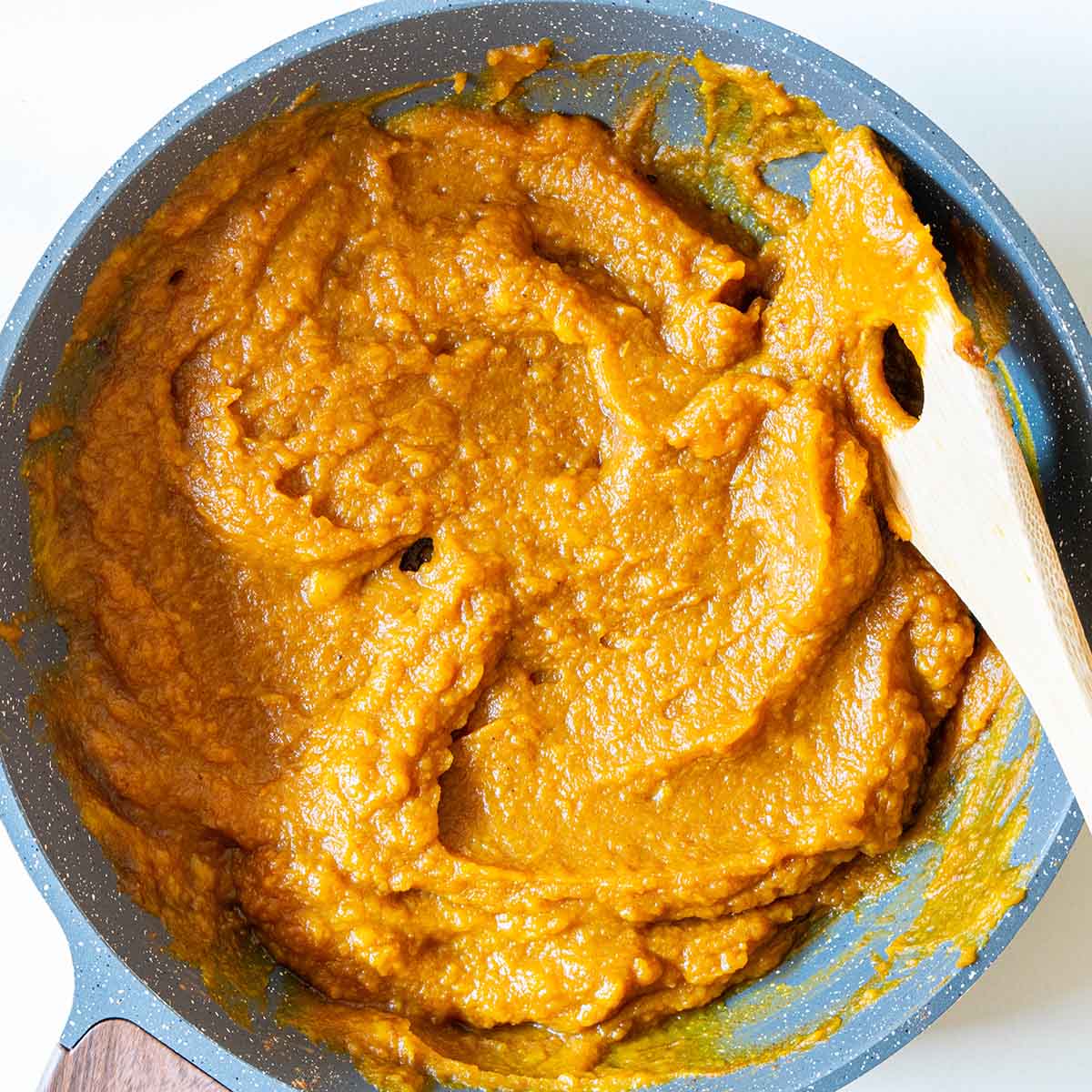
Cooking it like this caramelizes some of the sugars without creating crispy bits (which can happen when roasting directly on a hot metal pan). We want to keep the puree as smooth as possible for a silky pie.
I add the spices in at this time to increase their flavor intensity as well (essentially toasting the spices).
- Add 3 cups of butternut squash puree to a small skillet (you need extra because it cooks down and you still want 15 ounces at the end).
- Add in half of the brown sugar and all of the pie spices.
- Cook on medium heat for 5-10 minutes until the puree has darkened in color (it will be slightly thicker). Stir as needed to prevent scorching.
- Measure out 15 ounces to use in your pie (just shy of 2 cups).
Make the pecan shortbread crust and par-bake it
The pecan shortbread crust comes together much like a graham cracker crust since it uses melted butter in the same way.
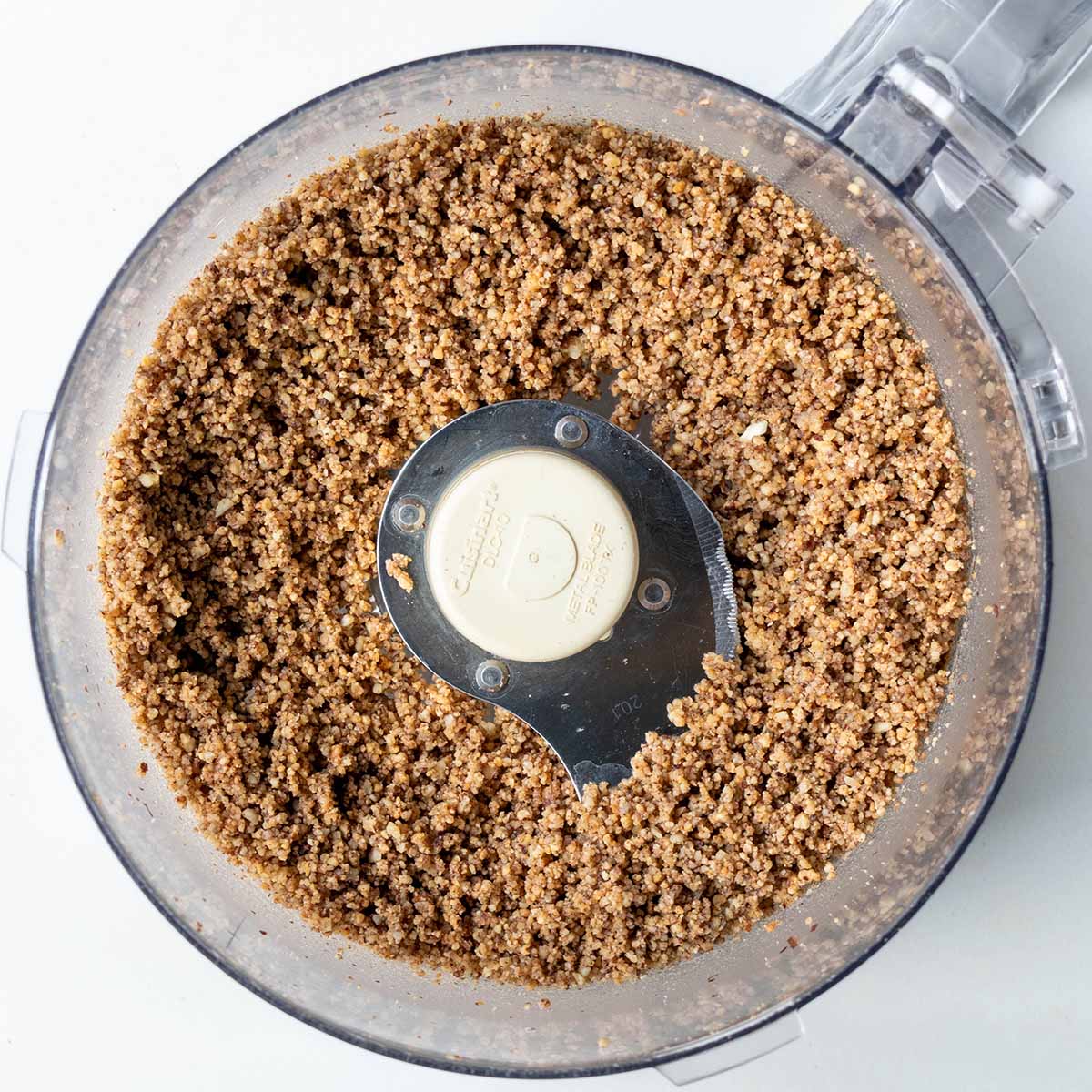
- Blend pecans in a food processor until they are made up of small, coarse crumbs. They will be larger than graham cracker crumbs, but smaller than chopped nuts.
- Mix with melted butter, sugar, spices, and flour until combined.
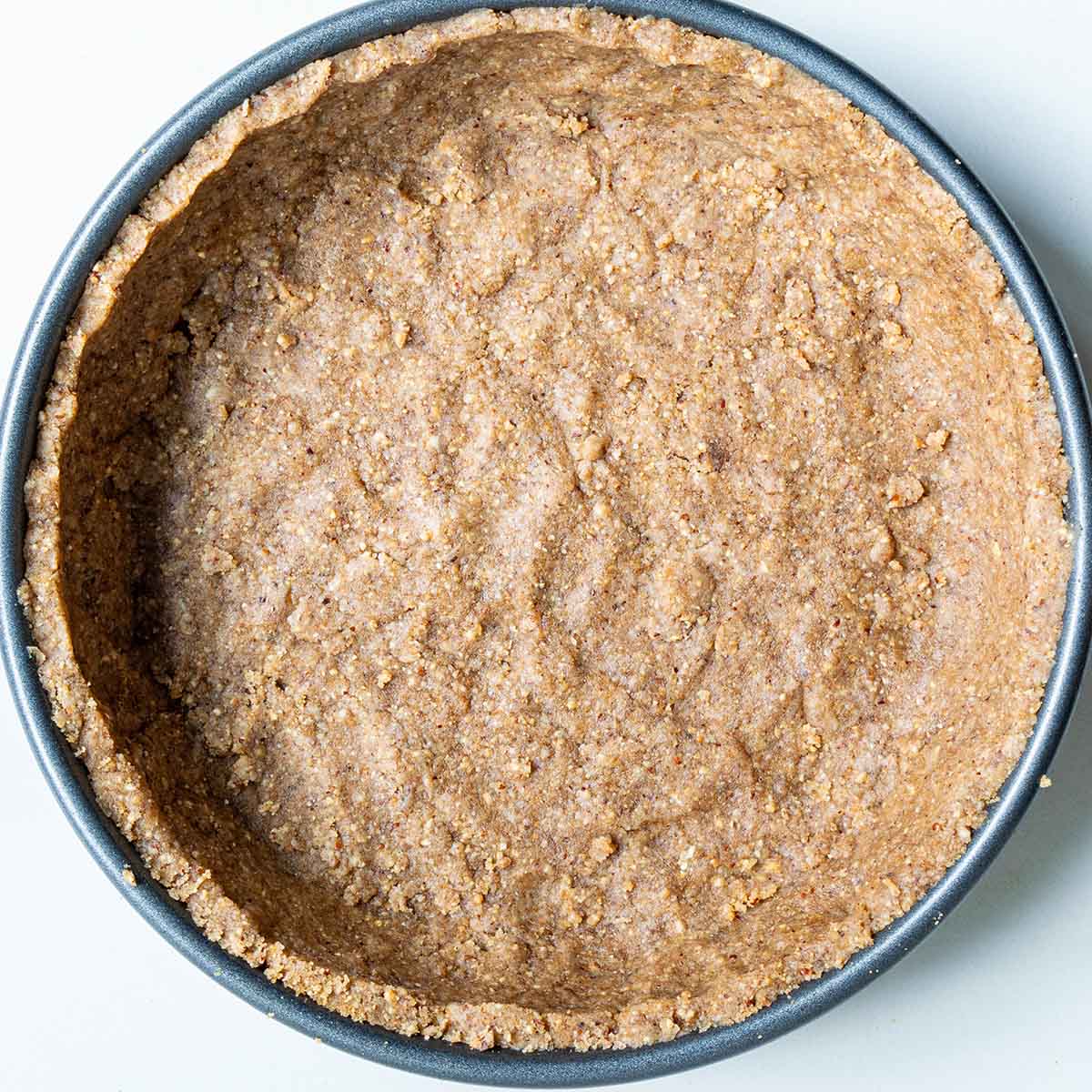
- Press into your pan and bake the crust for 15-20 minutes until lightly golden. Remember, it's going back in the oven to bake with the pie.
- Remove, let cool, and then it's ready for the pie filling.
A little tip: chop the nuts in the food processor after you've pureed the butternut squash.
Why? You don't want little pieces of nuts to end up in the filling and ruin that smooth, creamy texture of the custard pie.
Instead, wipe out the food processor with a paper towel after pureeing the butternut. It doesn't need to be perfectly dry. A tiny bit of moisture won't matter for the crust.
Make the pie filling
By this point, you've already done the lion's share of the work. Now you just mix the pie filling ingredients together, then pour it into the crust and bake it.
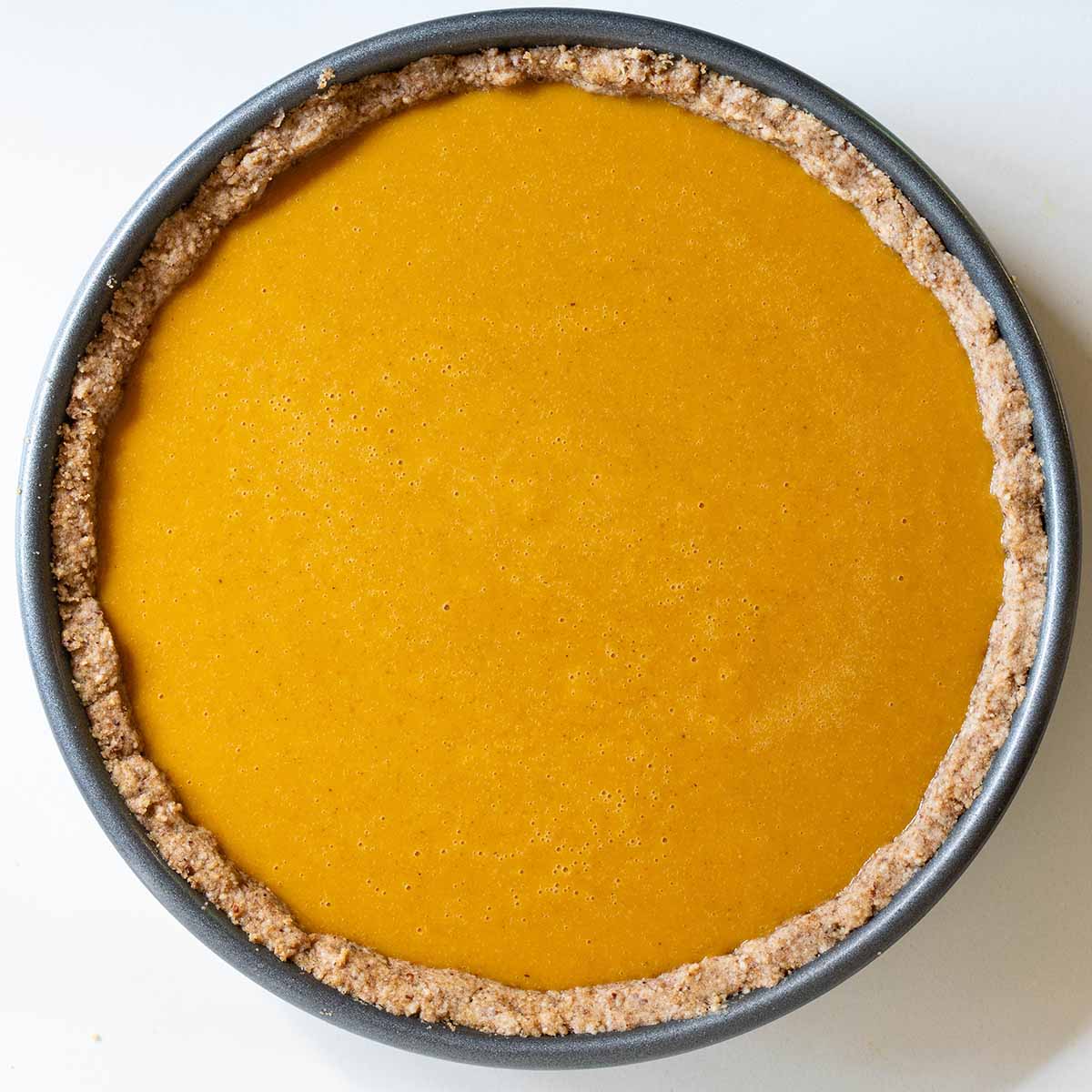
You'll whisk the butternut puree, remaining sugar, eggs, heavy cream and vanilla extract together. The whisk helps make sure all of the ingredients, including the gooey parts of the egg, fully combine.
The consistency will be like a very runny pudding - you'll feel some viscosity but it will be very thin and pourable.
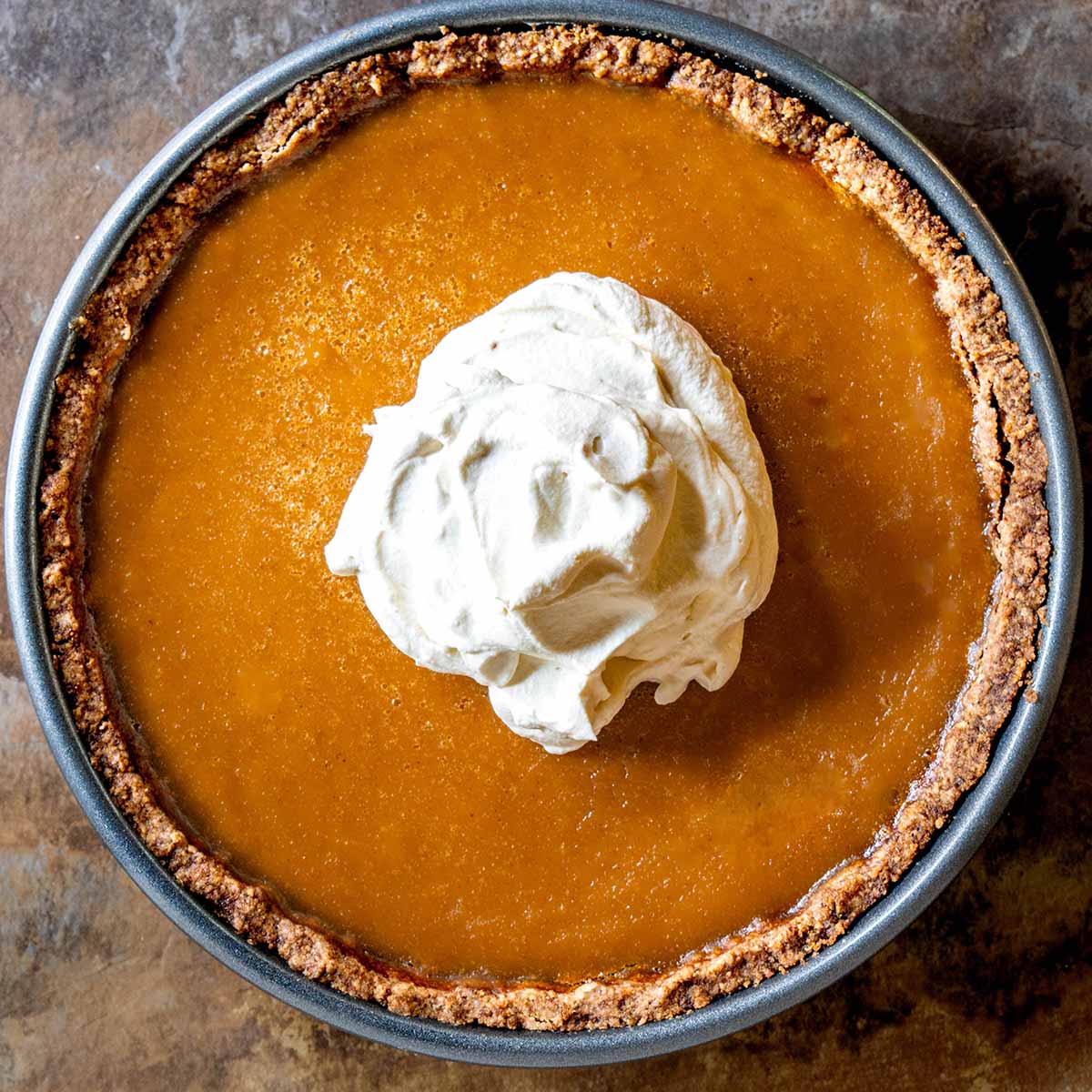
Bake the pie and how to tell when it's done
Alright, now you have to bake the pie and try to get it to set without overbaking it. Sometimes that is easier said than done.
I like using an instant-read thermometer for the most foolproof option. The pie is done when the temperature in the center is between 165°F and 175°F. I've noticed when I let pies get above 180°F, they start to crack.
However, if you use a thermometer, you'll have little holes in the center of your pie. If that's completely unacceptable, try the visual cues.
- Edges are set and will look puffy (that puffiness deflates as the pie cools). There might also be tiny cracks as it puffs up that (mostly) disappear as it cools.
- Center 4 inches are jiggly but not liquidy enough to slosh around. King Arthur Baking has a 5-second video of what a jiggly center should look like.
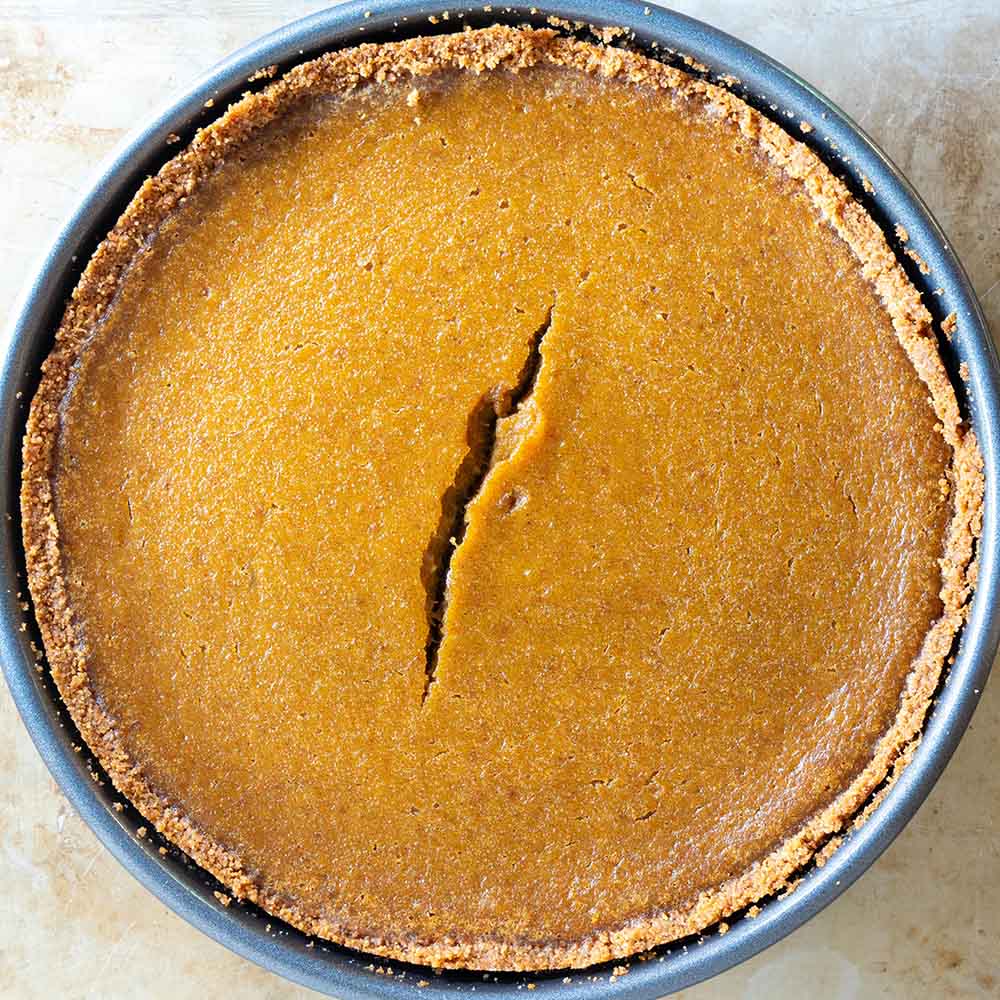
Do your custard pies crack? Here's why.
Your butternut pie will crack for the same reason as a pumpkin pie, no surprise.
It cracks from overbaking. King Arthur's article explains it well, "Those cracks you see in your pie are the result of overcooked eggs, eggs that have tightened up so much, in an uneven way, that they've created fissures in the filling."
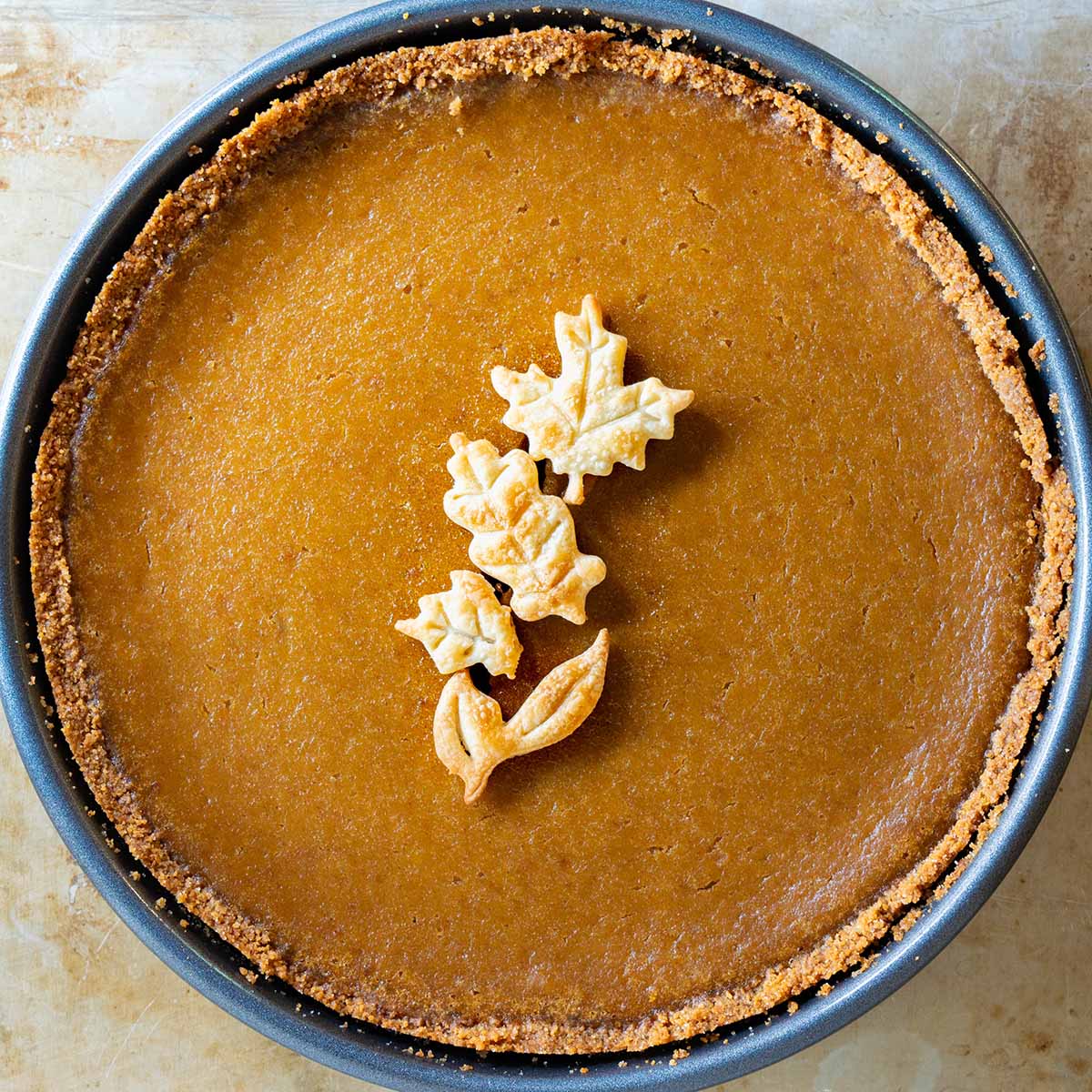
If your pie cracks, cover it up with whipped cream or bake pie dough cutouts for a super cute presentation. Dare I say it's better than a perfectly flawless pie?
I keep a spare refrigerated Pillsbury pie dough in the fridge - you know the kind that rolls out on the counter? I use this to make the cutout leaves.

- Perfect Combination: Including 4 pcs leaf shaped cookie cutters, maple, oak, double leaf and...
- Safe Material: This leaf fondant cutter is made of food grade plastic, well packaged in a box
I used some inexpensive fall leaf cookie cutters from Amazon. Below is an affiliate link if you're interested in the same product - I do get a small commission if you buy something, but at no cost to you.
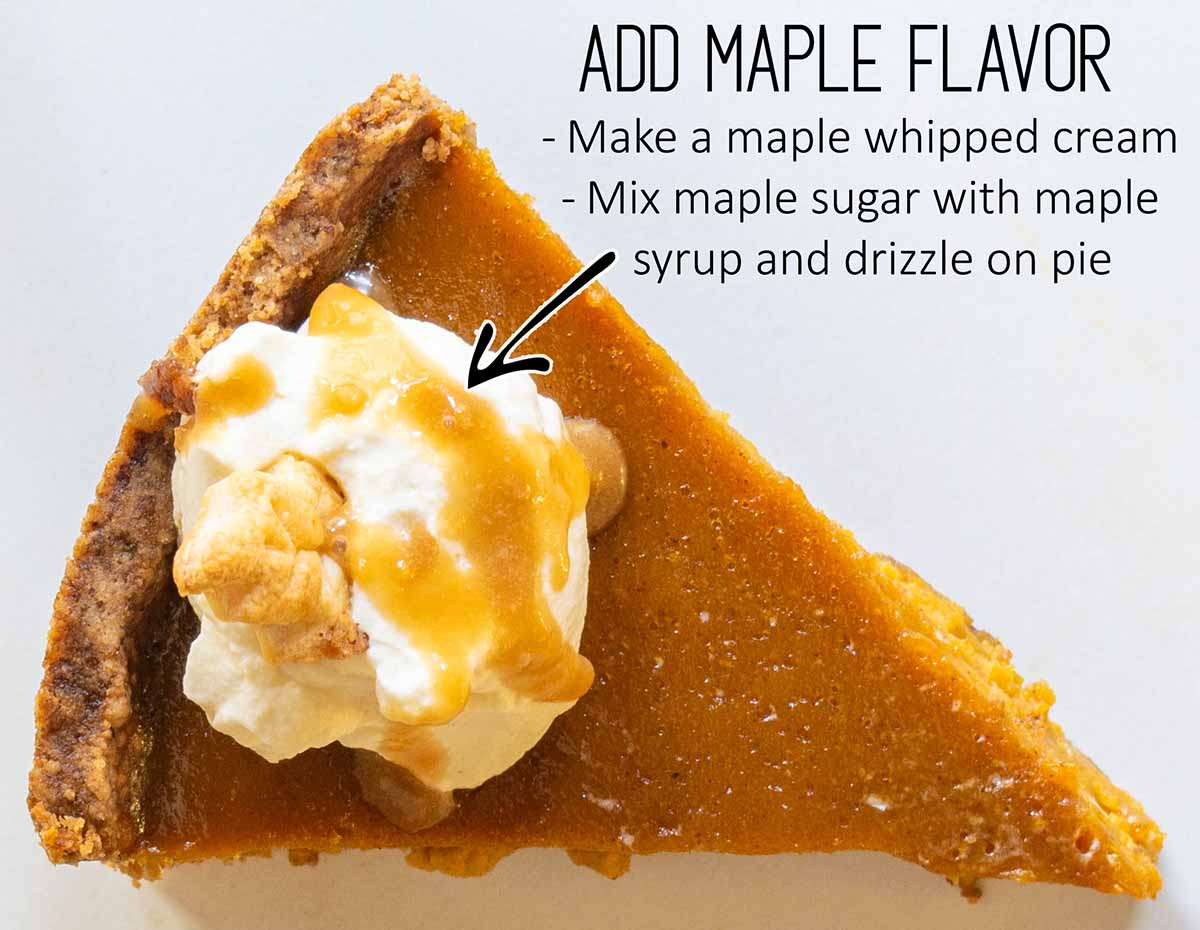
Maple whipped cream and syrup drizzle
If you have the time, add some last finishing touches to your pie.
For whipped cream, you can add in some cinnamon or maple sugar. My absolute favorite is Burlap & Barrel's wood-fired maple sugar - the flavor is unmatched, honestly.
I also mixed some maple sugar into real Wisconsin maple syrup for an intense maple flavor, which turned it into a caramel-like sauce. I drizzled just a tiny amount of that over the whipped cream.
Make-ahead and storage instructions
Butternut pies need to cool to fully set, just like pumpkin pies. They hold up great overnight in the fridge. This makes them a perfect make-ahead dessert, especially for the busy Thanksgiving holiday.
Store the pie in the fridge within 2 hours of removing it from the oven for safe storage. Southern Living notes that while (some) store-bought pumpkin pies are made to be shelf stable, your homemade ones are not.
How well does the pie hold up in the fridge overnight?
This butternut pie stores especially well in the fridge, mostly thanks to the pecan crust.
No matter how well you bake a pastry crust, it quickly loses that flaky perfection with storage. But that's not the case with this nutty crust (or even a graham cracker or gingersnap crust).
I left a piece in the fridge for several days, just to see how the crust held up and it was still in excellent condition. It was sturdy and not at all soggy.
Make the crust ahead of time
This crust can be made ahead of time. Go through the par-baking step, then store it on the counter (or fridge) for up to 3 days, wrapped in plastic so it doesn't get stale.
How to freeze the pie
This pie freezes nicely too, with the sturdy crust standing up to the freeze-thaw cycle as well as the filling. I freeze the pie already sliced up so I can grab the number of servings I want.
Recipe
Equipment
- 9" deep pie pan It doesn't have to be extra deep, just not shallow. I use a metal pan, so baking times are tuned to that. Glass and ceramic will work but may cook at different rates.
Ingredients
Butternut pie filling
- 1 medium butternut squash or honeynut squash
- 3 large eggs
- ¾ cup heavy whipping cream
- 1 cup brown sugar (can reduce to ⅔ cup for a less sweet pie)
Spices
- 1 teaspoon vanilla extract
- 1.5 teaspoon cinnamon
- ½ teaspoon ground ginger
- ¼ teaspoon nutmeg
- ¼ teaspoon salt
Pecan shortbread crust
- 1 cups chopped pecans about 4 ounces
- 1 cup flour
- 5 tablespoon butter melted
- ¼ cup brown sugar
- ½ teaspoon cinnamon
- ¼ teaspoon salt
Instructions
Make the fresh butternut puree
- Cut your butternut squash in half and scoop out seeds. Place cut sides down on a parchment-lined baking tray and roast at 400℉ for about 45-60 minutes, until the flesh in the neck is extremely tender. It shouldn't give any resistance, like you might get in a starchy, slightly under-baked potato.Once cool enough to handle, the skin should pull right off (if not, scoop out the flesh).If skipping the stovetop caramelization step, measure out 15 ounces (a heaping 1 ¾ cups) for the pie, no need to squeeze out water.
Make the pecan crust
- Reduce the oven temp to 375℉. Chop the nuts into fine pieces or chop in a food processor. They will be larger than graham cracker crumbs, but smaller than diced. Mix all of the crust ingredients together in a bowl, then press it into your pie pan. Bake this for 1-15 minutes then remove and let it cool completely.
Cook the puree on the stovetop for a deeper flavor (optional)
- Put all of the butternut puree into a shallow skillet, along with half the brown sugar and all of the spices. Cook over medium heat for about 10 minutes until it smells delicious and has darkened in color. It will reduce in volume as well.Measure out 15 ounces to use in the pie. Use any leftover in cookies or pumpkin bread.
Make the butternut pie filling
- Mix the eggs, sugar, and spices together in a bowl. Then add in 15 ounces of butternut puree (fresh or cooked down) and heavy cream and whisk to combine. It will be a very runny pudding texture where you feel some viscosity but it's still very pourable.
- Pour the filling into the par-baked graham cracker crust.
Bake for 45-60 minutes at 350℉
- Bake the pie on the lower rack until the edges are set and the center 4" are jiggly like jello. The center should not slosh around if nudged. Or use a thermometer and take it out when the center reaches 165-175℉.Overbaking can crack the top of the pie and turns the custard thicker.
- Let cool slightly then refrigerate within 2 hours for safety. This holds really well for several days and the crust never gets soggy.
Notes
- 8" pan: can be used if it's deep dish, or pour leftover filling in muffin tins lined with graham cracker crust (you'll need to make extra) or store-bought pie crust.
- Glass or ceramic: both work but will need to bake longer. They will also have more carryover cooking once removed from the oven and might crack.
Nutrition
More butternut recipes & resources
If you have leftover butternut puree (whether it's been cooked on the stovetop or not), you can use it in some of these pumpkin recipes. Just do a 1:1 swap.
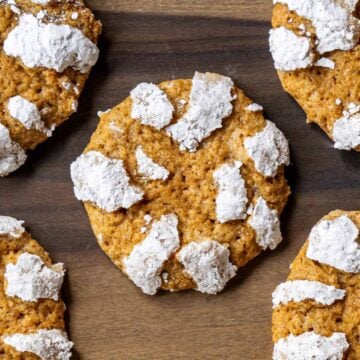
I also make a lot of recipes with butternut squash throughout fall and winter. Here are a few of my favorites.


Leave a Reply