Butternut squash makes a very smooth puree and rarely needs water drained off when used for baking. I've made puree from 10 types of winter squash and butternut comes the closest to canned pumpkin in texture, with a more prominent squash flavor.
This recipe keeps the preparation simple. I roast the squash without peeling it first, roast it, then blend until it's smooth. I leave out oil, butter, and seasonings so the puree is ready to use in pies, quick breads, cookies, and other baking recipes.
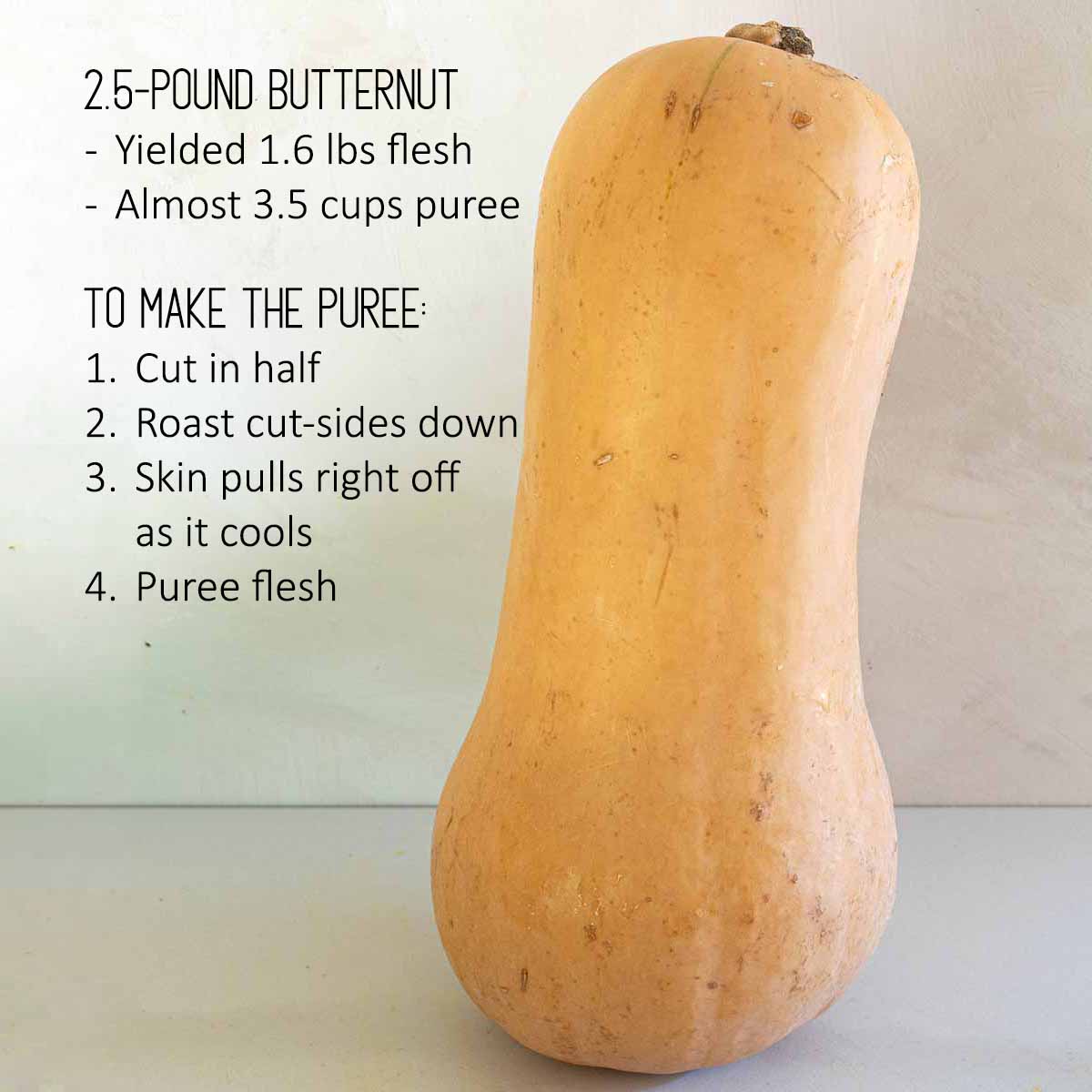
Why butternut squash makes the best puree
I've made puree from 10 different types of squash and butternut squash are my favorite to work with for several reasons:
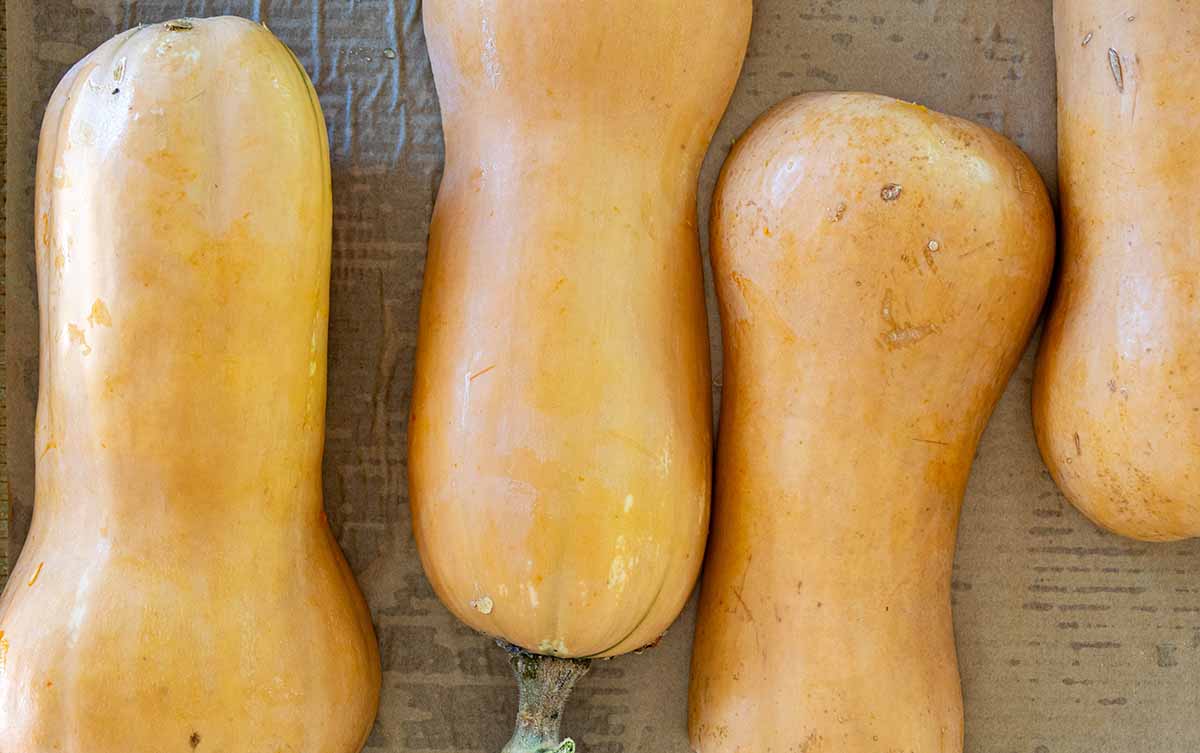
- No peeling required before roasting
- Yields the most flesh thanks to the long neck
- Smooth pureed texture
- Low water content and rarely needs to be drained, even when used for baking and pies
Yield per butternut squash
Pick any size butternut squash. The typical size weighs about 2-3 pounds. The squash I tested weighed 2.2 to 2.9 pounds and yielded 1.4 to 1.9 pounds of flesh, or about 3-4 cups of puree.
| Whole squash weight | Cooked flesh weight | Puree yield |
|---|---|---|
| 2.2 pounds | 1.4 pounds | 3 cups |
| 2.5 pounds | 1.6 pounds | almost 3.5 cups |
| 2.9 pounds | 1.9 pounds | 4 cups |
Leave plain for baking
For baking, I don't add any salt, spices, butter or oil. I cook it plain so that I can use it in any other recipe. Adding butter or oil can definitely change how it affects baked goods recipes.
Roast until the flesh is completely soft
The process for making butternut squash puree is the same as homemade pumpkin puree.
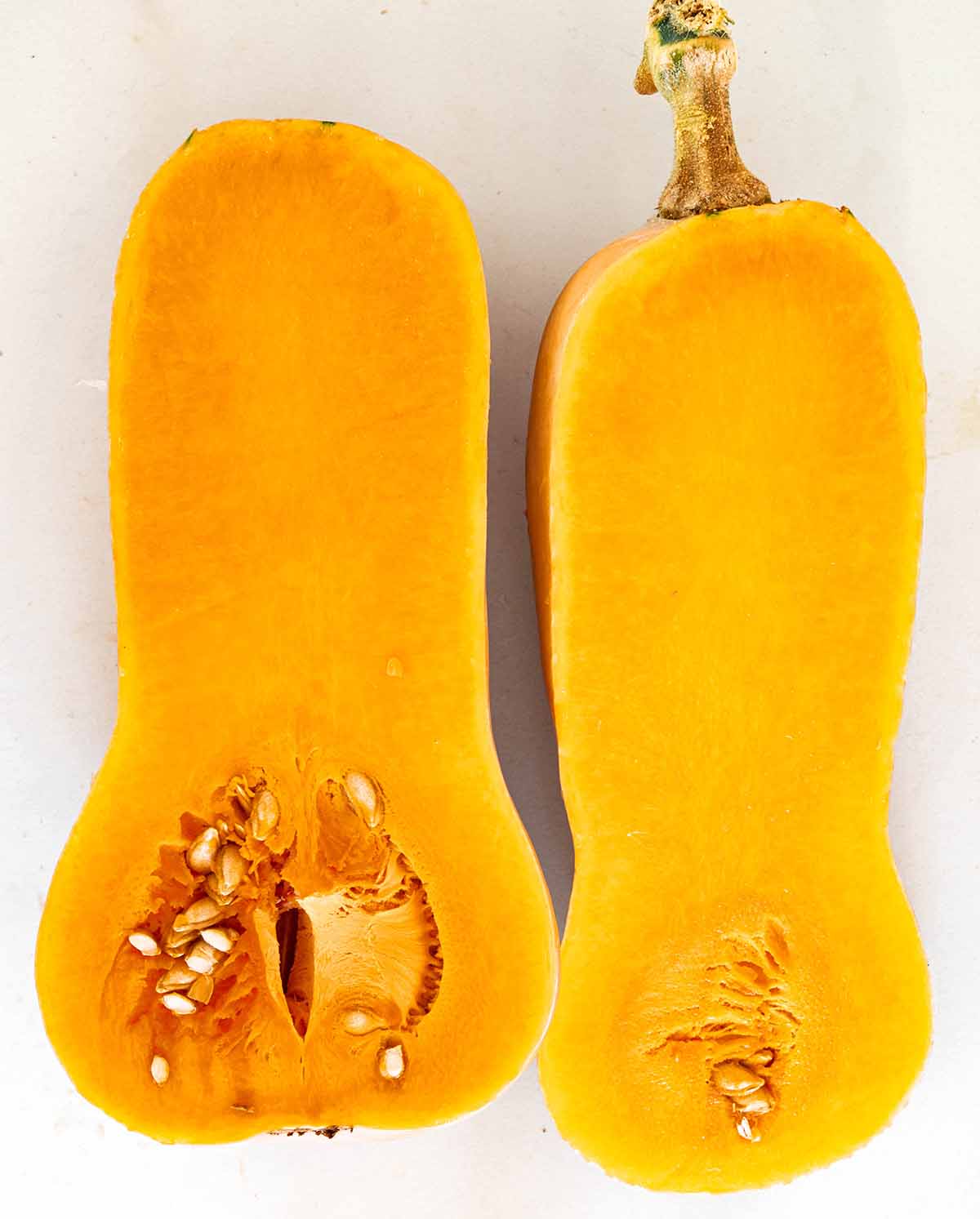
Before you roast the butternut squash, cut it in half from the top down, so you have a left and right side. Don't cut through the stem, it's too hard! Cut right next to it instead - it doesn't matter if the cut is a little off center.
Scoop the seeds out of the center. Then place your butternut squash halves cut-side down on a baking tray.
This traps steam in the flesh to make it really smooth. Roasting face up won't ruin your puree, but the flesh might dry out and feel a little more starchy.
Use parchment paper to prevent burning
I recommend lining the baking tray with parchment paper to prevent the sugars from burning and limit browning.
While caramelizing butternut is delicious for dinner, it can ruin the texture of puree that you need for making a butternut squash pie.
This is also cooked even longer to make sure the flesh is super soft, and sometimes the sugars run off with a small amount of liquid and completely burn onto an unlined tray. Ask me how I know!
Roast at 400°F for about 45 to 70 minutes
The cooking time will vary dramatically depending on the size of your butternut squash.
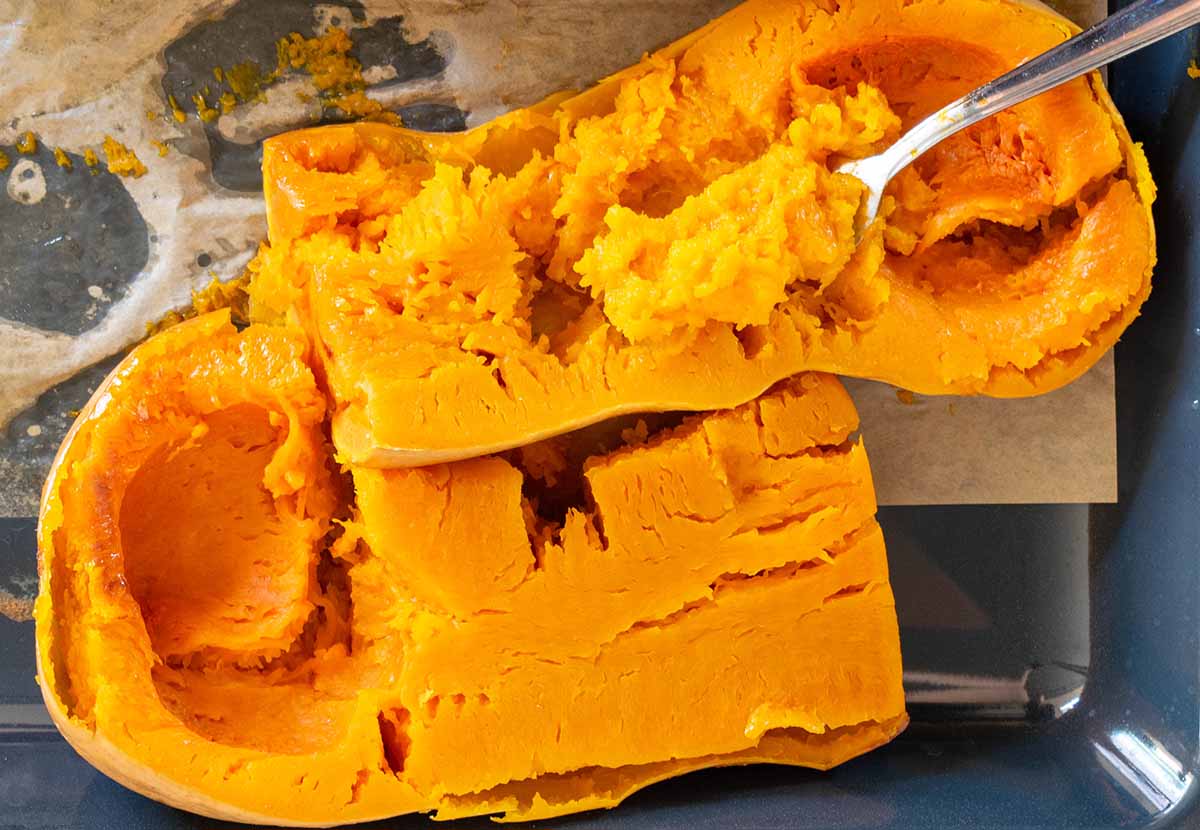
Check on the squash by piercing through the skin with a fork. Check the center of the thickest part, which will be the neck (not the hollowed out bowl).
Wiggle the fork around and if you feel any resistance (like if it feels like a starchy, slightly underbaked potato), keep cooking it. The flesh should feel buttery smooth.
It's hard to overcook butternut squash when you're using it for a puree. As long as you don't burn it, you can err on the side of cooking it longer.
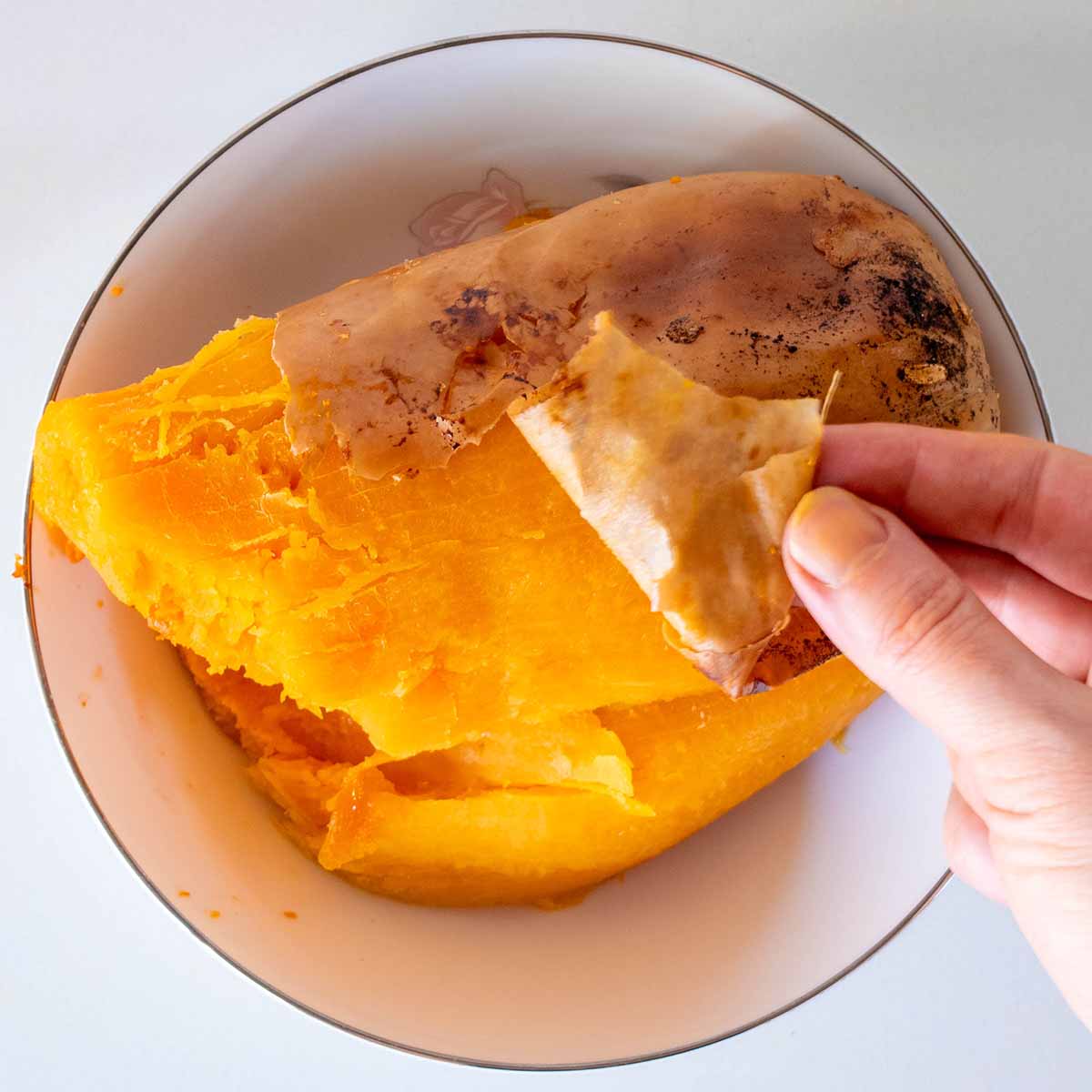
Peel off the skin
One of the other reasons I like roasting the butternut squash cut-side down is that the skin peels off very easily.
Remove the tray from the oven, and once the squash is cool enough to handle, you can simply pull the skin off. This doesn't work for all winter squash, at least not reliably, but it has worked every time I've roasted butternut squash like this to make a puree.
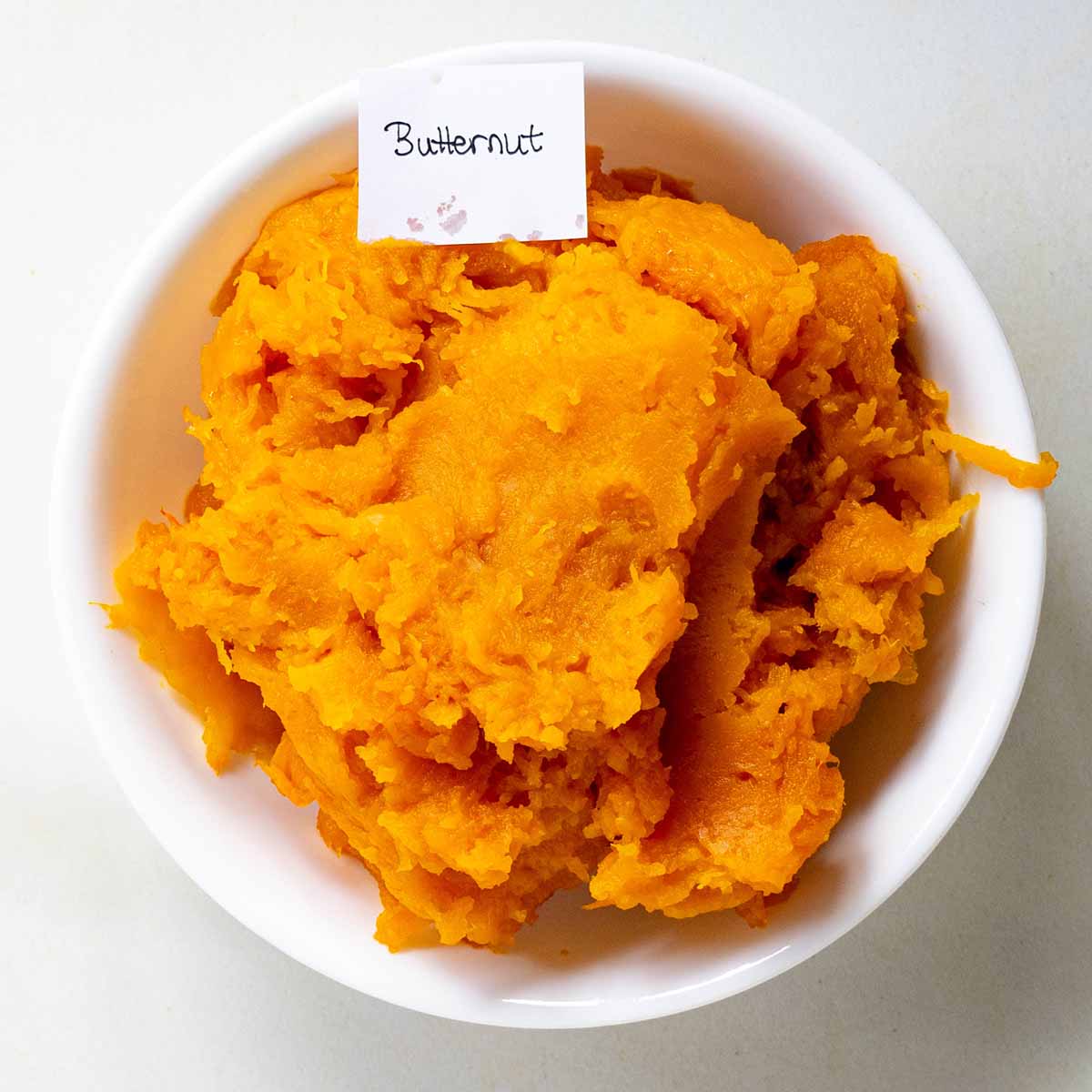
Choose your method to puree the flesh
Now you just need to turn your butternut squash into a puree, and you have several options. The method you choose partly depends on how you plan to use the puree.
- Food processor for the smoothest puree: ideal for making pumpkin / butternut squash pie where any unblended texture is noticeable. Also works for any other baking use.
- Fine-mesh sieve: if you don't have a food processor, press the flesh through a fine-mesh sieve. This takes some real effort but still produces a pretty smooth puree.
- Mashed: this is good enough if you're baking quick breads, muffins, or anything else where the texture doesn't have to be perfect. My rule of thumb is that if mashed bananas work for it, then so will mashed butternut squash puree.
I also like to puree it while it's still warm. It seems to blend easier than when it's been refrigerated overnight.
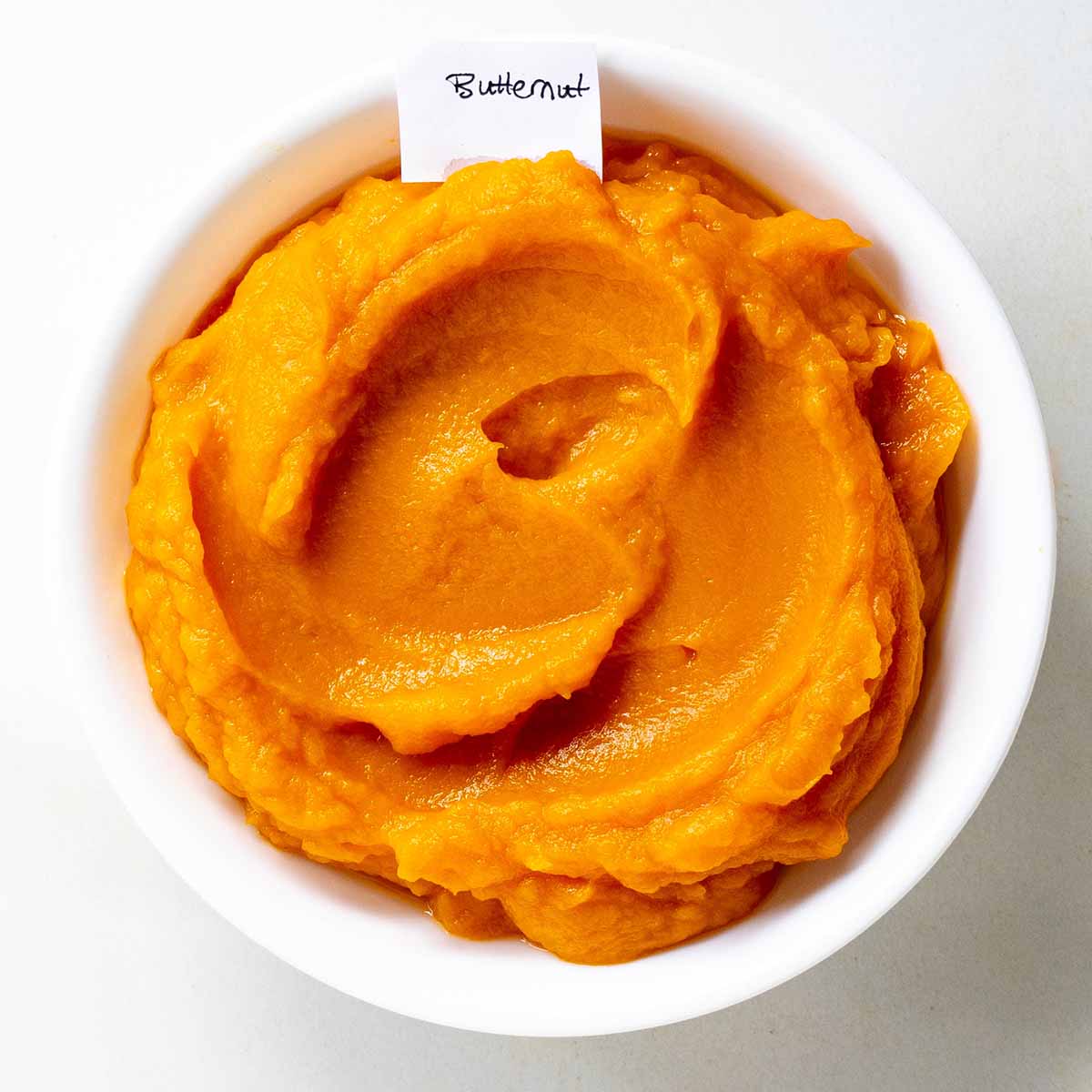
Do you need to drain off water?
I haven't had to drain water off a butternut squash puree yet. It is denser than most other squash I've worked with, including sugar pumpkins.
It's also the closest match in texture to canned pumpkin of all of the squash I've tested, without having to drain off water.
I've used the butternut puree, as is, to make quick breads, cookies, and pies. All of them have turned out great.
If you do need a thicker puree for a certain type of recipe, you can also cook it down on the stovetop to remove excess liquid. It also gives it a deeper flavor which is delicious in cookies or pie.
In fact, I use that method for my butternut squash pie to capture that deeper flavor. I paired it with a pecan crust and drizzled a maple-sugar syrup over the whipped cream.
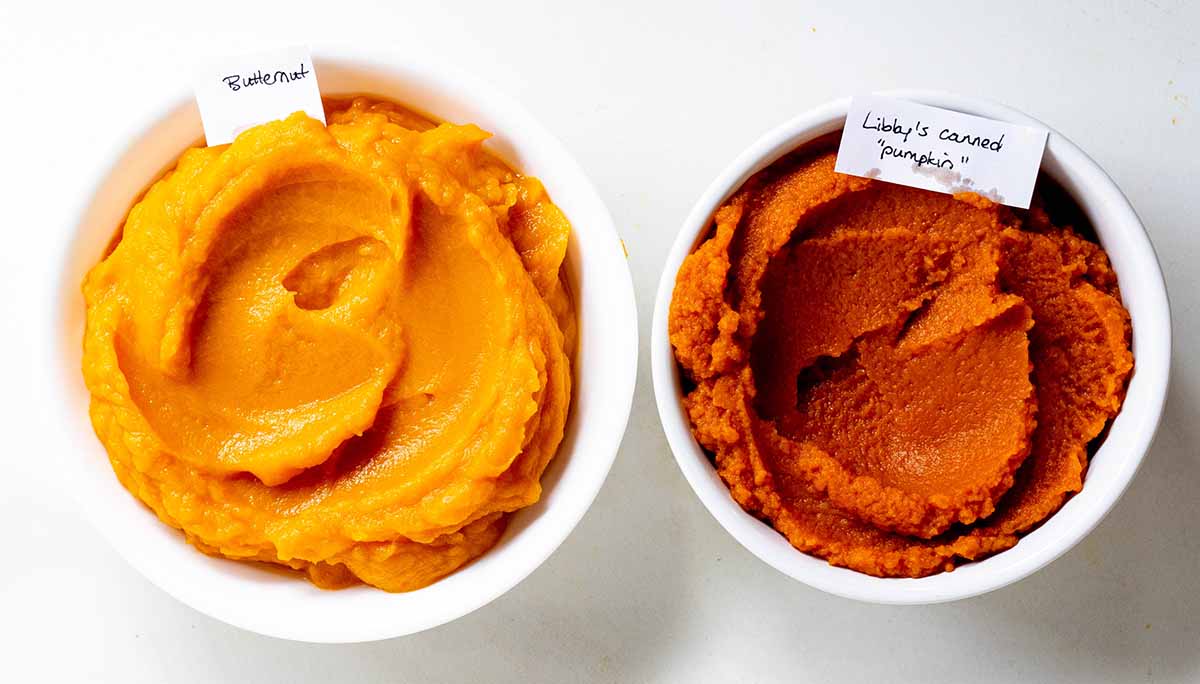
How does butternut puree compare to Libby's canned version?
Libby's canned pumpkin is their own proprietary pumpkin developed from a Dickinson squash, not traditional pumpkins.
It's actually the same species as butternut squash (both are Cucurbita moschata). Whereas sugar pumpkins are closer to zucchini, as they are both Cucurbita pepo.
So how close does butternut squash get to Libby's 100% canned pumpkin? Here are the results based on all of my tests:
- Color: butternut puree is lighter in color, but the finished pie is pretty close to Libby's.
- Texture: very smooth, and probably the smoothest of all the squash I tested. Most comparable to canned.
- Moisture: as close a match to canned as I've ever seen, no need to drain off excess water
- Flavor: butternut puree has a stronger flavor than canned pumpkin, which comes through in pies, but is harder to detect in other baked goods.
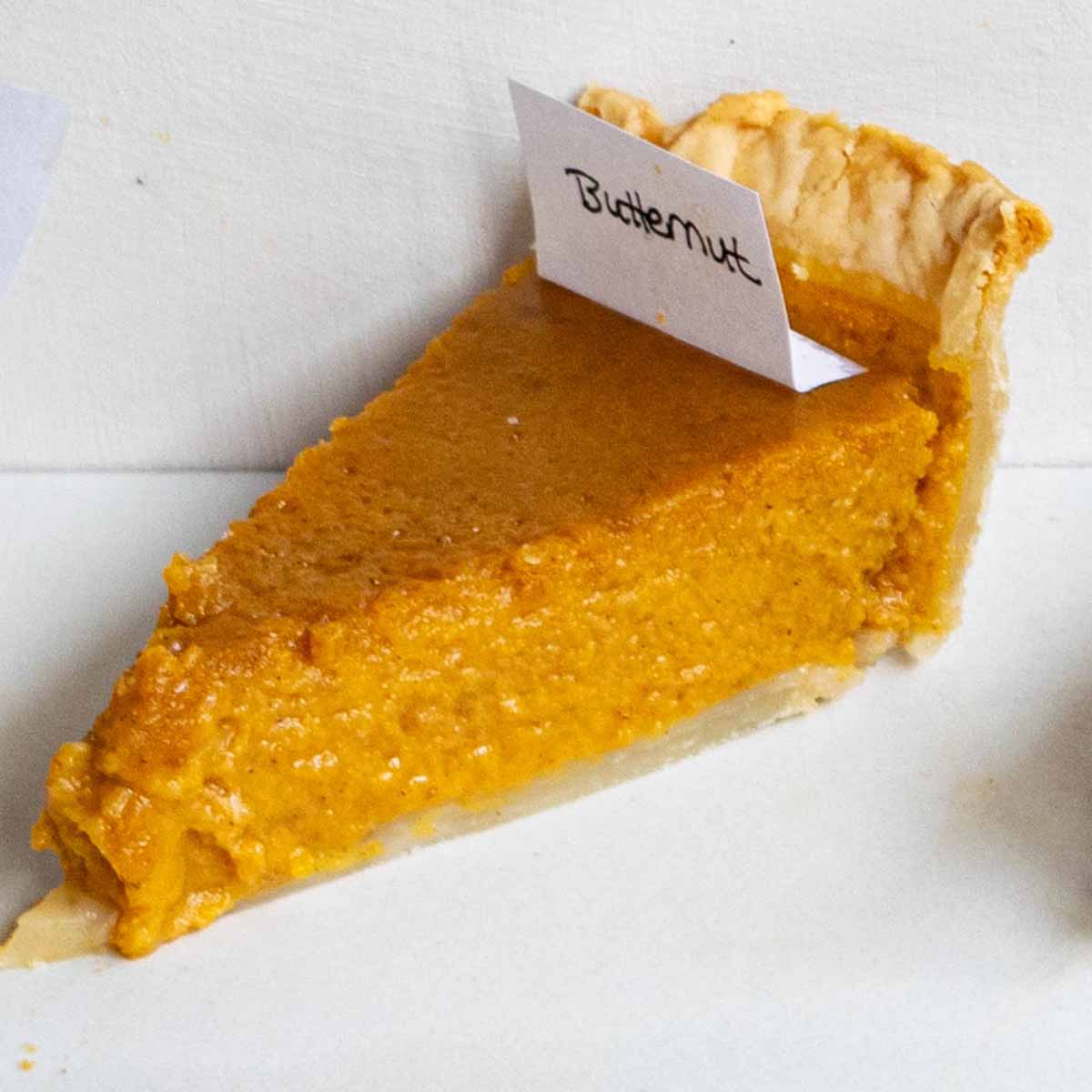
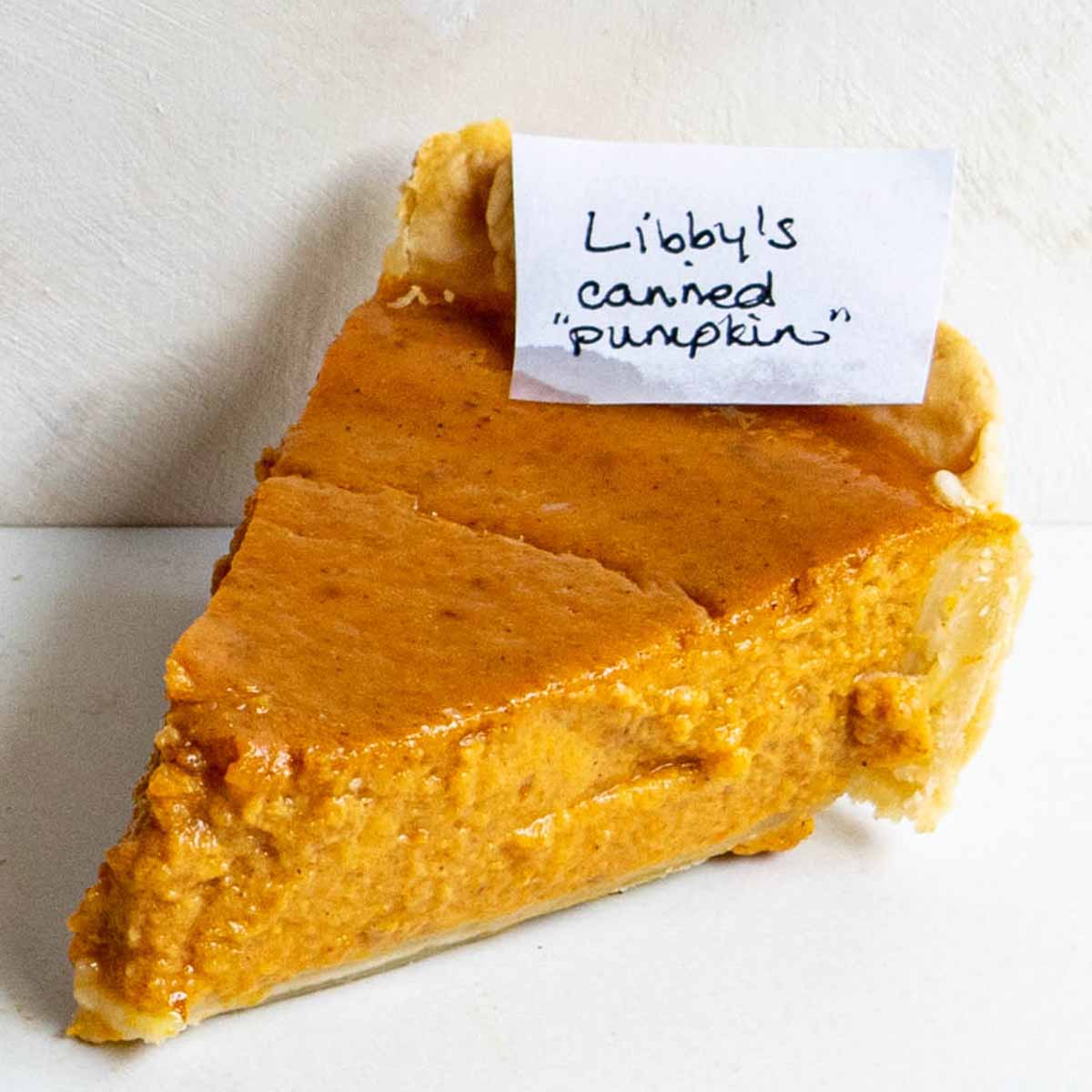
Now you can see why so many people like using butternut squash puree to make "pumpkin" pies and other baked goods.
Refrigerate or freeze for later
Butternut squash puree can be stored in the fridge until you're ready to bake your pies, breads, muffins, etc. It's good for 3 days, covered in the fridge.
You can also freeze it. Thaw it overnight in the fridge and drain off any pooled water before you bake with it.
If you want to freeze it, look up your favorite recipes to see how much they need. For anything that uses a can of pumpkin puree, you'll want to freeze 15-ounce portions. But some recipes only use a half cup or one cup.
Recipe
Ingredients
- 1 butternut squash see notes for yield
Instructions
- Preheat the oven to 400℉.
- Cut the butternut squash in half from top down, avoiding the stem, so you have a left and right half. Scoop out the seeds.
- Line a baking sheet with a piece of parchment paper (to prevent burning) and place both squash halves, cut side down, onto it. Transfer the baking sheet into the oven (it's okay if it's not fully preheated).
- Bake for 45-75 minutes, until the flesh is very soft. Cooking time will vary by size. You can check by poking a fork through the skin and wiggling it back and forth to feel for resistance. If it feel grainy, let it keep cooking. It should feel mushy.
- Remove from oven. Once cool enough to handle, pull off the skin.
- Puree the butternut squash flesh while it's still warm in a food processor until smooth (45-60 seconds) for pies, or press through a fine mesh sieve if you don't have one. You can instead mash the flesh if using for quickbreads or muffins.
- Store in the fridge for 3 days or freeze for long term storage.
Notes
- For pies: use a food processor for a super smooth puree, where chunks would ruin the texture
- Quickbreads and muffins: it's okay to mash into a puree (if mashed bananas work in the recipes, mashed butternut will too)
- Cookies: depends on the recipe, to be safe, use a food processor
Nutrition
Baking recipes that use butternut squash puree
I found a bunch of delicious-looking baking recipes that specifically use homemade butternut squash puree. See if any catch your eye:
- Pecan butternut squash bread, from The Almond Eater
- Butternut squash cake with cream cheese frosting from Baking Capture
- Butternut squash cake roll from Food.com
- Winter squash bars from Taste of Home
- Chai-spiced butternut squash cupcakes from Espresso + Lime
- Baked butternut squash donuts from Sweet Fix Baker
You can also swap your butternut squash puree in for recipes that call for canned pumpkin and get nearly identical results. Do an equal 1:1 swap.
Here are some recipes I've made with homemade pumpkin puree that will be extremely similar when swapping in butternut.
You might also like these other butternut squash recipes
Here are a few of my other favorite recipes that use butternut squash throughout fall and winter.

Leave a Reply