Homemade pumpkin puree is simple to make: roast pumpkin halves, scoop out the flesh, and blend until smooth. The part that takes a little judgement is choosing a good baking pumpkin and deciding if the finished puree needs water drained off or not.
I've roasted close to a hundred pounds of pumpkins and winter squash for this recipe and a pumpkin pie bake-off with homemade purees. Most sugar pumpkins made a puree that's very close to canned pumpkin without straining or squeezing water off.
Jump to:

Choose a pumpkin that's good for baking
Sugar pumpkins, also called pie pumpkins, are good for baking. Their flesh bakes up tender and turns into a smooth puree that's typically not too watery. They have a good pumpkin flavor with a medium intensity - not bland but also not super strong.
How many pumpkins do you need?
Most sugar pie pumpkins are between 3 and 5 pounds, usually on the smaller side from my experience. I measured two of the pumpkins.
- The 3-pound whole sugar pumpkin yielded 1.3 pounds of flesh after roasting it, which is about 2.5 cups.
- The 3.5-pound whole sugar pumpkin yielded 1.5 pounds of flesh after roasting, which is 3 cups.
So even a small sugar pumpkin should be enough to replace a 15-ounce can of pumpkin puree, even if you have to squeeze some water out.
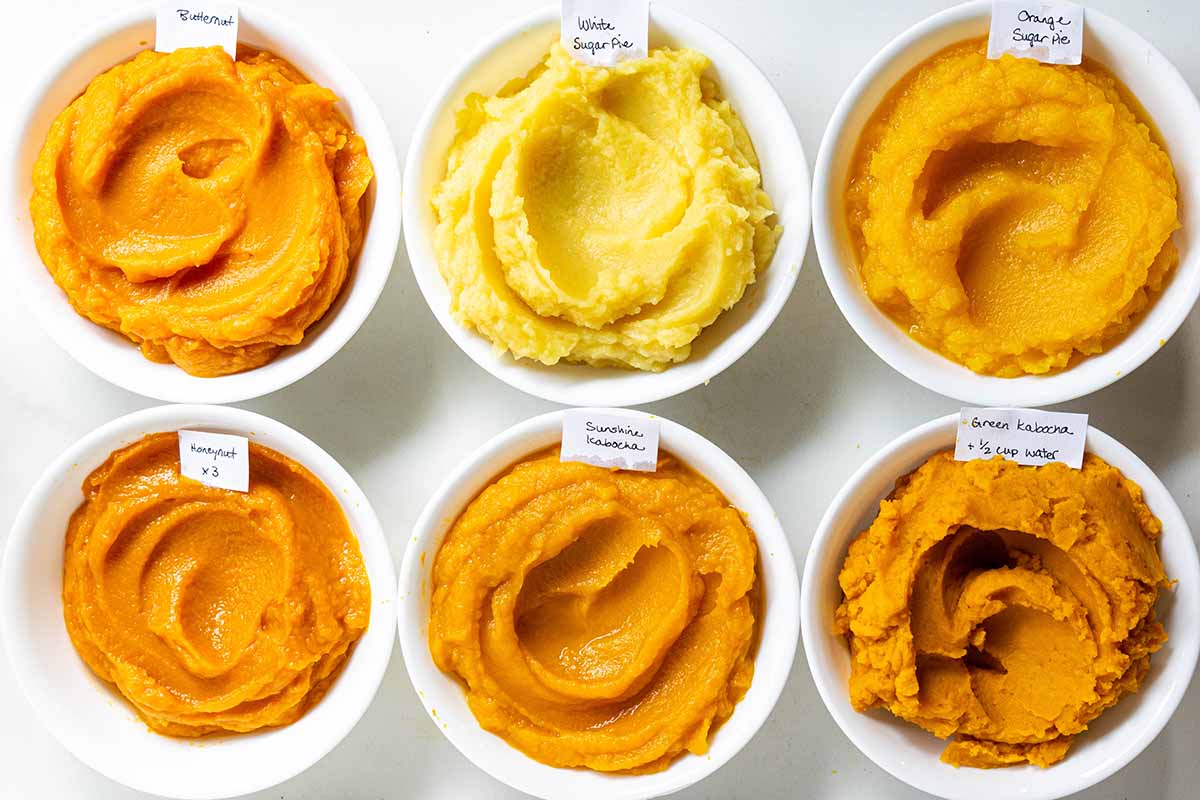
If you're working with other types of squash, here are the other measurements I have for you:
- White pie pumpkin at 3 pounds whole: 1.4 pounds of puree (almost 3 cups)
- Fairytale pumpkin at 9 pounds whole: 3.5 pounds of puree that needed to be significantly drained
- Autumn Frost at 3.3 pounds whole: 1.3 pounds of puree (~2.5 cups)
- Butternut squash, medium sized: 1.4 - 2.0 pounds of flesh (3-4 cups)
- Honeynut squash (small) at just under 1 pound each: 5-6 ounces of puree per squash (need 3-4 to replace a 15-ounce can)
Skip the carving pumpkins for a smoother puree
Carving pumpkins are prized for their thin walls that are easy to carve. But they are not good for baking.
When carving pumpkins are baked, the flesh is stringy, fibrous, and watery. It's that stringy texture that can ruin your pumpkin pie, giving it a grainy texture no matter how long you run it through the food processor or strain it through a fine mesh sieve.
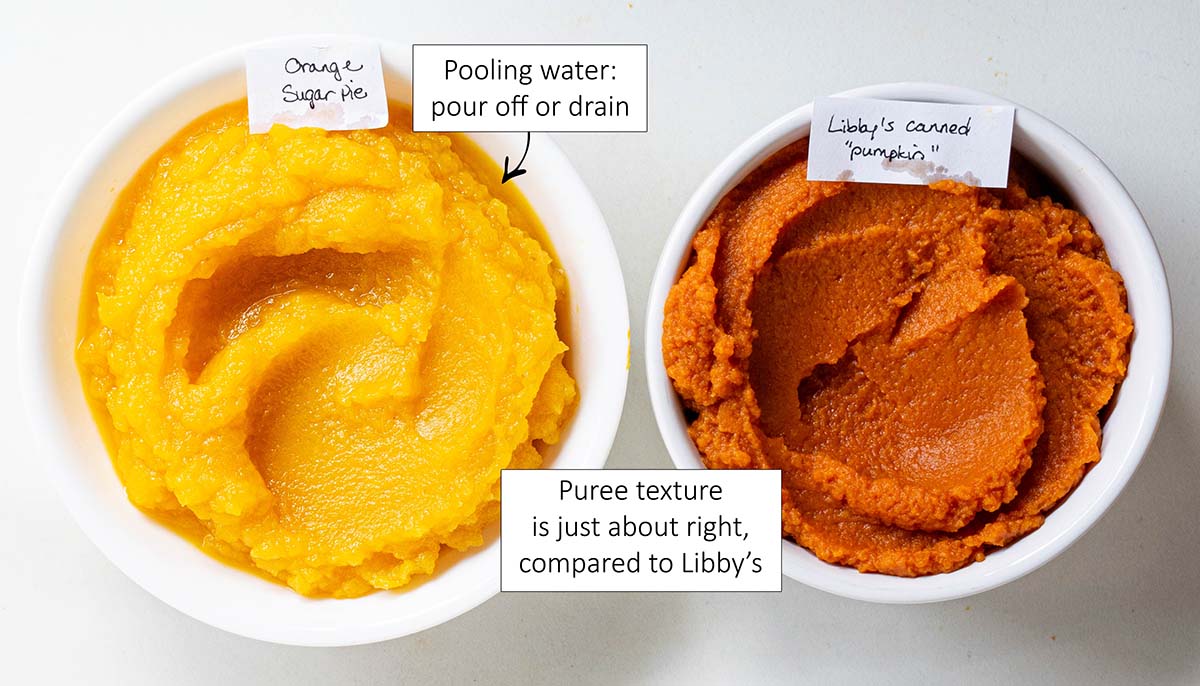
How does homemade pumpkin puree compare to Libby's canned version?
Libby's canned pumpkin is actually their own proprietary pumpkin developed from a Dickinson squash. It's actually more closely related to butternut squash than sugar pumpkins. The USDA defines "pumpkin" as any golden-fleshed, sweet squash for canning purposes.
The Chicago Sun Times has a fun article about how Libby's sources 90% of its pumpkins within a 60-mile radius of their canning facility in Illinois, the pumpkin capital of the world. If you want to see what the Dickinson pumpkins look like, that article has a lot of photos.
Let's see how homemade pumpkin puree compares to the canned stuff.
Flavor: sugar pie pumpkins win, by a small margin
Fresh sugar pie pumpkin puree has a little more pumpkin flavor by itself, but that difference was barely noticeable when I baked into pies, cookies, quickbreads, soups, and sauces (yes, I tried them all!)
I'm pretty sure the only reason my taste testers could tell a difference was they were doing direct side-by-side taste tests.
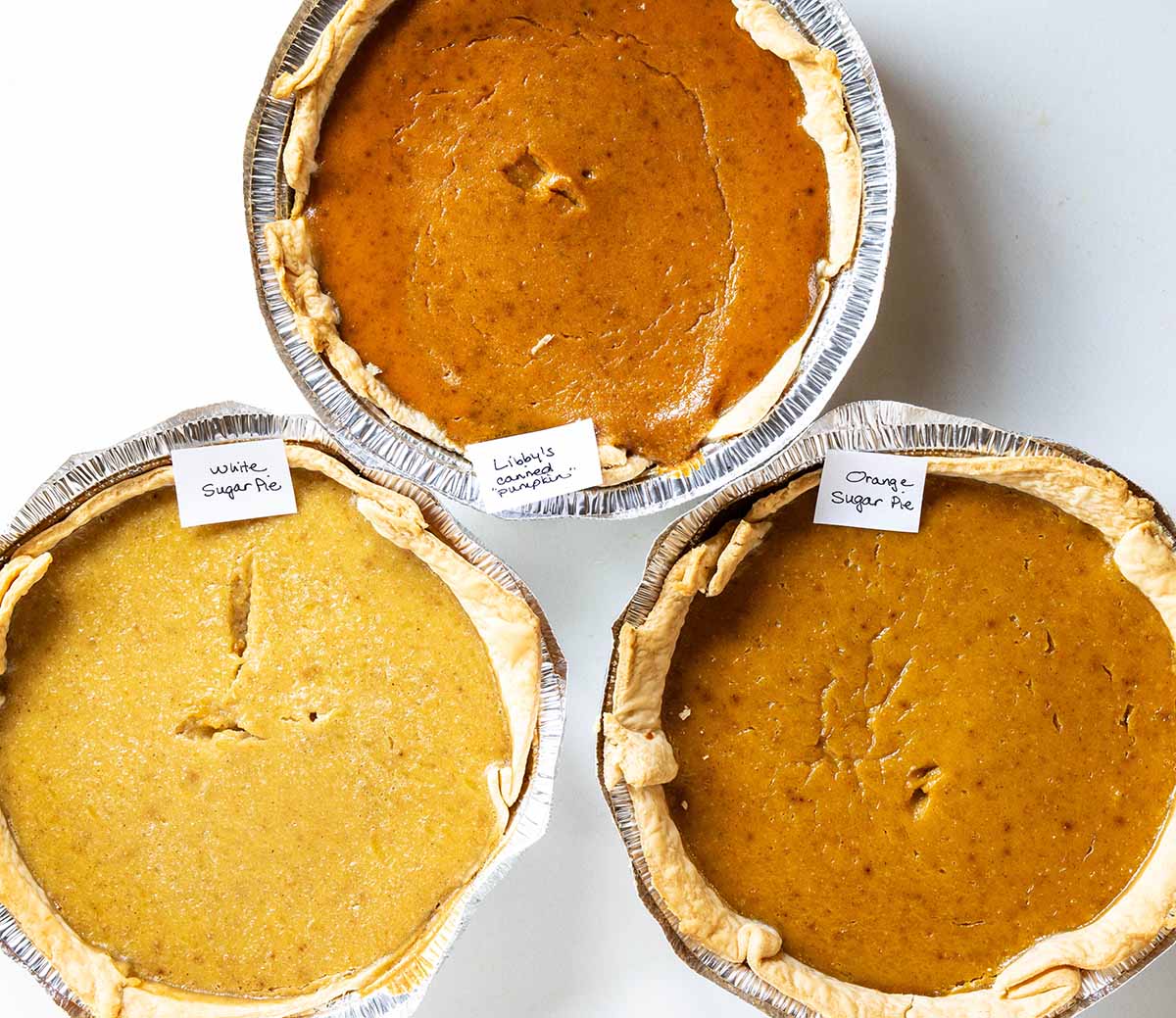
Color: Libby's canned pumpkin is darker
Libby's canned pumpkin is a deep burnt orange, whereas sugar pie pumpkins are a brighter orange-yellow color. But after adding cinnamon and other spices to a pie, one with homemade pumpkin puree will look very similar.
Consistency: home cooked pumpkin puree will vary
When working with fresh produce, you never know how much water content one will have compared to the next. Same goes with pumpkins.
Some are consistently more watery than others. For example, fairytale pumpkins are pretty watery, while butternut squash typically don't need any draining.
Sugar pumpkins are usually close to the right consistency, but might need some pooled water poured off or drained.
I tested a half dozen sugar pumpkins from different sources:
- Most were perfect as-is, maybe a teeny tiny bit more watery than Libby's
- A couple were actually thicker than Libby's.
- One was slightly more watery and I needed to pour off pooled liquid, but didn't need to strain it or squeeze through a cheesecloth.
That said, your results might vary.
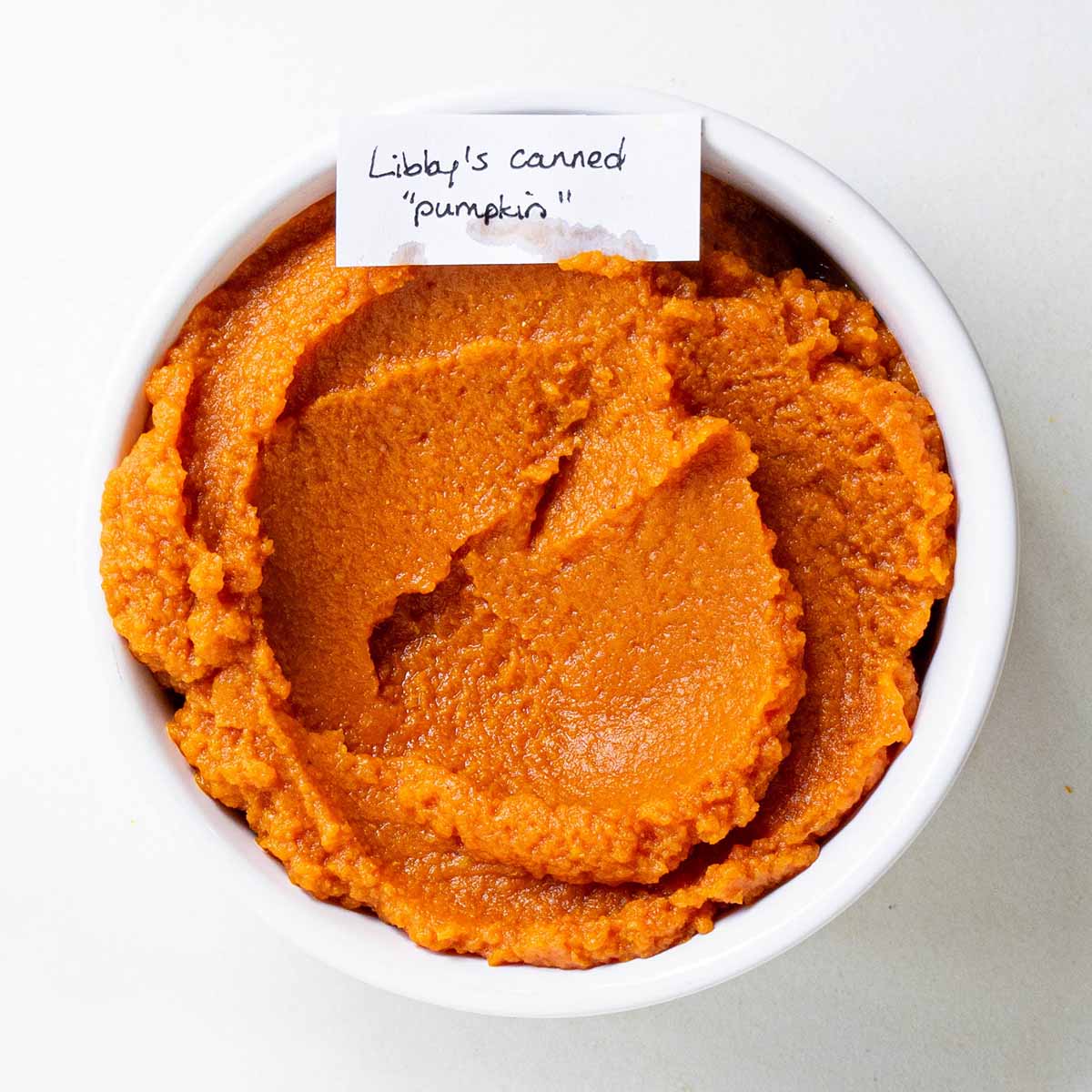
Canned pumpkin has the consistency of a thick applesauce. It's not as runny as regular applesauce, but it's also not as thick as tomato paste or even a pumpkin butter.
If you're using the homemade pumpkin puree for a pie or baking, you'll want to match that consistency.
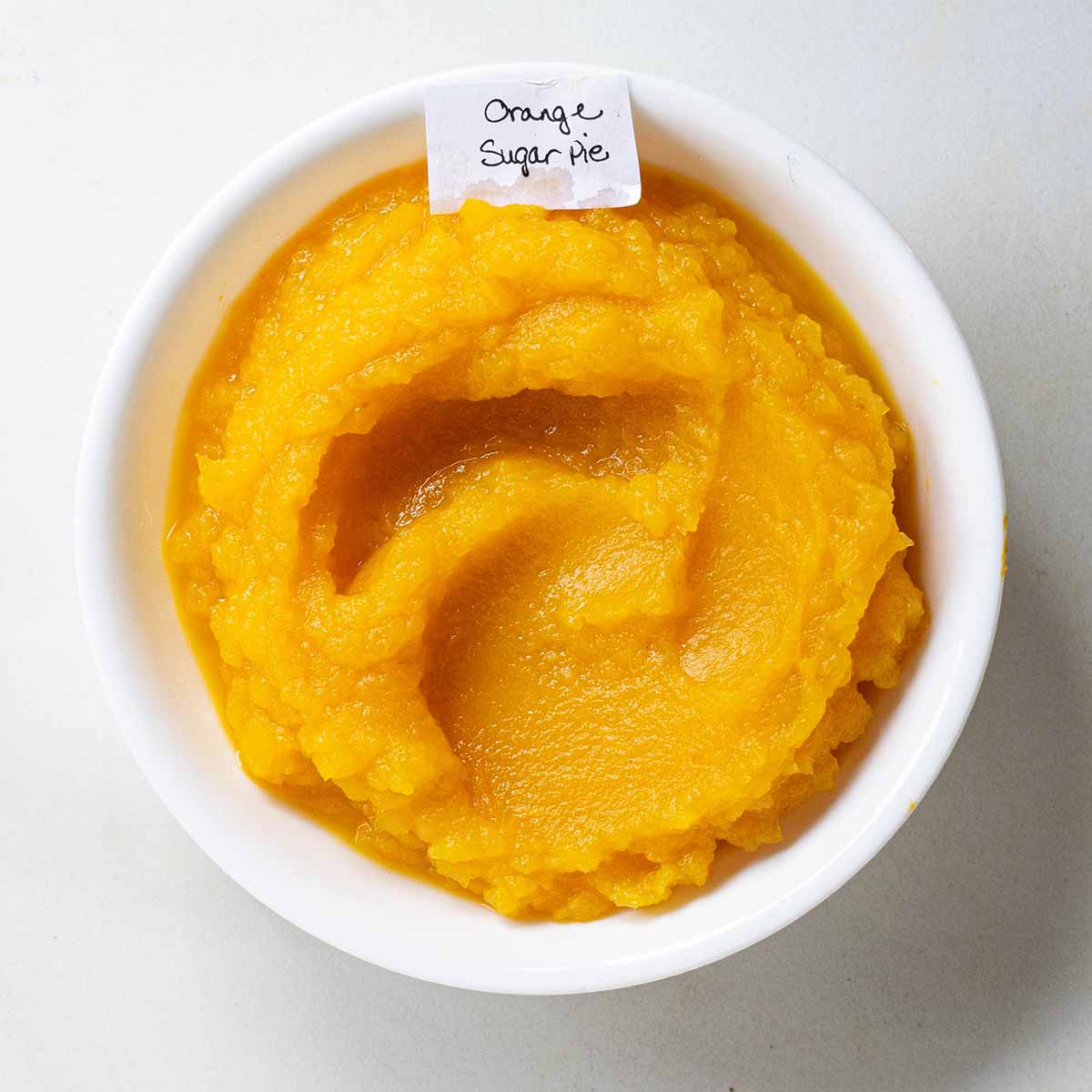
How to make homemade pumpkin puree
Making your own pumpkin puree is really not that hard, it just boils down to a few simple steps:
- Cut the pumpkin in half and remove the seeds.
- Roast both halves
- Scoop out the flesh once it's cooled (or just peel off the skin if you can)
- Puree it
I want to go over these steps in detail so I can share any tips I've learned.
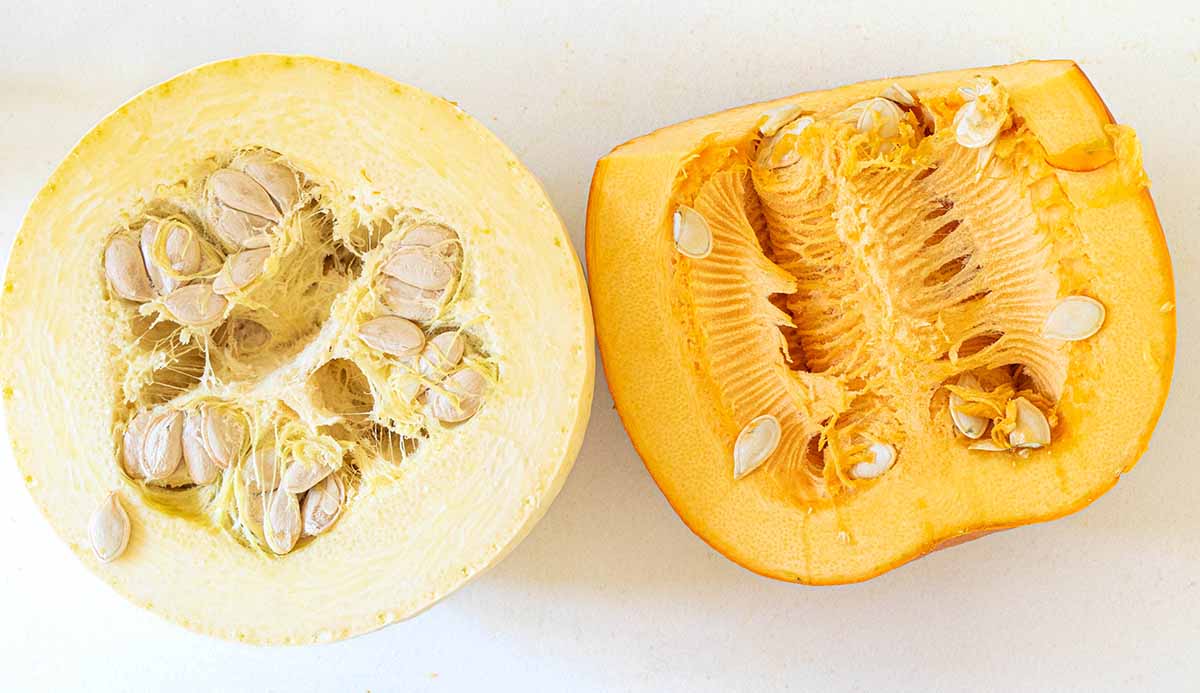
Step 1: Cut the pumpkins and scoop out the seeds
You can cut the pumpkin in half two ways:
- Cut around the middle so you have a top and bottom half
- Cut down from the top so you have a left and a right half
If your pumpkin is easy to cut and you want to keep the seeds for roasting, cut around the middle so you have a top and bottom half. The seeds are much easier to get out this way, based on how they are arranged inside the cavity. Only do this if you can safely cut the pumpkin on its side!
The easiest way to cut the pumpkin is from the top down. Cut right next to the stem, not through it, because the stem is way too hard to cut.
Either option will result in the same cooking time and quality of puree.
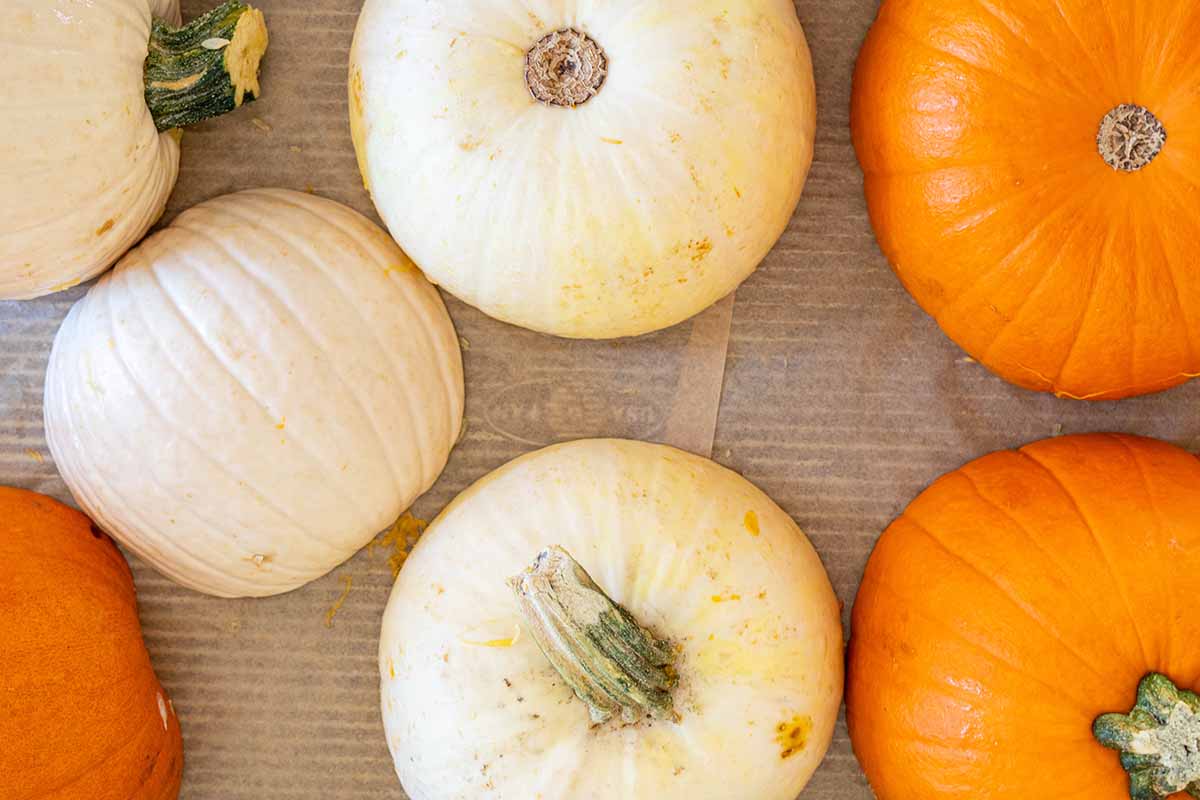
Step 2: Roast the pumpkin halves cut side down on parchment paper
Place the pumpkin halves on a parchment-lined baking sheet, cut side down. There are several reasons for this simple step.
First, the parchment paper reduces sticking and can limit how much the flesh browns. We want smooth flesh, not caramelized bits (at least not if the puree will be used in a pie).
The parchment paper also helps prevent the sugars from burning, which can happen with longer bake times. I know, because I've had some pumpkin juice seep off the paper and burn completely black where it touched the unlined part of the baking tray. Meanwhile, the lined part had no burnt flesh or juices.
Lastly, roasting cut sides down helps steam the flesh and keep all of it tender. I roasted some cut-side up and it dries out more. That might seem good to make your puree less watery, but I felt like it also affected the texture in a negative way.
You don't add any oil, water, sugar, or salt before roasting. You roast the pumpkin halves completely raw.
Roast at 400°F for about 45 to 60 minutes, depending on the size of your pumpkins. It's hard to overcook them, but you don't want them to burn either.
The pumpkins are done roasting when the flesh is extremely tender.
Poke through the skin with a fork and wiggle it around. You should feel almost no resistance, kind of like thick baby food. If you feel resistance, like graininess or a slightly undercooked baked potato, let them continue to bake.
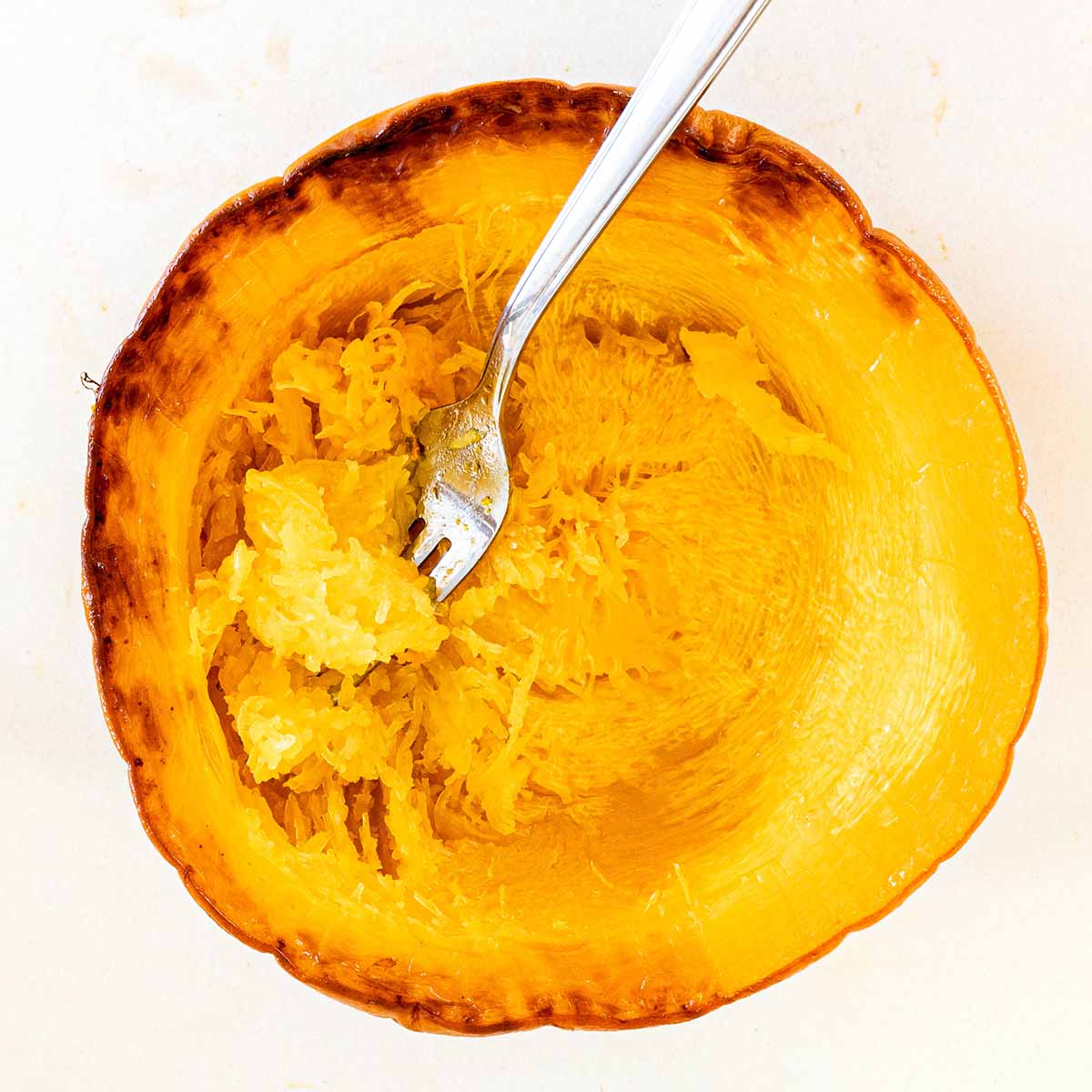
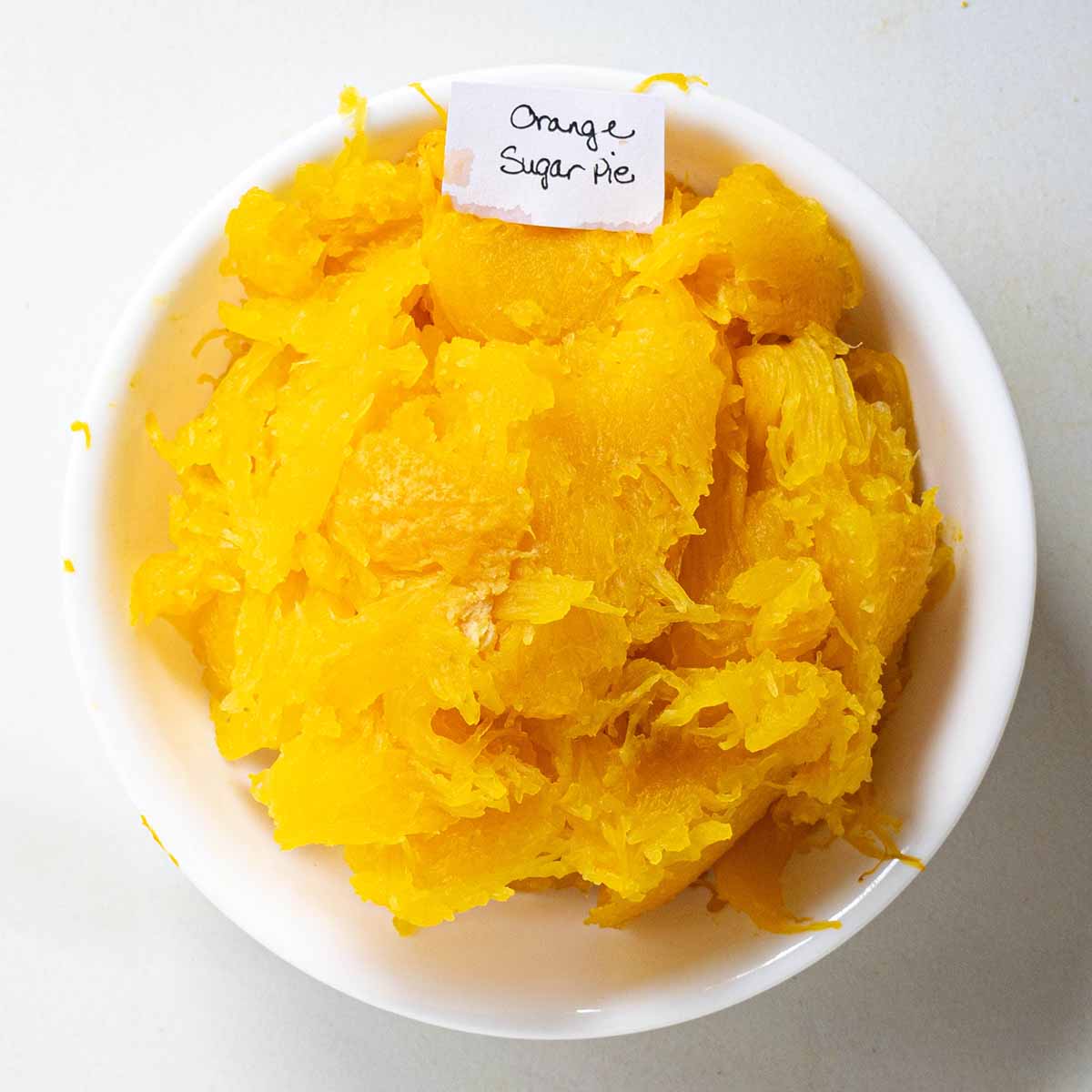
Step 3: Scoop out the pumpkin flesh once cooled
Immediately after removing the pumpkins from the oven, they will be too hot to handle and too awkward to flip with a spatula. Leave them to cool for 5-10 minutes (they will still be very hot though).
At this point, you can try to peel the pumpkin skin off by lifting it with a fork (or your fingers if it's cool enough). It will either peel right off, or not.
- If it peels off, do it! Then flip the pumpkins cut-side up to finish cooling (you will see steam continue to rise once you flip them).
- If the skin doesn't peel off, flip the pumpkins to finish cooling. Then scoop the flesh out with a spoon.
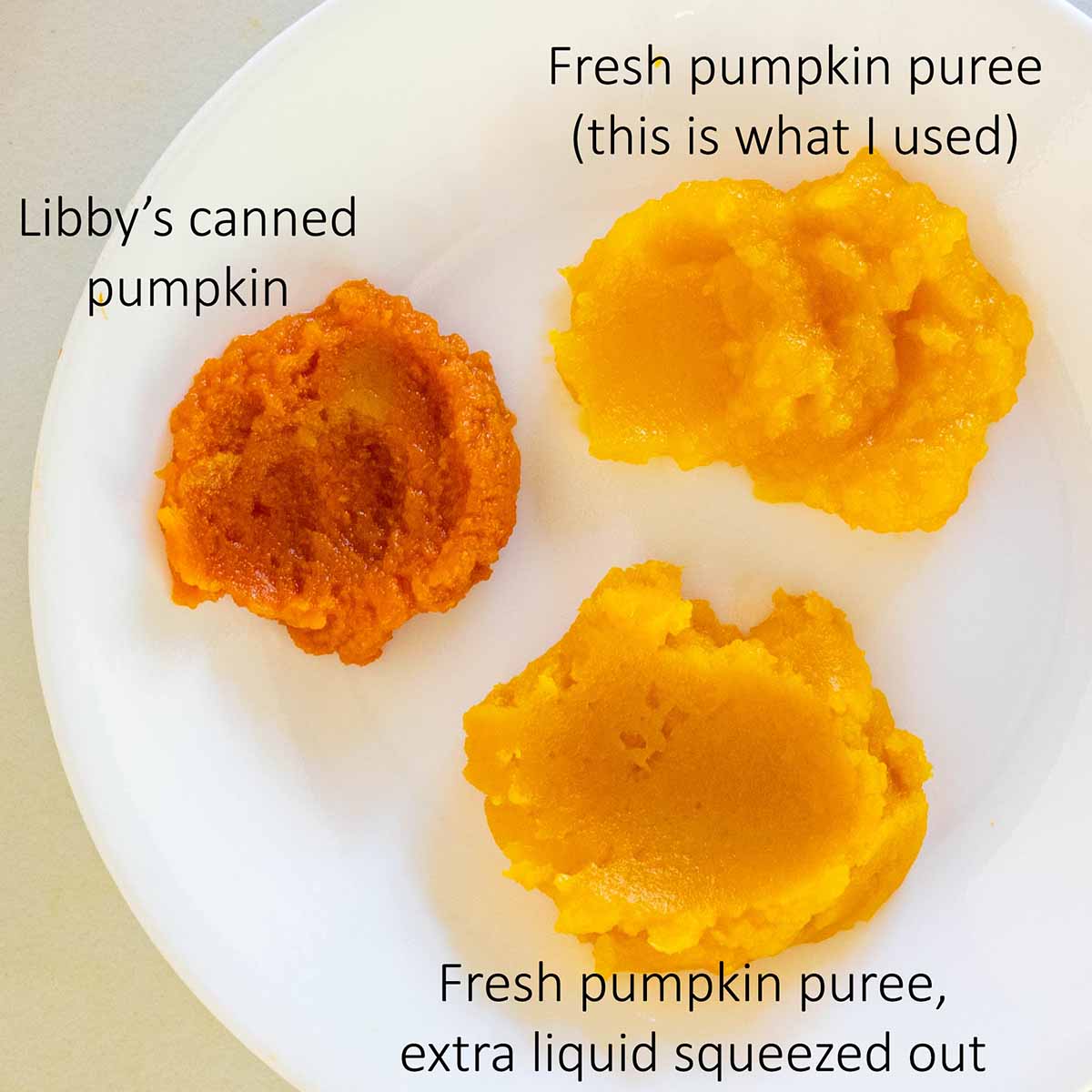
Step 4: Puree the pumpkin flesh
The last step is to turn the flesh into a pumpkin puree. You have a few options depending on the equipment you have, effort threshold, and intended use.
- Food processor: easy (but more cleanup), and best for pumpkin pie or cookies for the ultra smooth texture.
- Fine mesh sieve: press it through a sieve if you don't have fancy tools, but takes extra effort and a lot of elbow grease. A suitable stand-in for pumpkin pie or cookies.
- Mashed: easiest option and good enough for soups and sauces. The puree might have some chunks, but as long as they are small it's fine to use in muffins and quickbreads (similar to mashed bananas in banana bread).
Next, determine if the consistency is just right or is too watery, in which case, you'll want to pour off some liquid or strain it.
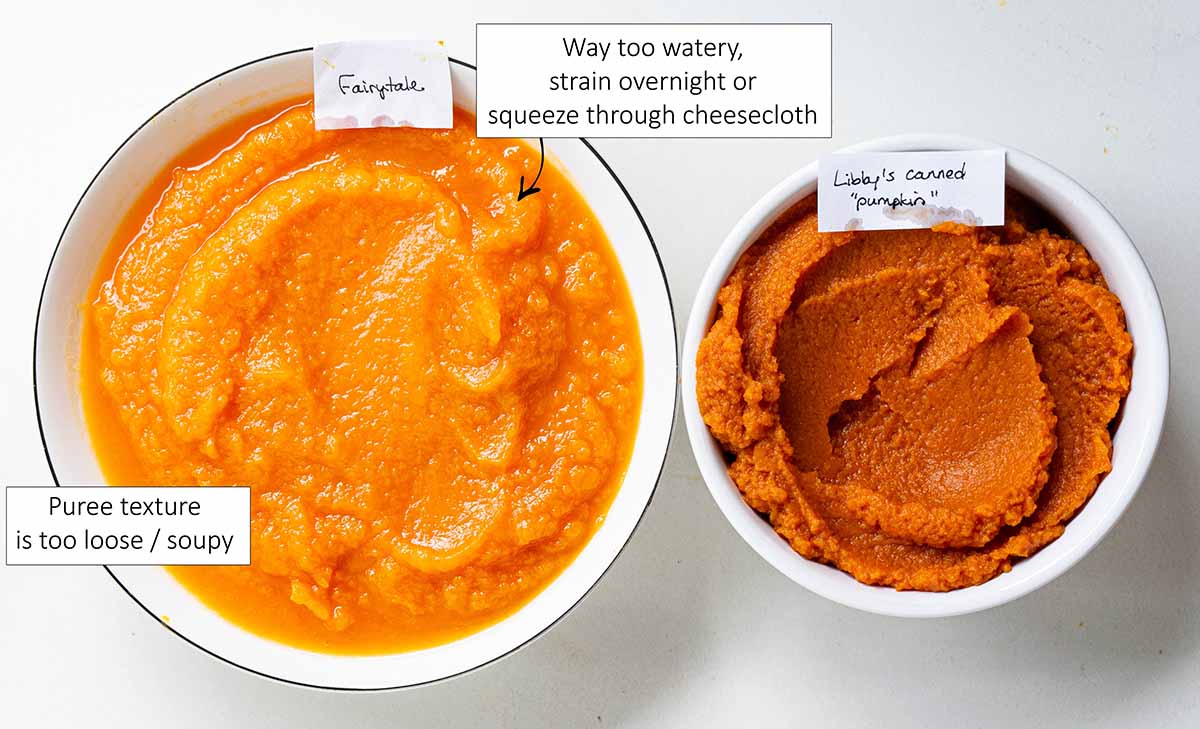
How to know if your pumpkin puree is too watery
If you're making homemade pumpkin puree to replace the canned stuff for baking, you're going to want to get it to a similar consistency.
Libby's actually has a pretty loose texture and is a little watery, but not so much that water pools when it sits.
If your pumpkin puree is too watery, you have several options:
- Pour off excess liquid: this works for purees that seem to have a good consistency but with a little water that pools
- Drain over a fine mesh sieve: don't press it through the sieve, but let it sit and drain for an hour (or even overnight in the fridge).
- Squeeze through a cheesecloth: this works for puree that's too loose and watery and needs extra help (or you just don't want to wait for the sieve).
- Cook it down: you can also cook it down in a skillet over medium heat. This may introduce caramelized flavors (if you want that), and turn it a darker color. This takes roughly 10 minutes (or more, depending on how watery it is).
How to store or freeze your puree
Your fresh, homemade pumpkin puree will be good for 3-4 days in the fridge. You can also freeze it for longer storage.
Portion out the puree in usable amounts.
- 15 ounces: To replace a can of Libby's, measure out 15 ounces by weight (about 1.75 cups). This is perfect for pies and soups.
- One-cup or half-cup portions work well for most pumpkin breads (with recipes ranging from 0.5 to 1.5 cups), and most cookie recipes only use half a cup.
- Ice cube trays to make smaller recipes.
Freeze the puree in mason jars or ziptop bags (flattened out for easy stacking).
The one thing you don't want to do is process the pumpkin puree for canning. The USDA provided directions for canning in the past, but those were withdrawn in 1989 because pumpkin puree thickness varies too much to guarantee safe canning.
The University of Illinois extension office further warns us to "Beware of social media sites or blogs highlighting the autumn season with recipes for canning pureed pumpkin or pumpkin butter as these are not evidence-based and therefore not safe for use."
Recipe
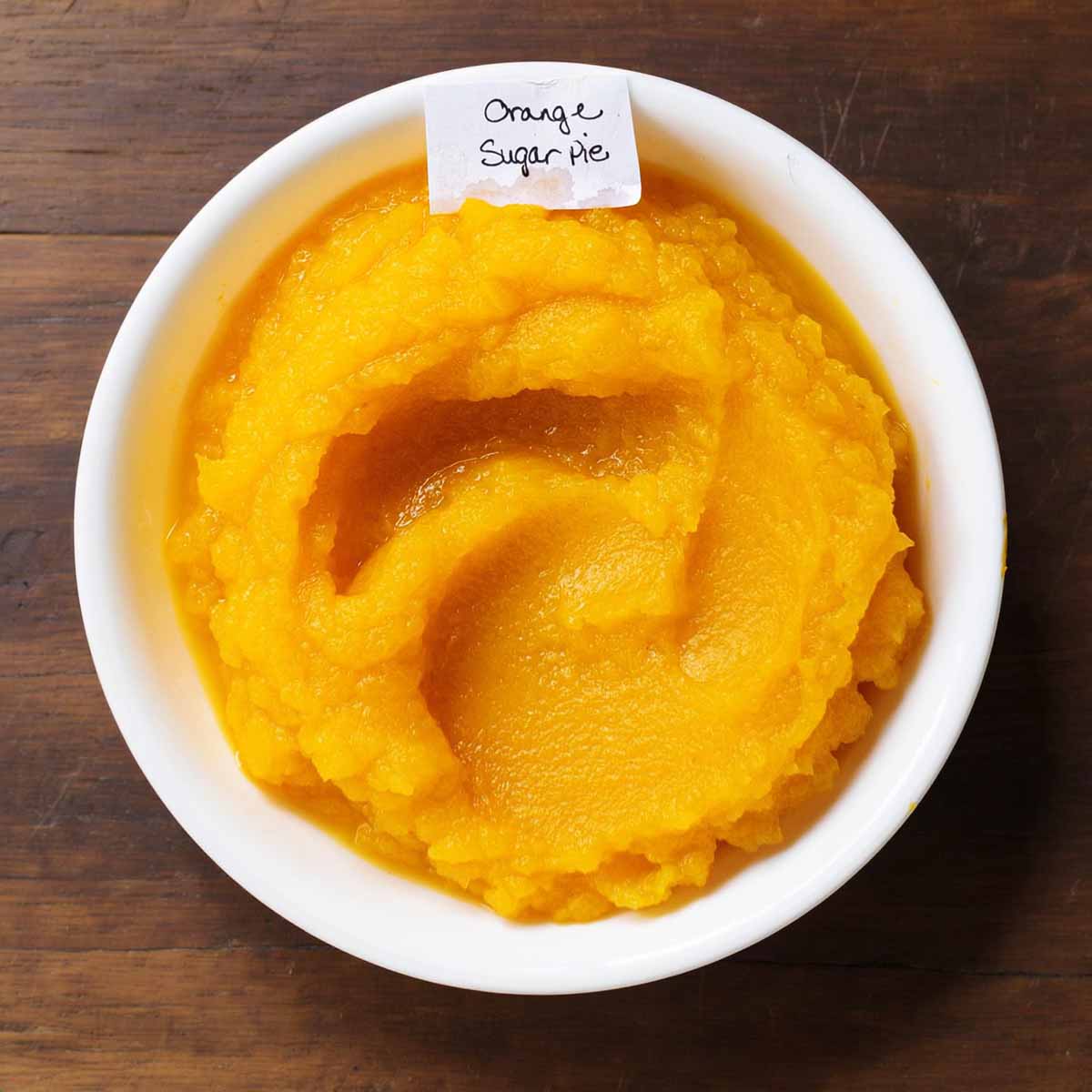
Ingredients
- 1 sugar pie pumpkin see notes for yield
Instructions
- Preheat the oven to 400℉.
- Cut the pumpkin in half:- If you can safely cut around the middle (so you have a top and bottom half), it's easier to scoop out the seeds for roasting later. - If you cut it into a left and a right half, cut next to the stem (it's too hard to cut through).
- Line a baking sheet with a piece of parchment paper and place both pumpkin halves, cut side down, onto it. Transfer the baking sheet into the oven (it's okay if it's not fully preheated).
- Bake for 45-60 minutes, until the flesh is very soft. You can check by poking a fork through the skin and wiggling it back and forth to feel for resistance. If it feel grainy, let it keep cooking. It should feel mushy.
- Remove from oven. Once cool enough to handle, see if the skin will peel off. If not, flip flesh side up to continue to cool and vent off steam. After it continues to cool, you can scoop out the flesh without burning yourself!
- Puree the pumpkin flesh in a food processor until smooth (45-60 seconds), or press through a fine mesh sieve if you don't have one.
- If using for pie, pour off any pooling liquid before adding it to the batter, or let drain overnight in the fridge in a fine mesh strainer or over a cheese cloth.
Notes
Nutrition
More recipes & resources
Wondering what to make with your homemade pumpkin puree? I've got you covered.
Try these chewy, fresh pumpkin crinkle cookies, pumpkin bread, pumpkin pie, pumpkin donuts, or anything else that calls for pumpkin puree. You can sub in homemade puree for recipes that call for canned.
Leave a Reply