Pumpkin bread is a forgiving place to start baking with fresh pumpkin. You'll make the pumpkin puree from scratch by roasting a sugar pumpkin until it's soft enough to mash by hand, then pouring off any water that pools.
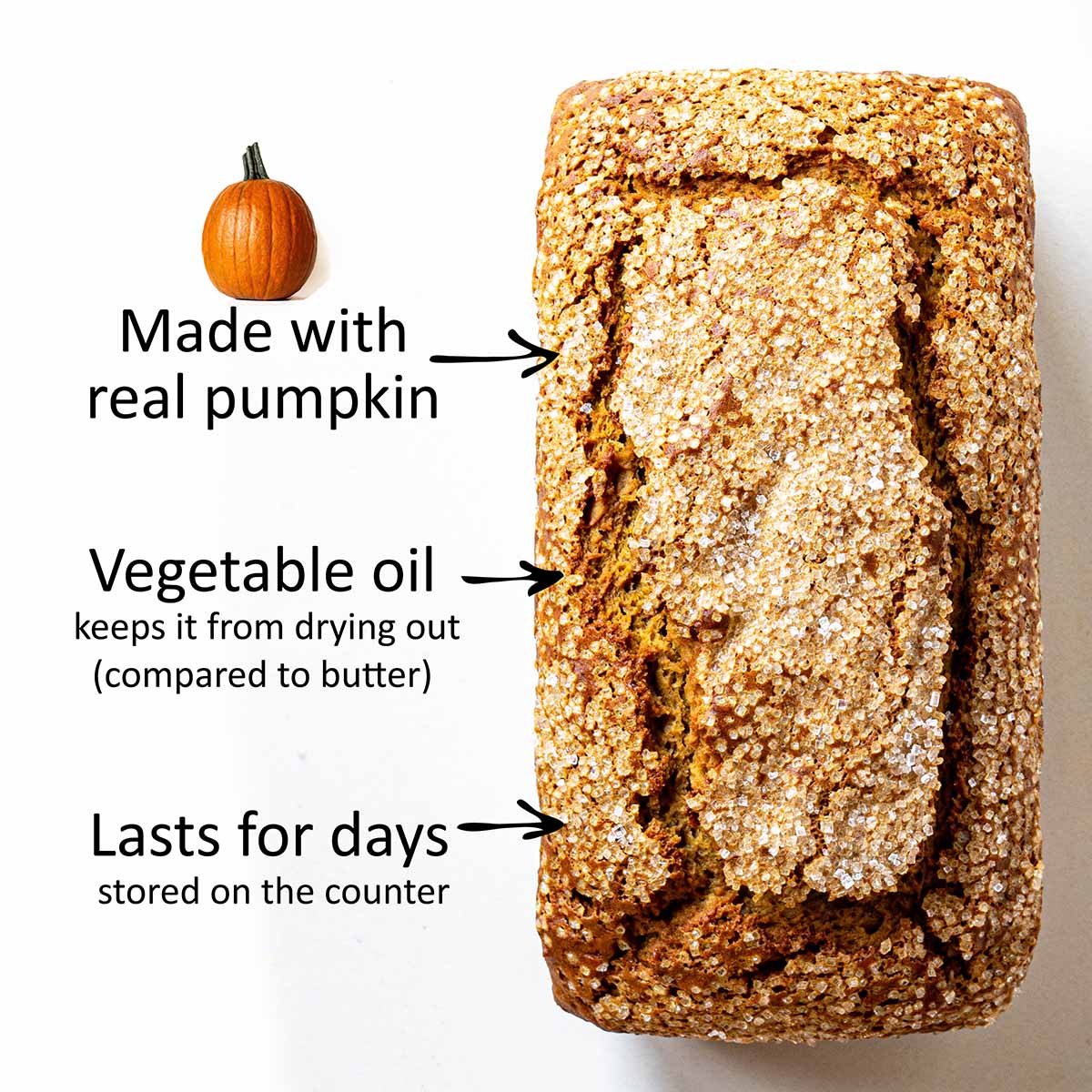
This pumpkin bread has a moist, tender crumb with a little heft. I've made it with both sugar pie pumpkins and butternut squash. Either works, you'll just need 15 ounces of homemade puree per loaf.
Pick your pumpkin
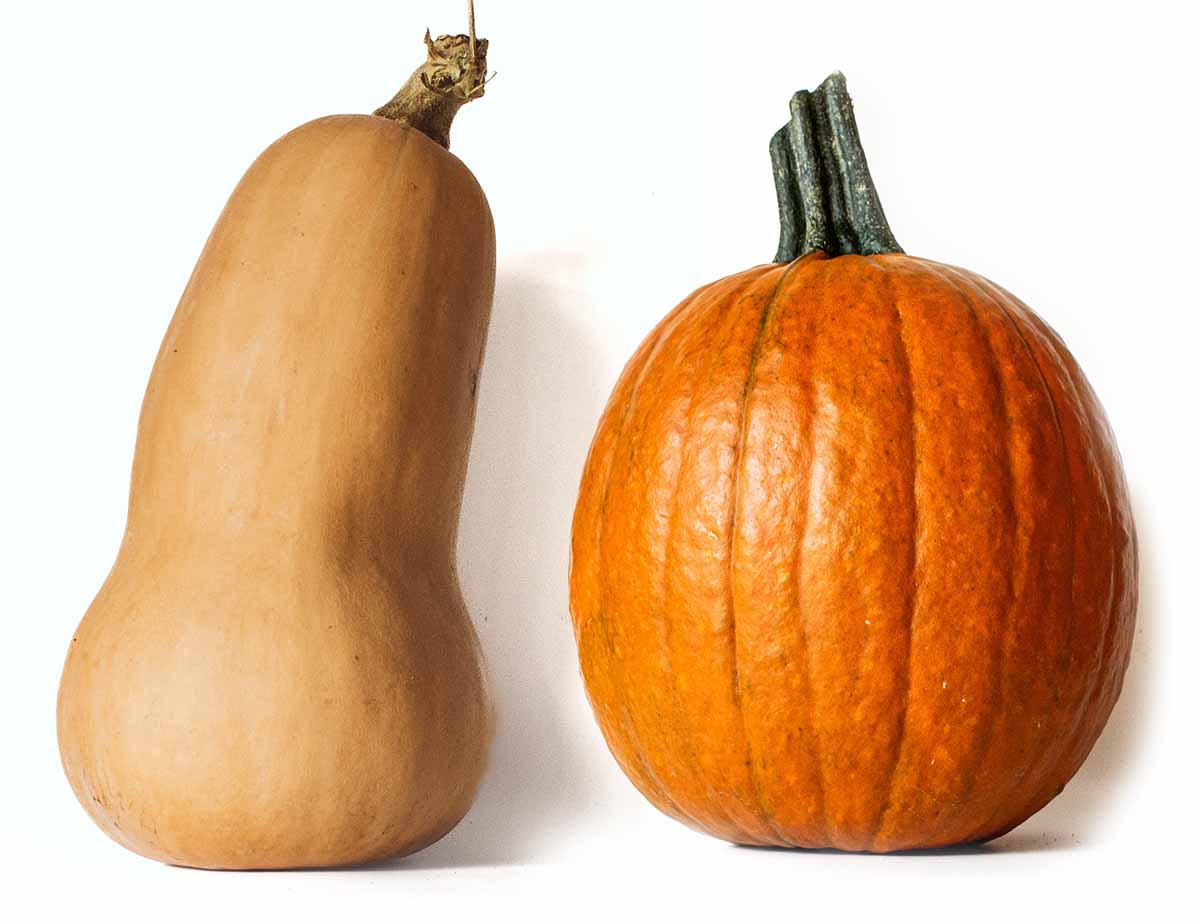
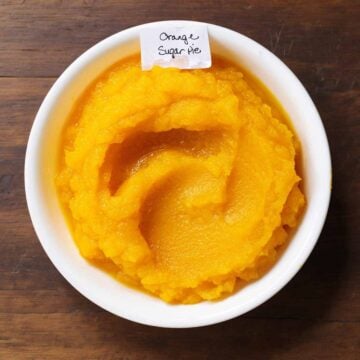
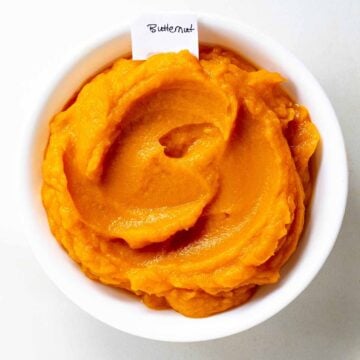
Most winter squash meant for eating (not carving) make a great pumpkin bread. My top recommendations are sugar pumpkins and butternut squash because they are easy to work with and the puree almost never needs to be drained.
This recipe uses 15 ounces of your homemade pumpkin puree (which is the same amount as canned pumpkin). That's just under a pound (and a heaping 1¾ cups).
You should only need one sugar pumpkin or butternut squash, but if you want to make two loaves, you'll probably need two pumpkins.
- Sugar pumpkins average around 3 to 3.5 pounds, which will give you about 1.5 pounds of puree (roughly 3 cups).
- A medium butternut squash weighs around 2.5 pounds and yields about 1.5 pounds of puree (roughly 3 cups).
The photographs of the recipe are all from a pumpkin bread that I made with sugar pie pumpkin puree, but I've also tested it with butternut squash puree.
Roast the pumpkin until it's soft enough to mash
Making pumpkin puree from scratch isn't hard, and most of the time is hands-off while you wait for it to cook.
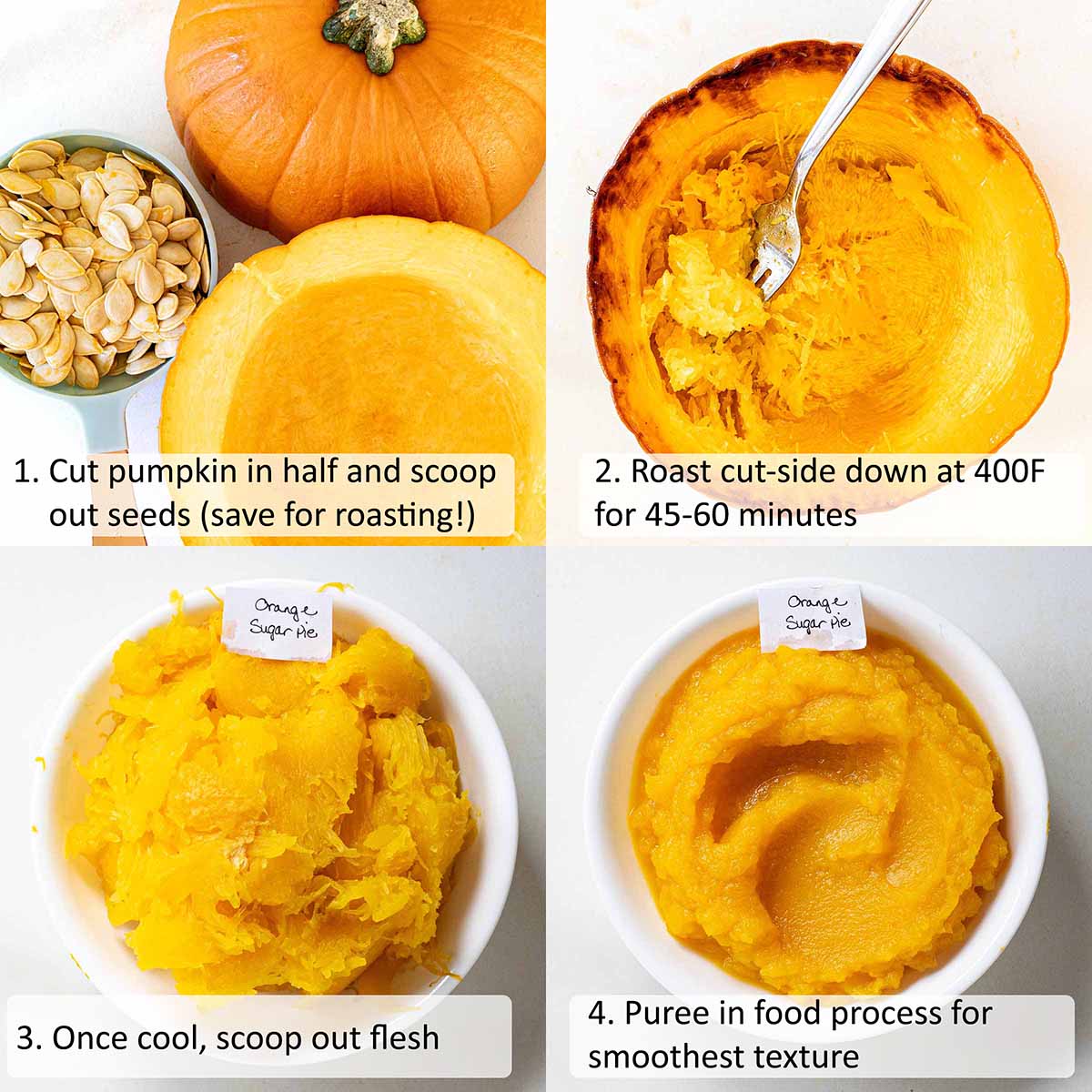
- Cut the pumpkin in half and scoop out the seeds.
- Place it cut-side down on a parchment-lined baking sheet (to prevent sticking and burning).
- Bake at 400°F for 45-60 minutes, until the flesh is extremely soft and gives no resistance. To check, poke through the skin with a fork and wiggle it around in the flesh.
- Remove from oven to cool and scoop out flesh.
- Puree in a food processor or mash with a potato masher.
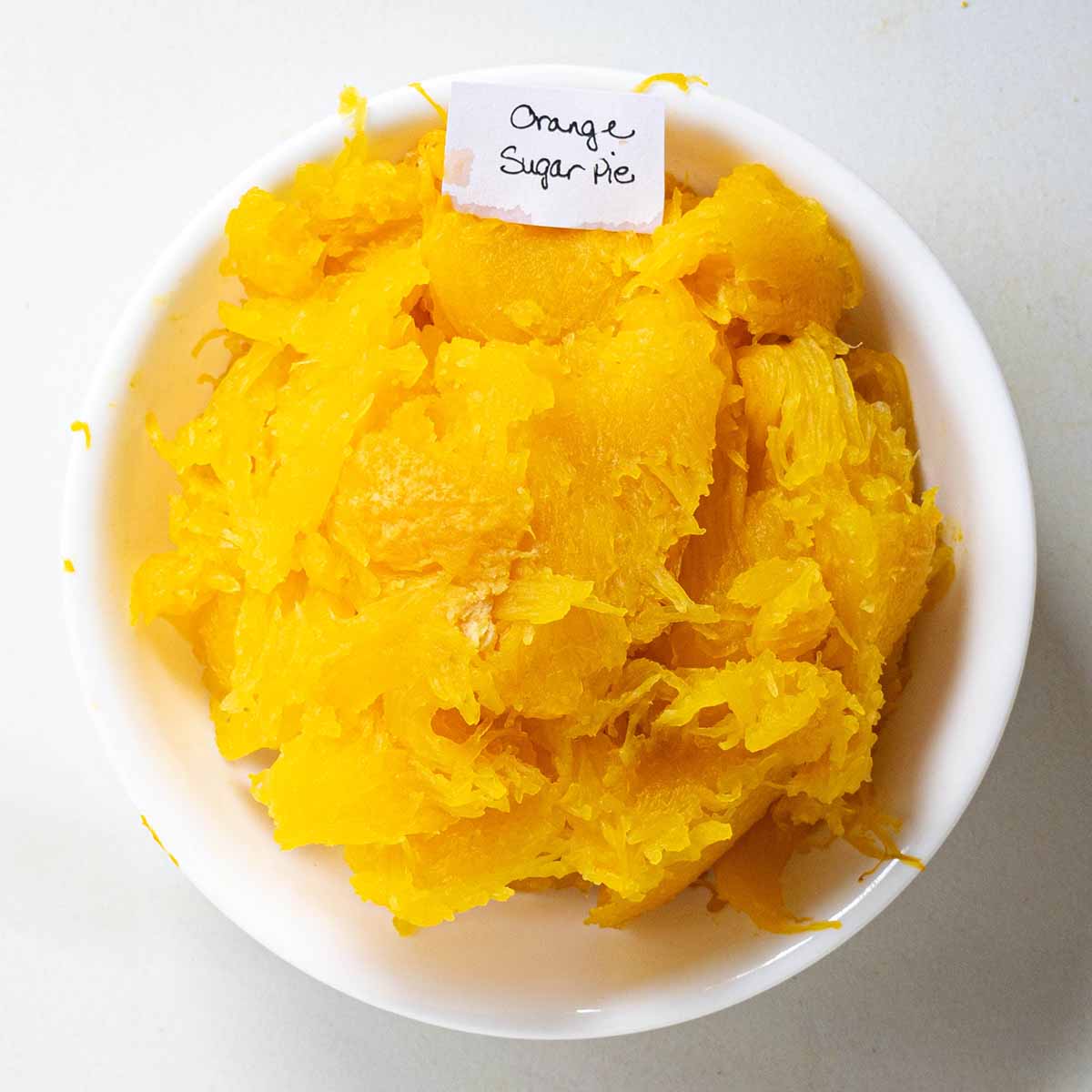
Mash it by hand and pour off any pooling water
When using homemade pumpkin puree in a pie, you want it to be as smooth as possible so a food processor is the best choice. However, for pumpkin bread, it just has to be well mashed, sort of like bananas for banana bread.
This saves you a lot of cleanup, since you only have to throw a masher in the dishwasher and not deal with washing all of the food processor pieces.
Can you put it in a food processor? Absolutely. If you want to save leftovers for use in pies, that's the best way to go. It's also helpful for a soup so you don't have to pull out an immersion blender.
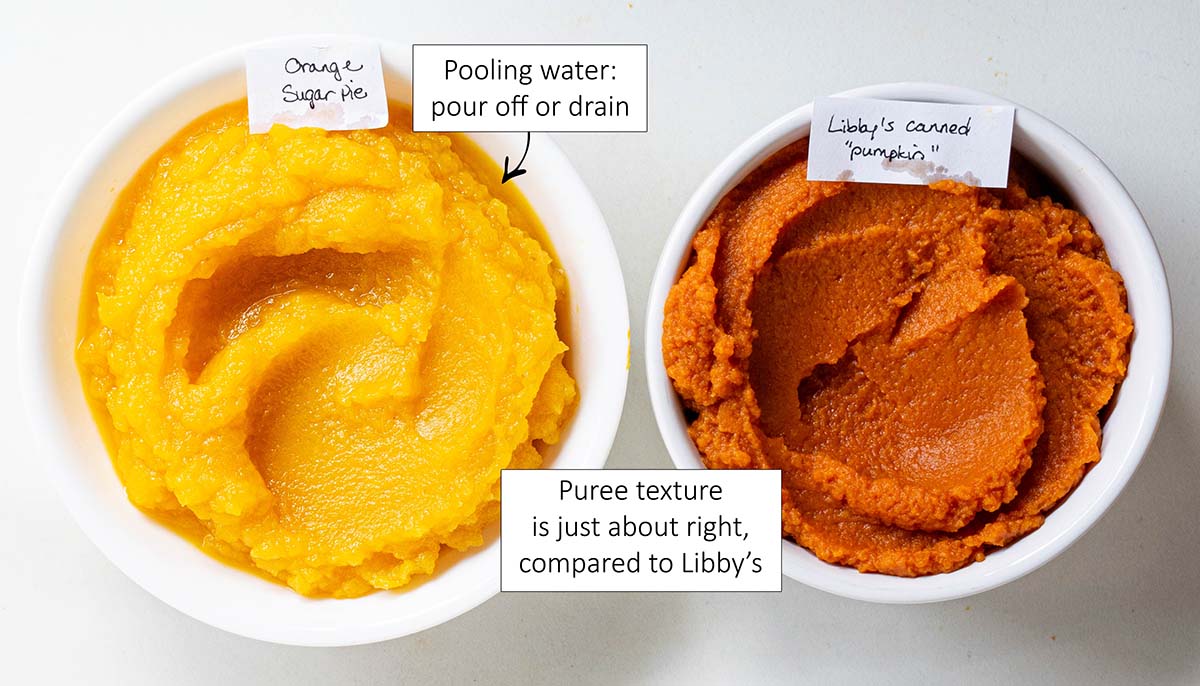
Pour off pooling water
Sugar pumpkins are usually not very watery. At most, I've had to pour off some pooling water before adding it to the pumpkin bread. However, I haven't ever had to squeeze out excess water or do anything crazy.
Quick breads are pretty forgiving, making them a great option for learning to bake with fresh pumpkin.
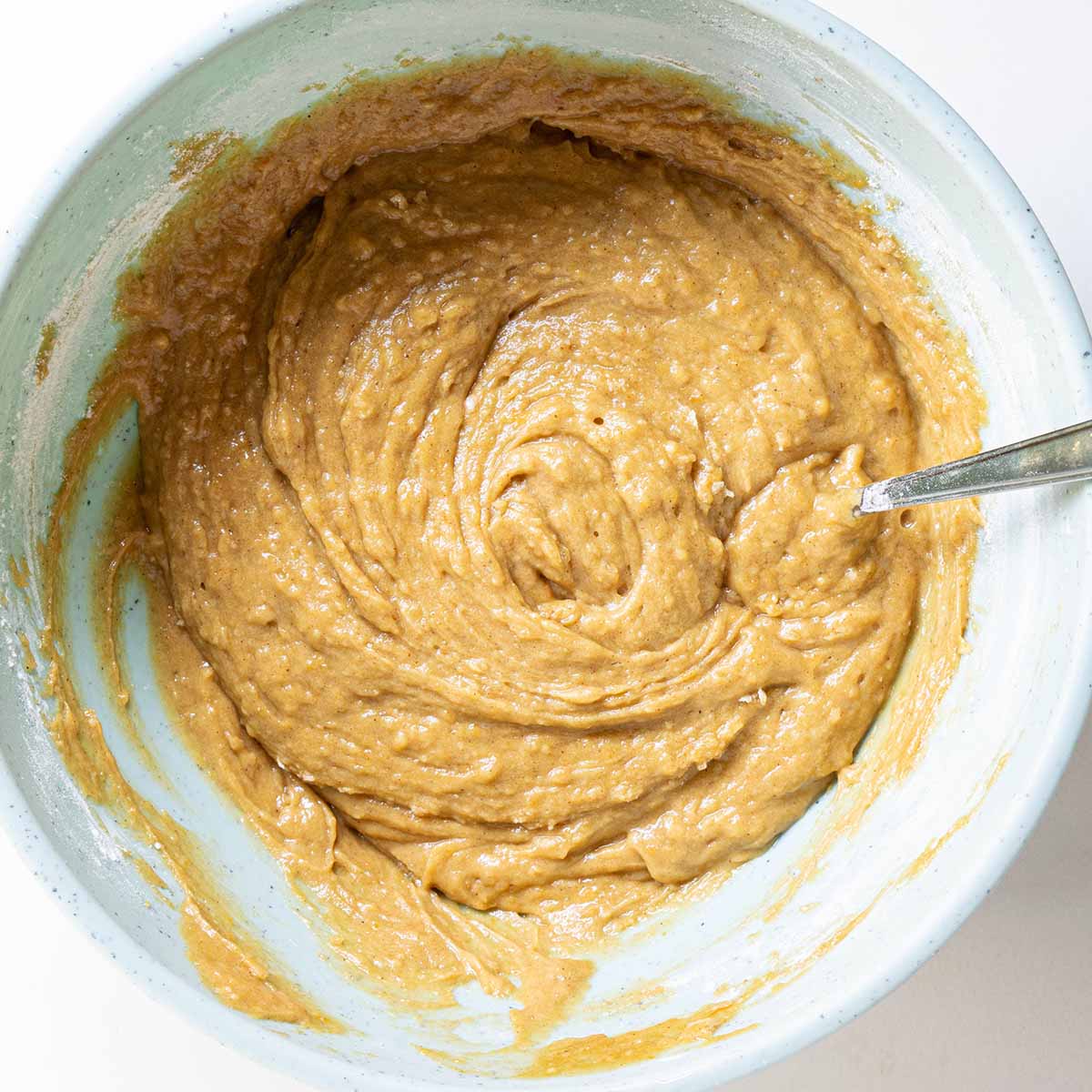
Measure 15 ounces for the pumpkin bread batter
You should have excess puree, even with just a single sugar pumpkin or butternut squash. Measure out 15 ounces (a heaping 1 ¾ cup), after pouring off pooled water, to use in the batter.
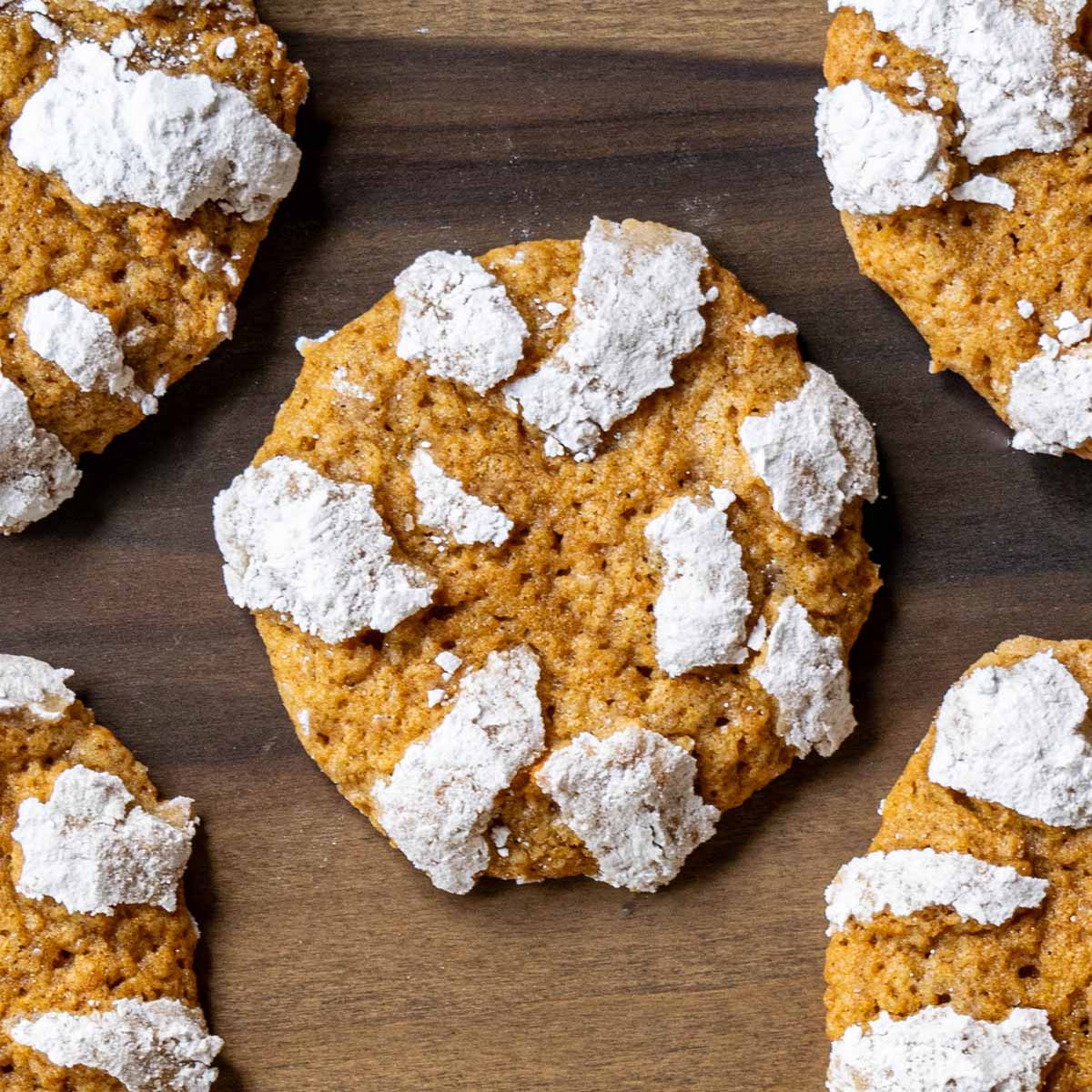
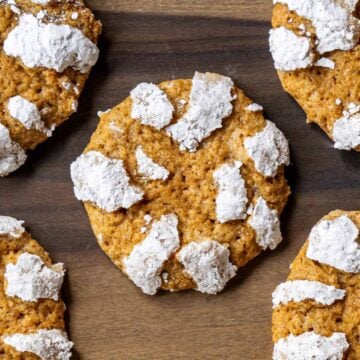
If you have just a little leftover, don't throw it out. These pumpkin crinkle cookies only need a half-cup of the puree. The recipe was made with fresh pumpkin (not canned).
Make a large batch of puree and freeze leftovers
You can make the puree ahead of time and store it, covered, in the fridge for several days. Or use it up and make a second pumpkin bread to give to a friend (or freeze the loaf, whole).
You can also make a large batch and freeze the extra puree for future use if you want. I was able to fit 3 sugar pumpkins on a large baking sheet. Or just throw the extra in a pasta sauce or soup.
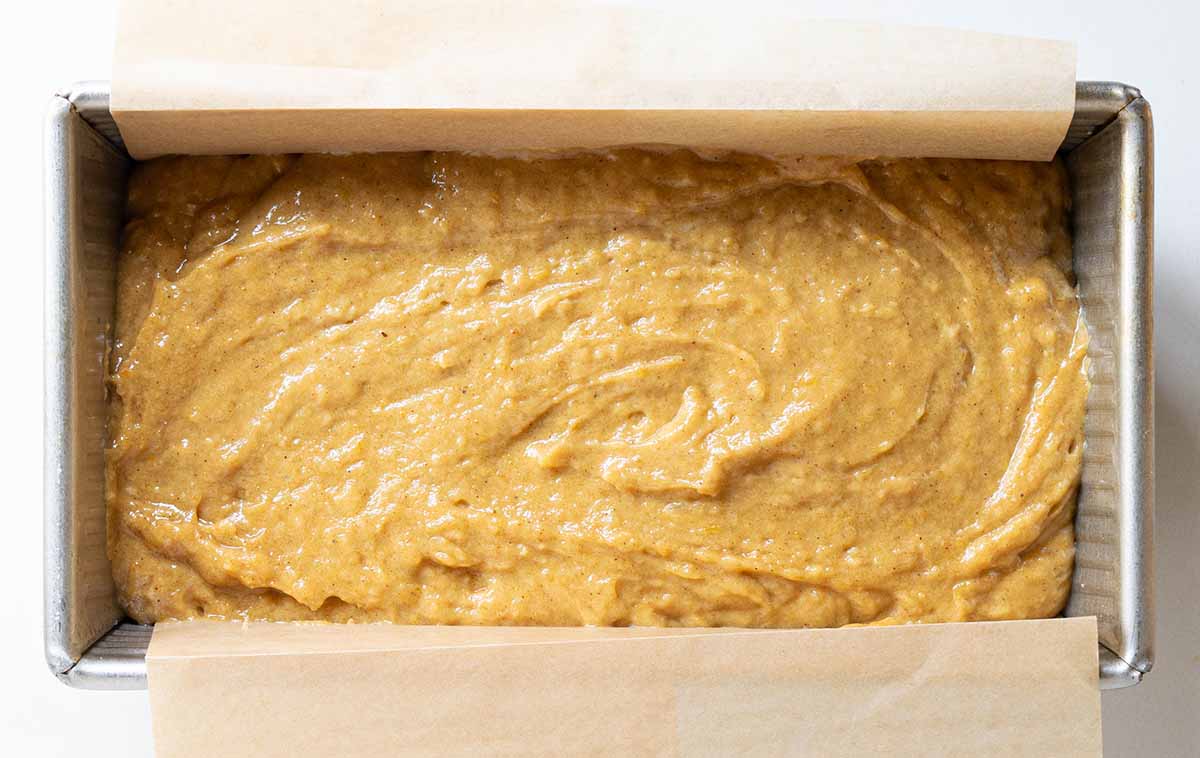
What to expect for the batter and texture
Now that you have the fresh pumpkin puree ready, you make the batter just like any other quick bread. You can even use this interchangeably with any other pumpkin bread recipe.
Batter
The batter is on the thicker side for this recipe. I mix it all in one bowl, starting with whisking the wet ingredients together really well, then adding the dry ingredients.
If you want to add in chocolate chips or nuts to the batter, go ahead. Add in anywhere from ½ to ¾ of a cup.
Cook it until the internal temperature reaches 200-210°F. If you haven't used an instant-read thermometer for baking yet, you're in for a treat. I never have over or under-baked quick breads, muffins, or pies anymore.
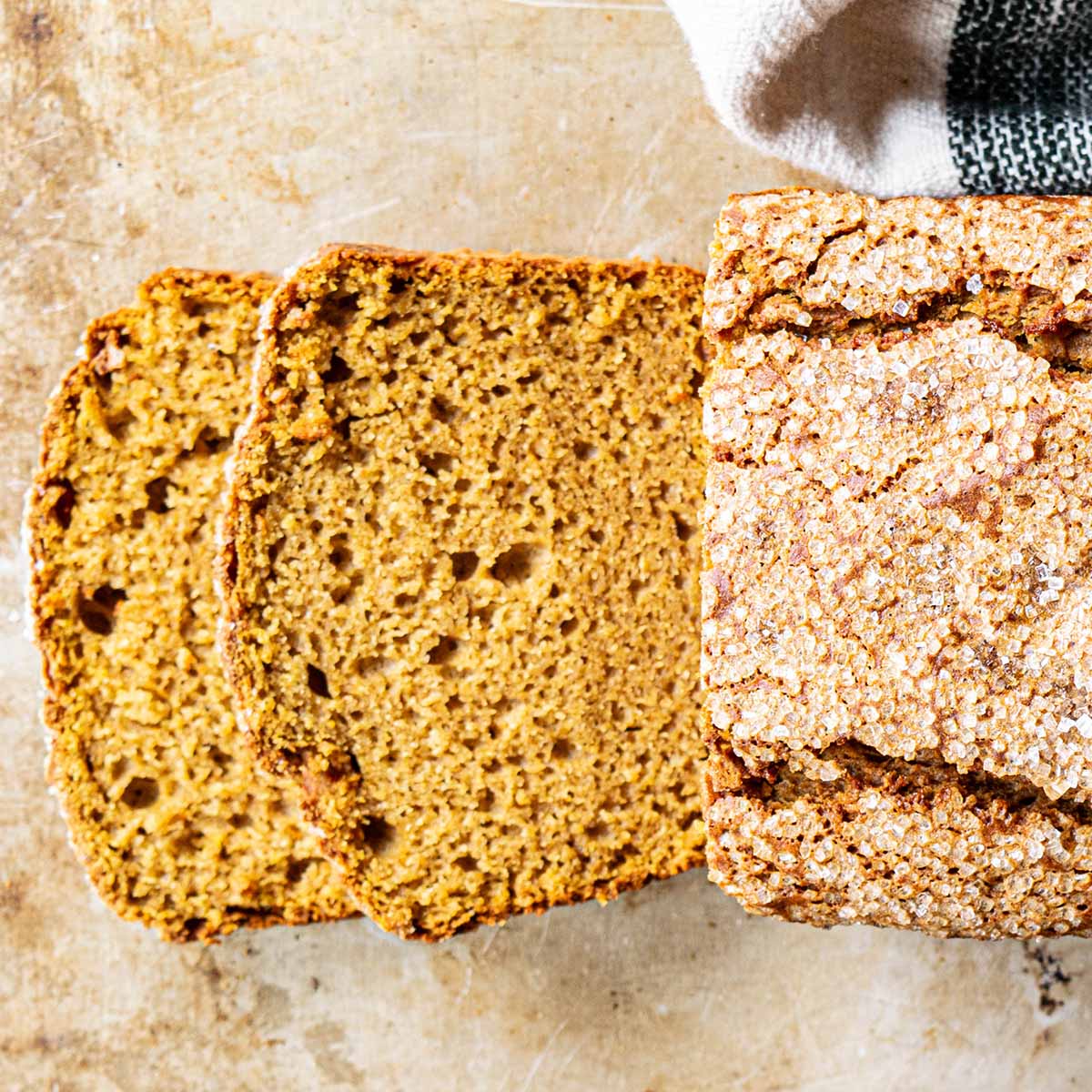
Texture
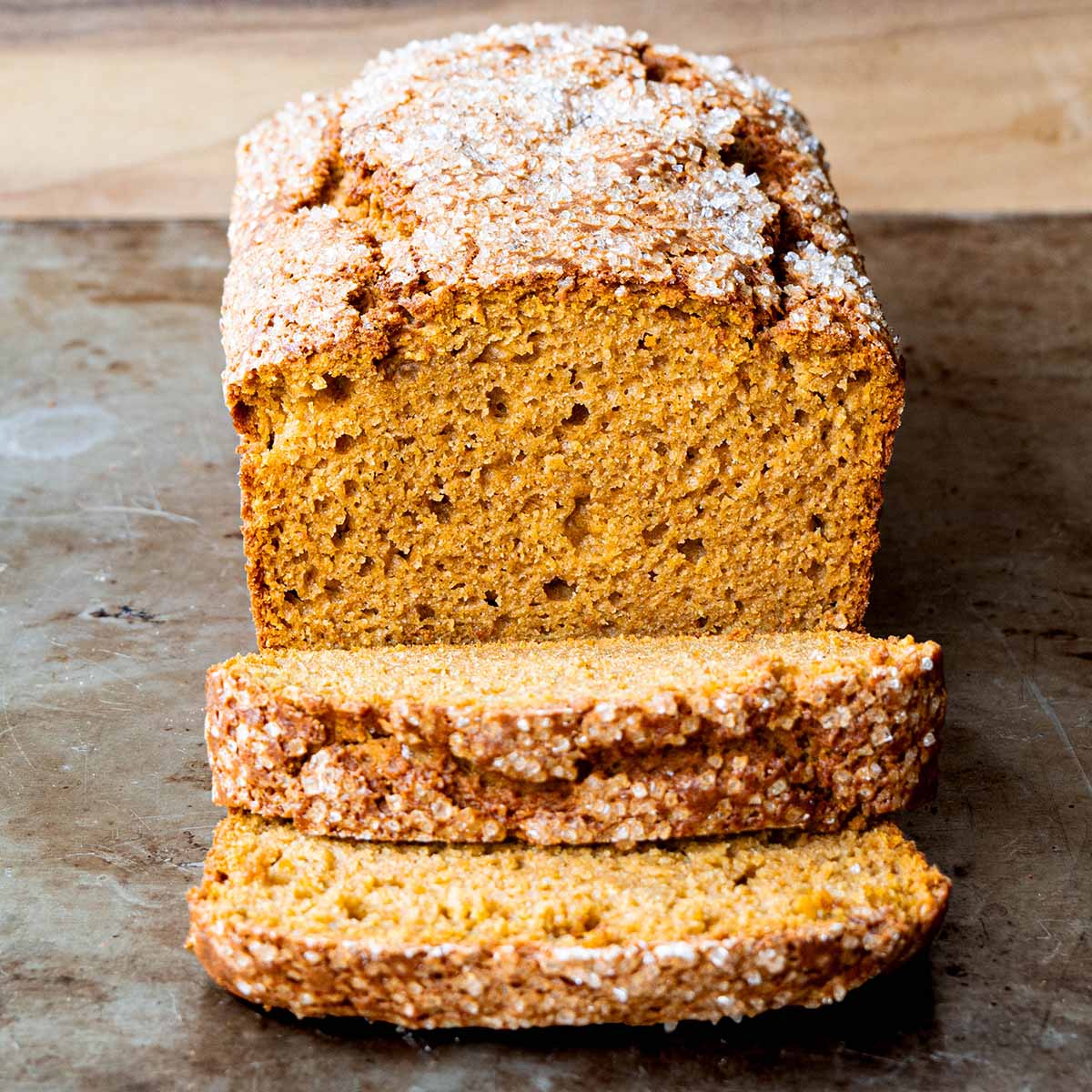
The finished pumpkin bread isn't light & fluffy or heavy & dense. It sits in between.
It also sits between dry and moist, with the vegetable oil keeping it on the moist side, especially after several days. Whereas recipes made with melted butter end up on the drier side.
Recipe
Ingredients
Fresh pumpkin puree
- 1 sugar pumpkin to make 15 ounces of pumpkin puree
Flour & spices
- 1 ¾ cup flour 210 grams
- 1 ½ teaspoon baking powder
- ½ teaspoon baking soda
- 1 ½ teaspoon cinnamon
- 1 teaspoon ginger
- ½ teaspoon salt
- ¼ teaspoon cloves
- ¼ teaspoon nutmeg
Wet ingredients
- ½ cup vegetable oil
- ½ cup granulated sugar
- ½ cup brown sugar
- 3 large eggs
Optional sugar coating
- 1 tablespoon turbinado sugar
Instructions
Make the fresh pumpkin puree
- Preheat & prep pumpkin: Preheat the oven to 400℉. Line a baking sheet with parchment paper. Cut the pumpkin in half and scoop out the seeds, place them cut-side down on the parchment paper tray.
- Bake for 45-60 minutes, until the flesh is very soft. Check it by poking a fork through the skin and wiggling it around in the flesh. You shouldn't feel any resistance and it shouldn't feel grainy.
- Remove from oven. Once cool enough to handle, see if the skin pulls off. If not, flip it and scoop out the flesh.
- Mash the flesh really well or puree it in a food processor. Measure out 15 ounces and add it to a large bowl for mixing.
Make the quickbread
- Prepare loaf pan: Lightly grease an 8x4 or 9x5 loaf pan and line the bottom and two sides with parchment paper (to make a 'sling' for easy removal). Greasing first helps the parchment paper stick.
- Mix wet ingredients: In your large bowl, vigorously whisk the pumpkin puree and wet ingredients together for a full minute. You want to evenly disperse the oil and add some air to the mixture.
- Add in dry ingredients: Sprinkle the baking soda, baking powder, and spices over the wet mixture and give it a brief stir. Add in the flour and stir with a spoon until just combined - you should not see any flour streaks. (Do not whisk the flour in, you don't want to overmix it).
- Optional sugar top: Sprinkle turbinado (or any coarse sugar) over the top if desired.
Bake for 50-65 minutes at 400℉ until the bread reaches 205-210℉
- Bake until a toothpick comes out clean, or the internal temperature of the bread reaches 205-210℉. (I always use an instant-read thermometer for baking so I never have an over- or under-baked quickbread).
- Let cool for 5 minutes then remove from the pan with the parchment paper sling and finish cooling on a wire rack. Slice once fully cool (or the slices fall apart when cutting).
- Store in an airtight container on the counter for up to 4 days. Or freeze.
Notes
- Butternut squash: 1 medium
- Honeynut squash: 3-4 small
- Fairytale pumpkin: 1 medium (yields 4 cups, enough for two loaves)
Nutrition
More pumpkin recipes & resources
If you want to make some other pumpkin bread versions, you can follow these recipes and sub in your fresh pumpkin puree.
- Swirl pumpkin bread (with molasses) by Savory Nothings
- Chocolate marble pumpkin bread by Sally's Baking
- Streusel pumpkin bread with a maple glaze from Butternut Bakery
- Cranberry pecan pumpkin bread from Mom on Timeout
For other pumpkin and winter squash recipes that use homemade pumpkin puree:
Leave a Reply