Making a Thanksgiving roast chicken has several advantages over turkey. It takes less time, less space, and is easier to cook without drying out.
Most chickens are between 3-5 pounds and will make 4-6 servings, perfect for a small crowd.
I've also partnered with my favorite source of sustainable meat, Seven Sons Farms, for Thanksgiving. I wanted to help make your meal more affordable when budgets are tight, while also introducing you to a really great source of humanely-raised meat.
Get a free chicken (and more!) with a big discount they are letting me offer my readers for the month of November. The information is after the recipe card, and I hope you take them up on it and give them a try.
Jump to:
Recipe
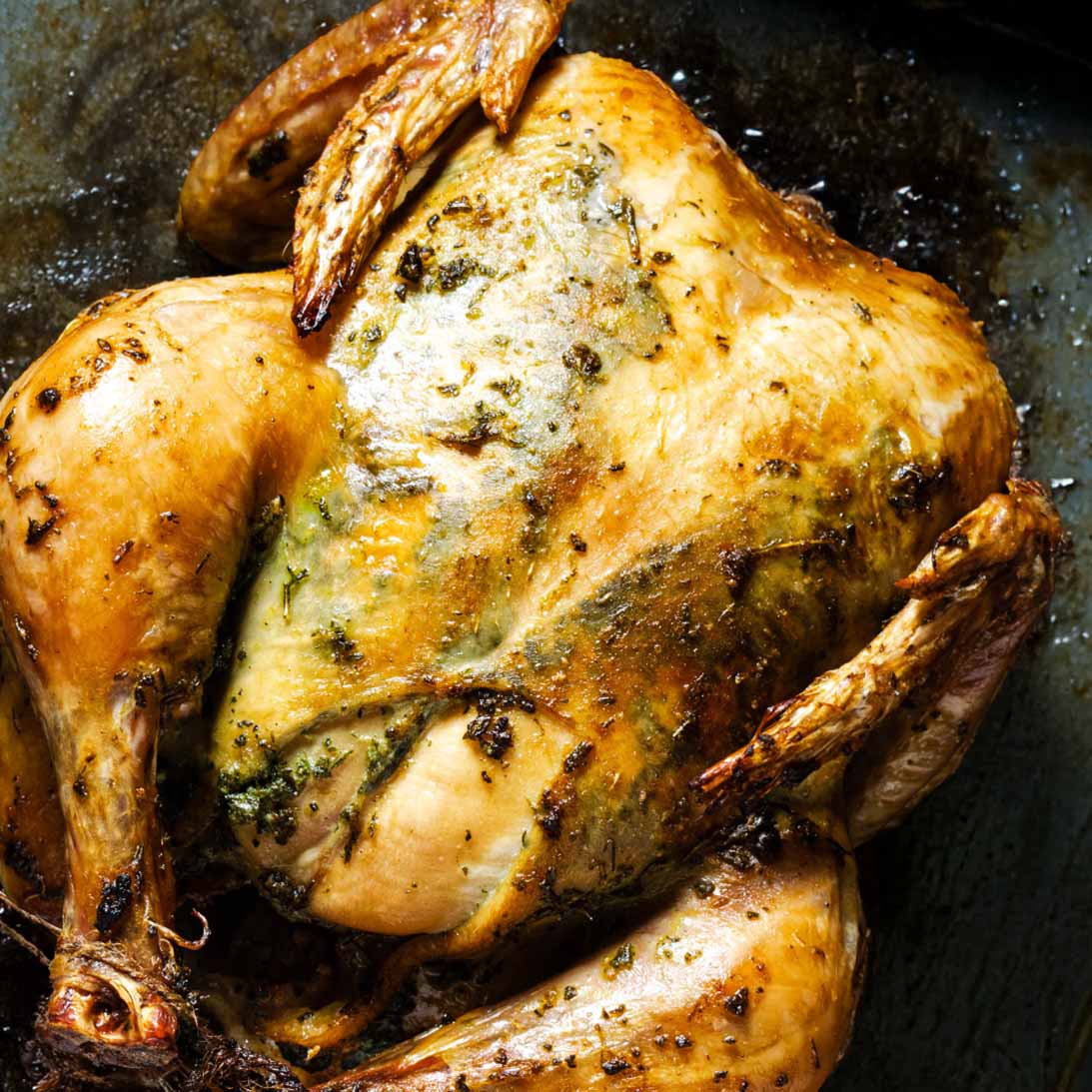
Ingredients
Garlic herb butter
- 2 cloves garlic
- 1 bunch chives
- 8 sprigs fresh thyme
- 4 sprigs fresh rosemary
- 4 sprigs fresh sage
- ½ teaspoon pepper
- 8 Tbs butter softened
Chicken
- 4 lb chicken
- 1 Tbs salt
- ½ of herb butter from above
Instructions
PREHEAT
- Preheat the oven to 425 with convection and place an oven safe skillet in it to preheat too. (Don't have a convection setting? Preheat to 450℉)
MAKE THE HERB BUTTER
- Remove rosemary, sage, and thyme from their stems. Mince all herbs and garlic (a food processor makes quick work of this). Add the softened butter and mix until combined.
- Set aside half of the herb butter to use with Thanksgiving dinner. You don't want to contaminate it in the next step.
ROAST THE CHICKEN
- Rub the chicken: Take your half of the butter for the chicken and add 1 tablespoon salt. This extra salt makes the chicken tasty (but your don't want it in the butter you set aside or it would be TOO salty for eating on bread, etc).Rub the now-salted herb butter under the skin of the chicken, and a little on top of the skin. Then finish with the last little bit on top of the skin.
- Place a thermometer in the chicken, if using a leave-in thermometer (highly recommended). Place it in the center of one of the chicken breasts, to the thickest part that will cook the slowest.
- Use hot pads and take the skillet out of the oven. Place the chicken in the skillet, breast side UP. Return to oven.
- Cook for about 10 minutes at 425℉ - the skin should be golden brown. Reduce the heat to 350 to finish cooking until the breast reaches 160℉ and legs are 170-185℉. If the skin is browning faster than the chicken is cooking, go ahead and reduce the temperature earlier. The chicken should cook in a total of 45-60 minutes (for a 3-4 pound bird).Dark meat is safe to eat at 165℉, it's more succulent when cooked to 185℉. But don't let the breasts overcook when trying to get to a higher dark meat temp.
- Remove the skillet and chicken from the oven. Cover the handle with a glove hot-pad so you (or a guest) doesn't accidentally grab it (ask me how I know!). Take the chicken out and let rest 15 minutes before carving. Resting lets the meat reabsorb the juices (but you might lose some skin crispiness, so you can separate the skin right away if that's important to you).
OPTIONAL: MAKE A PAN GRAVY
- Pour the pan drippings into a heat proof container. Wait a few minutes for the fat to float to the top. Skim off 2 Tbs of fat and return it to the pan, with the burner on medium-high.
- Meanwhile, skim the remaining fat off the top of the dripping and discard the fat. Keep the drippings! If you don't have 1 cup of drippings, add chicken stock to get 1 cup.
- Add 2 Tbs flour to the pan and whisk constantly until it smells toasty. Then slowly whisk in 1 cup of the drippings. Add a splash of wine and a teaspoon of mustard and continue to whisk.
- Remove from heat and serve.
SERVE
- The chicken has rested, so now you can carve it. Serve with spare herb butter or pan gravy.
Nutrition

Thanksgiving serving size
First, let's start off with how much actual meat is on a roast chicken. You can assume 60% of the weight of a raw chicken is meat, and you'll get about twice as much white meat as dark meat. The meat also loses about 25% of its weight as water is cooked out of it.
This means that a 3 pound chicken has about 1.8 pounds of meat when raw, but only 1.3 pounds after it is cooked.
A serving is generally considered to be 3-4 ounces, which is actually pretty modest for a big meal like Thanksgiving. Let's assume 6 ounces (which doesn't include leftovers).
If you assume 6 ounce servings, you can do an easy calculation: take the weight of the bird, and add one. That's your number of servings. As you can see in the chart below.
| Weight of whole chicken | Cooked meat | Servings |
|---|---|---|
| 3 pounds | 1.3 lbs (21 ounces) | 3-4 |
| 4 pounds | 1.8 lbs (29 ounces) | 5 |
| 5 pounds | 2.25 lbs (36 ounces) | 6 |
| Two 3-lb chickens | 2.6 lbs (42 ounces) | 7 |
Planning for leftovers
To plan for leftovers, first ask yourself how many leftover servings do you want? Add that to your number of guest servings, and that's how much you should cook.
However, I also suggest you set some chicken aside as soon as you carve it up. Put it in the fridge - out of sight. One thing that happens is if there isn't much left of a dish, people will "take one for the team" and help finish it. I see this happen all of the time when it doesn't look like enough to save (and I'm easily on that team when it comes to sweet potatoes and green bean casseroles).
Alternatively, make a lot extra. You can always freeze it, add it to a stew, make turkey croquettes, the list goes on.
Adding extra chicken
If you don't have the space to roast multiple chickens for Thanksgiving, you can also cook a few extra chicken breasts, thighs, or legs. Boneless chicken breasts are easier to carve up, but also easier to dry out.
Any of these chicken pieces can cook at any oven temperature - I know it's hard to juggle side dishes in the oven at Thanksgiving.
- A really hot oven will roast the chicken pieces faster, crisp up the skin, but dry them out easier (especially chicken breasts).
- A cooler oven (350°F), will take longer but be less likely to dry out the meat. Skin probably won't crisp up.
Here are some estimated cooking times based on your oven temperature.
| Chicken | Cook time at 425-450°F | Cook time at 350°F |
|---|---|---|
| Boneless chicken breasts | 15-20 min (often dries out) | 25-35 min |
| Bone-in chicken breasts | 25-30 min | 35-45 min |
| Bone-in thighs | 20-25 min | 35-45 min |
| Drumsticks (legs) | 20-25 min | 35-45 min |

What kind of chicken to buy
I like to treat Thanksgiving guests to fancy ingredients they might not always try for themselves. Heritage, sustainable turkeys are expensive and it's hard for pay that much, even for me (someone who spends too much on fancy food!). These types of turkeys usually start at over $100.
However, chickens are much more affordable. Sure, the sustainable ones that are actually raised in open pastures are still pretty pricey. But worth it! After buying a whole chicken for $3 (on sale) at a large grocery chain and chewing through the spongiest texture I've ever encountered, I was fed up. Since then, I buy almost all of my meat from a sustainable farm for the better quality and healthier profile.
I've sourced my meat from Seven Sons farms since 2022. They are a family-run farm that treats the animals, land, and community with respect. Their pasture-raised chickens (and their little homes) are moved daily to follow behind the grazing cattle. (They like to eat the bugs that are exposed in the dirt from all of the cow hoof marks).
Check out this article if you're interested in learning more about sustainable meat's benefits and costs.
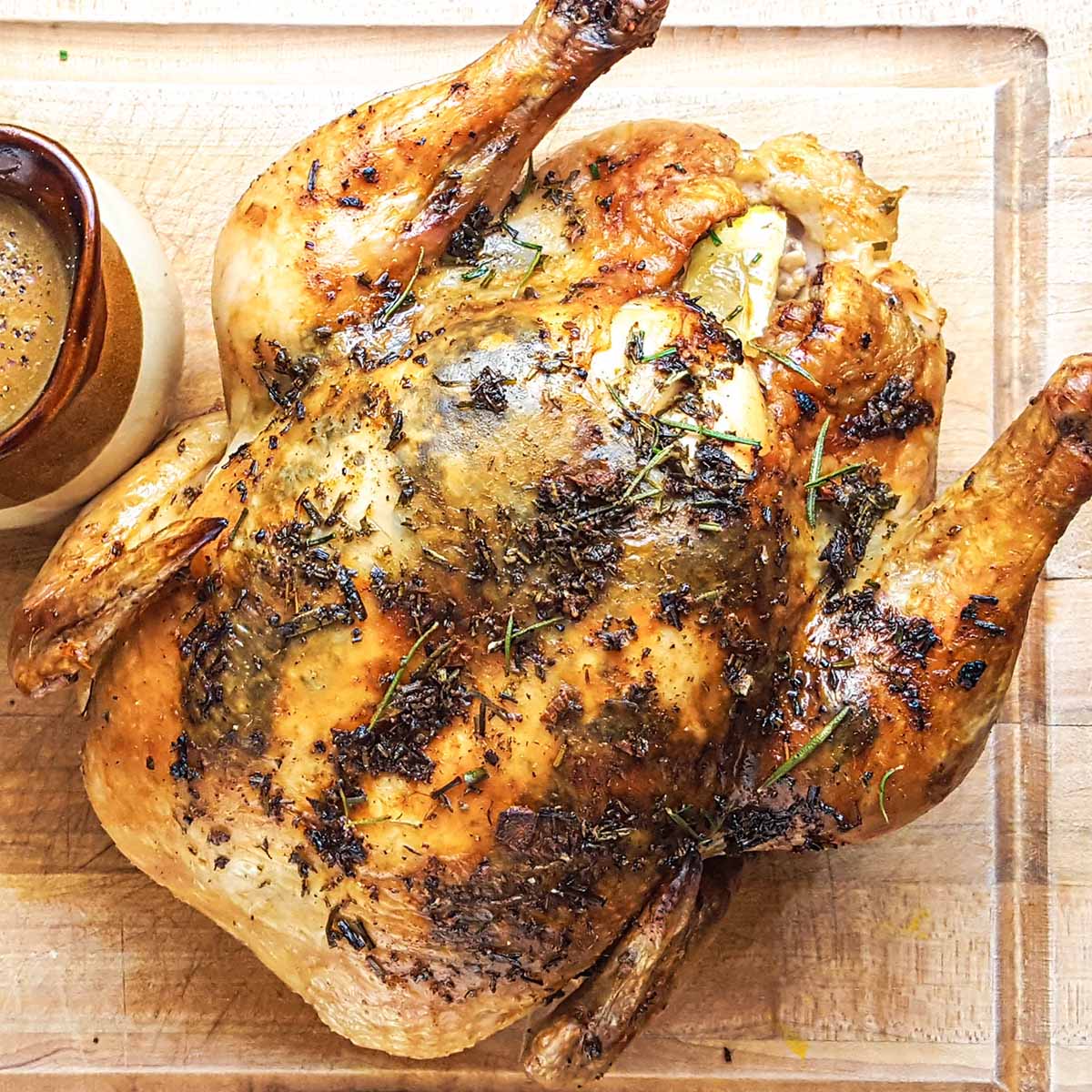
Tricks for roast chicken
First of all, I've found roasting a whole chicken results in more succulent meat than the individual parts. But even with that, there are a few tricks to making your Thanksgiving roast chicken perfect.
- Oven temperatures - to crisp skin while not overcooking the chicken
- Preheated skillet - to more evenly cook the dark meat
- Butter-herb rub - for flavor and juiciness
Oven temperatures for roasting
A hot oven crisps the skin of the chicken really well, but typically hot ovens dry out meat faster, especially lean meat. A few things help keep the moisture in:
- Chicken skin: the skin acts as a barrier for evaporation from the meat
- Butter: rubbing the chicken with fat also adds a protective layer
- Preheated skillet: this starts cooking the dark meat sooner so it can reach a higher temperature before the breasts overcook.
The other thing I do in this recipe, which was a tip from Cooks Illustrated, is to lower the temperature (to 350°F) part way through cooking. This lets the rest of the meat cook more gently, preventing it from drying out.
Also make sure to place your leave-in thermometer in the center of one of the chicken breasts while it roasts. Here's a video clip queued up for proper placement. Thermometers are essential to a perfectly roasted chicken for Thanksgiving - cooking just a couple extra minutes can increase the temperature by 5 degrees, and cooking for an 5 minutes can increase the temperature by 10 degrees, drying out your chicken.
Preheated skillet
This is a simple trick if you have a skillet to spare. Cast iron works the best because it can retain a lot of heat. Why does this matter?
The dark meat needs to get to a higher temperature than the chicken breasts in order to be tender and juicy. While the breasts only need to get to 160°F, chicken thighs and drumsticks need to get to 165°F to be safe, but 185°F for the best texture.
How do you get the thighs and drumsticks to cook faster? Put them on the preheated skillet for a heat boost while the whole chicken roasts. That's why the recipe instructs you to put the chicken breast-side-up in the pan, so all of the dark meat is touching (or really close) to the cast iron skillet.
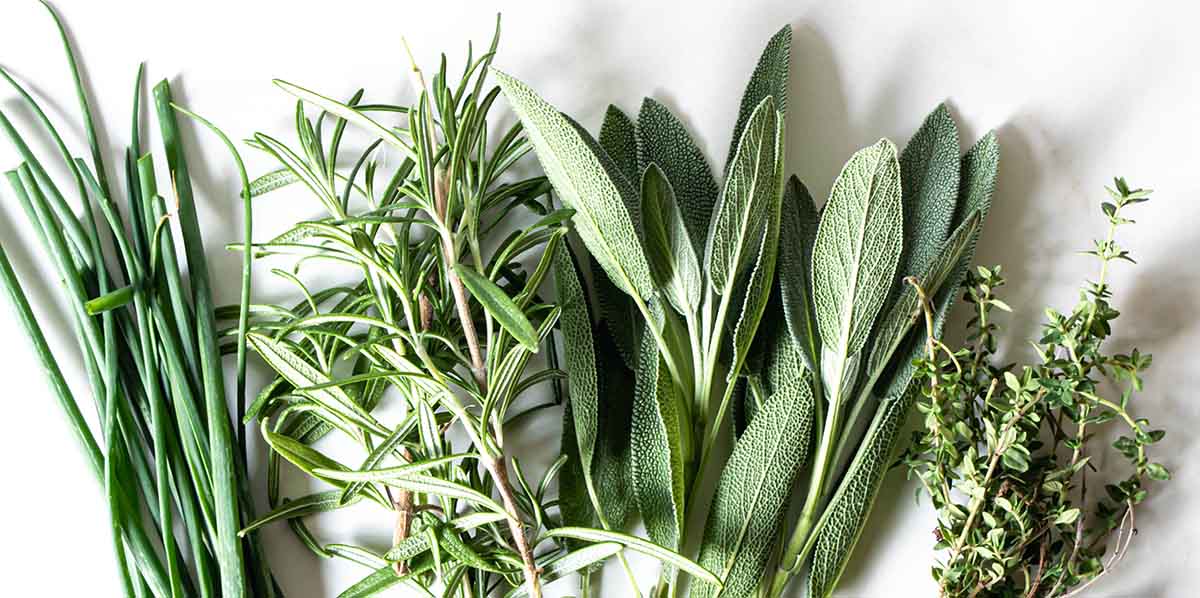
Butter-herb rub
This rub adds flavor and helps keep the chicken juicy. Some of the flavor penetrates the meat, but it is subtle. That's why most people make a pan gravy with the drippings, although you can make a very flavorful one without as well (that also uses butter and herbs - see the gravy section below).

Seasoning under the skin
If you've never rubbed spices under the skin before roasting a chicken, this section is for you. Otherwise, skim past it, as I don't expect to have any unique tips to share.

Get under the skin
Butter and herbs will melt off the top of the skin and won't penetrate to the meat. That's why you want to get the herb butter under the skin.
There's an easy spot to get under the skin - it's where the legs come together at the bottom of the breasts. You can get your fingers under the skin on each breast, while leaving it attached at the center breast bone (like the sternum).
You can also find an opening for the thighs and drumsticks near the same spot, on the bottom of the thigh.

Rub butter on top of the skin
Once you've rubbed the butter under the skin, add a light coating to the top of the skin. This will add a ton of flavor and give it a nice golden color.
That's it, you've done it!
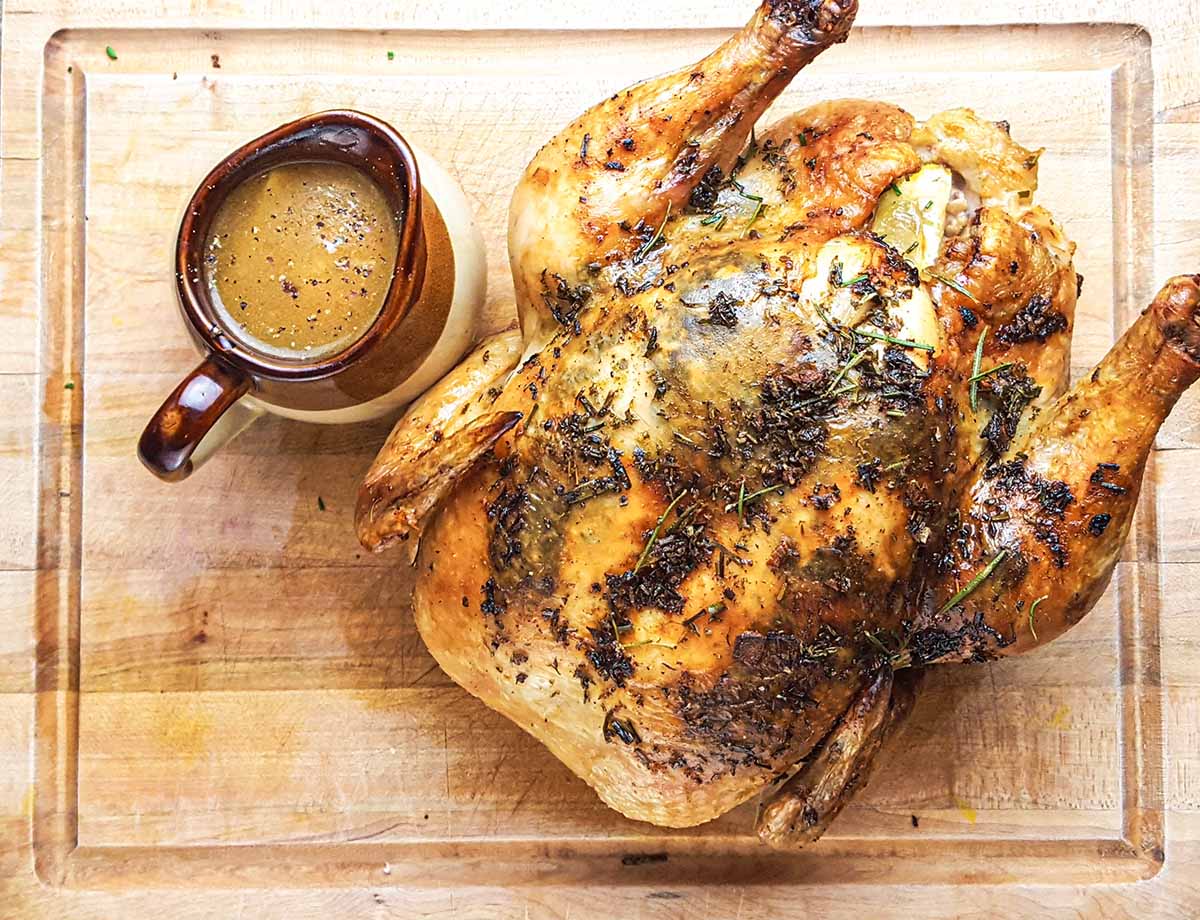
Gravy options
The pan drippings for this recipe will have some extra fat from the butter rub. It will be infused with tasty herbs, but you'll want to skim off most of the fat before using the dripping in a gravy.
If you're new to making gravy, let me assure you, it's actually quite easy. Here's a 1 minute video from the NY Times. And if you end up with lumps, don't fret, just run it through a strainer at the end.
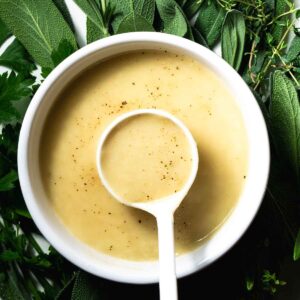
Alternatively, I have a gravy that can be made ahead of time, using butter and herbs. Make extra herb butter (or use the stuff you set aside), and add it to the pan when sauteing the shallots. Then follow the recipe as instructed, omitting the herb part later on.
More Thanksgiving recipes
Use up the leftover chicken in a Thanksgiving leftover club sandwich.
I found some other Thanksgiving roast chicken recipes that might be of interest:
- Cutting up a whole chicken into pieces, from American Home Cook
- Roast chicken with maple butter and rosemary from NYTimes Cooking (but as some commenters point out, preheat the skillet even though the instructions didn't mention it).
- A reddit post on how to make roast chicken Thanksgiving-y, from adding sage to presentation ideas.
I also have everything you need for green bean casseroles:



And for homemade cranberry sauce


And some Thanksgiving menu ideas to check out.
Leave a Reply