Squash vine borer moths lay tiny eggs, one at a time (not in clusters), making them easy to miss.
I deal with squash vine borers every single year, and over time I've come up with a routine for reliably finding the eggs.
I run through these routine checks on my plants daily (or every other day). It does take some time, it's worth the effort because removing eggs is much easier than dealing with larvae once they get inside the stem.
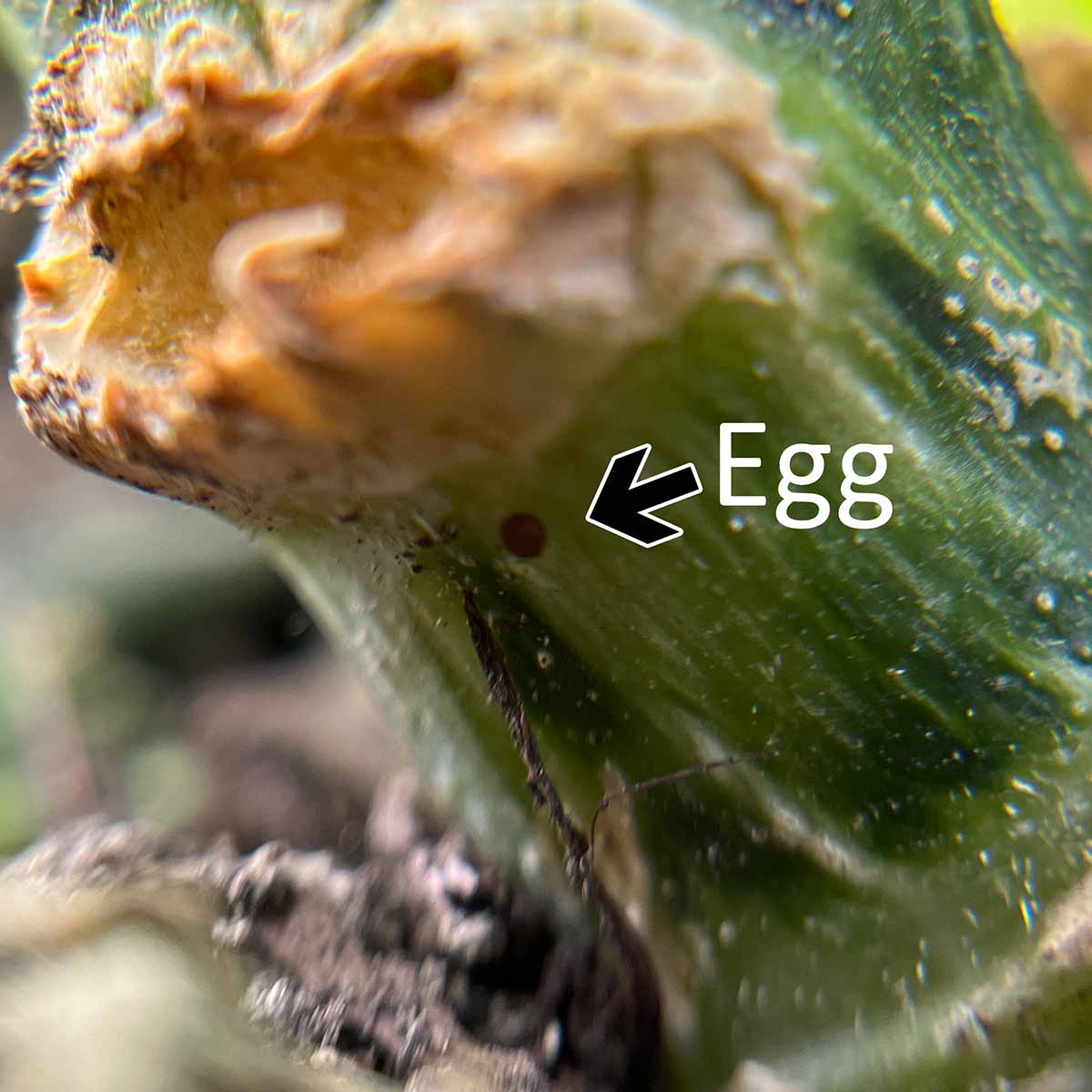
What do squash vine borer eggs look like
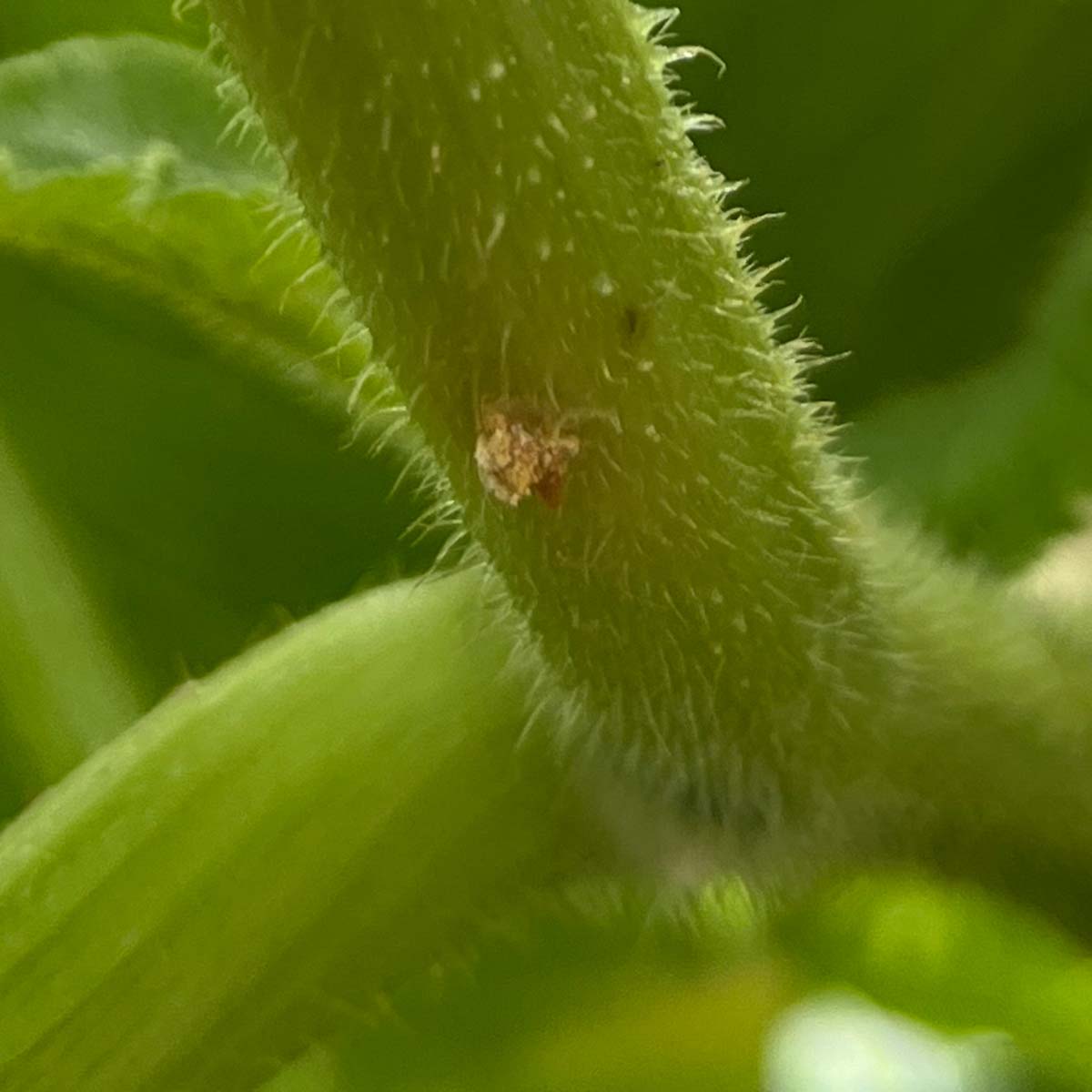
The eggs are a tiny (1mm) and look like a sharp pencil was dipped in wax then tapped onto the plant. They are a reddish-brown color, dull, and flat. When you remove them, they come off like a little flake of paint with hardly any resistance when rubbed between your fingers.
To make them even harder to find, they are laid one at a time, not in clusters or grouped. When laid near the base, they can look like a splash of dirt.
Each egg will hatch 1 larva, but that single larva can burrow into the stem and cause damage if left to continue until it matures in 4-6 weeks.
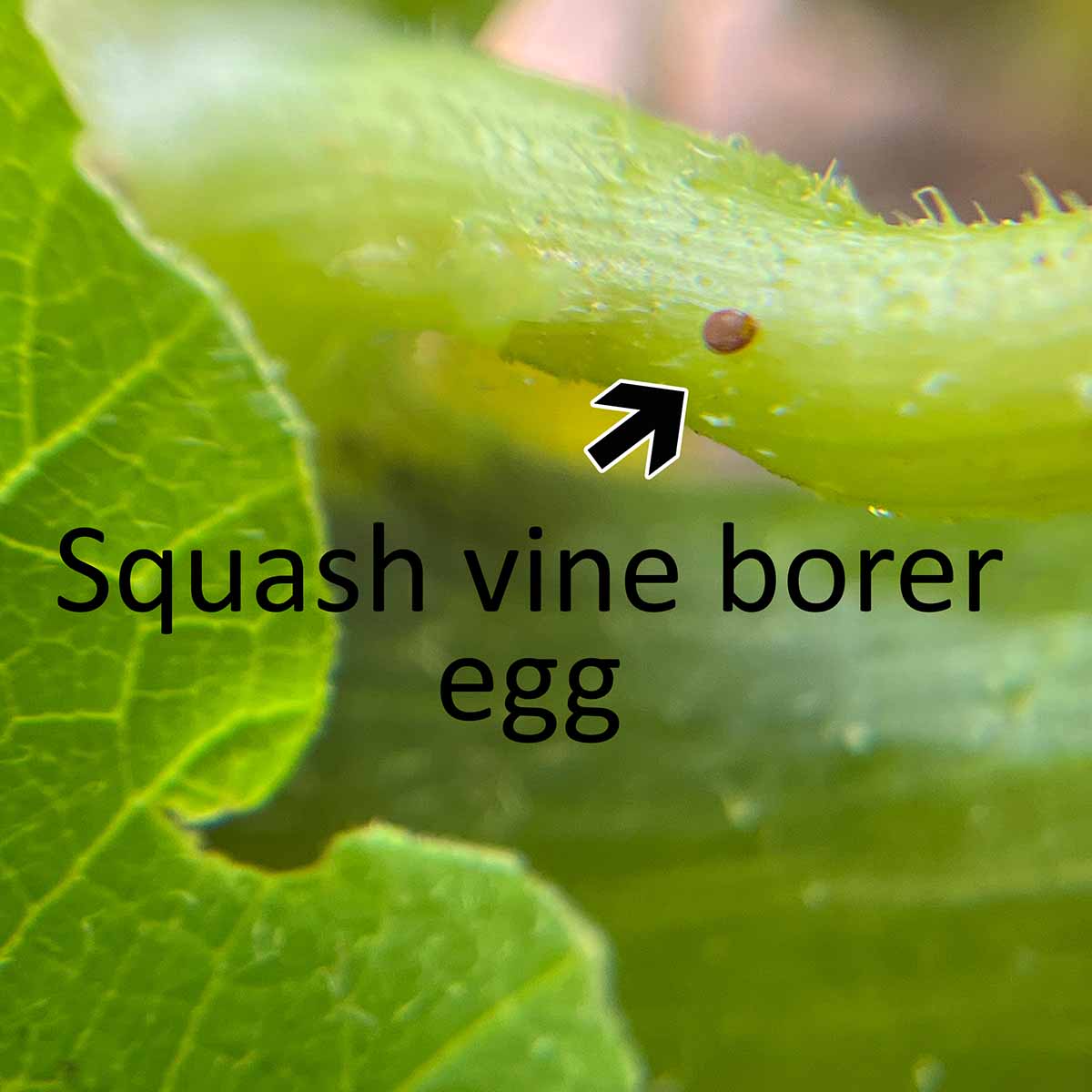
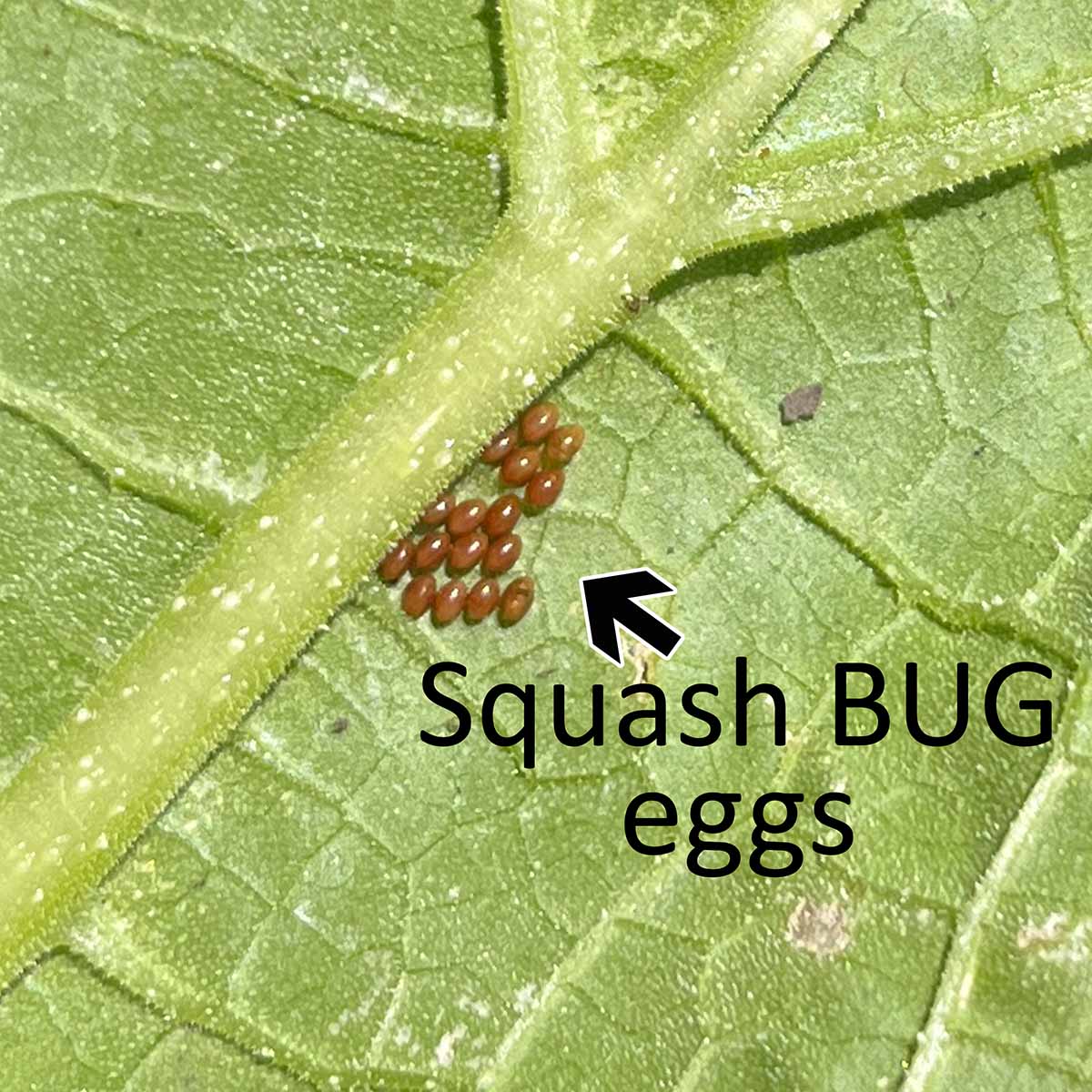
Squash vine borer vs squash bug eggs
The eggs are very similar but also different enough for you to be able to tell the difference.
| Characteristic | Squash vine borer | Squash bugs |
|---|---|---|
| Size | very tiny (1mm / 0.04in) | still tiny (1.5mm / 0.06in) |
| Shape | round & flat | oval and jelly bean shaped |
| Color | dull, red-brown | shiny bronze / copper |
| Lay | individual | clusters |
| Location | Common: stem base and along full stem, leaf stems Less common: leaves and developing fruit | Common: undersides of leaves Less common: leaf stems, very rarely on main stem |
The biggest clues are: squash bug eggs are typically laid in clusters and roll around in your hands like tiny beads (and are hard to crush with your fingers).
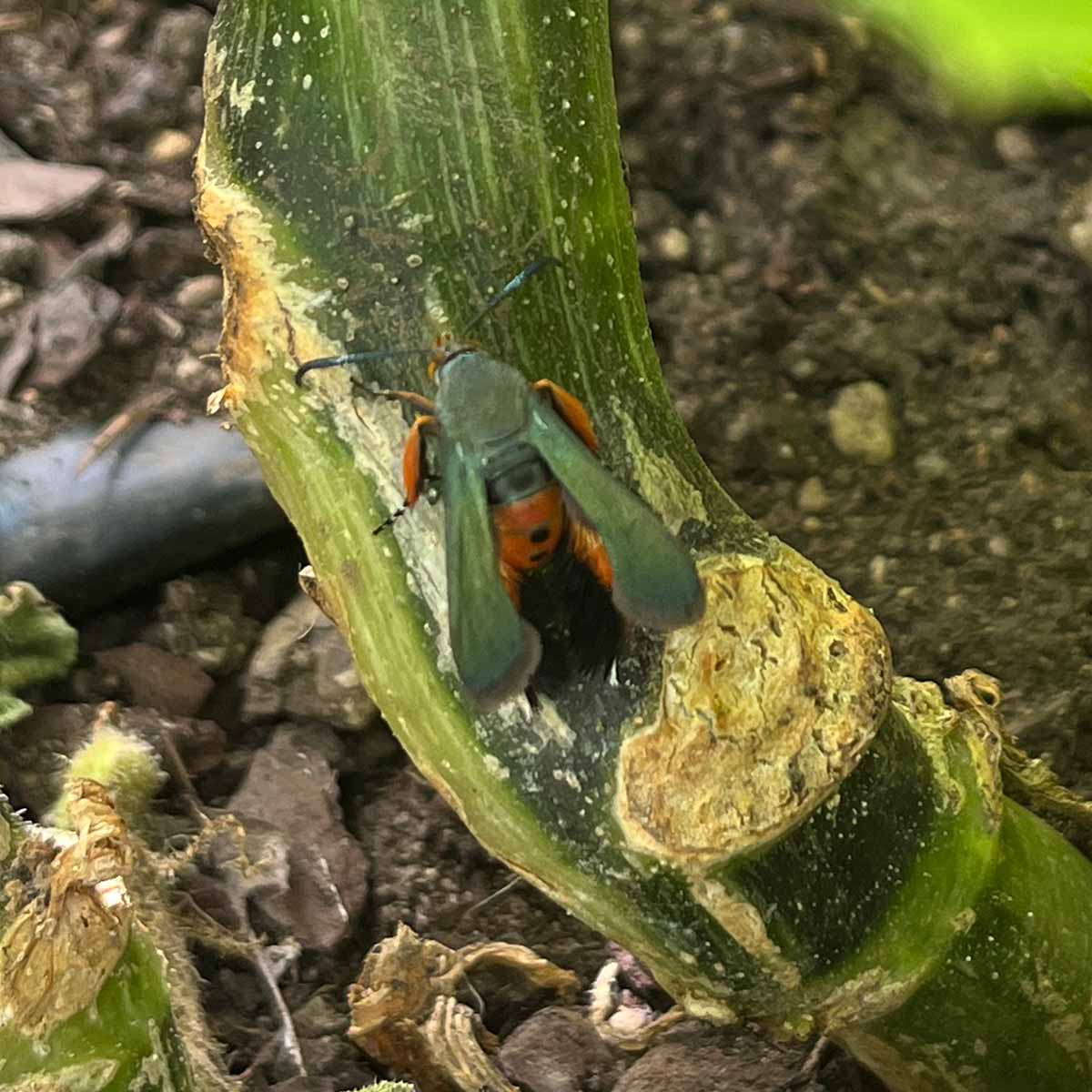
Where do the the moths lay the eggs?
The adult moths like to lay eggs at the base of the stem, but they don't stop there!
They have one or two hundred eggs to lay. While they prefer the main stem (not just the base), they can lay eggs anywhere.
Here's where I've found them in my own garden, and how common I find them in those locations:
- The entire stem (extremely common)
- Leaf nodes where the leaf meets the main stem (very common)
- Leaf stems, aka petioles (common)
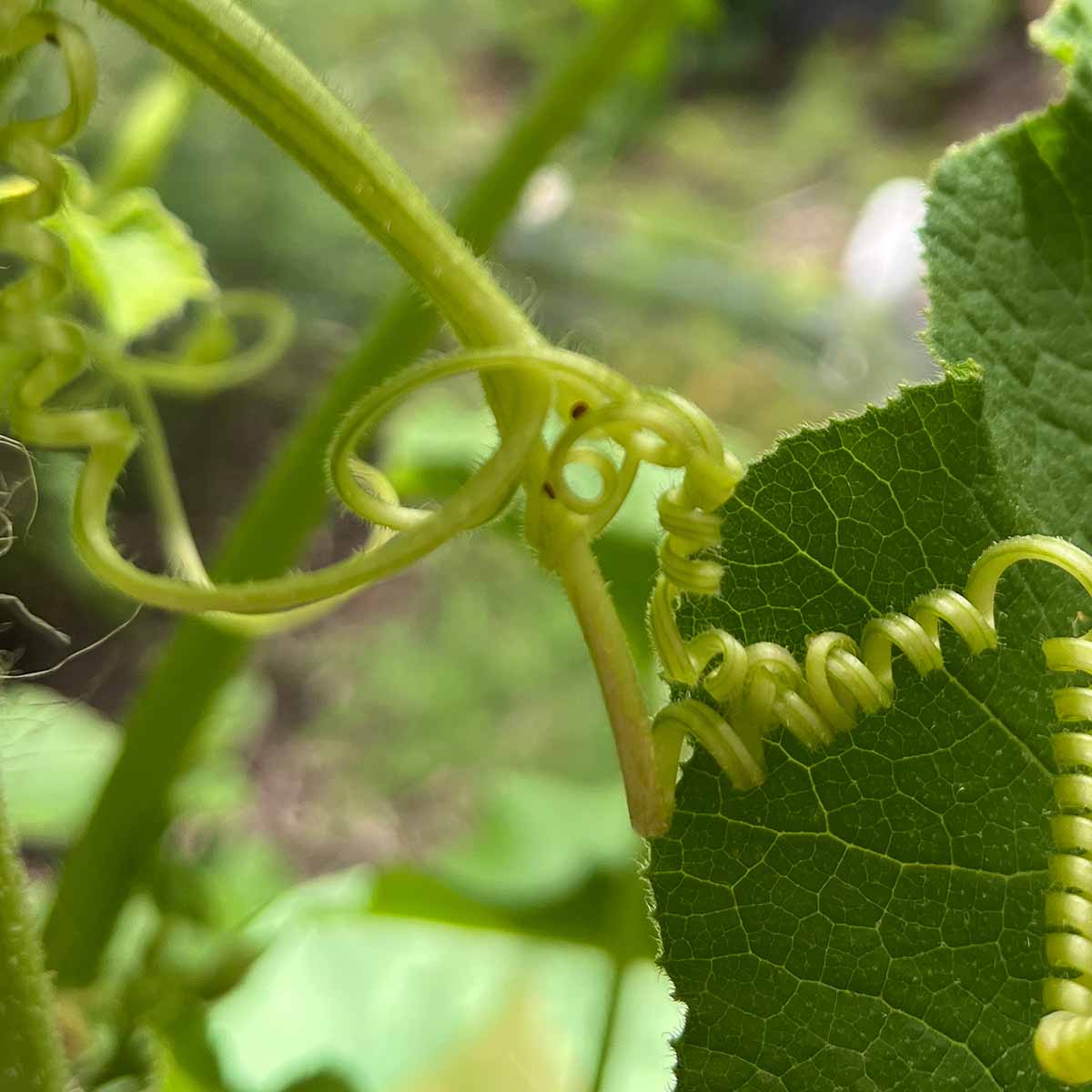
- Tendrils (less common)
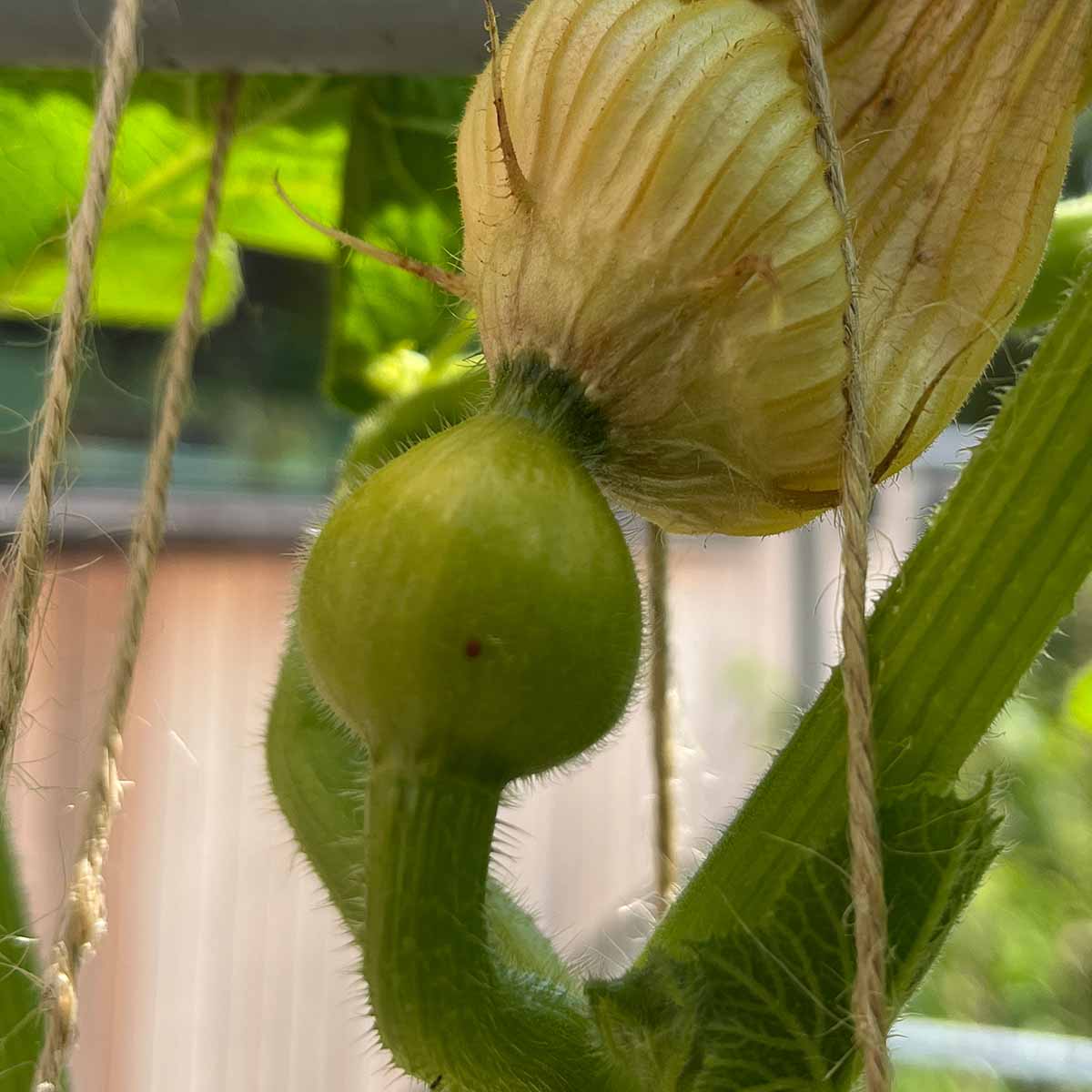
- Flower buds & their stems (less common)
- Squash fruit itself (less common)
How to check for eggs
Checking for eggs is a very time consuming process. I like to check daily (or every other day), knowing that if I miss some one day, I might catch it the next day. Here's how I look for eggs with the most success.
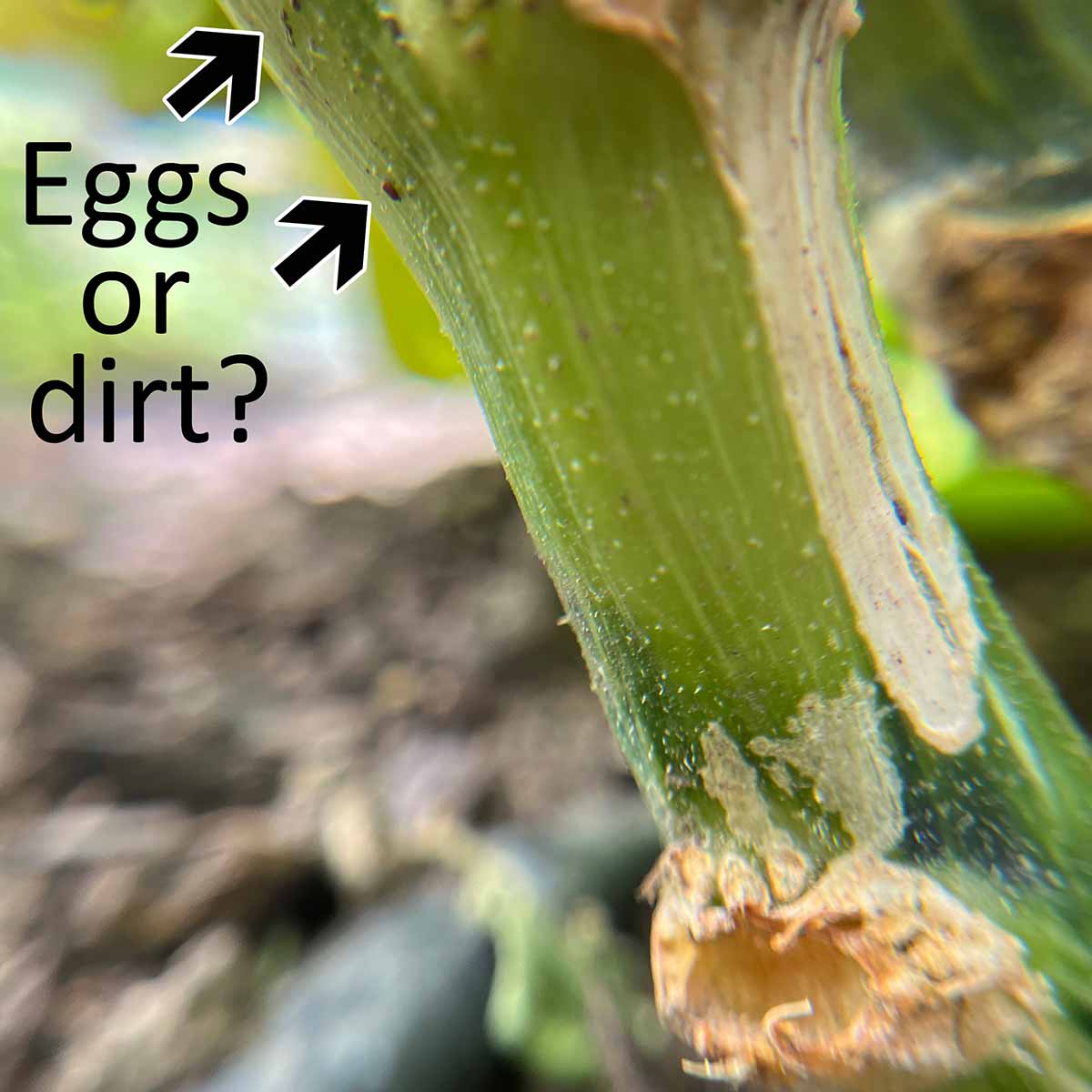
Start at the base of the stem
It can be hard to actually see eggs here unless you get your face level on the ground. So I do all of these things in addition to a quick sight check:
- First, I look for frass (sawdust-like excrement at the entry point) and soft spots at the base of the stem in case any eggs have hatched.
- Next, I rub my fingers all the way around the base to remove any eggs I can't see. Alternatively, you can use tape like a lint roller to remove what you can't see.
- I also brush loose soil away from the base so I can inspect the lowest part of the stem (and then push it back in place).
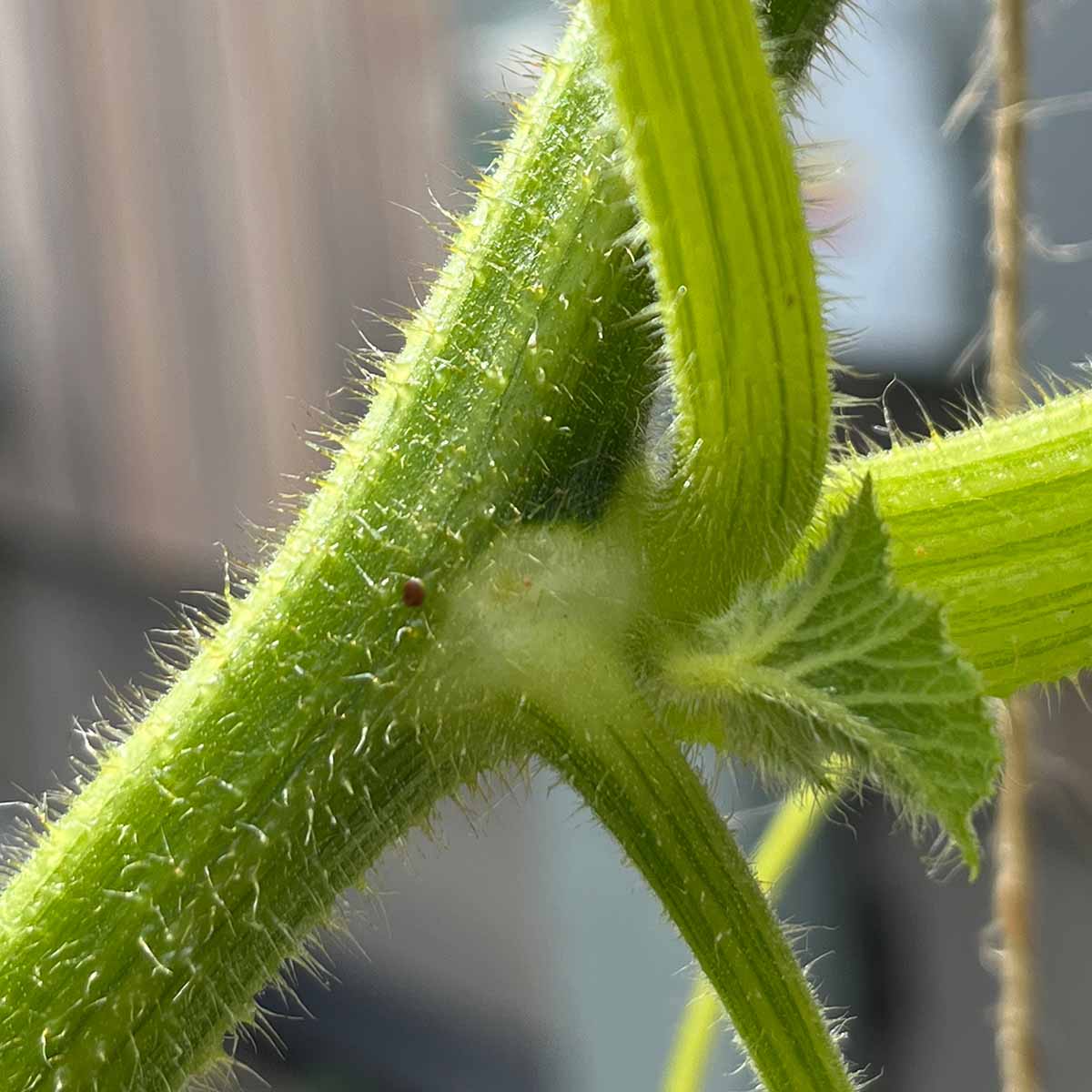
Check along the rest of main stem & leaf nodes
Next, I visually inspect the entire main stem. After the base near the soil line, this is the next preferred spot for the adult moths to lay eggs.
The idea behind this check is similar for both summer and winter squash. However, each one presents different challenges.
Zucchini and summer squash
The main stem is hard to see because it's crowded with all of the leaf stems. I first try to find any that I can actually see, and then I rub along the main stem to remove what I can't.
The leaf nodes can be hard to check as well since the plants are so bushy. So do what you can to view those junctions.
If a few older leaves completely block your access to the main stem, you can remove them if needed, but I wouldn't heavily prune a healthy plant just to make inspections easier.
Vining winter squash
If your winter squash vine is trailing along the ground, you'll want to check on the undersides of the main stem. However, the vines do like to root at leaf nodes along the vine when in contact with wet soil. This is a good thing.
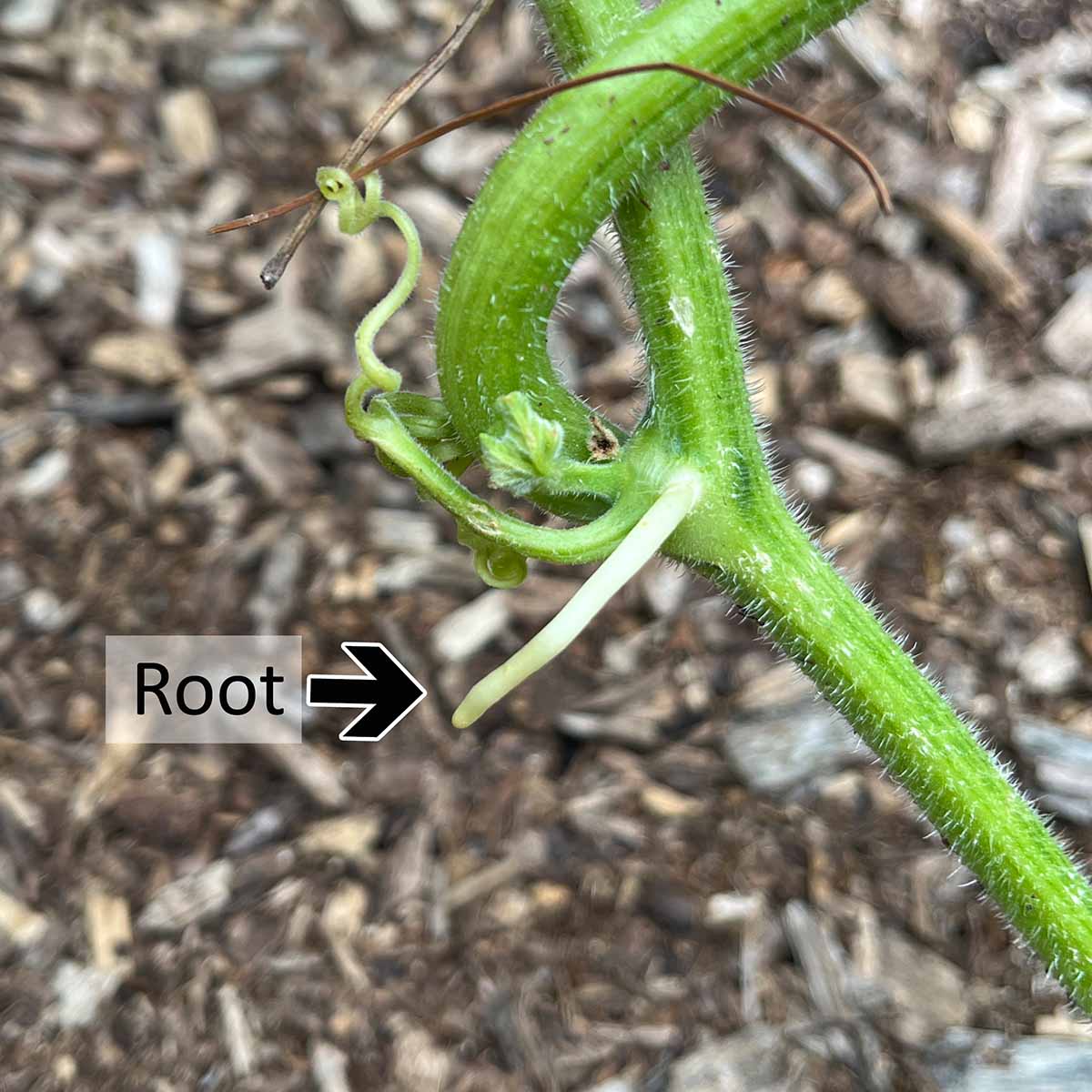
Tip: If a vine has already rooted at a node, don't pull it out of the soil just to inspect underneath. Check the exposed sides carefully and rub around any areas you can't see. For sections that haven't rooted yet, gently lift or turn the vine enough to inspect the underside.
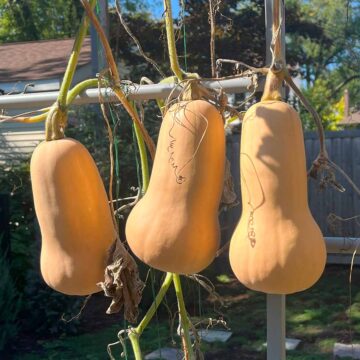
For trellised winter squash, these checks are easier, but you don't get the benefit of extra root support if the larva end up causing a lot of damage.
You also want to be sure to carefully check near any leaf nodes (where the leaf meets the main stem). It's easy for eggs to get tucked in on one side that's hard to see outside of a specific angle.
My personal trick here is to check the main stem from front and back on one day, then the left and right sides on the other day. This hopefully covers all angles to help you catch those hidden eggs.
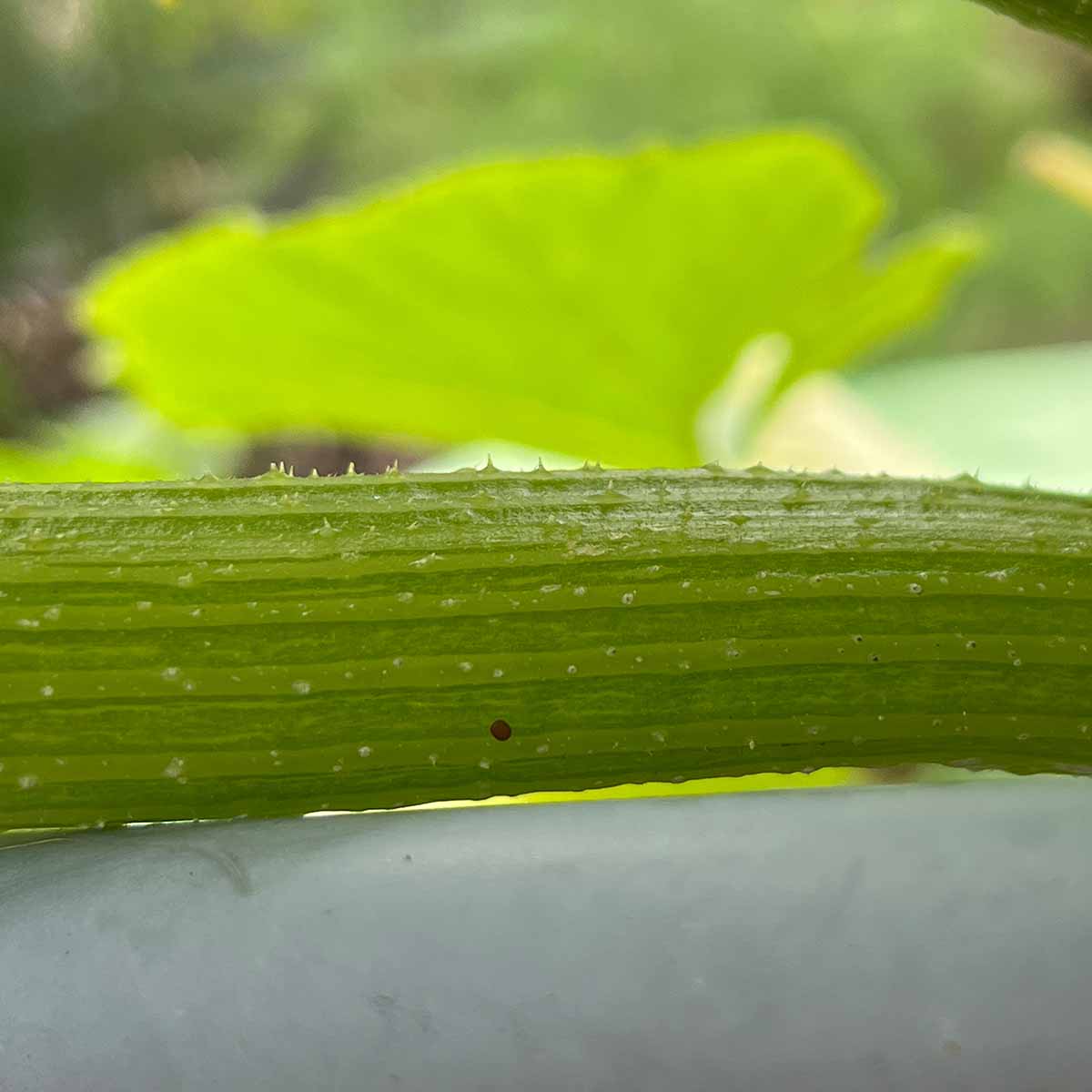
Check the leaf stems, tendrils, flower and fruit
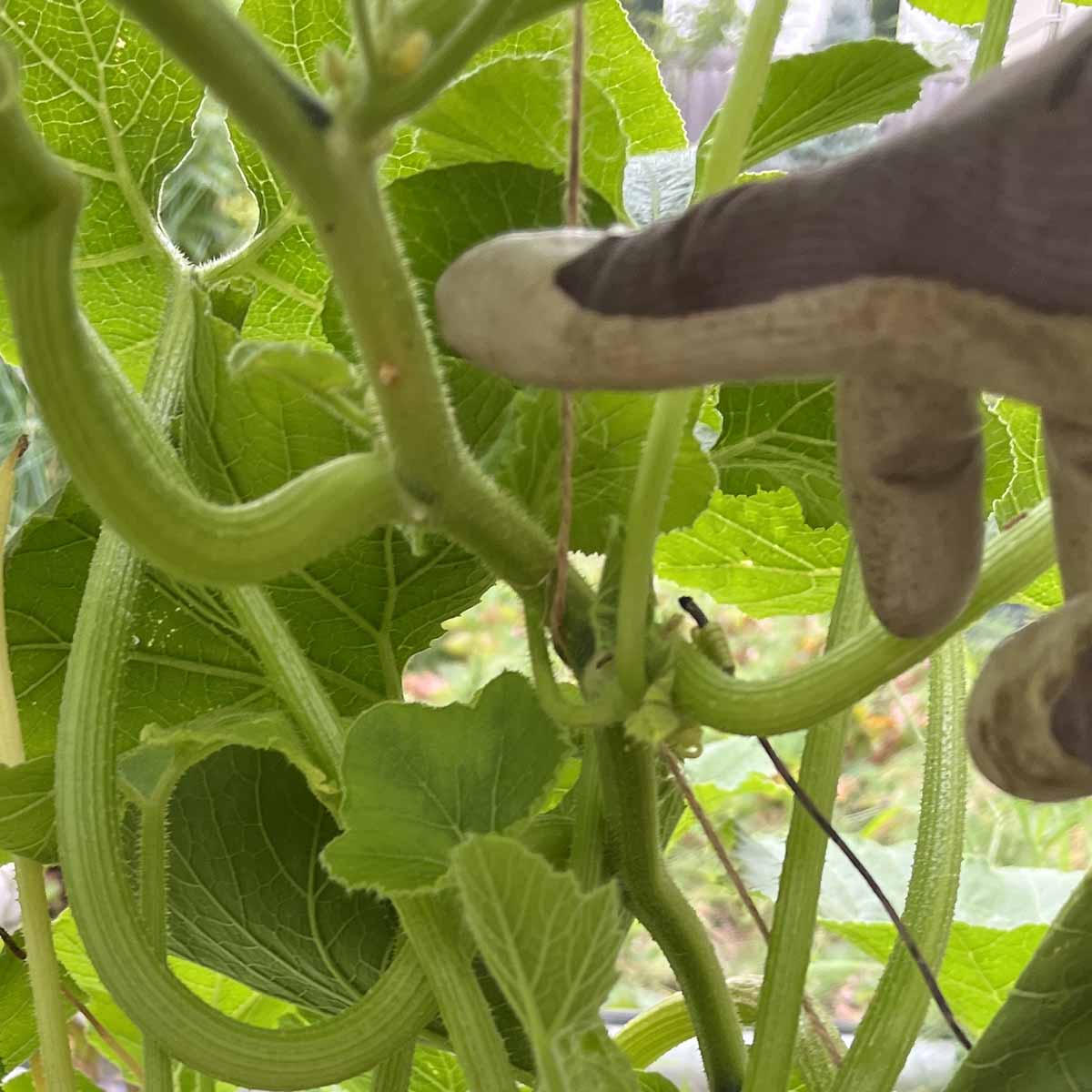
Lastly, I check the leaf stems pretty carefully as I find a lot of eggs on them. Since these stems are grooved, it can be easy to think you removed an egg that remains stuck in a ridge.
This check is easier for trellised winter squash and probably hardest for bushy zucchini and summer squash plants.
When inspecting the summer squash plants, be sure to get all the way to the plant and check on the undersides of each leaf stem.
I also do a quick scan of leaf surfaces, tendrils, flowers, and fruit. I don't open the flowers, I just check on the surfaces currently exposed. I haven't found eggs on opened flowers (yet), but I have found a couple on unopened flower buds.
I have found eggs laid directly on developing squash. Don't ignore them! The larvae can feed directly on the fruit, as Cornell even shows in a photo of a pumpkin.
How to remove the eggs
There are a lot of ways to remove the squash vine borer eggs before they hatch. Take your pick! I usually wear gloves when I'm in the garden and rub the eggs off and dispose of them.
Here are some other options:
- Scrape off with a fingernail
- Rub off with a wet cloth
- Use packing tape or duct tape to stick and peel them away
What if you miss an egg?
No matter how diligent you are, you'll probably miss an egg. Or maybe that's just me (I already have to look over my glasses to see up close, in my 40s!).
As long as you continue to check your plants regularly, you should be able to find the larva before they cause lasting damage. I still check every other day, even when it looks like the egg laying stage is done.
Here's a rough timeline chart so you can see what happens once an egg hatches and what to look for on your regular plant checkups. These days aren't exact, but rather are meant to give you an estimate of the larva's development and damage as it grows.
| Time after egg hatch | What's happening | What you see |
|---|---|---|
| Day 0 | Larva enters the plant | Tiny hole (if you are lucky) |
| Days 1-3 | Size of rice grain, early feeding | Tiny hole (often no frass), still hard to find |
| Days 3-7 | Chewing out a tunnel | Small amounts of frass |
| Week 1-2 | Larva grows fast, ½ inch+ (estimate) | Obvious frass, soft stem. Still decent chance of saving plant. |
| Weeks 2-3 | Major feeding damage | Wilting leaves, yellowing, weak stem, hard to save plant (but possible) |
| Weeks 4-6 | Mature larva, 1-inch | Very hard to save plant |
Does spraying with insecticide help?
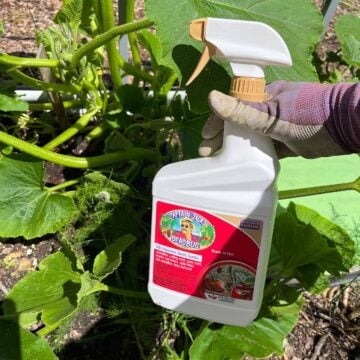
Sprays don't kill the eggs you're looking at. Instead, they're backup protection that can kill newly hatched larvae if they ingest it while trying to enter the plant.
There are two organic insecticides if you are interested: spinosad and Bt (Bacillus thuringiensis). I have a guide that covers when & how to use Bt and spinosad in a lot of detail!
When should you start looking for eggs?
Once the adult moths appear, they mate and start laying eggs right away. So you need to spot their activity and then start looking for eggs immediately. If you're interested in the timeline, check out my squash vine borer life cycle guide.
The adults only live for 3-5 days. But there's where the good news ends.
They emerge over several weeks, forcing you to check for eggs for at least 4 weeks, sometimes 6 or more.
If you live in a warmer climate, you'll see a second generation of adult moths that emerge later in the season. Generally northern states have one generation and southern states have two (starting around southern Illinois, for example).
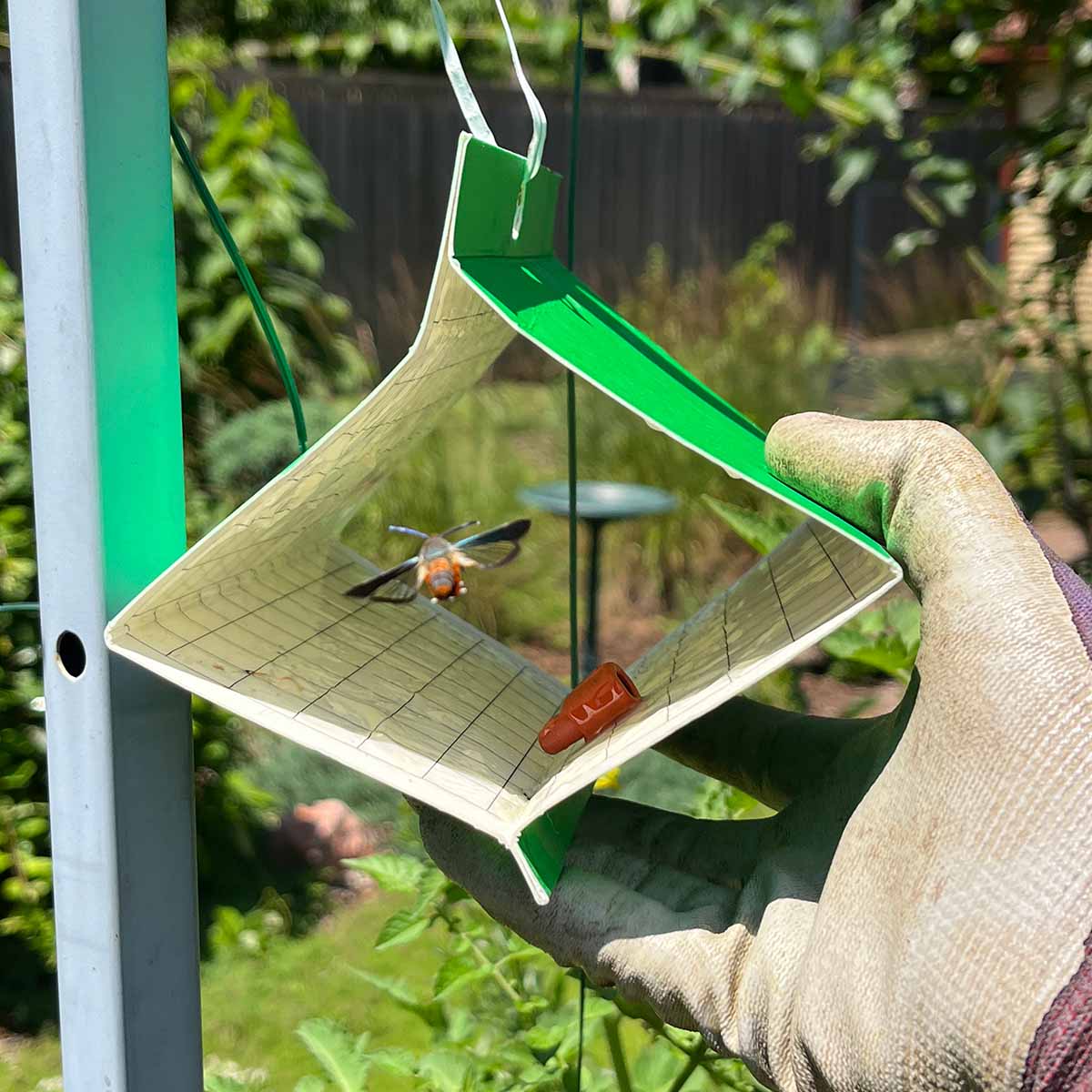
My advice is to put out a pheromone trap before they typically emerge in your area. That attracts the males and when you catch your first one, you know to start looking for eggs.
Also, before you get too excited, these traps won't stop the females from mating or laying eggs. It doesn't trap them either, as they aren't attracted to the pheromones.
How often should you check for eggs?
Eggs hatch 1-2 weeks after they are laid.
Because of this, I check for eggs daily. In case I miss some, I still have time to find them before they hatch. Every other day could also work, especially when your weather is cool.
Continue to check for eggs until you haven't seen any new ones for a week. That's a good sign the adult moths are gone (unless you're in an area with a second generation).
However, even though you'll stop finding new eggs, you should continue to check your plants regularly for signs of frass (a sawdust-like poop that accumulates at the entry hole), in case you missed any eggs.
The eggs can take 2 weeks to hatch, so you're stuck monitoring your plants for a little while longer. The things we do for our garden, right?!
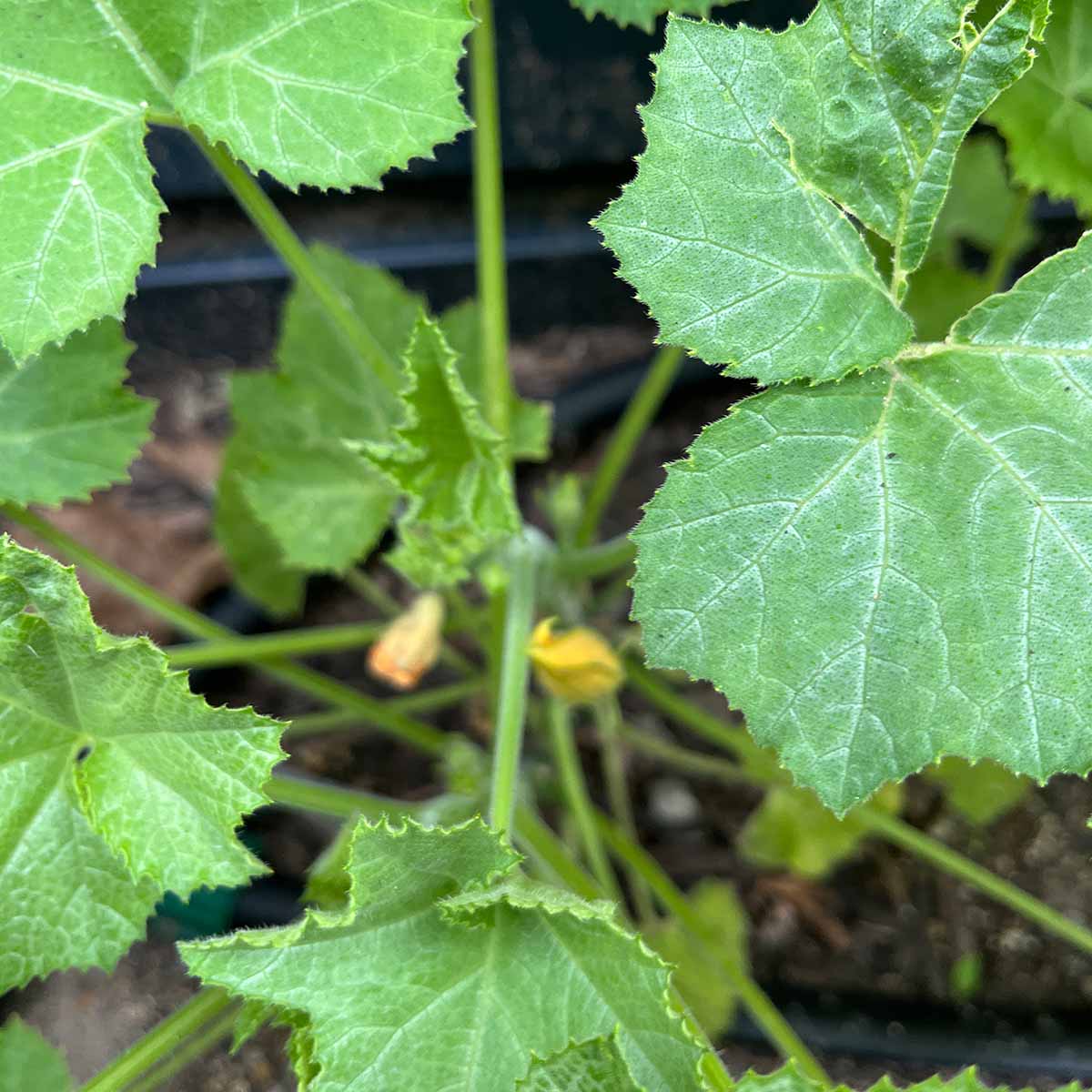
In summary: check on your squash plants regularly to keep them healthy
You're not going to find every egg the first time you check. But if you regularly monitor your plants, you'll find most of them before they hatch, and catch any early damage from the ones you've missed.
But even if a larva matures and causes real damage, you can still save the plant. I know because I've saved a bunch of mine from pretty gnarly damage.
Leave a Reply