As a gardener, I've had to figure out what to do with giant sage plants that have grown out of control. Frying is one of my favorite options and I can speak from (a lot of) experience on how to do it right.
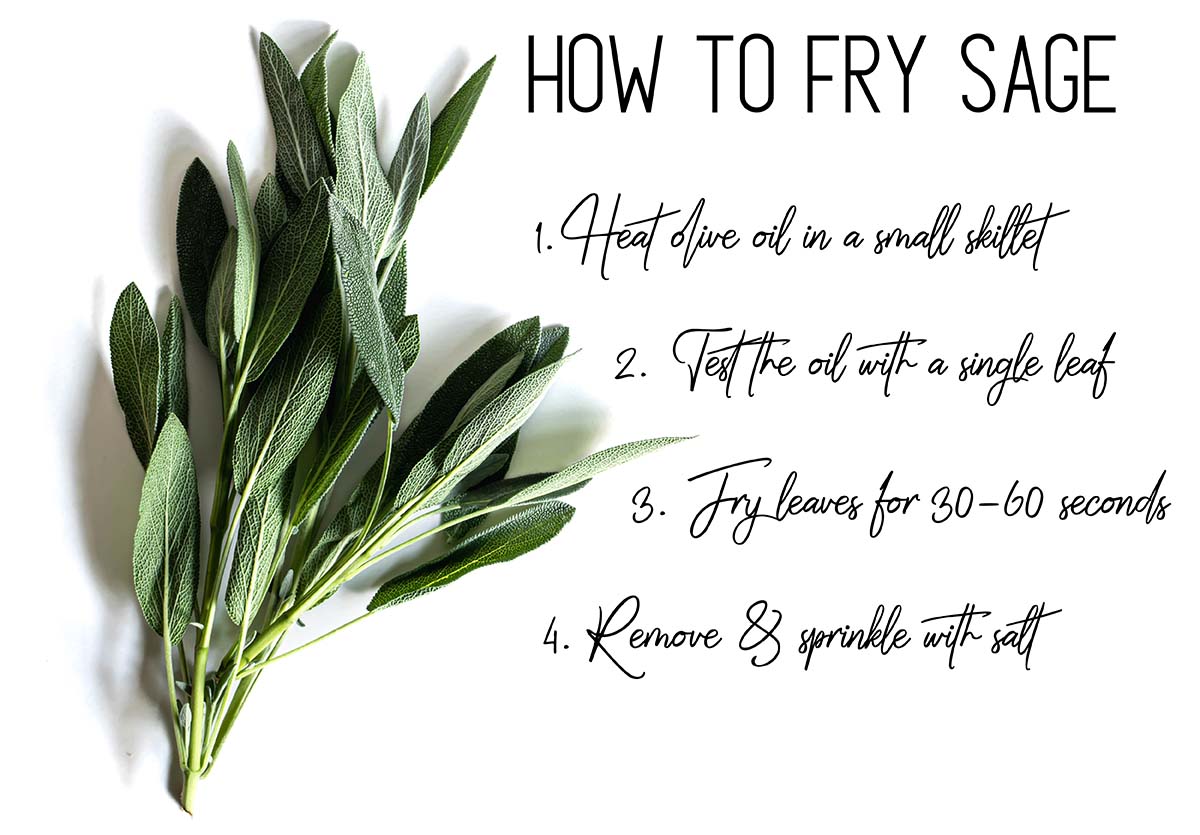
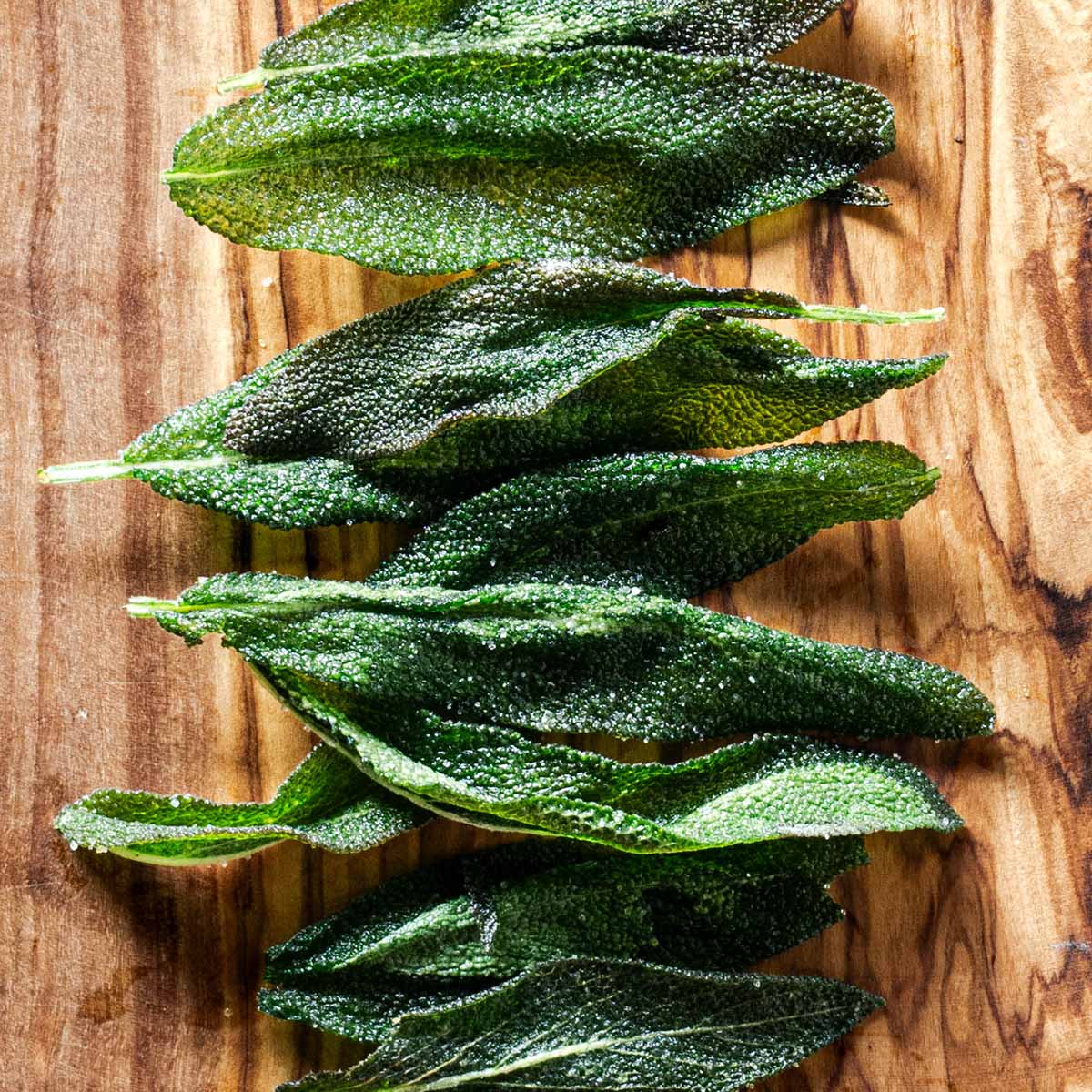
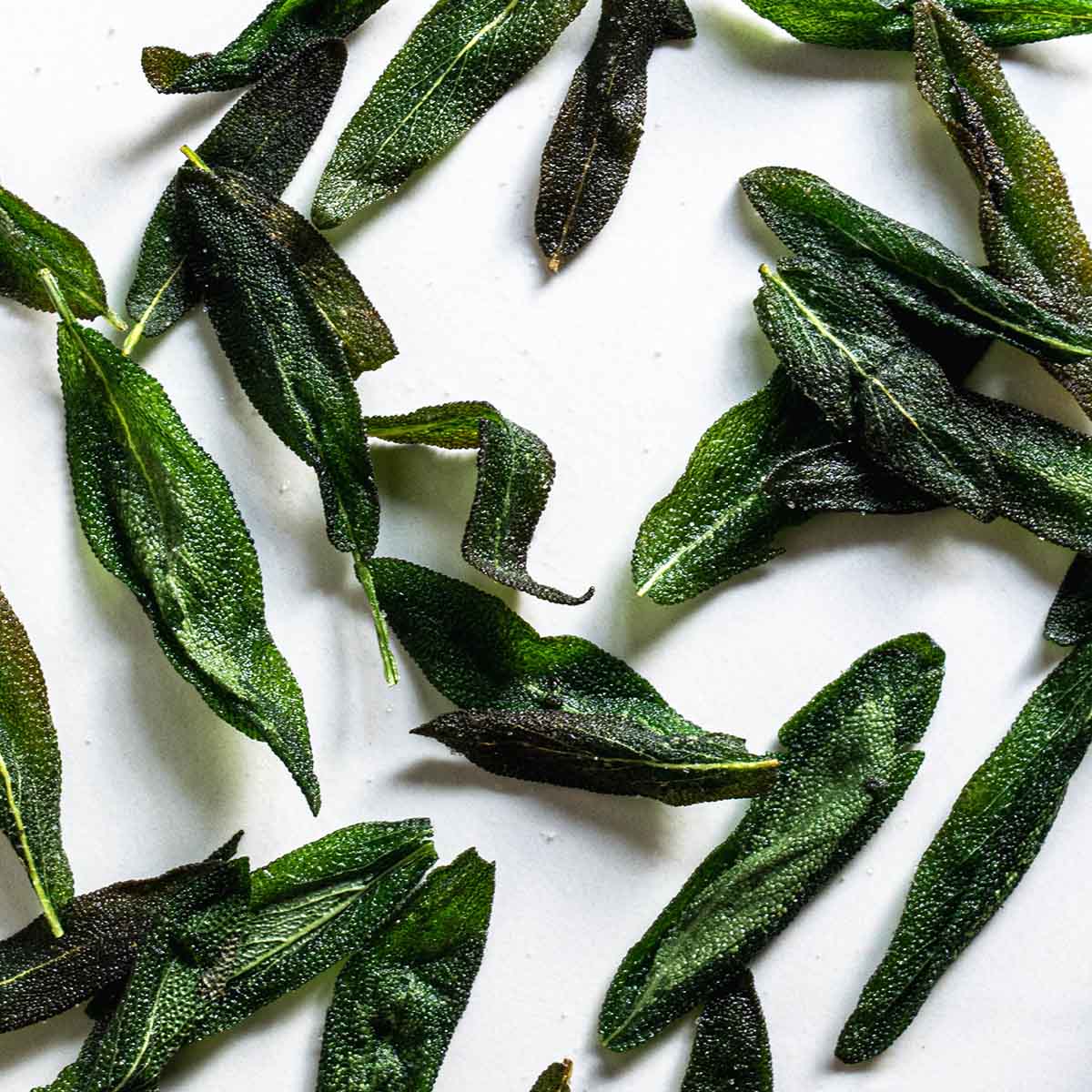
Fried sage only takes 30-60 seconds to fry in a pan of shallow oil. The strong sage flavor mellows dramatically, like a raw onion does once fried. The leaves will be dark green, crispy, and benefit from a sprinkle of salt.
After the recipe, I walk through the types of sage best for frying (for you gardeners out there), how to tell when they are done, and finally a list of recipes to make use of your fried sage.
Jump to:
Recipe
Equipment
- 1 small pan
Ingredients
- 20 sage leaves or any amount you want to use
- ¼ cup olive oil see note
- 1 pinch salt
Instructions
WASH & DRY SAGE LEAVES
- Make sure your sage leaves are very dry. Ideally, wash them them a couple hours ahead of time, dry them, and leave in the open air to further dry. This helps them fry up quick and crispy.
FRY THE SAGE
- In a small skillet, heat the olive oil on medium-high heat. Pro tip: use an infrared thermometer to test the oil surface temperature - your target is 350℉. Test if it's hot enough by frying just one sage leaf. If should bubble and stiffen up in about 60 seconds. You should have some wiggle room to take them out before they burn. Too hot: If the edges burn fast, lower the heat. (Too hot and the oil can impart bitter flavors).Not hot enough: if the leaves are crisping up in a minute, the oil should be hotter.
- Fry the sage leaves. I like to fry about 10 leaves at a time. Then I can watch each one and take them out when they are done. Set on a paper towel to drain excess oil (excess oil will make them lose crispiness).- They should be dark green (not brown), and start to stiffen up. If you take them out and they are completely limp, they won't crisp up as they dry. If they are turning brown, they are overcooked.
- Salt the sage leaves immediately after removing them from the oil. I like table salt because sea salt crystals always seem to fall off the leaves, without enough to cling to.
- Save the olive oil for roasting vegetables or making a salad dressing. It's now sage-flavored and delicious.
- These are best served right away, but can retain crispiness for about 24 hours in a paper-towel lined sealed container. Alternatively, if they are crushed on top of a dish, they don't need to be perfectly crispy and you can keep them for days.
Notes
Fresh sage
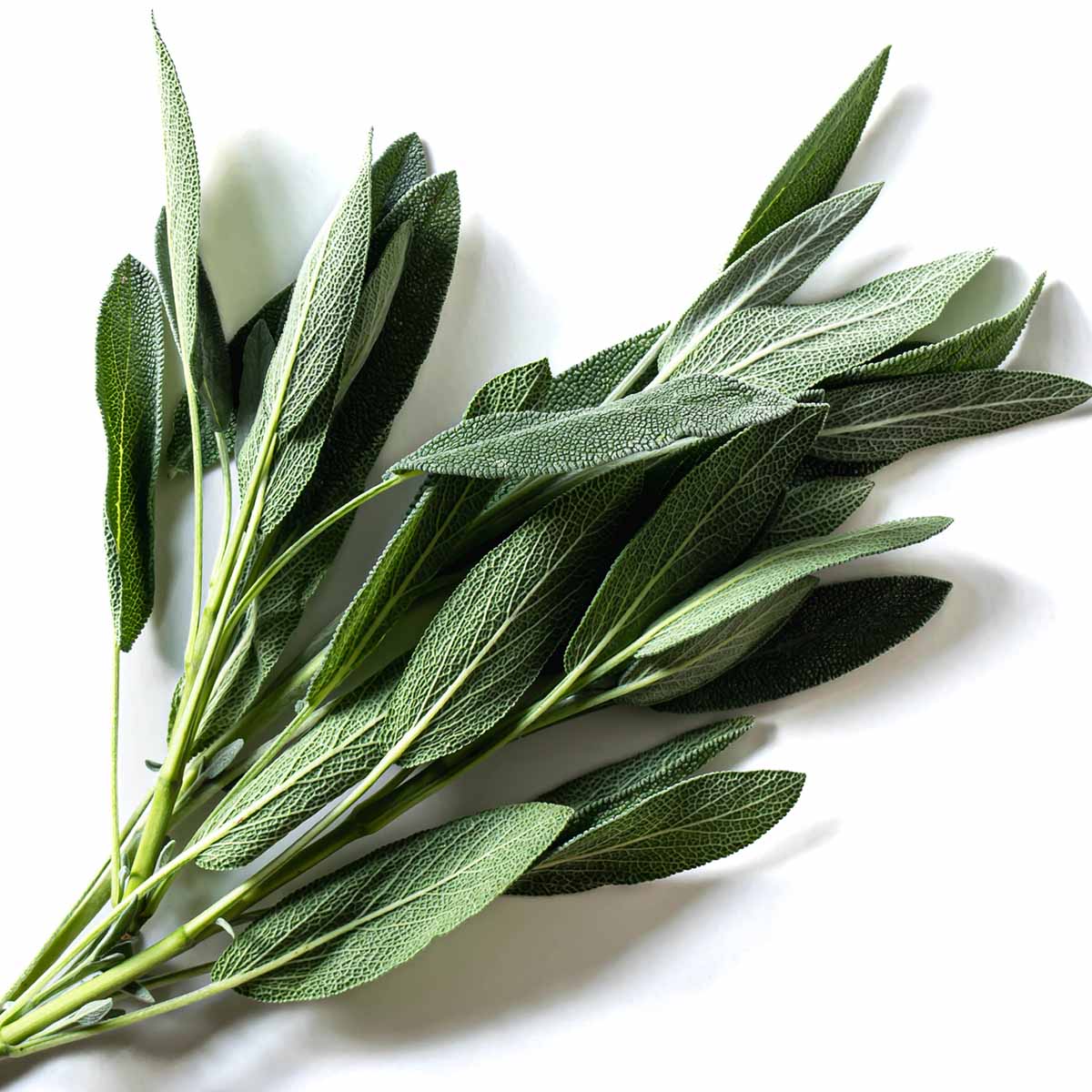
You can usually buy fresh sage at the grocery store, in the refrigerated area near all of the produce.
For those of you growing sage in your garden, let's talk about what kinds of sage to use. Salvia officinalis is the most common type of culinary sage (also called common sage), most often a silvery green-blue color with fuzzy leaves.
Any of those thick leaves work great for frying. While delicate, they are sturdy enough to handle the hot oil and turn into crispy fried sage leaves.
Other edible sages, like the popular pineapple sage, have thinner, non-fuzzy leaves. Those are much harder to fry to a perfect, crispy consistency because they are too thin. Here's a list of some edible sages, and you can see how some have those typical, thick leaves while others are really thin.
Frying in olive oil
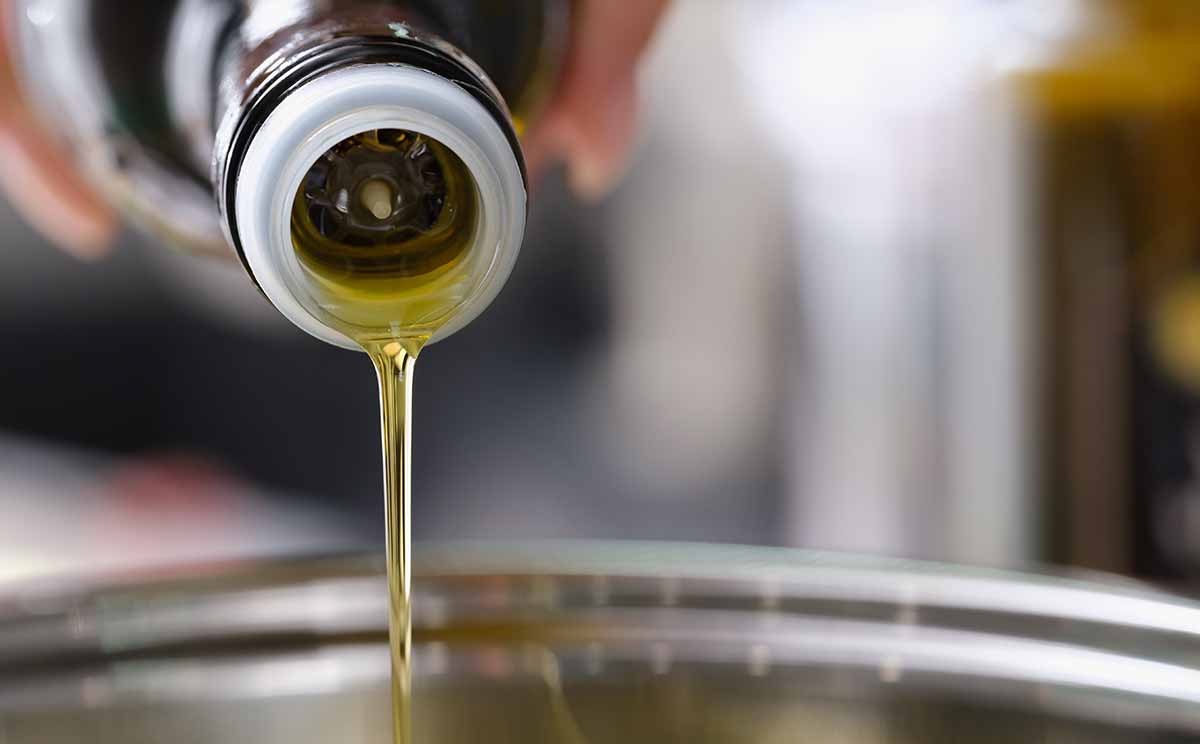
Most recipes for frying instruct you to use a high-heat oil, claiming olive oil doesn't qualify. I might even have a legacy recipe or two on this site along those lines (that I'll update if I find one). This came about because high heat can break down some oils, creating compounds that aren't healthy.
Olive oil
However, numerous studies have shown that our beloved extra virgin olive oil is perfectly safe for this use. The Culinary Institute of America addresses this head on: "Then comes the question that has generated much heat on the Web: can you (deep) fry with olive oil? First, let's state that yes, you can absolutely fry with olive oil with great results."
Furthermore, the North American Olive Oil Association explains that, "[Olive oil's] high smoke point (210°C/410°F) is substantially higher than the ideal temperature for frying food (180°C/356°F)."
If you want to be a real geek about it, you can use an infrared thermometer to see how hot the oil is in your pan, making sure its around 350°F.
Anyway, this is all good news because I prefer the flavor of olive oil to most other vegetable or seeds oils. It also means you can save the olive oil to use for roasting vegetables or to use in a salad-dressing. It's now sage-flavored and delicious.
Butter
I was researching some ideas for fried sage leaves and came across a Reddit thread where a bunch of people said they fry sage in butter. Curious, I gave it a try.
First of all, the flavor of the fried sage leaves was very buttery, and not in a good way (as impossible as that may sound). But the real problem was the butter very quickly burned, which was not unexpected.
Butter is known to be a terrible option for pan frying most things because the milk solids burn. If using butter, you'll want to buy clarified butter or ghee, which can stand up to the high heat.

How to tell when they are done
The speed the sage fries at is highly dependent on the temperature of the olive oil. When the oil is really hot, they fry up in 15-30 seconds but can go from perfectly cooked to burnt in just 5 extra seconds. The sage quickly turns brown and it's really hard to keep them that beautiful green color.
My first batches, the oil was too hot and I had a hard time getting them perfectly crispy. If I took them out 5 seconds too early, they were limp. If I took them out 5 seconds too late, they were burnt. It was too small of a window for me to confidently tell you how to successfully fry sage leaves.
So I finally went into the basement to grab my infrared thermometer to make sure the oil was the right temperature. It turns out, I had it way too high. You want to aim for about 350F. Mine would climb up to 385F at times and that still seemed ok.
With the right oil temperature, the sage leaves fried up in about 60 seconds, but I found I could leave them for about another 30 seconds without them turning brown. Each leaf was a vibrant green color with no brown spots.
Stages of frying:
- Sage leaves start to bubble and it loses the fuzzy texture
- The light green color is gone and they are medium green
- The leaves turn dark green and are limp when lifted with a fork or tongs
- The leaves are dark green and start to stiffen when lifted. Take them out now!
- The edges start to turn brown (they are still decent tasting at this stage)
- The leaves turn mostly brown and will be bitter or burnt tasting at this point.
Flavor & texture
Fresh sage has a very strong flavor, especially if it's fresh from your garden. You often have to use it sparingly in recipes or it takes over.
But fried sage is more subtly flavored. Oh it definitely tastes like sage, but at a level that's delightful to eat straight up. Think of how an onion's flavor is strong and pungent when raw, but mellow once deep fried.
As for texture, fried sage is crispy, but not as crispy as a potato chip. The leaves are thin enough that they crumble when chewed. When crumbled to add as a garnish, it flakes into pieces similar to a fancy flaked sea salt, or the crumbs at the bottom of a bag of thin Lay's potato chips.
How to use fried sage
If you have a garden and are overloaded with sage, you might be wondering how you can use fried sage so you can make use of your plants! Fried sage is good on everything, it seems. But that doesn't really help you, so below are some specific ideas, followed by actual recipes that use fried sage.
- Add to a charcuterie board
- Topping meat (like roast beef, turkey, chicken)
- A focaccia topping
- Garnish soups, stews, and chilis
- Sprinkle on top of roasted vegetables or mashed potatoes
- Top ravioli or alfredo pastas or gnocchi
- On top of bruschetta
- As a garnish on a salad or to replace basil leaves on a caprese salad
- On everything for Thanksgiving!
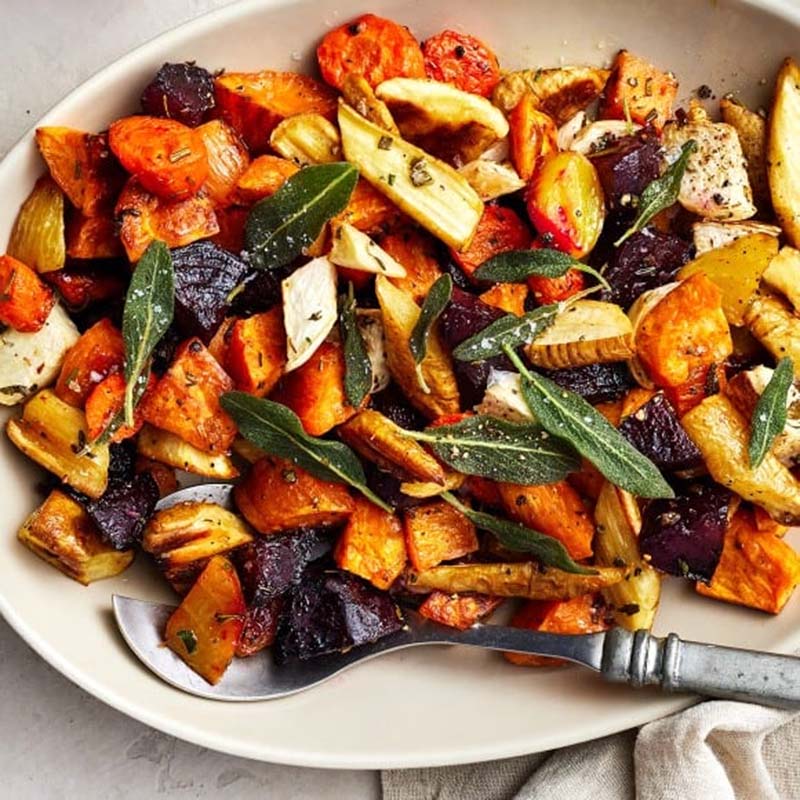
Now for some actual recipes to give you more ideas on how to use fried sage:
- Roasted vegetables with fried sage from Love & Lemons (pictured above)
- Roasted butternut squash risotto from Flourishing Foodie
- Delicata squash boats stuffed with pancetta, mushrooms, and risotto on Food52
- A winter bisque soup with fried shallots & sage from Vegan Yack Attack
- Pumpkin pasta that fries the sage over 4 minutes while the butter heats up for the sauce, from Half Baked Harvest
- Ravioli with brown butter sage from Foodie Crush (which also slowly fries the sage in the butter)
- Fall salad with apples and fried sage from NYT Cooking
- Fettuccine with mushrooms and fried sage from Food.com
- Wild sage salad with roasted sweet potatoes, pears, and figs, from Taste Canada - they don't use fried sage, but you could! And if you're trying to use up your sage, their dressing uses ¼ cup, for what that's worth!
- Garlic sage quinoa salad from Plant Based RD
More recipes & resources
There are a couple of other ways to make fried sage, in case you're interested!
- Battered and fried sage leaves by Jul's Kitchen
- Manchego stuffed fried sage leaves by The View from Great Island
If you're wondering what else is currently in season, check out my calendars to see what produce is in season each month (and coming up soon).

Leave a Reply