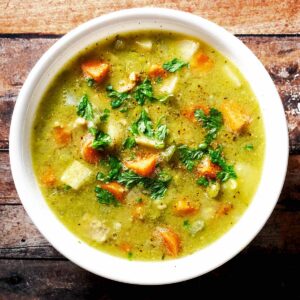
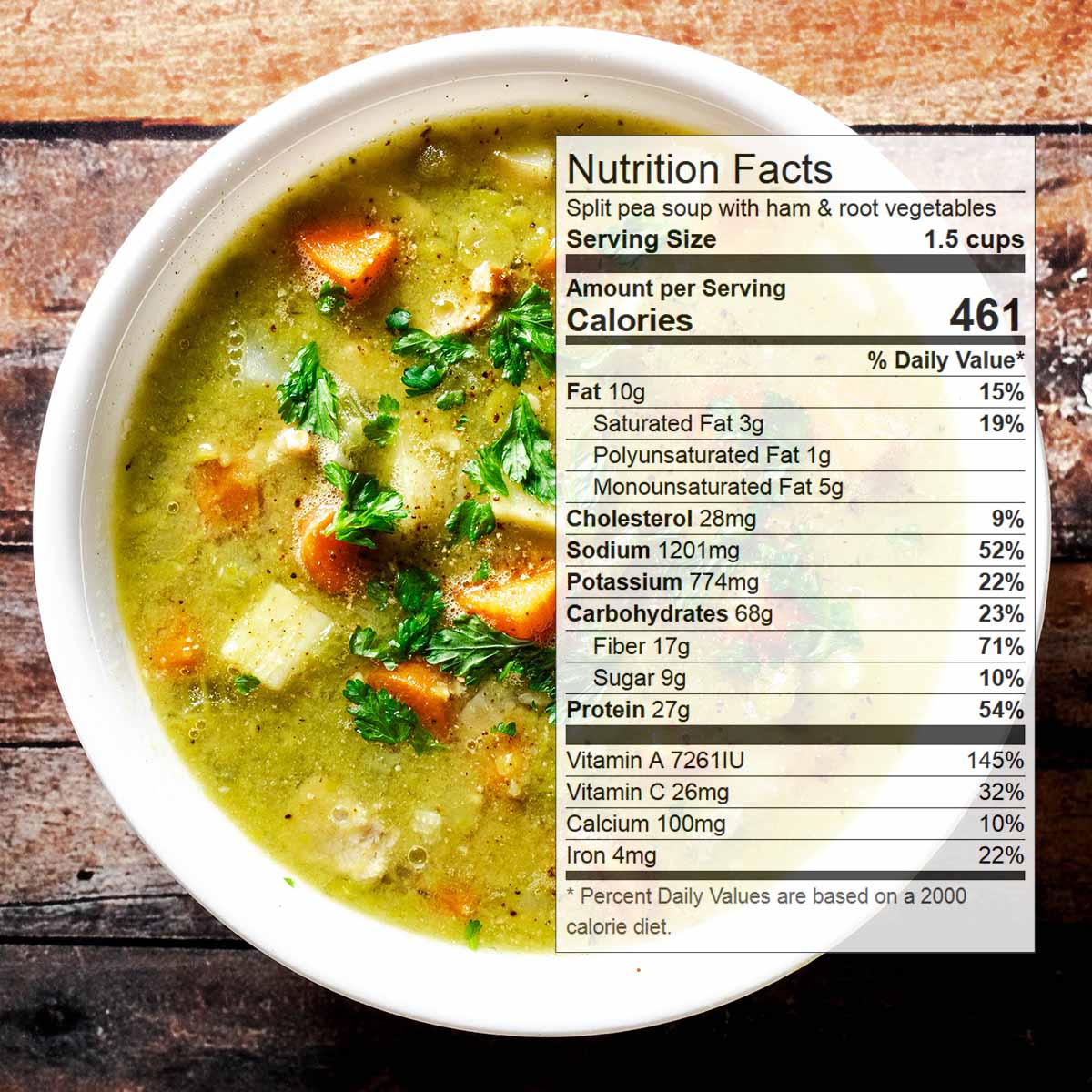
The amount of calories are surprisingly consistent for most homemade split pea soup recipes - running between 425 and 500 calories for a 1.5 cup serving.
This type of soup is also packed with nutrition, mostly thanks to the split peas. A single serving provides almost half the daily recommended amount of protein (27g out of 65g) and fiber (17g out of 30g), along with a good amount of vitamins.
Jump to:
Calorie breakdown
The majority of the calories come from the split peas and ham, although croutons and bread do add up quick.
| Ingredient | Calories per serving | Protein per serving |
|---|---|---|
| Split peas | 220 | 16 grams |
| Ham hock (estimated) | 40-50 | |
| 8 ounces ham | 60 | 9 grams |
| Carrots | 15 | |
| Red potatoes | 44 | 1.5g |
| Croutons | 125 | 4g |
| Bread (2 oz slice) | 150 | 5g |
If you want to customize the soup's nutrition, it's also helpful to know how many calories (etc) you get per unit.
- Lean ham, 1 ounce: 40 calories and 6g protein
- Carrot, 1 medium: 25 calories
- Red potato, 1 medium: 154 calories and 4g protein
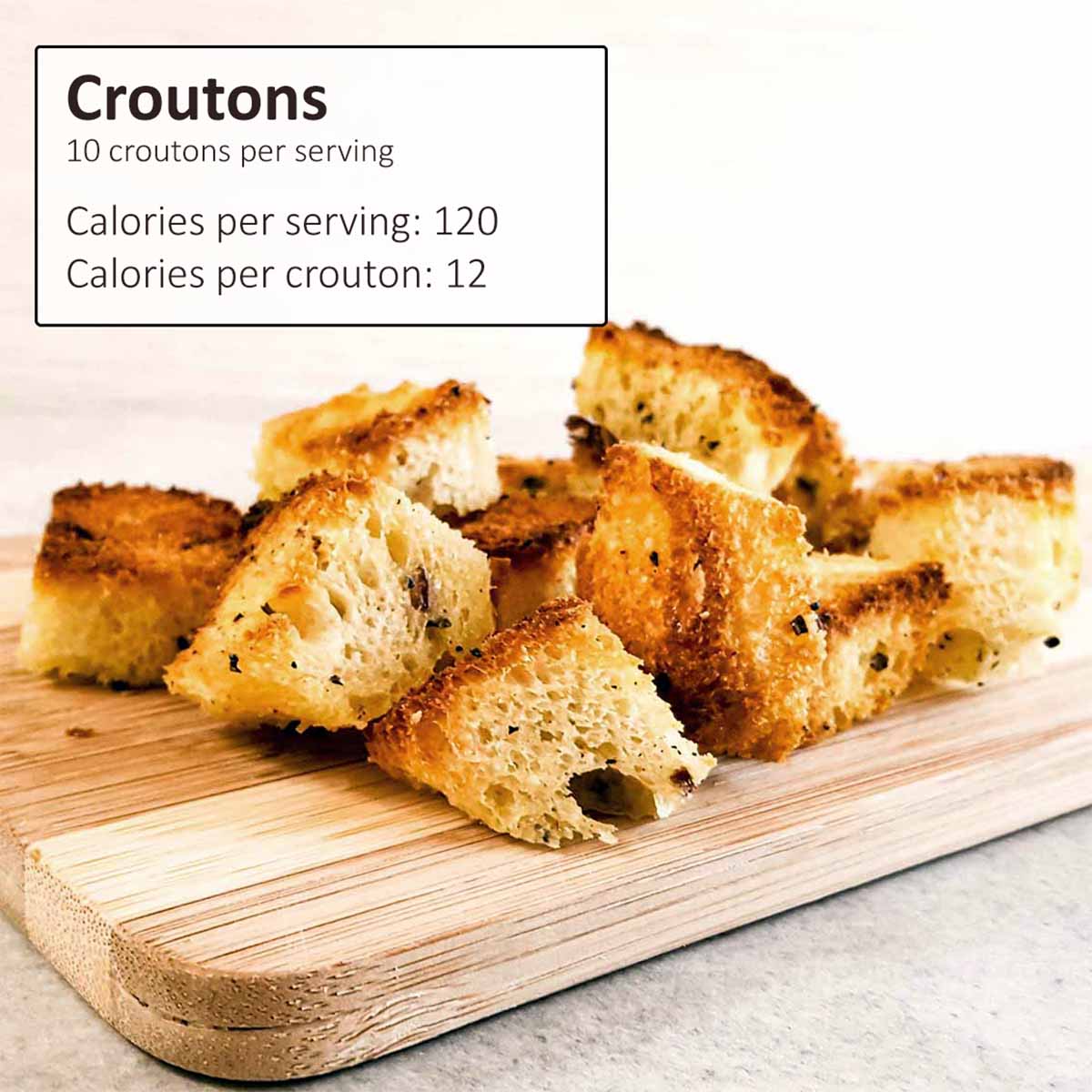
- Croutons: 12 calories per large crouton
There are differences in nutrition between lean ham, ham hocks, and ham bones, which is covered in the next sections.
The rest of the calories come from fat for sauteing the vegetables (about 100-120 calories per tablespoon), and minimal amounts for other vegetables and broth.

Ham hock nutrition
Ham hocks are the knuckle portion of a pig's legs. They are fatty, and full of collagen and connective tissue. They have the most flavor (and calories) of the ham options.
By my estimate, a 1-pound ham hock adds 285 calories to a pot of soup or bone broth.
It's difficult to definitively calculate, since there appears to be no source for an actual caloric measure on what's left in the soup after you pull out the ham hock.
Instead, I estimated it on calorie information that we do have.
A 1 lb ham hock is about 1,000 calories with 62 grams of fat. That amount of fat contains about 575 calories. Let's assume half of that felt melts into the broth, for a total of roughly 285 calories for the entire batch of soup.
Distributed over six servings, the ham hock adds about 50 calories and 6 grams of fat to each bowl of split pea soup.
Ham bones
Ham bones leftover from a spiral ham or some other dinner are usually shin bones. They add flavor, but not as much as a ham hock (especially one that's been smoked).
They aren't very fatty, so they also have less calories and more usable meat that can be added back into the soup. My best guess is just the bone portion would add 5-10 calories per bowl of soup.
Lean ham
I usually cook split pea soup with a smoked ham hock, which gets removed, and then replaced with chopped lean ham.
Lean ham is full of protein - about 6 grams per ounce and 40 calories. It's easy to include more or less ham in the soup to meet your dietary goals.
I often use leftover ham for this soup - everything from a spiral ham to pork tenderloin, and even pulled pork. Otherwise I buy ham steaks from the grocery store which are easy to dice into cubes.

Split peas
Split peas are actually regular peas that have been dried and then split in half (to reduce cooking time). Yellow split peas have a more mild flavor than green, but otherwise cook the same in a soup.
One of the reasons split pea soup is so healthy is the amount of plant-based protein and fiber you get from the split peas. They also provide a good amount of other nutrients, including B-vitamins, magnesium, and iron.
Vegetables
Most split pea soup recipes use carrots and some also include potatoes. I make one that incorporates other winter root vegetables like parsnips, parsley root, sunchokes, or celeriac to get a bigger range of nutrients (and flavor).
Here's a breakdown for 100 grams of each vegetable
- Carrots: 35 calories / 100g (2 medium carrots)
- Parsnips: 70 calories / 100g (1 medium parsnip)
- Red potatoes: 90 calories / 100g (half of a large red potato)
- Russet potatoes: 100 calories / 100g (half of a large russet)
- Celery root: 42 calories / 100g (about 1 cup chopped)
- Sunchokes: 75 calories / 100g (about ¾ cup chopped)
- Parsley root: 70 calories / 100g (about 3 medium)
You'll notice that carrots are on the lower end of calories even though we tend to think of them as one of the sweeter vegetables. But parsnips, parsley root, and sunchokes all have more sugar - one reason they are higher in calories.
Potatoes are also higher in calories but contain a lot of resistant starch and are full of other nutrients like potassium.
Leave the skin on the vegetables if you don't mind their flavor. The skins actually contain a lot of the nutrients and fiber.
All of the vegetables listed above, except celery root, have edible skin. (Technically celery root skin is edible, just usually hard to get all of the dirt out and not very tasty).
Croutons and bread
Croutons and bread are delicious to soak up a creamy split pea soup.
Croutons
Homemade croutons are especially tasty, adding the perfect, salty crunch.
Most homemade croutons have about 150 calories per serving. A serving is usually 10-15 croutons sized about ¾" square. That comes out to roughly 10-12 calories per crouton.
Store-bought croutons typically have 25% more calories, and restaurant croutons are even higher. Restaurants use a lot more fat (olive oil, butter, etc) to make an ultra-crispy, tasty crouton. They are delicious, but higher in fat.
Bread
Whole grain breads are healthier than loaves made with more refined white flour. I personally think hearty, whole grain breads are perfect companions to split pea soup.
Most loaves of bread have an average of 150 calories for a 2 ounce portion. Check the nutritional label on whatever you buy for more details.
More recipes & resources
I do detailed nutrition breakdowns for a selection of my recipes.
- Recipe: Split pea soup with ham & root vegetables
- Looking for a high protein meal - check out this summer cobb salad
- The Caesar salad nutritional breakdown also lists calories by ingredient
If you're wondering what else is currently in season, check out my calendars to see what produce is in season each month (and coming up soon).

Leave a Reply