My favorite wild mushroom risottos mix several varieties together for a more complex flavor. I use a full 1.5 pounds in this recipe so that mushrooms really are the star.
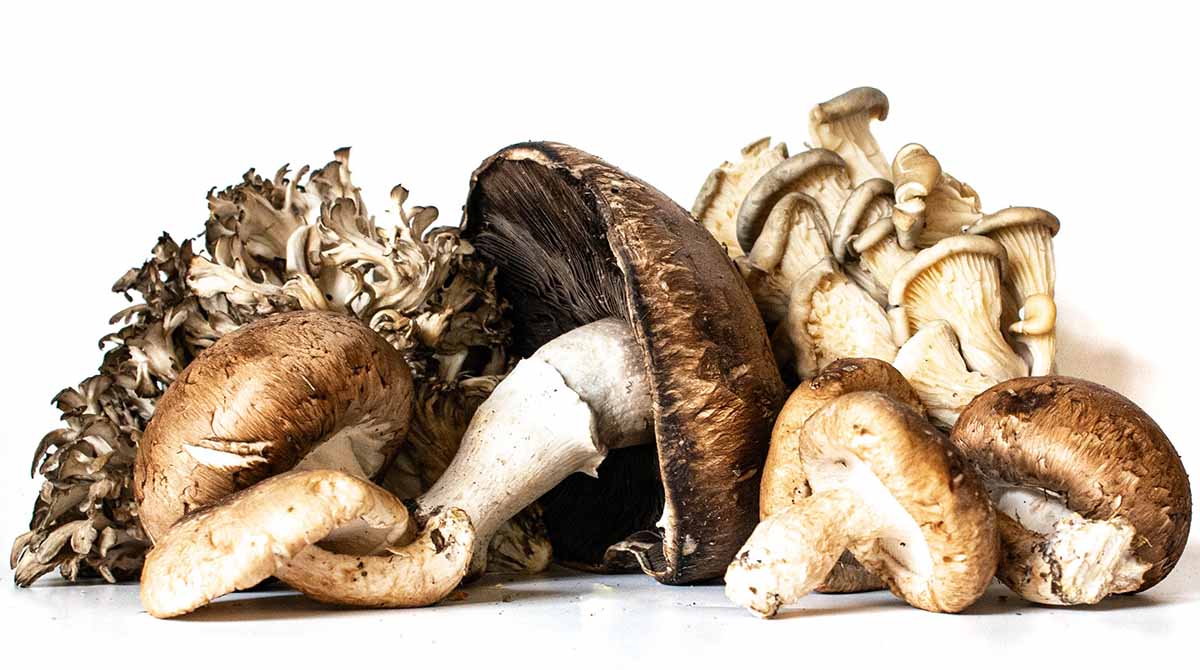
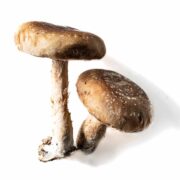
- Shiitake - savory and earthy, with lots of umami
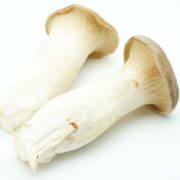
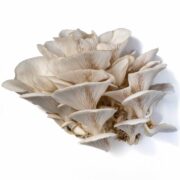
- King oyster - mild mushroom flavor but loaded with umami (even moreso than shiitake)
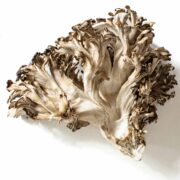
- Maitake - bold and earthy, excellent roasted or fried for a crispy topping
- Beech - mild, almost almond and earthy flavor, attractive topping when roasted
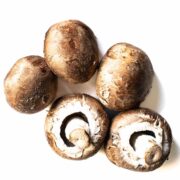
- Cremini - affordable all-purpose mushroom with familiar earthy flavor
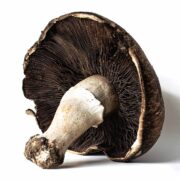
- Portobello - the mature version of cremini, with a more developed flavor

My favorite combination is to choose three varieties: cremini or portobello for the bulk, shiitake or king oyster for the savory flavor, and roasted maitake or beech mushrooms on top.
Jump to:

How to cook wild mushroom risotto: reviewing techniques
I'm always looking for the easiest ways to cook dinner that result in the most flavor. I tested a several methods for this wild mushroom risotto to see what actually makes a difference:
- Adding broth: gradually vs all at once
- Broth temperature: does the broth really need to be hot before adding it in?
- Cooking the mushrooms: separately vs with the risotto
Adding broth gradually makes a better risotto
The traditional way to cook risotto is relatively easy, but requires a lot of hands-on time. After initially cooking onions and toasting the arborio rice, you add broth a little at a time, stirring often.
A modern, hands-off approach has been gaining popularity. After the initial onion cooking and arborio rice toasting, all of the liquid is added at once. The pan is covered with a lid, and you let it simmer until the risotto absorbs the liquid - just like cooking regular rice.
I fully expected to prefer the hands-off approach, but it introduced a new problem: how do I know when the risotto is done cooking?
Every cooktop and pan heats up at different rates, so you end up having to check on the risotto every few minutes anyway. It's very easy to under or overcook risotto with this method.
Because of this, I found the traditional method of adding broth gradually is way more foolproof. It also creates a creamier texture that I was unable to replicate with the hands-off approach despite multiple attempts.
Both methods take the same total amount of time to cook, one just happens to be hands-off. If you want to try it, check out this article from Serious Eats for the science behind it.
The broth doesn't need to be warmed
Nearly every risotto recipe requires you to add hot broth to the pan (a little at a time). The argument is that cold broth slows down the cooking time and absorption rates too much.
It appears that advice might have carried over from 'the olden days' when using narrow, deep pots. However, most modern recipes use a large metal frying or sauteing pan. When adding a small amount of liquid to a hot, large surface area, it heats up - fast!
When I add room temperature broth (½-3/4 cup at a time) to the hot pan, it comes to a boil in 5-10 seconds. Cold broth only takes slightly more time. I use a stainless steel All-Clad pan on an induction cooktop, but it works the same when I've cooked on gas too.
Over the dozens of times I've tested risotto cooking methods, I haven't noticed the broth temperature affecting the final product, or even the total cooking time.
When to cook the mushrooms
Some mushroom risotto recipes instruct you to first cook the mushrooms in the pan, removing them before cooking the risotto. Then they are added back in to finish the dish.
If you're cooking full mushroom slices, this is good advice. Otherwise, the mushroom texture will get soggy.
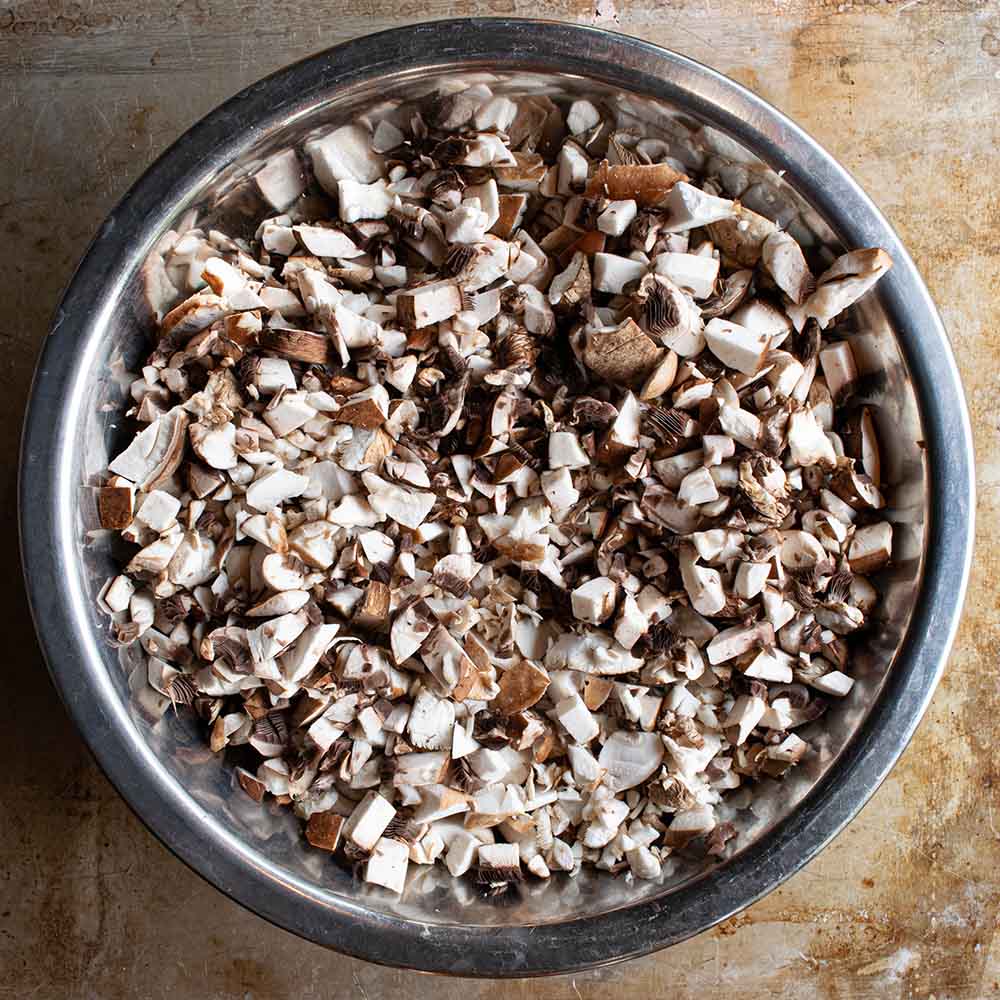
However, if you use diced mushrooms, you can cook them along with the onions and leave them in for the entire risotto making process. I prefer this method because it adds even more mushroom flavor to the risotto.
Wild mushroom varieties
Some wild mushrooms have very bold flavors (maitake, aka hen of the woods), while others are subtle in flavor but bursting with umami (king oyster). Each variety will add its own unique touch to the risotto.
I use the wild mushroom term loosely here. Some people refer to them only for foraged mushrooms growing in the wild. In grocery stores and recipes, the term is also commonly used for specialty mushrooms - which is how I'm using the term in this case.
Shiitake
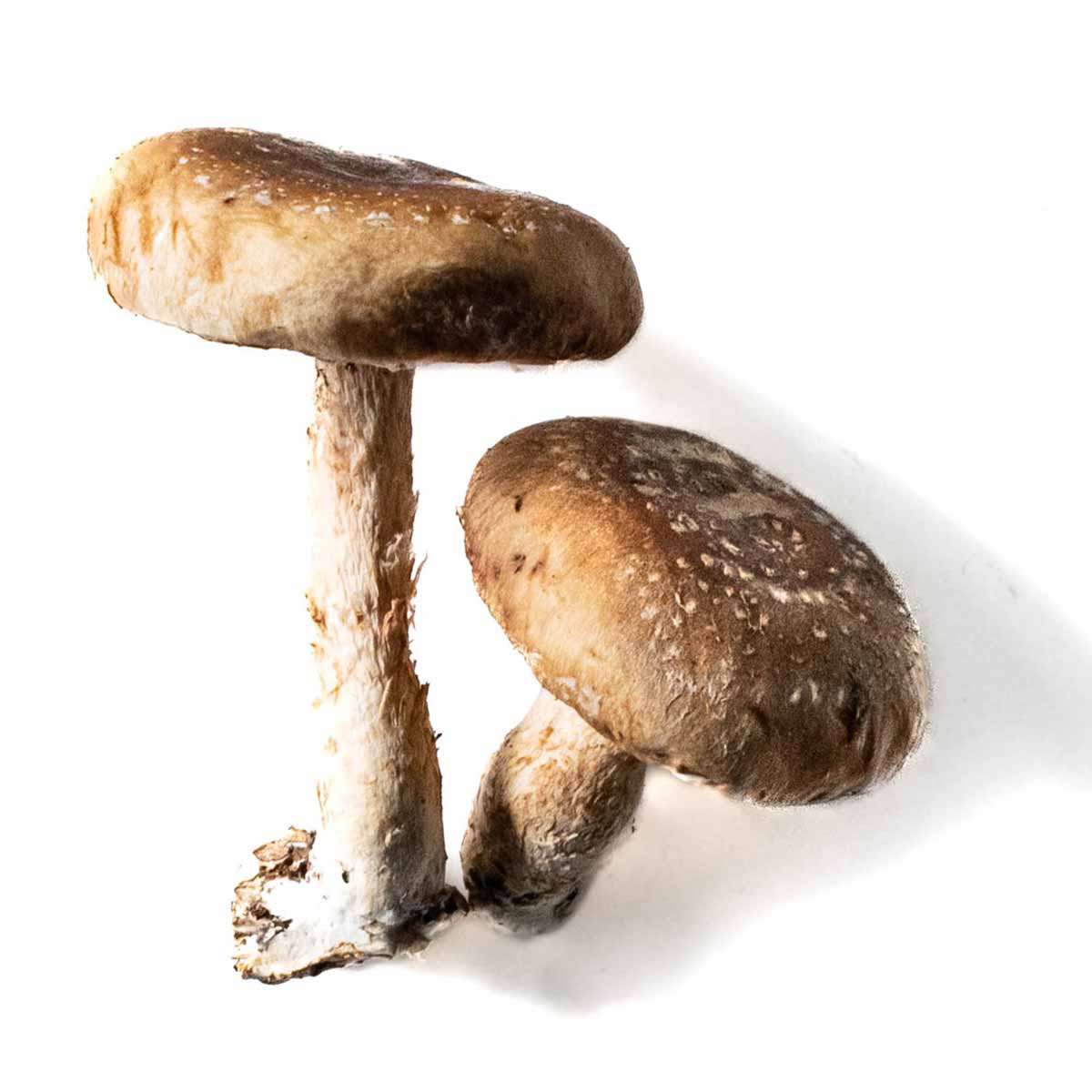
Shiitake mushrooms are probably the easiest wild mushroom to find in a grocery store.
They are somewhat bland but packed with a savory, umami flavor. Use the caps as the stems are tough and woody. (You can reserve them to flavor a soup stock).

King oyster
King oyster mushrooms are subtle in flavor but the king of umami. They have triple the amount of a specific umami compounds when measured against shiitakes (which are already high in umami compared to common mushrooms).
When cooked into a risotto, king oyster mushrooms will add a rich savoriness without much mushroom flavor. It's best to pair these with a more flavorful mushroom, including cremini or portobello mushrooms.

Maitake (hen of the woods)
These are my favorite wild mushroom for their bold flavor and crispy texture when roasted. The frilly edges roast to a perfect crispness that also melts in your mouth.
Maitake mushrooms are very strongly flavored, making them perfect for a wild mushroom risotto. I actually like to pan-fry or roast them first, set them aside, and add to the top of the risotto when serving.
You can also roast maitake mushrooms in the oven for a crispy topping.
These are much harder to find at grocery stores, but you should have luck at Asian markets, farmers markets, and farm-share boxes (CSAs).

Beech mushrooms
These cute little beech mushrooms are entirely edible, from cap to stem. They have a typical mushroom flavor, but a little earthier. They have hints of an almond nuttiness when cooked.
They are often cooked whole to show off their shape. For this risotto, you can cook them whole, separately. Then stir some in at the end and add some to the top when serving.
These are easy to find at Asian markets and I've also seen them at Trader Joe's in the produce section.
Other mushroom varieties
I like to add in some common mushrooms for their affordability, flavor, and texture. Cremini and portobellos are both great.
- Cremini mushrooms are the small, brown typical mushrooms at any grocery store. They have a standard mushroom flavor and texture.
- Portobellos are the large mushroom caps at grocery stores. They have the same flavor as cremini, but stronger.
There are some wild mushrooms that are extremely difficult to grow in a greenhouse or on a farm. If you get your hands on them, they would make an amazing addition to any wild mushroom risotto recipe.
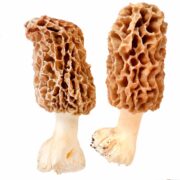
- Morel: foraged in spring and as prized for its flavor as truffle mushrooms
- Porcini: foraged in fall (and spring in mild climates), they are boldly earthy (forest floor) with hints of nuttiness. Outside of their fresh season, you can often find them as a powder (which would be delicious added to a risotto).
- Truffles: considering these can sell for $2,500 per pound (yep!), I doubt you have some on hand. But if you have a truffle salt or oil that you like, definitely use it for any wild mushroom risotto recipe you find yourself making.
Recipe
Ingredients
- 4 tablespoon butter or substitute olive oil
- 1 pound wild mushrooms a mix of shiitake, king oyster, maitake, and beech mushrooms
- ½ pound cremini mushrooms and/or portobello
- 4 cloves garlic
- 1 small yellow onion or 2 shallots
- ½ teaspoon salt
- 6 sprigs fresh thyme or 1 teaspoon dried thyme
- 1 ½ cups Arborio rice
- ⅔ cup dry white wine or sub with more broth
- 5 cups chicken broth
- ½ cup Parmesan cheese freshly grated, not canned
Garnish
- ¼ teaspoon finishing sea salt
- ½ teaspoon fresh cracked pepper
- fresh thyme or parsley
Instructions
Prepare mushrooms & aromatics
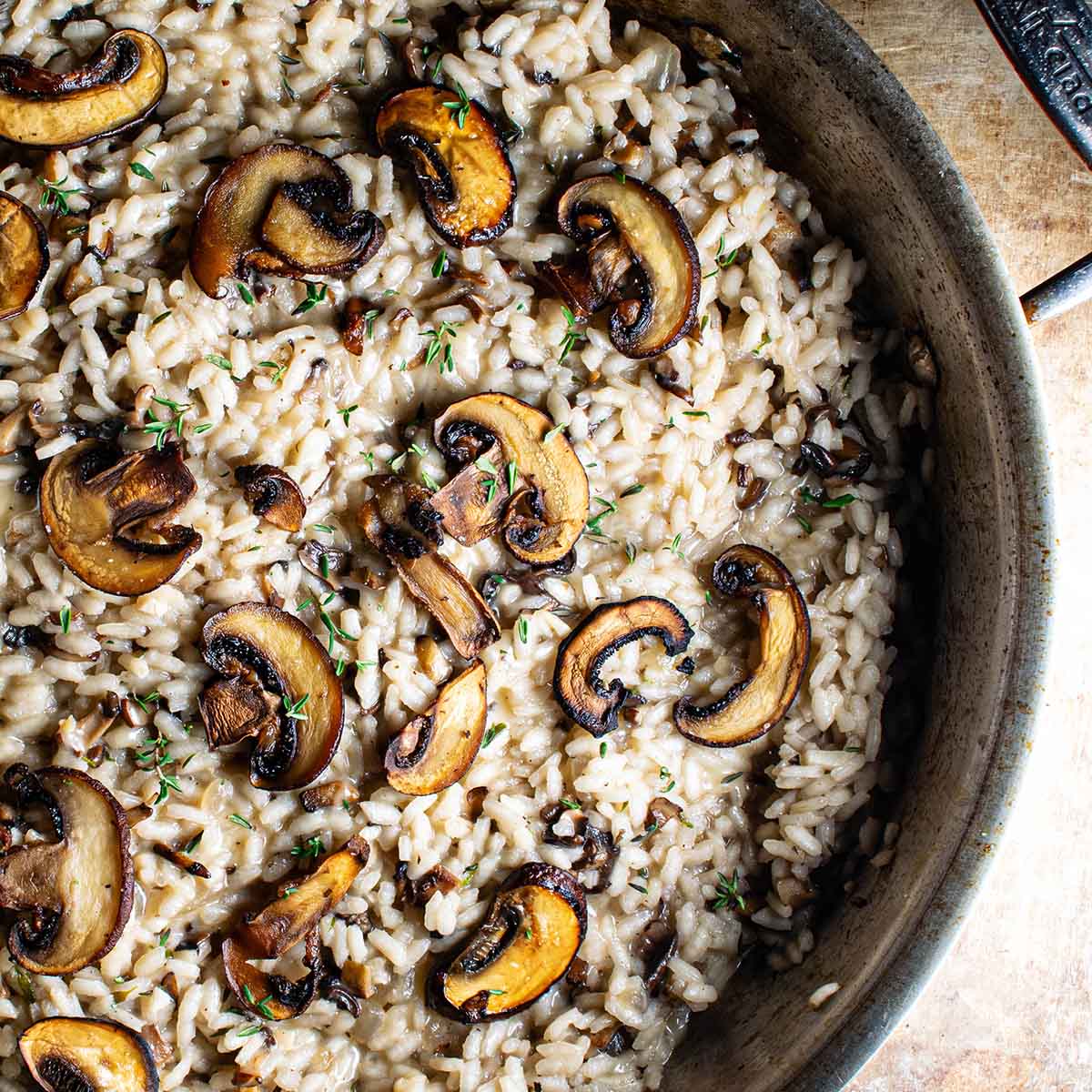
- Optional: set aside some mushroom slices for pan-frying (which will be added to the top of the risotto when serving)
- Dice mushrooms into ¼" pieces. They should blend into the risotto without their texture being very noticeable. Dice the shallots and garlic.
Cook mushrooms, etc
- Optional: add 2 tablespoon oil to a large skillet and pan-fry spare mushroom slices, flipping once until browned and the edges are crispy. Remove from pan and set aside on a paper towel lined plate. Sprinkle with salt while still hot.
- Add 2 tablespoon of butter to the skillet over medium heat. Add mushrooms and onions and cook until soft, golden, and aromatic. Add garlic and cook for 2 more minutes (adding it sooner will cause it to burn). Add in salt.
Make risotto
- Add 2 more tablespoon of butter to the pan (leaving the mushrooms and onions in there too). Once melted, add in the arborio rice and toast for 3-4 minutes (this adds flavor).
- Add wine (or sub with broth), scraping the pan with a wooden spatula to pick up all of the browned, flavorful bits. Add in thyme sprigs. Add in about ¾ cup of the broth (eyeball it, no need to be exact). Let it simmer, stirring often, until it's mostly absorbed.
- Repeat: add in broth, about ¾ cup at a time, stirring until it is absorbed. Continue until the risotto is al dente (soft but with a slight chewy bite). You may not use all of the broth, or you may use a little extra.
- Remove the woody thyme stems. Then stir in the cheese and serve.
Notes
Nutrition

Other recipes & resources
After sampling what felt like endless amounts of mushrooms from the farmers market, I came to appreciate the different flavors, textures, and uses for each variety.
I share those characteristics on each mushroom variety's page, along with recipes uniquely suited for them. Check out my mushroom guide.

If you're looking for classic cremini mushroom recipes, I've got you covered. Try my jägerschnitzel recipe (breaded pork chops with a mushroom gravy), or any other classic listed below.
For more risotto recipes, check out the recipes for scallops with corn risotto as well as asparagus risotto with ham.
If you're wondering what else is currently in season, check out my calendars to see what produce is in season each month (and coming up soon).


Leave a Reply