There are a lot of excellent potato leek soup recipes out there. Many are loaded with heavy cream, cream cheese, and bacon. While those are absolutely delicious, I wanted to make a potato leek soup that was a little bit lighter, but still full of flavor.
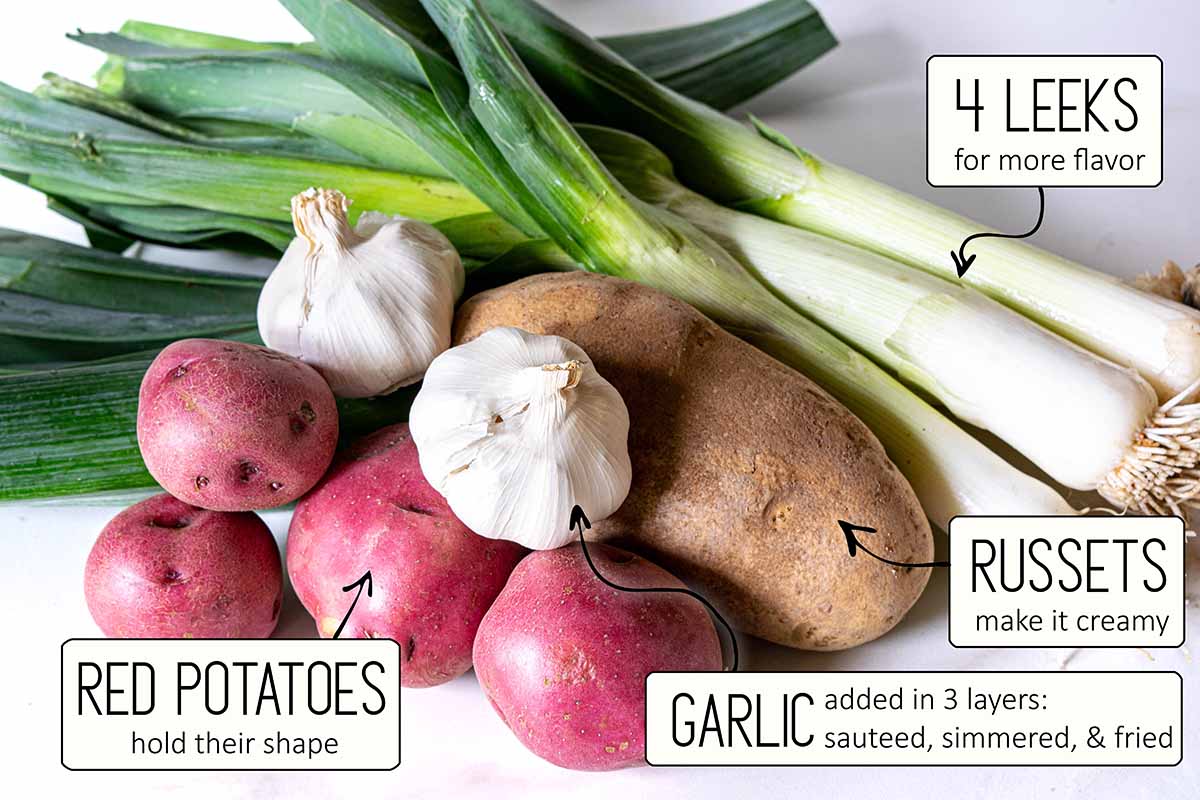
Here's how I built up the flavor after a lot of trial and error (and science):
- Leeks: use a lot of them (4 to be exact), and lightly saute to keep the flavor fresh
- Potatoes: use russet potatoes for a creamy texture without heavy cream and red potatoes for chunks that hold their shape (optional)
- Garlic: added in 3 layers for a deeper flavor (sauteed in butter, a whole head simmered in the soup, and fried garlic chips or garlic scapes for the garnish
Jump to:
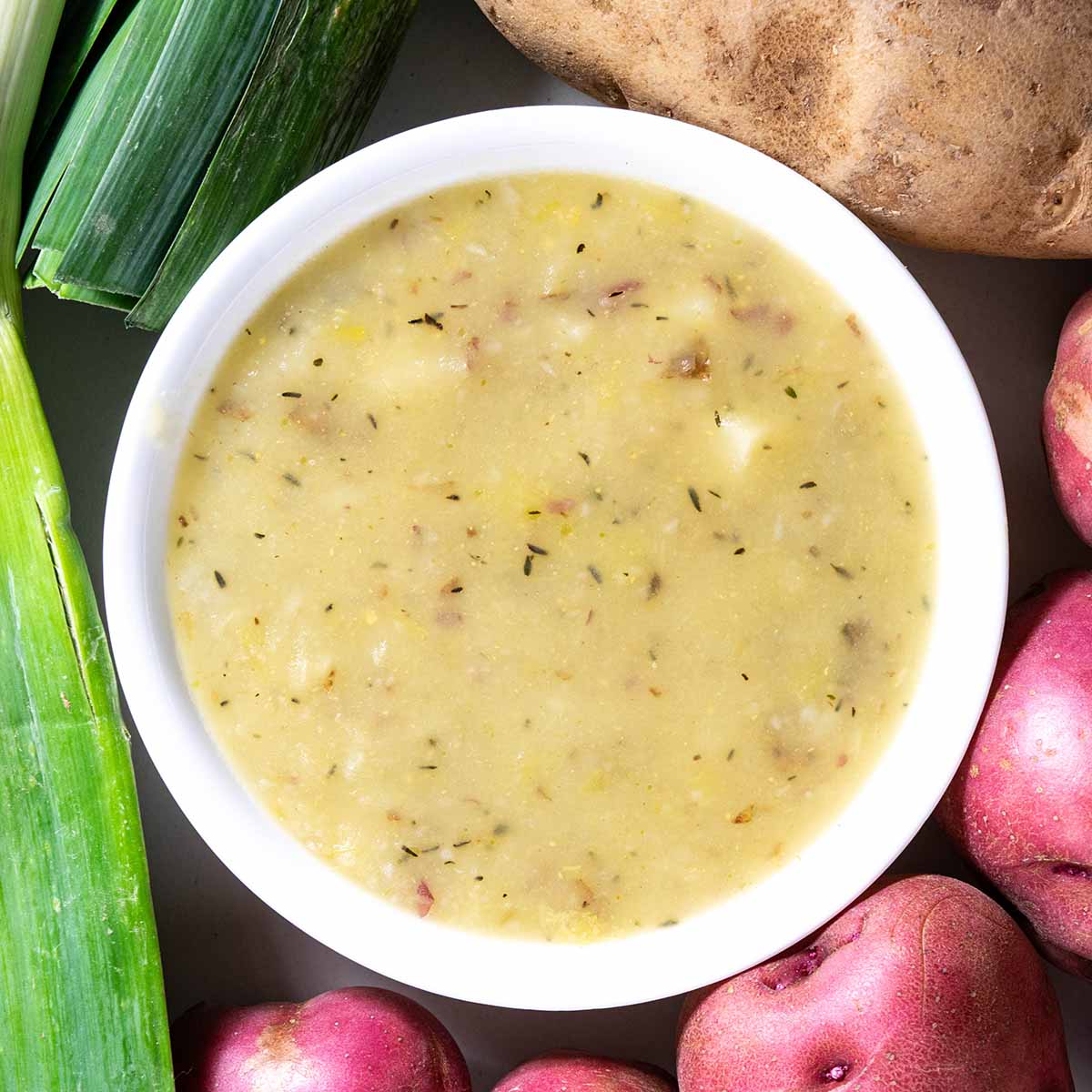
How russet potatoes make the soup creamy without heavy cream
Russet potatoes are known for their starchy texture, which is why they make wonderful baked potatoes and fluffy mashed potatoes.
They also make soups creamy. As the potatoes simmer, heat and water cause their starch granules to absorb liquid and gelatinize. Pureeing the soup disperses the gelled up starches throughout the soup.
This creates that classic creamy soup texture without heavy cream or flour. This method doesn't replace the fatty rich flavor of heavy cream, but it still feels velvety and substantial.
I use this same trick for my loaded zucchini potato soup that also skips the heavy cream.
I peel the russets since we want them to break down and blend up easier. I use an immersion blender and continue just until it's smooth and pureed. Over-blending can cause a stickier gluey texture.
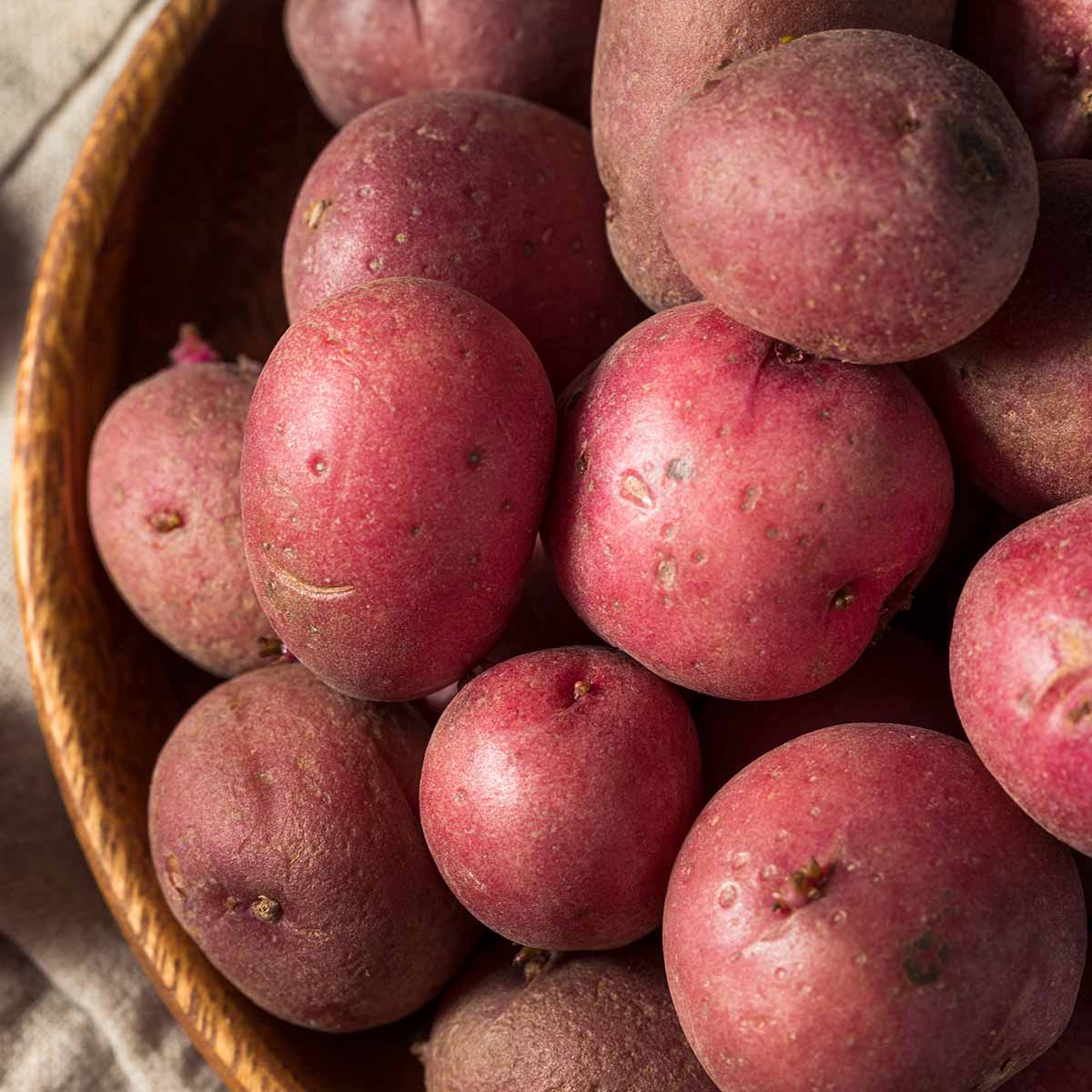
Why I use a second potato for the chunks
Red potatoes are categorized as waxy. They contain less starch and more moisture than russets, so they hold their shape particularly well when simmered in a soup instead of falling apart.
They don't need to be peeled either, since the skin is thinner and doesn't have a strong earthy flavor like russet skin does.
Once all of the potatoes are soft, I scoop out as many of the red potatoes as I want for a chunky soup. Then I return them after I puree the soup.
But what happens if I mix up some of the russets and red potatoes?
- Red potatoes: it's fine if some of these are blended up. The texture will still be good and some skin flecks show, making the soup look hearty.
- Russet: If some russets are scooped up and set aside with the red potatoes, they might have a mealy texture. They continue to break down as the soup is stirred, stored, or reheated.
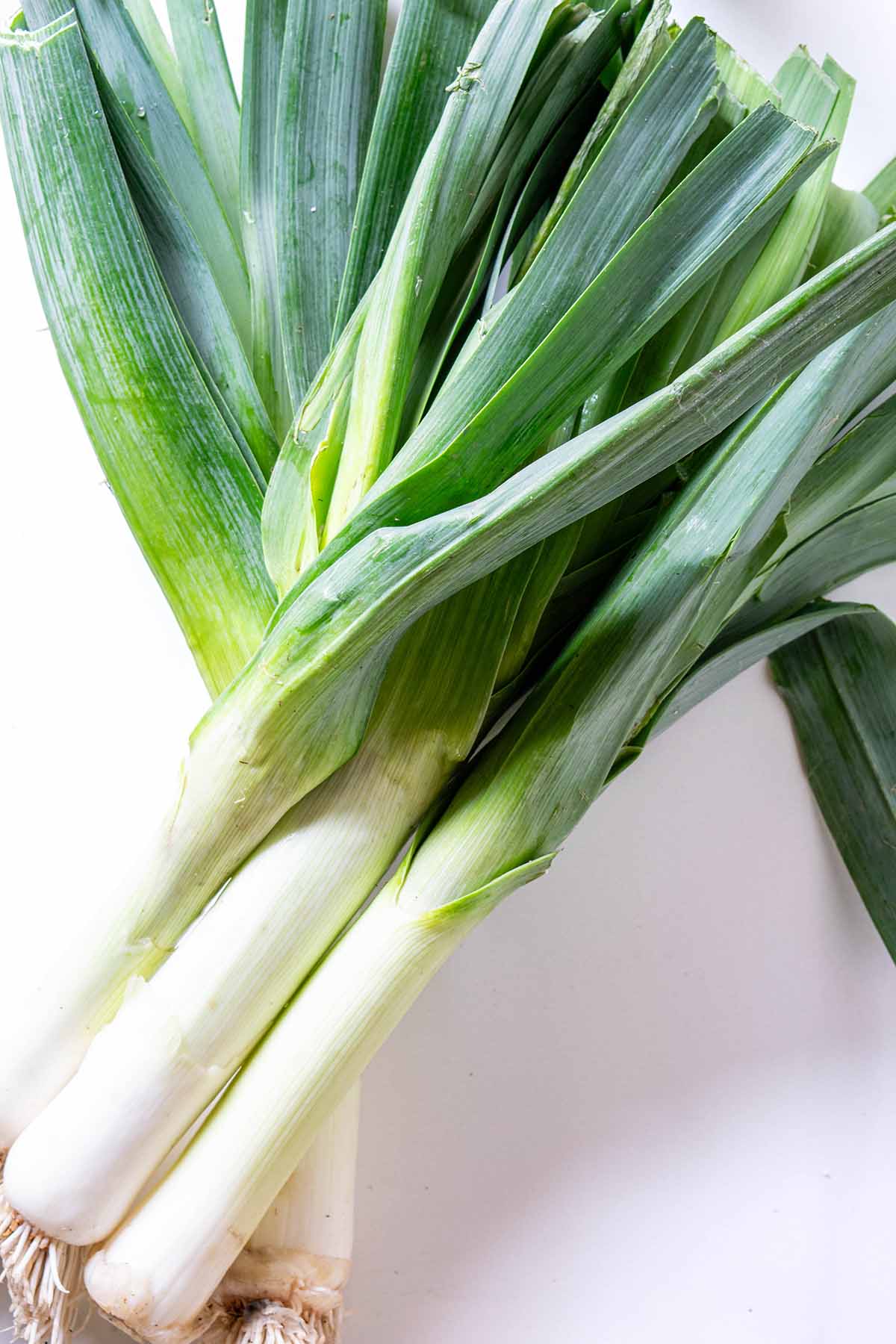
How to clean, cut, and cook the leeks
Look for leeks that are firm and crisp where the tops haven't starting wilting or yellowing.
Fresh leeks should last in your fridge for 1-2 weeks, or longer if they were recently harvested from your garden or the farmers market.
Store them in an open plastic bag in the crisper drawer to reduce moisture loss without trapping a lot of condensation.
You are going to end up using the white and light green parts of the leek stalk. The dark green leaves are tough and fibrous and will be discarded.
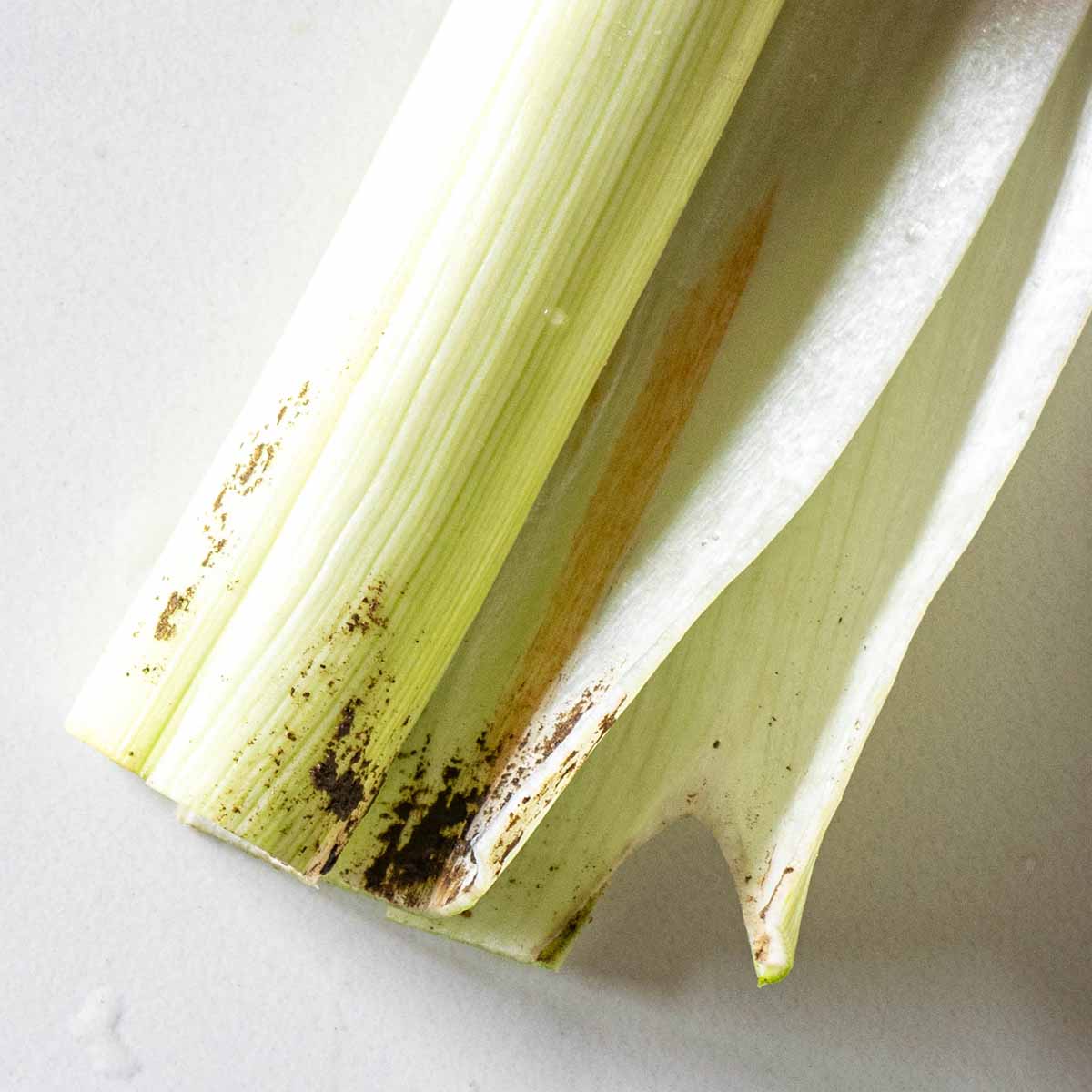
Why leeks always have dirt in them
While farmers try to send you clean leeks, they often have dirt lodged in between the layers.
That's because they mound dirt up high around the base of the stalks to keep them tender as they grow. But it also means that soil can get lodged in between the tight layers.
But the downside is that dirt can get trapped as it grows or from rain washing it in between the layers.
Washing leeks is quick and easy.
- Cut off the bottom root end
- Cut off the stiff green leafy tops
- Cut the remaining white and light-green stalks in half, lengthwise, so you can pull the layers apart to rinse under water. If they are exceptionally dirty, you can also chop them and rinse thoroughly in a colander or salad spinner.
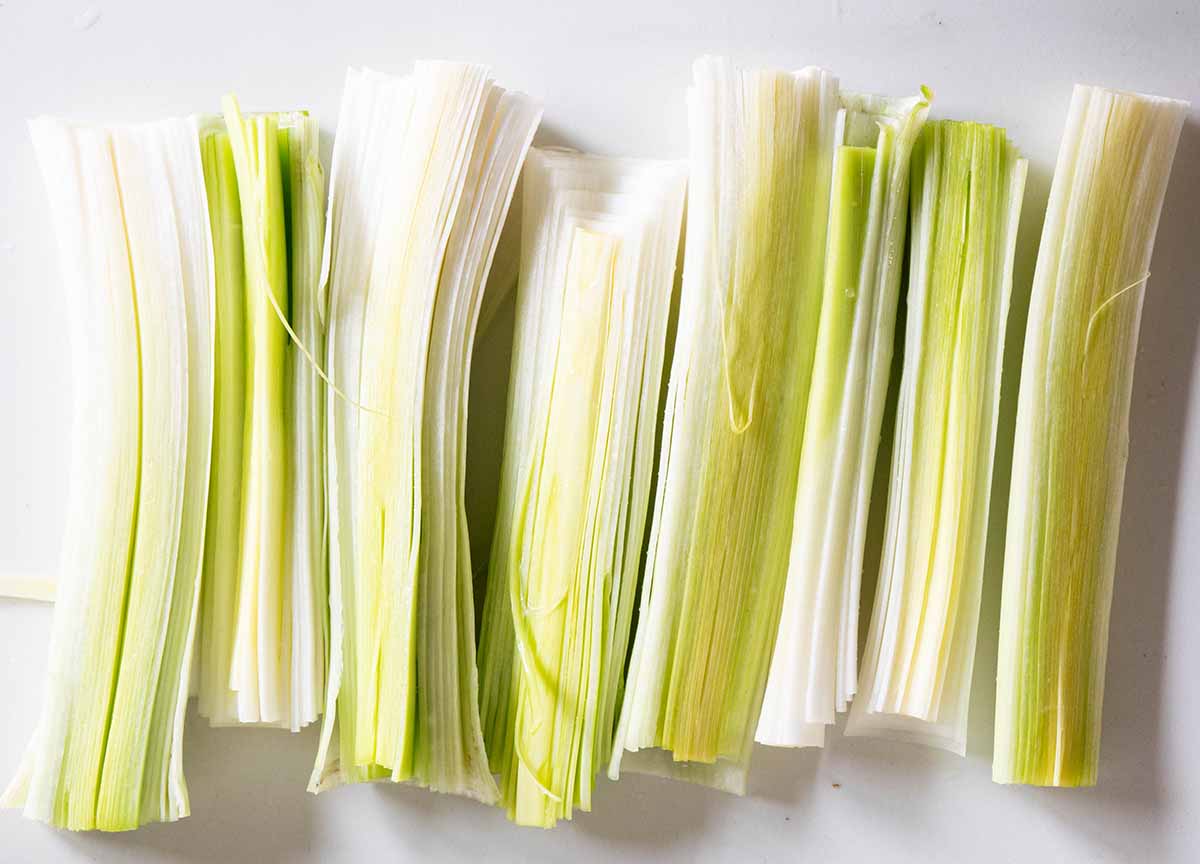
Why you need to cut the leeks across the stalk
Once the leeks are cut in half the long way, and washed, you cut across the stalks to make half-moon shapes that are about ¼ inch thick.
Slicing across the stalk like this allows them to soften and easily blend into a smooth soup. If they are sliced in the other direction, they can sometines be stringy and hard to blend.
The leeks will cook up relatively fast and quickly soften when sauteed with the garlic and butter. They are also thin enough that they easily blend into the smooth soup when pureed.
Cook leeks until soft and pale for the best flavor
The goal of cooking the leeks is to start the softening process and get the desired flavor.
Gently cooking the leeks until they are translucent or faintly golden reduces the pungent, sulfurous flavor.
At this stage, the leeks have a delicate, sweet onion flavor. This is the perfect stage! At this point, add broth to maintain the flavor while allowing them to continue to soften while they simmer.
Here's what to expect from their flavor at each stage:
- Raw: very sulfurous and oniony
- Soft & pale: mild, sweet, and gentle onion flavor - this is what we're going for!
- Lightly golden: deeper flavor with a hint of nuttiness and more savory
- Deeply browned: a more roasted, caramelized flavor (losing the fresh leek flavor)
- Burned: bitter and will spread throughout the soup
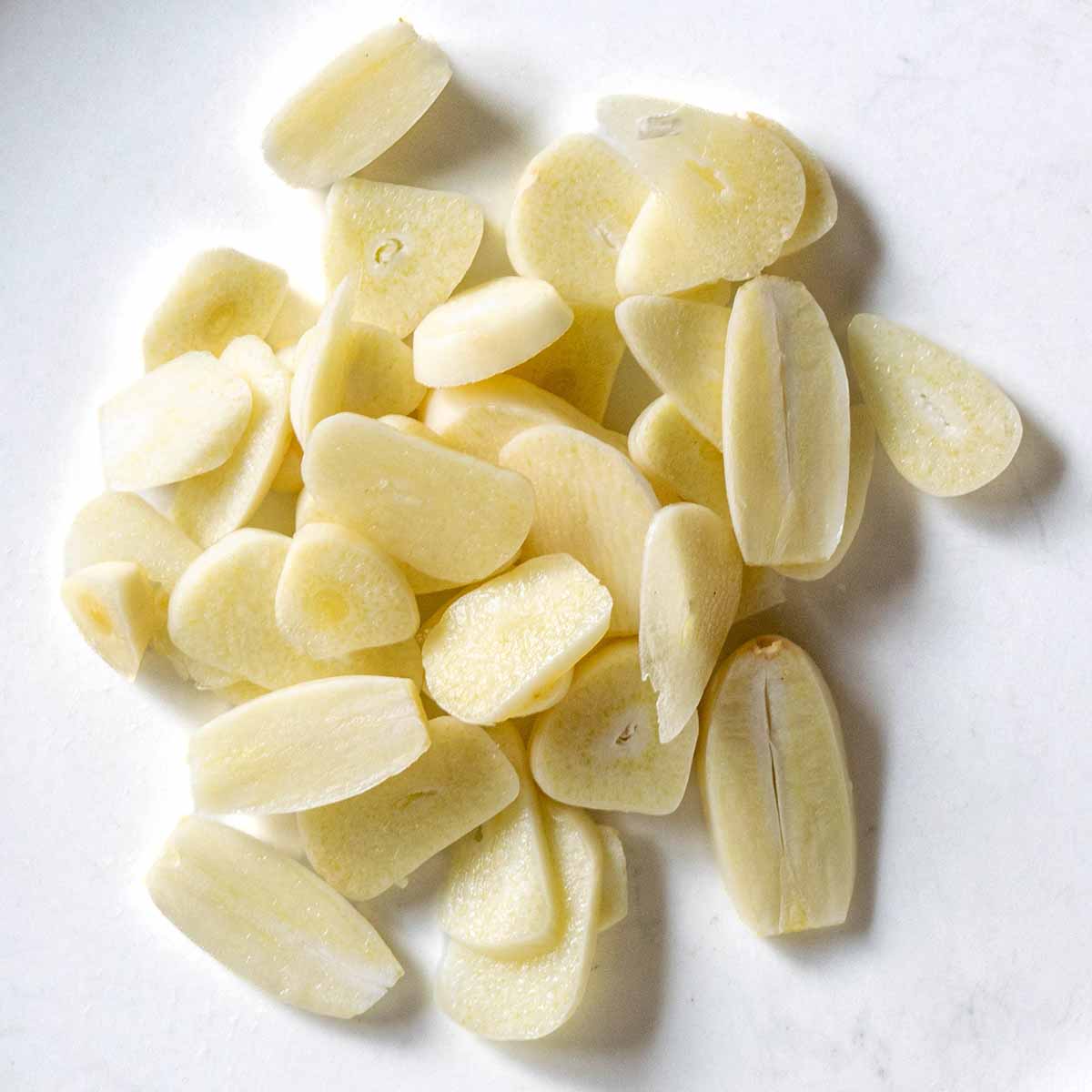
Garlic gets layered in
This soup uses a lot of garlic, but the flavor is soft and mellow rather than pungent or overpowering.
- Minced & sauteed: savory and aromatic
- Whole head simmered: mellow and slightly sweet
- Sliced & pan fried: toasted and concentrated
Saute chopped garlic with leeks for an aromatic base
Garlic has a complex flavor that changes depending on how it's cut and cooked.
When garlic is chopped, the cells rupture and create that characteristic sharp garlic bite.
Sauteing the chopped garlic creates cooked-garlic flavors that you can't get with just simmering in broth. The oil lets the garlic cook at temperatures higher than boiling, which changes the flavor. The resulting flavor is still characteristically sharp, although slightly mellowed out.
Another thing the oil does is distribute the garlic flavor throughout the soup. A lot of the garlic flavors compounds are fat soluble, which is why adding it during this step matters.
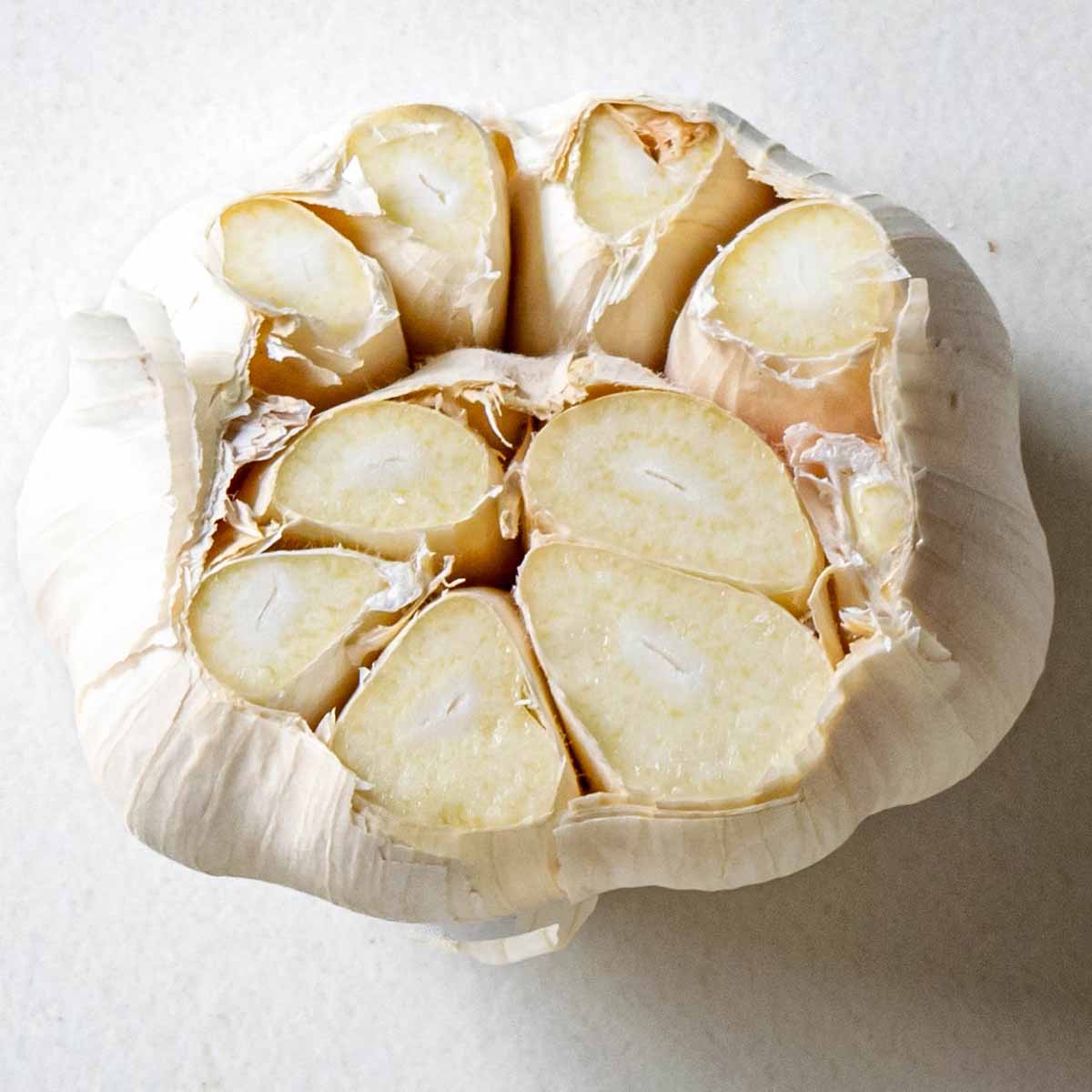
Simmer a whole head of garlic for a soft, mellow garlic flavor
Simmering a whole head of garlic in the broth gives a very different flavor than sauteing chopped garlic. It's mild, slightly sweet, and almost buttery.
The head of the garlic is cut off for two reasons:
- Exposed cloves lend more flavor to the broth
- It's easier to squeeze the cloves out and back into the soup
The head of garlic subtly flavors the soup while it simmers. When you take the head out, you can taste the soup to see how you like the flavor.
If you want some more of that soft, mellow garlic flavor, squeeze the cloves back in. I do this by using a set of tongs and squeezing toward the bottom so the cloves are expelled as a paste.
It's hard to add too much garlic flavor to a soup this way. It can be done, but it's surprisingly forgiving compared to the chopped garlic.
I've simmered two whole heads of garlic in this potato leek soup and it still wasn't overpowering. It was noticeably more garlicky, but not overwhelming.
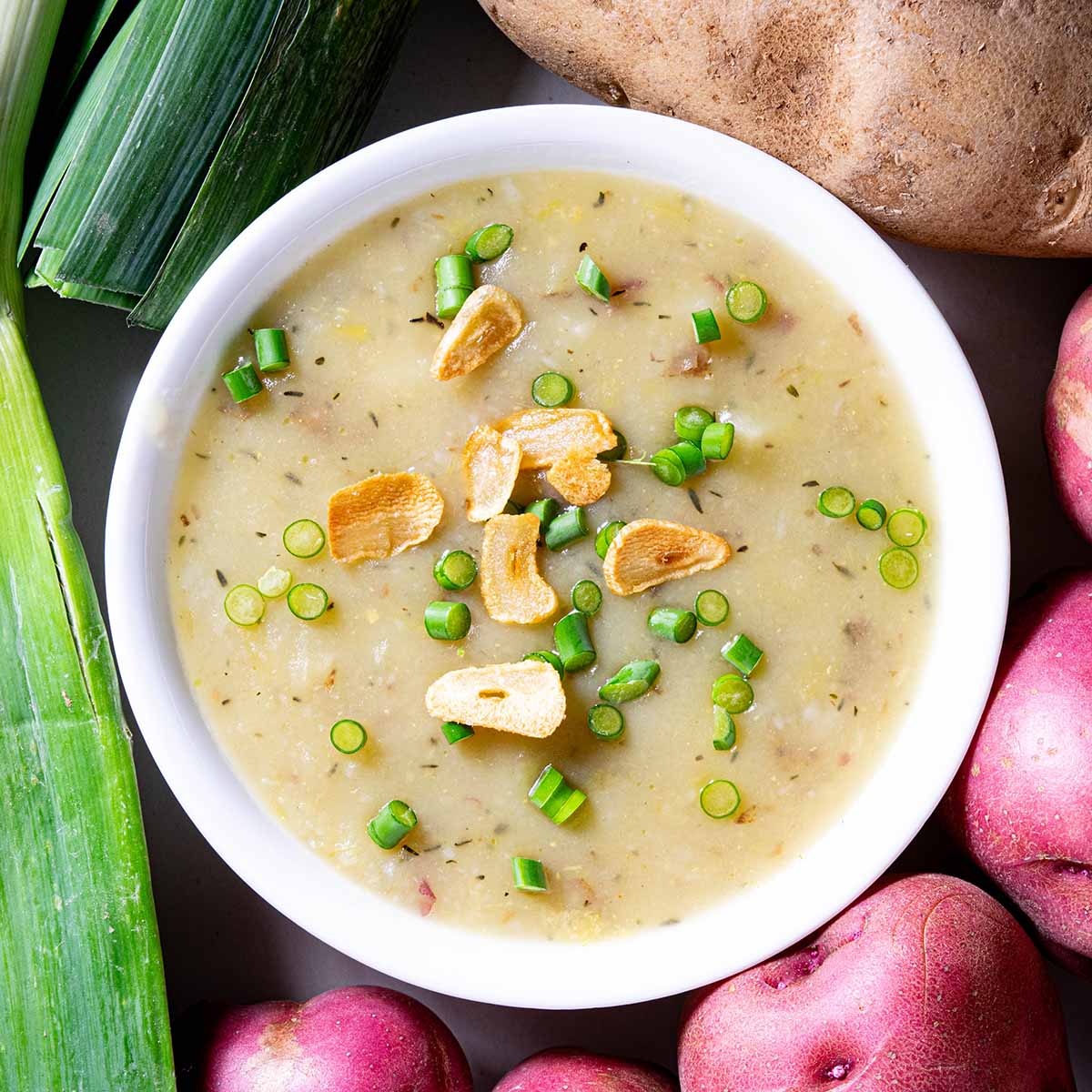
Add garlic chips for a toasted flavor
The sauteed garlic is savory and aromatic and the simmered garlic head is soft and mellow. Those flavors are integrated into the soup.
But the garlic chips are meant to add a burst of concentrated, toasted flavor.
They add flavor in a single bite, without spreading throughout the rest of the soup and taking over.
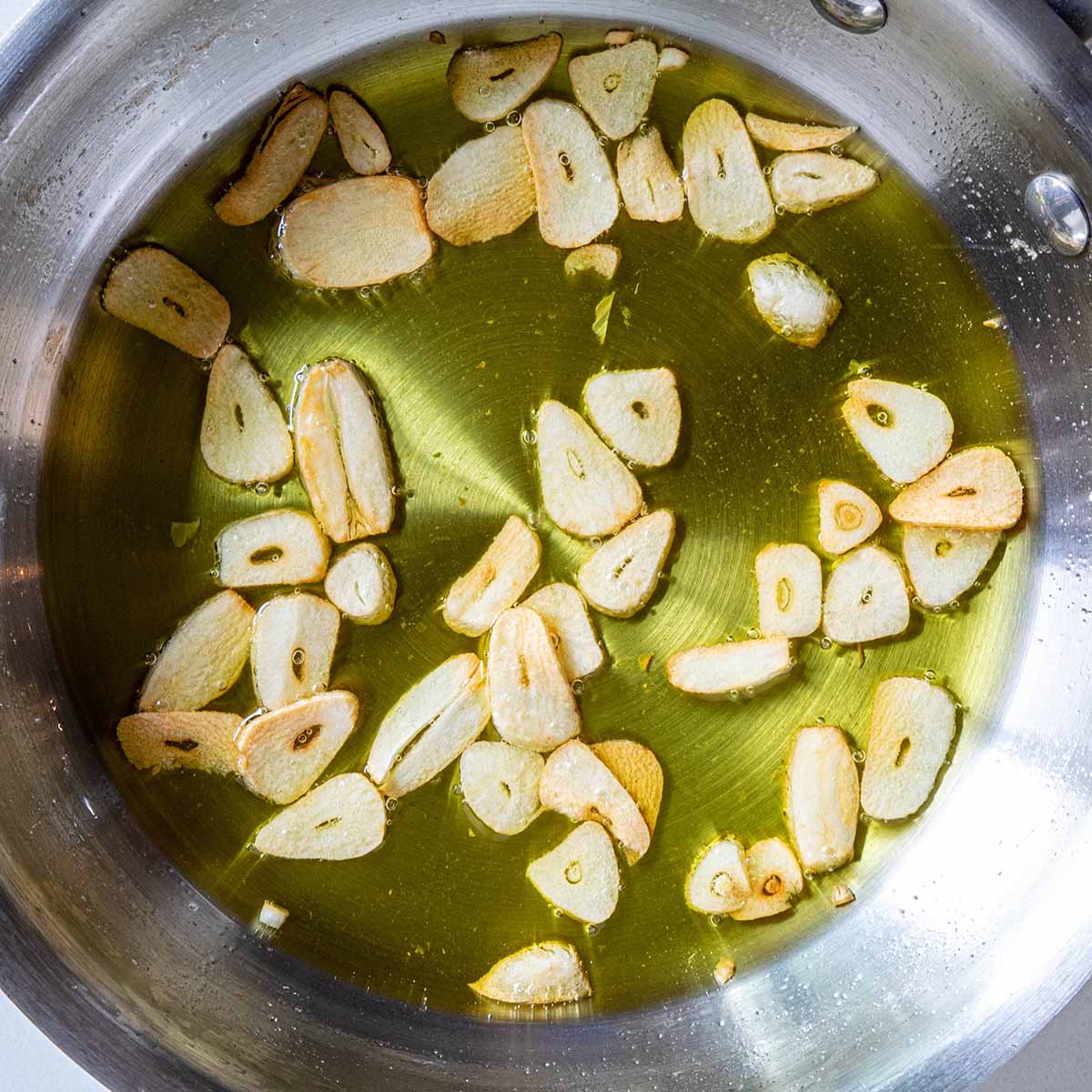
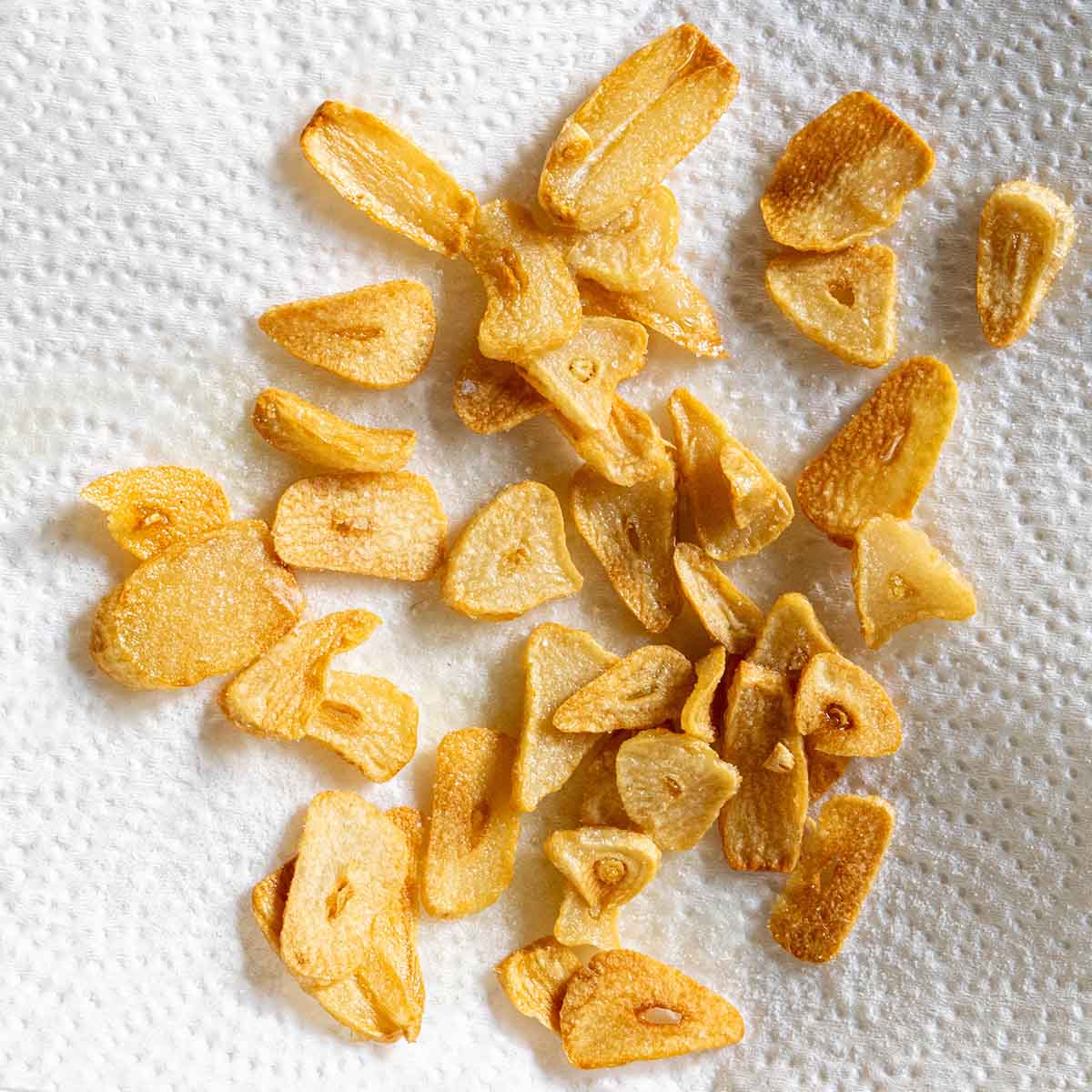
To fry the garlic, add a shallow layer of oil the a frying pan. Heat the oil to 350-375F. I actually use an infrared laser thermometer and point it at the oil, since the oil is too shallow for a clip-in thermometer.
Cook the garlic slices until they just start to turn a light golden color. They will continue to cook for a tiny bit longer after you pull them out.
They can overcook extremely fast, and a medium to dark golden brown color can start to taste bitter and acrid.
Immediately after you remove them, sprinkle with some fine sea salt and let cool on a paper towel.
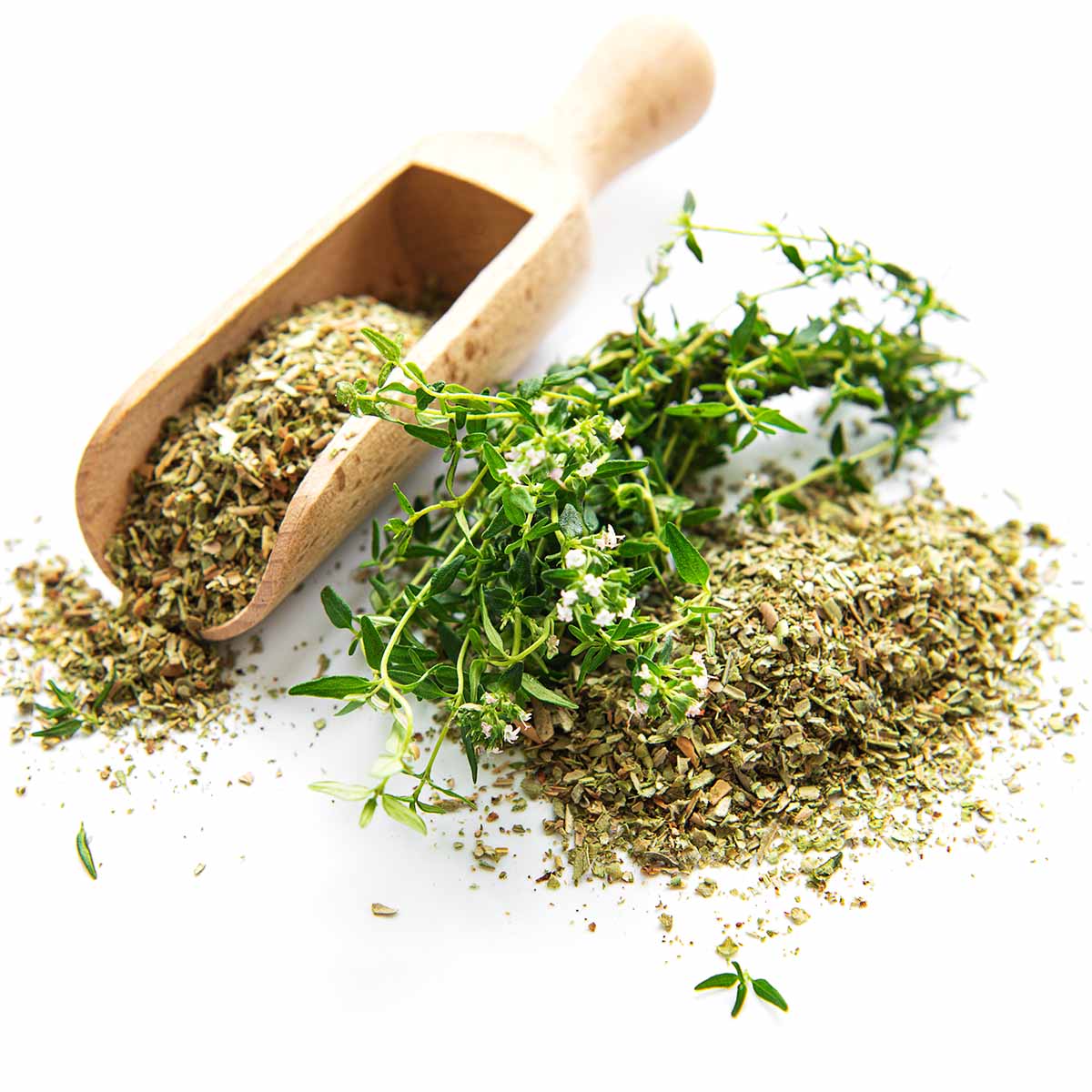
Fresh herbs add flavor while they simmer in the soup
I add sprigs of fresh thyme to the broth while it simmer for a more delicate and brighter flavor.
It's easier to work with than you might think. I throw the whole sprig in without bothering to remove the tiny leaves from the delicate stems.
While the whole sprigs simmer, the leaves naturally fall off and into the soup. When I'm ready to puree the soup, I just pull out the remaining woody stems with some tongs. That's it!
If you have fresh bay leaves, those also add a brighter flavor that's hard to describe. I'd say it's slightly floral with hints of eucalyptus. It's a more complex flavor that is lost with dried bay laurel. I actually grow bay laurel indoors all year, just for soups and stews!
If you only have dried herbs, you can substitute the bay leaves 1-for-1. But when using dried thyme, start by adding 1-2 teaspoons along with the minced garlic for a quick saute before you add the broth.
Which type of broth to use
If you have a homemade chicken or vegetable stock, now is the time to use it. It will definitely shine in this soup.
Otherwise, use your favorite brand of stock. My go-to is the Better than Bouillon brand.
I make so much soup throughout the year, I buy it in 6-packs from Walmart or Amazon and save about $3 per jar compared to my grocery store.
If you don't mind me sharing an affiliate link, here's one for 6-pack of Better Than Bouillon on Amazon, which gives me a small commission if you buy something.
Recipe
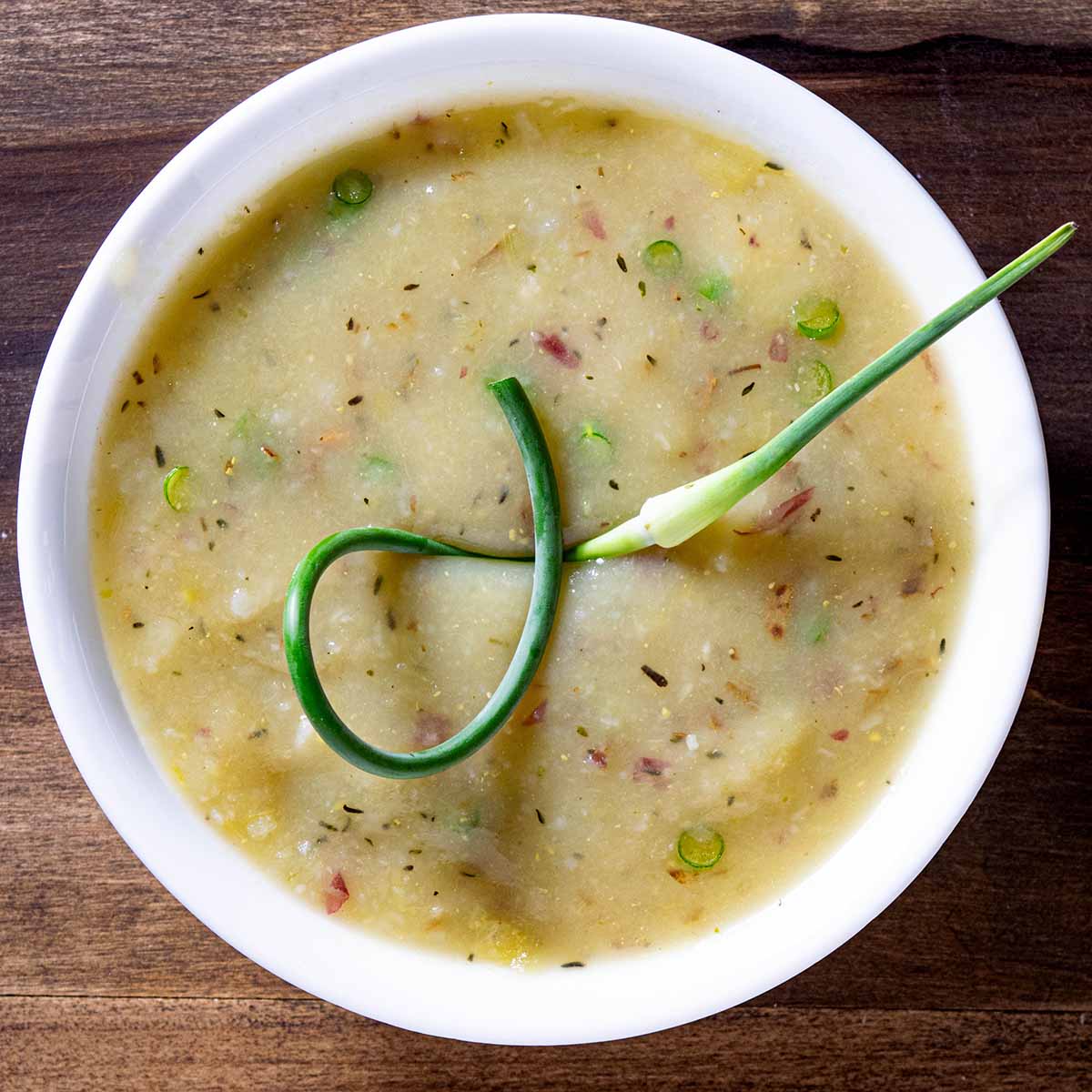
Ingredients
Soup Base
- 3 tablespoon unsalted butter olive oil for dairy-free
- 4 cloves garlic
- 4 leeks white and green parts
Soup
- 1.5 lbs russet potatoes
- 1 lb red potatoes sub russets for a completely smooth, not chunky, soup
- 6-7 cups chicken broth
- 1 head garlic
- 6 sprigs fresh thyme
- 3 bay leaves
- 1.5 teaspoon salt
Garnishes
- ¼ cup fresh chives
- Black pepper
- 4-6 cloves garlic for chips, or use chopped garlic scapes
- 3 tablespoon oil for chips
Instructions
Prep
- Leeks: cut in half the long way and wash between the layers. If it's really dirty, chop the leeks first and then rinse in a colander or salad spinner.Potatoes: peel russet potatoes, and cut the all potatoes into ½ inch cubes or so (no need to be exact).
- Garlic: Separate cloves from 1 head of garlic, peel and chop up 4 of those, to be used in the base. Peel and slice up 4-6 cloves (if you are making garlic chips). Cut the tops off the other head of garlic so the tops of the cloves are exposed (for simmering in the broth).
Saute the leeks with garlic & butter
- In a large pot, melt the butter. Add chopped garlic and leeks and cook until leeks are soft but not browned, about 5-10 minutes.
Add broth and aromatics, simmer for 20 minutes
- Add broth, the whole garlic head (with the top cut off), bay leaves, thyme sprigs, and salt. Bring to a boil then simmer for 20 minutes.
Add potatoes, simmer for another 15-20 minutes
- Add potatoes, partially cover the pot with a lid and continue to simmer for 15-20 minutes, until the potatoes are tender. While this simmers, fry the garlic chips.
Finish the soup
- Remove the garlic heads and squeeze the garlic onto a plate using tongs. The garlic should be a mashed consistency at this point. Add the squeezed garlic back into the soup and stir.
- Remove the bay leaves and thyme sprigs. If you want some potato chunks in the soup, use a slotted spoon to remove the desired amount. Then puree the soup, and add the potatoes back in.
- Taste and add salt or pepper if necessary. Add more broth to thin the soup, if needed. Top with chives, pepper and garlic chips.
- Top soup with chives and garlic chips and serve.
Garlic Chips
- Use a small frying pan and cover the bottom in a layer of oil, just enough to mostly cover the sliced garlic. Heat the oil to hot, but not smoking. Add sliced garlic to hot oil and swirl / push around to cook them evenly. After about 1 or 2 minutes, they will start to turn a light gold, watch them, because in seconds they will turn golden and after that they can turn dark gold and start to get bitter. Remove from pan at the light to medium gold stage, then cool on paper towels.
Notes
Nutrition
More creamy soups without heavy cream
I make a lot of pureed soups without heavy cream because I like to be able to rely on the texture of the vegetables to do that job.


Laura says
Love the garlic in this. thx for sharing.