Before you start layering your lasagna, pour a small amount of sauce into the bottom of the pan. Then build the layers:
- Noodles
- Ricotta mixture
- Any extras (spinach, shredded mozzarella, etc)
- Sauce
Repeat two more times. Then add your last layer of noodles topped with the remaining sauce. Wait to add the top layer of mozzarella until the last 15 minutes of cooking so it doesn't burn.
I'll show you how much of each ingredient I use per layer so you don't run out before you reach the top.
Why this order matters
The order actually matters for a few practical reasons:
- Sauce on the bottom prevents the noodles from sticking.
- Ricotta is easiest to spread directly onto the noodles.
- Sauce goes on last so it's in direct contact with the next layer of noodles, which is especially important when using oven-ready noodles.
- The top layer of mozzarella cheese is added during the last 15 minutes of baking so it can brown without burning.
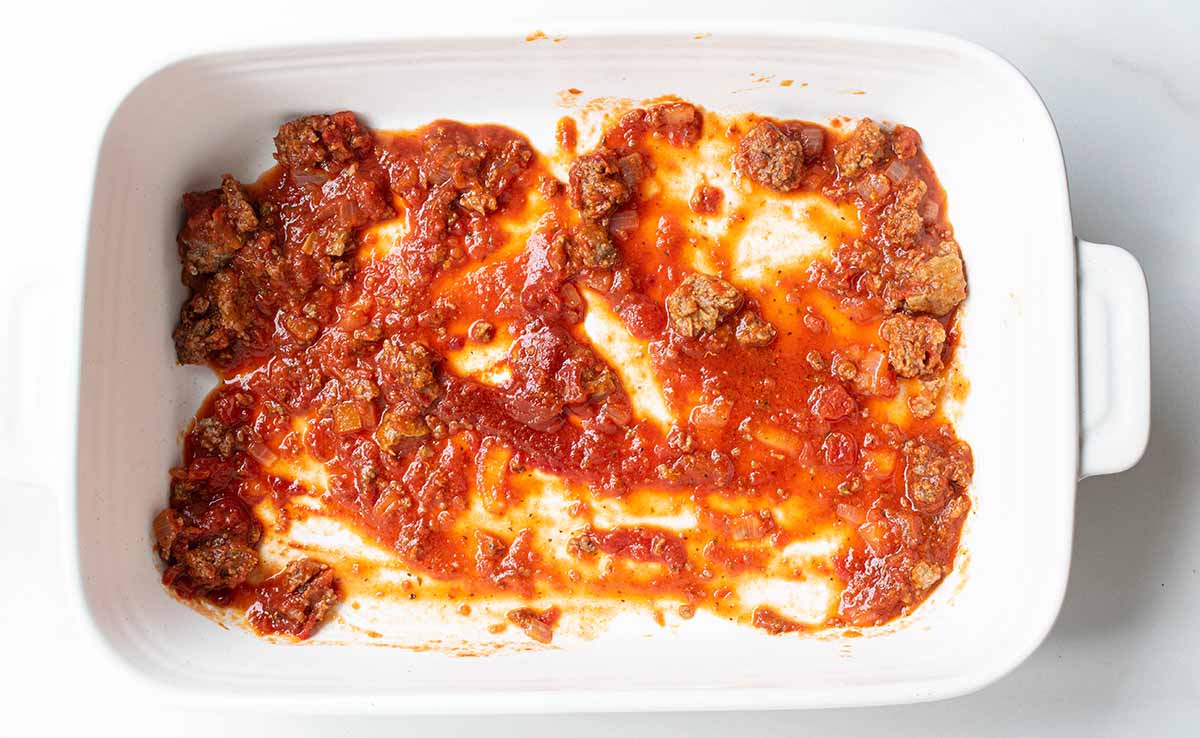
Start with sauce on the bottom
A thin layer of sauce on the bottom of your pan prevents the noodles from sticking. If you're using oven-ready noodles, this layer also helps make sure they have enough moisture to properly cook.
Add 1 cup of sauce to the bottom of the pan, unless your specific recipe says otherwise.
Types of noodles and how to use them
There are two types of lasagna noodles: ones that you boil before adding to the lasagna, or oven-ready noodles that you layer without cooking.
I arrange the noodles in distinct rows rather than overlapping them, which makes cutting the lasagna really easy.
It's especially important not to overlap oven-ready noodles, because the overlapping sections might not get enough direct contact with the sauce to fully soften.
Oven-ready noodles can be less forgiving
First, let's talk about oven-ready noodles. They are manufactured to be thinner so they can absorb the sauce while the lasagna cooks.
But you need to get the specifics just right:
- The right amount of sauce
- The right consistency
- Make sure noodles are in direct contact with sauce
Barilla recommends using 48 ounces of store-bought red sauce for a lasagna that fits in a 9x13 pan. And Bon Appetit points out that the sauce should be "runnier than normal" when using oven-ready noodles.
However, if you don't get the balance just right, one of the following happens:
- Noodles are undercooked
- The lasagna is runny from too much sauce or sauce that's too thin
I typically only use oven-ready noodles if I'm baking a lasagna hours or even a day ahead of time. The extra time sitting in the fridge and then reheating keeps it from being too runny.
Boiling noodles is more foolproof, but they can stick together
I almost always buy regular noodles that I boil before laying the lasagna. It does take an extra pot, but I have that going while I make the meat sauce, like in this spinach and meat sauce lasagna recipe.
I'm not the only one who prefers to boil the noodles. Food & Wine magazine tested five different methods of using noodles, from oven-ready to boiling. They heavily favored boiling the noodles first.
I try to time the noodles so they're ready when I'm about to start layering the lasagna in the pan so I don't have to worry about them sticking together.
I also always make several extra in case some spots stick or tear. Every box of lasagna noodles I've bought has had extra noodles anyway.
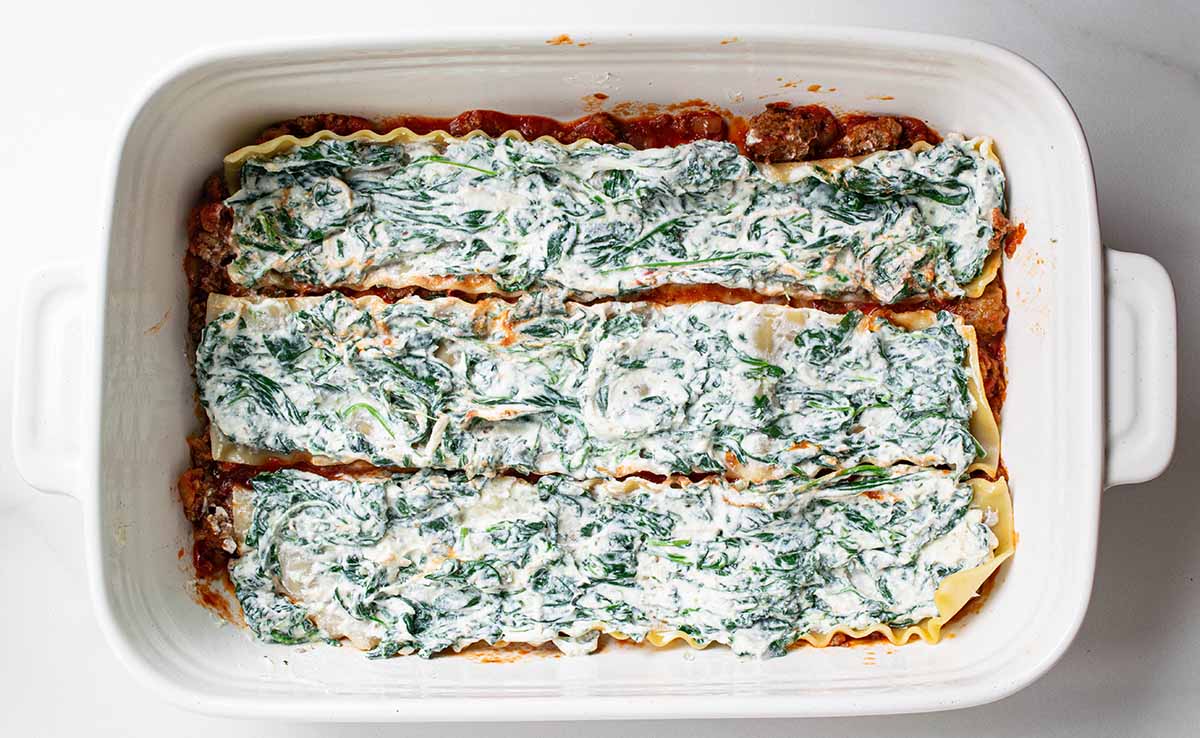
Build the middle layers
The best part of the lasagna is all of the stuff between the layers of noodles. But there's still a specific order!
Ricotta goes directly on top of the noodles
The ricotta filling spreads easiest when placed directly on top of the lasagna noodles. I like to dollop the filling around the noodles, then spread it out with the back of a spoon.
Most lasagna recipes use a 15 or 16-ounce container of ricotta, an egg or two and some extra cheese. This typically makes about 2.25 to 2.5 cups of filling.
For a standard lasagna with three layers of filling (and 4 total layers of noodles), I spread about ¼ cup of ricotta mixture per noodle, which ends up using ¾ cup per layer.
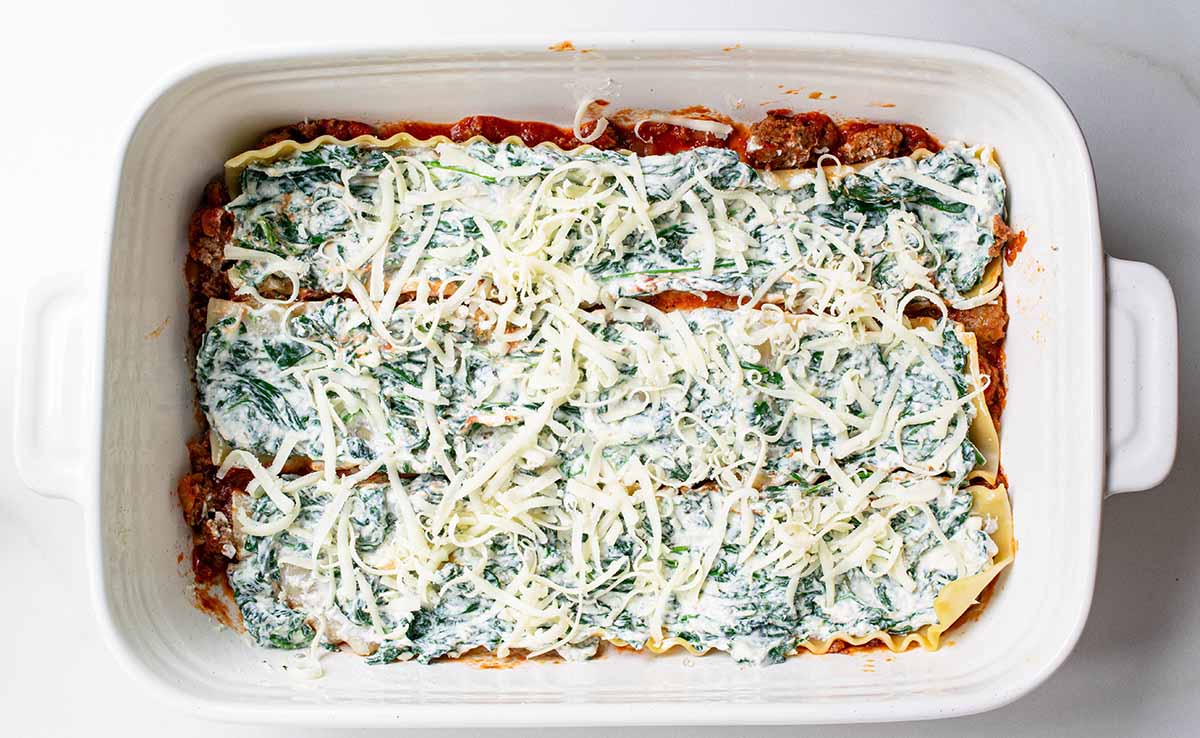
Add extra fillings next
Any other fillings should be added next, sandwiched between the ricotta and the next sauce layer.
The most common ones are shredded mozzarella and spinach, if they weren't already mixed into the ricotta. I prefer mixing the things like spinach directly into the ricotta for more even distribution.
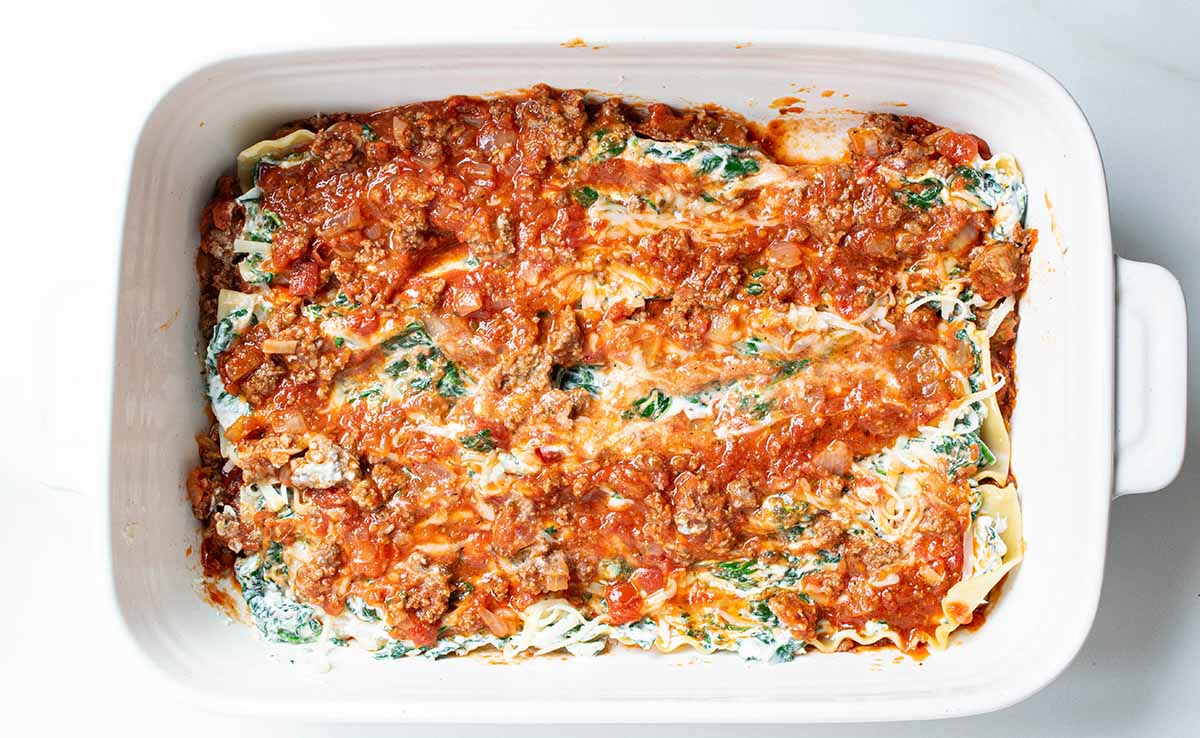
Pour sauce on last
Add your layer of sauce last. For a thinner sauce you can drizzle it over the top. For a thicker sauce, drop dollops around the pan and then spread it out with the back of a spoon.
Most recipes make about 4 cups of plain marinara or 5-6 cups for a meat sauce. Here's how much you'd end up using for each of those types of recipes:
- 4 cups of plain marinara: add ¾ cup per layer (plus 1 cup on the bottom of the pan and ¾ cup on the top)
- 6 cups of meat sauce: add a full cup per layer (plus 1 cup on the bottom and remaining 2 cups on the top)
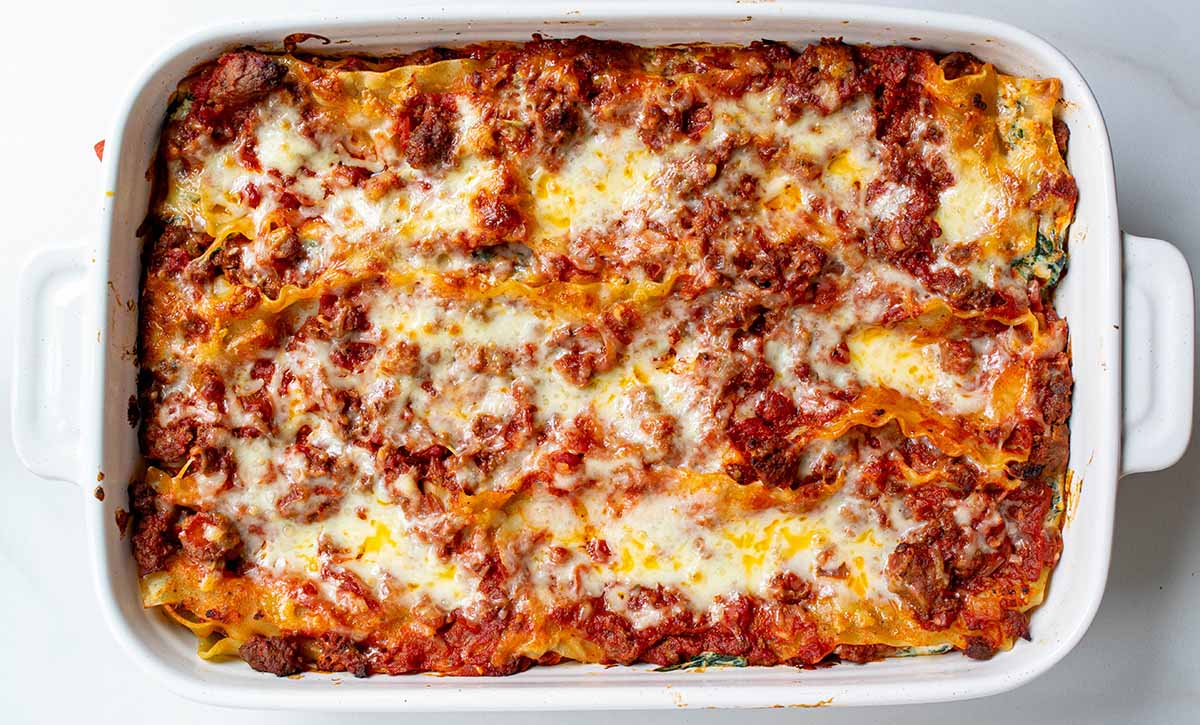
Repeat layers, then finish the top with noodles, sauce, and mozzarella
You'll repeat this for two more layers (or sometimes three for a really deep dish lasagna).
Then you'll finish with the top layer of noodles and remaining sauce.
Then add 1-2 cups of mozzarella cheese toward the end of baking.
How to bake the lasagna
Lasagna is usually baked somewhere between 350°F and 375°F for a total of an hour, plus additional rest time. Follow the recipe's instruction, of course, but here's the typical breakdown:
- Bake for 45 minutes, covered with foil
- Remove foil, add cheese, bake for 15 more minutes until cheese is browned and bubbly
- Rest for at least 15 minutes to thicken
The resting time might seem like an unnecessary step, but it really does work.The filling sets as the lasagna cools and I've found that even just 15 minutes makes a big difference.
More recipes & resources
Looking for some lasagna recipes to try? Here's my spinach lasagna with meat sauce, or try one of these other interesting variations:
- Lasagna with zucchini for the noodles from Downshiftology
- Mushroom and spinach lasagna with bechamel sauce from What's Gaby Cooking (uses no-boil noodles), or try this mixed mushroom version from Tasting Table
- Meatless lasagna with eggplant from Serious Eats
Leave a Reply