A club sandwich uses 3 slices of bread and two levels of fillings. This creates a few problems like excessive height, soggy bread (especially the middle slice), and slippery ingredients that slide out with each bite.
I've made a lot of club sandwiches and have figured out the best ingredients and how to stack layers to keep the sandwich intact.
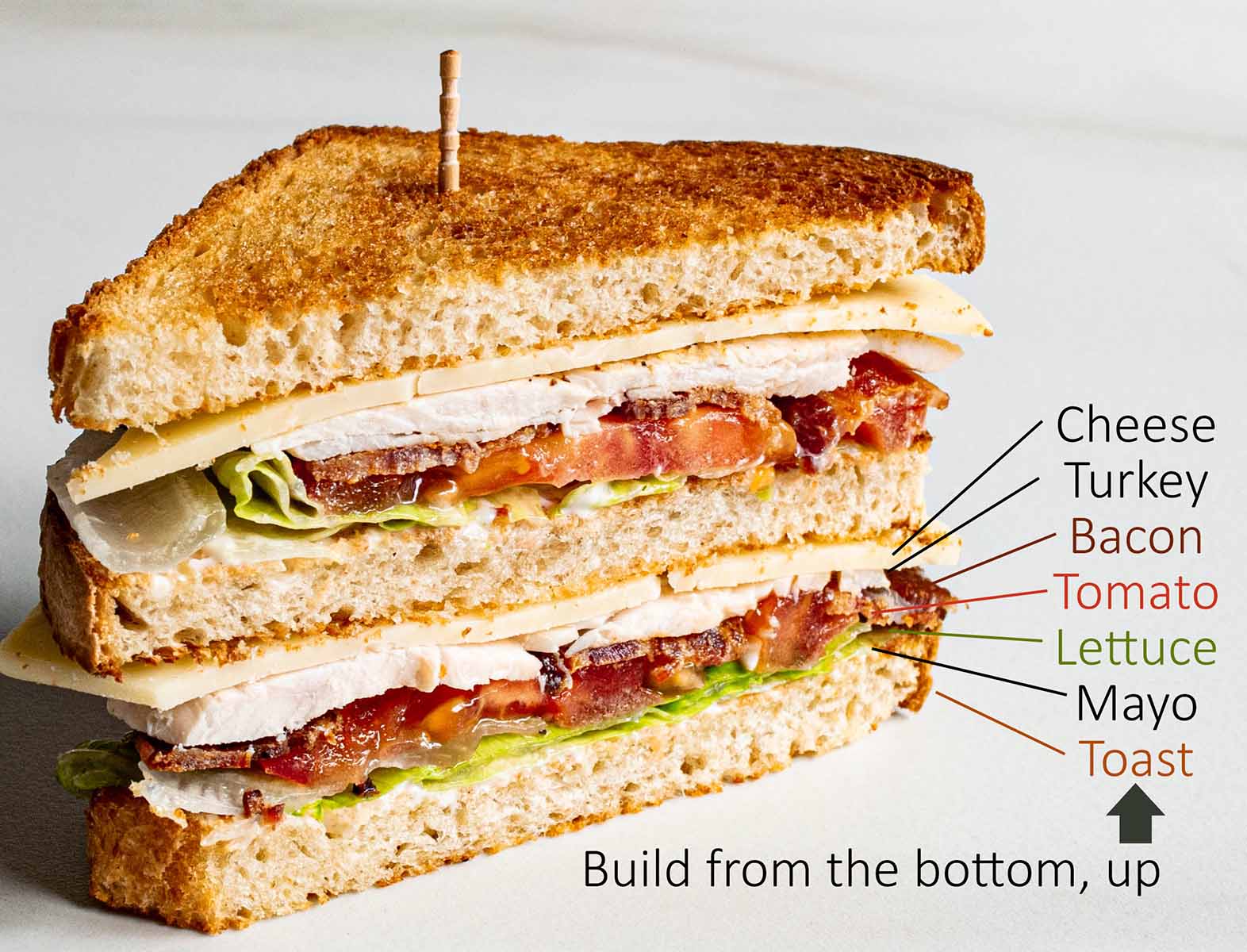
The 3 things a well-built club sandwich needs
The best club sandwiches have a manageable height, protect the bread from wet ingredients, and layer in such a way that slippery ingredients stay in place.
Let's take a closer look at exactly how to achieve each of these.
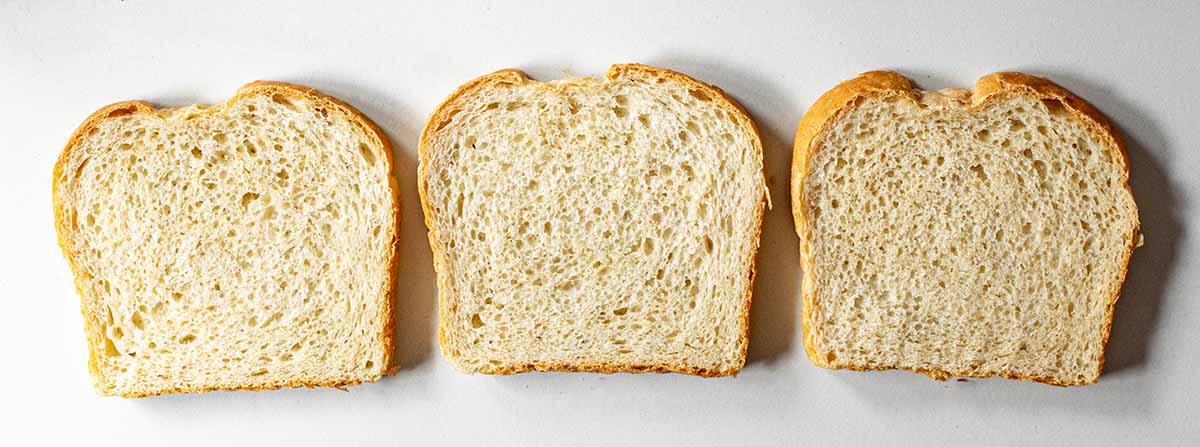
Manageable height: use thin-sliced bread and don't pile meat too high
The first thing to look for is thin-sliced bread (or slice your own loaf really thin).
Ideally the slices are about half as thick as a regular slice of bread. All three thin slices will only add up to the height of 1.5 slices of regular bread! If you want a store-bought recommendation, look for Pepperidge Farm Thin-Sliced bread.
The other thing is to keep the layers of meat small or modest. Don't pile them high like you would on an Italian sub. The delicate bread and stacked ingredients can't handle it.
Protect the bread from wet ingredients
Crisp, toasted bread is key for the texture and structure of a club sandwich. It will quickly fall apart if the bread gets soggy.
The first step is to toast your bread and then top it with a thin layer of mayo. It might seem counterintuitive, mayo is an emulsion of fat and liquid afterall.
In my tests, a thin, even coating of mayonnaise did help keep juice from the tomato slices from soaking into the bread too quickly.
The rest of the strategy comes from layering. Thoroughly dried lettuce goes under tomato slices to catch any juices, as another way to keep it from the bread.
The top layer should be a dry ingredient, like meat or cheese. That way, when the next slice of bread is placed on top, it won't soak up any water.
Keep ingredients in place by layering slippery ingredient between textured ones
Some ingredients want to slip out, especially tomatoes, and sometimes cheese if it gets wet.
I've found that layering them between more textured ingredients holds them in place.
- Tomato: place between lettuce and bacon, both have enough texture to grab onto it and hold it in place
- Cheese: keep away from tomatoes and mayo so it stays dry
I like to add cheese as my top layer because it won't make the bread above it soggy, and the rough texture of the toast grabs onto the cheese to keep it in place.
Choose ingredients that create a clean bite
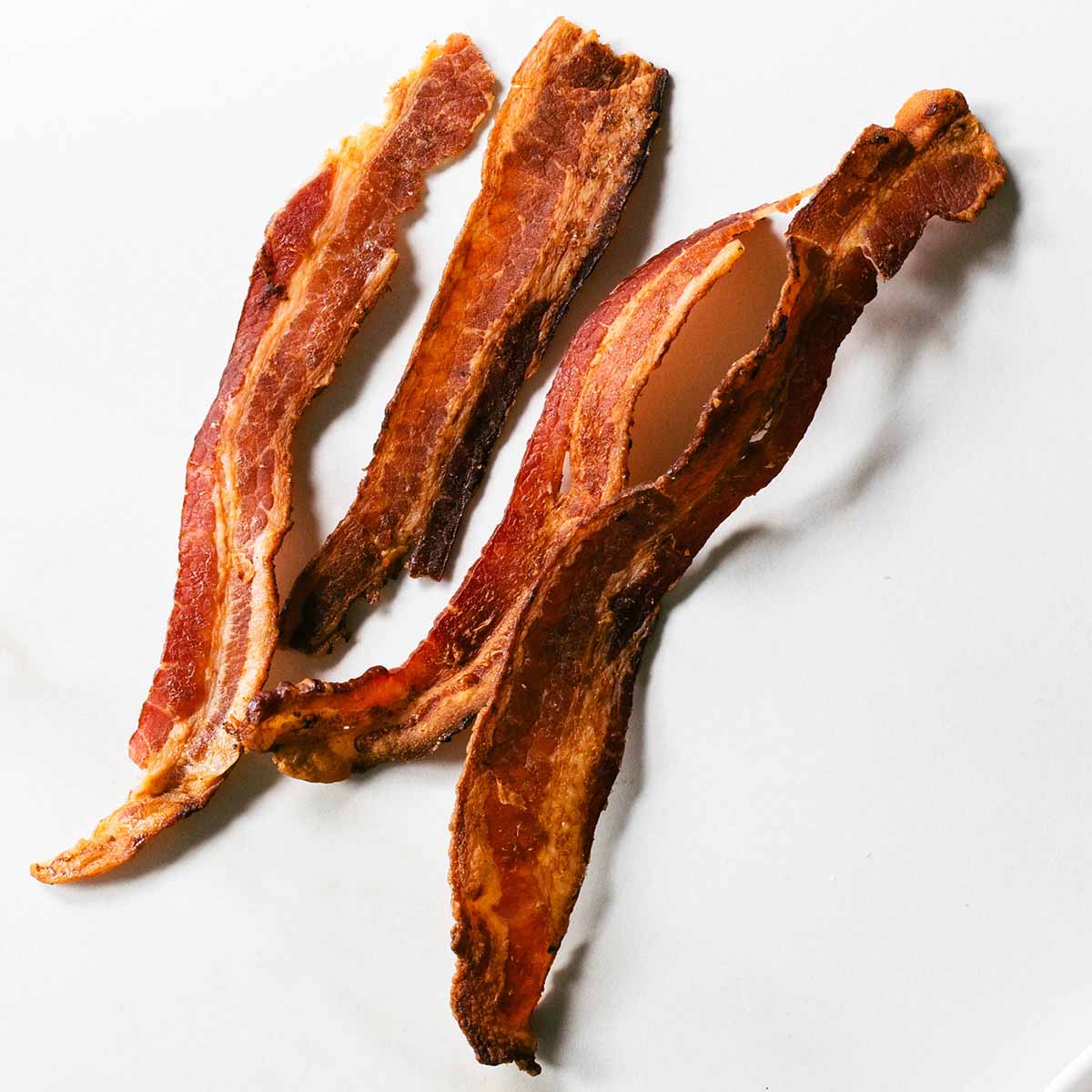
The other problem that a club sandwich can have is that ingredients slide out when you take a bite. Thick, chewy bacon is one of the biggest offenders here, but so is thick-cut poultry.
However, there are easy ways to make sure these ingredient break cleanly apart with each bite:
- Bacon: choose thin-cut bacon and cook it until it's crispy and easily breaks apart. If you insist on thick-cut (like farm style) bacon, chop it up before adding to the sandwich.
- Chicken and turkey: slice it as thin as possible. If you use thicker slices it's extremely important to cut across the grain so it easily tears when bitten into.
- Tomatoes: slice tomatoes thin and pat dry before adding to the sandwich so the whole slice doesn't pull off.
Lastly, while mayo is delicious on a club sandwich, don't spread it on too thick. That makes it too easy for the other ingredients to slide off.
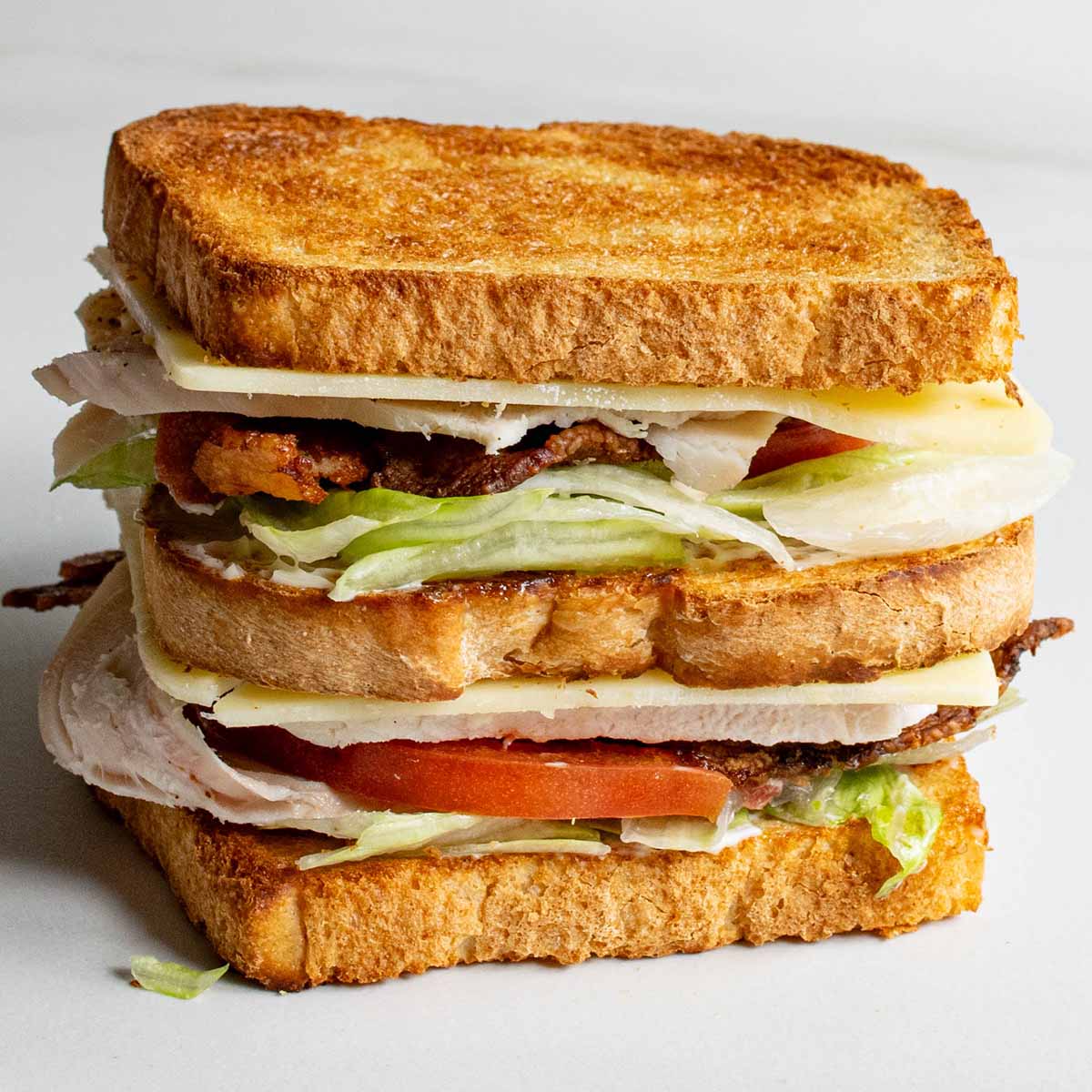
Build your own club sandwich: ingredients
A classic club sandwich has 3 slices of bread and typically each one is stacked with the same ingredients. Some versions put the meat on the bottom stack and the vegetable on the top stack.
Either way, you'll want a similar amount of ingredients. Here's what you'll need and how much:
| Ingredient | Amount | Notes |
|---|---|---|
| Bread | 3 slices | Thin-sliced, any style (Pepperidge farm thin-sliced has 16 slices and 2 ends) |
| Bacon | 3-4 slices | Thin sliced, cooked crispy (a 16-oz pack of regular-cut bacon has about 18 slices) |
| Turkey/ Chicken | 3 ounces | Any chicken or turkey (white meat),including rotisserie chicken (a 2.5lb rotisserie has 8-10 ounces of breast meat). |
| Tomato | 2 slices | Choose fresh beefsteak for flavor and texture |
| Lettuce | 2 leaves | Choose your favorite. Iceberg & romaine are classics, but even arugula or microgreens work. |
| Mayo | 2 Tbsp | Choose your favorite, or make a flavored aioli. |
Optional ingredients and variations
There are a bunch of additional ingredients you can addon while still keeping this well within the realms of a club sandwich.
- Cheese: the most popular addition. Try swiss, provolone, or havarti for subtle flavor that doesn't steal the show. Add as your top layer.
- Avocado: mash into a paste like you would for avocado toast and use in place of mayo.
- Basil: add fresh basil in with the lettuce
- Hard boiled egg: slice up and add on top of the lettuce
- Ham: add in addition to the turkey
- Apple: a really thin slice of apple adds a sweet-tart note that sounds odd but is delicious. Add on top of mayo, or between the bacon and poultry.
- Asparagus: sliced into super thin coins, these can replace your greens. You can eat them raw and they add a grassy crunch.
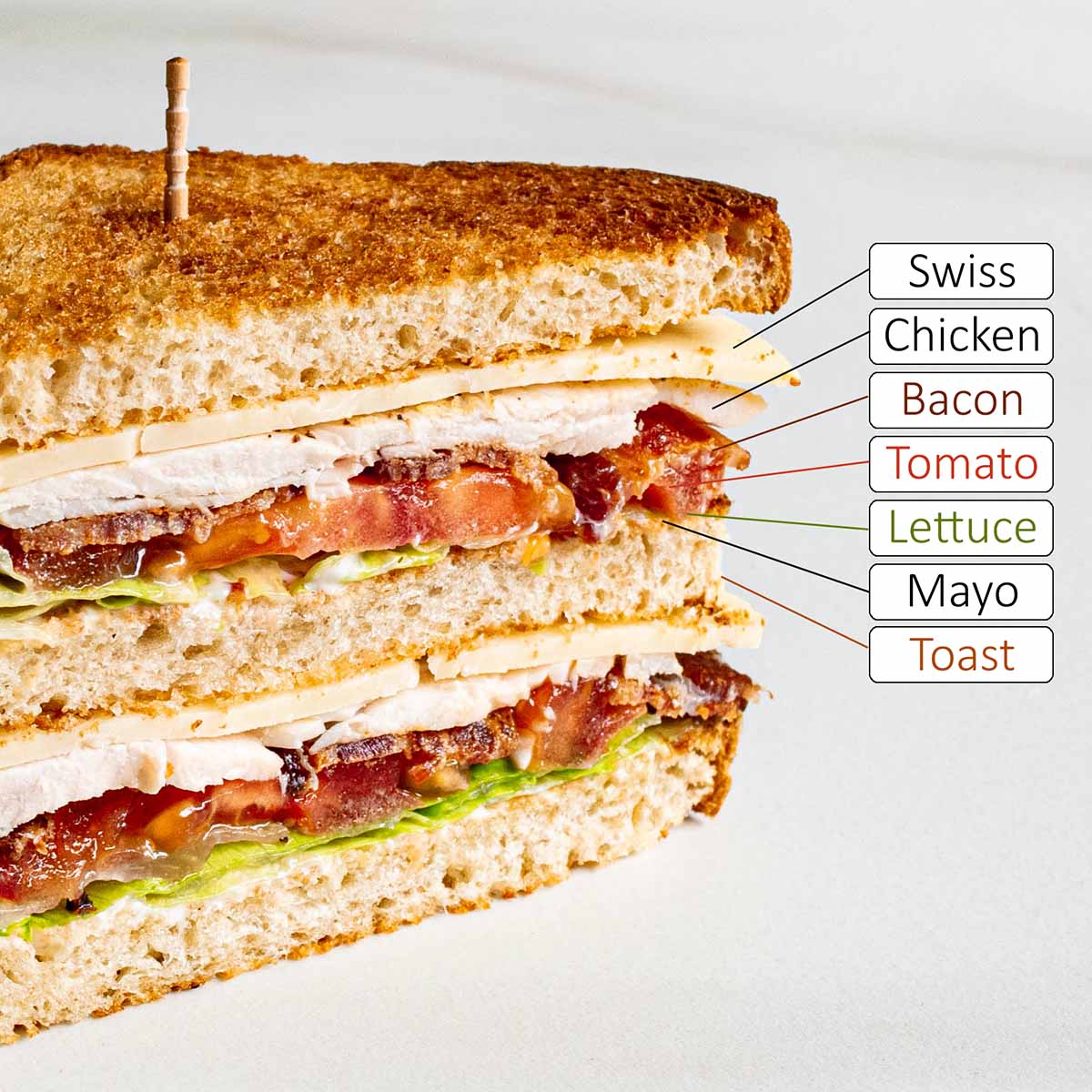
For an easy-to-follow recipe, check out my classic-style chicken club sandwich with bacon & swiss.
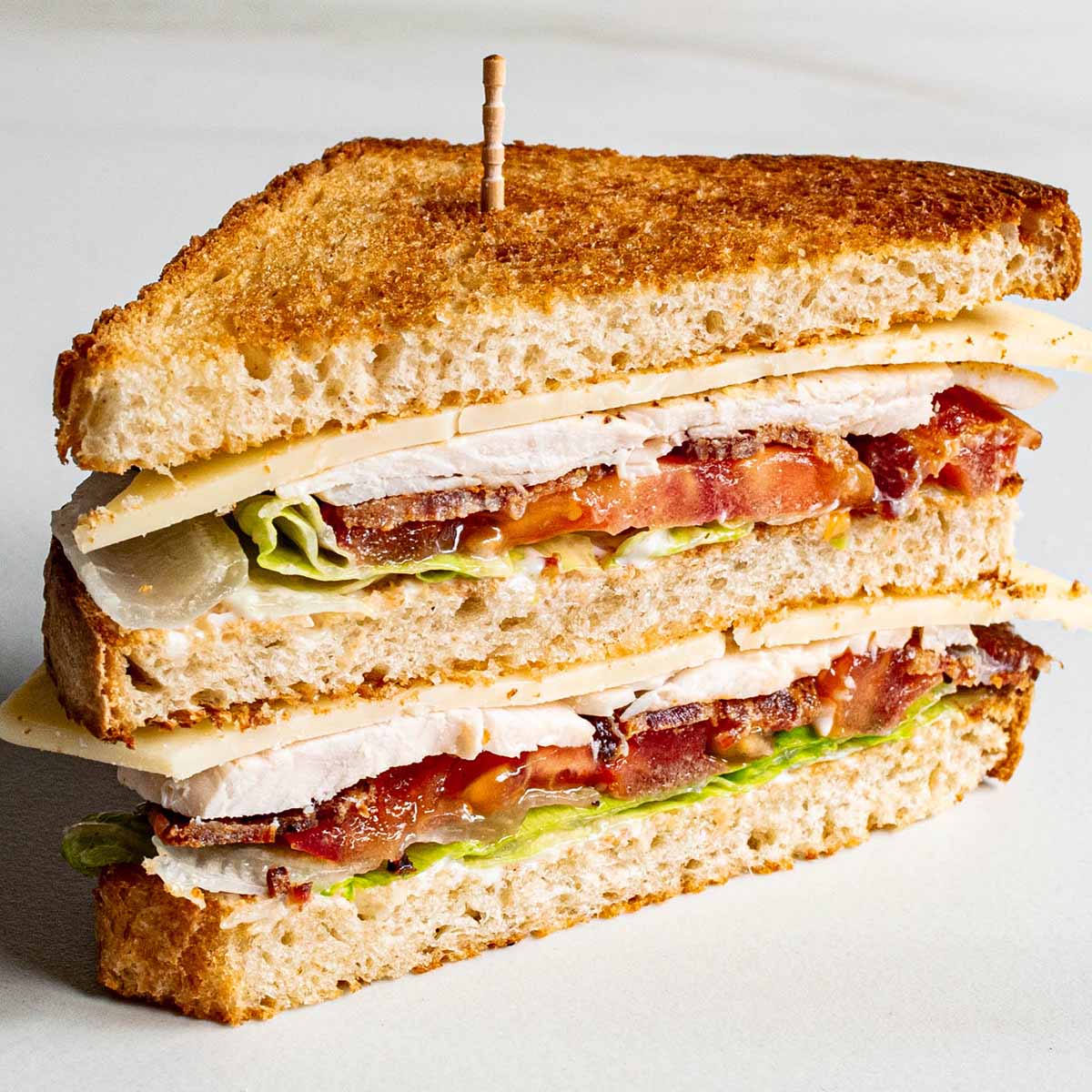
How to layer a club sandwich
It might seem like the layer order doesn't matter, but it does. At least a little bit!
You're trying to accomplish two things with the layer order: keep ingredients from sliding off and keep the bread from getting soggy.
We're going to start by making two open-faced sandwiches. Then we stack one on top of the other and add the last piece of toast for the final club sandwich stack.
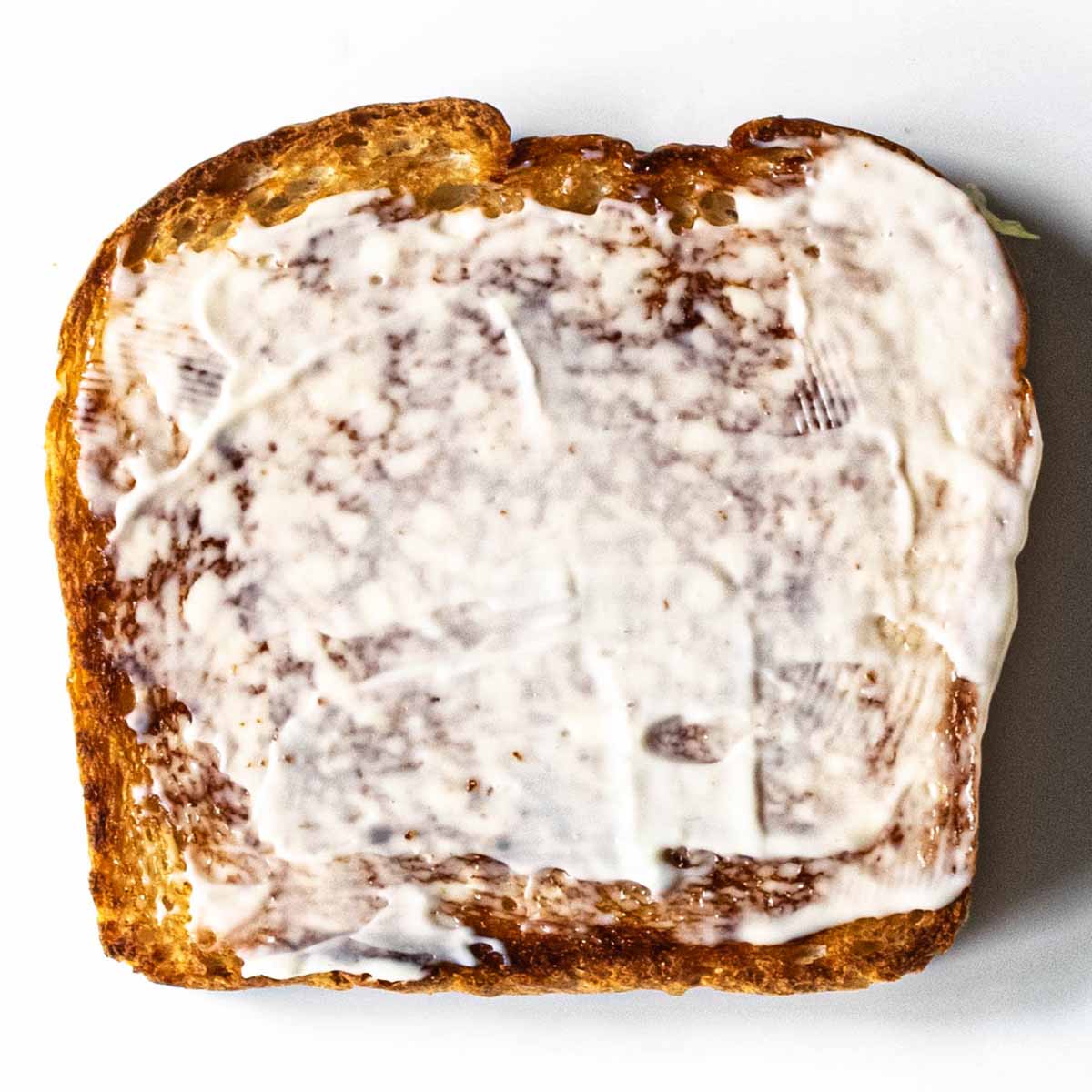
Layer 1: Mayo on toast
Mayonnaise is mostly fat and acts as a water barrier to keep lettuce or tomato juice from seeping into the bread.
Spread mayo on top of two slices of bread. These will be your bottom and middle pieces. You only need to add mayo to the top of your slices, so it stops any juice running down from above.
Make sure the toast has cooled for a minute or two before spreading it with mayo. If it's piping hot, the mayo might melt into the bread.
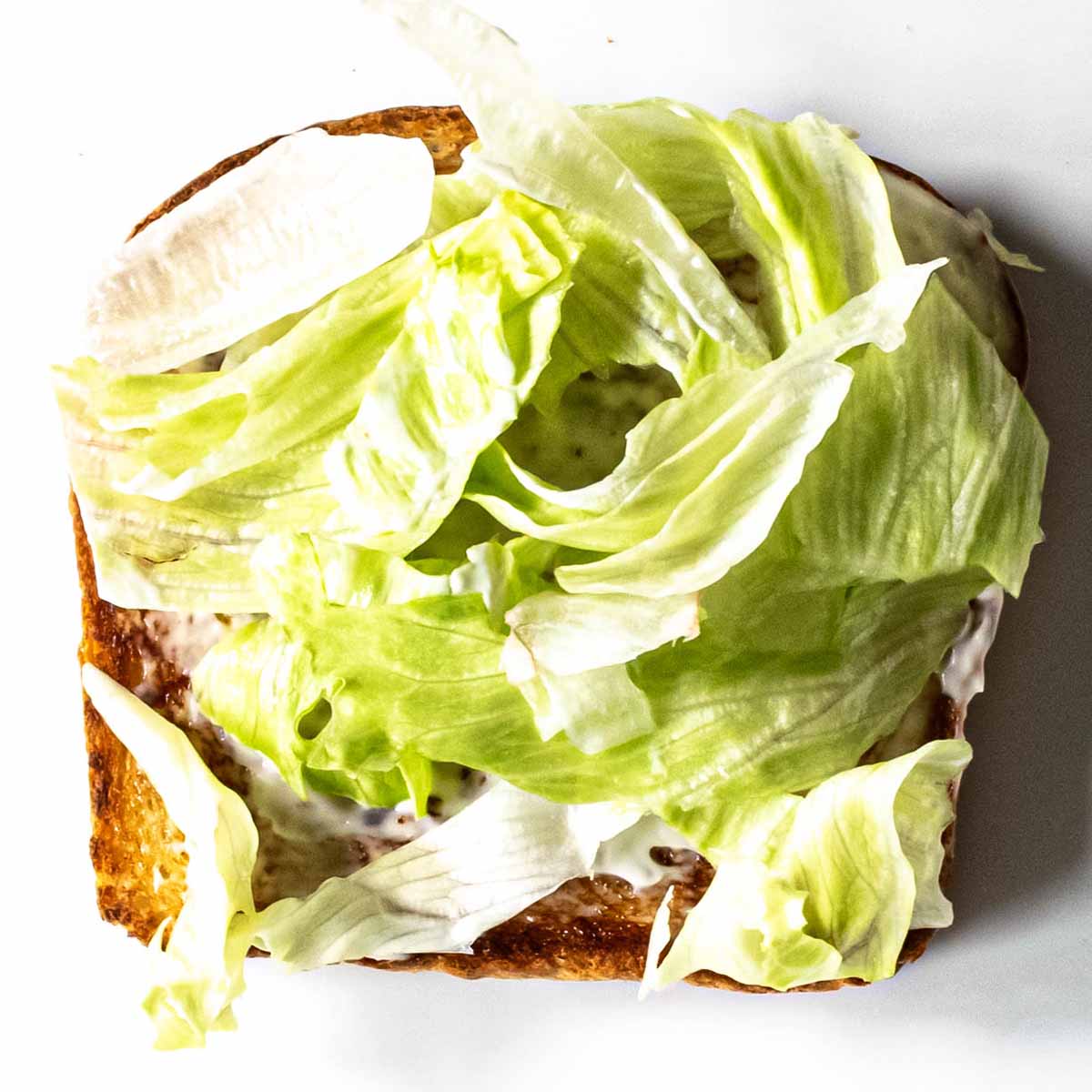
Layer 2: Lettuce
Next, add lettuce on top of the mayo on both slices of bread. Iceberg, romaine, and kale all act as good second barriers for a juicy tomato.
If you're using a more delicate green like arugula or microgreens, lightly push it into the mayo so it stays put.
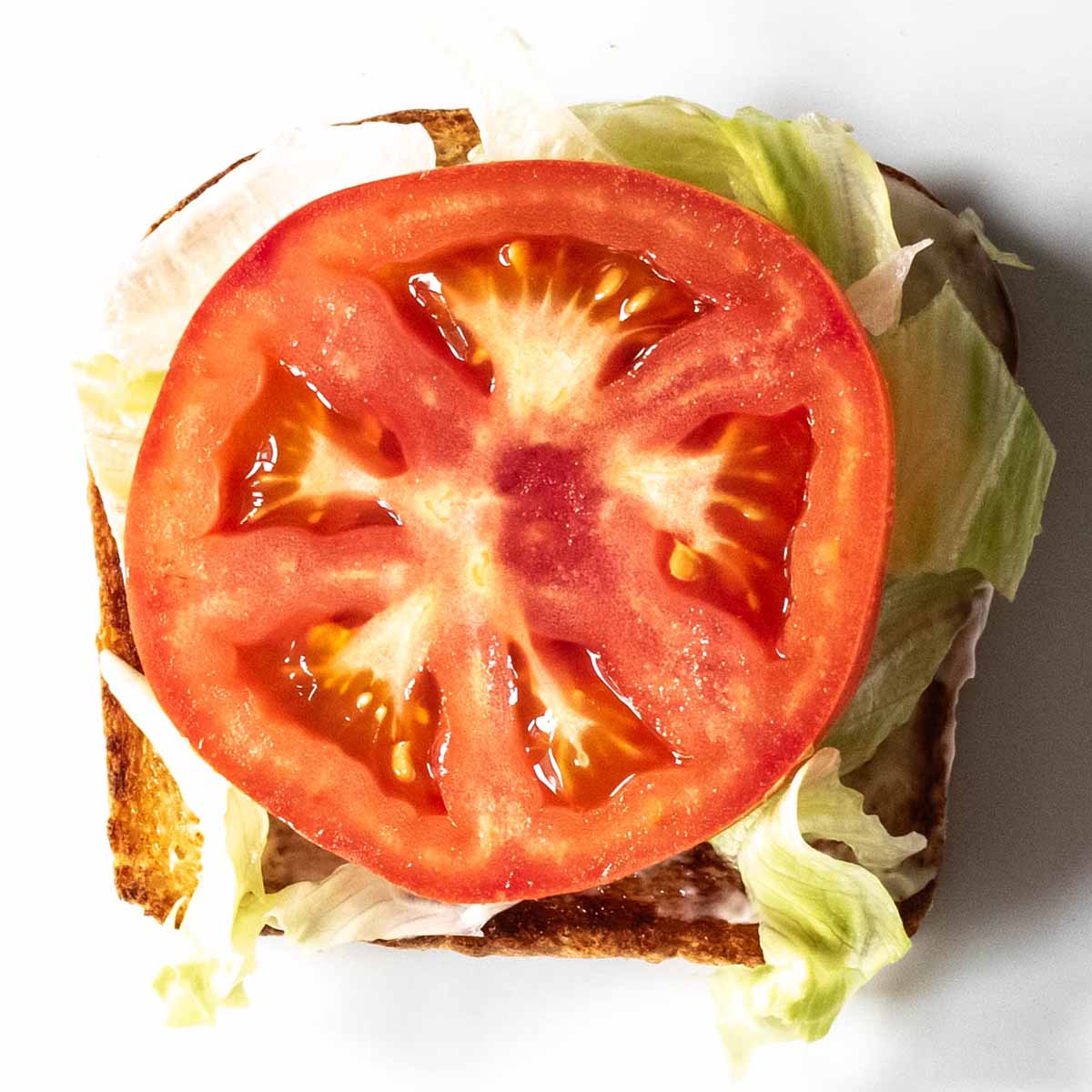
Layer 3: Tomato
The tomato is a slippery ingredient so we are trying to sandwich it between two other ingredients with texture to hold it in place.
I've tried several different layer orders and some ingredients do a much better job holding a tomato in place than others.
Lettuce has some texture to grab it, and does the next layer (bacon). If you put turkey or cheese on top of the tomato instead, it's much more likely to slip right off when you cut it or bite into it.
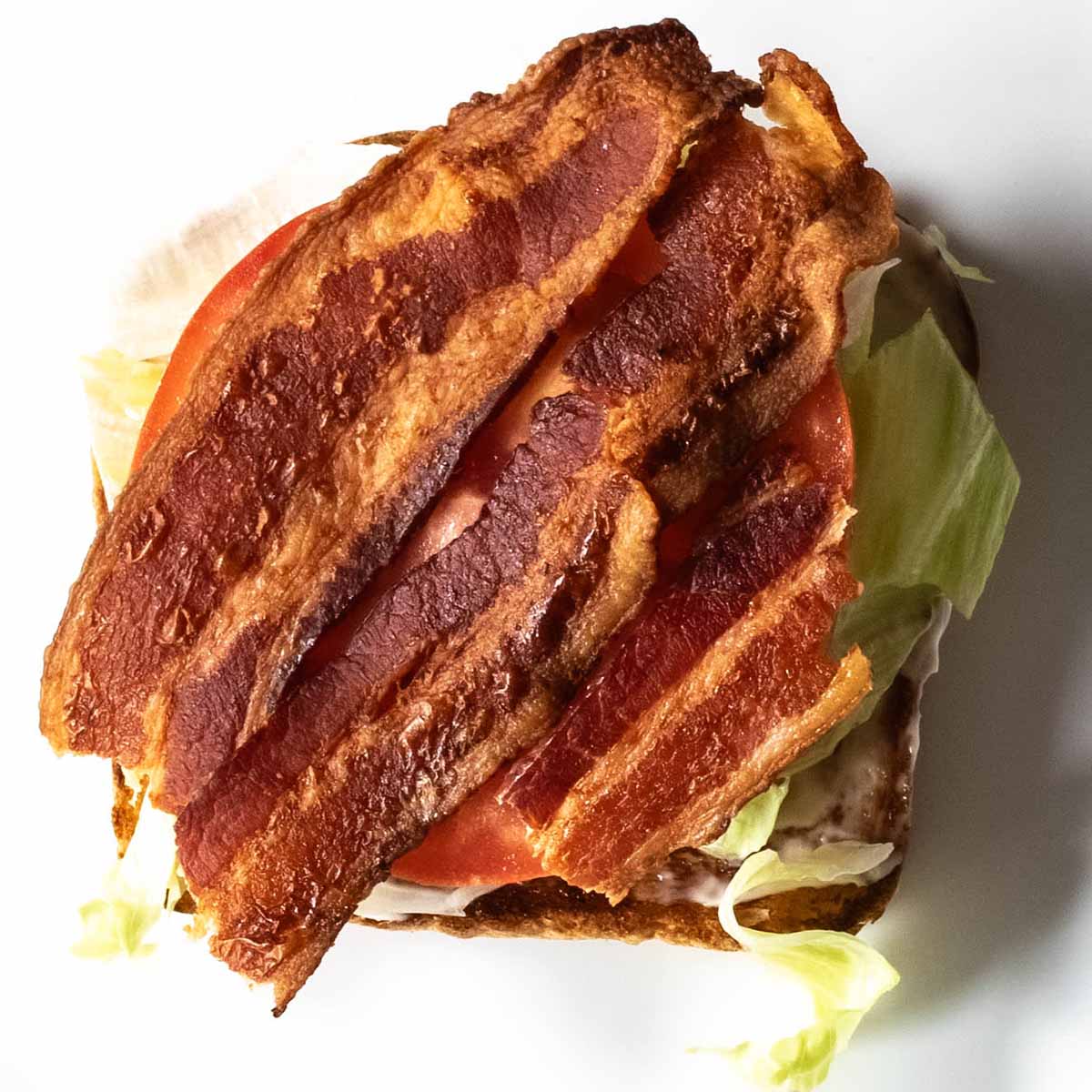
Layer 4: Bacon
The texture of bacon helps hold the tomato in place. Even though the bacon is salty, don't skip the little sprinkle of salt on the tomato. It really brings out the flavor.
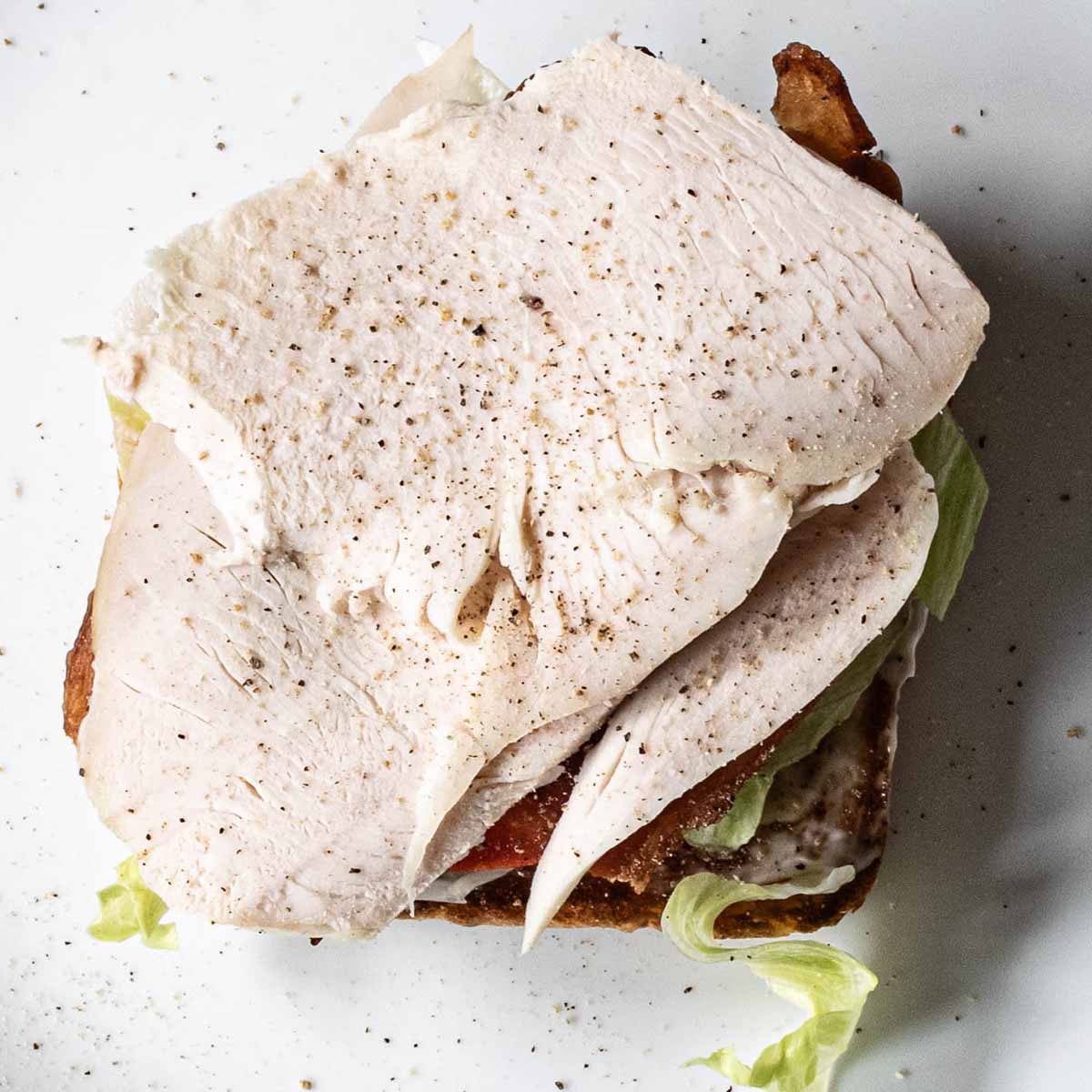
Layer 5: Turkey
Next, pile on your turkey (or chicken) breast. I typically use about 1 ounce per level and the sandwich is tall, but not too tall to eat.
However, if you want to really stack it on and make one of those diner club sandwiches that's too tall to eat (in a fun way), don't let me stop you!
Be sure to add salt (and pepper) to the turkey slices now if they are a little plain.
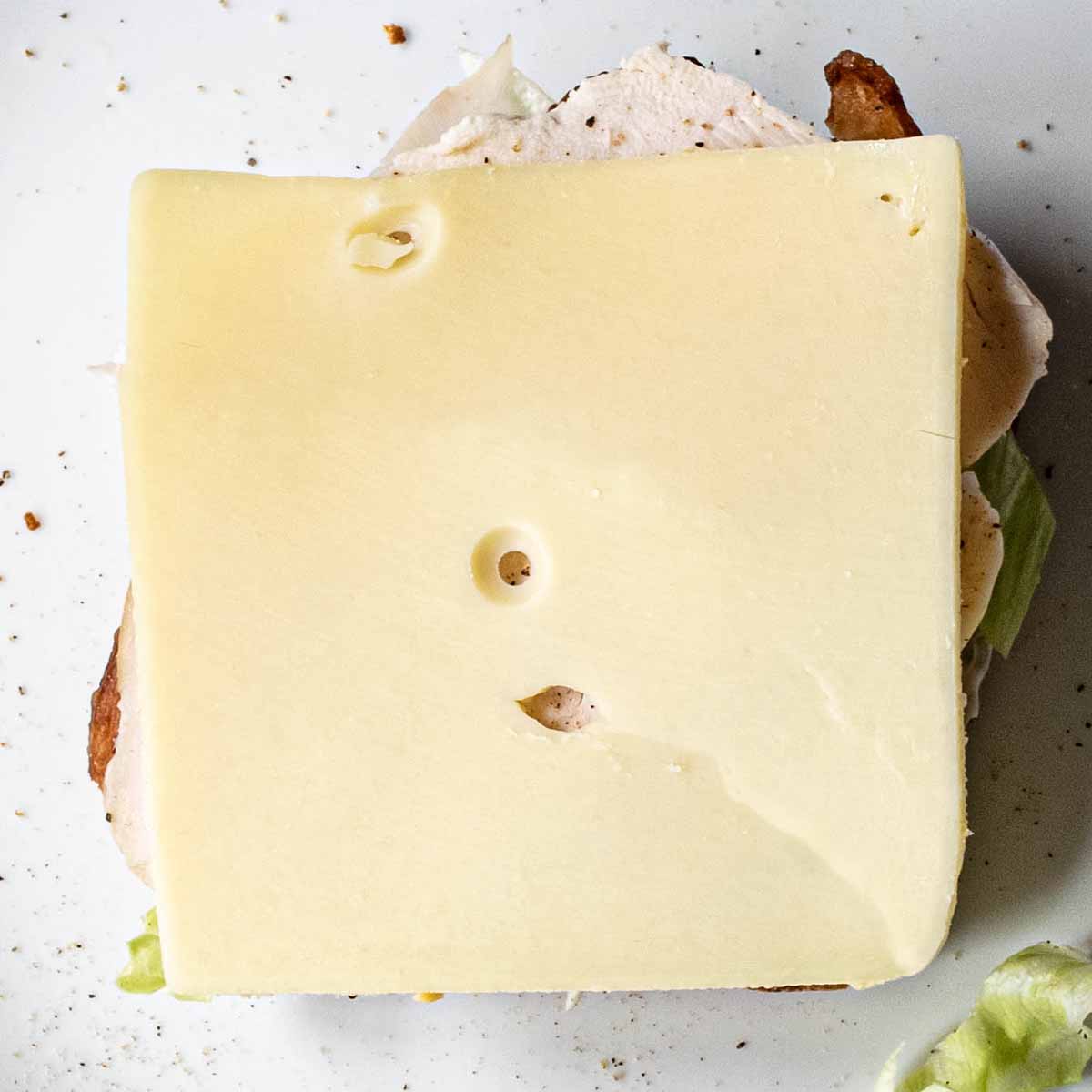
Layer 6: Cheese (optional)
I like to put the cheese layer last so it can grab onto the rough toasted edges from the bottom of the piece of toast that will stack on it.
I like to use a thin-cut cheese with a noticeable, but mild flavor.
Next: stack your levels
You just stack on of your open-faced sandwiches on top of the other. Then add your last piece of bread to the top.
Now you have a perfectly stacked club sandwich.
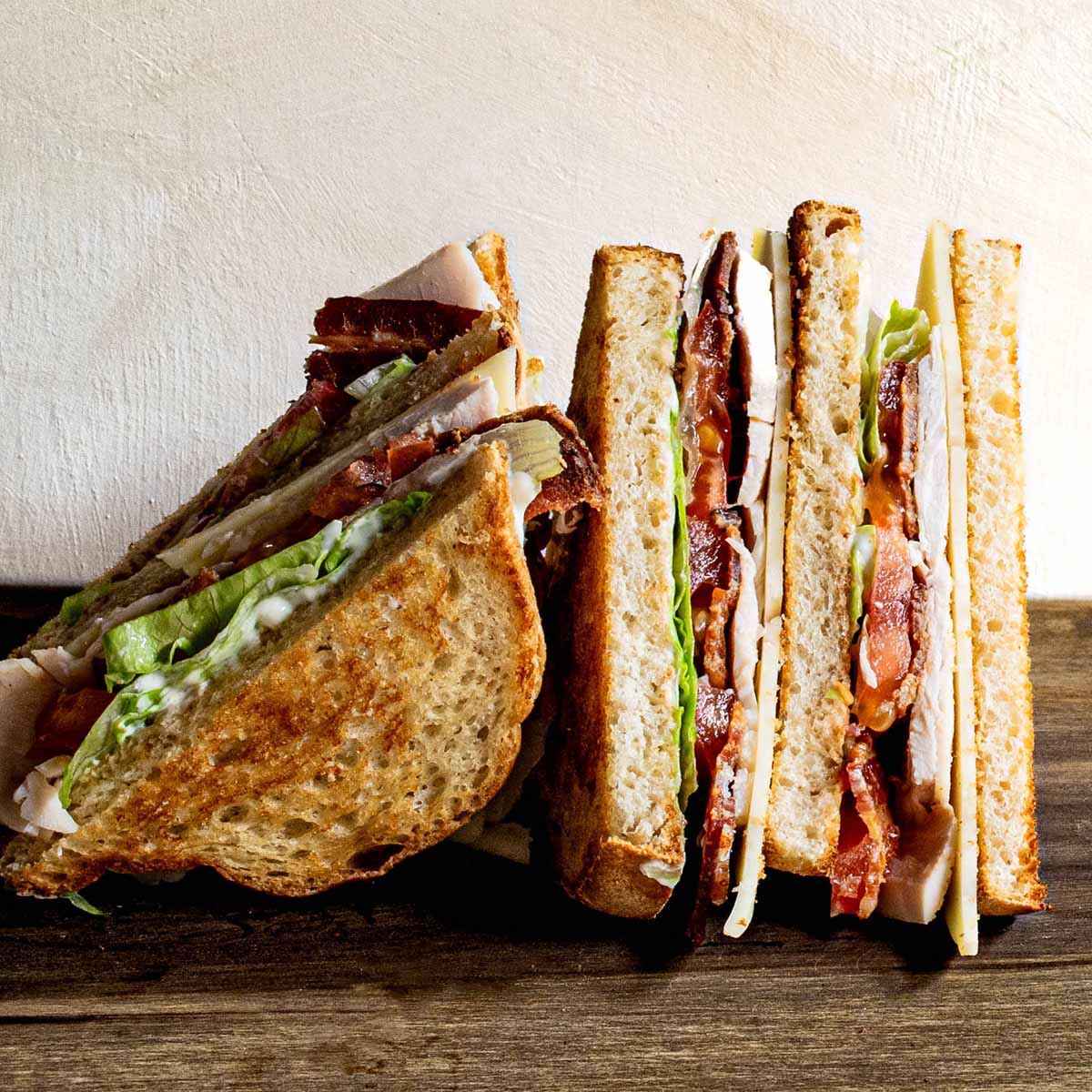
How to secure & cut a club sandwich
So now we've got a tall club sandwich and we want to cut it into triangles that are taller than they are wide.
That's a recipe for a sandwich that falls apart. This is where toothpicks come in.
Toothpicks make a cute presentation, but the real purpose is to keep the sandwich falling apart if it tips over or is set down. The toothpicks also help keep the ingredients in place.
- Place toothpicks before cutting
- Use a serrated knife to cut the sandwich in half (or into quarters)
- Saw gently without compressing the sandwich too much
- Keep the toothpick in when serving and warn guests of the toothpick since a standard height one is about as tall as the sandwich and can be hard to notice!
More recipes & resources
If you like to make restaurant recipes at home, I have some suggestions for you:
- A classic-style chicken club sandwich with bacon & swiss
- A club sandwich with ham & colby jack from A Pinch of Healthy
- Inside out grilled cheese California club sandwich from Real California Milk
- Club sandwich with spicy blood orange mayonnaise, chicken, and ham, from No Crumbs Left
- Turn it into a salad with Girl Gone Gourmet's Classic Club Chopped salad
Leave a Reply