What is a squash vine borer
Squash vine borers are known to wreak havoc in gardens in the Midwest, Southeast, and East Coast.
They are difficult to control because the damage is hidden inside the stem and often missed until late in the life cycle when leaves start wilting. The adult moths lay eggs that hatch and bore into the stem, and it's those larva that do the real damage while they feed and grow over 4-6 weeks.
I deal with squash vine borers, Melittia cucurbitae (Harris), every year and have been determined to beat them by all means necessary.
I understand your frustration with these buggers, so I've made this guide to truly help you:
- Experts: I've reached out to master gardeners and universities to learn what actually works (and what doesn't)
- Trials: I've tested the methods on my own garden
- Recovery: I've successfully saved plants from squash vine borer damage and I'm here to help you do the same.
Jump to:
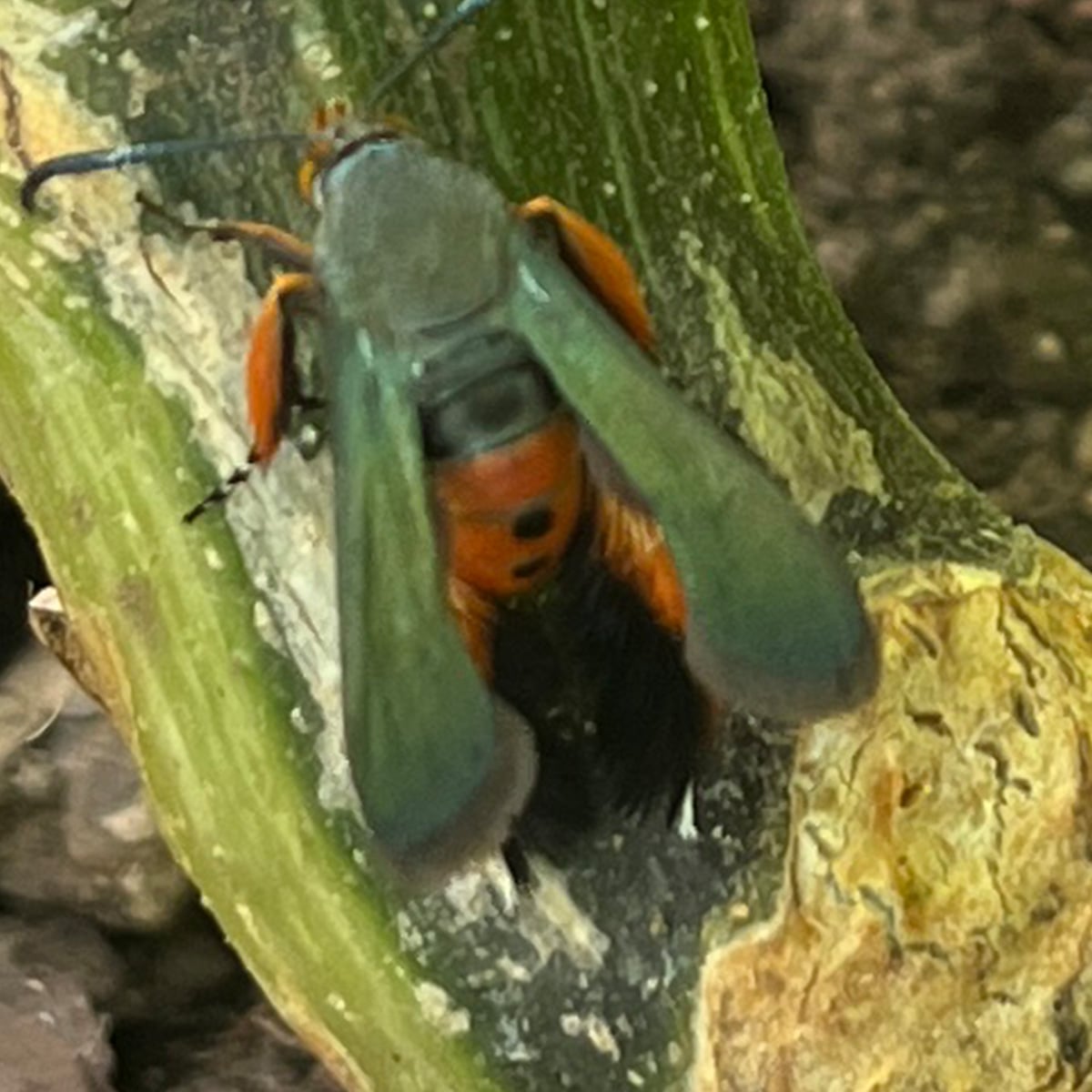
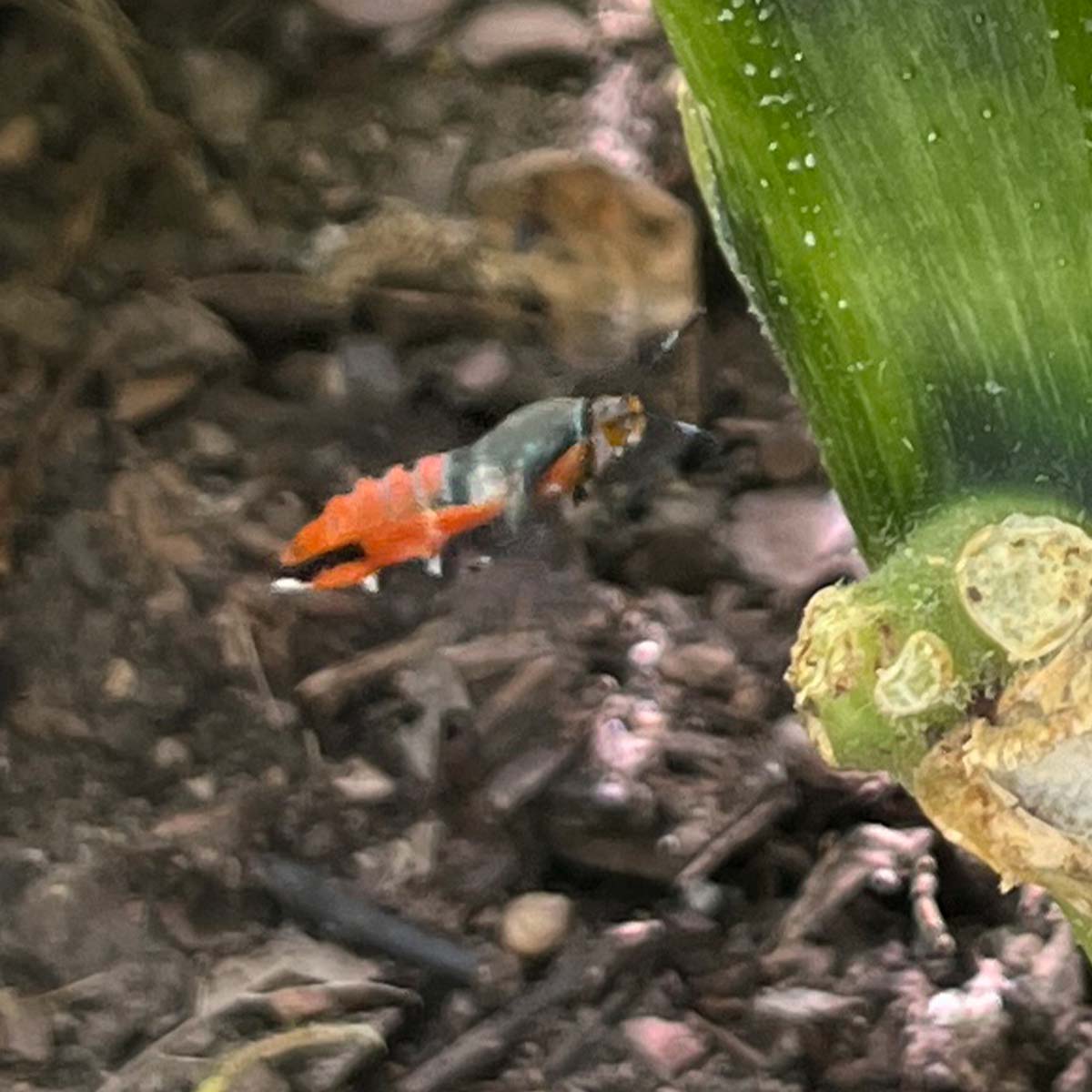
What does the adult moth look like?
An adult squash vine borer is a clearwing moth with a reddish-orange and black body. They are often mistaken as a type of wasp due to their long, wasp-like body, bright color, and the fact that they are active during the day (instead of at night).
- Color: orange-red with black spots along the back, black antennae, and black legs with white spots.
- Size: bodies measure about a ½ inch long (13mm) and the wingspan stretches to 1.25 inches (32mm)
- Wings: top set of dark wings with a clear bottom set
The male and female moths will look nearly identical to the untrained eye. If you are curious, you can see a photo of them mating on the Vermont Squash Vine Borer guide.
The adult female moths lay eggs on your zucchini and winter squash.
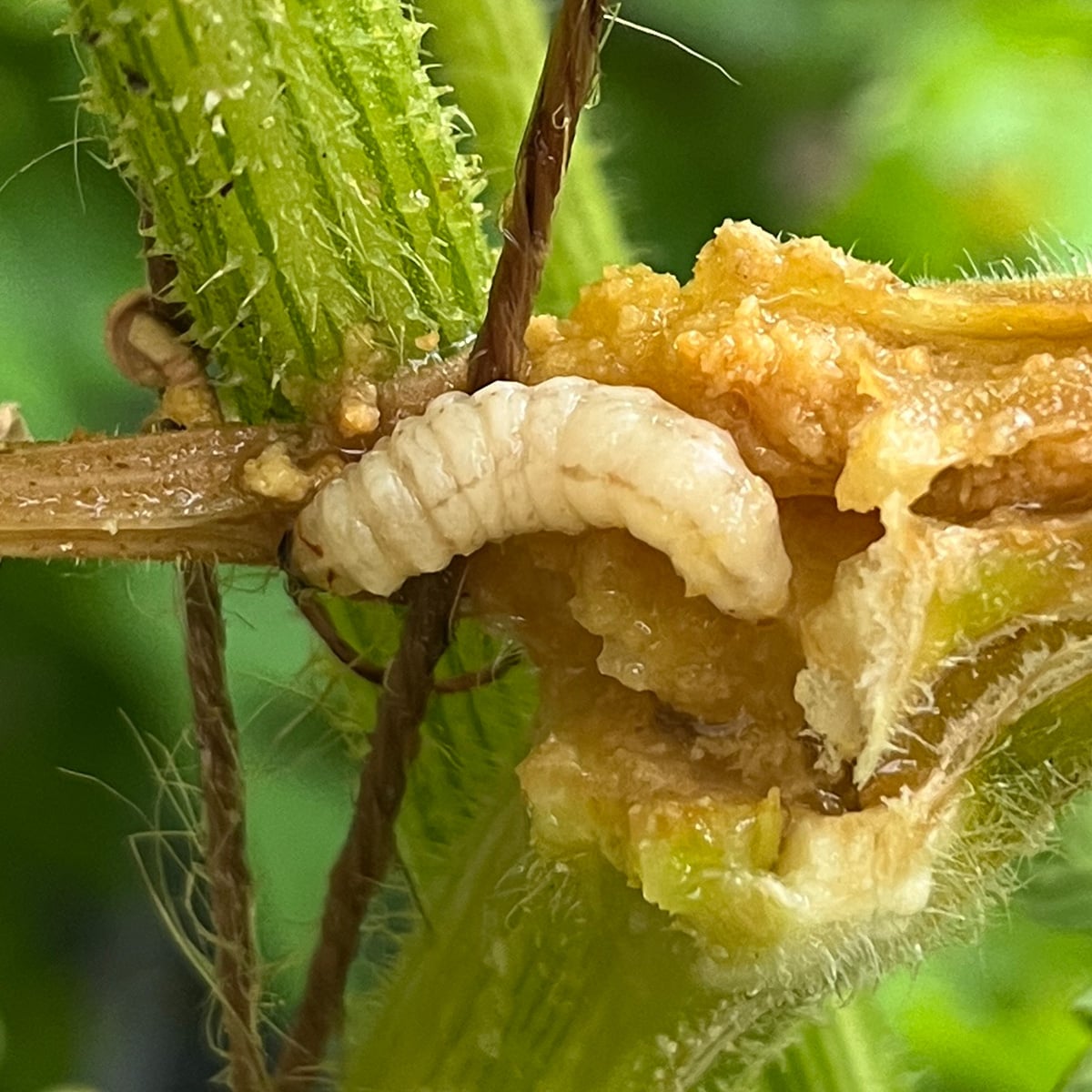
What do the larva look like?
When the eggs hatch, tiny larva immediately chew into the plant and enter the stem. You'll probably never see them at this stage as they are tiny and very quickly enter the plant.
- Color: off-white body with a grub-like appearance and a brown head.
- Size: grow to 1-inch (25mm), or even 1.25 inches (31mm).
They continue to feed inside the plant stem, and that is what damages the plant, not the adult moths.
When they are done feeding, they drop into the soil to overwinter in a cocoon, emerging as adult moths next year.
You can see more photos of the adult moth and larva and a map of activity at Mississippi State University.
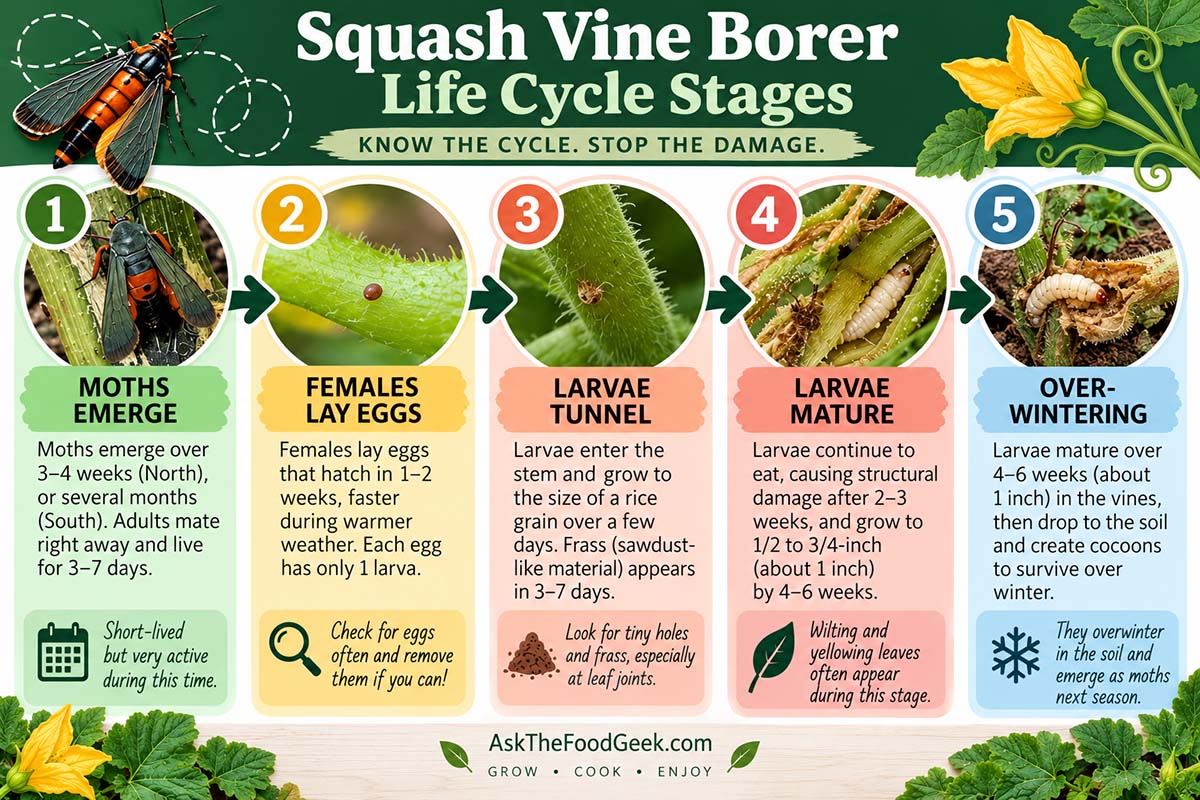
Squash vine borer life cycle
I like to treat the squash vine borer life cycle as a management calendar, not just insect trivia!
Each stage tells you what to look for and what you can do to stop the next one. Below is a quick chart for reference, followed by in-depth explanations for each stage of the life cycle.
| Stage | Duration | Action |
|---|---|---|
| Adults emerge | several weeks, with a 2nd generation in warm climates | Pheromone traps to detect initial activity, start monitoring for eggs |
| Egg laying | 4-5 weeks | Search for eggs & remove, spray spinosad or Bt as backup 2-3 times a week. |
| Larva hatches | 1-2 weeks to hatch | Continue to monitor for eggs and spray |
| Larva inside vine | mature over 4-6 weeks | Look for holes/frass, cut out of vine or inject Bt |
| Overwintering | Fall to spring | Remove infested vines before larva drop to soil |
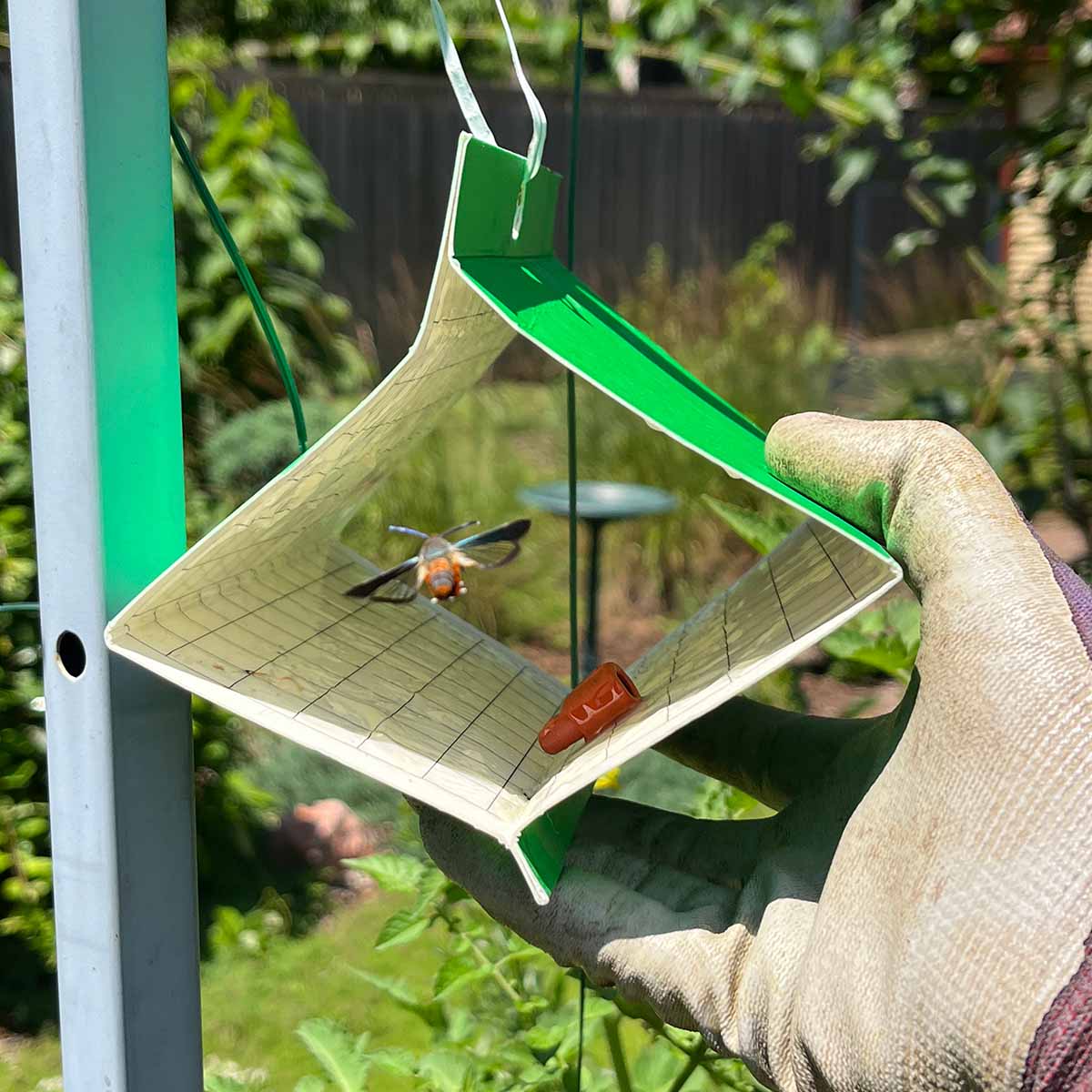
Stage 1: Adult moths emerge (timing climate dependent)
Why this stage matters: you want to identify the first adult moth activity as a trigger to start monitoring your squash vines for eggs.
- Timeline: adult moths emerge in spring in warm climates and early summer (late June or early July) in cooler northern climates like Minnesota and Wisconsin.
- Duration: their emergence extends over 3-4 weeks in northern climates, although the exact timing and duration varies by climate. Each adult only lives for 3-5 days. But in southern climates, more than one generation appears, placing constant pressure all season long.
- What I do: I set out a pheromone trap which attracts the males. I place it outside before they are supposed to emerge. Once you catch one, you know to start monitoring. I've missed the start of their activity, and once I put it out, I see males show up within 10 minutes! These traps do not attract females or prevent them from mating.
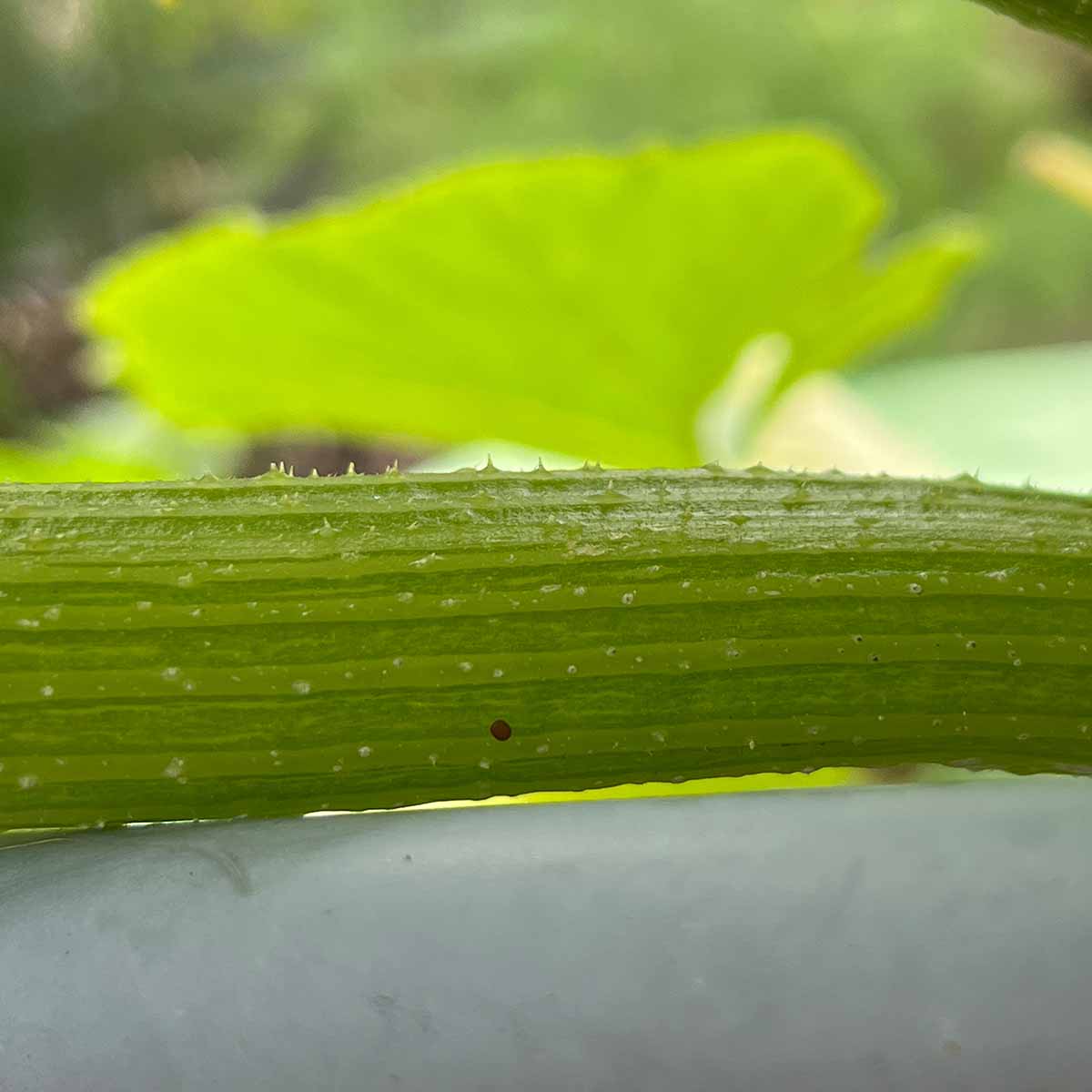
Stage 2: Females mate & lay eggs right away
Why this stage matters: during this part of the life cycle, you have a chance to monitor your plants for eggs and remove them before larva can hatch.
You can also spray an organic insecticide 2-3 times a week. This can kill larva when they hatch and bite into the stem if they actually ingest it.
- Timeline: start monitoring your plant as soon as you see the first adults arrive. The adults only live for 3-5 days, so they mate and start laying eggs right away.
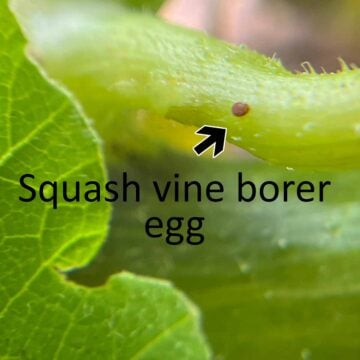
- What they look like: brownish-red, flat, dull discs. It almost looks like a wax pencil tip dabbed at the vine. The eggs are laid singly, not clumped or in groups. Each egg contains only 1 larva.
- Where to find them: most commonly on the lower 8 inches of the main stem, but they can (and definitely do) appear all over the plant, including leaf nodes (where the leaf meets the main stem), petioles (leaf stems), and even the curly tendrils!
- What I do: I check for eggs daily (or every other day) and continue until I haven't found new eggs for at least a week.
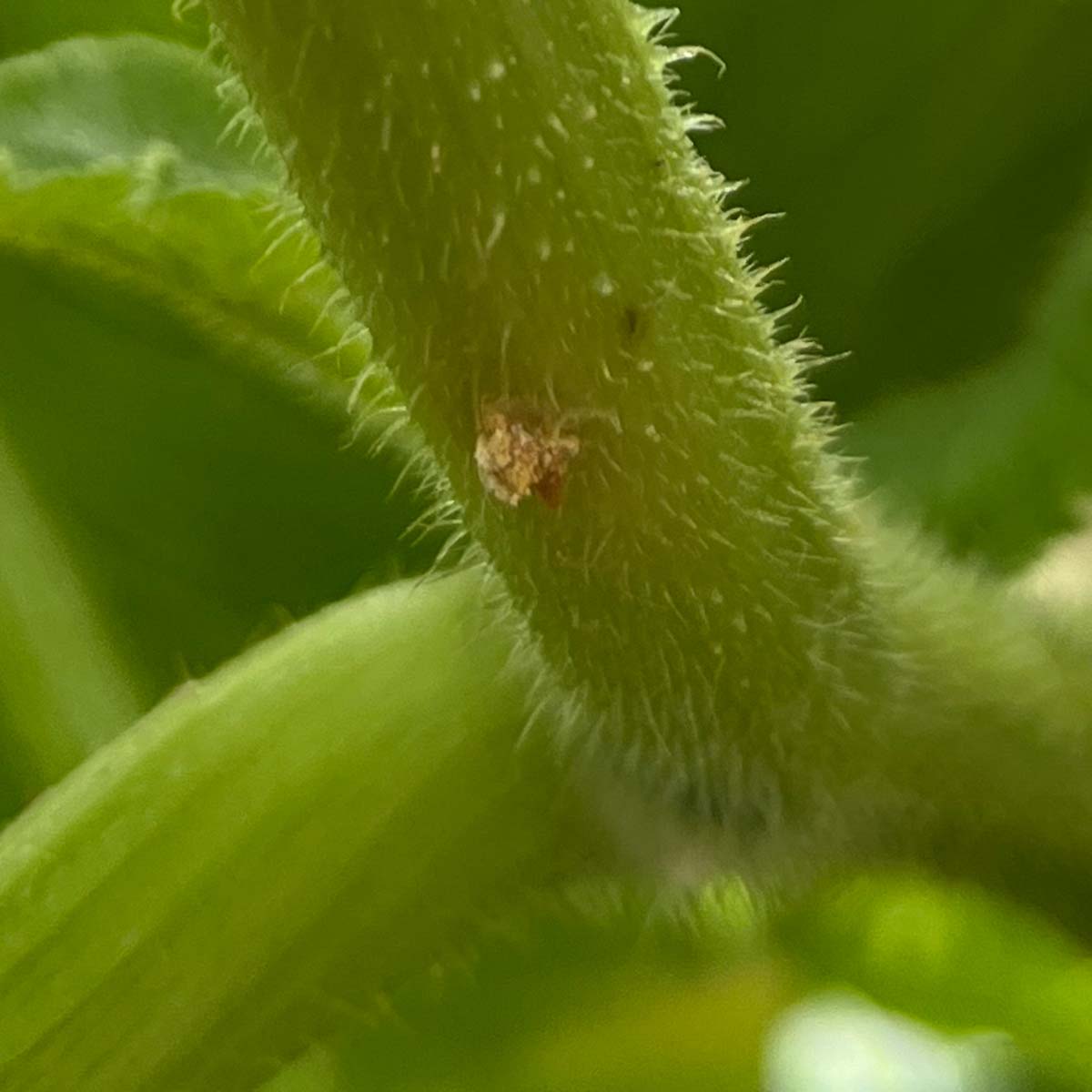
Stage 3: Larvae hatch & tunnel
Why this stage matters: there's a good chance you'll miss some eggs, and catching the larvae while they are still small keeps your plant healthy.
- Timeline: the larvae hatch 1-2 weeks after an egg is laid (up to two weeks in cool weather according to Cornell). They very quickly tunnel into the stem.
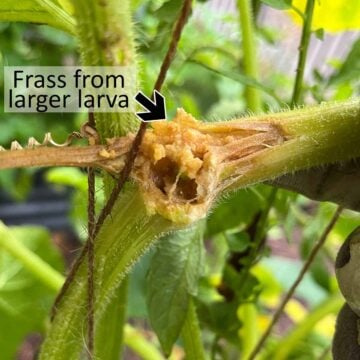
- What to look for: A tiny hole is the first sign but easily missed. As the larva feeds, sawdust-like frass accumulates around that opening. It might take several days for frass to be visible.
- Larva are still small: At this point, the larva is really small, likely between the size of a grain of rice and ¼ of an inch (although growth rate varies and I haven't found research with an actual timeline).
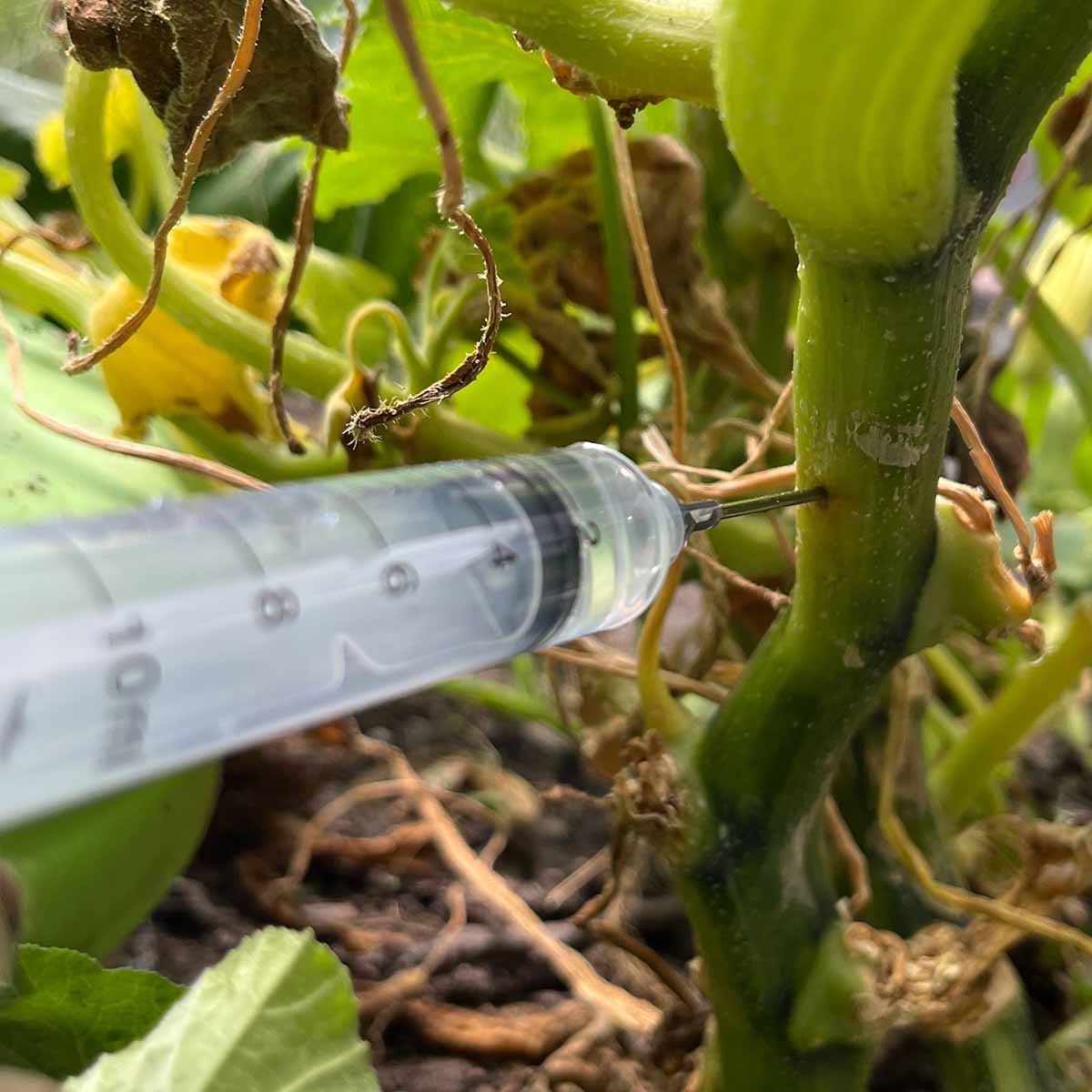
- What I do: Because they are hard to see at this size, I like to inject organic insecticide (Bt) in the entry hole to kill them. When I try to cut them out, I can't find them (because they are so small) and end up cutting the plant more than necessary in an attempt to find the bugger and then never end up knowing if I actually killed it.
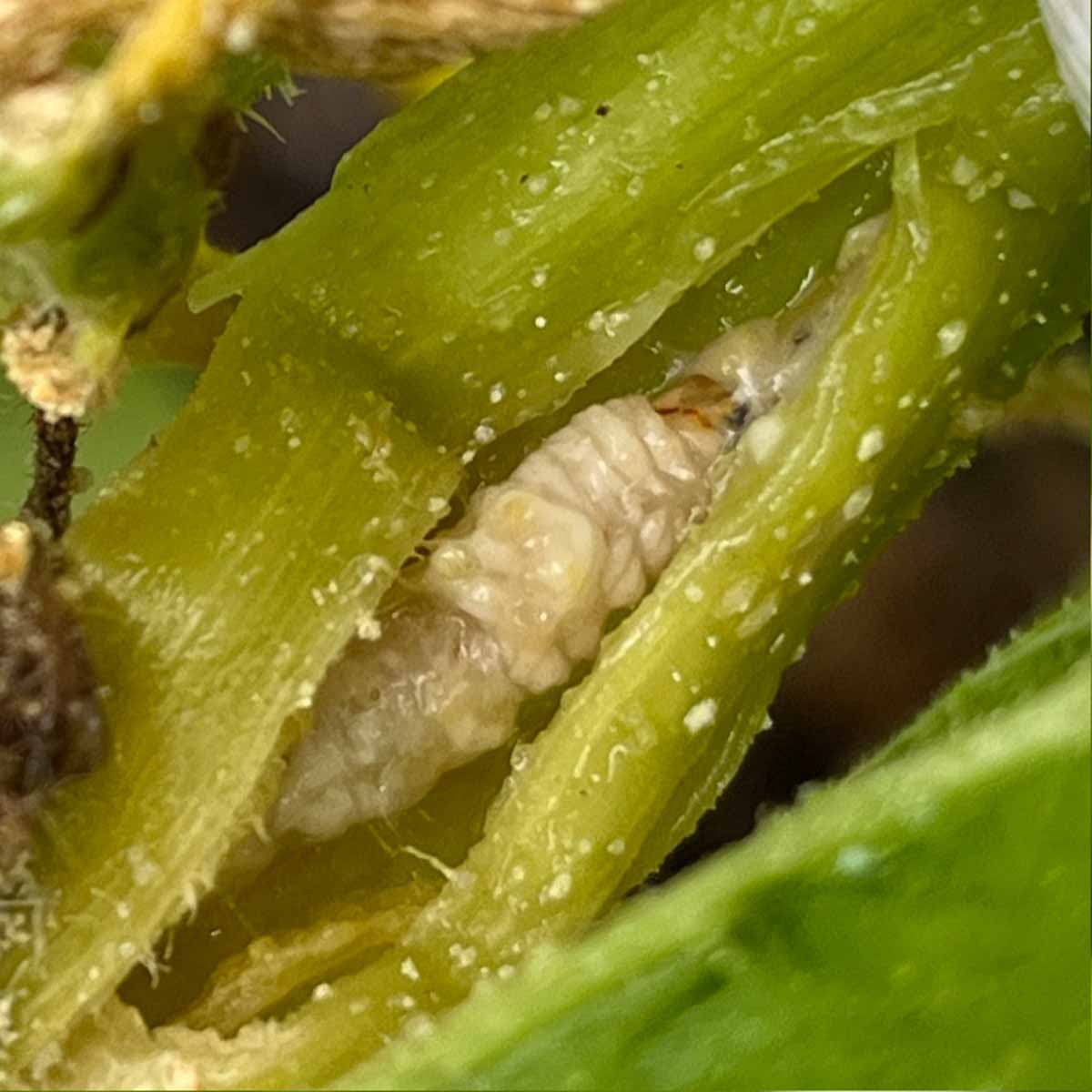
Stage 4: Larva mature & continue to feed
Why this stage matters: as larvae continue to feed and grow, they can cause substantial damage that is harder (but not impossible) to recover from.
- Timeline: they feed for a total of 4-6 weeks, eventually reaching 1-inch in length.
- What to look for: large frass accumulation at the entry holes, soft & mushy stems, and wilting leaves. If hatched on the stem, they stay in the main stem, but when hatched on the petiole (leaf's stem), they move toward the main stem for further feeding.
- What I do: I still like to inject organic insecticide to keep as much as the stem intact as possible. I have cut them out because they are easy to find, but it requires patience and care to not break the rest of the stem. I have accidentally bent the stem slightly backwards to grab the larva, further damaging the plant and making recovery very difficult (which is why I prefer injecting Bt).
- Related guides: How to save your plant from squash vine borers and How to use Bt & spinosad for squash vine borer control
Stage 5: Larvae leave and overwinter in the soil
Why this stage matters: if you have a very infested plant that you can't save, it's best to rip it out and destroy it (don't compost it as the larva might not die in typical home composting piles). This lowers the population for next year.
- Timeline: larva leave the plant over a (roughly) 4 week window as they mature.
- Duration: they overwinter from fall until emergence next spring.
- What I do: I try to pull out any majorly infested plants that I don't intend to save (whether I don't have time to closely inspect the entire plant and remove every larva, or the plant looks too far gone for recovery). This lowers the overwintering population. Next year, I plan to use a new site and test out row covers for prevention.
A second generation in warm climates
Warmer areas in the Southeast and lower Midwest usually have a second generation in summer. The second set generally emerges a month or two after the first set, creating a long, extended window for monitoring and potential damage.
Cooler climates, all the way down to at least northern Illinois only see one generation per summer. However, in warm years, it's possible to see a second generation. For example, University of Massachusetts notes a possible second emergence in hot years in late September or early October.
Which plants do they attack?
While squash vine borers can technically attack any Cucurbita plant, some varieties are very susceptible, while others are pretty resistant.
Favored host plants - the most attacked
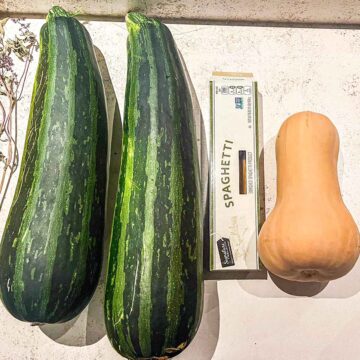
The most susceptible plants fall in the Cucurbita pepo and Cucurbita maxima cultivars.
C. pepo varieties:
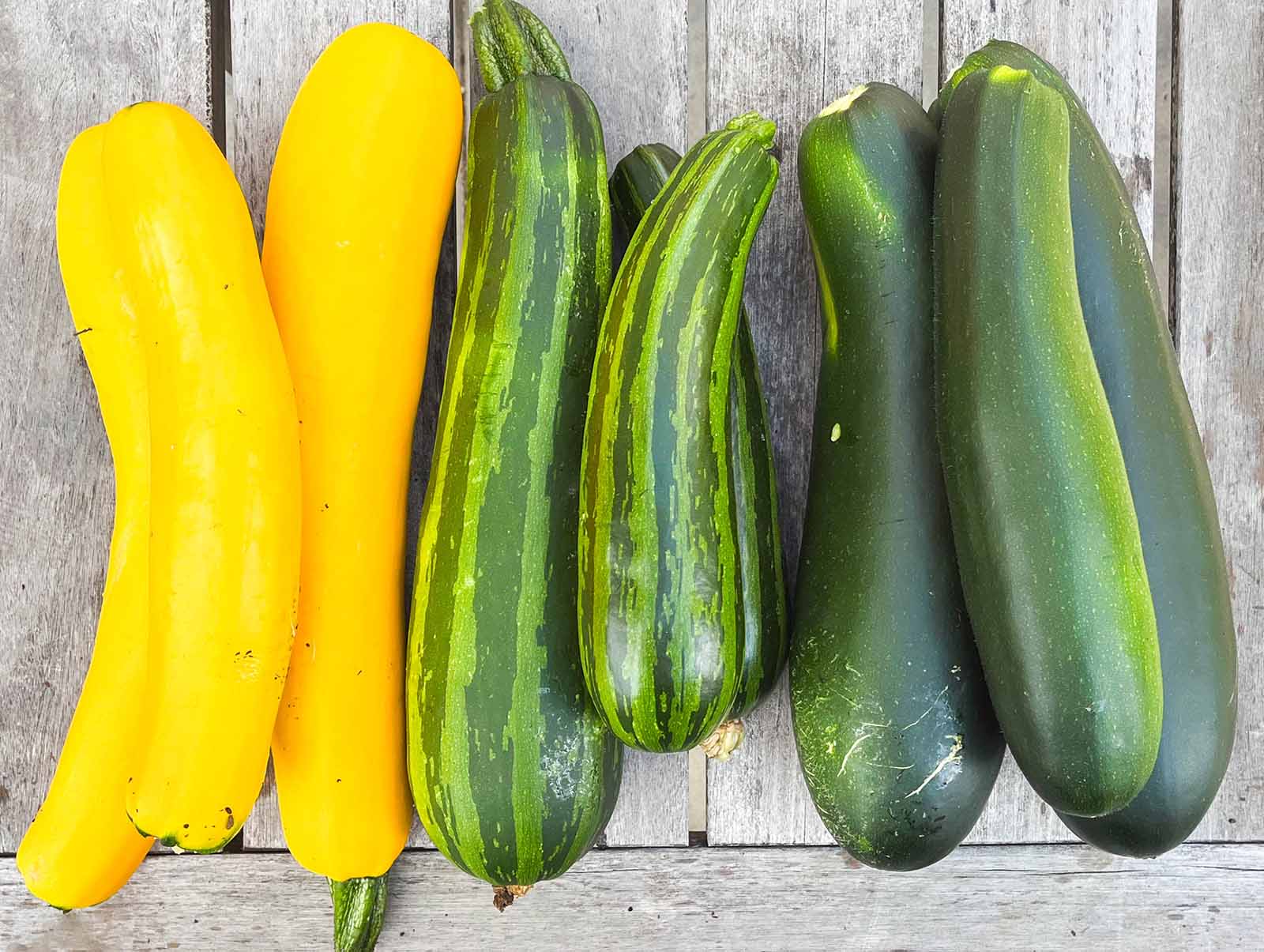
- Zucchini
- Yellow summer squash
- Pattypan
- Acorn squash
- Spaghetti squash
- Delicata
- Many pumpkins, including Sugar Pie and Winter Luxury
C. maxima varieties:
- Blue Hubbard (and other Hubbards)
- Buttercup
- Many Kabocha types, including Sunshine and Red Kuri
- Some large pumpkins
I grow many of these every year, including zucchini, yellow squash, delicata, and Sunshine kabocha (because Fedco seeds said it made the best pumpkin pie in their taste tests). And every year I'm scraping a ton of eggs off these vines.
Resistant varieties
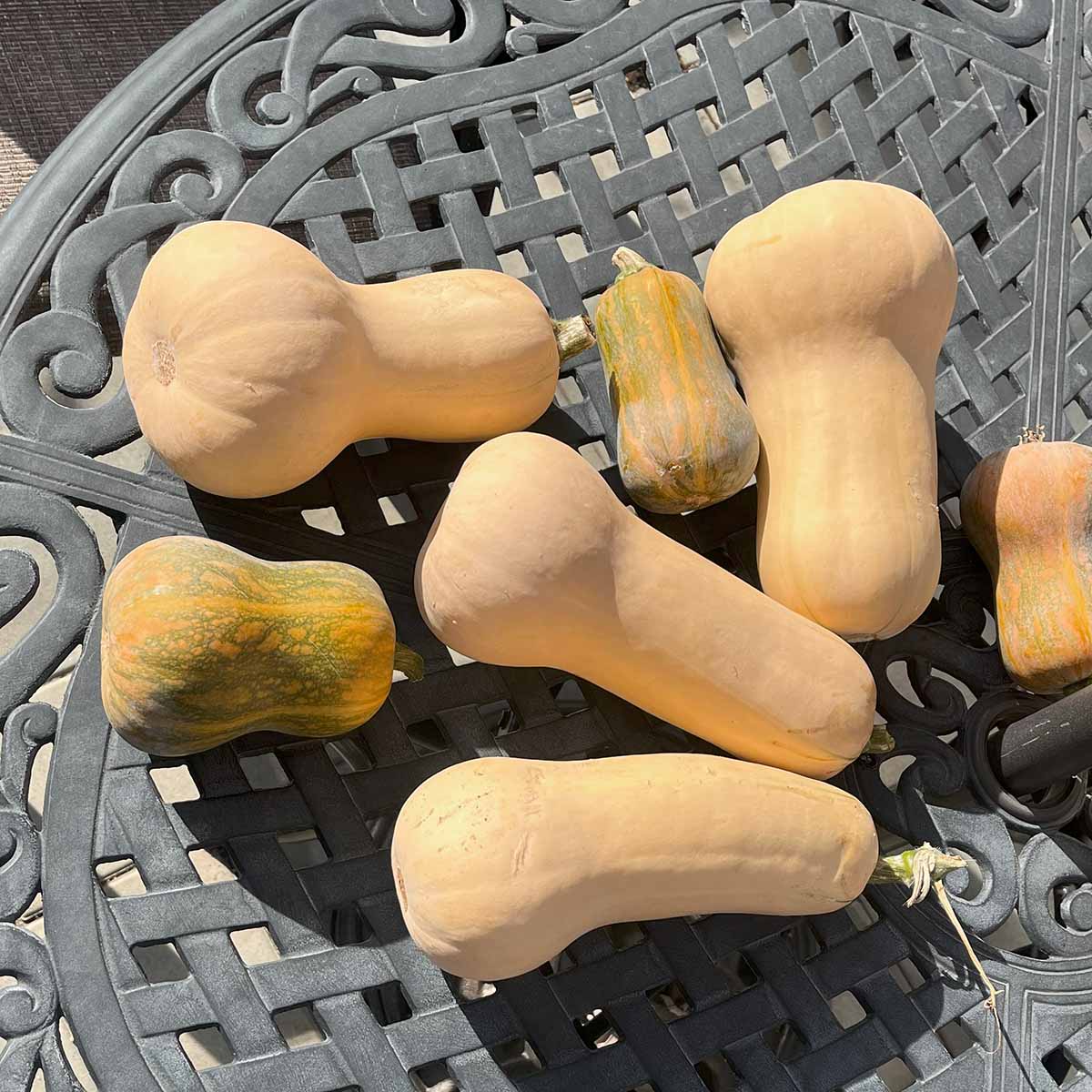
Members of Cucurbita moschata are highly resistant.
According to research, these are poor host plants. They are also much harder for the larva to feed on, often not surviving. (Source: Host Relationships of the Squash Vine Borer).
These varieties include:
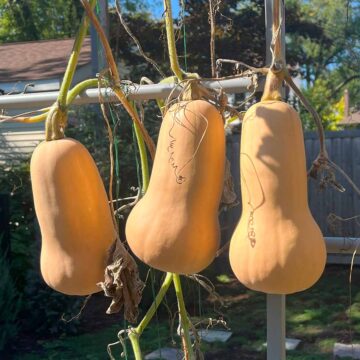
- Butternut squash, including Waltham butternut, butterbush, and early butternut
- Honeynut squash
- Tromboncino
- Calabaza
- Some "processing" pumpkins, including Dickinson Field, Kentucky Field, Buckskin, and Chelsey
- Cheese pumpkins
I grow all types of summer and winter squash in my Chicago-suburb garden every year and squash vine borers love me for it. But even when I have major squash vine borer activity and have to scrape eggs of the vines daily, the butternut and honeynut squash have always been fine.
I don't recall finding any eggs on the butternut or honeynut vines, or on any other squash from C. moschata. And if some were laid, I definitely haven't seen larva activity in them.
This is echoed across all types of gardeners across the country, like in this Reddit thread from r/vegetablegardening: "It's been a bummer to give up my zucchini, delicata, and acorn squash but I've since moved to all moschata family squash and have been MUCH MUCH more successful."
Cucumbers, melons, and watermelons are rarely attacked
Even though these plants all belong to the Cucurbitaceae family, cucumbers, melons, and watermelons aren't normal squash vine borer hosts.
In addition to that, the larva can't complete development outside of squash plants, according to the University of Illinois.
I have squash vine borers every year and my cucumbers and melons have never been attacked, even when planted right next to susceptible winter squash vines (that are attacked).
How to prevent & kill squash vine borers
The best way to deal with squash vine borers is to plant resistant varieties or prevent the larva from getting into the vine in the first place. Unfortunately, there's no easy solution. They all require time and effort, and often have limitations:
- Row covers: requires hand pollination (or late season timing)
- Wrapping the stem: better for zucchini, but doesn't protect the rest of the stem for winter squash
- Daily monitoring & removal of eggs: time consuming, but highly effective
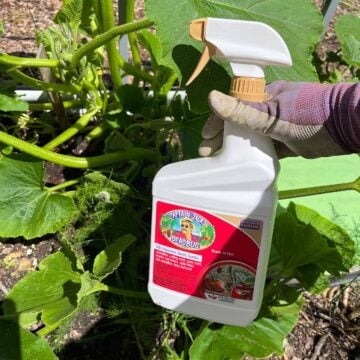
- Organic insecticide sprays twice a week: a backup method best paired with daily egg monitoring
Once the larva get inside, you'll need to kill them. You can do that one if two ways:
- Cutting it out: be careful not to damage the structural integrity of the rest of the vine
- Injecting an organic insecticide: my preferred method with a better success rate of plant recovery (personally)
What to do next year?
If you've had trouble in the past, there are a few things to think about for next year.
- Row covers and timing as prevention
- Plant resistant varieties
- Plan ahead and buy pheromone traps, organic pesticide, and syringes for injecting.
First, you can move your susceptible zucchini and winter squash varieties to a new area and cover them with a row cover. You need to move them in case some larva have overwintered in the old location's soil. Otherwise, they'll just emerge within your row cover, completely defeating the purpose!
Row covers also require eith hand pollination or timing your crop for harvest later in the season.
This year, I've planted a second set of zucchini and winter squash in June. They can be covered until the squash vine borer moths have all died, and then uncovered before they flower.
That said, I normally would be getting zucchini in July, but these plants won't likely produce until the end of August or early September. And we'll see if the winter squash have enough time to mature before my first fall frosts in October.
Also plant some resistant varieties, even if they aren't your favorite. Treat them as a backup plan in case your diligent daily monitoring misses some borers and you lose your crop.
Taking a year off from growing squash can break the life cycle of borers overwintering in your own soil, but won't guarantee new ones won't find you next year. Adult moths can fly up to 5 miles to find a host plant. And you know someone is growing zucchini nearby!
I wanted to share some of the products I use in case you're planning ahead. These are Amazon affiliate links so I do get a small commission if you buy something. I am always transparent about what I own (and use!), versus what's just an idea for inspiration or a reference.
More squash resources
I grow a lot of summer and winter squash every year and combined my knowledge with some research to provide useful, practical guides.
I've also learned how to use them up in recipes!


Anonymous says
really great write up on these evil squash borers. i have had them for years and i am obsessed with stopping them. i use most of the methods that you have used. i find it very difficult to fi d the eggs. and when i do see the moths i find it difficult to catch them. my best success is with a 5 gal water bottle. with the bottom cut out and i trap the moth but doesnt always work. i do yse bt. injected in stem. i know it sounds crazy. but i really hate them more than any other pest. but ijust wanted to thank you for a great article.
Veronica Tegen says
Thanks so much! I'm sad you have to deal with them too 🙁 I am working on a post specifically for how to use Bt, when to use it, toxicity concerns (extremely low for our friendly backyard wildlife), and more.